REVIEW · AMSTERDAM
Amsterdam Traditional Dutch Blue Tile Painting Workshop
Book on Viator →Operated by FunAmsterdam · Bookable on Viator
Blue and white, made hands-on. This Amsterdam workshop turns Delft Blue ceramics into a fun, guided painting session with a real take-home tile. You’ll sit down with brushes and paint in a small class, so it feels personal instead of rushed.
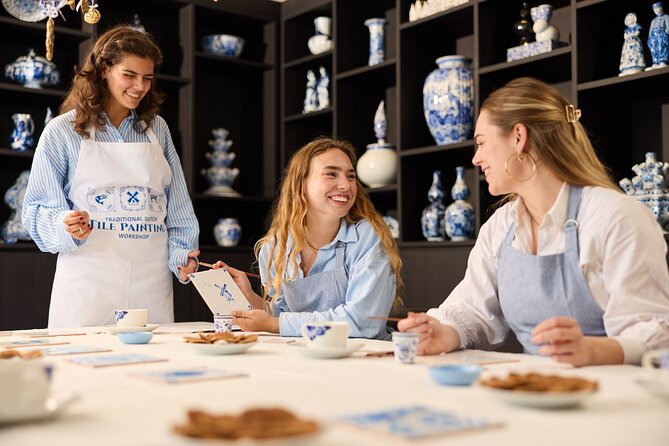
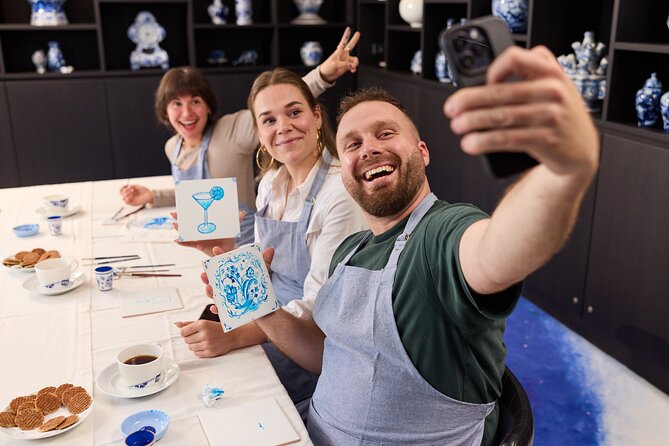
What I like most: you get tea, coffee, and a stroopwafel while you paint, and you don’t need any art background. The other big win is the small group size (max 15), which means you’re not stuck staring at a blank tile with no help.
One thing to consider is timing. The session runs about 75 minutes, and if you aim for a detailed design, it can feel a little tight.
In This Review
- Key things to know before you paint
- Entering Delft Blue mode at Oudeschans 17
- What the 75-minute workshop really looks like
- Painting Delft Blue: tulips, windmills, and your own design
- Tea, coffee, and stroopwafels while your tile dries (kind of)
- Why the instructor attention makes this beginner-proof
- Taking home your tile: souvenir value and travel reality
- Should you book the Amsterdam Traditional Dutch Blue Tile Workshop?
- FAQ
- How long is the Amsterdam Traditional Dutch Blue Tile Painting Workshop?
- Where does the workshop start?
- What is the price per person?
- Is the workshop offered in English?
- What group size should I expect?
- Do I need any prior art skills?
- Are refreshments included?
- Is there free cancellation?
Key things to know before you paint
- A small class (max 15) means real back-and-forth with the instructor
- Tea, coffee, and stroopwafel keep the mood relaxed while you work
- No prior art skill required, so you can start with confidence
- Delft Blue patterns and custom designs both work well here
- Your finished ceramic tile is yours to keep as a handmade Amsterdam souvenir
Entering Delft Blue mode at Oudeschans 17
The workshop starts at Oudeschans 17, 1011 KR Amsterdam. That location is handy if you’re already exploring central Amsterdam and want a break from walking, tram rides, and museum lines. The session is also offered in English, and you’ll get a confirmation when you book.
Plan for a simple, straightforward experience: you arrive, you check in, and you settle in at the painting stations. This is not a long cultural lecture. It’s a creative session with a bit of context about Dutch tile traditions and then straight into painting.
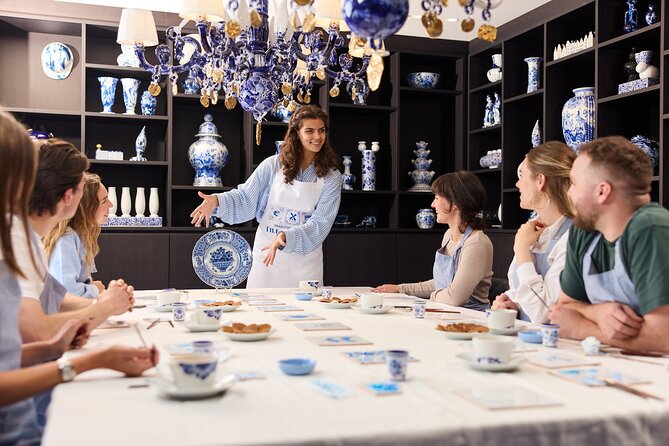
Logistically, the class is capped at 15 travelers, so it doesn’t feel like a factory line. You’ll see why this matters after 10 minutes: people can ask questions without raising their voice, and you’re more likely to get guidance on your brush strokes rather than just being handed a template and told to go.
Only realistic drawback: because it’s timed and shared with other groups, the pacing can be tight if anything shifts right before your start.
You can also read our reviews of more tours and experiences in Amsterdam.


What the 75-minute workshop really looks like
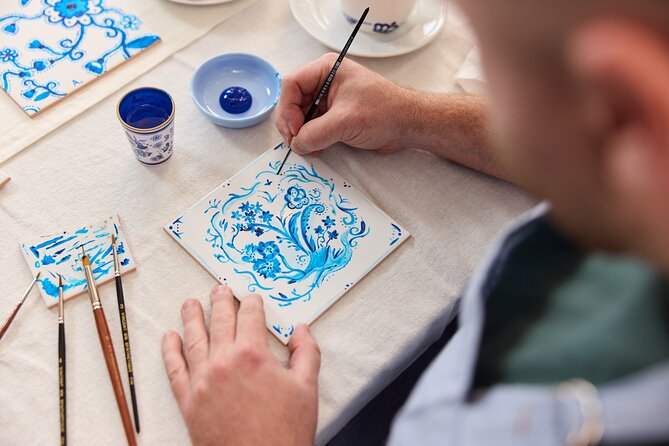
Think of this as a focused sprint, not an all-day craft. You’ll spend your time learning the basics of painting classic blue-and-white Delft-style motifs and trying out techniques that keep your design looking neat.
In practice, you’ll move through a simple flow:
- A short introduction to the Delftware story and the look you’re aiming for
- Guidance on easy painting methods
- Time to draw/plan your motif (traditional or your own)
- Time to paint, touch up, and finish with enough structure that you can actually take it home
One helpful detail from real participants: the class uses templates and prompts to get you moving fast. That’s great if you want instant direction. If you’re the type who loves sketching from scratch, you’ll still be able to create something original, but you’ll likely lean on the guidance to get it done within the time window.
If you want the cleanest results, aim for a design that’s recognizable without tiny details. A simple tulip, windmill shapes, or a cleaner border pattern tends to look good even if you don’t have a lot of painting time.
Painting Delft Blue: tulips, windmills, and your own design
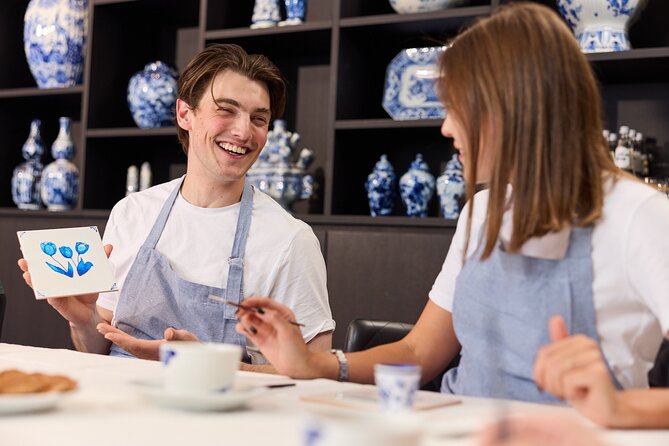
Delft Blue is more than a color. It’s the classic look of Dutch ceramic decoration—blue designs on a light background—often tied to familiar imagery like tulips and windmills. In this workshop, the instructor explains the story behind Delftware and then shows you easy ways to paint the patterns so they look right rather than messy or streaky.
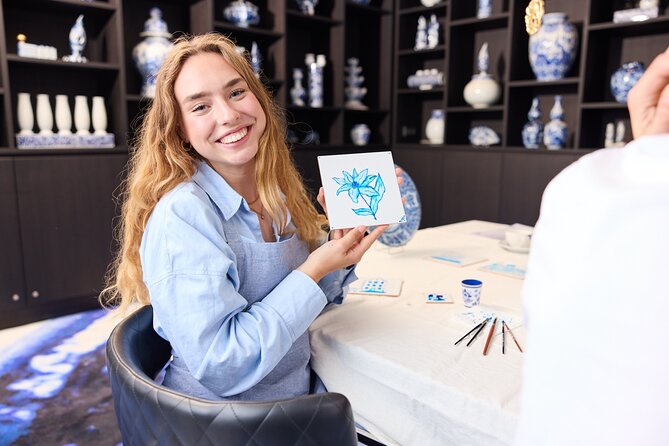
Here’s the smart part: you’re not forced into only one style. You can choose a traditional route (the classic motifs) or go personal and create your own design. That flexibility matters because it turns the workshop from a passive activity into something you can make truly yours.
Also, you get support while you work. Multiple participants highlighted that the instructor style makes it easy to produce something you’re genuinely happy with. One person specifically praised Belinda for being warm, welcoming, and encouraging—plus for making it simple even without previous painting experience.
If you’re debating complexity, I’d make your design plan with the clock in mind. One complaint you might run into is that the workshop can feel a bit short for a more complicated design. So choose the version of your idea that you can finish confidently.
Tea, coffee, and stroopwafels while your tile dries (kind of)
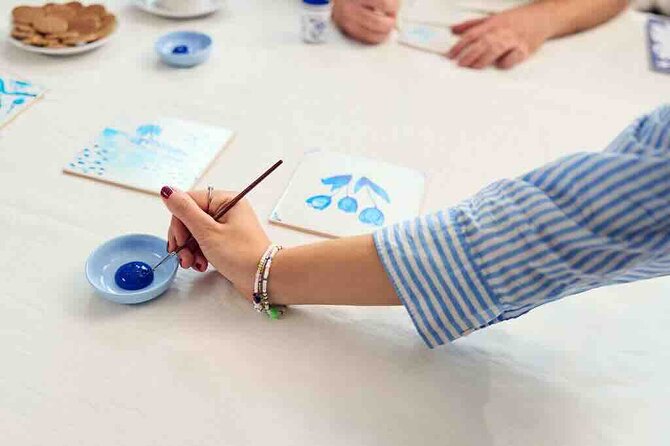
This workshop feeds you, and it’s not a token snack. You’ll enjoy tea, coffee, and a stroopwafel during the session. That matters more than it sounds, especially in Amsterdam where you can spend an entire day on your feet and still feel hungry even after a quick coffee stop.
The stroopwafel piece is especially nice because it fits the rhythm of the class. You can take a break, have a bite, and come back to the painting with fresh focus. It also makes the workshop feel like an actual Amsterdam experience instead of a timed craft desk.
This small comfort also helps if you’re traveling with family or bringing teen/young adult energy. One review noted this was a great change of pace when people were hitting museum burnout—because the activity is creative, relaxing, and doesn’t require deep attention the way galleries sometimes do.
Bottom line: the refreshments are part of the value, not an afterthought. They help the hour and change feel pleasant instead of exhausting.
Why the instructor attention makes this beginner-proof
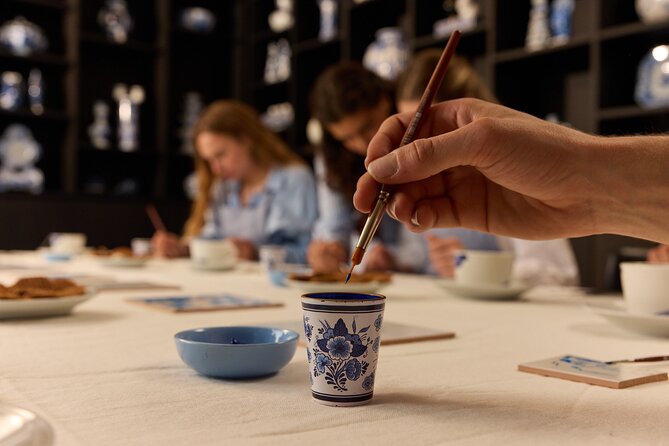
You don’t need prior art skills for this workshop. The best indicator is how consistently people pointed out that beginners can succeed here. The instructor provides structure, shows techniques, and helps you work through the steps without making you feel behind.
Class size also plays a role. With a max of 15 travelers, you’re likely to get individualized help when you hit a snag. That’s the difference between a workshop that feels like a lesson and one that feels like you’re on your own with supplies.
In the positive feedback, Belinda came up more than once as an instructor who kept things welcoming and easy. People also described the session as calming—less stressful than they expected, more guided than they expected.
If you’re hoping for a very deep, long-form explanation of every step of the ceramic process, this may not be your best bet. It’s designed to get you painting within a short time. But if what you want is a solid Delft Blue result plus a friendly guide, it fits the bill.
A practical tip: when the instructor offers quick method advice, take it immediately. These workshops reward fast follow-through more than perfectionism.





Taking home your tile: souvenir value and travel reality
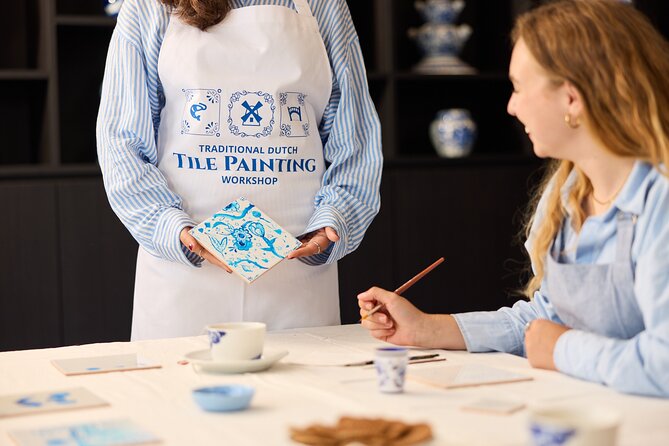
At the end of the workshop, your finished ceramic tile is yours to keep. That’s the big souvenir advantage: it’s personal, handmade, and unmistakably tied to Amsterdam. It’s also the kind of gift that doesn’t get lost in the pile of magnets and keychains.
There’s also a fun logistics detail worth planning for. One participant said airport security confused their carry-on because of the tile during X-rays. So if you’re flying home, treat it like a fragile item:
- Keep it in your main bag or carry-on if you can
- Expect extra questions at security
- Pack with care so the painted surface stays protected
In terms of overall value, $28.08 for 1 hour 15 minutes with materials plus tea, coffee, and a stroopwafel is a fair deal. You’re paying for guided instruction, supplies, and the final ceramic piece. Many people end up feeling like they bought a memorable experience rather than just a snack and a kit.
Should you book the Amsterdam Traditional Dutch Blue Tile Workshop?
If you want a break from Amsterdam’s usual menu of canals, museums, and walking, this is a smart option. It’s especially good for:
- Couples looking for something more interactive than a standard attraction
- Families who want a shared activity that doesn’t depend on everyone reading labels
- Solo travelers who like meeting people in a small group
- Anyone who wants a Delft Blue souvenir that’s actually handmade
The main reason to hesitate is the time. If you’re determined to paint a very detailed, complex design, you might feel the clock pressure. Aim simpler, plan your motif early, and you’ll likely enjoy a smooth experience.
FAQ
How long is the Amsterdam Traditional Dutch Blue Tile Painting Workshop?
It runs about 1 hour 15 minutes.
Where does the workshop start?
The meeting point is Oudeschans 17, 1011 KR Amsterdam, Netherlands.
What is the price per person?
The price is $28.08 per person.
Is the workshop offered in English?
Yes, it’s offered in English.
What group size should I expect?
The workshop has a maximum of 15 travelers.
Do I need any prior art skills?
No. No prior art skill is required, and the experience is designed for beginners.
Are refreshments included?
Yes. You’ll have tea, coffee, and a stroopwafel.
Is there free cancellation?
Yes. You can cancel for a full refund up to 24 hours before the experience starts.