REVIEW · ROTTERDAM
Cultural Walking Tour in Rotterdam
Book on Viator →Operated by Walk Rotterdam · Bookable on Viator
Rotterdam tells its story in buildings. This compact, 2-hour walk uses major landmarks and smart commentary to explain how the city rebuilt after WWII. I love the focus on architecture with context, plus the payoff of ending with wide river views instead of a dead-end backtrack. One thing to consider: it’s still a real walk, and the schedule is weather-dependent, so bring the right layers if it’s cold or rainy.
You start at the busy hub of Rotterdam Centraal and finish near the Maas at Boompjeskade, so you can plug the tour into the rest of your day without fuss. The pace is meant for people with moderate fitness, and the group stays small (up to 20), which helps the guide keep explanations clear and personal.
In This Review
- Key highlights you’ll feel right away
- A Two-Hour Walk Through Rotterdam’s Rebuilt Center
- Rotterdam Centraal to Lijnbaan: Where the City’s Plan Shows Itself
- Grote of Sint-Laurenskerk: Surviving WWII and What That Looks Like
- Markthal: Indoor Market Energy Meets Big-Design Architecture
- Erasmus Bridge and the Maas: Engineering Views and Modern City Contrast
- Price and Value: Why $54.06 Can Feel Like a Bargain
- Who This Tour Fits Best (and Who Might Want Another Option)
- Practical Tips So You Get More Out of Every Stop
- Should You Book This Rotterdam Cultural Walking Tour?
- FAQ
- How long is the Cultural Walking Tour in Rotterdam?
- Where does the tour start and end?
- What is the price per person?
- Is the tour in English?
- Is there a maximum group size?
- What age is the minimum for this tour?
- Is the tour suitable for people with moderate physical fitness?
- Are there any admission fees for the stops?
- Are snacks included?
- Can I bring a service animal?
Key highlights you’ll feel right away
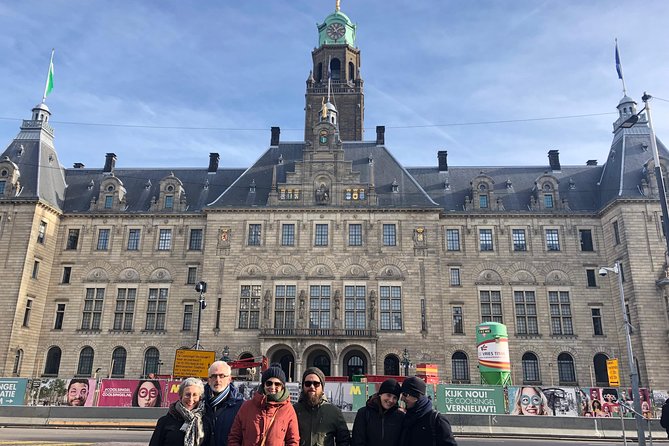
- Small group, big storytelling: up to 20 people keeps the talk interactive.
- Architect and art-historian angle: you’re not just naming places; you’re learning why they look the way they do.
- Built-for-a-purpose route: from the rebuilt Central Station to Lijnbaan, then church, then market hall, then the bridge.
- Market stop for local flavor: Markthal is where Rotterdam’s food culture meets modern design.
- Iconic skyline finish: Erasmus Bridge plus the modern developments across the Maas.
A Two-Hour Walk Through Rotterdam’s Rebuilt Center
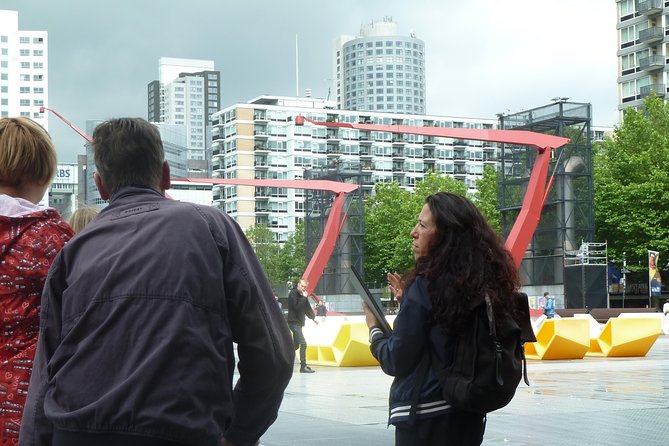
This tour is built for people who want more than photos. You’ll get a guided read on Rotterdam’s architecture: how the city’s street layout, landmark choices, and design decisions connect to its history and its engineering mindset. It’s also simply a good way to get oriented fast, because the stops cluster around the core “you can’t miss this” areas of Rotterdam.
At $54.06 per person for about two hours, you’re paying for guide time and expert interpretation. What makes it feel fair is that it’s not only sightseeing. You’re walking with someone trained to explain visual details—materials, urban planning logic, and the meaning behind what survived (and what didn’t).
The group format matters too. With a maximum of 20 people, you’re less likely to feel like you’re stuck listening from the back. And with a mobile ticket and English as the offered language, it stays simple to join without hunting paper vouchers.
You can also read our reviews of more tours and experiences in Rotterdam.

Rotterdam Centraal to Lijnbaan: Where the City’s Plan Shows Itself
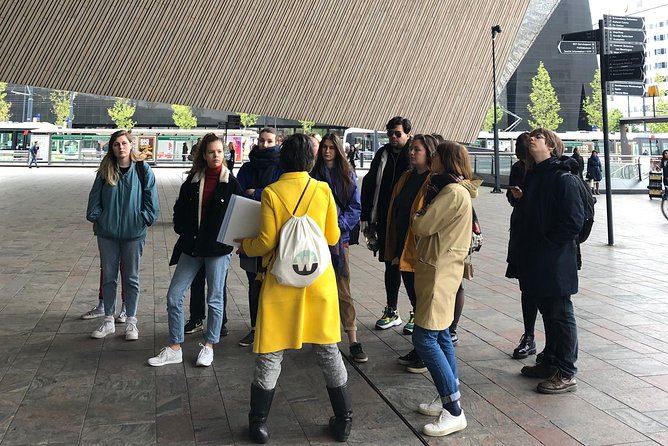
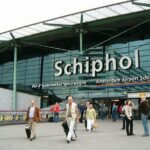
You begin at Rotterdam Central Station (Rotterdam Centraal)—specifically at the newly built station area. Even if you’re not a train person, this is a smart starting point. Rotterdam was built around movement: port logistics, tram and rail connections, and the constant reshaping of space. Starting at the station means you see the city’s modern “gateway” before you move into older layers.
From there, you walk through the Lijnbaan, described as the biggest national monumental area. For you, that means it’s not only a shopping street. It’s a chance to see how Rotterdam’s designers carved out pedestrian-friendly space and how the city balances commercial life with planned urban form.
A practical note: Lijnbaan and nearby streets can feel like a corridor—easy to walk, but not always shaded. If you’re visiting in winter, that’s exactly when a good guide story makes the chill feel shorter. One highlight from the experience of past participants was how guides stayed engaging even on cold January days.
Grote of Sint-Laurenskerk: Surviving WWII and What That Looks Like
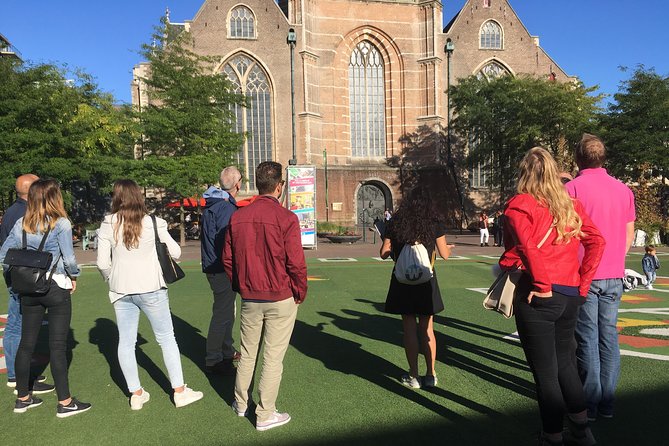
Next you’ll admire the exterior of Grote of Sint-Laurenskerk. The key detail here is that it’s Rotterdam’s oldest building, and part of it survived the bombardment. That one fact changes how you look at the church. Instead of seeing it as just a pretty stop, you’ll start noticing how survival becomes a visible layer in a cityscape.
Because this is an architecture-focused tour, you don’t just get a quick “this is old.” You’ll learn how the building’s survival fits into the bigger story of Rotterdam’s destruction and rebuilding. You can stand outside and still feel the contrast: what was kept, what was replaced, and how that decision echoes in the modern city around it.
Tip for the stop: take a moment to look beyond the main façade. Pay attention to details your eyes might otherwise skip—the edges, how the structure meets the surrounding streets, and how the church holds its presence even when the city around it keeps evolving.
Markthal: Indoor Market Energy Meets Big-Design Architecture
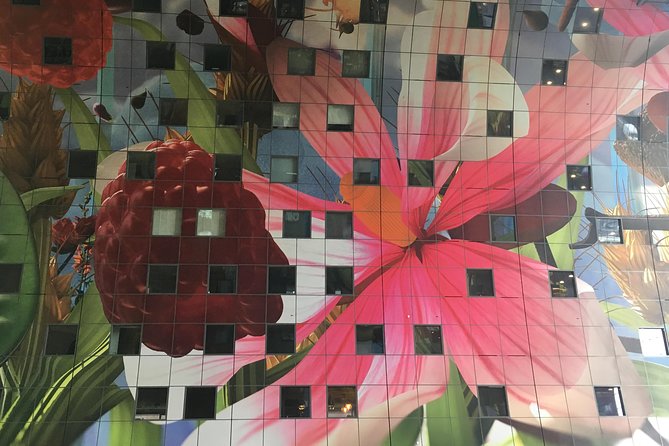
Then you hit Markthal, one of Rotterdam’s most talked-about spaces for good reason. The guide explains the impressive indoor market and food hall atmosphere, but the real value for you is that the storytelling connects food culture with architecture.
Markthal works on multiple levels:
- It’s a place to eat and snack.
- It’s a designed interior space with a strong identity.
- It shows how Rotterdam treats public life as something you shape with architecture.
One important detail for your planning: snacks aren’t included, and drinks aren’t included. But Markthal is exactly where you’ll want to buy something small—something local and easy—because the setting is part of the experience. If you’ve got limited time in Rotterdam, this stop helps you get the “I ate here” moment without turning the tour into a long food crawl.
If you care about photos, this is where your phone will earn its keep. The indoor setting, colors, and the market layout create a lot of natural photo angles. Still, don’t forget basic comfort: you’ll walk between stops, so keep your battery charged and your camera ready.
Erasmus Bridge and the Maas: Engineering Views and Modern City Contrast
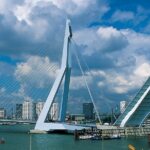
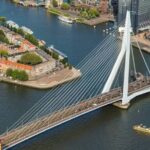
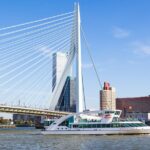
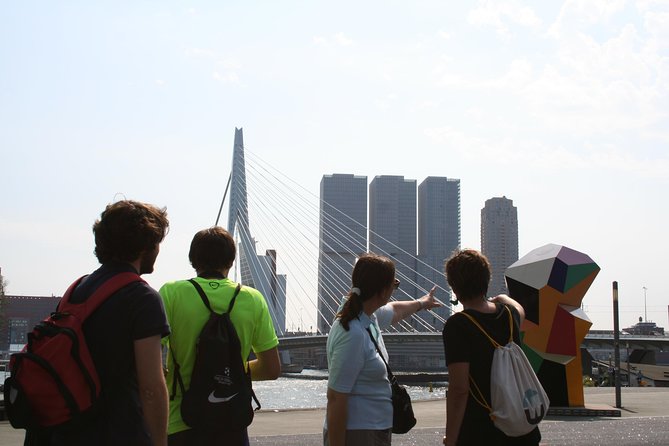
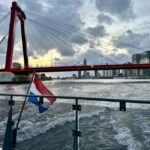
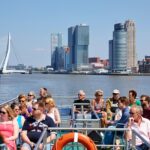
The tour ends along the riverside at Erasmus Bridge with views across the Maas. This is a satisfying finish because you get a big-picture perspective right when you’re ready for one. The bridge is the kind of landmark you recognize even if you can’t place it from memory.
What makes this ending valuable is the contrast. Your guide points out the landmark bridges of Rotterdam and the high-end architecture developments on the other side of the river. This is where the tour’s theme clicks: Rotterdam doesn’t treat architecture as isolated “pretty buildings.” It treats it as a city-wide system—engineering, transport, design, and reconstruction all working together.
If you want a simple post-tour plan, this is a good spot to continue wandering on your own along the water. You’ll already understand what you’re looking at, even after just two hours.



Price and Value: Why $54.06 Can Feel Like a Bargain
Let’s talk value in real terms. For $54.06, you’re getting:
- A local guide and a professional architect guide (and the tour is framed with architectural history from a professional art historian).
- A route that includes major landmarks with free admission at the listed stops.
- A small group size (max 20) and English as the offered language.
If you’ve done “big city” walking tours before, you know the common problem: you pay for time, but you don’t get real expertise. Here, the guide style is built around architecture and urban design context. That’s what changes the tour from a checklist into a story you’ll remember.
Also, starting at Rotterdam Central Station and ending near Boompjeskade is a smart logistics win. You’re not spending your time figuring out how to reach the next place—you’re already in the middle of things.
Who This Tour Fits Best (and Who Might Want Another Option)
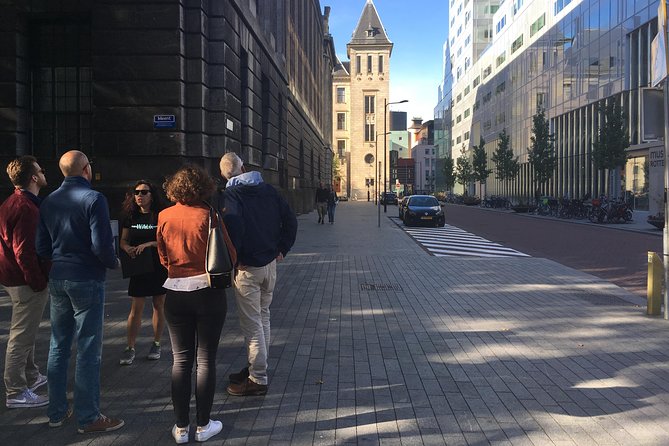
This is a strong pick if you:
- Like architecture and urban planning, even a little
- Want an efficient way to see Rotterdam’s center in a single morning or afternoon window
- Prefer a guided explanation over self-guided reading
- Enjoy short, focused stops instead of long museum time
It also makes sense if you’re traveling with a friend or going as a pair. The tour notes group discounts, and the experience is set up with a minimum booking of 2 people per booking.
One consideration: the tour is designed for a moderate physical fitness level and has a minimum age of 12. If you’re using a wheelchair or need highly flexible pacing, you may want to check details with the operator before booking, since the data only tells us “near public transportation” and “moderate fitness,” not step-free routing.
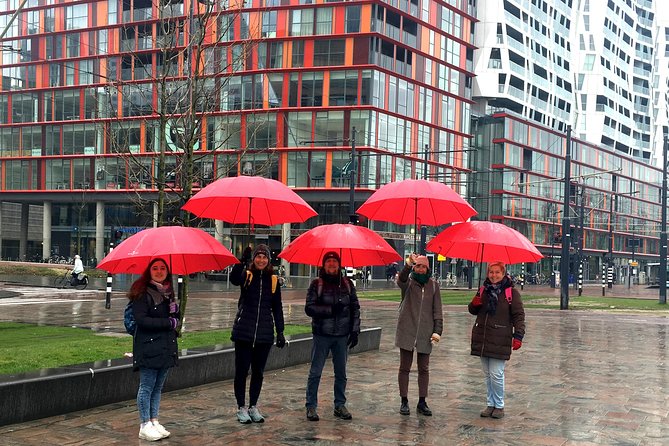
And if you’re visiting in cold or wet weather, dress accordingly. Rotterdam can switch moods quickly, and you’ll be outside for the whole walk.
Practical Tips So You Get More Out of Every Stop
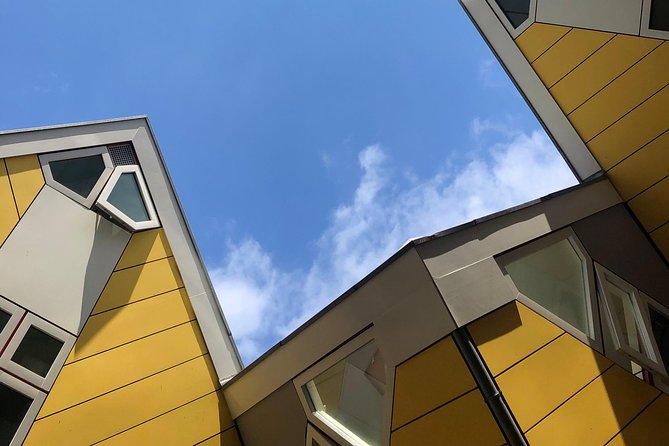
Here’s how to make the most of the experience, without overthinking it:
- Bring water. The walk is long enough that you’ll feel it, especially in winter.
- Charge your phone. Markthal and Erasmus Bridge are photo-friendly moments.
- Dress for the weather. The tour notes weather-appropriate clothing, and your comfort directly affects how much you enjoy the stories.
- Plan for a walking pace. Stop times are brief, so keep moving and listen while you walk—this is where the flow matters.
- Expect guided “seeing.” The value is not just where you go; it’s how the guide helps you notice what matters.
One small improvement idea from the experience of past participants is worth adopting personally: if you have specific photo priorities, decide them ahead of time so you’re ready when the guide points out the best angles.
Should You Book This Rotterdam Cultural Walking Tour?
Yes—if you want a guided architecture-and-city-planning story in a tight timeframe. This tour earns its place because it pairs major Rotterdam landmarks with explanations that help you understand the city’s choices, not just its postcard views. The Markthal stop adds a real taste of daily Rotterdam life, and the Erasmus Bridge ending gives you that satisfying “now I get the shape of the city” feeling.
I’d skip it only if you’re looking for a long, sit-down museum experience or if your day already has a very similar architecture-focused tour. Also, if cold rain shuts you down, weigh your stamina and comfort level, since you’re outside for the full walking route.
If you’re new to Rotterdam and want to make your first day smarter, this is a very reasonable bet.
FAQ
How long is the Cultural Walking Tour in Rotterdam?
The tour lasts about 2 hours.
Where does the tour start and end?
It starts at Rotterdam Central Station (3013 AJ Rotterdam) and ends at Boompjeskade (3011 Rotterdam) near the Maas river.
What is the price per person?
The price is $54.06 per person.
Is the tour in English?
Yes, the tour is offered in English.
Is there a maximum group size?
Yes. The experience has a maximum of 20 travelers.
What age is the minimum for this tour?
The minimum age is 12 years.
Is the tour suitable for people with moderate physical fitness?
Yes. It’s noted for travelers with a moderate physical fitness level.
Are there any admission fees for the stops?
The listed stops show Admission Ticket Free, so there aren’t paid entries indicated for those specific sights.
Are snacks included?
No. Snacks are not included. The tour highlights a local market stop, but you would need to purchase your own snack if you want one.
Can I bring a service animal?
Yes. Service animals are allowed.