REVIEW · ROTTERDAM
Private Walking Food Tour of Rotterdam
Book on Viator →Operated by Trigger Tours · Bookable on Viator
Rotterdam doesn’t do quiet. This private walking food tour mixes street-level snacks with architecture and postwar history. You’ll start at Rotterdam’s Central Station area and work your way through neighborhoods like Kruiskade and Chinatown, then end at the Markthal, where the food is the final payoff.
I love that it’s truly private, so your guide can set the pace and answer your questions without herding you along. I also like the mix of well-known Rotterdam sights (Town Hall, Markthal, Cube Houses) with smaller details—plus the chance to taste classic Dutch picks like krokets, kibbeling, stroopwafel, Dutch cheese, and herring.
One possible drawback: this is best described as a walking tour with tastings, not a full-on food feast. If you expect everything to be open and sampling-heavy every stop, you should plan for the odd timing issue—one group on a Monday morning found little was available and felt misled.
In This Review
- Key highlights worth knowing
- A Rotterdam walk with snacks (and stories) that actually fit together
- Meeting near Central Station: how it sets your rhythm
- Groothandelsgebouw to Kruiskade: where Rotterdam feels multicultural
- Rotterdam Town Hall stop: the wartime survivor moment
- Markthal and Cube Houses: modern Rotterdam’s big visual payoff
- What you eat: classic Dutch picks, not a full meal
- Guides set the tone: Susan and Stephan as standout examples
- Price and value: when $132 makes sense (and when it doesn’t)
- Timing matters: what to do about Monday mornings and open shops
- The practical flow of the route (so you know what you’re getting)
- Should you book this Rotterdam private walking food tour?
- FAQ
- Where does the tour start?
- How long is the Private Walking Food Tour of Rotterdam?
- What food will I taste on the tour?
- Is it really private?
- What language is the tour offered in?
- Is the booking refundable if plans change?
Key highlights worth knowing
- Private, English-speaking guide with your group only, meeting near Central Station
- Architecture + food: WWII-era survival stories and modern Rotterdam design in one route
- Kruiskade and Chinatown area for that multicultural street feel
- Markthal and Cube Houses as the big visual finish, opened in 2014
- Four Dutch tastings chosen from kroket, stroopwafel, Dutch cheese, herring, and kibbeling
- Flexible pace (some guests praised how guides didn’t rush picture stops)
A Rotterdam walk with snacks (and stories) that actually fit together
If you’re the type of traveler who likes seeing how a city works—not just what it looks like—this tour hits a sweet spot. Rotterdam can feel like a design city, but it’s also a survivor city. The route ties food stops to specific places, so you’re not just walking from landmark to landmark. You’re walking through the reasons Rotterdam looks the way it does.
You start at the Rotterdam Tourist Information near Central Station (CSStationsplein 21). From there, the guide frames Rotterdam’s story quickly: what was lost, what was rebuilt, and why so much of the city feels intentionally modern. It’s a useful setup because Rotterdam’s architecture is so different from the Dutch cities many visitors expect.
The private format matters. In a group tour, you often end up sprinting to keep up or asking questions late. Here, your guide can slow down, check in, and adjust based on your interests. One guest specifically mentioned Susan being flexible after they’d already done a food tour in Amsterdam—exactly the kind of thing that can make or break a second-timer tour.
You can also read our reviews of more tours and experiences in Rotterdam.

Meeting near Central Station: how it sets your rhythm
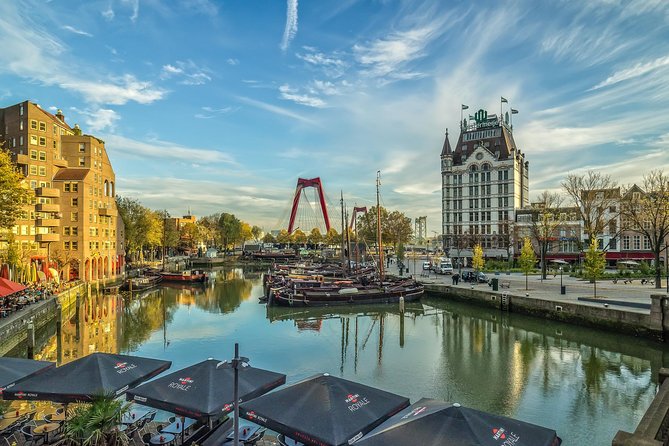
The meeting point is near Rotterdam’s new Central Station area, at Rotterdam Tourist Information on CSStationsplein 21. This is smart if you’re staying in the city center or planning to use public transit—getting there isn’t a puzzle.
You also get an immediate context lesson before the tastings. The guide walks you past the Groothandelsgebouw, completed in 1953 and one of the early major buildings after the WWII bombing of Rotterdam. That detail changes how you look at the city. Instead of seeing a random postwar building, you see Rotterdam’s rebuilding logic—big, functional, and designed to move forward.
A practical note: because you’re starting in this high-traffic station area, show up a few minutes early. The tour is about a couple hours, and a late start can reduce the time you’ll have for pictures, questions, and tasting.
Groothandelsgebouw to Kruiskade: where Rotterdam feels multicultural
After Central Station, you head toward Kruiskade, a neighborhood with shops and culture from around the world. It’s the kind of area where Rotterdam’s identity shows up fast: practical streets, mixed communities, and a city that doesn’t try to be postcard-perfect.
From there, you’ll see Rotterdam’s Chinatown area. This isn’t just a name drop. The value here is that your guide connects the street feel to Rotterdam’s broader story of trade, migration, and change. Even if you’re not a museum person, neighborhoods are a real education—especially in a city like Rotterdam, where history often lives in the streets more than in grand galleries.
You’ll also pass smaller architecture and monuments many locals notice more than visitors do. That’s one of the most praised parts in the reviews: guides pointing out design philosophy and details, not just reciting dates. If you like taking photos (and many of us do), this portion can be a fun way to get your bearings fast.
Rotterdam Town Hall stop: the wartime survivor moment
The next major landmark is Rotterdam’s Town Hall. It’s one of the few buildings that survived the WWII bombing, and that survival detail hits differently after you’ve walked through the postwar context near Central Station.
This stop isn’t just for architecture lovers. It’s a turning point in the tour structure, because it’s where you get your first food tasting. That timing helps. You get history early, then you get a reward. It keeps the walk from feeling like an extended lecture.
If you’re the kind of traveler who gets impatient when tours talk too long, this is a good sign: tastings are built into the flow rather than saved for the end only. Of course, the exact amount you eat depends on what’s available at the time you go—something I’ll come back to.
Markthal and Cube Houses: modern Rotterdam’s big visual payoff
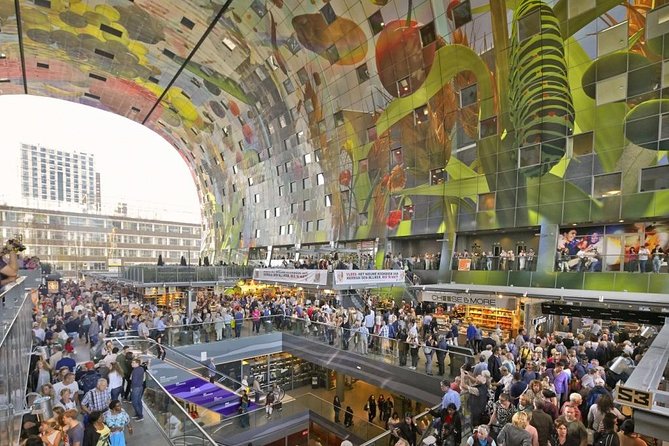
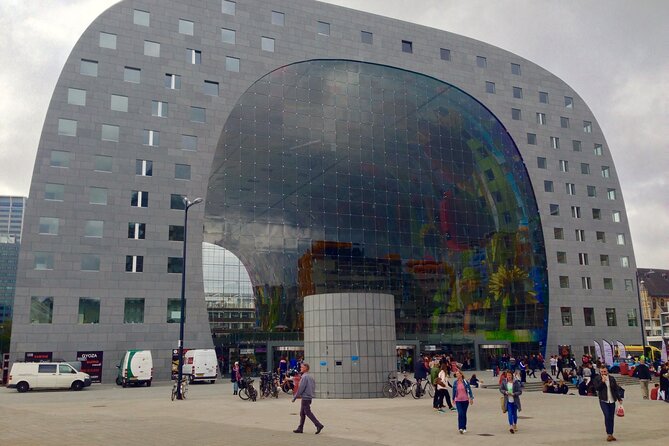
Eventually, you reach the Markthal and Cube Houses area. This is the wow moment in the tour description for a reason: the Markthal opened in 2014, and it’s one of the most striking sights in Rotterdam. Even if you’ve seen photos, it’s the kind of place that feels more impressive in person because of scale and the way it frames the space around it.
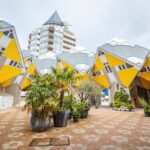
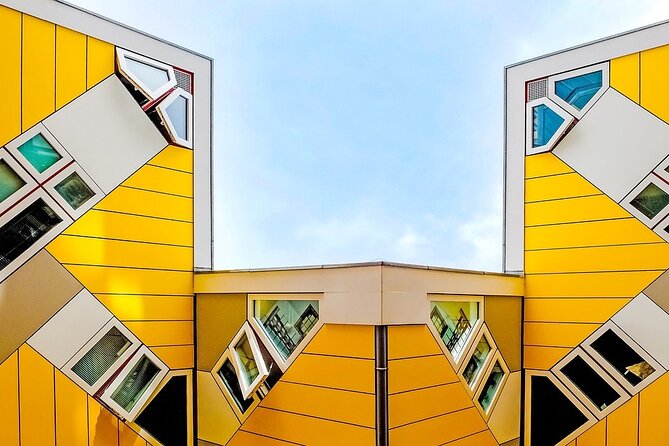
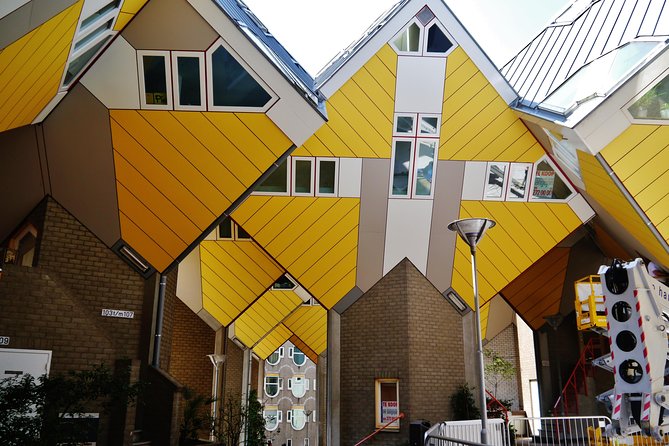
Next come the Cube Houses—one of Rotterdam’s most famous design icons. They’re playful, but they’re also part of Rotterdam’s identity: engineering that turns into a visual statement.
Food-wise, this is where you get the last two Dutch tastings. So even if you’re walking slower or stopping for pictures, you’re approaching the point where the tastings return. The tour ends back at the Markthal area, where you can sit down for a final tasting.
One thing I’d watch: the Markthal is a food destination, but timing and days can affect what’s open at specific counters. This is where expectations matter. A highly rated tour can still feel underwhelming if you show up expecting a long sequence of big bites at every step and your day happens to land on limited hours.



What you eat: classic Dutch picks, not a full meal
The tour is built around four different typical Dutch products. You can choose from:
- Kroket
- Stroopwafel
- Dutch cheese
- Herring
- Kibbeling
That selection is a big part of why the tour works. It’s not random snacks. It’s core Dutch comfort food and street food—enough variety to taste different styles: creamy vs. crunchy, sweet vs. savory, and the famous Dutch love of fish.
The way reviews describe it, the tastings can be generous. One guest praised the food hall and fresh herring as a memorable highlight. Another mentioned that some portions were quite large, which matters because even “small tastings” can still satisfy you.
Still, here’s the honest caution: a couple reviews call out confusion about what the tour really is. One disappointed group said nothing was open on a Monday morning and they ended up starving. Another said the tour felt more like a walking history experience than a food sampling experience. In both cases, the guide still did a good job with the city context—so the issue wasn’t friendliness or effort. The issue was the level of food availability and the match between the title and what happened in practice.
So my advice is simple:
- Treat this as a tastings-focused walk, not a full brunch or dinner.
- If you’re going on a day that might have reduced hours, eat a solid breakfast or plan to top up afterward.
Also: because you can choose among the Dutch products, you should think ahead about what you really want. If you’re not a fan of fish, consider swapping toward kroket, cheese, stroopwafel, or kibbeling if offered.
Guides set the tone: Susan and Stephan as standout examples
Even with the same route, the experience can swing based on the guide. The reviews are heavy on guide praise, and two names come up repeatedly: Susan and Stephan.
Susan is described as friendly, knowledgeable, and flexible. One guest specifically noted she adjusted because they’d already done an Amsterdam tour—so she didn’t feel like she was running a rigid script. Another praised how Susan allowed time for photos and didn’t push people too fast.
Stephan also gets strong marks for knowledge, kindness, and an easygoing style. One review said he even helped people navigate Rotterdam after the tour—small touch, big value if you want your day to keep moving smoothly.
This is a private tour, so you’re not dealing with the typical problem of group drift. Your guide can match your speed and questions. If you’re the type who likes to ask why a building looks the way it does, you’ll probably enjoy this format.
Price and value: when $132 makes sense (and when it doesn’t)
At about $132.17 per person, you’re paying for three things at once:
1) a private guide,
2) a walking route through major Rotterdam sites, and
3) multiple Dutch tastings tied to the stops.
For many people, that’s good value—especially if you’re pairing food with sightseeing and want someone to explain why Rotterdam’s architecture differs from other Dutch cities. If you’ve only got a limited time window, this can act like a compact city introduction with edible souvenirs.
But price sensitivity is real. If your priority is heavy eating, you may feel disappointed. The title includes food, and at least one review suggests the tour may have been marketed in a way that implied more frequent sampling than what actually happened. Another said the cost felt high relative to the amount spent on food.
So here’s how to judge whether it fits you:
- Great fit if you want Rotterdam context plus several tastings.
- Potential mismatch if you’re expecting a long, multi-stop feast with lots of different bites at each location, regardless of day and opening times.
If you’re traveling with friends and want a private experience without doing the planning yourself, that private guide time can justify the price quickly.
Timing matters: what to do about Monday mornings and open shops
Because your tastings depend on what’s available at the time of your tour, day and timing can affect the experience. One review mentioned a Monday morning where nothing seemed open, leading to a much smaller tasting experience than expected.
I can’t change opening hours, but you can protect yourself:
- Eat beforehand so you’re not starting hungry.
- If you’re picky about fish or fried items, decide in advance which of the five product choices you’ll want.
- If you’re sensitive to pacing, pick a day when you expect more normal operations.
If everything is open, the tour reads like a smooth progression: Central Station context, Town Hall tasting, then Markthal finishing bites with the Cube Houses and the big design finale.
The practical flow of the route (so you know what you’re getting)
Here’s how the pacing tends to feel from start to finish, based on what the tour description promises and how guests described the day:
- Central Station area: quick WWII and rebuilding context as you walk past Groothandelsgebouw.
- Kruiskade and Chinatown area: multicultural street exploration and design details.
- Town Hall area: a first tasting break tied to a landmark survivor story.
- Markthal + Cube Houses area: visual peak of modern Rotterdam and additional tastings.
- End at Markthal: final tasting with a chance to sit and reset.
One review even noted the walking distance felt like around six miles. That gives you a reality check: this isn’t a short stroll. It’s a proper city walk, so wear comfortable shoes.
Should you book this Rotterdam private walking food tour?
Book it if you want a mix of Rotterdam design + a guided explanation + classic Dutch tastings in about a couple hours, with your guide able to slow down and tailor the day. It’s also a good option if you’ve already been to Amsterdam (or plan to later) and you want Rotterdam’s story in a different flavor.
Skip it or adjust expectations if your main goal is a guaranteed, full meal of food at every stop. The tour is clearly described as tastings, and opening times can change how much you end up eating—one Monday morning experience left a bad taste for some people.
If you like questions, photos, and learning why buildings matter, this one has strong odds of being a highlight.
FAQ
Where does the tour start?
You meet at Rotterdam Tourist Information, CSStationsplein 21, 3013 AJ Rotterdam, Netherlands, near the new central station area.
How long is the Private Walking Food Tour of Rotterdam?
It lasts about 2 hours (approx.), though the tour description also mentions a longer private food tasting walking tour format, so expect it to run in that general timeframe.
What food will I taste on the tour?
You’ll taste four different typical Dutch products. You can choose from kroket, stroopwafel, Dutch cheese, herring, and kibbeling.
Is it really private?
Yes. It’s a private tour/activity, and only your group participates.
What language is the tour offered in?
The tour is offered in English.
Is the booking refundable if plans change?
Free cancellation is available if you cancel at least 24 hours in advance for a full refund.