REVIEW · ROTTERDAM
Rotterdam: Architecture Highlights Tour including the Depot
Book on GetYourGuide →Operated by De Rotterdam Tours · Bookable on GetYourGuide
Rotterdam’s buildings have a point of view. In this 2.5-hour architecture walk, you get a local guide plus rare interior/roof access that makes the city’s design story feel real, not just pictured.
I especially loved two stops: the Depot Boijmans van Beuningen with its striking mirror-like facade, and the rooftop views from Het Witte Huis (weekends) or a terrace near Grotekerkplein (weekdays).
One consideration: this is still a walking tour with tight timing and roof access, so it may not work well if you have mobility impairments, even though it’s listed as wheelchair accessible.
In This Review
- Key things I’d circle on your Rotterdam map
- Why Rotterdam Architecture Feels Personal on This Tour
- Price and What You Actually Get for $494 (Private, Up to 6)
- Rooftop Views: Het Witte Huis on Weekends vs Grotekerkplein Terrace on Weekdays
- Markthal Entry: MVRDV’s Housing-with-a-Food-Scene Concept
- Dudok and Timmerhuis: OMA’s Pixelated Steel-and-Glass Redevelopment
- Rotterdam’s Central Station and Post-War Landmarks: What Changes After Crisis
- Museumpark Stops: Sonneveld House and Het Nieuwe Instituut
- Depot Boijmans van Beuningen: The Curved Mirror Facade and the Doors from Engineering
- Cube Houses Discount: Use It to Extend the Day on Your Own
- What the 2.5 Hours Actually Feels Like (Timing, Pace, and Group Size)
- Should You Book This Rotterdam Architecture Tour?
- FAQ
- How long is the Rotterdam Architecture Highlights Tour?
- Where do we meet the guide?
- Is rooftop access included?
- What’s included besides the expert guide?
- Is the tour private?
- Can I cancel or book without paying today?
Key things I’d circle on your Rotterdam map
- Depot Boijmans van Beuningen’s curved mirror facade and the engineering behind it
- Rooftop perspective over Markthal, the Cube Houses, and the big bridges
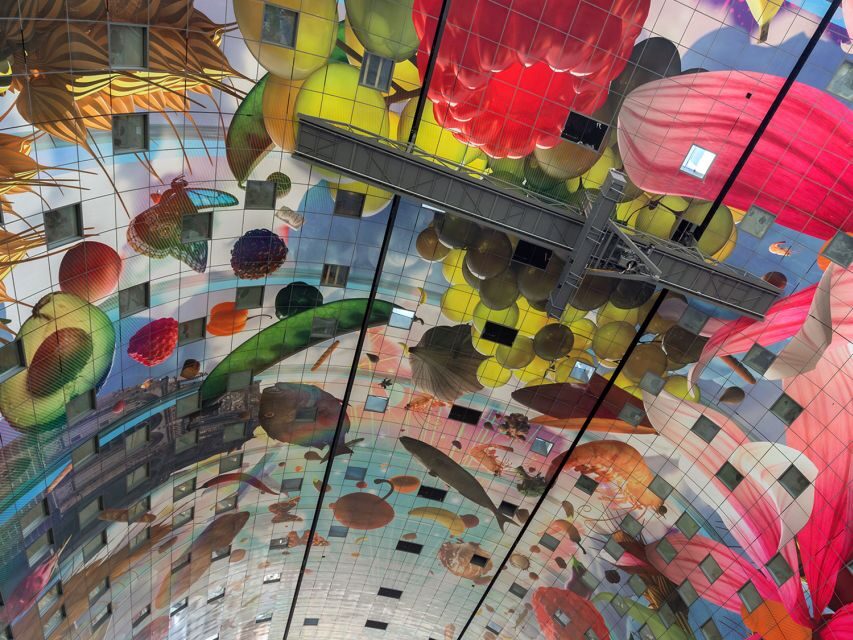
- Markthal entry through MVRDV’s idea of housing plus a food hall
- Timmerhuis redevelopment: OMA merging older municipal space with a steel-and-glass structure
- A strong mix of eras, from post-war monuments to experimental modern landmarks
- Cube Houses discount + postcards by Rotterdam photographer Ossip van Duivenbode
Why Rotterdam Architecture Feels Personal on This Tour
Rotterdam has always been a city of builders. You can feel that attitude in how the guide explains the shapes, the materials, and the practical problem-solving behind the looks. This tour is built around that mindset: bold, fast-moving, and willing to test ideas in public.
I like that the pace stays focused. You’re not floating past buildings; you’re stopping often enough to notice details, then getting the story of how those choices came together. And the guide really leans into construction and design logic, so it stops being only about appearances.
A nice detail from the experience: guides can bring extra clarity even when you’re not an architecture nerd. One guide named Frank Schipper is specifically noted for being upbeat and answering questions with clear, competent explanations, including structural and planning details. That matters, because Rotterdam’s architecture can look futuristic, but it’s usually grounded in real engineering.
You can also read our reviews of more tours and experiences in Rotterdam.

Price and What You Actually Get for $494 (Private, Up to 6)
This is listed as $494 per group up to 6 for about 2.5 hours, which changes the math fast depending on how many people you bring. If you fill all 6 spots, you’re looking at roughly $82 per person—far more “worth it” when you compare to typical per-person sightseeing add-ons. If you only have a couple people, it becomes a more premium private experience.
Here’s what supports the price. You’re not just walking and snapping photos: you get an expert local guide, plus a rooftop entrance (varies by weekday vs weekend), plus 3 postcards by Ossip van Duivenbode, plus a 50% discount entrance ticket to the Cube Houses. That’s a bundle of value that’s easy to spend elsewhere—so having it packaged saves time.
Also, it’s private group style, meaning the guide can slow down for questions about the buildings you care about most. For architecture tours, that’s often the difference between a quick highlight reel and a genuinely useful walkthrough.
Rooftop Views: Het Witte Huis on Weekends vs Grotekerkplein Terrace on Weekdays
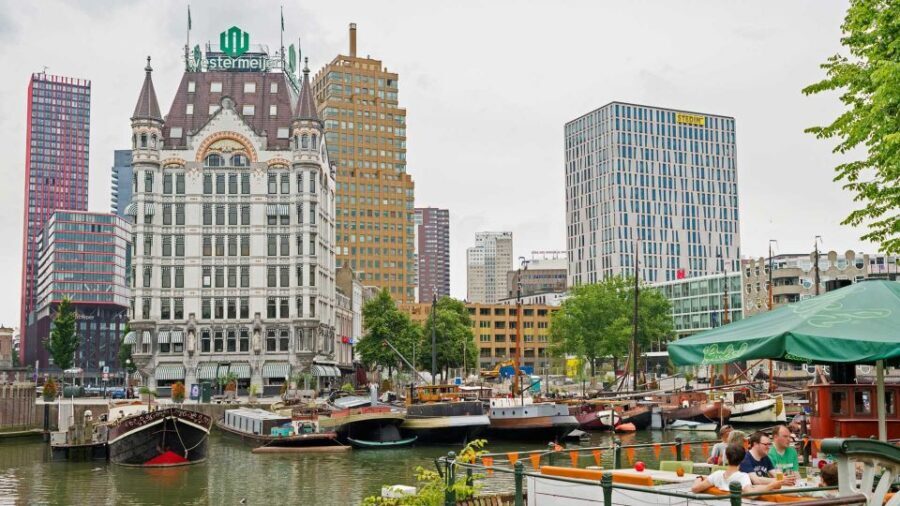
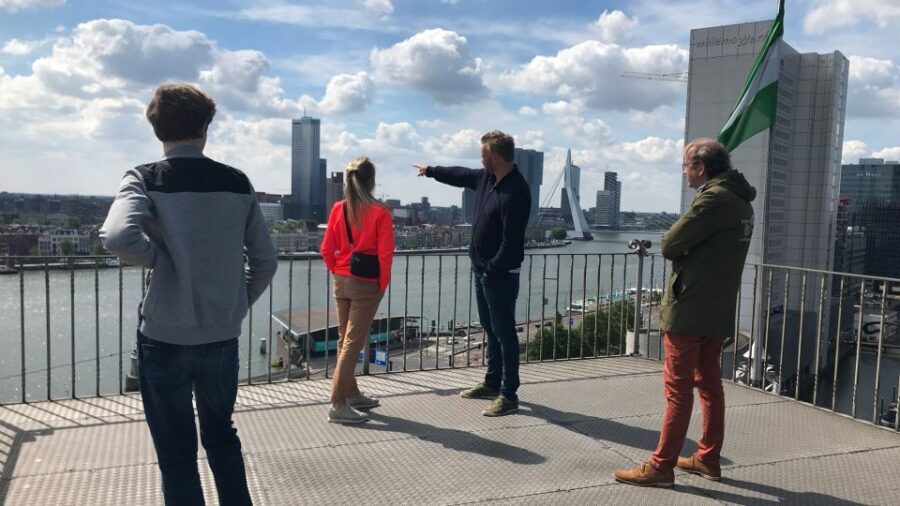
The tour starts with a rooftop moment—one of those Rotterdam “wow, so that’s the angle” scenes.
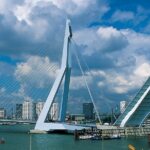
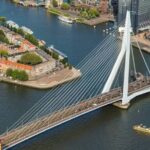
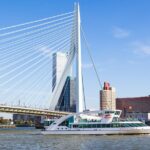
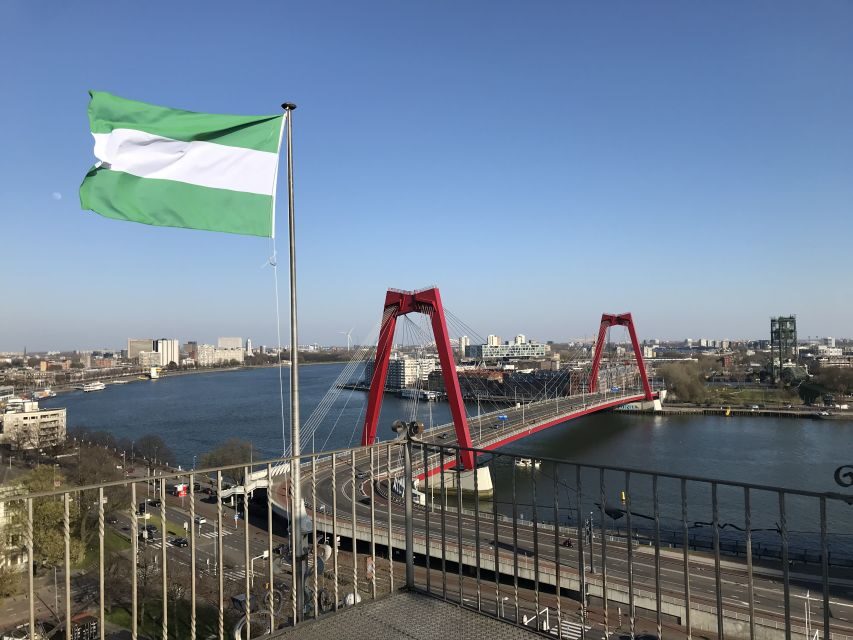
- Weekend tours: you start on the rooftop of Het Witte Huis. From there, you can look over Markthal, the Cube Houses, the Erasmus Bridge, the Willems Bridge, and De Rotterdam. It’s a classic skyline spread, but the rooftop access makes it feel special rather than just panoramic.
- Weekday tours: you begin at a rooftop terrace near Grotekerkplein, which also gives strong city-center views, including the area around Markthal.
Why this matters: rooftops are where you can understand urban planning. Rotterdam is layered—buildings, bridges, and open spaces interlock. Seeing them from above helps your brain connect what you’ll walk through next: the shapes of the skyline, the placement of major landmarks, and how the city redirects traffic and foot movement through design.
Practical note: this early rooftop start sets the tone. You’ll walk with a clearer mental map from the beginning, so the rest of the stops land better.
Markthal Entry: MVRDV’s Housing-with-a-Food-Scene Concept
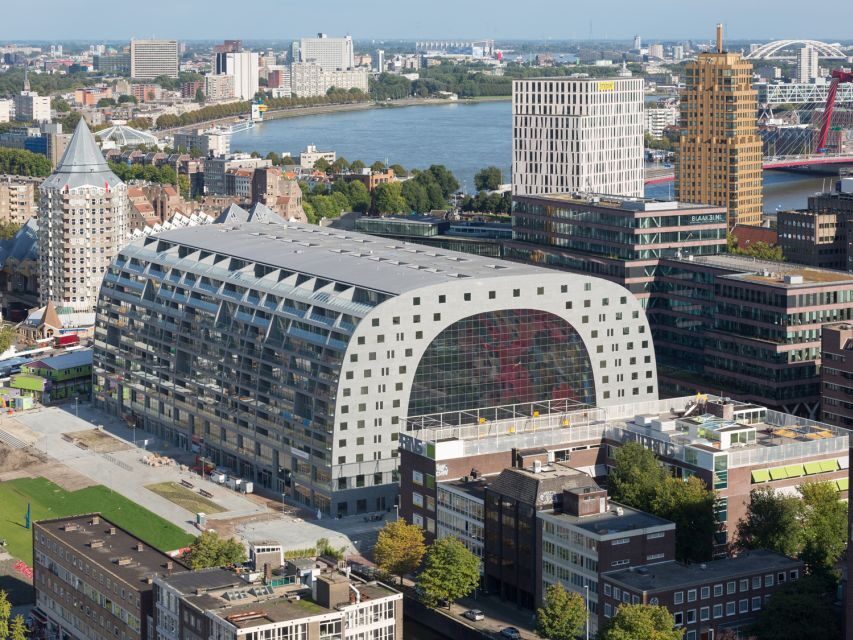
After the rooftop, you walk right into Markthal, designed by MVRDV. This is one of the most talked-about Rotterdam projects for a reason: it’s not only a building, it’s a system.
You’ll move through the concept where housing meets a lively food scene. That mix changes how the space feels. Instead of a single-purpose interior, Markthal becomes a day-to-night place where people live above and gather inside. For visitors, that’s the difference between reading about design and seeing it in action.
What I like on tours like this is the timing: you don’t just arrive in a food hall without context. The guide frames Markthal as part of Rotterdam’s larger approach to non-stop experimentation. So when you’re inside, it’s easier to notice how the building holds multiple roles at once.
If you’re the type who likes architecture you can actually use, Markthal hits the sweet spot.
Dudok and Timmerhuis: OMA’s Pixelated Steel-and-Glass Redevelopment
Next up: the route moves through key redevelopment and design storytelling. You’ll pass Dudok’s Dudok and arrive at the Timmerhuis, a major inner-city redevelopment project.
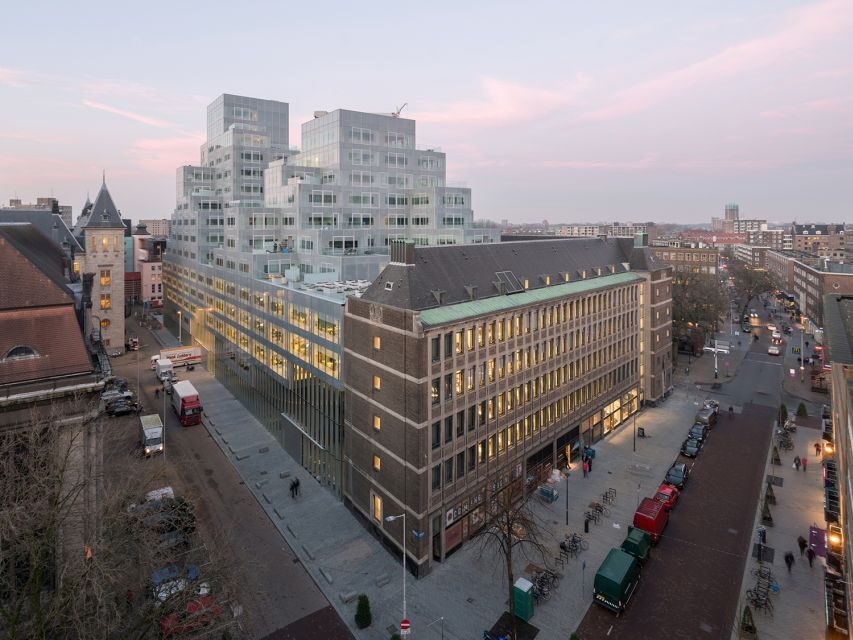
This is where Rotterdam’s “fix and evolve” attitude gets concrete. The Timmerhuis project is described as a merger approach: a municipal office block from the 1950s combined with a pixellated steel-and-glass structure created by OMA. The “pixellated” detail matters because it signals more than style. It suggests a building skin designed to read as pattern, light, and structure all at once.
You’ll also get a rooftop entrance to the Timmerhuis on weekdays. That’s especially useful because it lets you see how the redevelopment works from both street and height. You can compare what stays from the older city fabric versus what gets transformed into a new visual language.
One small caution: if you’re expecting a long sit-down architecture lecture, this isn’t that. It’s more like guided pattern-recognition. You’ll move, look, and listen in short bursts.



Rotterdam’s Central Station and Post-War Landmarks: What Changes After Crisis
You’ll spend time on the city’s big public-facing structures: Rotterdam Central Station, the post office, and the de Bijenkorf-warehouse, plus other monuments along the way.
This section helps you understand a key Rotterdam idea: modern design isn’t separate from history here. It’s often the next phase after reconstruction and change. The guide’s explanations connect how the city evolved into a place that treats architecture like problem-solving.
As you move through the streets, you also pass through more layers:
- you’ll go past Forum toward Schouwburgplein
- then reach Kruiskadeplein, where you can see buildings like Groothandelsgebouw and de Delftse Poort
- and you’ll spot religious and cultural landmarks such as Calypso, Pauluskerk, and de Unie
Why I think this works: Rotterdam’s architecture becomes easier to appreciate when you see it in sequence. You start recognizing recurring themes—form, function, and the city’s habit of rebuilding with a stronger visual statement each time.
Museumpark Stops: Sonneveld House and Het Nieuwe Instituut
In the Museumpark area, you’ll look at Sonneveld House and Het Nieuwe Instituut. Even without getting lost in technical detail, these two stops add important balance.
Sonneveld House helps you ground the experience in a more human-scale perspective. Then Het Nieuwe Instituut brings you back to modern cultural purpose. For architecture tourists, that mix is valuable because it shows how different types of buildings serve different needs—living spaces, institutions, and the role design plays in shaping everyday life and public knowledge.
If you like when an architecture tour includes variety instead of repeating the same style note over and over, this part will satisfy you.
Depot Boijmans van Beuningen: The Curved Mirror Facade and the Doors from Engineering
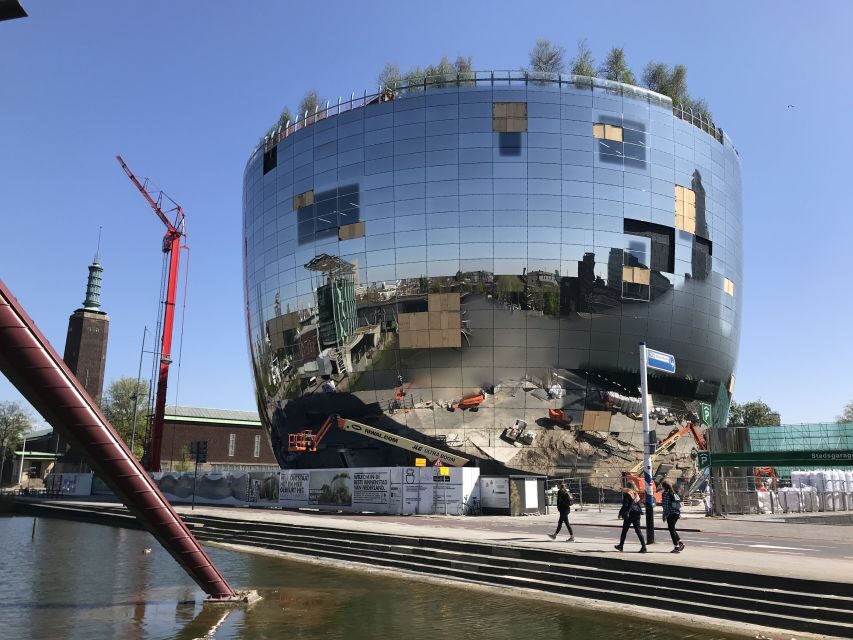
The final “eye catcher” is Depot Boijmans van Beuningen—and yes, it’s called out for a reason. You’ll marvel at the curved mirror facade, and you’ll get a close-up explanation of what makes it work.
The guide specifically talks about:
- the concept behind the reflecting panels creating a double-curved facade
- and why the building needed aviation engineering techniques to operate the huge entrance doors
That combination is what makes this stop different from a standard exterior photo stop. When you understand the engineering challenge—controlling massive doors and shaping the facade—you stop seeing the building as just futuristic styling. You start seeing it as a functional system that’s been pushed toward a dramatic visual effect.
Also, Depot is built around public access in a way that’s unusual. You’re stepping into a place that’s described as a public art depot, and that context changes how you look at the architecture. It’s not just a shell; it’s an environment for how art is stored, managed, and presented.
If you love buildings where design and mechanics meet, this is the highlight.
Cube Houses Discount: Use It to Extend the Day on Your Own
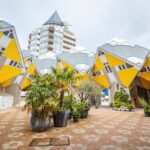
The tour includes a 50% discount entrance ticket to the Cube Houses. The stop isn’t described as part of the walking route itself, but you do get the discount, which is a smart bonus.
Here’s how I’d use it: schedule the Cube Houses either before or after the tour depending on your energy. Since the rooftop views mention the Cube Houses in the skyline, you’ll already have a sense of where they sit and what they look like from above. Then, if you go inside with the discounted ticket, you’ll connect the visual trick to the lived experience.
Discounts like this are good value because Cube Houses can be the kind of attraction you don’t want to gamble on. The tour gives you a reason to care, and the discount helps you follow through.
What the 2.5 Hours Actually Feels Like (Timing, Pace, and Group Size)
At 2.5 hours, you get enough time to connect the dots without losing momentum. It’s a walking tour, so the value comes from how often you pause. The guide keeps you moving through a chain of architecture stories, from big modern icons down to post-war and institutional landmarks.
It’s also a private group format. That typically means you’ll experience it differently than a crowded bus-style tour. For this kind of topic, smaller groups help because you can ask questions about facade details, redevelopment logic, and structural ideas.
Language options are Dutch, English, and German, which makes it easier to match your comfort level.
One more practical note: pets are not allowed, though assistance dogs are allowed.
Should You Book This Rotterdam Architecture Tour?
Book it if you want a design-focused Rotterdam outing that goes beyond photos. The key strengths are the Depot Boijmans van Beuningen access and the rooftop start (Het Witte Huis on weekends or the Grotekerkplein terrace on weekdays), plus the Markthal entry and the Timmerhuis redevelopment story.
I’d skip or think twice if you need something fully low-mobility. The tour is listed as wheelchair accessible, but it’s also marked not suitable for people with mobility impairments. Because rooftops and entrances are part of the experience, it’s worth asking the operator directly about your specific needs before committing.
FAQ
How long is the Rotterdam Architecture Highlights Tour?
The tour lasts about 2.5 hours.
Where do we meet the guide?
You meet your guide outside the entrance of the Witte Huis.
Is rooftop access included?
Yes. Rooftop access is included, but it depends on the day: on weekdays you get a rooftop entrance to the Timmerhuis, and on weekends you start on the roof of Het Witte Huis.
What’s included besides the expert guide?
The tour includes 3 postcards by Rotterdam architectural photographer Ossip van Duivenbode and a 50% discount entrance ticket to the Cube Houses.
Is the tour private?
Yes. It’s described as a private group for up to 6 people.
Can I cancel or book without paying today?
Free cancellation is available up to 24 hours in advance for a full refund, and you can reserve now and pay later.