REVIEW · ROTTERDAM
Rotterdam Architecture and Highlights Walking Tour (TOP RATED)
Book on Viator →Operated by Trigger Tours · Bookable on Viator
Modern Rotterdam hits best with a guide. I love the Cube Houses stopped often enough to really look, and I love how the tour tracks the logic behind Erasmus Bridge and the city’s post-war rebuild. The one thing to keep in mind is that not every guide will focus equally on architecture details, so you may want to ask early how deep the building stories go.
This is a small, private-feeling walk built around passing major landmarks—Rotterdam Central Station, Markthal, City Hall, Kunsthal, and more—while your guide ties the sights to the city’s design mindset. You also get a reset halfway through with a free beverage at a central spot, which helps a lot if you’re planning other Rotterdam stops afterward.
On timing, you’ll see both a 2-hour estimate and a longer tour description that includes a break. In practice, the route can get adjusted to fit the time window, so I recommend confirming which signature sights are guaranteed for your departure.
In This Review
- Key Points That Make This Tour Worth Your Time
- Why Rotterdam’s Architecture Needs Feet, Not Just Photos
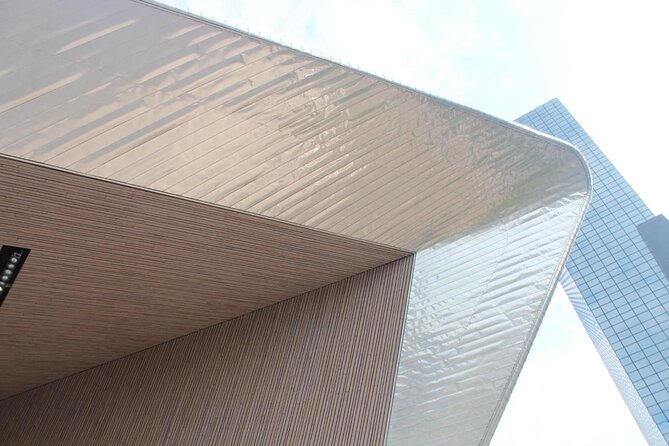
- Starting at Rotterdam Central Station: The Best Possible Launch Pad
- The Tour’s Big Theme: Post-War Rebuild, Modern Boldness
- Cube Houses: When the Design Looks Like a Joke Until You See It
- Markthal (Enclosed Market): Architecture You Can Shop Inside
- City Hall: The Civic Side of Rotterdam’s Story
- Kunsthal and the Gallery Energy of Rotterdam
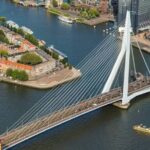
- Erasmus Bridge: The Icon You Finally Understand
- Rotterdam Central Station Again: A Final Anchor Back to Your Starting Point
- The Mid-Tour Break: Why the Drink Stop Is More Than a Comfort Detail
- Guide Styles: Some Are Architecture-Forward, Others Lean General
- Timing Realities: 2 Hours vs 3 Hours (and Why That Matters)
- Getting Value From a $35.52 Guided Walk
- What to Wear and Bring for a Rotterdam Walking Tour
- Who This Tour Fits Best
- Should You Book It? My Bottom Line
- FAQ
- FAQ
- How long is the Rotterdam Architecture and Highlights Walking Tour?
- Where do I meet the guide?
- Where does the tour end?
- Is the tour private?
- What’s included in the price?
- Are drinks or meals included?
- Is it offered in English?
- Do I need to book for more than one person?
- Can I cancel, and how much notice do I need?
Key Points That Make This Tour Worth Your Time
- 40+ architectural sights passed on a tight city route, including modern icons and older standouts
- Meet at Rotterdam Central Station so you start oriented and easy to find
- Free water or soda during a planned mid-tour break to keep energy up
- Private guide Q&A style: ask questions as you walk, and you’ll usually get direct answers
- Route flexibility by interests, with some guides tailoring more than others
- Time can affect which big stops fit, so clarify whether Erasmus Bridge and Cube Houses are part of your exact run
Why Rotterdam’s Architecture Needs Feet, Not Just Photos
Rotterdam is one of those cities where you can stare at buildings all day, but you’ll get way more out of it if someone explains the why behind the what. The city took huge hits during World War II, and the rebuild shaped a very different architectural personality than you’ll find in older Dutch cities. You’ll see that mix of new, functional design and still-there historical elements while walking street to street.
What I like about this tour is that it doesn’t treat Rotterdam like a museum. It treats it like a working city where design decisions show up in bridges, markets, civic buildings, and the way neighborhoods were stitched back together. And since you’ll pass a long list of sites—about 40—it’s a fast way to get your mental map straight.
The price is also in the “doable” range for a guided walk. At about $35.52 per person, you’re paying for a guide to connect the dots: what you’re looking at, why it was built, and what each landmark says about Rotterdam’s values.
You can also read our reviews of more tours and experiences in Rotterdam.


Starting at Rotterdam Central Station: The Best Possible Launch Pad
Meeting at Stationsplein 10 is smart. You’re at Rotterdam Central, and that puts you near the city’s main transport spine and a big architectural statement right away. It also means you can arrive by tram, metro, or foot without stress, which matters because architecture tours move quickly.
Right at the start, your guide sets expectations and starts building the story. Expect a mix of modern highlights and “wait, look up” details around the station area before you move outward into the city core. This first leg matters because it teaches you what to notice: materials, geometry, and how Rotterdam uses bold forms instead of ornament.
The Tour’s Big Theme: Post-War Rebuild, Modern Boldness
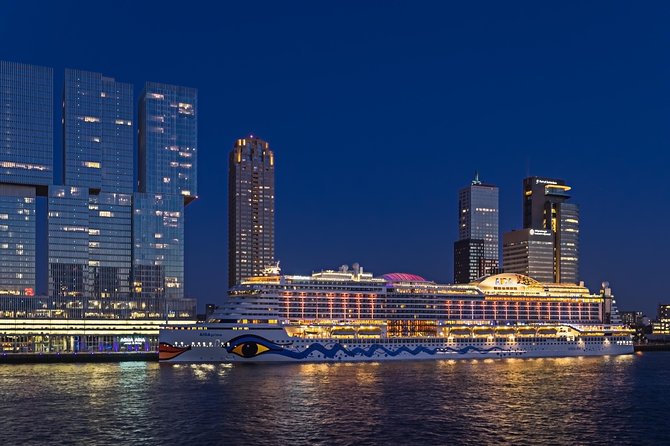
Rotterdam’s architecture often feels like a design lab—without the label. The city has a reputation for modern building because so much of it was damaged during World War II, and what came next reflects rebuilding choices made under pressure: faster construction, new urban priorities, and a willingness to try fresh ideas.
On this walk, you’ll hear that theme explained through landmarks rather than speeches. You’ll likely compare what survived, what was rebuilt, and what replaced earlier plans. That context turns the walk from sightseeing into understanding.
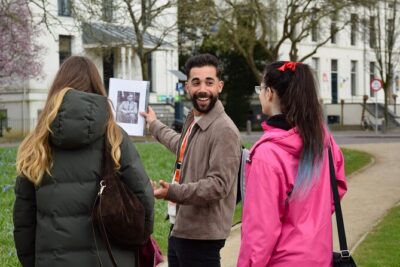
This is also where the guide quality really shows. One guide’s style can feel like quick orientation; another can slow down at the right moments and give you clearer architectural details. The good news is you’ll have time to ask questions, and the best guides will answer without rushing you.
Cube Houses: When the Design Looks Like a Joke Until You See It
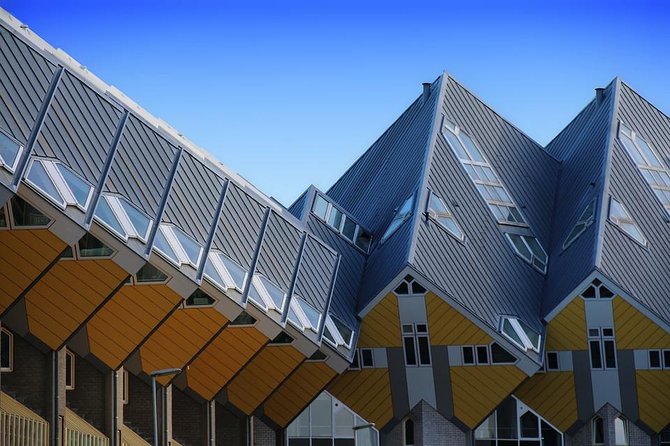
The Cube Houses are often the reason people book this kind of Rotterdam tour, and they deserve the attention. Their tilted, stacked shape is easy to spot, but the real point is how the design tackles urban constraints—space, streetscape, and how you can still create something playful and distinctive in a practical city.
On a good visit, your guide helps you notice what’s happening with the angles and the logic of the form. On a less smooth version of the walk, timing can squeeze how much time you spend there. One note from experience in the wild: the Cube Houses are not always treated as a primary stop, even if they appear in the tour description. So if Cube Houses are your top priority, say so early and ask if you’ll get specific time there.
Markthal (Enclosed Market): Architecture You Can Shop Inside
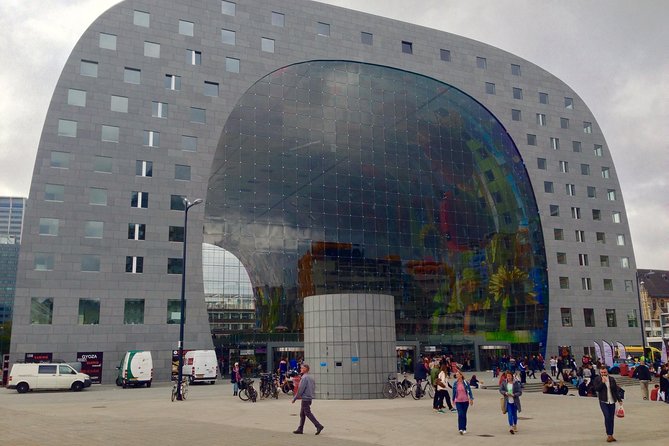
Markthal is a standout because it’s architecture with a daily job. It’s not just a viewpoint; it’s a place where food, commerce, and city life meet under one roof. That makes it more engaging on a walking tour than purely external monuments—you get architecture plus how people actually use it.
What to look for: how the structure frames the market experience and how the building fits into the surrounding streets. A good guide will connect Markthal to Rotterdam’s post-war urban thinking: planning public space with heavy use in mind, not just design for show.
If your tour includes Markthal toward the middle, that’s a nice shift from bridge and skyline icons to a tighter “street level” view of architecture.



City Hall: The Civic Side of Rotterdam’s Story
City Hall brings the tour into Rotterdam’s civic identity. This is one of those stops where architecture can feel political in a quiet way—how a city chooses to represent itself, what it wants residents to feel, and how public buildings signal priorities.
You’ll often see City Hall mentioned as part of the mix of modern-and-older landmarks. Even if the tour isn’t led by an architect, a strong guide can still help you read the building’s intention: symmetry versus function, form versus statement, and how the civic center anchors the city.
Kunsthal and the Gallery Energy of Rotterdam
Kunsthal is a different kind of architectural stop. It tends to feel more modern and flexible—like the building was designed to host art, not just to be stared at from across the street. That changes how you experience it while walking: you’re not only seeing a form, you’re imagining what it supports.
If your guide makes time for Kunsthal, you’ll get more than a passing photo stop. You’ll hear how the building works within Rotterdam’s design mindset—practical, forward-leaning, and meant to keep moving.
Erasmus Bridge: The Icon You Finally Understand
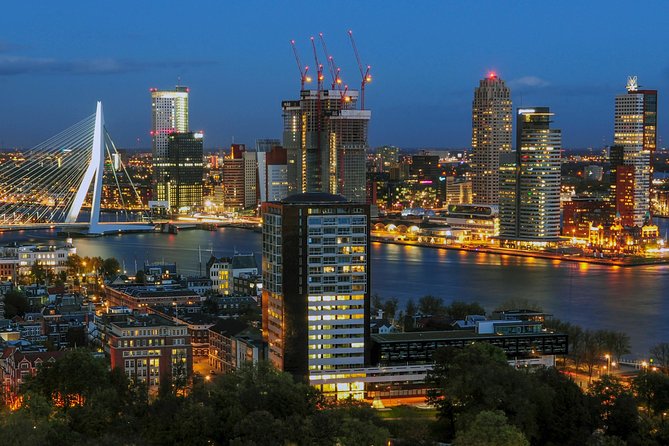
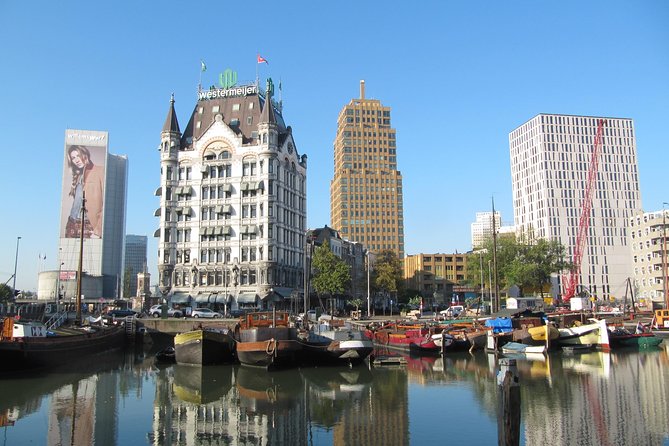
Erasmus Bridge is the Rotterdam signature many people come for. It’s also one of the hardest to “get” from photos alone, because scale and placement matter. On this tour, the guide’s job is to help you see how the bridge fits into the city’s layout and why it became such a symbolic piece of the skyline.
A good guide will slow down long enough to point out shape and function, then connect it to the larger story of redevelopment. This is where Q&A helps: ask what the bridge represents in Rotterdam’s modern era and what design choices made it such a landmark.
If time gets tight, this is also a stop that can get cut. One person noted that the guide had to cut Erasmus Bridge to fit the schedule into 2 hours. If Erasmus Bridge is a must-see for you, confirm it during the first few minutes and don’t wait until the final stretch.
Rotterdam Central Station Again: A Final Anchor Back to Your Starting Point
The tour ends back near the meeting area in central Rotterdam. That matters because it helps you keep your legs under you after the long walk and makes it easier to continue exploring without hunting for directions.
Depending on your route, you may finish with viewpoints that help you tie earlier landmarks together. Even if you don’t get new stops near the end, you’ll likely get a clearer sense of how the parts of the city connect—where major design choices land and how they shape your walking path.
The Mid-Tour Break: Why the Drink Stop Is More Than a Comfort Detail
Halfway through, you’ll take a break for about 30 minutes at a central Rotterdam location, with free water or soda included. This pause is built in after roughly 1.5 hours of walking in the way the tour is described.
This is a practical feature for two reasons:
1) It resets attention. Architecture stories need brain space, not just legs.
2) It protects you from turning the whole walk into “walk, rush, photo, repeat.”
If you’ve spent time on other Rotterdam activities that day, this break keeps the architecture segment from feeling like one long sprint.
Guide Styles: Some Are Architecture-Forward, Others Lean General
This is where your experience can swing the most. In real life, different guides bring different strengths.
I saw praise for guides who were flexible and tailored the route to what you care about, plus guides who were friendly and direct about history and context. People also credited guides by name, including Michaël, Tony, Susan, and Foxy, for being informative and fun while walking key areas like Cube Houses and the enclosed market.
At the same time, there’s a caution flag: one review described a guide who felt more like a general Rotterdam guide than a focused architecture interpreter, with some details missing or even incorrect. Another pointed out a mismatch between what was implied in the description and what happened in the time-limited route.
So here’s my practical advice: on the spot, say what you want. If you want construction dates, ask for them. If you care about modern form versus historical survival, tell the guide that early. You’ll usually get a better tour simply by steering the conversation.
Timing Realities: 2 Hours vs 3 Hours (and Why That Matters)
The description you’ll see can mention different timeframes: around 2 hours in the tour length, but also a longer format that includes a break and continues after it. In practice, your route can get adjusted to fit the time window, especially for landmark-heavy stops.
Why you should care: famous Rotterdam features have different “time costs.” Erasmus Bridge might take longer for viewpoints and photos. Cube Houses take longer if you want to really study the form. Markthal can slow you down because it’s a place you want to pause.
If you have only one afternoon in Rotterdam, prioritize your top 2 sights (or ask the guide to prioritize them) so you don’t leave wishing you had pushed for more time at the icons.
Getting Value From a $35.52 Guided Walk
At about $35.52 per person, you’re not buying a long private art tour. You’re buying compression: a guide who points out what’s worth noticing and provides context quickly.
This is good value if:
- you want a big overview fast
- you like modern architecture but want the story behind it
- you prefer walking routes with stops that include Q&A
It’s less ideal if:
- you’re expecting a deep, architect-level lecture with lots of exact construction timelines every stop
- you need every single named landmark guaranteed, no matter how timing works
If you’re the type who enjoys asking follow-up questions, you’ll likely feel the payoff much more.
What to Wear and Bring for a Rotterdam Walking Tour
This is a walking-focused experience, so treat it like one. Wear comfortable shoes you can move in for a couple of hours, especially because you’ll be stopping to look up and around.
Bring water of your own if you tend to get dry, even though the tour includes water or soda during the break. And plan for weather changes—Rotterdam’s day can shift quickly, and you’ll want a light layer.
Also, since you’ll pass so many sights, keep your phone charged. You’ll want photos, but more importantly you’ll want to be able to reference details your guide mentions when you’re back in your hotel.
Who This Tour Fits Best
I’d book this tour if you:
- want a first-time Rotterdam “architecture map”
- enjoy modern design but want cultural and historical grounding
- like guided walking with the option to ask questions
I’d be more cautious if you:
- need extremely precise dates and technical construction facts at every stop
- only care about one or two landmark icons and can’t tolerate the chance a stop gets shortened
- dislike pauses at statues or street spots without strong architectural explanation
Should You Book It? My Bottom Line
If your goal is to understand Rotterdam quickly and you’re open to a guided mix of modern landmarks plus civic and historical context, this tour is a strong choice. The free drink break, the long list of passed sights, and the chance to ask questions make it a practical way to get more out of a limited time window.
But do this one thing to protect your money: tell your guide your priorities at the start. If you want Cube Houses and Erasmus Bridge treated as central stops, say so early. That small conversation can turn an average walkthrough into the kind of tour that actually teaches you how to look.
If your schedule is flexible, keep in mind you can cancel for a full refund up to 24 hours in advance. That gives you room to lock in a plan and still adjust if another Rotterdam activity pops up.
FAQ
FAQ
How long is the Rotterdam Architecture and Highlights Walking Tour?
It’s listed at about 2 hours, with a planned break partway through. Some descriptions also mention a longer overall walk time, so it’s smart to check your confirmation for the exact schedule.
Where do I meet the guide?
You meet at Stationsplein 10, 3013 AJ Rotterdam, Netherlands.
Where does the tour end?
The tour ends back at the meeting point in central Rotterdam.
Is the tour private?
Yes. It’s a private tour/activity, and only your group participates.
What’s included in the price?
A local guide and a small-group walking tour are included, plus free drinks (water or soda).
Are drinks or meals included?
Food and drinks aren’t included unless specified. The tour includes free water or soda during the break.
Is it offered in English?
Yes, the tour is offered in English.
Do I need to book for more than one person?
A minimum of two people per booking is required.
Can I cancel, and how much notice do I need?
You can cancel for a full refund if you cancel at least 24 hours in advance of the experience start time.