REVIEW · DELFT
Delft: Private Historical and Cultural Guided Walking Tour
Book on GetYourGuide →Operated by Explore Delft · Bookable on GetYourGuide
Delft has a way of sticking in your head. On this private historical and cultural walking tour, I love how the William of Orange mausoleum turns big national stories into something you can see up close, and how the canals and old houses make every detour feel worth it. The route is customizable, so you’re not stuck with a one-size-fits-all checklist.
One thing to plan for: this is a walking tour in town, rain or shine. Even if you take it at an easy pace with your guide, you’ll want comfortable shoes because Delft’s center is made for pedestrians, not soft-soled city slippers.
I like that the tour starts in an obvious place, right in front of the Nieuwe Kerk, so you can find it quickly and get moving. You’ll also be with a professional local guide who can switch the focus as your group wants—architecture, art, royal history, or the bits most people miss.
In This Review
- Key highlights I’d prioritize in Delft with a private guide
- Meeting in Front of the Nieuwe Kerk: How the Tour Starts
- William of Orange Mausoleum: Where National Stories Feel Personal
- Delft’s Town Hall Square: Renaissance Looks and a Civic Inside-View
- Canals, Bridges, Alleys, and Courtyards: The Delft You Actually Want to Photograph
- The Beguinage, Prince’s Court, and Delft’s Smaller Religious and Civic Places
- The Only Remaining Historical Windmill and the Court of Almonde
- Vermeer’s Delft: Connecting Paintings to Real Places
- Delft Blue Pottery: Origins, Then Watching Craft Happen
- Private Tour Value: Why $135 Per Person Can Be Worth It
- Real-World Guide Styles: Harry, Yvette, Jessica, and What That Means for You
- What to Bring, and How to Dress for Rain or Shine
- Who This Tour Suits Best (And Who Might Want Something Else)
- Should You Book This Delft Private Historical and Cultural Guided Walking Tour?
Key highlights I’d prioritize in Delft with a private guide
- William of Orange mausoleum: a must-see anchor point for Dutch history
- Canals, bridges, and courtyards: great for photos, even when clouds roll in
- Town hall square and justice setting: small space, big meaning
- Vermeer’s Delft: you connect the paintings to real streets and buildings
- Delft Blue pottery: learn the origins, then watch craft happening
Meeting in Front of the Nieuwe Kerk: How the Tour Starts
Your guide meets you in front of the Nieuwe Kerk. That matters more than it sounds. A good start keeps the first 10 minutes from turning into a scavenger hunt, and it also sets the tone: Delft’s story begins in the city center, not at the edge of town.
Because it’s a private group, you can settle quickly. If your legs are feeling cautious, your guide can slow the pacing. If you’re there specifically for art or architecture, you can ask for more time where you’ll care most.
One practical tip: wear shoes that handle wet sidewalks and occasional uneven pavement. The tour runs rain or shine, so you won’t get a polite reroute just because the sky has opinions.
You can also read our reviews of more walking tours in Delft



William of Orange Mausoleum: Where National Stories Feel Personal
The tour’s first big emotional hit is the mausoleum of Prince William of Orange, considered the founding father of the Netherlands. Even if you know the basics, seeing this memorial in Delft helps the name stop being a textbook label and turns into a place you can picture.
What I like about this stop on a guided walk is timing. You get oriented before the canals, before the bridges, before the city hall square. Your guide can connect the mausoleum to the civic life of Delft—how power, faith, and community have always overlapped in Dutch cities.
If your group likes political history, this is where your guide can go deeper without dumping a lecture on you. And if your group is more arts-and-streets focused, the mausoleum still gives you a framework for what you’ll see next.
Delft’s Town Hall Square: Renaissance Looks and a Civic Inside-View
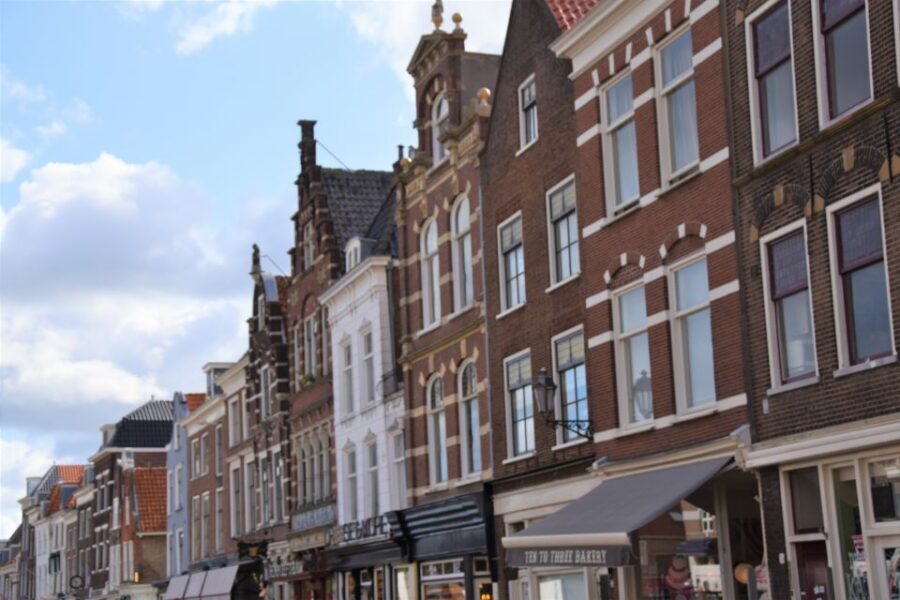
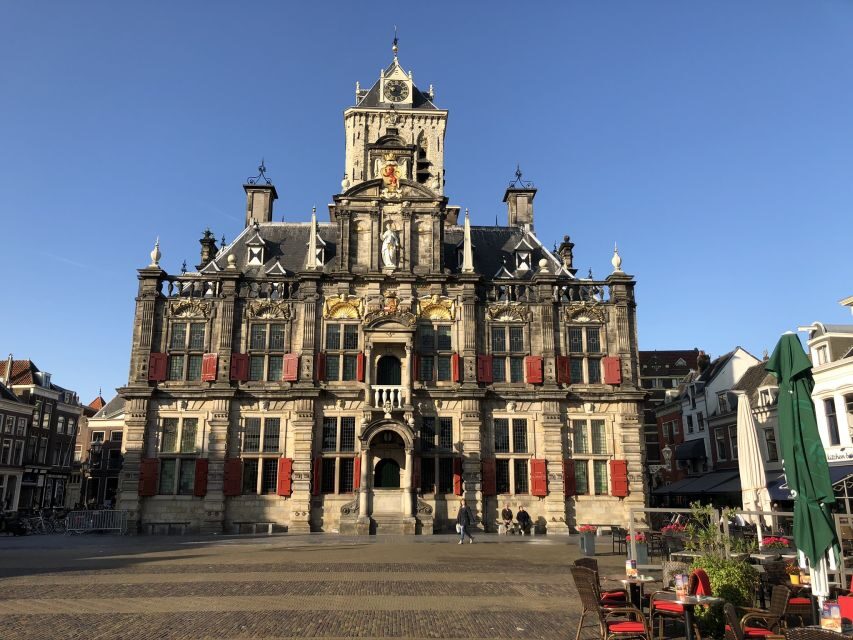
From there, you move toward Delft’s historic center, including a medieval square that leads to the city town hall in Renaissance style. The best part of guided walking here is the ability to notice what your eyes might skip on your own: proportions, facades, and the feel of a square that’s been used for centuries.
You can also peek inside to see where justice was spoken centuries ago. That detail is small in time and huge in meaning. It shows how civic life worked in a pre-modern city: public decisions weren’t abstract. They were made in real rooms, by real officials, in a building people could reach easily.
If you like architecture, ask your guide to point out the elements that reflect civic pride versus function. If you prefer human-scale stories, ask what life might have been like for ordinary people waiting for decisions.
Canals, Bridges, Alleys, and Courtyards: The Delft You Actually Want to Photograph
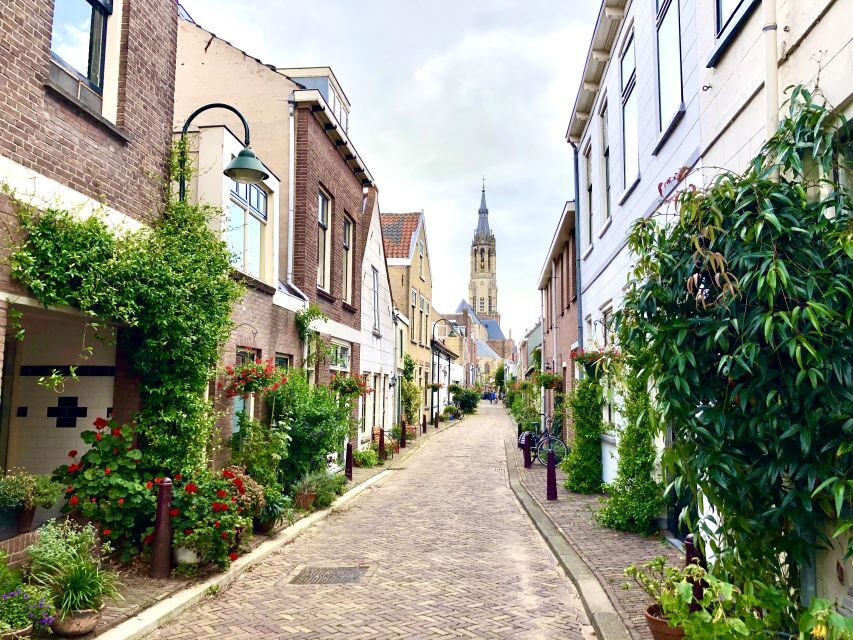
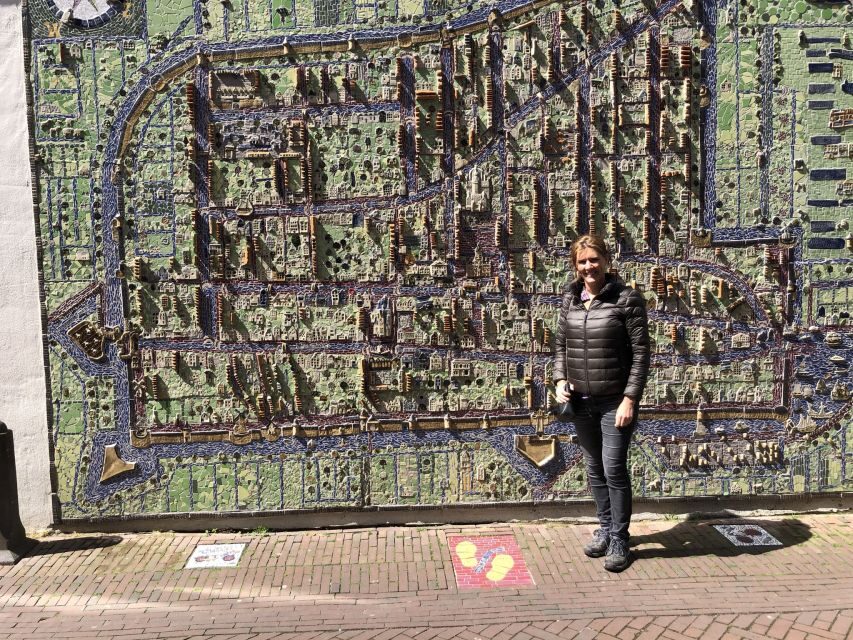
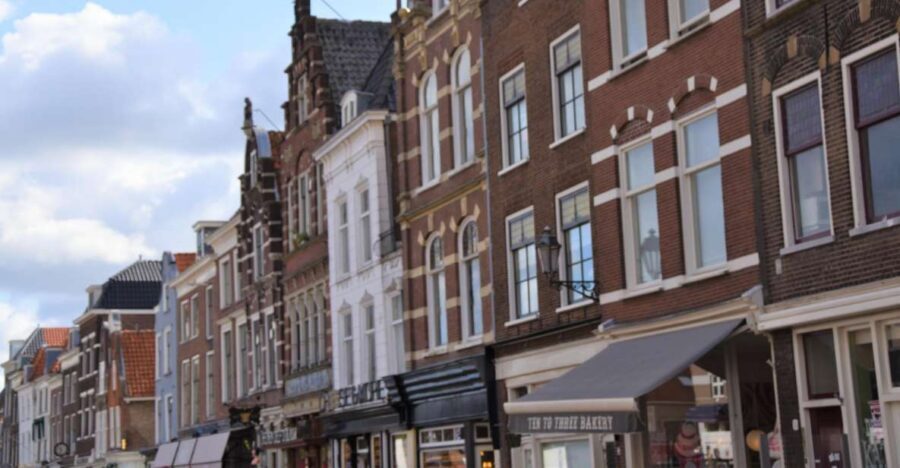
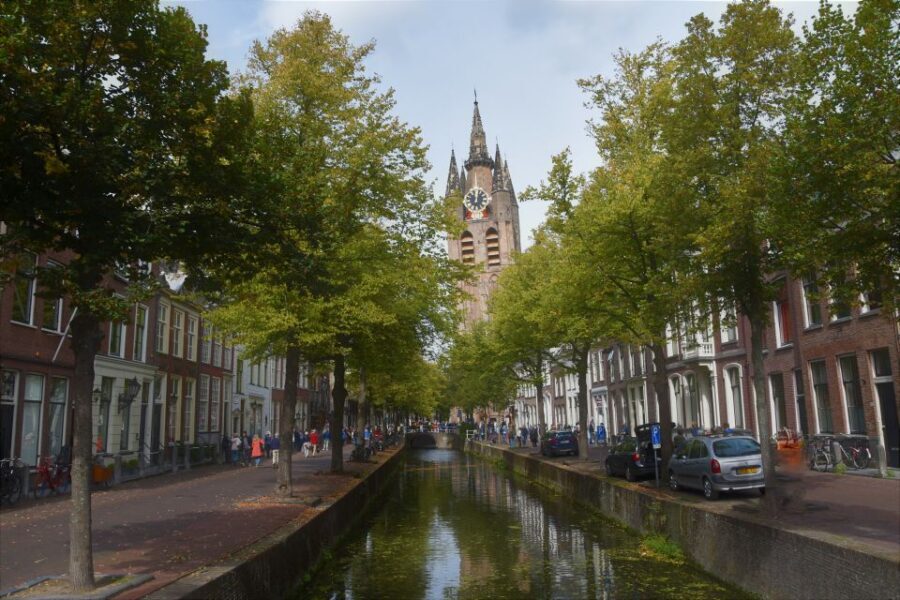
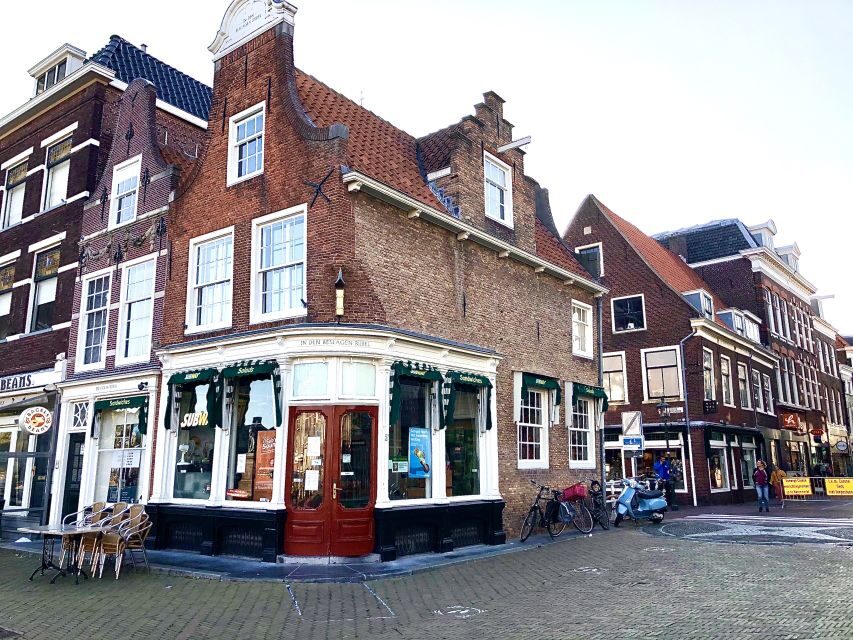
Then the tour turns into what most people came for: the colorful traditional houses, the canals, and the quiet geometry of bridges. Delft’s center is a maze in the best way—small alleys that open into courtyards, canals that seem to appear exactly where you didn’t expect them, and bridge crossings that keep breaking up the walk with a new view.
Your guide will help you “read” what you see:
- How canals shaped movement and trade
- How buildings face water and street at once
- Why certain corners feel sheltered even in a busy city center
You’ll also cross historic bridges over the canals. Again, the value of a guide is not only that you learn, but that you get the rhythm right. Cross now, pause here, look back at the angle of the canal—those are the moments that turn into lasting memories.
This section also includes several highlights along the old streets, such as an ancient church, the Prince´s Court, and the beguinage. The exact order can vary depending on what you choose to prioritize, because the tour is customizable.
The Beguinage, Prince’s Court, and Delft’s Smaller Religious and Civic Places
Delft isn’t only towers and big landmarks. A lot of its personality comes from quieter institutions, and the tour includes a few of them, including the beguinage and the Prince´s Court.
These stops are useful because they broaden what Delft means beyond a single theme. The mausoleum gives you the Dutch founding story. The town hall square gives you civic power and justice. Then places like the beguinage add another layer: how communities supported everyday life.
If you’re traveling with mixed interests, this balance helps. Someone who came for canals still gets canals. Someone who came for art and culture still gets context. And if your group likes to wander, your guide can adjust so you’re not forced into a rigid route.
You can also read our reviews of more guided tours in Delft

The Only Remaining Historical Windmill and the Court of Almonde
Two specific Delft details often get overlooked when people plan on their own: the only remaining historical windmill and the court of Almonde, described as one of the best hidden courts of Delft.
Why does this matter? Because it’s not just trivia—it changes how you understand the city. A remaining windmill shows how older technologies and city logistics once worked. A hidden court shows how Delft’s street life can be interrupted by a calm inner world.
The walk between these kinds of spots is where your guide earns their fee. You’re not just moving from A to B. You’re learning why A exists, how it relates to the next stop, and what to notice as you pass by.
Vermeer’s Delft: Connecting Paintings to Real Places
Now for the art part. The tour takes you through Johannes Vermeer’s hometown, and you walk to places where his masterpieces were set. This is the big reason to choose a guided version instead of doing it alone.
When you’re only reading about Vermeer, it’s easy to imagine the city as a backdrop. With a guide, the streets and buildings become part of the story. You start to see why certain scenes feel the way they do—light direction, street layout, and the rhythm of buildings facing water and street.
You’ll get context for how Delft shaped the artist’s life and work. And you’ll be able to ask questions on the spot, which is especially helpful if you’re not an art expert. Your guide can translate the cultural details into plain language.
If you want an experience that feels more personal than a museum lecture, this section is exactly that.
Delft Blue Pottery: Origins, Then Watching Craft Happen
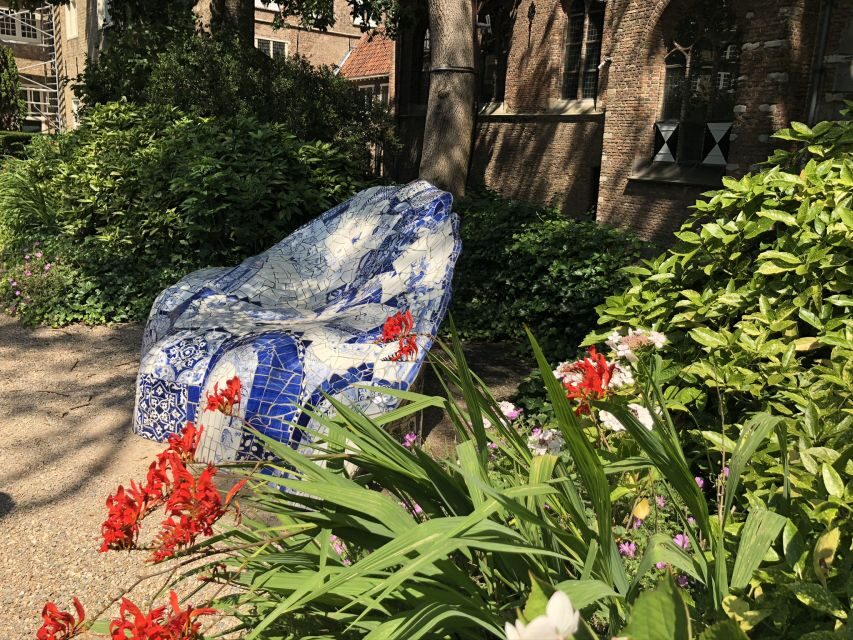
Delft is famous for one more thing besides William of Orange and Vermeer: Delft Blue pottery. The tour includes learning about its origins and visiting a pottery place in town.
The highlight here is simple: you get to see a master painter at work. That means you’re not only hearing the story; you’re watching how the look is made. You’ll also understand why the blue-and-white style spread and became such a signature.
This part is worth it even if you already own Delft Blue souvenirs. Seeing craft on-site makes the patterns feel less like decoration and more like technique.
Practical note: if you’re tempted to buy pottery, go with a plan. Smaller items can be easier to carry, and you’ll want to compare prices if you’re shopping around after the tour.
Private Tour Value: Why $135 Per Person Can Be Worth It
At $135 per person for 2.5 hours, this isn’t the cheapest way to do Delft. So I’d judge it like you should judge any paid tour: does it save time, improve your understanding, or help you do something you couldn’t do on your own?
Here’s what you’re paying for, and why it can make sense:
- A professional local guide who can explain what you’re seeing while you’re seeing it
- A private format, so you can ask questions without competing with a crowd
- Customization, so you spend time on the stops that matter to your group
- Specific Delft anchors: the William of Orange mausoleum, Vermeer-related places, and Delft Blue pottery
If your group includes at least one person who likes history, art, or architecture (not just scenic strolling), the guide usually pays off quickly. And if you’re the type who wants to understand what you’re looking at instead of collecting checkmarks, you’ll feel the value.
Also, the walk is short enough—2.5 hours—that you’re not locked into a full-day commitment if you prefer to keep the rest of your itinerary flexible.
Real-World Guide Styles: Harry, Yvette, Jessica, and What That Means for You
The tour experience is shaped by your guide, and the standout theme from people who’ve done this in different languages is that the guidance stays clear, engaging, and detail-aware.
I’ve seen strong praise for guides such as:
- Harry, noted for historical information and historical architecture
- Yvette, praised for bringing Delft history to life and keeping the experience engaging
- Jessica, recognized for well-documented explanations and a pace that lets you move at your group’s comfort level
One very practical piece that came up with Jessica: she recommended places to eat and to try Delft sweets like pastelillos. That’s the kind of local help that makes a walking tour feel like a real start to your day, not just an educational stop.
So if you book this, don’t be shy about asking. Ask what to do next, ask where to stop for something sweet, and ask which canal-view spots are best at the time of day you’ll be there.
What to Bring, and How to Dress for Rain or Shine
Because the tour runs rain or shine, pack like it’s a walking day, not a casual hangout.
- Comfortable shoes are non-negotiable
- Bring a light rain layer if the forecast looks uncertain
- If you’re bringing a camera, keep it accessible for the canal and bridge crossings
Also, since the tour is customizable, bring a “wish list” mentally. If you care most about Vermeer, say so early. If you care most about Delft Blue pottery, make sure you’re not accidentally rushing through that section.
Who This Tour Suits Best (And Who Might Want Something Else)
This is a strong fit if you:
- Want a focused Delft experience in just 2.5 hours
- Care about William of Orange, Vermeer, and Delft Blue
- Like walking routes where the guide helps you notice details
- Prefer a private setting where you can choose your pace and routes
It may be less ideal if you:
- Only want minimal walking and plan to rely heavily on public transport
- Prefer a completely self-guided approach with no guide input
- Want food included in the ticket price (it isn’t)
Should You Book This Delft Private Historical and Cultural Guided Walking Tour?
If Delft is on your trip list and you want more than photos, I’d book this. The combination of royal memorial, civic architecture and justice setting, Vermeer-related places, and Delft Blue pottery is a smart way to get depth without turning your day into a museum marathon.
The biggest reason to choose it is the guide’s role. You’re not just moving through landmarks—you’re learning how they connect. And because the tour is customizable, you’re more likely to leave feeling that Delft matched your interests, not someone else’s plan.
If your group includes people with different tastes, the private format helps keep everyone satisfied. I’d treat this tour as your foundation day: do it early in your Delft stay, then use what you learn to plan the rest on your own.