REVIEW · DELFT
Delft – Step/scootertour in and around the city
Book on GetYourGuide →Operated by Do DELFT · Bookable on GetYourGuide
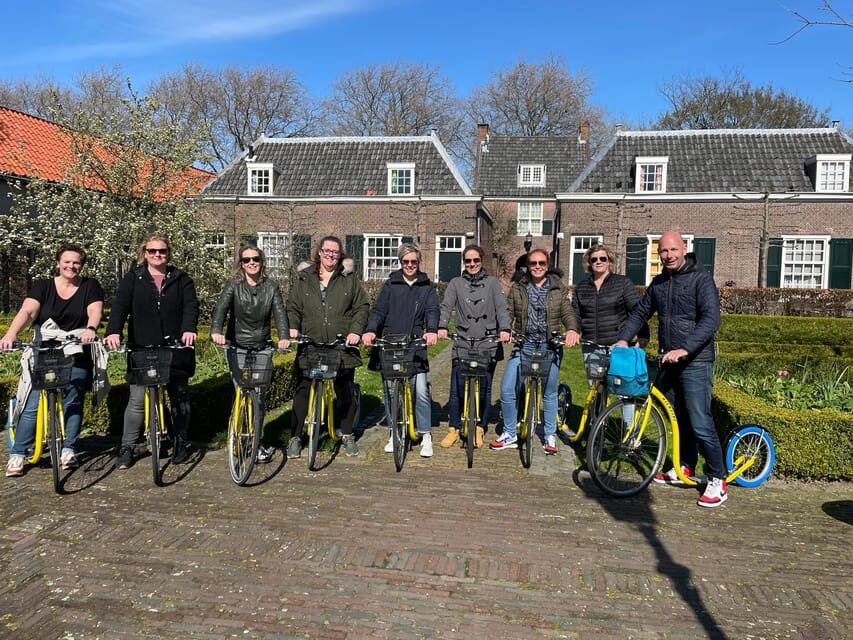
Stepping around Delft beats just walking. This non-electric steptocht is a playful way to see classic sights and quieter neighborhoods, with stories from guides who know the city’s rhythm. What I like most is the mix of stops: you roll past Agnetapark and its historic social-corner vibe, then you end up right where Delft postcard views meet real streets. One thing to consider: you’ll need to feel comfortable riding a bicycle-style scooter step, and the pace still depends on your comfort level.
You get a small group (max 10), so the guide can actually adjust. That’s a big deal on a route that includes modern edges of town, a working windmill area, and those old courtyard stops where it’s better to hear the backstory than just snap photos.
In This Review
- Key things that make this Delft steptocht worth it
- From Oude Delft to modern Delft by step scooter
- Mill de Roos: seeing a working windmill up close
- Agnetapark: calm streets and the Marken story
- Hofje van Pauw: courtyard life from 1707
- Eastern Gate and old street texture outside the main core
- Markt to New Church to town hall: the Delft core, done right
- Old Church and its leaning tower moment
- The ride back: neighborhoods, not just a repeat route
- Price and what $32 actually buys you
- Who should book this Delft step scooter tour?
- What to do before you go so the tour feels effortless
- Should you book this Delft steptocht?
- FAQ
- How long is the Delft step/scootertour?
- What does the tour cost?
- Where do you meet for the tour?
- Is the step scooter electric?
- How big is the group?
- What languages are the tours offered in?
- What is the cancellation policy?
- Who is this tour not suitable for?
Key things that make this Delft steptocht worth it
- You cover more ground fast without feeling like a bus tour
- Agnetapark gives you a calmer side of Delft beyond the main center
- Hofje van Pauw (from 1707) is quieter, courtyard-style history in plain sight
- Markt + New Church + town hall are the Delft center hits, not side quests
- Old Church’s leaning tower is right there when you want that wow moment
From Oude Delft to modern Delft by step scooter
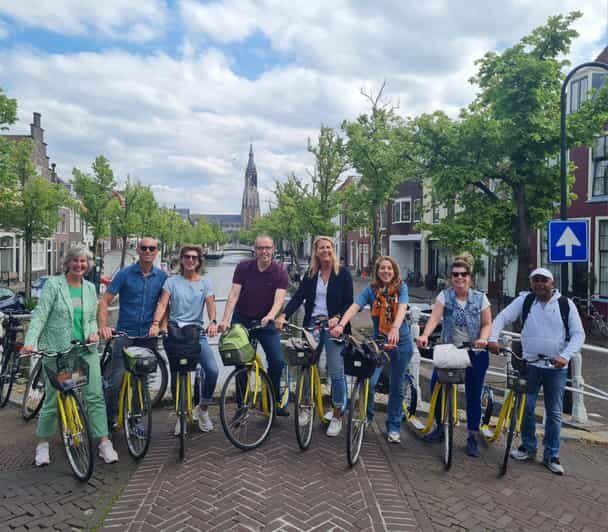
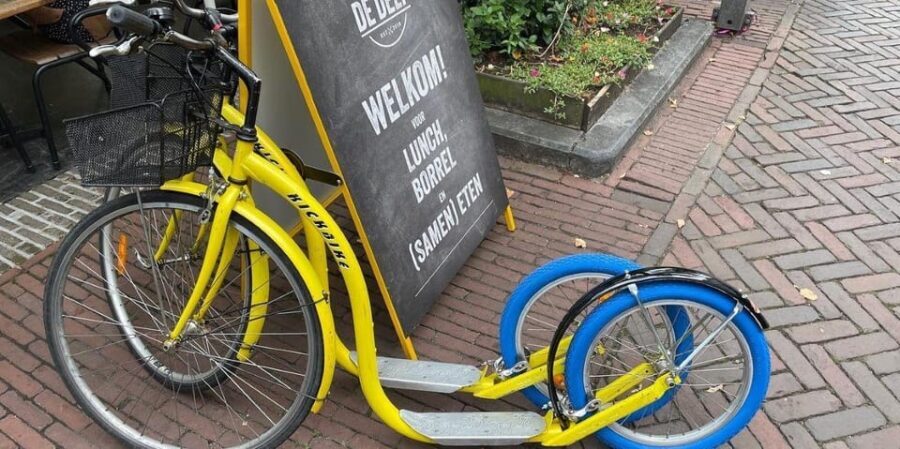
The tour starts in the Delft center area at Oude Delft 113, at the meeting spot by restaurant De Delf. After a quick setup, you roll out on non-electric steps (the Dutch word is step, not scooter). If you’ve only used a typical rental bike, plan for a short adjustment period. It’s not hard, but it’s different enough that you’ll want your balance to feel relaxed before you start taking your best photos.
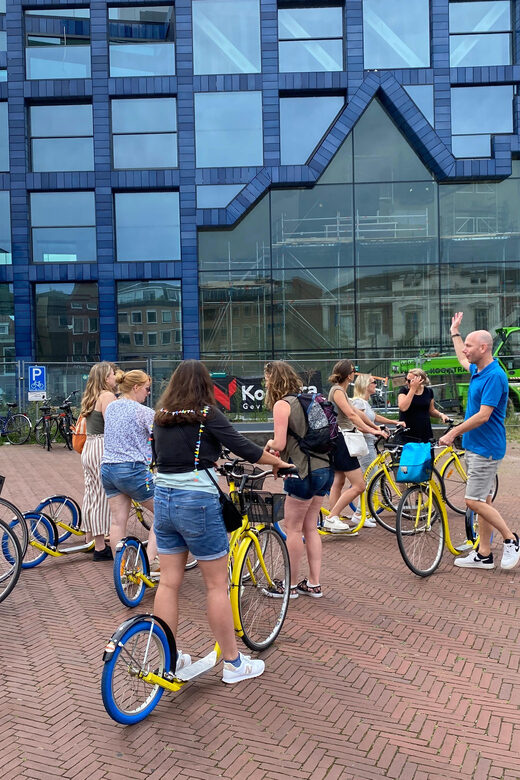
The first stretch moves you from the oldest part of town toward the modern side of Delft. Here, you get to see how city planning has changed the landscape: the train now runs under the city, and that means construction has made room for new architecture. Even if you’re not a “modern architecture” person, it helps to understand Delft as a living place, not just a museum of canals and churches. It also gives your legs a chance to settle into the riding rhythm before the tour slows down for the historic stops.
This opening leg is more than transit. It sets your expectations: you’re not just collecting landmarks. You’re learning how Delft fits together—old streets, working city infrastructure, and neighborhoods people actually live in.
You can also read our reviews of more city tours in Delft
Mill de Roos: seeing a working windmill up close
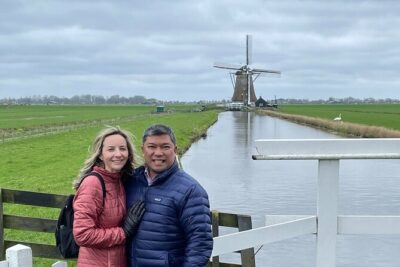
Not long after the modern segment, you head toward Mill de Roos. The key detail is that it’s still in use. That matters because a functioning windmill hits differently than a windmill that’s purely decorative.
On a walking tour, mills often blur into background scenery. On these steps, you get the chance to line up better photos and actually pause where the view works. You’re close enough to notice the sense of purpose in the place—this isn’t only about Delft’s image, it’s about Delft’s working past.
Practical tip: bring your phone camera settings you like and don’t rush. Windmill areas reward a slow look because the angle changes as you move.
Agnetapark: calm streets and the Marken story
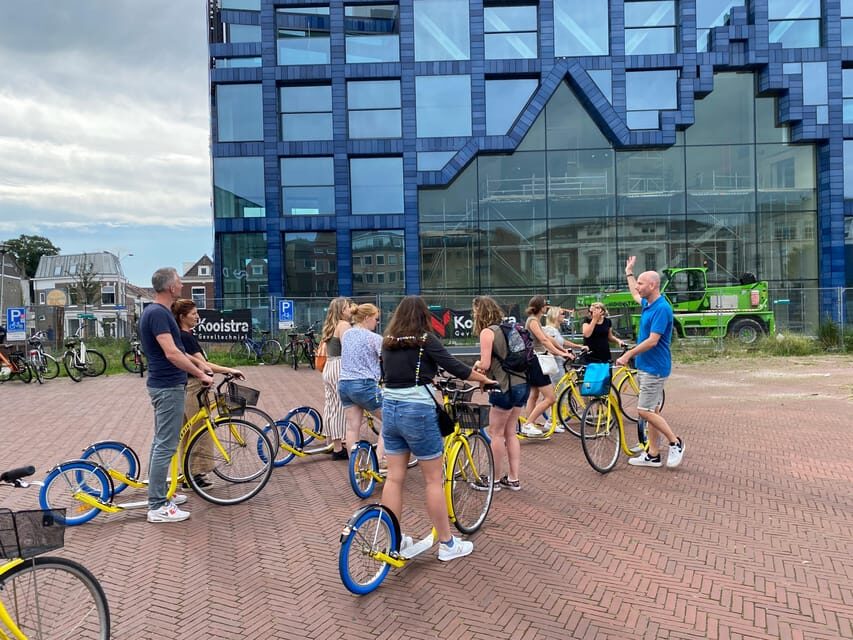
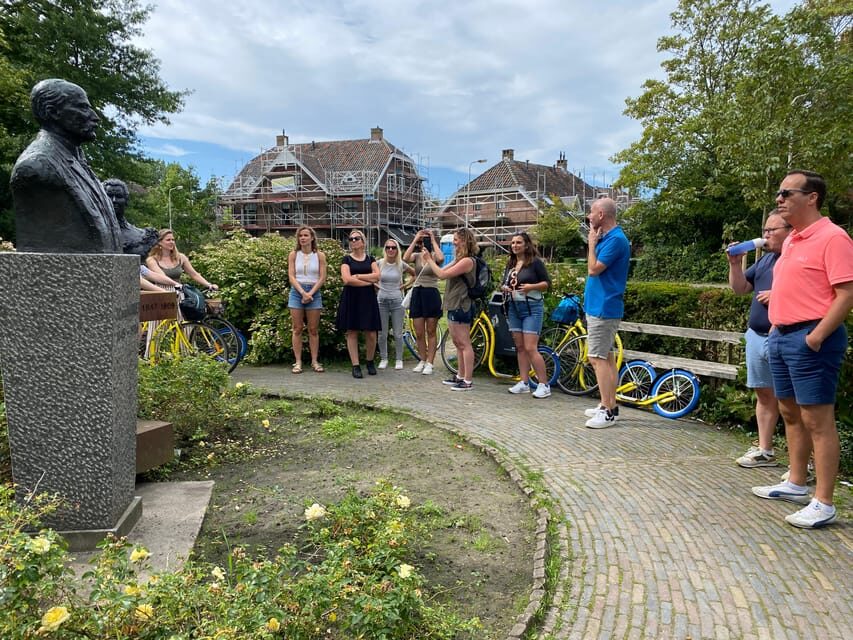
Next comes Agnetapark, one of those stops that changes the temperature of the tour. This part is quieter, more residential, with a garden-village feel. If you usually stick to the main tourist core, you’ll feel the difference immediately.
This is also where the tour leans into storytelling. You’ll hear about the Marken couple, described as way ahead of their time. I like this kind of stop because it turns an area into a character. Instead of just saying what you’re looking at, the guide gives you a reason to remember it.
What you gain here is contrast. Delft isn’t only the Markt and churches. It has social spaces, courtyards, and planning decisions that shaped daily life. Agnetapark helps you understand how ideas about care, community, and architecture played out at street level—without getting stuck in heavy lectures.
Hofje van Pauw: courtyard life from 1707
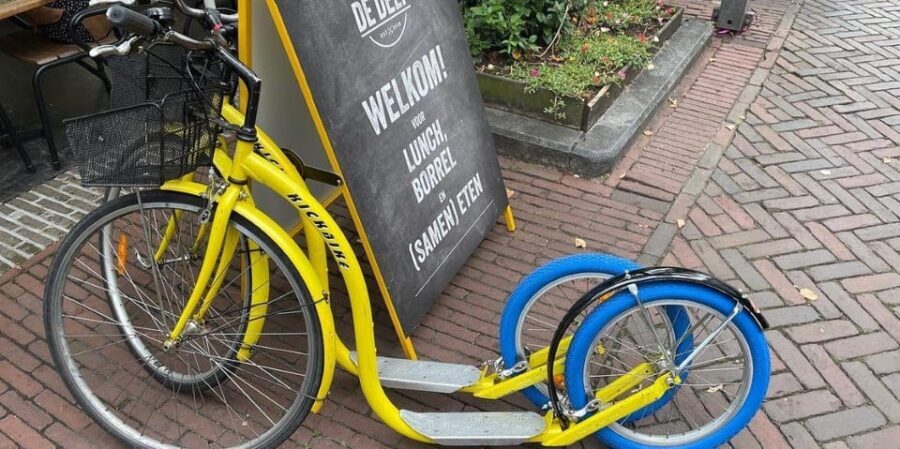
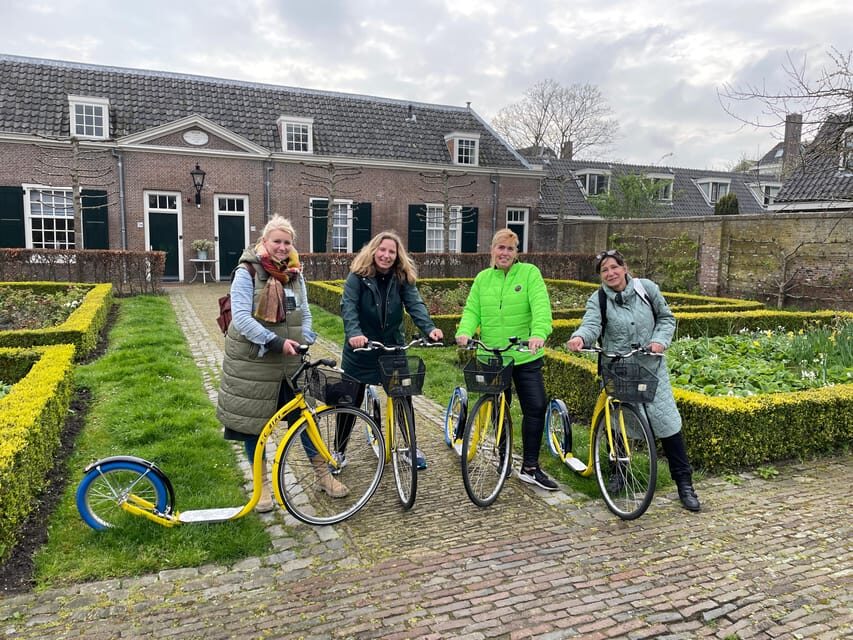
After you’ve had a few minutes to get used to riding, you reach Hofje van Pauw. This is a courtyard stop, and it’s the kind of place where you should slow down mentally. Courtyards are designed for stillness and belonging. When you hear about its founder—and that the courtyard dates to 1707—the space starts making sense fast.
The standout thing here is how personal the story becomes. A hofje is not a monument you look at from a distance. It’s a lived-in pattern of architecture: inward-facing, quiet, and meant to shelter people. Even if you don’t know Delft terms, you’ll understand it by being there.
A possible drawback: because you’re in a small group and this is a photo-stop format, you might not get long inside every angle you want. That’s the tradeoff of a 1.5-hour loop. Still, the time you do spend is more meaningful than a rushed “here it is” moment.
Eastern Gate and old street texture outside the main core
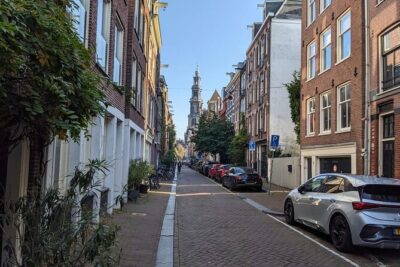
Your route then swings past the Eastern Gate area and continues through older streets on the way back. This is one of the parts I think is most valuable for you if you like cities with layers.
Why? Because you start to notice the texture of neighborhoods outside the usual visitor loop. Instead of only seeing Delft’s most central face, you catch side streets and edges where the city looks more everyday. That’s where Delft feels real: bicycles, doorways, small turns, and the subtle differences in building scale and street width.
And since you’re on step scooters, you can keep moving without losing the ability to pause and look. You get the best of walking—being close to details—with a little more range.



Markt to New Church to town hall: the Delft core, done right
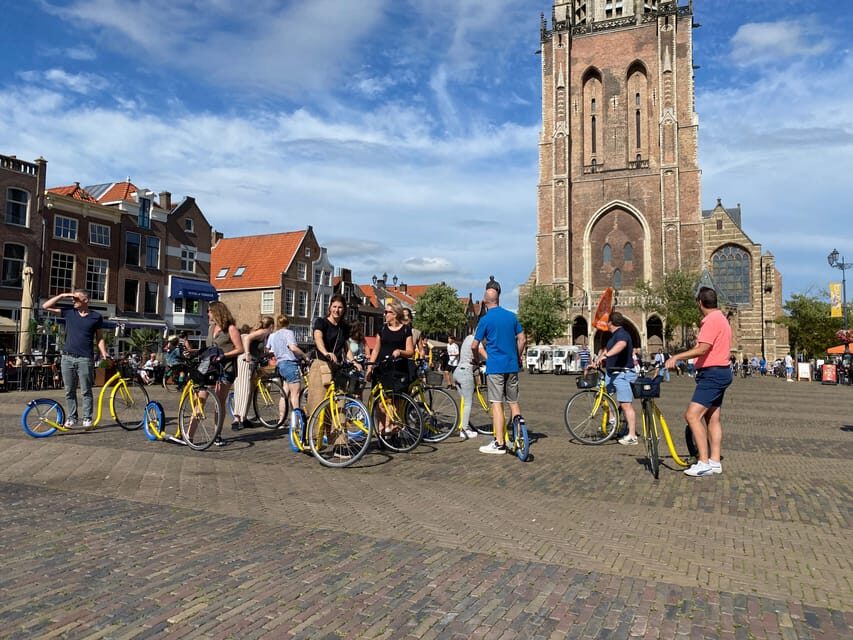
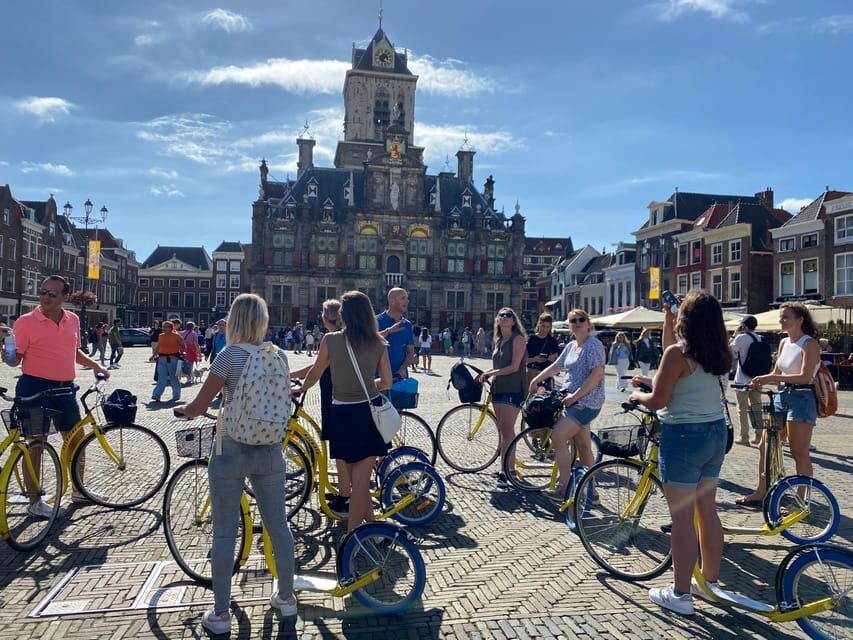
Eventually, you roll into the big spotlight area: the Markt. This is Delft’s main square energy, with the New Church and the town hall making the frame. If you’re imagining classic Dutch town-center views, this is where you get them.
What makes this stop work on this tour is timing and pacing. You aren’t just arriving at the square at the start of your trip, when you’re still learning where things are. You’ve already covered other sides of the city, so you’ll recognize this as the “center of gravity” in Delft’s layout.
Also, photo stops here aren’t empty. You have a chance to point your camera at the building groupings and then have context from the guide about what you’re looking at. It’s the difference between a souvenir photo and a memory with details attached.
If you care about architecture and civic life, the town hall area is a good place to stand and take two minutes longer. Delft’s town square is designed for people to gather and look outward. Do the same.
Old Church and its leaning tower moment
No Delft route feels complete without the Old Church. This tour gives you the famous view of the leaning tower—right in your line of travel. Even if you’ve seen images, being close changes how you perceive it. The tilt looks more dramatic when you’re on the ground and not staring at a postcard.
This stop is also good for stretching your legs a bit—still on a tight schedule, but enough to step off, get your angle, and soak in how the church sits among the surrounding streets. Old Church isn’t only about one visual trick. It helps you understand how Delft’s heritage anchors the city plan, so later you’ll recognize it again when you walk on your own.
The ride back: neighborhoods, not just a repeat route
On the way back to the meeting point, you don’t just retrace the route like a loop on rails. You ride via the Markt and then onto old streets, creating a second chance to see how the city looks from a slightly different direction.
This is the moment where a good guide shines. In real life, you’ll likely have time to ask questions, and the guide may adjust the focus to match what your group cares about—especially food ideas. One guide named Kevin stood out in past tours for handling stories with energy and even adding a surprise at the end, including a drink afterward. Another guide named Frans impressed with fun storytelling and lots of Delft knowledge.
That flexibility is part of the value. If you want a tour that feels like it has a pulse, not just a script, this format is built for that.
Price and what $32 actually buys you
At $32 per person for 1.5 hours, this isn’t trying to compete with a cheap walking tour. It’s paying for three things you’re really buying:
First, you’re paying for the rental of the non-electric step. Second, you’re paying for live guiding in English or Dutch (your choice by guide availability). Third, you’re paying for the small group size, so you’re less likely to feel like you’re just part of a fast-moving crowd.
For me, the math works if you want both sights and context, and you’d rather spend time learning than zigzagging alone. If you already know Delft well and just want iconic views, you could do it cheaper by yourself. But if Delft is new to you, this route is a strong way to get orientation while still visiting memorable courtyard and mill stops.
Who should book this Delft step scooter tour?
This is a great fit if you:
- want a fun, easy-active way to see more than just the main sights
- like guided stories tied to places, not generic history
- can handle a non-electric step and keep balance comfortably
- enjoy small-group pacing and the chance to ask questions
It’s probably not the best choice if you:
- can’t ride a bike
- need wheelchair access or any accommodation beyond what the tour data supports
- have visual impairments (the tour isn’t suitable for visually impaired guests)
- are traveling with kids under 16 (the tour isn’t for children under 16)
Also, plan for weather. One review mentioned it was warm. Delft can get hot in summer, and you’ll feel that more when you’re active. Bring water and keep sun protection handy.
What to do before you go so the tour feels effortless
You’ll enjoy this more if you show up ready to move. Here’s what helps:
- Wear shoes with grip for cobblestones and turns
- Do a quick mental check that you’re comfortable with balance on two-wheeled step gear
- Have your camera ready, but don’t rush every photo stop
- Bring a light layer for morning or evening, since Delft weather can shift
The tour is short, so your energy matters. If you come in fresh, you’ll spend the ride actually noticing the city instead of thinking about your gear.
Should you book this Delft steptocht?
If you’re visiting Delft for the first time, I’d book it. The route hits the big names like Markt, New Church, town hall, and Old Church’s leaning tower, but it also gives you the parts that usually get skipped: Agnetapark and Hofje van Pauw with its courtyard story from 1707, plus Mill de Roos.
If your idea of travel is purely efficient and you dislike anything active, a walking tour might suit you better. But if you want something that feels like exploring with a local who actually points out what matters, this non-electric step scooter format delivers real value.
FAQ
How long is the Delft step/scootertour?
The tour lasts about 1.5 hours.
What does the tour cost?
It’s $32 per person.
Where do you meet for the tour?
The meeting point is at restaurant De Delf, at Oude Delft 113.
Is the step scooter electric?
No. The steps are non-electric.
How big is the group?
The group is small, limited to 10 participants.
What languages are the tours offered in?
Guides offer the tour in English and Dutch.
What is the cancellation policy?
Free cancellation is available up to 24 hours in advance for a full refund.
Who is this tour not suitable for?
It’s not suitable for children under 16, people who can’t ride a bike, wheelchair users, and visually impaired people.