REVIEW · MAASTRICHT
Discover Maastricht with a Smile! Culture, History and People
Book on Viator →Bookable on Viator
Maastricht reads like a storybook. In two hours, you get a walking tour paced around the city’s landmarks and people, with a guide like Peter Corsius using humor and local detail to make places click fast. I especially like the stop-and-explain rhythm that keeps you moving, and how the tour ties history to modern Maastricht spirit at De Mestreechter Geis. One drawback: it’s mostly walking, and you’ll want a moderate fitness level and comfy shoes.
This is a private tour for your group only (up to 15), and you can steer the themes toward what you care about, from Roman influence to border-town stories and even industrial heritage. Pickup is offered, and you’ll meet at Stokstraat; the guide figures out the exact pickup spot with you and calls about 10 minutes before.
Most stops are quick, and many places are free to view, but Saint-Servaas basiliek needs its own admission ticket (not included). If you dislike anything church-related, you may want to plan your time so you don’t feel rushed at the main religious stops.
In This Review
- Key highlights worth your attention
- A 2-hour walk that feels custom, not canned
- Pickup, mobile tickets, and finding your guide at Stokstraat
- Saint-Servaas basiliek, Sint Servaasbrug, and Market Square
- Helpoort and Father Vinck Tower: medieval city walls with gossip energy
- Jekerkwartier to Stokstraatkwartier: Roman layers you can connect
- De Mestreechter Geis and Vrijthof: the city’s identity in public space
- Onze Lieve Vrouw Sterre der Zee: a strong finish at one of the city’s most popular churches
- Language, guide style, and why it matters more than the itinerary
- Price and value: $210.27 per group up to 15 people
- Who this Maastricht with a Smile tour suits best
- Should you book this one?
- FAQ
- How long is the Maastricht tour?
- Is this a private tour?
- What’s the group size limit and price?
- Is pickup available?
- Where is the meeting point?
- What language is the tour offered in?
- Are admission tickets included?
- Are coffee or drinks included?
- What physical fitness level is needed?
- Can I cancel for a full refund?
Key highlights worth your attention
- A guide who mixes facts with small stories so the city feels lived-in
- Roman-to-modern threads you can actually see while you walk
- Oldest bridge and gate moments that give Maastricht its street-level credibility
- Maastricht’s spirit symbol at De Mestreechter Geis, not just another photo stop
- A flexible route you can shape within the tour’s time window
A 2-hour walk that feels custom, not canned
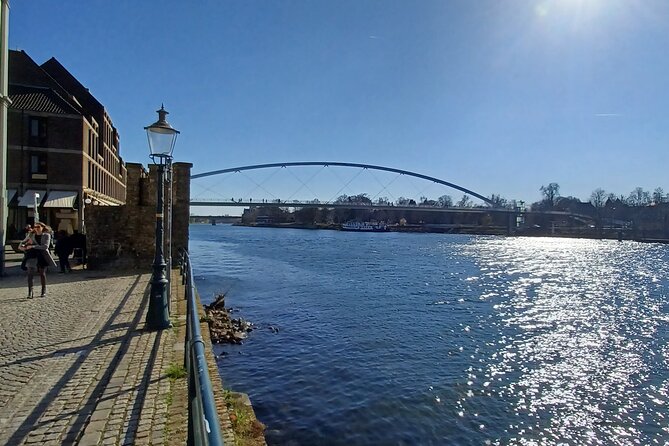
This tour is designed to fit your time and interests. The walk is about 2 hours (often around 1.5 hours depending on what you pick), and it’s made to measure based on client demand. That matters in Maastricht because the city has layers: Roman traces, medieval defenses, church power, border politics, and later industry and everyday life. A fixed checklist can’t cover all that in a satisfying way, but a guide who tailors the route can.
You’ll also benefit from the pace. The stops are typically short—often around 5 to 20 minutes—so you’re not stuck waiting for one long segment. It’s ideal for getting your bearings quickly and learning how the city “connects,” even if you only have a half-day.
If you’re the type who wants history in plain language (and not lecture mode), you’ll likely enjoy it. Several guide-style details stand out: Peter’s approach is smart but not stuffy, and he uses humor to keep things moving.
The biggest practical point: because the stop durations are short, you should ask questions early. If you wait until the end, you’ll miss chances to steer the story toward what you care about.
You can also read our reviews of more tours and experiences in Maastricht.



Pickup, mobile tickets, and finding your guide at Stokstraat
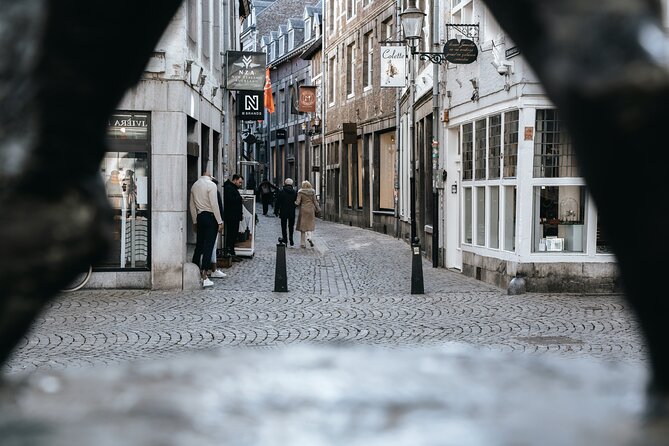
The tour starts and ends at Stokstraat, 6211 Maastricht. That’s convenient because it puts you in the city core where most walkers want to be anyway. If you’re being picked up, you won’t get a random meeting point. The guide determines the pickup location together with you and calls about 10 minutes before.
You’ll also get a mobile ticket, which keeps things simple. No printed voucher needed. And because it’s a private activity, you won’t be squeezed into someone else’s schedule.
One more logistics note: the tour is offered in English, so you’ll be able to follow along without translation hurdles. Near public transportation is listed as well, which is helpful if you decide to arrive on your own and then meet the group.
Plan for walking between stops. The guide can adjust some pace, but the overall feel is still a city walk. If you’re coordinating with older family members, tell the guide what pace works before you start.
Saint-Servaas basiliek, Sint Servaasbrug, and Market Square
Your first major anchor is Sint Servaas basiliek Maastricht. This is where you get the story of the city’s patron saint and how he’s tied to Maastricht. It’s not just about architecture; it’s about why the church matters to the city identity. Admission for this church is not included, so if you want to go inside, budget time and tickets.
Then you move to Sint Servaasbrug, often described as the oldest bridge in the Netherlands, with a story that stretches from Roman-era roots to modern days. This is a perfect stop for “walk and learn” because you’re not only hearing about history—you’re seeing how Maastricht’s older geography shapes the present.
From there, you arrive at Market Square, with the old city hall and the statue of JP Minckelers nearby. Market Square is a strong place to understand how towns like Maastricht ran on civic life: trade, administration, and public gathering. The nearby reference to the old Sphinx factory hints at the industrial pulse that later joined the religious and political layers of town.
Practical note: Market Square and the bridge-area stops are mostly about orientation and viewpoint learning, not museum time. So you’ll get value even if you’re not a big “go inside” person.
Helpoort and Father Vinck Tower: medieval city walls with gossip energy
When you hit Helpoort, you’re stepping into the story of the oldest still existing town gate in the Netherlands. Town gates sound boring on paper until you stand where they once controlled movement. You get the history of the gate and also the social angle—small bits of gossip style storytelling—so it feels like the city has a pulse, not just stone.
This is also the kind of stop where a good guide can explain how defenses shaped everyday life. Even if you’re not a military-history person, you’ll understand the point quickly: gates meant boundaries, and boundaries meant power.
Next is Father Vinck Tower, where the focus is on medieval history and on who friar Vinck was. Towers often get treated like generic skyline pieces, but here the story gives the name meaning. You leave with a clear reason why this tower exists in the city memory, not just because it’s tall.
Time at each stop is brief, and that’s intentional. You’ll notice more because you’re moving, not because you’re stuck staring at one plaque for 30 minutes.
If you want the extra credit version of this segment, ask the guide to connect the gate and tower stories to what you’ve already seen elsewhere in town. The best tours make you feel like you’re building a mental map in real time.
Jekerkwartier to Stokstraatkwartier: Roman layers you can connect
One of my favorite parts of a city like Maastricht is when the tour helps you spot connections across time. In the Jekerkwartier, you meet Monument Fons Olterdissen, a quiet stop that anchors a kind of local legend—Maastricht’s version of Roger and Heart—plus his legacy to the city. This kind of memorial matters because it shows what a place chooses to remember.
Then you move into Stokstraatkwartier, a beautifully restored area that’s tied to the city’s oldest Roman settlement. Even if you don’t suddenly identify Roman stones under your feet, you’ll understand the logic: Maastricht wasn’t placed here by accident. It sits where older roads and older rivers made sense, and those reasons keep echoing.
This stop helps you understand why Maastricht can feel both old and normal at the same time. The Roman story isn’t trapped in a distant textbook. It’s part of how the neighborhood got its structure.
A quick heads-up: this section involves walking through streets and viewpoints, so if you’re sensitive to uneven surfaces, slow down and pace yourself. The tour notes a moderate physical fitness level, so it’s not an all-stairs or all-sprint situation, but you should still plan for a walking day.






De Mestreechter Geis and Vrijthof: the city’s identity in public space
De Mestreechter Geis is the symbol of the Maastricht spirit, and you’ll feel why as soon as you’re standing there. This isn’t just a statue for a quick photo; it’s part of the city’s shared language. The guide’s interpretation helps you read it as a marker of local identity—what Maastricht thinks of itself.
After that, you reach Vrijthof, Maastricht’s main square. Vrijthof can feel like the heart of the city for a reason: it’s a hub for civic life, celebrations, and major views. Since the guide adapts to what you want to focus on, this stop can land differently depending on your interests—architecture, public life, or stories of people and power.
The tour’s style here is helpful. Instead of giving you a dry list of sights, it frames what you’re looking at: why this square matters, how the city’s history shows up in the surrounding details, and what to notice on your own afterward.
If you’re short on time in Maastricht, Vrijthof is a place you can return to without guilt. Even after the tour ends, you’ll know where you are and why it matters, so you spend less time “figuring out” and more time enjoying.
Onze Lieve Vrouw Sterre der Zee: a strong finish at one of the city’s most popular churches
You close at Onze Lieve Vrouw Sterre der Zee Basiliek, often referred to as the city’s most popular church. The tour calls the nickname Slevrouw, and it sits on Onze Lieve Vrouweplein—one of the city’s key squares.
This is a big stop because it lets you wrap your walking story with the kind of symbol that shaped Maastricht for centuries: a Marian devotion expressed in a prominent building. The tour keeps it practical and understandable, so even if you’re not into religious architecture, you’ll still get the city meaning.
An admission ticket is listed as free for this stop, so you can focus on whether you want to spend a few extra minutes inside without worrying about extra costs mid-walk.
This also tends to be a good moment to ask your last questions. In two hours, you learn the map of the city; at the final stop, you can ask for suggestions on what to do next—especially if you want to turn your walk into a fuller day.
If you’re hoping to cover more than the two-hour version, it’s worth knowing the tour can run longer. Within the same guiding style, you can choose additional themes like D’Artagnan and Louis XIV, Roman influences, the bishop’s mill, industrial heritage, and social history.
Language, guide style, and why it matters more than the itinerary
This experience stands or falls on the guide. The reviews linked to this tour point clearly to one theme: humor plus expert local detail. Peter is singled out as intelligent, funny, and able to explain history with insight stories rather than dry facts. That makes a real difference in a place like Maastricht, where the city can look small but carries a lot of meaning.
Another helpful detail: the tour works for different language needs based on how the guide delivers the content. One review highlights it being great even in German, which tells you the guiding style can flex.
If you’re traveling with mixed-interest people, the made-to-measure concept helps. You can ask for more Roman angle, more border-town angle, more defensive works, or more industrial-social history. The walk remains manageable because the stops are short, but the story can be tailored.
I also like that the tour doesn’t force a museum mindset. You’re outside. You’re seeing street-level reminders. And you’re learning why those reminders exist.
If you prefer a quiet, minimal-walking tour, this might feel a bit talk-heavy. If you want to walk and learn, it’s a strong fit.
Price and value: $210.27 per group up to 15 people
The price is $210.27 per group with a group size up to 15. Since it’s per group, the value improves when you travel as a small crowd or family group that fills out more of the capacity. If you reach the full 15-person limit, that’s roughly $14 per person. If your group is only 2 or 4 people, the per-person cost rises fast.
So here’s the practical way to think about it: pay for a guide’s time and local storytelling, not for “admissions.” Most stops don’t require paid entry, and the tour focuses on interpretation. The one church with admission not included (Saint-Servaas basiliek) is the main additional likely cost.
At 2 hours, you also have a time-efficiency advantage. You’re not spending half a day commuting or hunting for sights. You’re getting a city map plus context you can use immediately.
If you want more than the walk—like a whole-day version—this setup can become even better value because you can keep the same guiding style while covering more themes.
Who this Maastricht with a Smile tour suits best
This tour fits you if you:
- want an easy start to Maastricht with a clear sense of place
- like history told through real locations, not just museum panels
- travel as a small group and want a private guide
You might choose something else if you:
- dislike walking between multiple short stops
- only want deep museum time, since this is a street-and-stops experience
- need a long sit-down format, since the tour is mostly viewings and movement
The tour works well for moderate-fit walkers, including families who can handle short segments. It also lists service animals allowed, and it’s near public transportation if you’re meeting without pickup.
Should you book this one?
If your goal is to get your bearings fast and learn Maastricht’s key threads—Roman roots, medieval defenses, church power, and the local identity vibe—this is a solid choice. The guide style is the star: intelligent, funny, and built around stories you can remember later.
I’d book it if you value a private group walk and you’re okay with short stop times and some outdoor walking. I’d think twice only if you want purely self-guided pacing or you’re not interested in religious and civic landmarks.
FAQ
How long is the Maastricht tour?
It lasts about 2 hours. The route can also be made to measure for 1.5 hours up to a whole day depending on what you want.
Is this a private tour?
Yes. It’s a private tour/activity, and only your group participates.
What’s the group size limit and price?
It’s $210.27 per group for groups of up to 15 people.
Is pickup available?
Pickup is offered. The guide determines the pickup point together with you and calls about 10 minutes before meeting up.
Where is the meeting point?
The start and end point is Stokstraat, 6211 Maastricht, Netherlands.
What language is the tour offered in?
The tour is offered in English.
Are admission tickets included?
Not all of them. Saint-Servaas basiliek Maastricht has a note that the admission ticket is not included, while several other listed stops are free.
Are coffee or drinks included?
No. Coffee and/or tea and other beverages or food are not included unless otherwise stated.
What physical fitness level is needed?
You should have a moderate physical fitness level since it involves walking between stops.
Can I cancel for a full refund?
Yes. You can cancel for free up to 24 hours in advance for a full refund. If you cancel less than 24 hours before, you don’t get a refund.