REVIEW · MAASTRICHT
Maastricht: North Caves Guided Tour
Book on GetYourGuide →Operated by Explore Maastricht · Bookable on GetYourGuide
Step under Maastricht and time starts misbehaving. This guided trip through the North Caves is part history lesson, part underground scavenger hunt, and part quiet science experiment. It’s dark, damp, and oddly unforgettable.
I love how the tour turns the walls into evidence. You’ll see centuries-old inscriptions and dramatic charcoal drawings, plus marks left by the marl workers who carved the passages by hand. The guide also connects it all to real local events, including the French siege and a failed plot to destroy Fort Sint Pieter.
One thing to consider: it’s not a chill stroll for everyone. You’ll walk through a cave system with no natural light, and it’s not suitable if you have mobility issues or claustrophobia.
Key points to know before you go
- Hand-carved corridors: what’s left from a labyrinth once over 20,000 passages
- Wall details you can spot: old inscriptions and charcoal drawings, plus marl-worker traces
- War-time refuge stories: shelters used by Maastricht families and even livestock owners
- A working-style cave relic: an ancient bread oven tied to three farming families
- Fort Sint Pieter connection: the French siege thread and the failed attempt to blow it up
- Practical cave realities: roughly 12°C and zero phone signal underground
In This Review
- Finding Grotten Noord: Maastricht’s Underground Meeting Point
- The Iron Gate Moment: What It Feels Like When Light Disappears
- Following the Guide Through 70 Kilometers of Block-Breaker Work
- Spotting Wall Evidence: Inscriptions and Charcoal Drawings
- Wartime Shelters: When Families Hid Underground With Livestock
- The Ancient Bread Oven Stop: A Refuge That Could Feed People
- The French Siege Thread and Fort Sint Pieter’s Twist
- How the 70 Minutes Actually Feel (and How to Enjoy Them)
- Price and Value: Why $12 Works Here
- Guide Quality and the Tone You’ll Want to Bring
- Who This Tour Suits Best (and Who Might Skip)
- Should You Book the Maastricht North Caves Tour?
- FAQ
- Where is the meeting point for the North Caves tour?
- How long is the guided tour?
- What languages are the live guides available in?
- What should I bring?
- Is there phone signal inside the caves?
- How deep do you go during the tour?
- Is the tour suitable for people with mobility impairments or claustrophobia?
- Can I cancel and get a refund?
Finding Grotten Noord: Maastricht’s Underground Meeting Point
Your tour starts at Grotten Noord Maastricht Underground, right by Fort Sint Pieter (Luikerweg 80). Plan to arrive at least 10 minutes early because tours start exactly on time, and they won’t wait for late arrivals. Bring your e-tickets with the QR code ready so you can scan and move on fast.
This kind of punctual start actually makes sense down there. Once you’re inside, the schedule is your friend. The guide keeps the group flowing through narrow corridors and darker chambers without wasting time.
Tip: wear your “cave walk” layer, not your “museum stroll” layer. You’ll feel why as soon as the gate shuts.
The Iron Gate Moment: What It Feels Like When Light Disappears
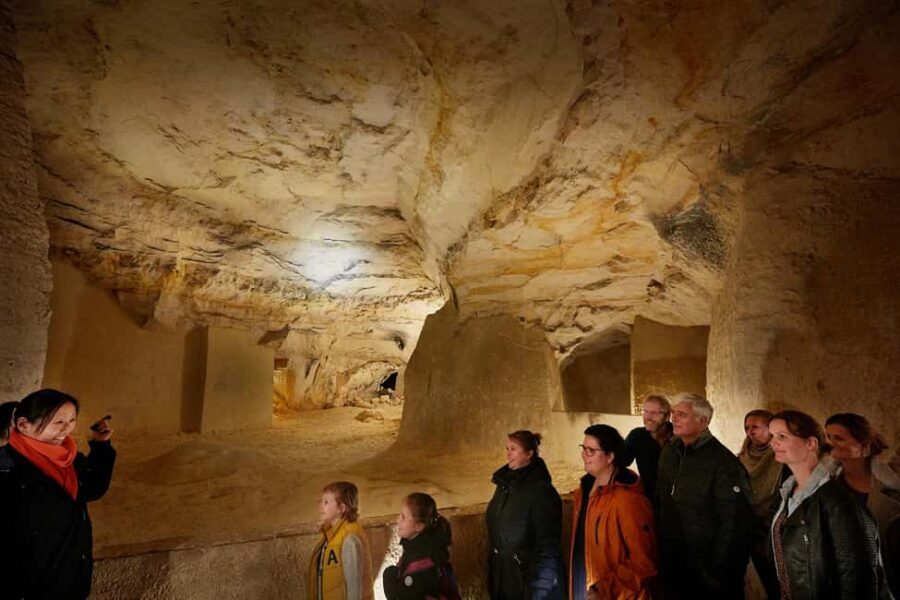
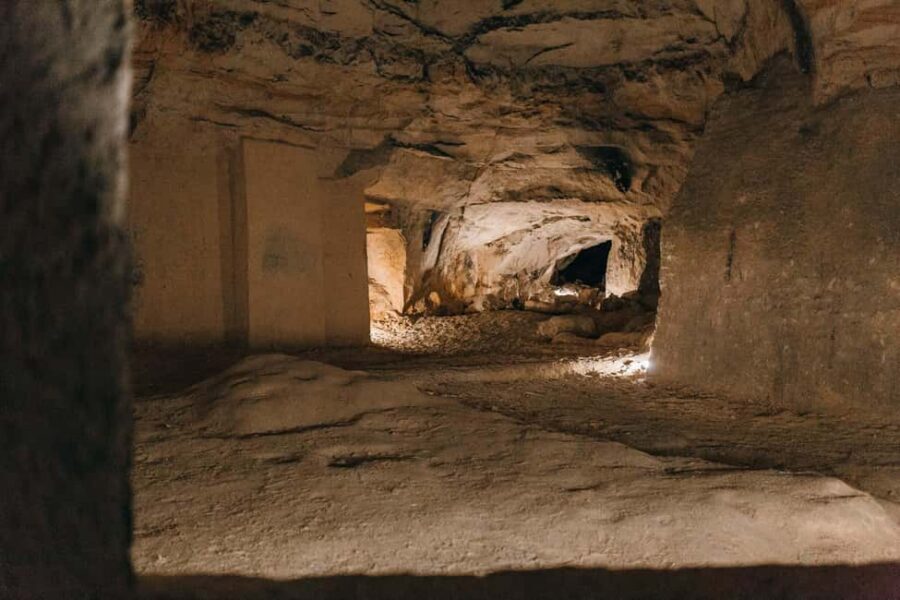
The best part of this tour starts immediately. You leave daylight behind and step into a cave system where no light, no sound, no smell, no radiation, and no phone signal reach you. That description sounds almost sci-fi, but in practice it means you’ll lose your normal sense of direction fast.
Then the heavy iron gate slams shut. Humidity rises in the air, and the temperature drops to cave conditions around 12°C. Your phone becomes a useless brick, so don’t plan to use it for photos or navigation—just accept it and follow your guide’s pace.
This is one of those experiences where the setting does half the storytelling. The cave doesn’t just host the history; it changes how you perceive it.
You can also read our reviews of more guided tours in Maastricht

Following the Guide Through 70 Kilometers of Block-Breaker Work
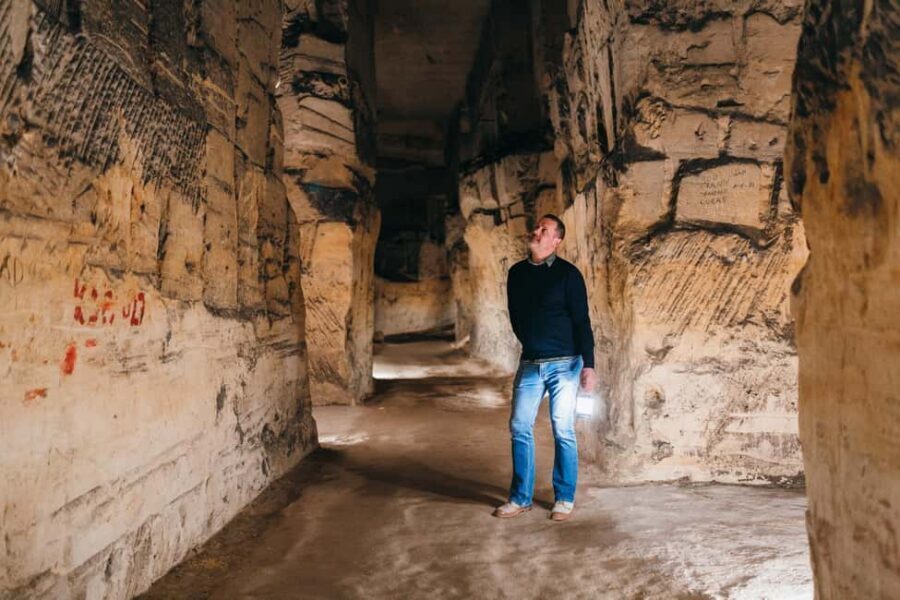
Your guide leads you safely from Maastricht Underground down to about 30 meters beneath the Sint-Pietersberg area. The walking route takes you through a labyrinth that used to be far larger—more than 20,000 corridors—and is still an impressive 70 kilometers long today.
The big idea here is labor. This wasn’t “crafted” by a sculptor for decoration. These passages were hand-carved by marl workers (block breakers) over generations. As you move, you’re not just seeing caves—you’re seeing the physical footprint of work that lasted long enough to become local infrastructure.
And because it’s guided, you don’t have to guess what you’re looking at. You learn what matters, where to pay attention, and why certain wall marks are worth your time.
Practical note: the tour includes walking through tight spaces with uneven cave footing. If you’re used to flat, indoor museum floors, give your legs a quick mental pep talk.
Spotting Wall Evidence: Inscriptions and Charcoal Drawings
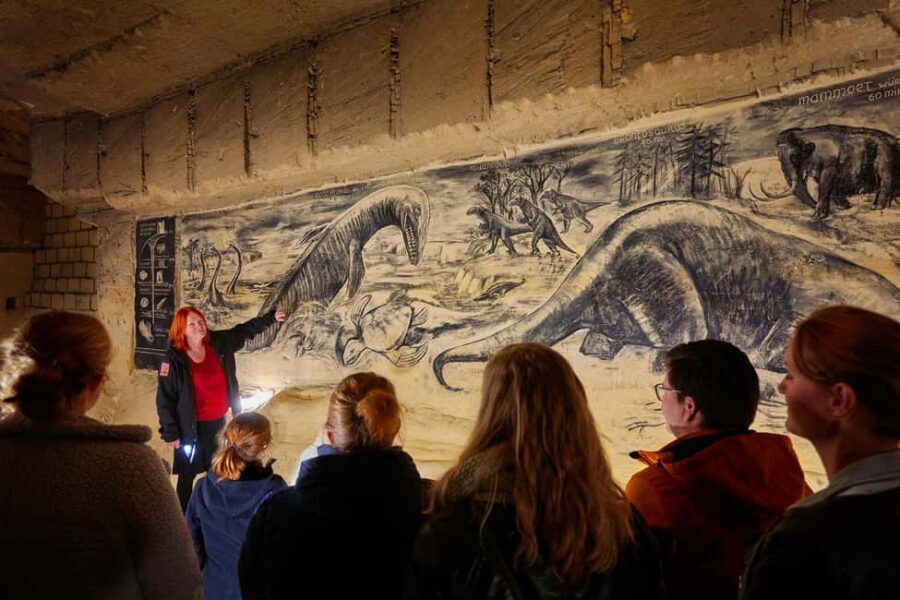
One of the strongest parts of the experience is the “look closer” effect. Your guide points out centuries-old inscriptions etched into the walls, as well as bold charcoal drawings that feel almost immediate even though they’re old.
In a normal museum, you read a label and move on. Here, you’re reading the wall itself. That’s a different kind of engagement—more personal, more physical. The marks don’t just describe the past; they show how people actually used the space.
You’ll also learn about traces left behind by marl workers. These aren’t vague “mystery carvings.” They’re the result of human presence over time—work, pauses, and the need to leave some kind of signal behind.
If you like history, this is where the tour becomes more than a dark walk. It becomes a guided interpretation of evidence you can see with your own eyes.
Wartime Shelters: When Families Hid Underground With Livestock
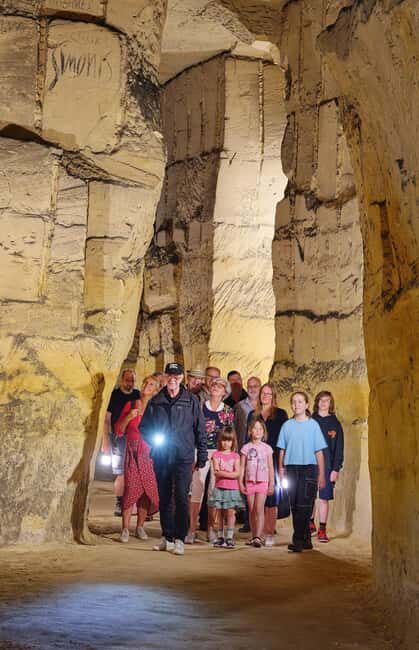
Caves weren’t only for mining. They were also practical shelter.
During the tour, you’ll visit spots used as shelters where residents hid precious possessions during wartime. Even more striking, the caves were used by families who sheltered underground with their livestock—which tells you this wasn’t a quick hide-and-wait plan. It was survival for real households.
This section hits hardest if you pay attention to the scale of what people did. You’re not imagining a battlefield from a distance. You’re being shown the place where ordinary life tried to stay intact when it couldn’t stay above ground.
Expect your guide to connect these shelter stories to the broader conflict narrative of the region.
The Ancient Bread Oven Stop: A Refuge That Could Feed People
Another standout stop is the ancient bread oven. The tour includes this detail because it’s about more than dramatic survival stories.
You’ll see an oven used by three farming families who took refuge here for months. That matters because food is the difference between hiding and living. A bread oven implies planning, routine, and the stubborn effort to keep a household functioning.
This is one of those moments where you’ll probably do that quiet double-take: people prepared meals underground. It makes the cave feel suddenly less like a monument and more like a lived-in space.
If you enjoy tangible details—objects that still exist—you’ll appreciate this stop a lot.





The French Siege Thread and Fort Sint Pieter’s Twist
The tour also connects the cave story to military events above ground. You’ll learn about the traces of the French siege and a failed attempt to blow up Fort Sint Pieter.
This is valuable because it anchors the underground world to a specific historical timeline. Instead of treating the caves like a standalone curiosity, the guide ties them to what was happening in Maastricht and why those fortifications mattered.
It also gives you a satisfying “wait, so that’s why” feeling. When the story clicks, the whole cave system starts to read like part of the same historical machine.
How the 70 Minutes Actually Feel (and How to Enjoy Them)
The total tour time is 70 minutes, and that’s a sweet spot for an underground walk. Long enough to feel the “different world” effect. Short enough that you’re not trapped underground for hours.
You’ll spend your time moving through hand-carved passages, stopping for guide explanations, and seeing wall details and specific relics like the oven and shelter points. Since the cave system has no natural light, you’ll rely on your guide’s instructions for pacing and safe movement.
What to wear:
- Bring a jacket. It’s about 12°C inside.
- Wear shoes with solid grip. Cave floors can be uneven.
What not to plan:
- Phone use inside won’t work the way you expect because there’s no phone signal underground.
- If you’re sensitive to tight spaces, be prepared: it’s not designed for claustrophobic comfort.
Price and Value: Why $12 Works Here
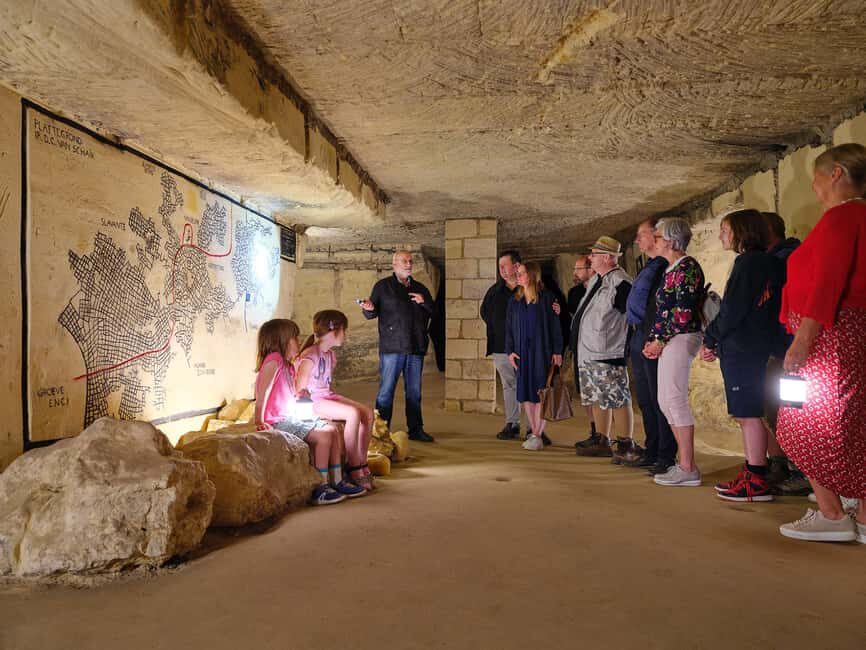
At $12 per person for a guided, one-hour underground experience, this is the kind of price that makes the decision easy. You’re not just paying for entry. You’re paying for an experienced guide who shows you the specific carvings, inscriptions, and historical connections so you don’t spend the whole time wondering what you’re seeing.
The value also comes from concentration. In 70 minutes, you’ll cover:
- how the caves were carved by marl workers
- what people left behind on the walls
- how families hid and lived underground
- how local conflict connects to Fort Sint Pieter
That’s a lot of context for the money. And because it’s guided, you get the “meaning” portion, not only the “wow, dark cave” portion.
Guide Quality and the Tone You’ll Want to Bring
The tour is run with Dutch, German, and English live guides. One guide you may encounter is Frank, and the vibe from his guidance is clear: easy explanations, a relaxed feel, and humor that keeps things from turning into a lecture.
Even if your guide uses a different style, the format stays the same: you’re guided to look at particular wall features and specific historical sites. This isn’t a random walk where you’re left to figure it out alone.
Go in with the right attitude: curiosity beats speed. You’ll enjoy it more if you’re ready to slow down when the guide points at something on the wall.
Who This Tour Suits Best (and Who Might Skip)
This is a great fit if you:
- like history with real physical evidence
- want an underground experience that’s guided and specific
- enjoy war stories tied to everyday survival details
- don’t mind dark spaces and damp air
It’s not a good fit if you have mobility impairments or claustrophobia, since it involves walking through a cave system with tight, enclosed areas and no natural light.
If you’re on the fence, ask yourself one simple question: can you feel comfortable in a dark, enclosed environment for about 70 minutes? If the answer is no, skip it and look for a different Maastricht activity.
Should You Book the Maastricht North Caves Tour?
I think you should book if you want an efficient, high-value way to experience Maastricht’s underground story. For $12, you get a guided route to multiple meaningful sites: carved corridors, inscriptions and charcoal drawings, shelters used during wartime, an ancient bread oven, and the Fort Sint Pieter/French siege thread.
I’d skip it if you’re worried about tight spaces, or if the idea of no natural light and no phone signal would stress you out. Otherwise, bring a jacket, get there early, and let the cave do what it does best: make history feel hands-on.
FAQ
Where is the meeting point for the North Caves tour?
The meeting point is next to Fort Sint Pieter at Luikerweg 80. Arrive at least 10 minutes early because tours start exactly on time.
How long is the guided tour?
The tour lasts 70 minutes.
What languages are the live guides available in?
The guide provides the tour in Dutch, German, and English.
What should I bring?
You should bring a jacket. Inside the caves it’s around 12°C.
Is there phone signal inside the caves?
No. There is no phone signal inside the caves.
How deep do you go during the tour?
You go safely up to 30 meters deep beneath the Sint-Pietersberg.
Is the tour suitable for people with mobility impairments or claustrophobia?
No. It is not suitable for people with mobility impairments or for people with claustrophobia.
Can I cancel and get a refund?
Yes. You can cancel up to 24 hours in advance for a full refund.