REVIEW · ROTTERDAM
Discover Rotterdam: Classic Highlights Bike Tour by a Local
Book on GetYourGuide →Operated by Rottourdam · Bookable on GetYourGuide
Rotterdam changes fast when you pedal through it. I like how this local-guided bike tour strings together big architectural moments and practical city stories, from the Cube Houses to the harbor areas. You also get a short break built into the route, so it stays fun instead of a nonstop march of sights.
The main thing to consider: it’s a true cycling tour. If you can’t ride comfortably for about three hours (or you hate bikes), this will feel like work, not sightseeing. Also, there’s no food included, just time to grab a coffee and a bite on your stop.
In This Review
- Key Highlights Worth Marking Up
- Why Rotterdam by Bike Beats a Bus Ride
- Meeting at Linker Veerdam 1 and Getting Rolling
- Hotel New York to Erasmus Bridge: A City Rebuilt in Real Time
- De Brandgrens and Veerhaven: The WWII Story Has Physical Edges
- Euromast and Boijmans Van Beuningen: Modern Rotterdam With Cultural Clues
- Heilige Boontjes Break: Coffee Time, Plus a Breather
- Stadhuis Rotterdam and Sint-Laurenskerk: Where the Old Still Reads Clearly
- Cube Houses and Markthal: Rotterdam’s Most Fun Photo Pair
- Oude Haven and De Hef: Port Energy at Street Level
- The 3-Hour Pace: What You Really Get for Your Time
- Price Check: Is $71 Worth It?
- Who Should Book This Rotterdam Bike Tour (and Who Might Skip It)
- Should You Book Discover Rotterdam: Classic Highlights Bike Tour?
- FAQ
- How long is the bike tour?
- Where is the meeting point?
- Are bikes and helmets included?
- Is the tour guided?
- What languages are available?
- What key sights will I see?
- Is food included?
- Do I need to arrive early?
- Is there an option to pay later?
- Is the tour suitable if I can’t ride a bike?
Key Highlights Worth Marking Up
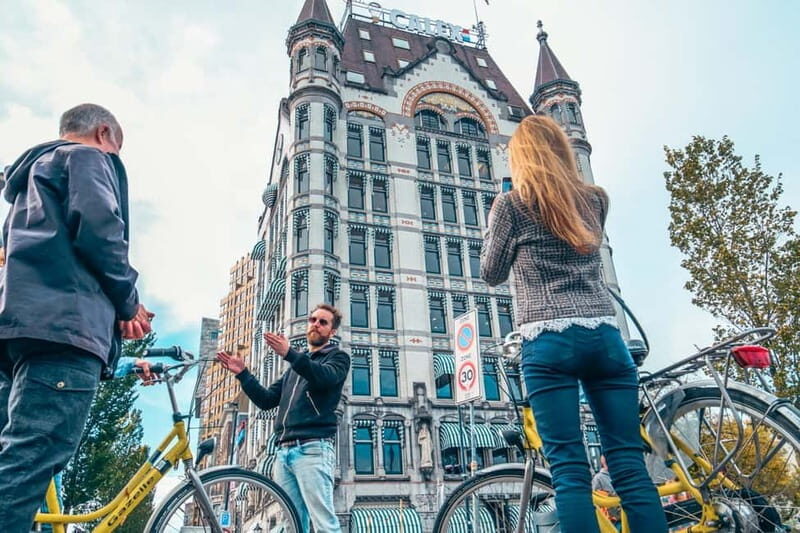
- Cube Houses + Markthal in one smooth loop: Two Rotterdam icons, explained in plain language.
- WWII resilience story, not a lecture: You’ll connect the dots between destruction and the city’s modern rebuild.
- Maritime Rotterdam with real dockside atmosphere: Harbor views and port landmarks help the city click.
- Boijmans Van Beuningen Art Depot area: Modern culture stops up close, even without going inside.
- A guide who keeps the pace human: Named guides like Elmer, Elmar, and Yoreh are praised for energy and Q&A-friendly stops.
Why Rotterdam by Bike Beats a Bus Ride
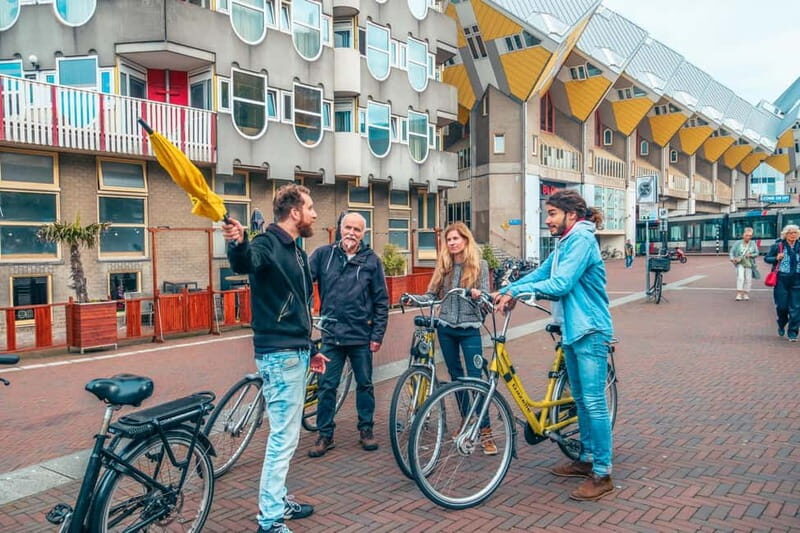
Rotterdam is the kind of city where streets tell stories. A bike tour turns those stories into something you can feel: the wind off the water, the scale of the bridges, and the way new design sits right beside older streets.
This tour works because it’s built around walkable-to-bikeable sights. You’re not stuck staring at one view for 45 minutes. Instead, you glide between key landmarks and get context as you go. That’s especially useful here, because Rotterdam’s look comes from rebuilding and rerouting after World War II.
If you like cities that don’t play it safe, you’ll enjoy the balance. You get modern architecture (the Cube Houses and Markthal) and also the port-side identity (places like Oude Haven and De Hef). It’s a quick way to understand Rotterdam’s mindset: practical, experimental, and always moving.
You can also read our reviews of more cycling tours in Rotterdam
Meeting at Linker Veerdam 1 and Getting Rolling
You’ll start at Linker Veerdam 1. The easiest tip is to look for the small wooden meeting house with a colorful rooftop. That’s where the guide is waiting with the bikes.
Arrive about 15 minutes early. That buffer matters more than you’d think. You’ll want time to fit the bike, adjust the seat, and get comfortable before you roll into city traffic and busy intersections. Bikes and helmets are provided, and the helmet is optional, which matches how many locals ride.
Once you’re moving, the group’s rhythm matters. Multiple guides (including Elmer/Elmar and Yoreh) are noted for keeping the pace comfortable. That usually means you’ll have enough time at each stop to take photos, ask questions, and not feel rushed.
Hotel New York to Erasmus Bridge: A City Rebuilt in Real Time
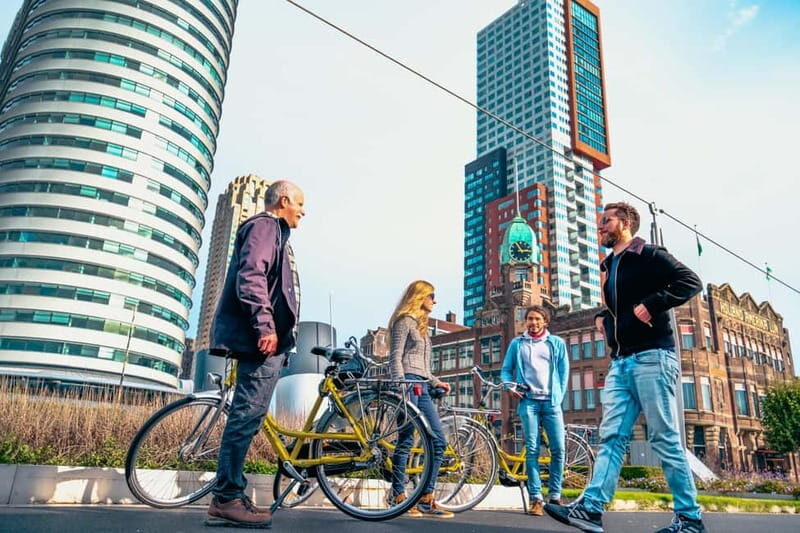
One of the first big photo-and-story stops is Hotel New York. Even if you’ve only seen it from pictures, seeing it up close helps you understand Rotterdam’s mixture of old-world names and newer city ambition. It’s a strong early anchor because it’s tied to the city’s maritime identity and international feel.
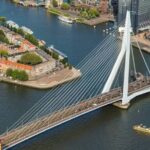
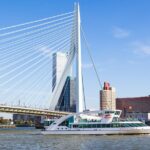
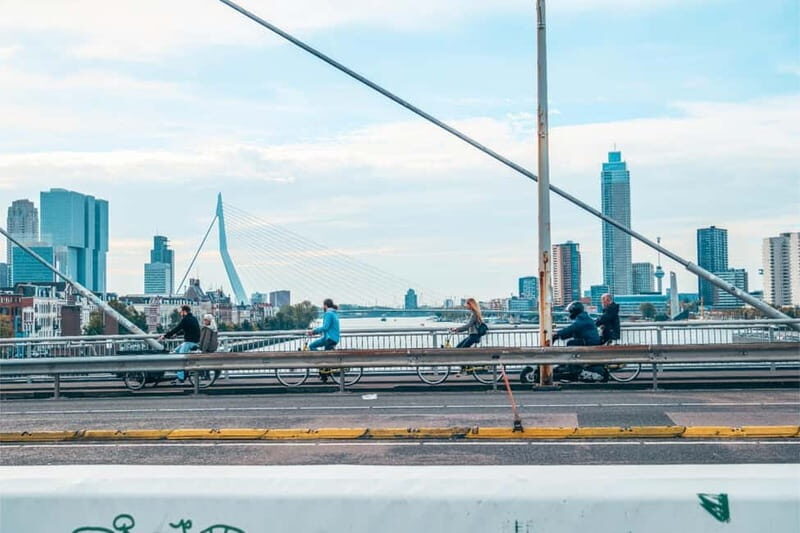
Right after that, you’ll pass Erasmusbrug (Erasmus Bridge). The bridge is one of those Rotterdam features people recognize instantly. But what makes it useful on a tour is the explanation behind why it looks like it does and how the city thinks about connecting spaces. When you’re on a bike, you also notice the “in-between” moments: ramps, waterfront angles, and the way the bridge frames the skyline.
I like using early landmarks like these as a mental map. By the time you reach the more specialized architecture, you’ll already be oriented.
De Brandgrens and Veerhaven: The WWII Story Has Physical Edges
Rotterdam’s resilience isn’t just a headline. On this ride, you’ll learn about the city’s transformation after World War II as you pass through areas that reflect that history.
A key stop here is De Brandgrens. The name matters because it points to how the city’s layout and boundaries were shaped by destruction and recovery. You’ll probably walk away thinking about the city’s current form as something engineered through hard lessons, not just planned for aesthetics.
Then you head toward Veerhaven, another spot that reinforces Rotterdam’s port personality. In a city like this, maritime areas aren’t separate from daily life. They’re part of the street-level experience—what you see from the road, how the wind hits, and how the skyline shifts as you approach the water.
Euromast and Boijmans Van Beuningen: Modern Rotterdam With Cultural Clues
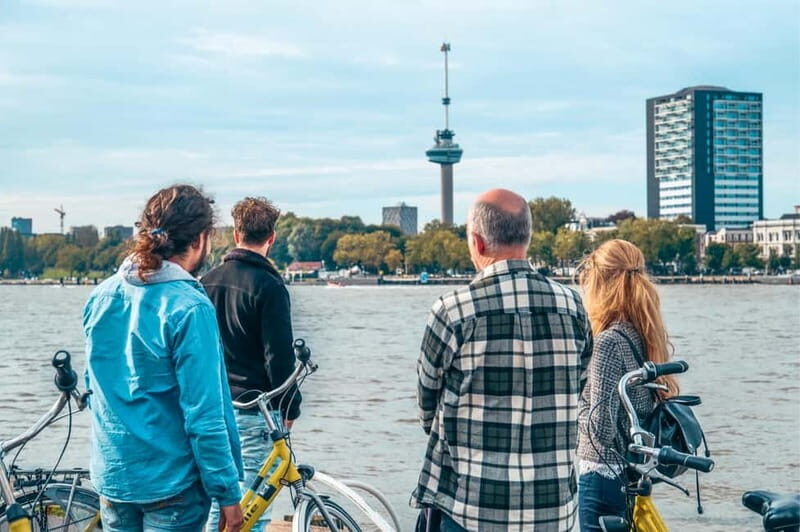
Next on your route is Euromast. Even if you don’t go up, passing it gives you a sense of Rotterdam’s “look up” ambition. It signals that the city isn’t only about waterfront practicality—it also invests in viewpoints, skyline drama, and landmark identity.
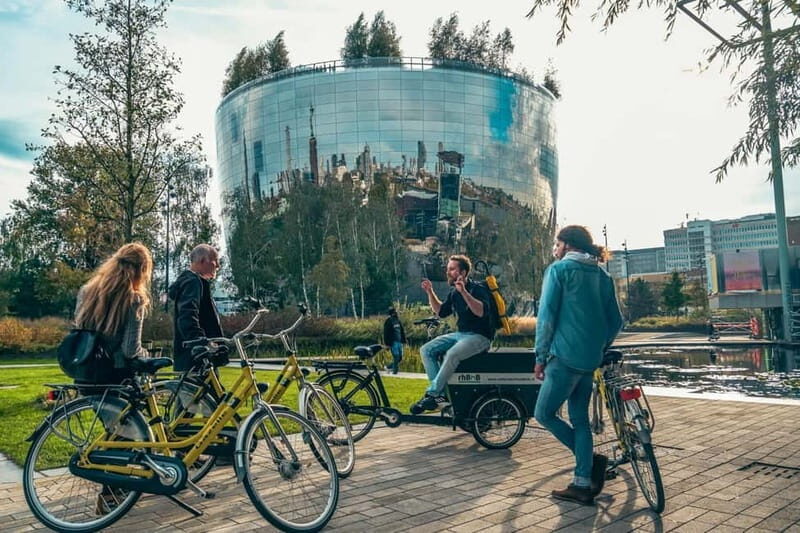
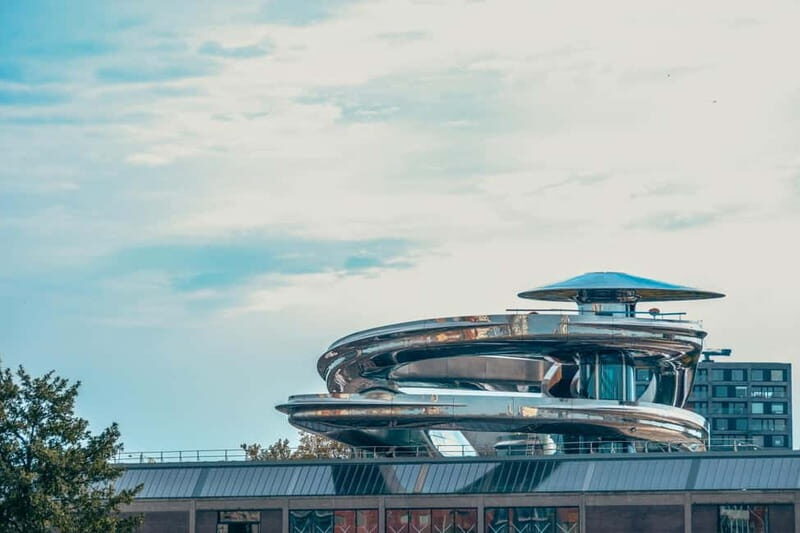
After that comes Depot Boijmans Van Beuningen. You’ll pass the Boijmans Van Beuningen Art Depot area, which is a modern culture stop tied to a well-known art institution. The value here is timing. You’re not tired yet. So you can actually absorb the contrast: Rotterdam’s bold contemporary structures next to older city fabric, all under the same cycling pace.
If you care about design, this segment is a good payoff. It helps you understand why Rotterdam is often described through architecture and planning more than through museums alone.



Heilige Boontjes Break: Coffee Time, Plus a Breather
Your planned break is at Heilige Boontjes for about 20 minutes. This is not a long meal stop, but it’s exactly enough time to reset your legs and grab a coffee and a bite.
One thing I’d call out from this type of stop: it’s also a chance to recharge your attention. After a few passes of bridges and landmark exteriors, a short pause helps you enjoy the next set of sights instead of just taking photos on autopilot.
If you want to make the break count, bring your camera out before you order. The angles around this part of the center are good for quick snaps, and you’ll be glad you did it before the tour regroups.
Stadhuis Rotterdam and Sint-Laurenskerk: Where the Old Still Reads Clearly
After the break, the tour turns toward historic civic and church landmarks.
You’ll pass Stadhuis Rotterdam (Rotterdam City Hall). Even from street level, it anchors the city as more than a modern experiment. It reminds you that Rotterdam has always been a working city with institutions and governance, not only a “future-looking” design showcase.
Then comes Grote of Sint-Laurenskerk. Churches in the Netherlands can look simple or dramatic depending on your angle, but seeing it as part of a cycling route helps you connect it to the surrounding city fabric. You start noticing patterns: where people have gathered for centuries, how the street widths shift, and how landmarks frame everyday routes.
This is a good rhythm change. After modern buildings and dockside scenes, historic architecture gives your eyes something calmer to rest on.
Cube Houses and Markthal: Rotterdam’s Most Fun Photo Pair
Now you hit the two most “wow” stops, and for good reason.
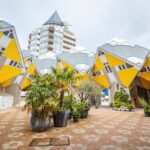
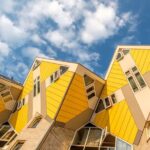
First, the Cube Houses. These aren’t just quirky. They also represent Rotterdam’s comfort with unusual forms and practical solutions. Seeing them in real street context makes them make more sense than a single postcard angle ever could.
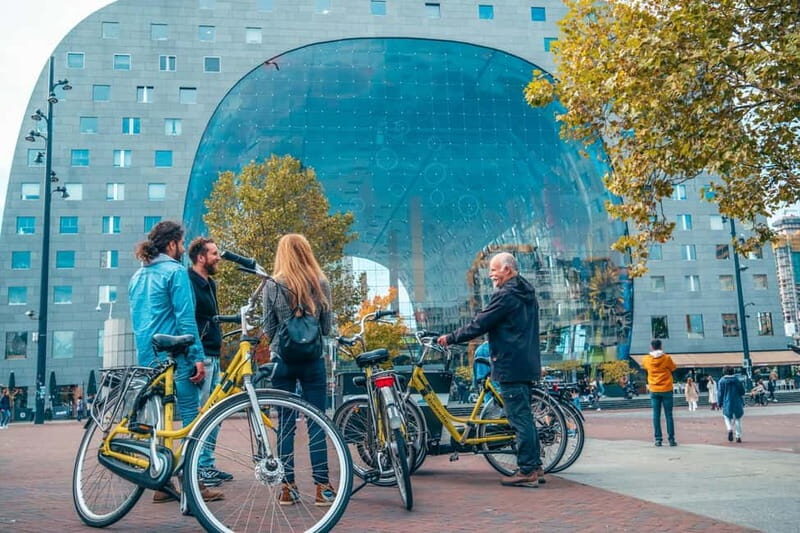
Then you’ll pass Markthal. This food and event hall is a signature Rotterdam stop. On a bike tour, you get a clear view of the building’s shape without needing a long indoor visit. It’s also a great spot to slow down mentally and observe: how people move around it, how the building interacts with the surrounding streets, and why it’s such a meeting point in the city.
If you’re choosing this tour as your main “first time in Rotterdam” plan, these two stops are the reason you should. They’re iconic, easy to understand quickly, and they give you something to talk about the rest of your trip.
Oude Haven and De Hef: Port Energy at Street Level
As the tour moves toward the end, you’ll return to Oude Haven. This is where Rotterdam’s maritime story feels more grounded. The atmosphere around old harbors has a different feel from sleek modern architecture. Even when you’re not going inside anything, you’ll sense the working-city vibe.
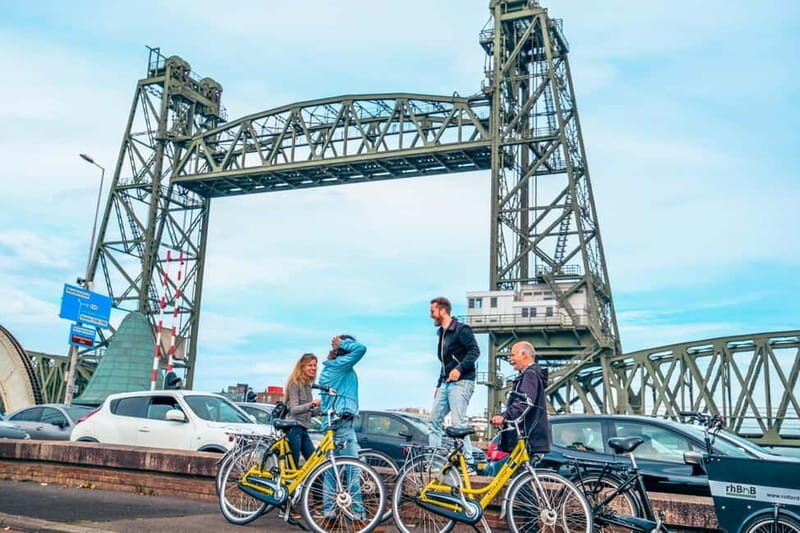
Next is De Hef, a famous structure associated with Rotterdam’s industrial past. Passing it on a bike tour helps you see it in scale. It’s one thing to recognize it from a distance, and another to experience how it sits within the city’s streets and routes.
This is also a nice finishing strategy. Ending near harbor landmarks helps the city’s identity click as one story instead of separate attractions.
The 3-Hour Pace: What You Really Get for Your Time
This tour is 3 hours. That’s a strong length for first-timers because it’s long enough to cover multiple zones, but short enough that you won’t feel trapped for half a day.
Most importantly, the cycling segments between stops are spaced with time for photos and explanations. Guides named Elmer/Elmar and Yoreh are praised for pacing and for not turning the ride into a dry lecture. In practice, that usually means you’ll get frequent but not constant talking, plus chances to ask questions.
For comfort, wear practical cycling shoes or sneakers and dress for the weather. Rotterdam weather can change your mood fast, so check the forecast and pack a light layer. Also, bring water. Even if you’re getting a coffee at the break, hydration keeps your energy steady.
Price Check: Is $71 Worth It?
At $71 per person for a 3-hour guided ride, the value comes from what’s included.
You get:
- a live local guide
- a rental bike
- helmet optional
So you’re paying for two main costs you’d otherwise handle yourself: transportation and local expertise. Rotterdam’s best sights aren’t all in the same district, and public transit plus self-guiding can eat time fast. Here, your guide saves that planning effort and turns the route into a coherent story: rebuilding after World War II, modern architecture, and the port identity.
Is it a bargain? It’s not “cheap,” but it’s not overpriced for the package either. If you want your first Rotterdam day to be efficient and fun, this is one of the most sensible ways to do it.
Who Should Book This Rotterdam Bike Tour (and Who Might Skip It)
This experience is ideal if you:
- can ride a bike confidently
- want a fast way to connect Rotterdam’s major icons with clear context
- like seeing modern architecture and maritime areas without driving or juggling transit
It may not be the right fit if you:
- can’t ride a bike
- dislike cycling in city traffic (even at a relaxed touring pace)
- expect food to be included (the tour includes a short break where you can buy a coffee and a bite)
Languages offered are Dutch and English, which helps if you want the explanation in English. There’s also private group availability if you want a quieter setup for friends or family.
Should You Book Discover Rotterdam: Classic Highlights Bike Tour?
If this is your first time in Rotterdam and you want the biggest “I get it now” moments, I think you should book it. The tour covers the Cube Houses, Markthal, and port landmarks like Oude Haven and De Hef, and it does it in a time window that won’t wreck your schedule.
Book it especially if you like architecture with a story. The WWII rebuild theme isn’t just a background fact here. It helps you understand why Rotterdam looks like Rotterdam.
One practical tip before you commit: check your bike comfort. If you’re at all unsure, choose comfortable shoes, bring water, and treat the first stop as your warm-up. Once you’re rolling, the route tends to feel like a guided city walk you can cover faster and more enjoyably.
If you tell me your travel dates and whether you prefer lots of stops vs. fewer stops, I can help you decide if this timing matches your Rotterdam plan.
FAQ
How long is the bike tour?
The tour lasts 3 hours.
Where is the meeting point?
You meet at Linker Veerdam 1, and you should look for a small wooden house with a colorful rooftop.
Are bikes and helmets included?
Yes. Bike rental is included, and a helmet is optional.
Is the tour guided?
Yes. It’s a live tour with a local guide.
What languages are available?
The guide speaks Dutch and English.
What key sights will I see?
You’ll pass by or visit highlights such as Hotel New York, Erasmus Bridge, Euromast, Depot Boijmans Van Beuningen, Cube Houses, Markthal, Oude Haven, and De Hef.
Is food included?
No. Food and drinks are not included. There is a 20-minute break where you can buy a coffee and a bite.
Do I need to arrive early?
Yes. Please arrive 15 minutes before the tour starts.
Is there an option to pay later?
Yes. You can reserve now & pay later.
Is the tour suitable if I can’t ride a bike?
No. It is not suitable for people who can’t ride a bike.