REVIEW · ROTTERDAM
Discover the best spots in Rotterdam with Outside Escape
Book on Viator →Operated by Outside Escape · Bookable on Viator
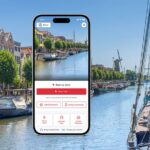
Rotterdam turns into a puzzle you can walk. This Outside Escape experience turns sightseeing into a smartphone city game, so you move at your own pace while solving riddles and clues around classic Rotterdam spots.
I especially like the focus on a compact route that still covers a lot, and the way the game nudges you to notice details you might otherwise miss.
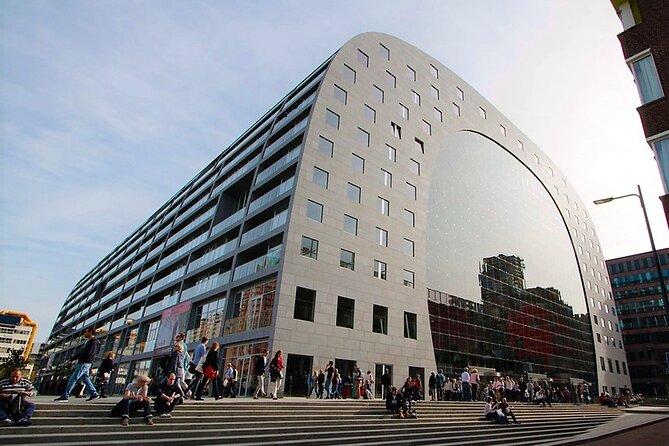
I also really like the stop at the modern food market inside an architectural masterpiece—it’s the kind of place where the game actually makes you slow down and enjoy the atmosphere. One possible drawback: the English clues can be confusing for some people, so if you want everything to read perfectly, be ready for a little head-scratching (and double-check you’re using the correct starting point at Stadhuisplein).
This is ideal if you’re traveling with family or friends and want an active, low-stress way to see Rotterdam, with a group setup designed for up to four players while bookings are for a group of up to six.
In This Review
- Key things I’d look forward to
- A smartphone scavenger hunt that keeps Rotterdam moving
- Starting at Stadhuisplein and pacing a 1-mile loop
- Town hall views: the civic start that sets the tone
- The modern food market stop: where the game becomes a reward
- Old harbor energy and permanently docked boats
- Grotekerkplein and Sint-Laurensplein: church square with layers
- Witte de Withstraat: independent street for coffee, fries, and beer
- The Destroyed City memorial: remembering May 14, 1940
- Pim Fortuyn statue: politics in bronze, history in context
- Price and group setup: when $30.12 per group makes sense
- The main watch-out: English riddles and the starting point
- Who should book Outside Escape in Rotterdam?
- Quick FAQ
- FAQ
- How long does the Rotterdam city game take?
- Where does the experience start and end?
- What is the price and group size?
- Is it offered in English?
- Is it private?
- Can I cancel?
- Should you book this Rotterdam city game?
Key things I’d look forward to
- Smartphone-led city game with riddles, clues, and challenges
- About a 1-mile (2-kilometer) route that fits in 1 to 2 hours
- A mix of Rotterdam moods: civic sights, a landmark food market, and the harbor
- Grotekerkplein history (including its older name, Saint Laurensplein)
- Witte de Withstraat culture with easy options for coffee, fries, and casual drinks
- Memorial stops like The Destroyed City and the Pim Fortuyn statue
A smartphone scavenger hunt that keeps Rotterdam moving
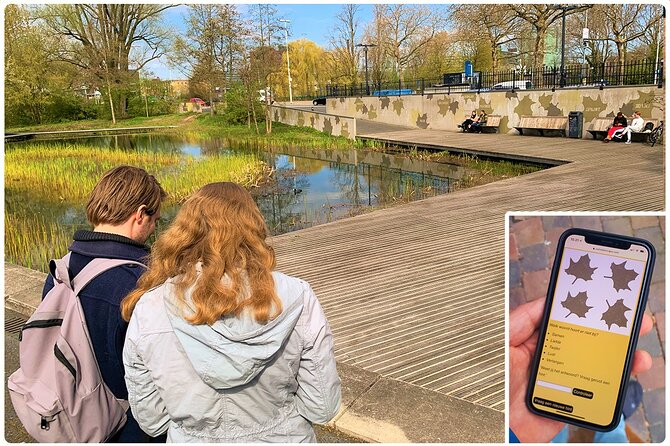
If you like the idea of walking from highlight to highlight, but don’t want to be tied to a strict tour rhythm, this style of experience is a strong fit. You use your smartphone to follow the route and answer the game’s questions along the way. The goal isn’t speed—it’s attention.
What makes it work in Rotterdam is the layout. The route is short (about 1 mile / 2 kilometers), and the stops are spaced so you can actually enjoy the spaces in between—streets, squares, and waterfront views—without feeling like you’re constantly rushing.
It’s also a good choice when you’re traveling with mixed ages. The structure gives everyone something to do, but it doesn’t require long stretches of sitting or listening. You’ll be moving, looking up, and reading signs and surroundings like you’re doing your own little self-guided investigation.
You can also read our reviews of more tours and experiences in Rotterdam.


Starting at Stadhuisplein and pacing a 1-mile loop
The experience starts at Stadhuisplein, Rotterdam, and ends at Plein 1940. That’s helpful because it frames the whole experience as one walk—rather than hopping around the city.
Here’s the practical part: the route is only about 1 mile (2 kilometers) and the overall time is 1 to 2 hours. That means you can fit it between other plans without burning half a day. It’s long enough to feel like you’ve covered real ground, but short enough that even if the game takes a bit longer, you likely won’t feel stuck.
Also, you should plan on it being walk-and-think time. The game uses riddles and challenges, so the “time” isn’t just your walking pace. If you’re the type who likes reading and figuring things out as you go, you’ll probably land closer to the upper end of the 1–2 hour window.
Town hall views: the civic start that sets the tone
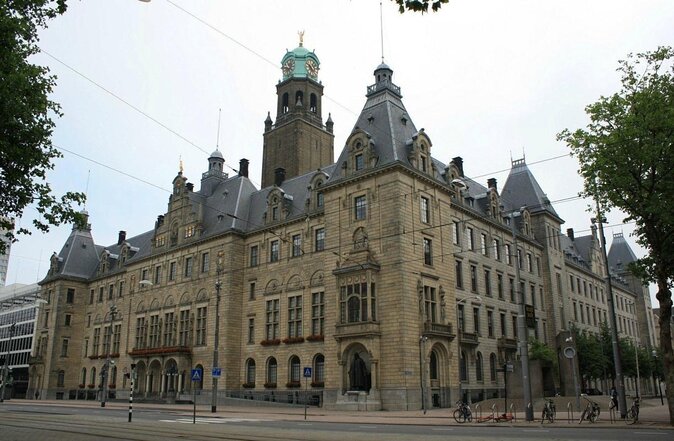
You’ll pass Rotterdam’s town hall, which makes a smart first step. Starting with a civic landmark helps you get oriented quickly. It’s a reminder that Rotterdam isn’t only canals and old churches—it’s also modern Europe’s practical, forward-thinking side.
Why this matters: when you’re on a short route, the first stop can make the whole walk feel connected. The town hall area gives you a baseline of how the city presents itself, before you jump to older history, memorials, and the harbor.
If you’re arriving by public transportation, this start point is convenient because it’s in the core sightseeing zone. You’ll feel like you’re already in the center of things.
The modern food market stop: where the game becomes a reward
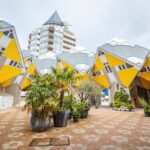
One of the best parts is the stop at a modern food market inside an architectural masterpiece. Even if you’re not planning to eat a full meal, this is the kind of place that makes a city game feel worthwhile.
A food market works especially well for a scavenger hunt because it’s visual and sensory. You can look around, compare stalls or design features, and treat the stop like a mini break inside a highlight building. The experience design clearly leans into this—so don’t rush through it.
This is also a natural “win” for groups. People can agree on a place to pause, recharge, and then continue. If you’re traveling with someone who doesn’t always enjoy puzzles, this stop gives them a reason to enjoy the game anyway.
Old harbor energy and permanently docked boats
Next comes the old harbor of Rotterdam, including iconic boats that are permanently docked. This shift—from civic and architecture to water and maritime atmosphere—adds variety fast.
Rotterdam’s harbor story is a big piece of the city’s identity, and the waterfront brings perspective. Even if you’re only walking past, the change in scenery helps you feel the city’s scale and industrial character.
One thing to keep in mind: since you’re on a short route, your harbor time is likely brief. Treat it as a “see it and absorb it” moment, not an extended waterfront stroll.




Grotekerkplein and Sint-Laurensplein: church square with layers
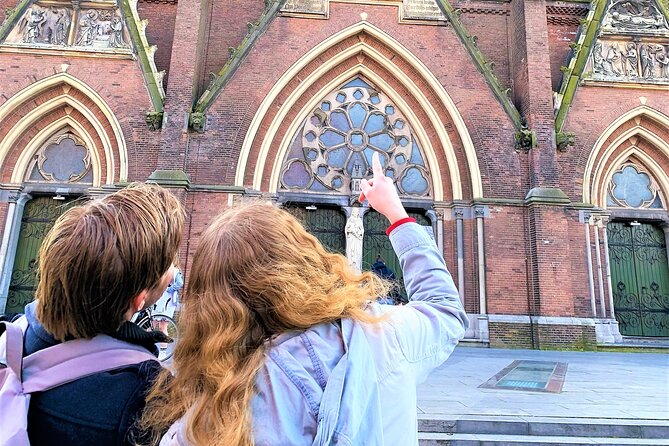
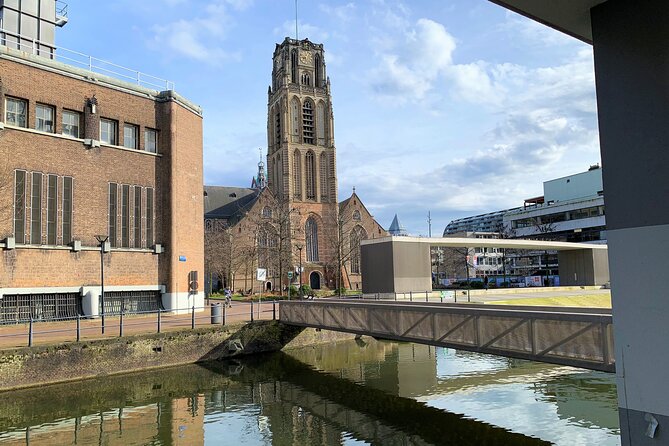
Your walk includes Grotekerkplein, the square in front of the Grote of Sint-Laurens church. It’s a plaza setting, so it’s perfect for pausing as the game asks you to solve something and re-check where you are.
Here’s the historical detail that makes the stop more than a photo op: between 1592 and 1976, this plaza was called Saint Laurensplein. That’s exactly the sort of clue-driven detail that makes a city game feel real—you notice that the past is still written into street identity.
Drawback to consider: church-square sightseeing can be a little less fun if you’re expecting lots of time inside buildings. This stop is about the public space—the square, the church presence, and the clues you pick up around that setting.
Witte de Withstraat: independent street for coffee, fries, and beer
Then you hit Witte de Withstraat, which is known for its bars and restaurants with an independent feel. For many people, this is where the route becomes more playful. You can picture this street as the “hangout” part of your walk—where the game stops and street life take over.
It’s also practical. If you want a casual break, this street offers options for:
- a coffee
- trying good fries
- popping into a Berlin-style beer bar called Wunderbar
This stop can be especially enjoyable if you like walking streets where the city feels human-scaled and slightly off the biggest tourist tracks. It’s still central, but it doesn’t feel like a theme park version of Rotterdam.
The Destroyed City memorial: remembering May 14, 1940
The game then brings you to The Destroyed City, a bronze memorial sculpture in central Rotterdam. This one is heavy, and it’s meant to be.
It commemorates the German bombing of Rotterdam on 14 May 1940, which completely destroyed the historical center of the city. The sculpture was unveiled in 1953, and later designated a Dutch national monument in 2010.
This stop is valuable for two reasons. First, it adds context to Rotterdam’s look—especially if you notice how modern and rebuilt much of the city feels. Second, it makes the walk more than a checklist. You’re reminded that cities aren’t just buildings; they’re stories shaped by events people survived.
If you’re the type who likes light-and-fun activities only, you might want to mentally prepare for this moment. The game won’t sugarcoat it, and that’s a big part of why it lands.
Pim Fortuyn statue: politics in bronze, history in context
Right after the memorial, you see a statue of Wilhelmus Simon Petrus Fortuijn, known as Pim Fortuyn. He was a Dutch politician, and the statue references the fact that he was assassinated in 2002—the first noteworthy political assassination in the Netherlands since 1672.
This stop adds another kind of context beyond war history. It shifts the story toward the modern political tensions that shaped the Netherlands in the early 2000s. And because it’s a statue in a public space, it’s easy to connect the game’s clue-solving to real-world history you can point at.
Consideration: this part is less about big visuals and more about meaning. If you like to understand why a landmark matters, you’ll probably enjoy it more than if you only want scenery.
Price and group setup: when $30.12 per group makes sense
The price is $30.12 per group (up to 6 people) for about 1 to 2 hours. That pricing can be a good deal if you split the cost across friends or family.
Here’s the value logic I’d use: a short, structured walking experience normally costs more once you add a guide. This one replaces the guide with a smartphone game, while still giving you a clear route and built-in stops. You’re paying for convenience and direction, not just “walking around.”
Two group notes matter:
- It’s described as a private activity, meaning only your group participates.
- The game is described as playing in a group of up to four people.
So if you’re traveling as a larger group, you may want to plan how you’ll share the phone and take turns solving. If you’re a family or a couple plus kids, it aligns nicely with the up-to-four “play” setup.
Also, with a rating of 4.5 and 92% recommending, the overall signal is strong. The most positive feedback centers on the experience being fun for exploring main sights plus a bit off the usual track, with the food market standing out as a highlight.
The main watch-out: English riddles and the starting point
From the feedback pattern, the biggest concern is not the route itself—it’s the game text.
One issue reported is that the riddles and clues may not make sense in English, which can slow you down or make the experience less satisfying. Another issue reported earlier was that the starting point instructions didn’t match the correct location, but the operator updated the starting point and reviewed hints after feedback.
What I’d do if I were planning this:
- Follow the start point at Stadhuisplein closely and use the map pin provided for that exact location.
- If something seems off in the English clue, don’t assume you’re totally lost—re-check your position and try again. In short games, small location mismatches can create big confusion.
Who should book Outside Escape in Rotterdam?
This is a great fit if you want:
- a light, active way to explore Rotterdam without constant explanations
- a self-paced format for families and friends
- a short route (about 1 mile / 2 kilometers) that fits into a busy day
- a mix of civic, harbor, and memory-focused stops
It may be less ideal if you strongly prefer:
- perfectly straightforward instructions with no ambiguity
- deep museum-style stops (this isn’t that kind of pacing)
- zero chance of translation oddities affecting clue clarity
Because it’s offered in English, you won’t have language barriers with the guide itself—but the clue wording may still be the part you scrutinize.
Quick FAQ
FAQ
How long does the Rotterdam city game take?
It takes about 1 to 2 hours.
Where does the experience start and end?
It starts at Stadhuisplein, Rotterdam and ends at Plein 1940, 3011 Rotterdam.
What is the price and group size?
It costs $30.12 per group (up to 6). The game play is described for groups of up to four people.
Is it offered in English?
Yes, it’s offered in English.
Is it private?
Yes. It’s a private activity, so only your group participates.
Can I cancel?
Yes. You can cancel for a full refund if you cancel at least 24 hours before the experience starts.
Should you book this Rotterdam city game?
I’d book it if you want a structured walk that covers standout Rotterdam landmarks in a tight loop, especially if your group likes solving puzzles while sightseeing. The biggest selling points are the fun smartphone format, the food market stop, and the way the route balances lively streets with serious history.
I’d think twice only if you’re someone who needs clue text to be crystal clear in English with no friction. If that sounds like you, go in with patience and make sure you’re starting at Stadhuisplein so you don’t lose time early.