REVIEW · AMSTERDAM
Discover the City Centre of Amsterdam
Book on Viator →Operated by Lost in the Lowlands · Bookable on Viator
Canals, squares, and hard history—no museum hassle. This 1 hour 45 minute route strings together Amsterdam’s most meaningful landmarks, from Dam Square to the Jewish Quarter, with an easy flow that helps you understand what you’re looking at.
I especially like how the guide brings the city to life with clear stop-by-stop context, so each turn feels purposeful.
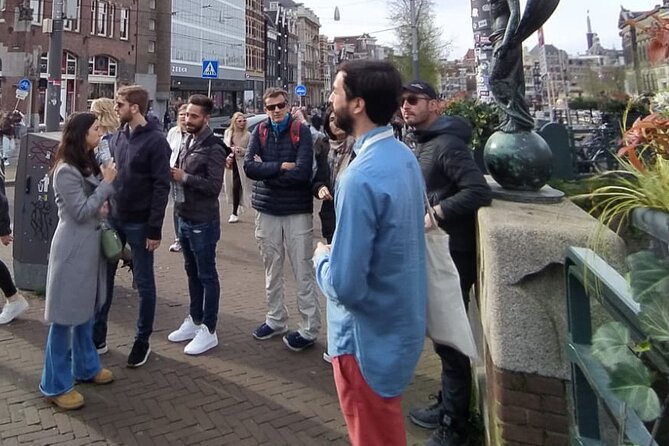
I also love the small-group vibe, capped at 15 people, which keeps the walk from turning into a shoulder-to-shoulder sprint. A highlight is that Aldo also steers you toward calmer spots, so you can actually take in views and get questions answered without feeling rushed.
One thing to consider: not every stop is ticket-free. The House on the Three Canals has an extra admission that is not included, and the tour works best in good weather.
In This Review
- Key highlights you’ll care about
- Dam Square to the Jewish Quarter: the fast way to read Amsterdam’s centre
- Meet the guide: Aldo’s style and how it changes the experience
- Stop-by-stop: what you’ll learn as you walk
- Dam Square: Amsterdam’s starting point and origins
- Oudezijds Voorburgwal: the oldest canal and the town’s early purpose
- Oudezijds Achterburgwal: history around the Red Light District
- House on the Three Canals: WWII hideouts and the Nazi occupation
- Rokin: why Dutch water management is a survival skill
- Muntplein: old walls, church bells, and the tulip connection
- Halvemaansbrug: houseboats and the famous dancing houses views
- Staalmeestersbrug: iconic church views and Protestant reform
- Memorial Plate Jewish Amsterdam Walk: tolerance and how the story developed
- Price and value: what you pay for, what you don’t
- Logistics that keep the walk smooth (meeting points, mobile tickets, transport)
- After the tour: how to turn the history into a better itinerary
- Who this walking tour is best for
- Should you book this tour?
- FAQ
- How long is the City Centre of Amsterdam tour?
- What is the price per person?
- Is the tour in English?
- Is a monument or museum ticket included?
- Do I need to bring food or drinks?
- Where does the tour start and end?
- How many people are in a group?
Key highlights you’ll care about
- A tight route across central Amsterdam that ends in the Jewish Quarter
- Most stops are ticket-free, so you’re paying mainly for the stories and guidance
- Small group size (max 15) for easier conversation and photo time
- Canal history with real-world purpose, including why water management matters
- WWII and occupation stories at the House on the Three Canals area
- Practical recommendations at the end, including where to eat and what to do next
Dam Square to the Jewish Quarter: the fast way to read Amsterdam’s centre
If Amsterdam feels like a maze of canals and bridges, this tour gives you a legend to follow. You start at Dam 39, right by Dam Square, and you work your way through the city centre along canals, squares, and key bridge views. It ends in the Jewish Quarter at De stem van Amsterdam, Amstel 1, which is a smart place to finish if you want to keep exploring right after the walk.
What I like most is the pacing. Each main stop is about 10 minutes, so the tour doesn’t drag, and you’re not stuck staring at one wall for the whole time. It’s built for orientation: by the end, you’ll have a better sense of why Amsterdam’s layout looks the way it does, and why certain areas gained the reputations they have.
And because it is an English tour with a live guide, you get context in the moment—exactly what you need when you’re trying to make sense of canals, churches, and old buildings in daylight.
You can also read our reviews of more tours and experiences in Amsterdam.


Meet the guide: Aldo’s style and how it changes the experience
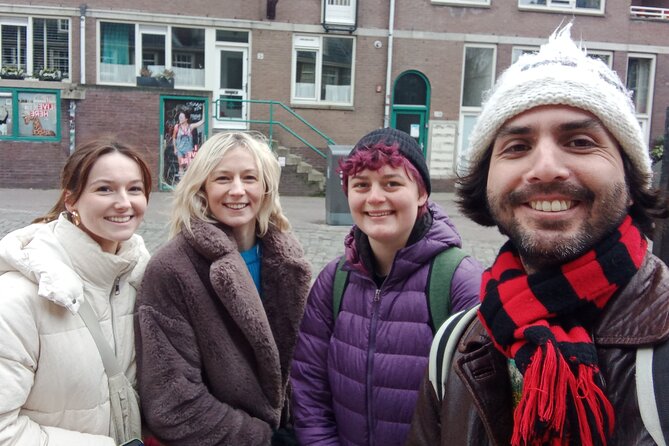
This tour’s quality comes down to the guide, and the name you’ll hear most is Aldo. The feedback is consistent: Aldo is engaging, pays attention to different interests, and keeps things moving without losing the thread of the story.
I also appreciate the tone. It isn’t just facts dumped at you. Aldo has a way of layering explanations—origins of Amsterdam, canal design, religious buildings, and later darker chapters like WWII—so it feels like you’re learning a connected story, not memorizing dates.
Another small but big plus: the tour favors less-crowded spots when possible. That matters in Amsterdam. If you’ve ever tried to stop on a crowded bridge while everyone else stops at the exact same time, you know how quickly photos and listening become a hassle. A quieter viewpoint makes the history easier to absorb.
Stop-by-stop: what you’ll learn as you walk
Here’s what the route is really doing. Each stop adds a different lens—geography, religion, conflict, and how the city rules itself through water and trade.
Dam Square: Amsterdam’s starting point and origins
You begin at Dam Square, one of the oldest locations in the city. This opening matters because it sets the baseline. Even if you only know Amsterdam from postcards, this is where you start connecting the city’s shape with its early identity.
You’ll get an overview of the origins of Amsterdam right at the place where most people first land—making the rest of the walk easier to follow.
Oudezijds Voorburgwal: the oldest canal and the town’s early purpose
Next is Oudezijds Voorburgwal, tied to the oldest canal of Amsterdam. The big idea here is not just that canals are pretty. You learn how the canals were laid out and what they were for, and you see how religious buildings fit into that early structure.
This stop is great for making the city’s waterfront make sense, especially if you’ve wondered why the canals look the way they do and how they shaped everyday life.

Oudezijds Achterburgwal: history around the Red Light District
Then you move to Oudezijds Achterburgwal, where the tour explains the history of the Red Light District and the culture around drugs in Amsterdam.
A heads-up: this is part history lesson, part social context. If you want purely architectural stops, you might find this section more direct than you expected. But if you’re trying to understand Amsterdam honestly—reputation, rules, and how society views certain activities—it belongs here.
House on the Three Canals: WWII hideouts and the Nazi occupation
At House On The Three Canals, you’ll hear about Nazi occupation and hidden printing press stories tied to the building. This is the tour’s darker, heavier moment, and it often lands hardest because it’s so close to something you can still see and imagine in your head.
Important practical note: admission to this monument is not included. So if you want to go inside or pay the extra fee, budget time and money for that. If you’d rather keep the walk simple, you can still learn from the outside context, but you may miss the full scope of what the site offers.
Rokin: why Dutch water management is a survival skill
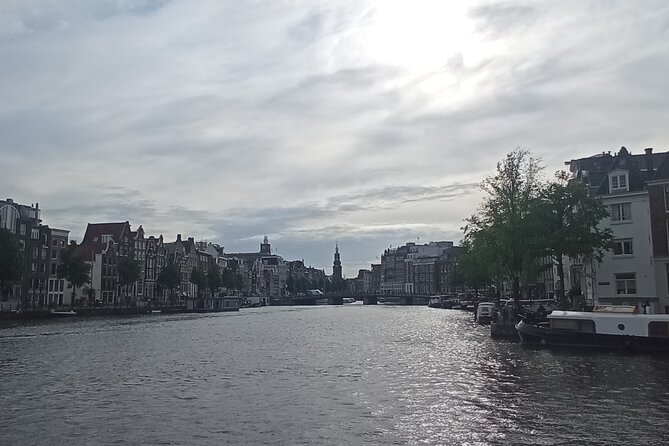
At Rokin, near where the Amstel river ends, the focus shifts to water management. This is a key Dutch topic, and the tour connects it to why water control has always been crucial in the Netherlands.
I like this stop because it turns the canals from scenery into engineering and survival. Once you understand the role water management played, you’ll notice more on later walks: the canal edges, the city’s relationship to water, and why the Dutch treat water like a system, not a backdrop.
Muntplein: old walls, church bells, and the tulip connection
Then it’s Muntplein, next to the flower market. You’ll hear about the old walls of the town, the presence of bells across the city centre, and how the tulip entered the country.
This stop works well if you enjoy the way Amsterdam mixes commerce, culture, and religion. It also gives you an easy bridge to what you might do after the walk—like checking out the flower market area while the tulip story is fresh in your mind.
Halvemaansbrug: houseboats and the famous dancing houses views
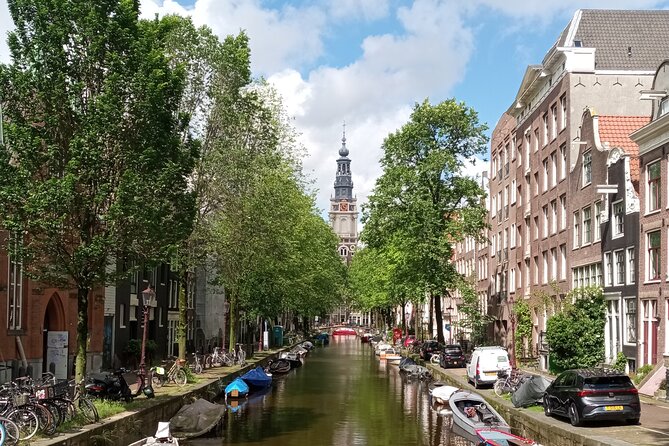
At Halvemaansbrug, you get a classic perspective over the Amstel river. You’ll appreciate examples of Amsterdam houseboats and the famous dancing houses.
This is a “look first, understand after” moment. Standing at a bridge, it’s easier to grasp why some houses lean and how the city’s building traditions interact with canals and water levels.
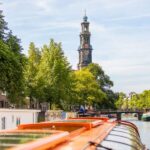
Staalmeestersbrug: iconic church views and Protestant reform
At Staalmeestersbrug, you get one of the iconic views in the centre. The tour then explains changes brought by the Protestant Reformation in churches across Amsterdam.
If you’re walking past church facades and wondering why they look the way they do, this is where you get a framework. You stop seeing them as random old buildings and start seeing them as evidence of big shifts.
Memorial Plate Jewish Amsterdam Walk: tolerance and how the story developed
The tour ends at the Memorial Plate Jewish Amsterdam Walk area in the Jewish Quarter. You’ll learn how the Jewish Quarter is part of Amsterdam’s broader history and how tolerance developed in the city.
Ending here is smart. The walk starts with origins and moves through religion, social life, war, and governance. Then it finishes with a long view on how different communities lived together. It gives you a final lens that’s both human and deeply tied to the city’s identity.
Price and value: what you pay for, what you don’t
The price is $12.04 per person, and the value is better than it looks at first glance because most stops have free admission. So you’re paying primarily for the live guide, the route design, and the explanations that connect the landmarks.
Still, you should know the one exception: House on the Three Canals requires an admission ticket not included. If that stop matters a lot to you, factor in the extra cost.
Also, the tour does not include food or drinks. Bring a water bottle. You’ll be walking for roughly 1 hour 45 minutes, and even short tours feel longer when you’re thirsty in warm weather.
The good news: the route is structured around short segments, so you can stay comfortable and keep your energy for the rest of your day.
Logistics that keep the walk smooth (meeting points, mobile tickets, transport)
You’ll start at Dam 39, 1012 JS Amsterdam. This is a central meeting point, easy to reach from many areas. You’ll finish at Amstel 1, 1011 PT Amsterdam, near De stem van Amsterdam, so you’re not stuck back at the core square after the tour.
You get a mobile ticket, and you’ll receive confirmation at booking time. The tour is offered in English, and service animals are allowed. It’s also near public transportation, which matters if you’re pairing this with museums or dinner later.
Group size stays under 15 travelers, so the guide can manage the pace and answer questions without turning the walk into a line.
One more practical factor: the experience requires good weather. If it gets canceled for weather, you’ll be offered another date or a full refund.
After the tour: how to turn the history into a better itinerary
A strong part of this tour is that you get personal recommendations at the end. You’re not just leaving with photos—you’re leaving with next steps.
Use that time well. Ask what fits your interests:
- If you like architecture and old streets, ask what to see next near the route.
- If you want food, ask where to eat that matches your vibe and budget.
- If you’re curious about canals and water, ask what viewpoints or short walks make the most sense after your orientation.
This is the kind of tour that helps you stop guessing. Once you’ve heard the stories, you can walk with a purpose instead of just following crowds.
Who this walking tour is best for
I’d put this tour near the top of the list if you want:
- An orientation walk through central Amsterdam without committing to a long museum day
- A mix of canals, religion, and major historical moments, including WWII
- A guide who answers questions and keeps you engaged
- A manageable length on arrival day or before dinner plans
It may not be ideal if you only want upbeat sightseeing and zero discussion of darker topics. The route does touch on the Red Light District context and WWII occupation, and those sections are part of learning Amsterdam honestly.
Also, the tour is marked as suitable for most travelers. If you have mobility concerns, the safest bet is to check with the operator before booking, since it is a walking experience through the centre.
Should you book this tour?
Yes, if you want a smart, cost-friendly way to understand Amsterdam’s core in under two hours. $12.04 is hard to beat for a guided walk that covers Dam Square, multiple canals, the WWII-connected House on the Three Canals area, and a thoughtful ending in the Jewish Quarter—especially since most stops are free admission.
I’d say skip it or choose another option if you’re not interested in the heavier themes in the route, or if you strongly dislike paying extra for entry at House on the Three Canals.
If you’re short on time and you want to leave feeling like Amsterdam finally clicked, this is the kind of tour that does that fast.
FAQ
How long is the City Centre of Amsterdam tour?
It lasts about 1 hour 45 minutes.
What is the price per person?
The price is $12.04 per person.
Is the tour in English?
Yes, it is offered in English.
Is a monument or museum ticket included?
Most stops have free admission, but House On The Three Canals has an entrance fee that is not included.
Do I need to bring food or drinks?
Food and drinks are not included, so you should bring a water bottle.
Where does the tour start and end?
It starts at Dam 39, 1012 JS Amsterdam and ends at Amstel 1, 1011 PT Amsterdam (De stem van Amsterdam).
How many people are in a group?
The tour has a maximum of 15 travelers.
If you tell me your travel dates and what you care about most (canals, WWII, churches, food, or Jewish history), I can help you decide whether this timing works best with the rest of your Amsterdam plan.