REVIEW · THE HAGUE
Private Tour of Delft & Rotterdam with Cube House and Transfer
Book on Viator →Operated by Discover Delft · Bookable on Viator
Delft’s canals and Rotterdam’s angles in one loop. This private tour strings together classic Delft history and 70s Cubic House architecture, with a live guide who keeps the story moving city to city. I especially like how the route mixes famous landmarks with quick, satisfying “wait—why is that here?” moments.
Two things I really like: you get a guided walk through Delft’s key sights (Prinsenhof, Oude Kerk, Nieuwe Kerk, and the Vermeer-connected spots) and then you jump to Rotterdam for the Cubic Houses from inside plus the Markthal and Old Harbour area. One possible drawback: it’s primarily a walking itinerary, so if rain or mobility issues are in play, wear good shoes and tell your guide up front what pace you need—one recent guest pointed out the description should be clearer that it’s not a drive-everywhere tour.
In This Review
- Quick highlights before you go
- A private Delft-to-Rotterdam day with a tight, human pace
- Delft’s Prinsenhof and the Old Church brewing-quarter vibe
- Grote Markt to the New Church: a royal burial stop with tower options
- Vermeer connections: VOC armory and Maria van Jessekerk towers
- Beestenmarkt and the walk toward Delft Station
- Delft to Rotterdam by train: fast, easy, and included
- Rotterdam Cubic Houses: an architecture oddball tour win
- Oude Haven terraces and the White House skyline survivor
- Markthal: your food hall detour with big art overhead
- Sint-Laurenskerk by the Market Hall: a 14th-century tower that lived
- Ending back at Blaak: the Rotte dam spot and optional free time
- Price and value: what $228.78 per person buys you
- Who this tour fits best (and when you should adjust expectations)
- Should you book this private Delft & Rotterdam tour?
- FAQ
- How long is the Private Tour of Delft & Rotterdam?
- Is the train between Delft and Rotterdam included?
- Do I need to buy a ticket for the Cubic House?
- Is this tour private?
- Do you offer hotel pick-up and drop-off?
- What language is the tour in?
- Where does the tour start and end?
- Is mobile ticketing used?
- What is the cancellation window?
Quick highlights before you go
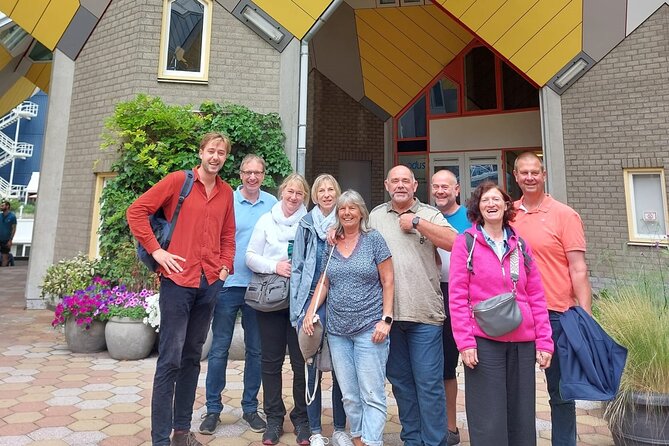
- Cubic House entry included, and you’ll even view an apartment from the inside
- Train hop between cities is built in (Delft Station to Rotterdam Blaak, 18 minutes)
- Many stops are free to see, so your money goes to the guide and the one paid attraction
- Vermeer trail moments in Delft, tied to specific locations you’ll pass by
- Rotterdam’s “old meets new” contrast, from Oude Haven terraces to Markthal’s big interior showpiece
- Private format, so your group stays together with the guide (no crowd herding)
A private Delft-to-Rotterdam day with a tight, human pace
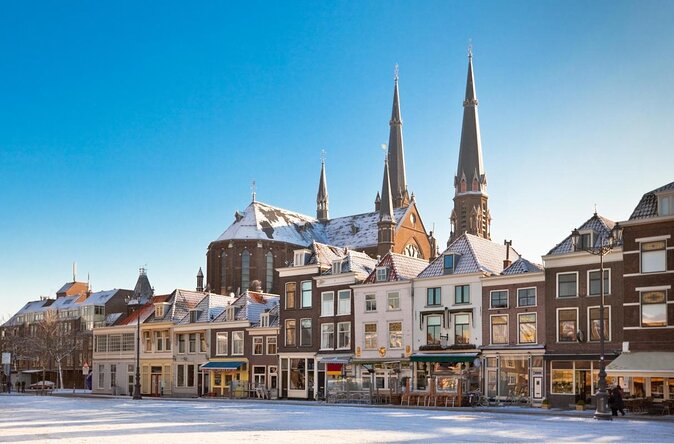
This is sold as a private tour, typically about 4 to 5 hours, built to feel like two city mini-circuits rather than a rushed checklist. You start in Delft, then take the train over to Rotterdam Blaak, and finish around the Blaak area. You also have options that include hotel pick-up and drop-off (if you select that option), otherwise you meet the guide at the meeting point.
I like that the tour has a built-in “reset” because the train ride naturally breaks up the walking. It’s also useful for first-timers: you don’t have to figure out how to get from one city to the other mid-day. One practical note: the stops are short (often 10–15 minutes), which keeps energy up but means you’ll want to ask questions if anything catches your interest.
You can also read our reviews of more tours and experiences in The Hague.



Delft’s Prinsenhof and the Old Church brewing-quarter vibe
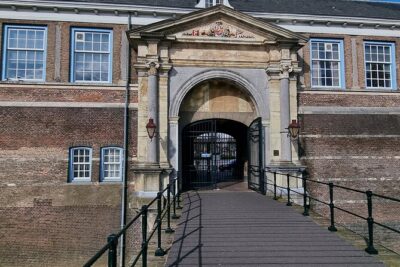
Delft starts with a walk into the Museum Prinsenhof area, where you get the sense that this wasn’t just pretty canal scenery—it mattered in Dutch history. Even though the stop time is brief, you’re guided through the significance of the site and how it shaped later events.
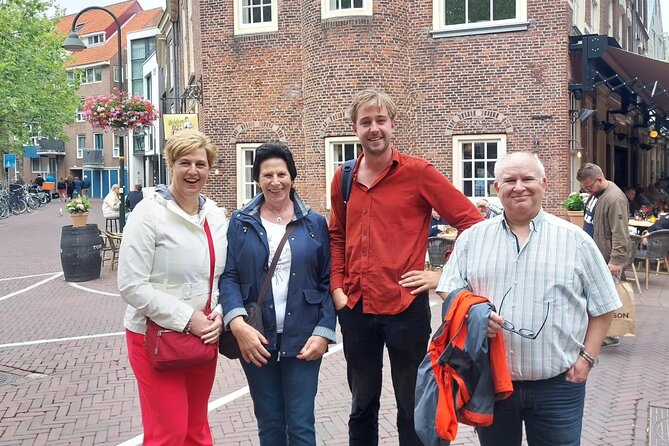
Next you head toward the Oude Kerk (Old Church), in what’s described as the old beer brewing quarter. That detail alone helps the city click, because Delft’s identity wasn’t only about painters and spires; it was also tied to everyday craft and trade. You’ll also see the Old Church building that many people recognize instantly—plus you’ll get the explanations behind its odd lean, and why it is such a visual talking point.
Then there’s the Gemeenlandshuis van Delfland, noted for a heavily decorated facade near the Oude Kerk. I like this stop because it’s the kind of building that looks impressive even from the outside, yet people often miss what it actually meant. A good guide will connect the decoration to Delft’s practical power and the systems that kept the region functioning.
Grote Markt to the New Church: a royal burial stop with tower options
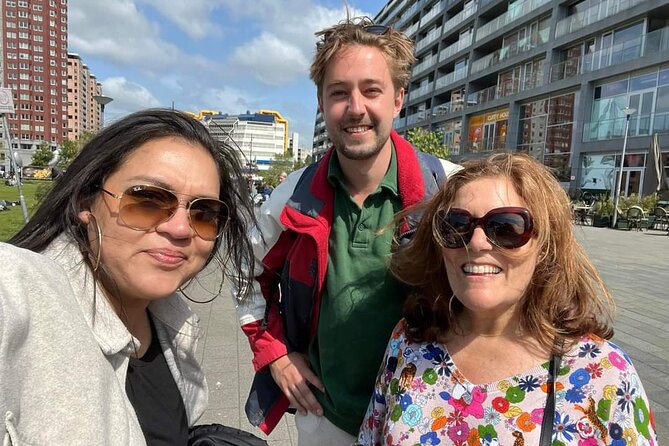
As you move toward the Stadhuis Delft (the older town hall, partly dating to the 13th century), you’ll walk into the atmosphere of the Grote Markt square. Even if you don’t go inside, the age alone sets a mood: you’re standing in a space that’s been central for a long time. The guide’s job here is to make the old stone feel understandable, not just old.
From there it’s to the New Church (Nieuwe Kerk). This is a big deal in the Netherlands: it’s described as the second-highest church in the country, and the royal family is buried here. If you want to add more views, there’s an optional church tower climb available through the guide (you can be warned it’s a climb—think stairs, not casual sightseeing).
What I like about this portion is the mix of symbolism and function. A church that hosts royal burials is heavy on meaning, but the tower option makes it useful too: you get a physical payoff for the effort if you choose it.
Vermeer connections: VOC armory and Maria van Jessekerk towers
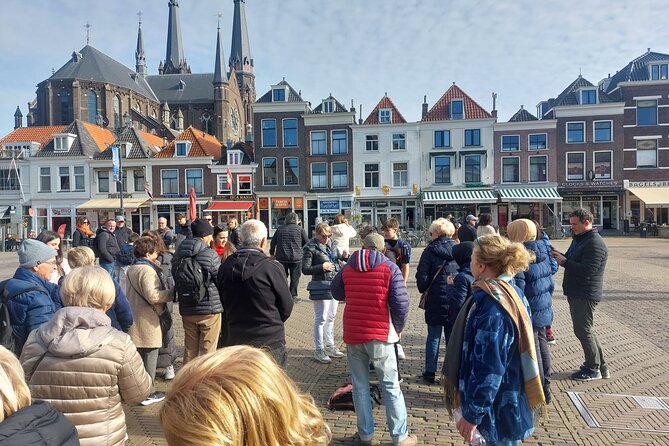
One of the best parts of this tour is how it turns Delft into a story map for Vermeer-related spots. You’ll walk by the Armamentarium, which is a former weapons armory of the V.O.C. and a sign of how Delft fit into the Golden Age Dutch Republic. That context matters because you see the city’s wealth and ambition before you get to the “art city” label.
The tour also highlights the exact idea of where Vermeer was standing when he made the famous View of Delft painting. The time is set aside at the canal area, and the guide connects architecture, waterways, and viewpoint logic so the painting feels less mysterious. Even if you’re not a hardcore art person, this approach usually makes you look twice at buildings you’d otherwise treat like background.
After that, you go back north to Maria van Jessekerk, the first Catholic church built in the center of Delft. The notes call out something “funny” about the two towers, plus the fact that it stands on the spot where Vermeer used to live and make paintings. I like that the guide doesn’t treat Vermeer like a floating genius; instead, you get a sense of where he worked and how the city’s religious life shaped the streets around him.
Beestenmarkt and the walk toward Delft Station
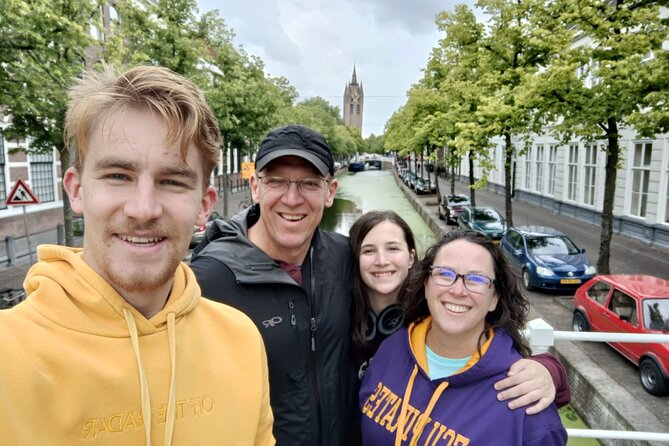
You finish the Delft core with a pass by Beestenmarkt, described as one of Delft’s coziest squares—great for a beer or lunch. This stop is brief, but it’s useful because it gives you a real-world pacing reset: you’ve been moving from landmark to landmark, so you’re finally near an actual hangout square.
Then you walk toward Delft Railway Station for the train to Rotterdam Blaak. This part helps the logistics feel natural rather than stressful. The walk also sets you up for something practical: once you’re at the station, you’ve already seen the city transition toward the wider region.





Delft to Rotterdam by train: fast, easy, and included
The transfer is straightforward and time-efficient: it’s 18 minutes by train, from Delft Station to Rotterdam Blaak, and the train fare is included (listed as €4.10 included in the activity price). The route is set up so you’re not staring at a timetable while your tour time ticks away.
One detail that I really appreciate: the tour is guided through the experience even on the move. That means you arrive ready to start Rotterdam—not mentally scrambling for where you’re supposed to be next.
Rotterdam Cubic Houses: an architecture oddball tour win
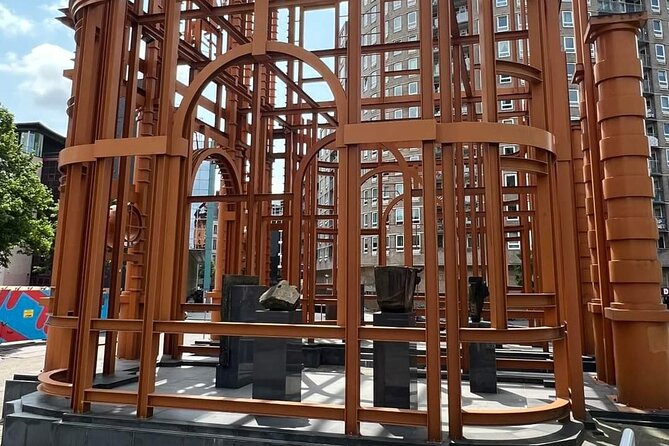
When you step off in Rotterdam, you immediately face one of the city’s signature surprises: the Kijk-Kubus Museum-house (Cubic Houses, by Piet Blom). These were built in the 1970s and are described as a way of building a village inside a city. The tour doesn’t just point at the shapes from outside—it includes entry, and you’ll see one of the apartments from the inside.
This is the stop that justifies the tour price the most for many people because it’s the one attraction with an actual ticket included. And because you go inside, you understand the design instead of just admiring the weirdness. It also adds variety after Delft’s older brick and church silhouettes.
Oude Haven terraces and the White House skyline survivor
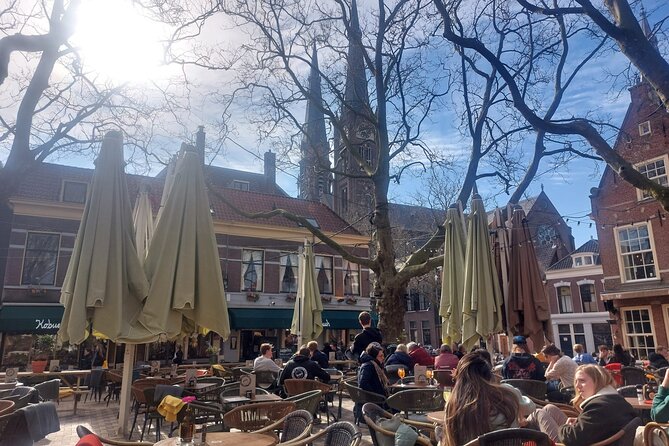
After the Cubic Houses, the tour moves into Oude Haven (Old Harbour). This area is now a lively recreational zone with terraces, and you’ll also see more Piet Blom architecture in the mix. The tour notes that ships are anchored there for restoration, which gives the harbour a living feel rather than “photo set only.”
Then comes the Witte Huis (White House), described as the oldest skyscraper of Europe (dating to 1898) and one of the few buildings to survive Rotterdam’s bombing. This is a powerful contrast point: Rotterdam is known for reinvention after destruction, and the White House is a physical reminder that not everything was erased.
I like how this part stays grounded. You’re not just seeing “modern city,” you’re seeing the layered story of what survived, what changed, and what was rebuilt.
Markthal: your food hall detour with big art overhead
Next you head to the Markthal, the impressive Market Hall right near Blaak. The tour describes two sides containing apartments, and inside you can taste foods from around the world. It also calls out the ceiling as a standout, with one of the biggest pieces of art on the planet.
Even if you don’t plan to buy food, this is still a great stop because it gives you a sensory break from churches and street corners. And if you do want a snack, it’s easier to grab something here than trying to time it later.
Sint-Laurenskerk by the Market Hall: a 14th-century tower that lived
Right next to the Markthal you’ll see the Grote of Sint-Laurenskerk. The tour description emphasizes the 14th-century church and the fact that the tower survived Rotterdam’s bombing. Today it’s mostly used as an event location.
This stop works well as a “breathing space” after the busy, commercial energy of Markthal. It also helps you read Rotterdam more clearly: the city’s story is not only glass and angles; it includes old stone that refused to disappear.
Ending back at Blaak: the Rotte dam spot and optional free time
The tour ends around Blaak again. The notes say this is where the original dam over the Rotte was built, and that Tuesdays and Saturdays you can find a big outside market here. Ending at Blaak is convenient because it’s also a major transit hub—so you can extend your day or head home without trouble.
If you want to keep going, you’ve got an easy base point. If you just want a clean finish, you’re done without having to backtrack through the same streets for hours.
Price and value: what $228.78 per person buys you
At $228.78 per person, you’re paying for a fully private setup across two cities. That’s not cheap, but the value is clearer when you look at what’s included:
- Two guided city walks (Delft and Rotterdam) rather than one generic city stop
- Cubic House admission included, which is the only ticketed attraction on the list
- Train transfer included, saving you time and making the day smoother
- Air-conditioned vehicle listed for short transfers between Rotterdam and Delft (and pick-up/drop-off options if selected)
- Many sights are free to enter, so you’re not layering extra ticket costs on top
Where the price really shows its worth is the guide. The strongest praise from recent guests was about how well the history was explained and how helpful guides were with pacing. Names mentioned include Remy, Robin, Alberto, and Tristan, and the consistent theme was clear, friendly communication and a real interest in the region.
Who this tour fits best (and when you should adjust expectations)
This tour is a great match if you want both cities but don’t want the mental juggling of routing, timing, and tickets. It also suits you if you like architecture that tells a story—Delft’s medieval-to-Baroque feel, then Rotterdam’s post-war and design experiments like the Cubic Houses.
It’s also a good choice for couples and small families who want a private pace. Because it’s private, you can ask for a bit more time at a stop that grabs you.
One caution: it’s not a drive-everywhere tour. The itinerary is built around walking segments and short viewing stops, with the train doing the heavy lifting between cities. If weather is rough or you have mobility limits (like foot pain), tell the operator or guide what pace you need before you start so the route can work for you.
Should you book this private Delft & Rotterdam tour?
Book it if you want the efficient Delft-to-Rotterdam combo with a guide who explains what you’re seeing, and you care about getting into the Cubic House rather than just standing outside it. The route is short, focused, and well-paced for a half-day adventure that still feels like more than a drive-by.
Skip (or modify) if you’re expecting long vehicle rides between every stop, because the experience is designed around walking. Also, if your plan is to spend hours inside museums, this format may feel too “see and learn” rather than “tour and linger.”
If you’re flexible and you like history with real location details—especially the Vermeer-linked moments—this one is an easy yes.
FAQ
How long is the Private Tour of Delft & Rotterdam?
It runs about 4 to 5 hours.
Is the train between Delft and Rotterdam included?
Yes. You take the train from Delft Station to Rotterdam Blaak (about 18 minutes), and the fare is included (listed as €4.10).
Do I need to buy a ticket for the Cubic House?
No. The tour includes the ticket to enter a Cubic House and you can view an apartment from the inside.
Is this tour private?
Yes. It’s a private tour/activity, and only your group participates.
Do you offer hotel pick-up and drop-off?
Pick-up and drop-off are available if you book the option that includes it. If you choose that, you’ll be picked up up to 1 hour before the start and dropped off afterward.
What language is the tour in?
It’s offered in English.
Where does the tour start and end?
This experience is in The Hague area as the listing location, but the itinerary moves through Delft and ends in a different location around Rotterdam Blaak.
Is mobile ticketing used?
Yes. A mobile ticket is offered.
What is the cancellation window?
You can cancel for a full refund up to 24 hours before the experience’s start time. Free cancellation is available.