REVIEW · THE HAGUE
The Hague: Hop-on Hop-off Heritage Tram Tour
Book on GetYourGuide →Operated by Tourist Tram The Hague · Bookable on GetYourGuide
A historic tram makes the city feel personal. This Hop-on Hop-off Heritage Tram in The Hague lets you ride a charming, older-style vehicle all day while an audio guide helps you spot the biggest sights. I like that it runs on a loop with 16 hop-on stops, so you can build a route that matches your day instead of following a strict tour script.
Two things I really appreciate: the multilingual audio guide with earphones, and the simple fact that you get unlimited rides for one day. The main drawback is practical: the tram runs every 30 minutes, so if you jump off to linger somewhere, you’ll want a little patience waiting for the next cycle.
In This Review
- Key takeaways before you ride
- A heritage tram is an easy way to learn The Hague
- Price and value: what $21 really buys you
- Timing you can count on (and how not to get stuck)
- Your route, mapped in human terms: city center to sea to peace
- Stop-by-stop guide: what to use each hop for
- A note on where you’ll spend time
- The audio guide: useful, clear, and worth listening to
- Comfort and rules: small details that affect your day
- Who should book this heritage tram tour?
- Should you book the Hop-on Hop-off Heritage Tram?
- FAQ
- What is included with the ticket?
- How often does the tram run, and when?
- How many hop-on stops are there?
- Where can I start the tour?
- What languages are available for the audio guide?
- Are food or drinks allowed on the tram?
- Is the tram accessible for wheelchairs or mobility impairments?
Key takeaways before you ride
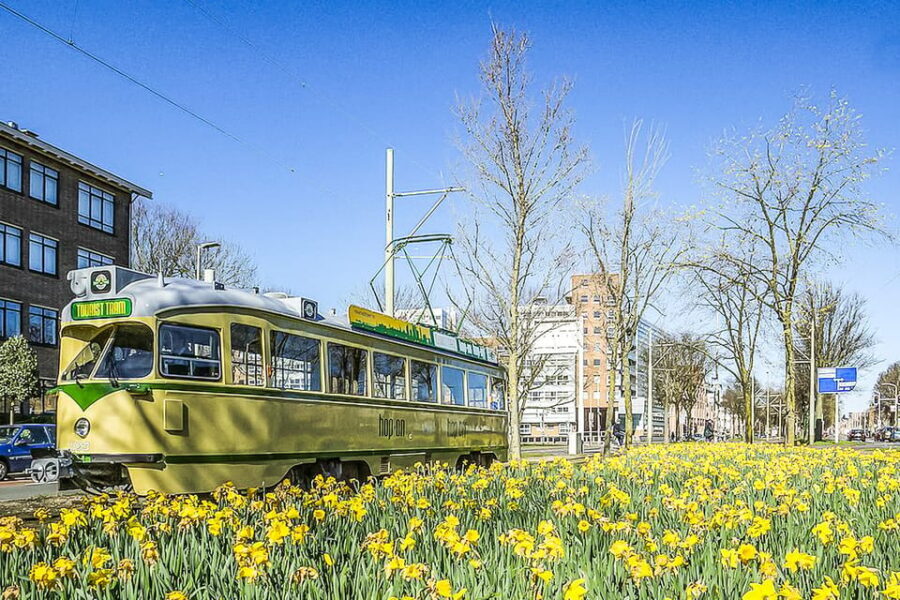
- Historic 65-year-old tram experience: you’re not stuck in a bus line, and the ride feels like part of the day
- Unlimited day ticket across 16 stops, including Central Station and the Peace Palace area
- 10-language audio tour with earphones, even in The Hague dialect
- Kurhaus and Scheveningen beach connection using the same tram circuit
- Every 30 minutes timetable (10:15–16:45), so timing matters if you’re trying to pack in everything
A heritage tram is an easy way to learn The Hague
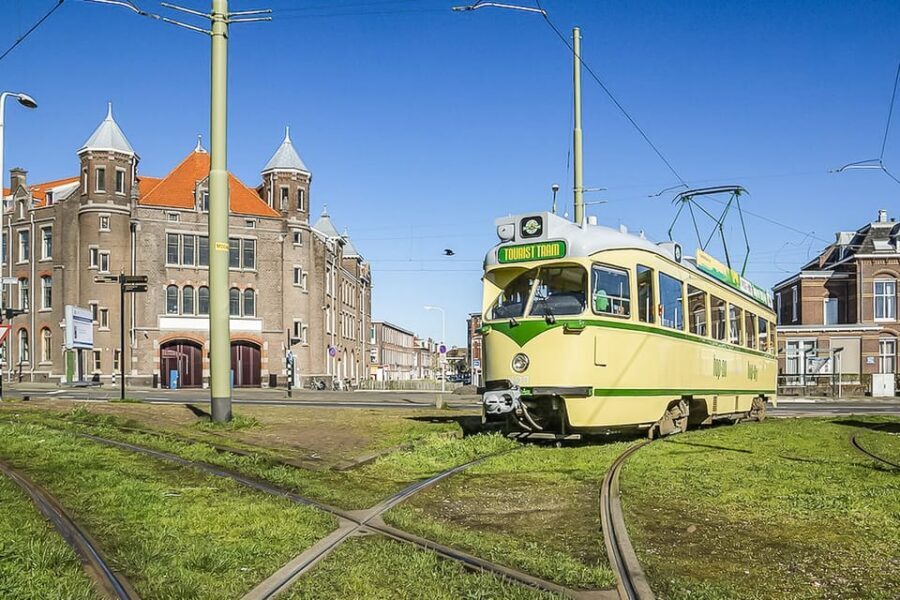
The Hague can be an odd city for first-timers. It’s not “one landmark, then everything else.” It’s government buildings, seaside vibes, and neighborhoods that feel different street to street. That’s where a hop-on tram shines: you get transportation and context in one package.
This ride stands out because you’re on a historic tram—about 65 years old—with an audio tour that helps you connect what you see to what it means. Instead of just passing by, you hear why the Parliament and Peace Palace matter, and you can hop off when you want photos or a slower look. It’s a smart mix of movement and storytelling, without the stress of planning each leg.
And since you can start at any of the stops, the tram also works if you arrive late in the day or want to begin closer to where you’re staying. I like that flexibility. You’re not forced into a single start point.
You can also read our reviews of more tours and experiences in The Hague.



Price and value: what $21 really buys you
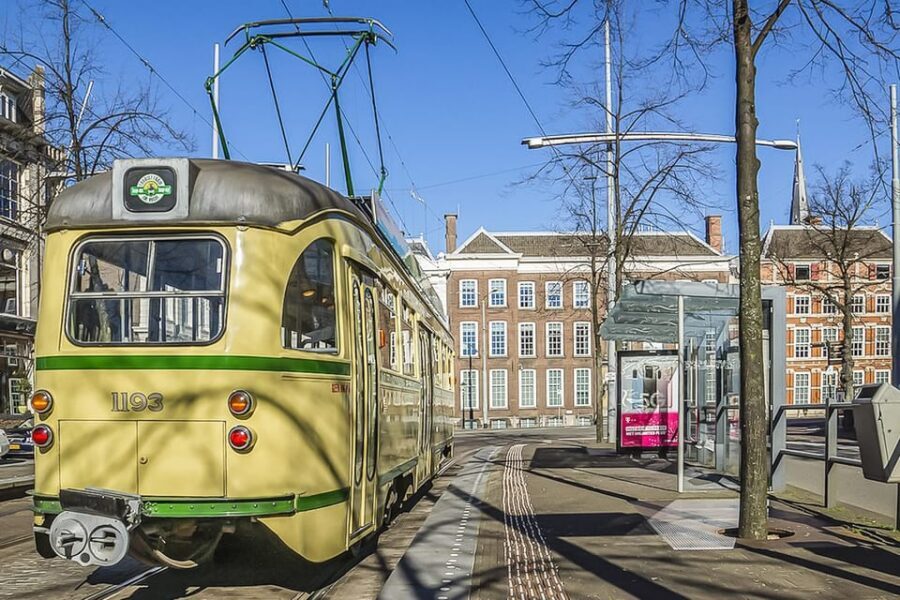
At $21 per person for a 1-day ticket, this is the kind of deal that only works if you use it like a tram tour, not like a quick ride. The value comes from two bundled perks:
First, you get unlimited access to the tram all day. If you spend 30 minutes somewhere, then come back for the next segment, the ticket still pays off.
Second, the audio guide is included. You get earphones at boarding, and you’re offered narration in multiple languages. The cost isn’t just for transportation—it’s for guided sightseeing while you ride.
Compared with paying for taxis or trying to do everything with short point-to-point trips, the tram is a practical way to keep your day smooth. It’s also ideal when you don’t want to negotiate transit, transfers, or walking distances in a new city.
Timing you can count on (and how not to get stuck)
The tram runs every 30 minutes from 10:15 AM to 4:45 PM. The first departure from Stop 1 (Gravenstraat) is 10:15 AM, and the last full round departs from Stop 1 at 4:45 PM.
Here’s the practical trick: plan your “big hop-offs” earlier in the day. If you’re hoping to do a longer stop—like heading toward Kurhaus and then building time for the Scheveningen beach area—you’ll feel more relaxed if you’re not doing it at the very end of the loop.
Also, because the schedule is every 30 minutes, you don’t want to treat it as a minute-by-minute subway replacement. In exchange for that fixed rhythm, you get a one-ticket sightseeing route with minimal decision-making.
Your route, mapped in human terms: city center to sea to peace
The circuit is designed to connect major zones without you having to plot every transfer. On the official stop list, you’ll find everything from the city center (Centrum) to Central Station, then onward to the Kurhaus area and the Peace Palace / Vredespaleis zone.
A good way to think about the ride is as three themes:
- City & landmarks: starting in the center and looping through key downtown access points
- Seaside connection: getting to the Kurhaus area and using it as your gateway toward Scheveningen beach
- Government and peace institutions: the Peace Palace stop is a focal point, and you’ll also hear about the Houses of Parliament as part of the story
If you want a simple plan: ride through the center first so you get your bearings, then choose whether you want more time on the beach side or more time around the Peace Palace zone.
Stop-by-stop guide: what to use each hop for
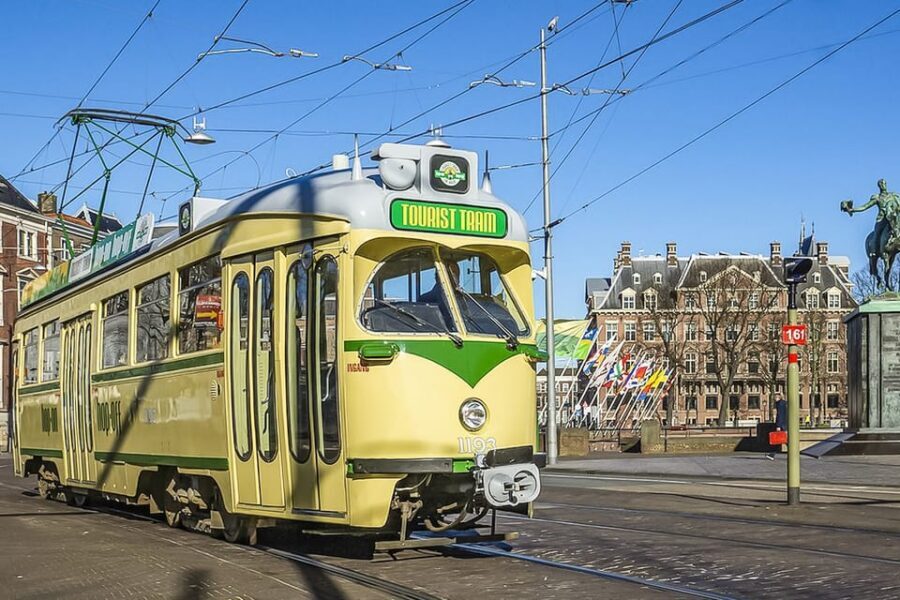
Below is how I’d use the 16 stops to shape your day. I’m keeping it practical: what each stop is best for, plus one small watch-out where relevant.
Stop 1: Gravenstraat (city centre start)
Start here if you’re near the center. It’s also the easiest reference point because it’s marked as the meeting location for Stop 1.
Stop 2: Centrum
Use this when you want city-core convenience—ideal for quick hop-ons and hop-offs as you bounce between photo stops.
Stop 3: Centraal Station
This stop is your transit safety net. If you’re timing your day around museum visits or train connections, it’s a logical place to rejoin the route.
Stop 4: Malieveld
This is one of the city-access stops on the loop. I’d use it as a strategic “I want to be near this area” option rather than expecting one single must-do sight.
Stop 5: Madurodam
Another well-known stop by name, and useful if that’s on your list. The main value is you can reach it without walking your whole day.
Stop 6: Nieuwe Duinweg
Good for breaking up the route. If you want a slower pace and don’t want to wait until the Kurhaus side, this stop helps you do it.
Stop 7: Kurhaus
This is one of the big reasons to take the tram. Hop here if you want to connect to the Kurhaus area and then head toward the Scheveningen beach side on foot.
Stop 8: Zwarte Pad
A flexible stop for wandering and reassessing. I treat stops like this as “choose your pace” points: you can get off, then decide if you want to stay nearby or continue.
Stop 9: Keizerstraat
Another neighborhood access stop. Use it to break the loop into manageable chunks and keep walking distances from getting too long.
Stop 10: Statenlaan
This stop helps you keep the circuit going without forcing you into one long walk. If your day includes multiple breaks, it’s handy.
Stop 11: Frederik Hendriklaan
Also a neighborhood connector. I’d use it when you want to adjust timing—get off, stretch, then continue when the tram comes back around.
Stop 12: World Forum / Johan de Wittlaan
A named area stop that’s useful if your interests run toward that part of the city. The tram’s value here is straightforward: it gets you there without planning.
Stop 13: Vredespaleis / Peace Palace
This is the stop you build around for sure. If you care about the Peace Palace, this is your cleanest hop point and the audio guide will help you understand what you’re looking at.
Stop 14: Mauritskade
A convenient rejoining stop. It’s also a practical choice if you want to hop off, then return to the loop without backtracking.
Stop 15: Kneuterdijk
A city-area stop that’s good for pacing. If you’ve been walking and want to shorten the rest of your sightseeing, this works well as a mid-route anchor.
Stop 16: Kerkplein
A final stop that makes it easier to end your day close to where you want to wander next. It’s a good option if you prefer finishing with a neighborhood walk.






A note on where you’ll spend time
Even though the tram passes a lot of points, the time-sink choices are usually these: Peace Palace and the Kurhaus/Scheveningen side. If you’re short on time, give those priority and use the other stops mainly to break up travel time and grab quick photo moments.
The audio guide: useful, clear, and worth listening to
One of the best parts here is that the audio tour isn’t just background noise. You get a guided story for major sights, and it’s available in Dutch, English, French, Spanish, Italian, Russian, Chinese, Japanese, German, plus The Hague dialect. Earphones are provided when you board.
Language range matters more than you’d think. If you’re traveling with mixed-language group members, you’re all on the same ride with the same structure, just in your own language.
Practical tips I’d follow:
- If you’re trying to photograph or step out, listen a few sentences ahead so you know what’s coming.
- Don’t assume the sign at the stop is obvious in every moment. Some people found stop signage hard to spot, so watch for the Tourist Tram stickers on the posts.
- If you’re very sensitive to audio volume, know that some segments can feel louder than others for certain listeners—especially between Central Station and Madurodam.
Comfort and rules: small details that affect your day
The tram is comfortable enough for a full circuit, and staff are described as friendly and responsive. You’ll also be traveling on a historic vehicle, which comes with limitations.
Important rules:
- No food in the vehicle
- No alcohol and drugs
Accessibility note:
- This tram is listed as not suitable for people with mobility impairments.
- Wheelchairs and baby strollers only fit if they can be easily disassembled or collapsed because the tram doors are quite narrow.
- There’s no step-free access between the platform and the tram.
If you fall into the stroller or mobility category, take that seriously. The best move is to plan your stops with extra patience for getting on and off.
One more practical point: because the stops are on a repeating loop, you may occasionally feel like you’re waiting if you time it tightly. People noted the 30-minute interval and signage visibility can make finding the right stop a little stressful, especially at the start. Build a tiny buffer into your first hour.
Who should book this heritage tram tour?
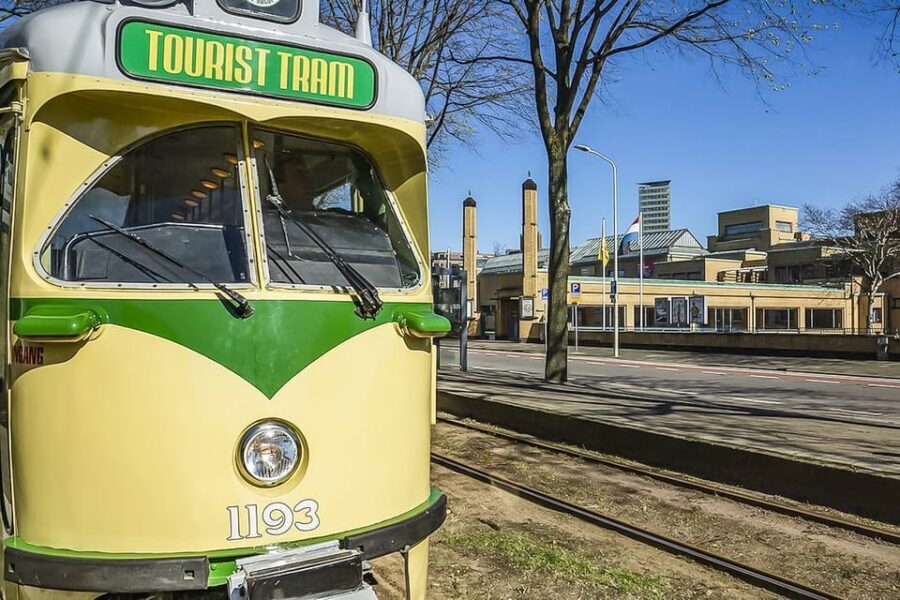
I’d recommend it if:
- You want a low-effort way to get your bearings in The Hague.
- You prefer guided sightseeing without being stuck on a bus with a rigid itinerary.
- You like the idea of pairing major sights like Peace Palace with seaside time near Kurhaus / Scheveningen.
- Your group values staying together and listening at the same pace, in different languages.
I would think twice if:
- You rely on step-free access or struggle with narrow doors and historic tram boarding.
- You need ultra-tight timing with no waiting. The schedule is fixed at 30-minute intervals.
Should you book the Hop-on Hop-off Heritage Tram?
If your goal is to see The Hague without turning the day into logistics, this is a strong choice. The unlimited day ticket, the 10-language audio guide with earphones, and the mix of government sights plus seaside access make it one of the easiest ways to experience more of the city in less planning time.
Book it if you want flexible sightseeing with a clear route rhythm. Skip it only if you’re very time-urgent, or if mobility constraints mean the historic tram boarding won’t work for you.
FAQ
What is included with the ticket?
Your ticket includes unlimited access to the Hop-on Hop-off heritage tram for the day, plus an audio guide in multiple languages with earphones provided when you board.
How often does the tram run, and when?
The tram operates every 30 minutes from 10:15 AM to 4:45 PM. The first departure from Stop 1 is 10:15 AM, and the last full round departs from Stop 1 at 4:45 PM.
How many hop-on stops are there?
There are 16 tram stops you can hop on and off at during the tour, including stops such as Centrum, Centraal Station, Kurhaus, and Vredespaleis / Peace Palace.
Where can I start the tour?
You can board the tram at any of the 16 stops. Stop 1 (Gravenstraat) is listed as the meeting point, but your start time can be flexible based on where you want to begin.
What languages are available for the audio guide?
The audio guide is available in Dutch, English, French, Spanish, Italian, Russian, Chinese, Japanese, and German, and it also includes The Hague dialect.
Are food or drinks allowed on the tram?
Food is not allowed on the vehicle, and alcohol and drugs are also not allowed.
Is the tram accessible for wheelchairs or mobility impairments?
It’s listed as not suitable for people with mobility impairments. Wheelchairs and baby strollers can only fit if they can be easily disassembled or collapsed, and there is no step-free access between the platform and the tram.