REVIEW · THE HAGUE
The Hague: Escher in The Palace Museum Ticket
Book on GetYourGuide →Operated by Escher in Het Paleis · Bookable on GetYourGuide
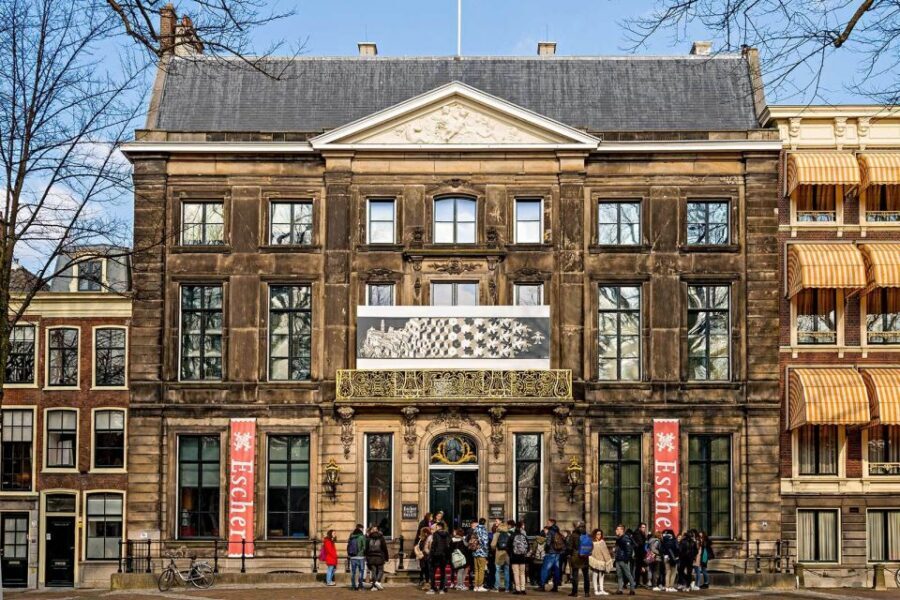
Mind-bending art hides in a royal palace. At Escher in Het Paleis in The Hague, you’ll see Metamorphosis III and more than 130 prints staged inside a former royal residence, with optical surprises built into the visit.
I love how the museum doesn’t treat Escher like a poster. It treats him like a thinker. Another favorite is the interactive, hands-on experience on the second floor, where you tackle his optical tricks with both your eyes and your hands.
One thing to plan for: the palace is light on space to stash stuff, since large bags aren’t allowed. If you’re traveling with bulky luggage, you’ll want to sort storage early so you’re not stuck on the sidelines.
In This Review
- Key takeaways before you go
- Why Escher in a Royal Winter Palace makes sense
- Price and value: why a discounted ticket is a smart call
- Getting to Het Paleis in The Hague without drama
- The permanent exhibition: more than a greatest-hits wall
- Metamorphosis III: the 7-meter “time and space” effect
- The “impossible” prints you’ll recognize instantly
- Looking as Escher Does: the interactive second-floor puzzle zone
- Don’t sleep on the palace details: chandeliers and the café
- Audio guide and labels: reading vs. watching
- How long to plan: one hour can work, but two feels right
- Other artists in the mix: why it helps, not distracts
- Best types of visitors (and who might want to adjust expectations)
- Should you book? My practical take
- FAQ
- Do I get a discount if I book this ticket online?
- Where is the meeting point for the ticket?
- How can I get there from The Hague Central Station?
- How long is the ticket valid?
- Is an audio guide included, and in which languages?
- Is there anything I’m not allowed to bring?
- Are there closures on specific dates?
- Is it free for children?
- Is there a guided tour option?
Key takeaways before you go
- Metamorphosis III reaches 7 meters long, making his ideas feel physical, not just theoretical
- The royal Winter Palace setting keeps the original ambiance, so art and architecture work together
- Impossible prints like Day and Night and Climbing and Descending give you quick hits of full-on Escher wonder
- Looking as Escher Does turns optical effects into a puzzle you can solve
- Audio guide is included in multiple languages, so you can read as you go
- Kids get a free treasure hunt, which helps families keep momentum inside the museum
Why Escher in a Royal Winter Palace makes sense
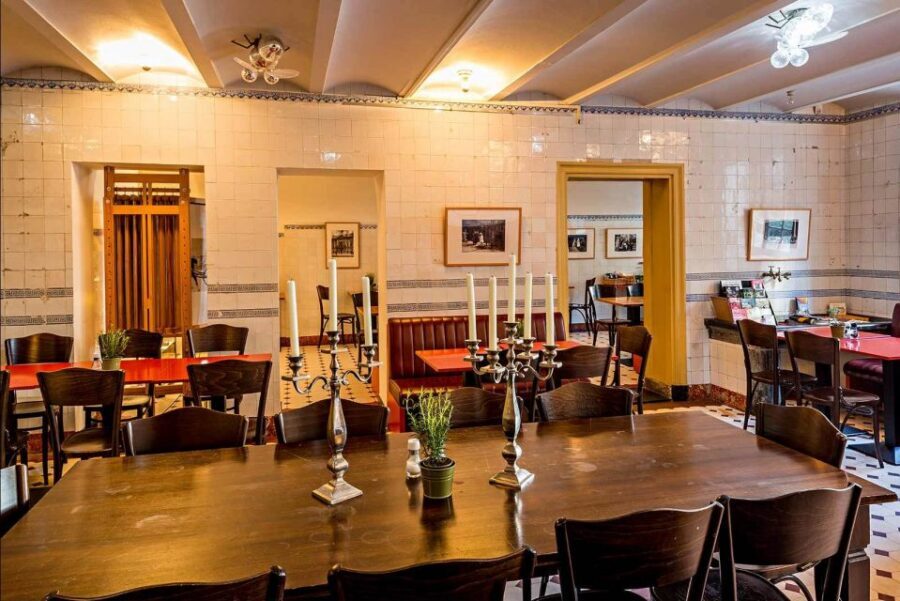
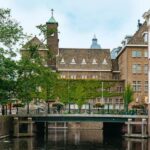
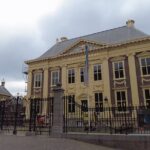
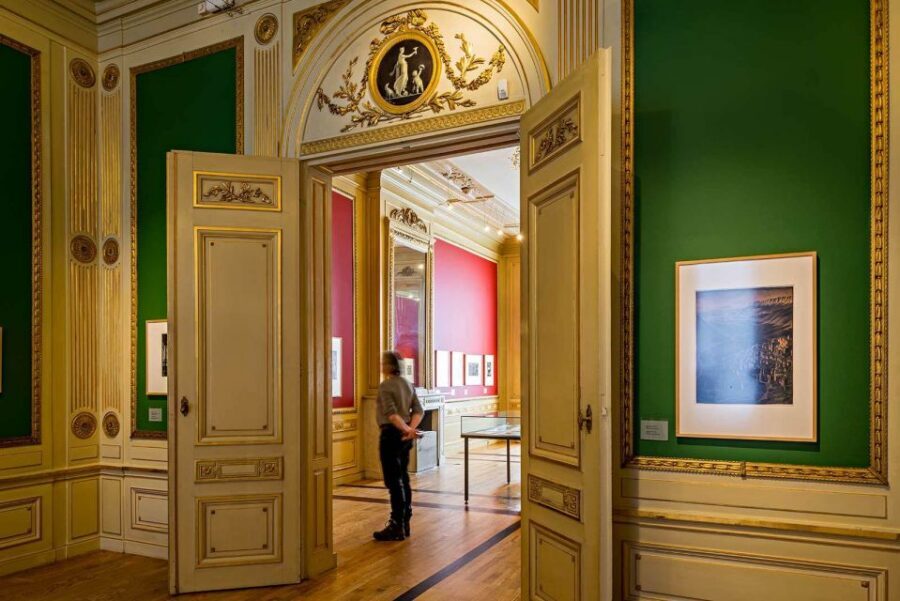
Escher’s work is about rules that bend. So it fits perfectly that this museum sits in a building that still feels ruled by old grandeur. Het Paleis is the former Winter Palace of Queen Mother Emma of the Netherlands, and it’s one of the few places in The Hague where the original royal ambiance has been maintained. That alone changes the mood of the art. You don’t just walk past prints; you move through a space that feels designed to impress.
I also like that the museum isn’t trying to be flashy in a modern way. The prints are presented in rooms with personality—so your brain starts paying attention to details faster than you’d expect. It’s a natural match for Escher, whose best effects rely on careful looking.
A few more The Hague tours and experiences worth a look


Price and value: why a discounted ticket is a smart call
At $15 per person, the ticket price is easy to swallow, especially because you get more than just static viewing. Entry includes admission to Escher in Het Paleis, plus an audio guide in multiple languages. That means you can spend time reading and exploring at your pace without feeling pressured to rush for a guided narration.
You’ll also get a visit that lasts longer than a quick gallery stop. Many people end up spending around an hour or two, depending on how closely you read and how long you linger with the interactive elements. For the money, that’s good value because the museum is built to reward slow attention.
Getting to Het Paleis in The Hague without drama
The meeting point is Het Palais, Lange Voorhout 74, Den Haag. From The Hague Central Station, you can take tram 9 and get off at Korte Voorhout, or tram 17 with a stop at Kneuterdijk. Either option is straightforward, and trams are usually the least stressful way to move around The Hague’s city center.
Plan to walk the last bit and give yourself a few minutes for the entrance flow. Also, read up on the one rule that affects your comfort: no large bags. If you’re carrying a big daypack, you’ll want to treat it like an item that might slow you down at entry, not something you can forget about.
The permanent exhibition: more than a greatest-hits wall
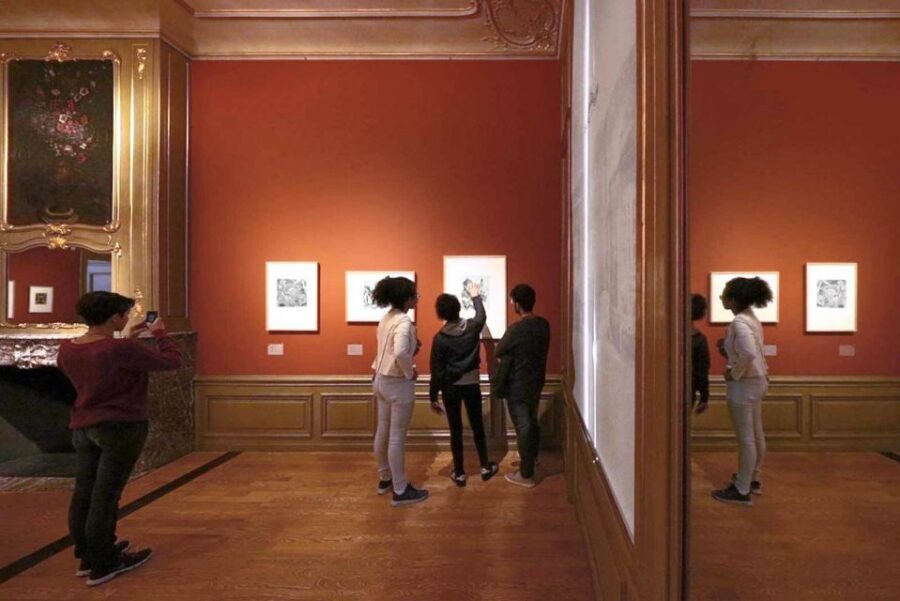
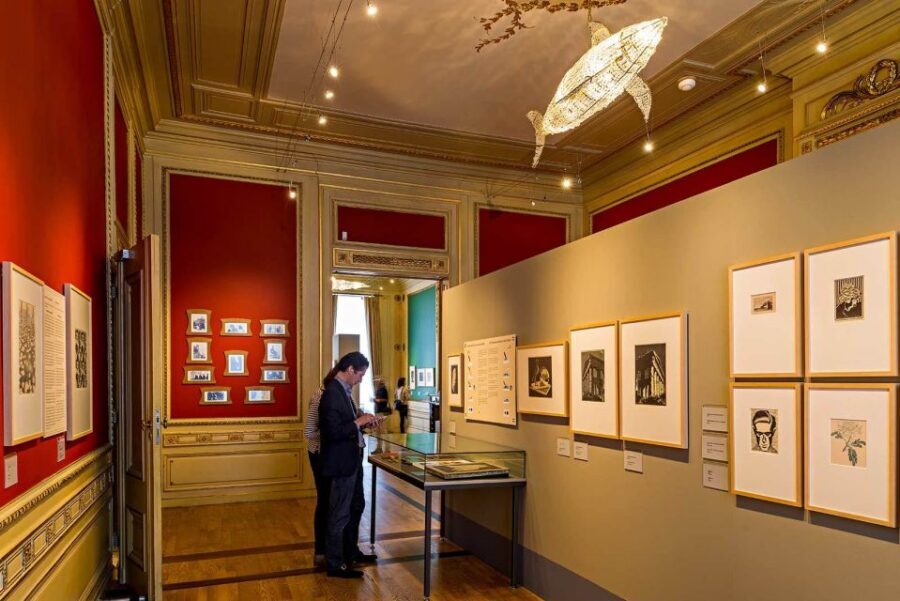
The core of the experience is the permanent Escher exhibition, housed across multiple floors in the palace. You’re looking at a collection of over 130 prints, and the display helps you see how his themes return in different forms. Instead of thinking of Escher as one style, you start seeing how his interests evolve—tessellations, paradox-like scenes, impossible perspectives, and repeating visual structures.
What makes this section work for you is pacing. You can move quickly when something catches you, then slow down when you reach the pieces that need time to decode. One visitor favorite is how the museum provides a clear sense of progression, including the way Escher revisits his favorite ideas. If you like art history but hate museum fatigue, this format is friendly.
Metamorphosis III: the 7-meter “time and space” effect
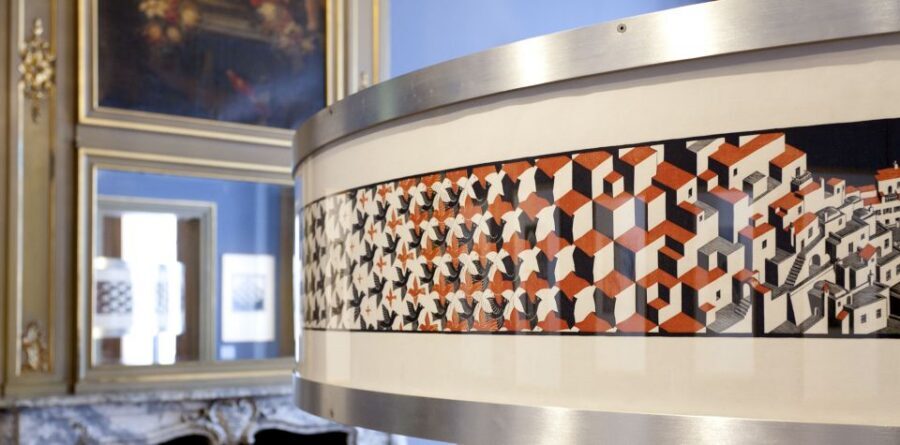
The showstopper is the monumental 7-meter-long Metamorphosis III. It’s not just large; it’s presented in a way that changes how you experience it. The art combines time and space into something that feels like a single unfolding moment, so your eyes start tracking the transformation the way you’d follow a story.
This is one of those pieces where the scale makes the concept land. Small reproductions on a screen can’t fully communicate that feeling of ongoing change. In the museum, you sense momentum. You’re not only looking at an optical trick—you’re reading a transformation that stretches across your field of view.
You can also read our reviews of more museum experiences in The Hague
The “impossible” prints you’ll recognize instantly
If you only know a few Escher images, this is where the museum pays you back. You’ll see famous works like Day and Night, where a Dutch countryside scene morphs into a flock of birds. You also get Climbing and Descending, with rows of people perpetually moving up and down a staircase.
Here’s why these matter for you as a visitor: they show Escher’s trick of using familiar visual logic—landscape shapes, stairs, crowds—then bending it into something that stops behaving like everyday space. You leave with the feeling that the world is more negotiable than you assumed.
One practical tip: when you reach these iconic prints, don’t rush to the label. Look first, then read. The label will explain the thinking, but your initial reaction is where the artwork starts doing its work.
Looking as Escher Does: the interactive second-floor puzzle zone
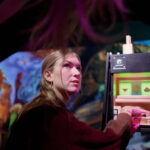
On the second floor, you’ll find the interactive exhibition Looking as Escher Does. This is where you use both senses—your eyes for optical puzzles and your hands for activities designed around Escher’s concepts. It’s a smart addition because it turns passive viewing into problem-solving.
Families tend to enjoy this section the most because it breaks the museum into a different kind of time. Instead of only staring, you’re testing how the illusion behaves. Kids also get an extra boost from a free treasure hunt for children, which can help younger visitors stay engaged without constant redirecting.
Also note one detail that affects comfort: the museum includes a video bio of Escher that takes place in a smaller viewing space. If you’re sensitive to stuffy rooms or prefer wide areas, plan your route so you’re not forced to stay inside longer than you want.
Don’t sleep on the palace details: chandeliers and the café
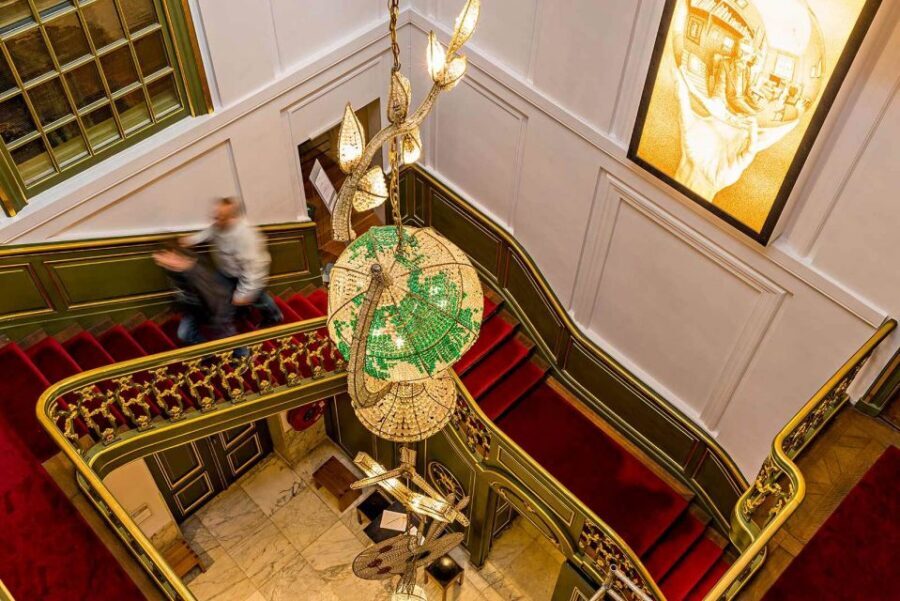
It’s easy to focus only on the prints, but the palace setting adds real texture to the visit. One repeat highlight from visitors is the chandeliers. Looking up makes the museum feel like more than a container—it’s part of the show.
You’ll also find a café in the former kitchen of the palace. When you’re done with optical intensity, the café gives you a place to reset before heading back into the galleries. It’s especially useful if you’re traveling with a group where different people want different tempos.
If you’re planning around snacks, this café is one of the easiest ways to avoid breaking your museum rhythm with long detours.
Audio guide and labels: reading vs. watching
The ticket includes an audio guide with languages including English, Dutch, German, French, Chinese, Japanese, Ukrainian, and Korean. That’s helpful if you don’t want to rely on written labels the whole time.
If you like to listen while you look, you’ll likely appreciate the audio. On the other hand, one visitor noted that downloading the audio tour for free onto a phone involved a process that felt time-consuming and required personal information. If you dislike that setup, you can still enjoy the museum using the exhibit text and your own attention span.
Either way, you’ll get the most out of the museum by balancing both: read a little, look a lot, then let the audio fill gaps only where it matters.
How long to plan: one hour can work, but two feels right
The museum size is manageable, so you’re not committing to an all-day marathon. Many people find it a good fit for about an hour or so if they mostly skim labels and focus on the biggest works. If you enjoy art details—or if you want to slow down for Metamorphosis III and the interactive floor—plan closer to two hours.
Also build in time to re-look. Escher rewards a second pass. After you understand what his “rule-breaking” looks like, earlier pieces start making more sense. That’s one of the quiet joys of the collection: repetition that teaches you how to see.
Other artists in the mix: why it helps, not distracts
The museum doesn’t limit itself to Escher alone. You’ll also see works by other influential artists. That matters because it prevents the visit from turning into a one-note experience.
For you, this blend can be a relief. You get to compare themes and techniques while still staying rooted in Escher’s world. It also gives you a wider view of the kinds of visual thinking happening around the same time—so Escher feels less like an isolated genius and more like a major node in a bigger visual conversation.
Best types of visitors (and who might want to adjust expectations)
This works especially well if you like:
- optical illusions, geometry, or design thinking
- art that rewards careful looking
- hands-on activities (especially on the second floor)
- family visits where kids need something to do
It may feel a bit intense if you strongly prefer big, airy museum galleries and lots of open space. The palace rooms can feel smaller, and the video area can be enclosed. You’ll still enjoy it, but you might want to plan breaks at the café and pace yourself.
Should you book? My practical take
If you’re interested in Escher at all, this is an easy yes. The combination of a permanent collection, the 7-meter Metamorphosis III, and the Looking as Escher Does interactive floor gives you a visit that’s both memorable and repeatable in your mind.
Book it if:
- you want value at a clear $15 price point
- you like iconic works plus a chance to see how his themes evolved
- you’d enjoy a museum where details matter and puzzles happen
Skip it only if:
- you’re traveling with large bags you can’t manage (since large luggage isn’t allowed)
- you don’t care about optical effects or interactive elements
FAQ
Do I get a discount if I book this ticket online?
The offer is described as a discounted entry, available through GetYourGuide.
Where is the meeting point for the ticket?
The meeting point is Het Palais, Lange Voorhout 74, Den Haag.
How can I get there from The Hague Central Station?
You can take tram 9 to stop Korte Voorhout, or tram 17 to stop Kneuterdijk.
How long is the ticket valid?
The ticket is valid for 365 days. You can check available starting times.
Is an audio guide included, and in which languages?
Yes. An audio guide is included in English, Dutch, German, French, Chinese, Japanese, Ukrainian, and Korean.
Is there anything I’m not allowed to bring?
Luggage or large bags are not allowed.
Are there closures on specific dates?
The palace is closed on Christmas Day and January 1. It is open on Easter, King’s Day, Ascension Thursday, Whitsun, and Whit Monday.
Is it free for children?
Children up to 6 years old get free entrance when accompanied by a paying adult.
Is there a guided tour option?
A guided tour is available for a maximum of 20 people, with a fee of EUR 60 per guide. It requires reservation.