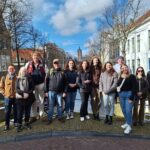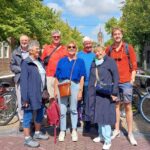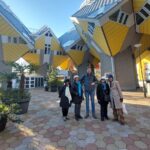
One street, lots of government. This 90-minute small-group walk of The Hague is a fast way to understand how art, power, and public life fit together. You start at the Mauritshuis area, then move through key political and royal spots, ending at Madurodam with a miniature version of what makes the Netherlands feel Dutch.
I especially liked the small group size (max 8). It keeps things moving, and it’s easier for the local to adjust the pace to your questions and walking speed. I also liked that you don’t just hear facts—you get personalized suggestions for what to do next, which is a practical gift on your last day or your first evening.
One thing to consider: the tour is more “story-led and factual” than “dramatically surprising.” If you’re expecting a totally wild route or surprises in the Hollywood sense, you may feel a bit underwhelmed—like one reviewer did. Also, like any walking tour, it’s on foot, and it’s not recommended for impaired mobility.
In This Review
- Key highlights to know before you go
- Mauritshuis to Binnenhof: the Hague’s art-and-power angle
- City Hall for weddings and royal birth registrations
- Noordeinde Palace: the King’s office, not a fairy-tale backdrop
- Peace Palace photos: Gothic plus Neoclassical in one brick frame
- Madurodam finish: The Hague in miniature, with the right ending
- Price and logistics: is $126.29 a good value?
- Who should book this Surprise Walk?
- Tips to get the most from your 90-minute route
- Should you book this Surprise Walk?
- FAQ
- How long is the Surprise Walk of The Hague with a Local?
- What is the group size?
- Where does the tour start and end?
- What’s included in the price?
- What is not included?
- Do I need to buy entry tickets during the walk?
- Is there a mobile ticket?
- Is confirmation sent after booking?
- Is the tour good for most people?
- What’s the cancellation window for a full refund?
Key highlights to know before you go
- Starts at Mauritshuis and sets the tone with Dutch art in mind
- Binnenhof stop connects you to the oldest part of The Hague and Parliament’s two chambers
- City Hall and royal registrations shows the paperwork side of monarchy
- Noordeinde Palace explains where the King works, not just where he lives
- Peace Palace photo moment lets you clock Gothic and Neoclassical details on a brick facade
- Ends at Madurodam, where canal houses, windmills, and the Peace Palace are miniaturized
Mauritshuis to Binnenhof: the Hague’s art-and-power angle
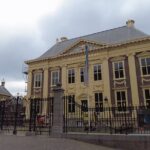
Most city tours give you a list. This one gives you a theme: how The Hague functions. You begin in front of the Mauritshuis Museum, famous for housing a top 17th-century Dutch painting, and that opening matters. It signals that this city isn’t only streets and views; it’s culture and decision-making in the same compact footprint.
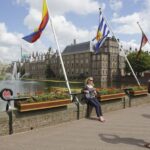
Then you head to the Binnenhof, which is described as the oldest section of The Hague. The big payoff here is understanding why so many people come to this part of town. You’ll learn that it houses both chambers of Parliament, so even if you’re not a politics person, you can still read the buildings as working institutions—not museum props.
What I like about the way this fits together is that it makes the architecture feel relevant. Instead of asking you to memorize dates, it helps you connect what you see (stone, courtyards, civic buildings) to what happens there (law-making, governance). That’s also why small-group pacing works; you’re close enough to landmarks to notice details without a long commute between stops.
A small consideration: the tour is about walking and talking, not long museum time. If you want museum tickets and extended indoor viewing, plan to add that yourself after the walk.
You can also read our reviews of more tours and experiences in The Hague.

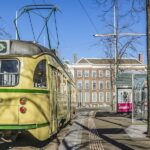
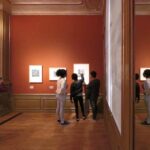
City Hall for weddings and royal birth registrations
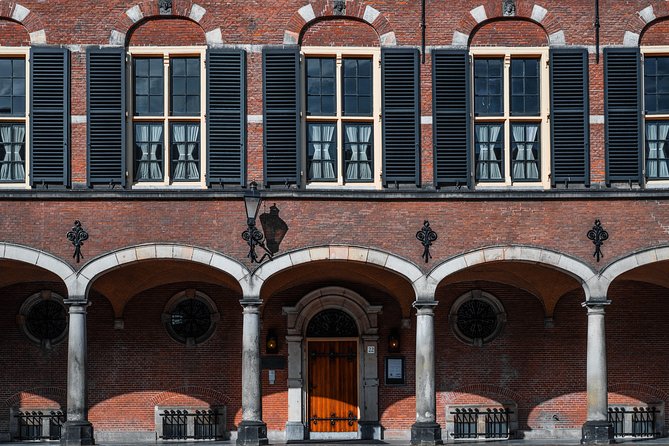
Next, you move to the City Hall, and this stop has a very human angle. You learn about civic wedding ceremonies and—more unusually—where the Royal family registers family births. That contrast is the point. The Hague isn’t just officials in suits; it’s also the place where personal milestones become formal civic records.
This is the kind of detail that’s easy to miss if you wander on your own. You might walk past a grand municipal building without realizing it plays two very different roles in public life. In a short tour, those “why this building matters” explanations are exactly the value you’re paying for.
The drawback is also practical: since the focus is civic and institutional, don’t expect a lot of interactive moments. You’re there to understand what the site represents. If you love photos, you’ll still get your share, but it’s story-first rather than selfie-first.
If you’re traveling with mixed interests—say, someone who loves architecture paired with someone who likes politics—this stop tends to land well. It gives each person a foothold.
Noordeinde Palace: the King’s office, not a fairy-tale backdrop
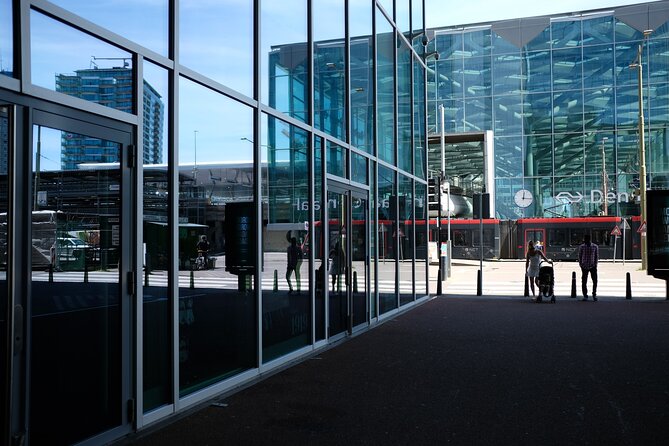
Then comes a key palace stop: Noordeinde Palace, described as the King’s place of work. That wording is important because it changes how you think about the building. You’re not being asked to imagine it as a static monument. You’re seeing it as a real workplace tied to modern state life.
This kind of explanation also helps you read surrounding streets. Once you understand that a palace can function like an operational base, you start noticing what’s implied by the setting: order, security, and a sense of official rhythm. Even if you don’t memorize every fact, you leave with a clearer mental map of what the monarchy looks like in everyday terms.
I also appreciate how this stop fits the overall structure. The walk moves from Parliament to civic ceremonies and registrations, then into the working palace. That sequence makes the city feel organized rather than random.
One thing to watch: language clarity can make or break a tour. One review noted that the guide’s English was difficult to understand, even though the guide was passionate and well informed. I can’t predict how every local will sound on your date, so if you’re sensitive to accent or fast speech, choose a time when you’re fresh and don’t plan to do a lot of other listening-heavy activities right before.
Peace Palace photos: Gothic plus Neoclassical in one brick frame
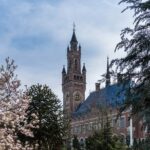
After Noordeinde Palace, you get a shot at the Peace Palace, described as an imposing brick building that combines Gothic and Neoclassical styles. This is one of those stops where the architecture can be the main event, and the tour helps you know what you’re looking at.
If you’ve ever stood in front of a beautiful facade and thought, I love this, but what am I actually seeing, this is that moment. The tour’s job is to give you just enough architecture language to make the building click in your mind. You’ll also get an easy photo opportunity, which is exactly what you want in a timed walking route.
Why this matters for value: the Peace Palace can be a “pretty building” if you don’t have context. With context, it becomes a story of how different styles land in the same civic statement.
The main limitation is time. You’re there for the impression, not for an in-depth study session. If you want to linger, you’ll need to schedule extra time after the walk.
Madurodam finish: The Hague in miniature, with the right ending
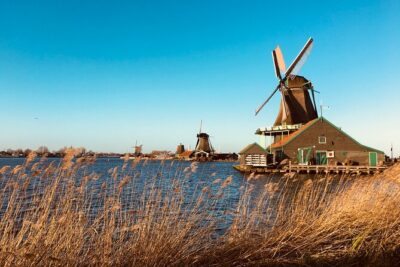
Your tour ends at Madurodam at George Maduroplein 1. This miniature park is presented as a replication of what makes Holland unique, including canal houses, windmills, and the Peace Palace. Ending here makes smart sense. You spend 90 minutes learning why certain buildings and institutions matter, then Madurodam compresses that same “identity” into something you can see at a glance.
As a closing move, it’s a gentle reset. Instead of more civic talk, you get a playful visual wrap-up. You can treat it as a bonus for the kids—or just a low-pressure way for adults to keep exploring without needing a deep research mindset.
Practical note: this is where you’ll likely want to spend more time if you enjoy miniatures and quick “wow” moments. The tour itself likely doesn’t include entry, so treat Madurodam as your chance to extend the day at your own pace.


Price and logistics: is $126.29 a good value?
At $126.29 per person for about 1 hour 30 minutes, the value depends on what you want from the experience. You’re paying for three things that are hard to replicate on your own: a local’s storytelling, a tight route that hits the right institutions fast, and personal recommendations so you don’t waste your remaining hours.
This price also assumes you like the small-group format. Since the group is up to 8 travelers, you get a more focused conversation than big bus tours. If you’re the type who enjoys asking a question when something catches your eye, that format can feel worth it.
But here’s the honest line: if you want the feeling of a true private tour with customized routing all the way, this won’t be it. One review said it wasn’t worth the cost of a private-style experience, even while praising the guide’s passion and knowledge. So if your mental target is one-on-one service, compare your expectations against the reality of an 8-person max.
Also remember what’s not included. The tour mentions that entry tickets for transportation, museums, and monuments are excluded, so factor in any extra admission you want after your walk.
Who should book this Surprise Walk?
I’d book this if you want a fast way to understand The Hague’s “engine room.” It’s ideal for people who love architecture with context, who like knowing what a building does, not just what it looks like.
It’s also a good first-day activity because it gives you direction for the rest of your visit. The tour’s personalized suggestions are the kind of practical output that helps you stop second-guessing your plans.
You might skip it if you hate walking or if you need step-by-step accessibility support—since it’s not recommended for impaired mobility. And if you’re looking for a tour that truly changes its route in surprising ways, set expectations carefully. This walk is built around core sights and story structure.
Finally, it’s hosted by an independent local. That can be a plus, because different locals bring different styles. It’s also why language clarity can vary. If you’re nervous about that, it’s worth choosing a time you’ll be alert, and keep your questions short and concrete.
Tips to get the most from your 90-minute route
Start by arriving ready to walk. The full experience is about 1 hour 30 minutes, so you’ll be moving between key stops rather than lingering for long. Wear comfortable shoes and bring water, especially if you’re traveling in warmer weather.
Second, treat it like a learning sprint. When the local explains why Parliament sits in the Binnenhof or why the City Hall matters for royal birth registrations, you’ll get more out of the stop if you ask one follow-up question. Even a simple request—where to look next for architectural details—can sharpen your experience.
Third, bring your photo mindset, but don’t let it rush the stories. The Peace Palace is a clear photo moment, and Madurodam is where photos become part of the fun. For the palace and civic sites, think “understand first, photograph second.”
And here’s a sneaky good strategy: after the walk, use your local’s suggestions immediately. The tour includes personalized recommendations, and those are most useful when you act on them while the stories are still fresh in your head.
Should you book this Surprise Walk?
I’d say book it if you want a compact, small-group way to connect the Hague’s landmarks to how the city actually works. The small group of up to 8, the emphasis on buildings like the Binnenhof, and the ending at Madurodam make it a smart route for first-timers who want more than a sightseeing checklist.
I would hesitate if you’re paying mainly for a “surprise” factor or for the feeling of a fully private tour. Based on feedback, the experience leans factual and structured, even when it’s well told. Also, if you worry about understanding the guide’s English, plan for that risk and choose your time wisely.
If your goal is practical orientation plus memorable context, this walk is a strong pick for The Hague.
FAQ
How long is the Surprise Walk of The Hague with a Local?
It’s approximately 1 hour 30 minutes.
What is the group size?
The tour is a small group with a maximum of 8 travelers.
Where does the tour start and end?
It starts in front of MauritshuisPlein 29, 2511 CS Den Haag and ends at Madurodam, George Maduroplein 1, 2584 RZ Den Haag.
What’s included in the price?
You get a knowledgeable local, a small group experience, and personalized recommendations.
What is not included?
Personal expenses aren’t included. Also, entry tickets for transportation, museums, and monuments are excluded.
Do I need to buy entry tickets during the walk?
Entry tickets are excluded, so if any stop requires admission for you to go in, you’ll need to handle that separately.
Is there a mobile ticket?
Yes, the experience uses a mobile ticket.
Is confirmation sent after booking?
You should receive confirmation at the time of booking.
Is the tour good for most people?
It says most travelers can participate, but it is not recommended for guests with impaired mobility.
What’s the cancellation window for a full refund?
You can cancel up to 24 hours in advance for a full refund. If you cancel within 24 hours, you won’t receive a refund.