REVIEW · THE HAGUE
Delft in a Day: Private Tour with Royal Delft, Churches & Lunch
Book on Viator →Operated by Discover Delft · Bookable on Viator
A whole day in Delft can feel like sprinting. This one stays organized, with the key sights lined up in smart order. You get a guided walk that connects canals, churches, and Delft Blue to the people who made the city matter.
I especially like how much ground you cover without turning it into a museum marathon. Royal Delft plus Vermeer stops give you two of Delft’s biggest reasons to go, and the pace keeps you moving between places instead of waiting around for tickets.
One possible drawback: it’s a long 7 to 8 hours of walking, and some parts are time-sensitive. If you don’t like stairs, skip the optional tower climb at the New Church, since it’s about 365 steps.
In This Review
- Key points before you plan your Delft day
- Why this Delft in a Day tour makes sense for most schedules
- Starting near the center: Delft Railway Station to Armamentarium
- Following the canals north: Maria van Jessekerk and the old synagogue area
- Markt square: market life, Delft’s big landmarks, and Hugo Grotius
- New Church and its tower: royal burials plus optional stairs
- Vermeer Centrum Delft: copies of his work, in a way that helps you spot patterns
- De Waag lunch: the tasting-break you actually want
- Old Church: burials, architecture, and Vermeer’s name again
- Gemeenlandshuis van Delfland and Prinsenhof: the politics stop
- Royal Delft by transfer: watching Delft Blue live on since 1653
- Finishing back in the center: use the extra time smartly
- Price and value: when $604.65 per person feels fair
- Who this tour suits best (and who might want a lighter option)
- If you book: a few smart ways to make it smoother
- Should you book this Delft in a Day tour?
- FAQ
- How long is this Delft private tour?
- Where does the tour start and end?
- How much does the tour cost?
- What’s included in the ticket price?
- Is Royal Delft included, or do I need to get there on my own?
- What church visits are included?
- Can I climb the tower at the New Church?
- How far in advance do people usually book?
- Is this a private tour?
- Can I cancel for a full refund?
Key points before you plan your Delft day
- Royal Delft factory time: the only remaining Delft Blue maker from the 17th century era, still using the original techniques (from 1653).
- Two major churches: the New Church (royal burials) and the Old Church (including Vermeer’s burial).
- Lunch at De Waag: historical weighing house lunch with a drink, included in the tour price.
- Vermeer Centrum Delft: you’ll see copies of all his works, which is a great way to get oriented fast.
- Fewer logistics headaches: tickets for key sites plus transfers to Royal Delft are built in.
Why this Delft in a Day tour makes sense for most schedules
If you want Delft in one day, you need two things: an efficient route and someone to connect the dots. This private tour is built for that. It runs roughly 7 to 8 hours and ends back in the city center around 5:00 PM, so you still have room for dinner plans elsewhere in The Hague area or an evening walk in Delft.
The price looks high on paper at $604.65 per person, but what you’re buying is a guided, ticketed day with lunch and included entries to multiple attractions. You’re also getting transfers by car to get you out to Royal Delft, since it’s not right in the center. For a private format, that combination usually beats the DIY approach where you’re constantly re-checking opening hours and booking multiple timed tickets.
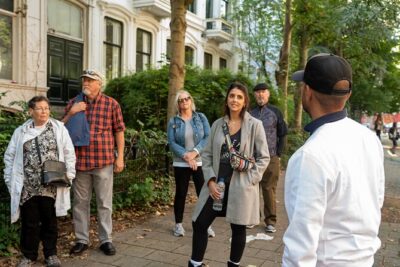
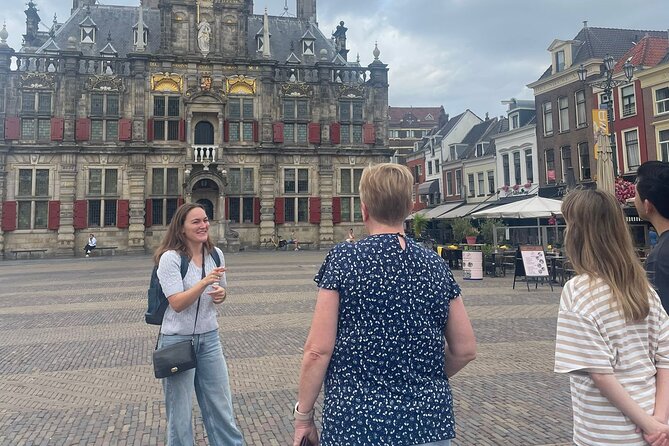
You’ll also have a mobile ticket and an English-speaking guide. And because it’s private, you won’t be squeezed into a packed group that steamrolls your pace.
You can also read our reviews of more tours and experiences in The Hague.


Starting near the center: Delft Railway Station to Armamentarium
The day begins at Station Delft, which is right next to the city center. That matters more than it sounds. You don’t lose time commuting from far out, and you can start walking right away through the compact historic core.
From there you head south of the center to see the Armamentarium area. This is where you get two Delft storylines at once. First, the big former weapons armory gives you a sense of the city’s role in power and protection. Second, you’ll learn about an office of the Dutch East India Company—a reminder that Delft’s “small city” vibe came with serious global reach during the golden days of the Dutch Republic.
A fun Delft-specific moment here: you’ll also look for the exact spot where Vermeer was standing when he painted View of Delft. Even if you’ve seen the famous painting before, it lands differently when you stand nearby and the guide explains the angle and the framing.
Practical note: this first segment is ticket-free, so you’re mostly paying for time with the guide and for the context that turns brick-and-street corners into something you actually remember.
Following the canals north: Maria van Jessekerk and the old synagogue area
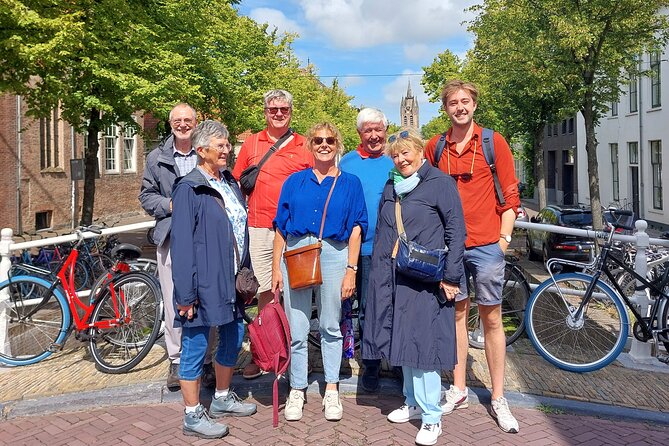
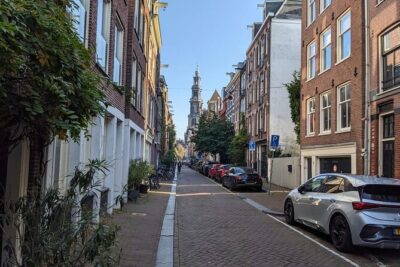
After Armamentarium, the route walks north along Delft’s older canal routes. One of the joys of Delft on foot is how the city reveals itself in layers—quiet stretches, sudden views of facades, and canals that feel like guides in their own right.
Stop by Maria van Jessekerk, the Catholic church. You’ll get a brief look inside, which is useful because churches here can feel like they have “more to them” than the outside suggests. This stop is included, so you’re not hunting for extra admission or trying to squeeze in another ticketed visit later.
As you pass other sights in the same walking corridor, you’ll also encounter the area where the city’s old synagogue used to be. The tour keeps these details light but meaningful: you’re not just checking boxes—you’re getting a sense of how Delft’s religious and cultural life evolved.
If you’re photographing, be ready for a mix of canal angles and church facades. Delft’s best pictures usually come from simple walking positions rather than climbing or special viewpoints.
Markt square: market life, Delft’s big landmarks, and Hugo Grotius
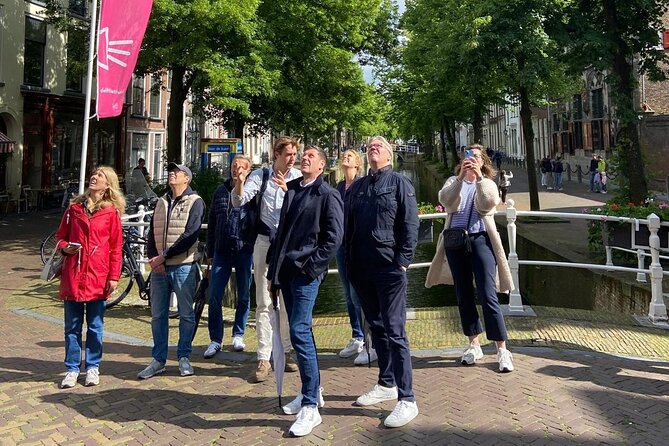
Next up is the Markt, where you reach Delft’s main market square. You’ll go through Beestenmarkt and pass the former house connected with Vermeer on the way. Then you’re right where the city “shows off” its landmarks.
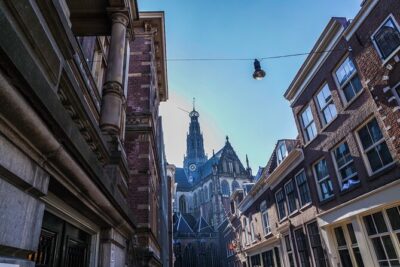
On this square you’ll see the second-tallest church of The Netherlands. The guide will explain who is buried underneath, which is one of those details that instantly makes a building feel personal rather than just impressive. You’ll also learn about the statue of Hugo Grotius and see the old town hall.
This stop is mostly ticket-free, but it’s one of the most important because it’s a visual anchor. If you only memorize one street level impression from Delft, make it this area.
Timing-wise, it’s about 20 minutes here, so don’t plan to linger like you would at a standalone museum. Instead, use it like a “read the city” moment: quick look, then let your guide fill in names and meaning.
New Church and its tower: royal burials plus optional stairs
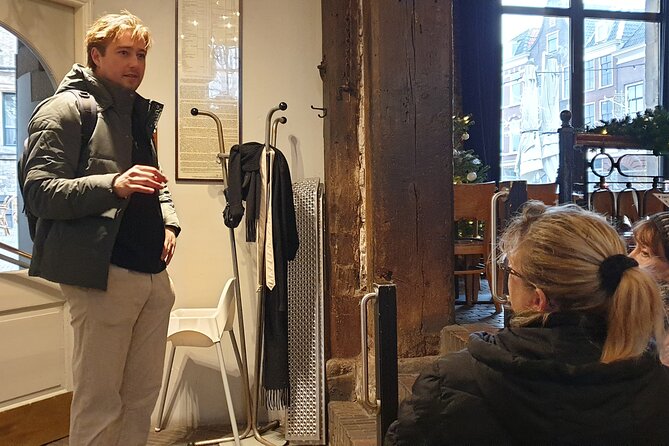
From Markt, you enter the New Church with your guide. This is one of Delft’s headline stops. The New Church is where the Dutch royal family is buried, so the experience is part architecture, part stories of power and legacy.
The tour includes admission here. You’ll spend about 25 minutes inside, which is enough time to understand what to look at without turning into a speed-run.
Then comes the optional challenge: you can climb the tower. The number you’ll hear is about 365 steps. If you’re even slightly curious, it’s worth considering—but keep your legs and time in mind. If stairs aren’t your thing, you can still enjoy the church interior and focus on the stories your guide points out.
This is also a good stop to slow down for a moment if your feet are starting to protest. You’ll be grateful you’re not rushing later.




Vermeer Centrum Delft: copies of his work, in a way that helps you spot patterns
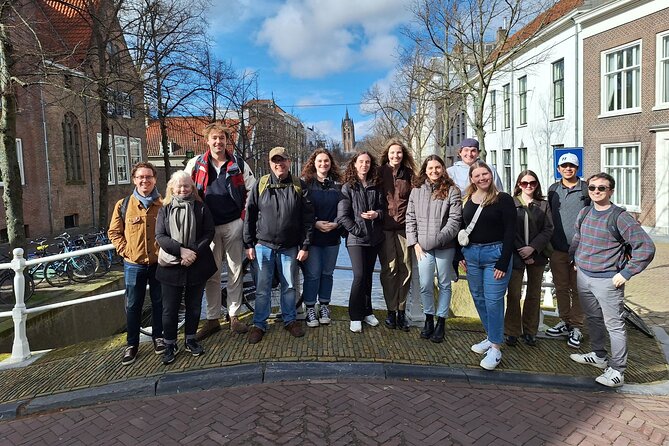
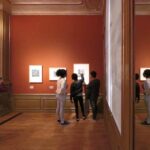
After the churches, the tour moves to Vermeer Centrum Delft. This is where the day becomes much more than sightseeing. Johannes Vermeer is tied to Delft by birth, upbringing, and burial, and the museum helps you connect the dots across his paintings.
You’ll spend about 45 minutes here. The standout detail in the plan: you’ll see copies of all his works. That’s a smart approach when you’re on a timeline. Original paintings can be scattered across the world, but copies allow you to build a complete picture of his themes and subjects in one place.
Even if you aren’t a Vermeer superfan, this museum stop helps you “see differently” while you’re out walking. The guide can point out what to notice when you spot familiar motifs back in the streets and canals.
If you’re a fan of art, it’s also the perfect bridge between the two church visits and the Old Church stop that follows later.
De Waag lunch: the tasting-break you actually want
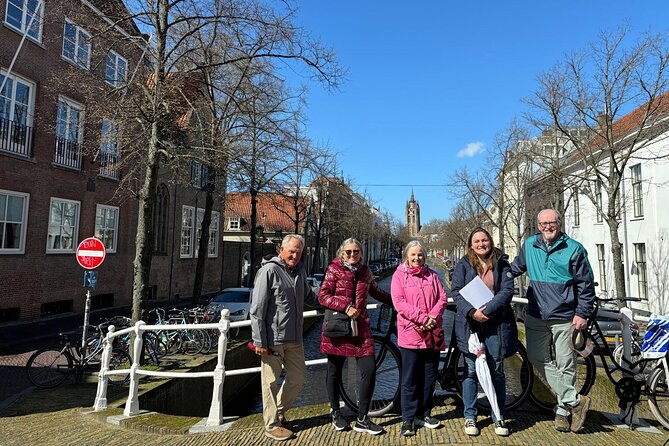
Lunch is included at De Waag, Delft’s historical weighing house right behind the old town hall. This is scheduled for about 1 hour, and your lunch includes a drink.
Why I like this kind of included meal stop: it avoids the “where should we eat” scramble and it places you in a historic building that fits the theme of the day. You’re not just eating nearby—you’re eating in a spot that feels like part of the city.
Also, the location matters. Being right behind the old town hall means your lunch break doesn’t strand you outside the route. After lunch you can keep moving toward more churches and canals without wasting time repositioning.
Practical advice: treat lunch like a reset. Use the time to check your energy level before the next church and canal-focused sections.
Old Church: burials, architecture, and Vermeer’s name again
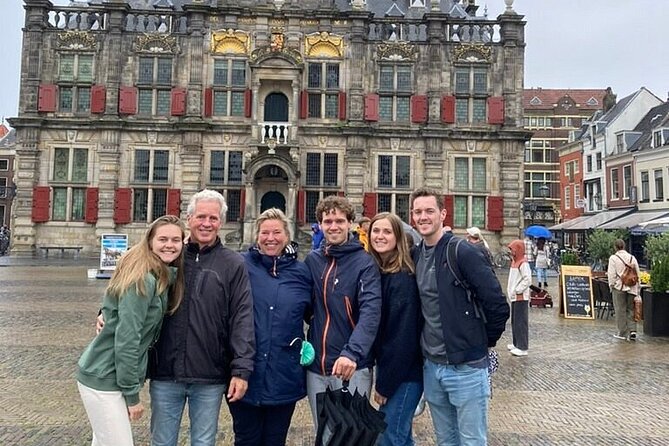
You’ll head from Markt toward the Old Church, walking past a few more landmarks along the way. Among them are Delft’s former meat hall, the old house of Antony van Leeuwenhoek, and Delft’s second-oldest canal. That last part is key: Delft’s canals are not just scenery here. They’re part of the route logic and the city’s historical layout.
At the Old Church, you enter together with your guide for about 45 minutes. This stop includes admission, and it’s where you’ll learn about the church building and the people buried there—including Johannes Vermeer.
This double Vermeer reinforcement is intentional and, honestly, helpful. One stop gives you museum context, and the other gives you real-life “this is where he rests” context. When you leave, you’ll understand why Delft uses him as a cultural anchor.
If you want to take photos, be mindful of church rules, which can vary. Your best move is to ask your guide what’s okay in the moment and focus on your eyes first.
Gemeenlandshuis van Delfland and Prinsenhof: the politics stop
After Old Church, the tour includes two short but meaningful context stops.
First is the Gemeenlandshuis van Delfland, a heavily decorated facade visible along the Oude Delft canal route. The tour frames it as a question: what the building is and why it mattered. You’ll likely connect it to how the region managed water and governance, since Dutch cities treat water control as both survival and power.
Then you visit Museum Prinsenhof Delft. This place played a deciding role in Dutch history, and you’ll learn that the Father of the Fatherland was assassinated here. Even without memorizing every political detail, the tone of the museum is clear: Delft wasn’t just painting and ceramics. It was also at the center of major national events.
Both of these stops are shorter (around 15 minutes each), so think of them as story seasoning. They keep the day from being only art and architecture.
Royal Delft by transfer: watching Delft Blue live on since 1653
The highlight for many people is the Royal Delft – Koninklijke Porceleyne Fles visit, and the tour treats it like that. Since it’s not in the city center, you go by car. The ticket is included, and you also get the transfer to and from the site.
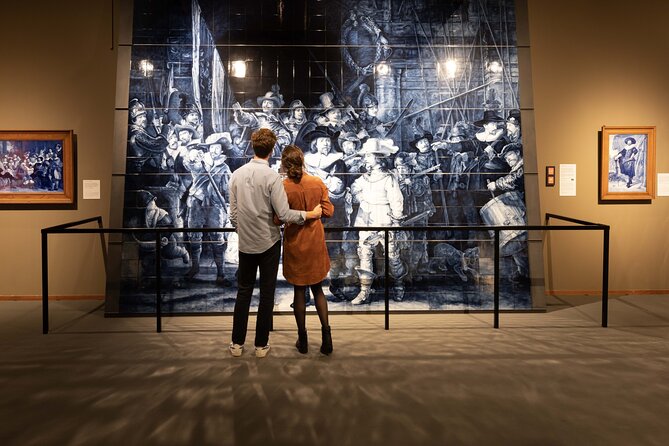
Royal Delft is presented as the only remaining Delft Blue manufacturer from the 17th century, dating back to 1653. That’s the kind of line you might hear anywhere, but here it’s paired with a very practical idea: they still use the same techniques. The tour is designed to help you understand what that means in real terms, not just as a label.
You’ll spend about 1 hour at Royal Delft. If ceramics and craft processes matter to you, this is where your day shifts from “look” to “watch.” You’ll come away with a clearer sense of why Delft Blue is recognized instantly—because you’re seeing how it’s made, not just shopping for it.
If you’re buying something, the shop is usually part of the experience at these factory museums, but your tour timing is fixed, so don’t plan on browsing for 90 minutes. Decide what you want before you arrive, or ask your guide what’s worth focusing on first.
Finishing back in the center: use the extra time smartly
After Royal Delft, the tour brings you back to Markt, where you can head for dinner or continue to another city. The day ends around 5:00 PM, which is a gift if you like having a plan after the guided part.
My practical advice: after a day like this, keep dinner simple and close. You’ve been walking and going in and out of churches and museums. Delft is at its best when you slow down after the tour and just wander the canals and squares you now understand more clearly.
If you have energy, you can also revisit Markt and the church area because your guide’s context makes them feel new.
Price and value: when $604.65 per person feels fair
At $604.65 per person, you’re paying for a private, guided day with multiple included admissions and one included lunch. You also get transfers to Royal Delft and the time savings of not coordinating separate tickets.
This price will feel fair if:
- You care about Delft beyond the postcard version.
- You want someone to point out what to look for (including Vermeer’s painting location).
- You prefer not to juggle tickets at multiple sites in a single day.
It might feel steep if:
- You’re comfortable planning your own route and you only want 2 or 3 highlights.
- You’re sensitive to walking and stairs and you don’t plan to do optional climbs like the New Church tower.
The private format is the deciding factor. If you’re traveling with a partner or a small group, the value often improves because you can move at a pace that suits you instead of someone else’s schedule.
Who this tour suits best (and who might want a lighter option)
This tour fits best if you want a structured day with churches, Vermeer, and Delft Blue, plus included lunch. It’s also great for travelers who like authentic places tied to real stories: canal-side buildings, actual historic weighing houses, and a working manufacturer.
I’d especially recommend it for:
- Art lovers who want context for Vermeer without chasing scattered works.
- History-minded travelers who like political and cultural connections.
- People who would rather pay for convenience than organize everything themselves.
You might want to choose a shorter or different option if you:
- Don’t like a packed schedule. The order is tight and you’re in and out of multiple sites.
- Are unsure about the optional tower climb (365 steps). You can skip it, but the tour does include an opportunity for it.
- Need long breaks between stops. Most segments are around 15 to 45 minutes.
If you book: a few smart ways to make it smoother
- Wear shoes you trust. You’ll be on foot for a full day.
- Have a light plan for lunch. It’s included, so don’t waste time hunting; just eat and reset.
- If stairs are a concern, decide early about the New Church tower. You’ll avoid stress later in the day.
- Bring a camera, but don’t forget to look up as much as you shoot. Delft’s details often show up at street level.
Guides matter on tours like this. In the reviews tied to this experience, guides named Valentin and Robin come up as friendly and pleasant, and that personality shows in how smoothly the day moves. You’ll feel it in the way the route connects Vermeer, markets, and the factory visit instead of feeling like separate stops.
Should you book this Delft in a Day tour?
If you want one organized day that covers Delft’s top themes—Royal Delft, Vermeer, and two important churches—this is a strong choice. The included lunch at De Waag and the included admission tickets remove a lot of friction, and the Royal Delft transfer solves the one DIY headache of where the factory sits.
Book it if your priority is depth with a guide and you’re okay with a full 7 to 8 hours. Skip it (or consider a lighter plan) if you prefer a slower pace, fewer sites, or you don’t want optional stair climbing.
FAQ
How long is this Delft private tour?
It runs about 7 to 8 hours.
Where does the tour start and end?
It starts and ends in Delft at Markt, 2611 Delft, Netherlands.
How much does the tour cost?
The listed price is $604.65 per person.
What’s included in the ticket price?
Lunch at De Waag (with a drink), entrance to the Old Church, New Church, Vermeer Centrum Delft, and Royal Delft are included, along with transfers to and from Royal Delft and all fees and taxes.
Is Royal Delft included, or do I need to get there on my own?
Royal Delft is included, and you’re taken there and back by car because it’s not in the city center.
What church visits are included?
Both the New Church and the Old Church are included.
Can I climb the tower at the New Church?
Yes. If you feel like it, you can climb the tower, which is about 365 steps.
How far in advance do people usually book?
On average, it’s booked about 6 days in advance.
Is this a private tour?
Yes. It’s private, and only your group participates.
Can I cancel for a full refund?
You can cancel for free up to 24 hours before the experience’s start time for a full refund.