REVIEW · AMSTERDAM
Amsterdam City Center & History – Exclusive Guided Walking Tour
Book on Viator →Operated by Babylon Tours Amsterdam · Bookable on Viator
Amsterdam can feel like a postcard, but this tour makes it make sense. In 2.5 hours, you get a focused route through the city’s big turning points—religion, trade, and canal-era life—served with real guidance and smart time management. I especially love the way the guide connects the dots between landmarks so you don’t just see buildings, you understand why they’re here. And I like the pace: it’s brisk enough to cover a lot, but guided enough that it doesn’t feel like a checklist.
You’ll also walk out with useful next steps. The experience is designed to help you keep exploring after the tour, and the guides seem to tailor explanations on the fly—people I encountered on similar tours with guides like Anita, Diana, and Pedro were praised for keeping questions moving and the group engaged, even when weather turned.
One consideration: you’re outside for the full route, rain or shine, and some sights aren’t visitable from the inside due to security and access limits. Come with comfortable shoes and a flexible mindset.
In This Review
- Key takeaways before you go
- Why this walking tour works for first-time orientation
- Where it starts and how to plan your timing
- From St. Nicholas Basilica to the Weeping Tower: faith and farewell-by-ship
- Zeedijk, old sea dike engineering, and Amsterdam’s lock-bridge charm
- Nieuwmarkt and De Waag: commerce, guild power, and a city-gate survivor
- The Trippenhuis and the Smallest House: wealth contrasts you can see
- Oost-Indisch Huis courtyard: where trade logic became corporate history
- Tiny houses and the art of fitting in: Kleine Trippenhuis
- Zuiderkerk to Rembrandt House area: Protestant change and the creator-city vibe
- Stopera, canal-house angles, and Begijnhof calm
- Dam Square and the Herengracht Golden Bend: the center of power in one line
- Anne Frank House area, gabled trade emblems, and Karthuizerhof’s courtyard scale
- Noorderkerk and the Papeneiland finish: from neighborhood worship to apple pie
- Price and value: what you’re really paying for
- Who should book this Amsterdam center walk
- Should you book this tour?
- FAQ
- What’s the duration of the Amsterdam City Center & History guided walking tour?
- How much does the tour cost?
- Where does the tour start and where do I end?
- What language is the tour offered in?
- Does the tour run in bad weather?
- Is this a private tour?
- Are there attractions or stops where admission is included?
- What should I bring or wear?
- Is there free cancellation?
Key takeaways before you go
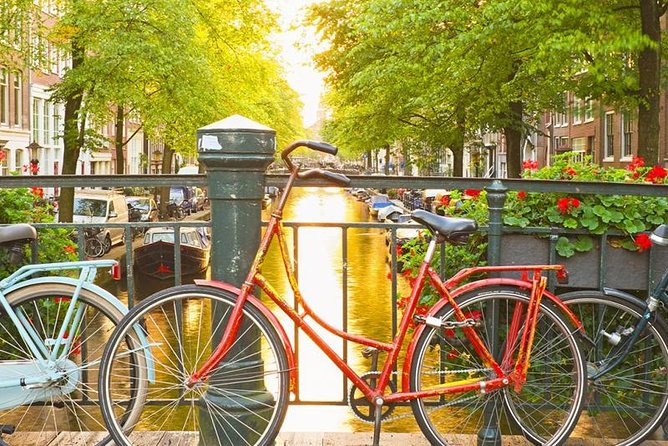
- A 2.5-hour, city-center route that’s long enough to matter, not so long you’re done thinking
- Insider context at every stop, so the canal and church details don’t feel random
- Free-and-not-free sights mixed in, meaning you should expect mostly short photo stops plus a few short-entry moments
- Outdoor-first planning with rain-or-shine running and limited interior access at some attractions
- Your guide’s Q&A energy is a real part of the value, not just recited facts
- You finish at Papeneiland, a pretty canal corner that’s easy to turn into your next plan
Why this walking tour works for first-time orientation
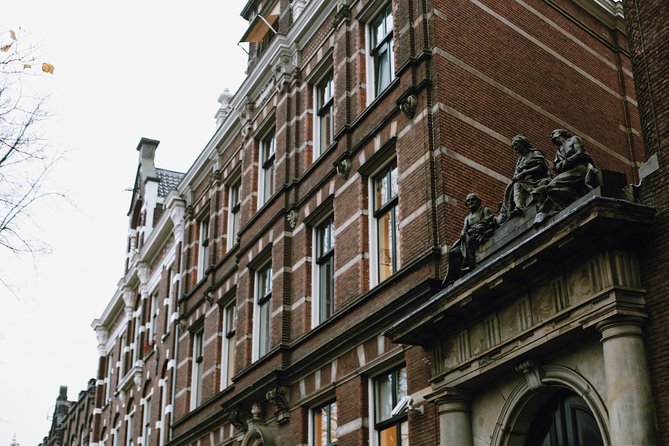
This is the kind of Amsterdam introduction you’ll actually use on day one or day two. The route stays anchored in the historic center, and the story the guide tells is built around themes you can feel walking: how the city grew from maritime life, how religious power shifted, and how trade money shaped what you see on the canal fronts.
At $62.48 per person for about 2.5 hours, you’re paying for two things: expert narration and time efficiency. Amsterdam’s landmarks are everywhere—what’s harder to buy is a coherent way to connect them quickly. If you want to wander on your own, you can. If you want a map made of stories, this is the bargain. Group discounts are part of the deal, and it’s booked far enough in advance that popular times can fill.
You can also read our reviews of more tours and experiences in Amsterdam.


Where it starts and how to plan your timing
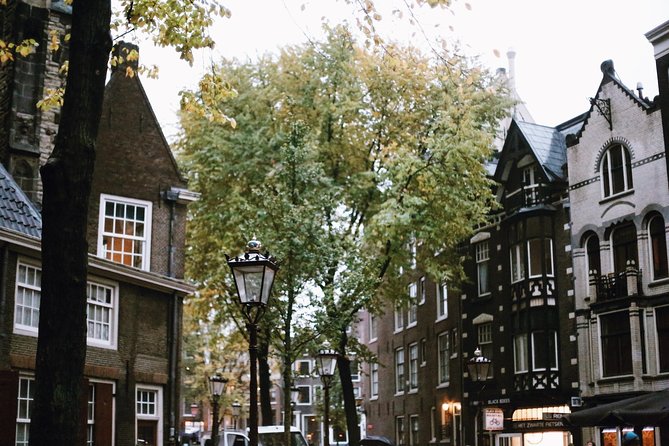
You’ll meet at Prins Hendrikkade 73, 1012 AD Amsterdam, and finish at Het Papeneiland, Prinsengracht 2, 1015 DV. The start point is described as near public transportation, and the end point is basically an invitation to keep walking the canals right after.
The tour runs rain or shine, so build your day around walking time, not weather luck. You’re also asked to provide a mobile phone number (with country code)—that matters in a city where meeting up can get messy fast if groups scatter in the crowd.
One more practical note: no large bags or suitcases are allowed. That’s not unusual for city tours, but it can catch people off guard if you’re arriving by train with luggage. Pack light, wear layers, and bring water.
From St. Nicholas Basilica to the Weeping Tower: faith and farewell-by-ship
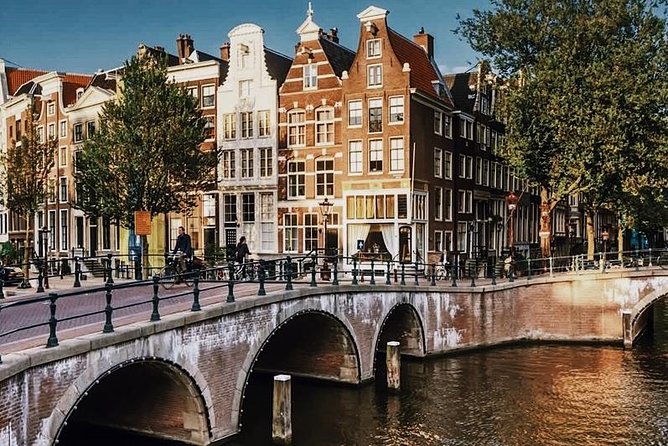
You begin with St. Nicholas Basilica, Amsterdam’s primary Roman Catholic church. You’ll hear how it came together in the late 19th century after long periods of Catholic prohibition. What I like about starting here is that it sets up a theme: Amsterdam’s religious landscape changed over time, and the buildings you see are evidence of those shifts.
Next comes the Weeping Tower (Schreierstoren), a medieval structure tied to the idea of farewell. The key detail here is the human one: women would say goodbye to loved ones departing by ship. Even if you’re not a history nerd, it lands—because you’re looking at the edge where personal life met the sea.
How to manage expectations: these first stops are short. You’re not meant to linger for a full museum visit. You’re meant to get context quickly, then keep moving before the city resets its mood.
Zeedijk, old sea dike engineering, and Amsterdam’s lock-bridge charm
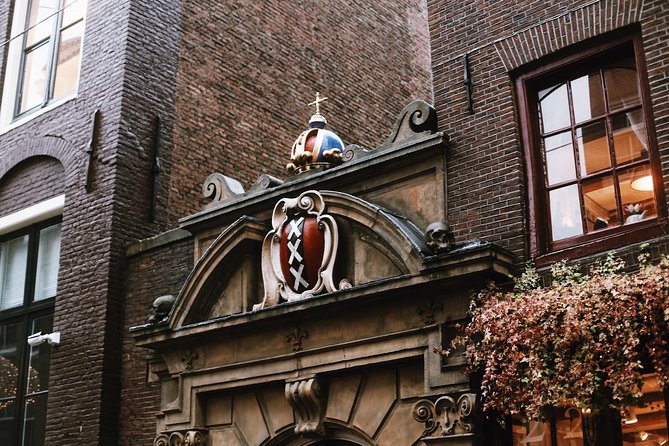
Then you hit Zeedijk, one of Amsterdam’s oldest streets. The big idea is that this area wasn’t always “just a street.” It began as a sea dike that held back water from the IJ. That’s a good reminder that Amsterdam isn’t only about canals for pretty photos; it’s also engineering for survival.
At the Kolksluis, you’ll see one of the city’s picturesque lock bridges. This is the kind of stop that makes you notice details you’d otherwise walk past—how water control shapes the city’s layout, and how even infrastructure can become visually iconic.
This section is also a nice decompression point: it’s not only churches and plaques. It’s the practical side of Amsterdam, presented in a way you can remember.
Nieuwmarkt and De Waag: commerce, guild power, and a city-gate survivor
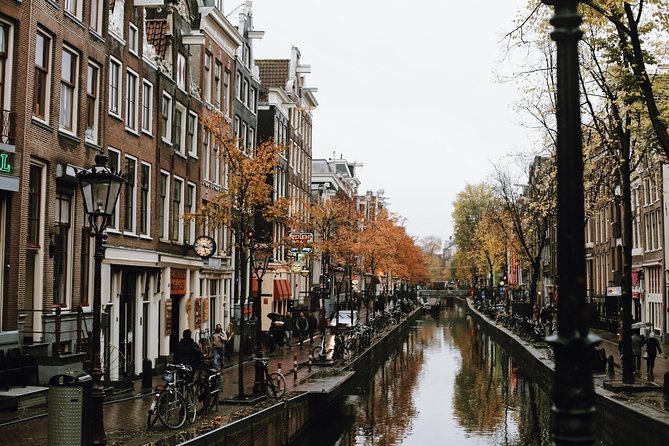
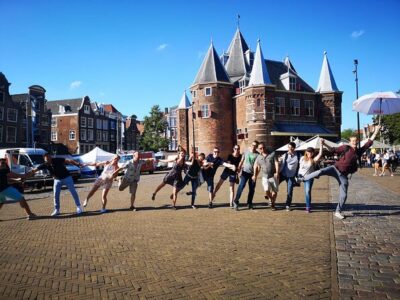
At Nieuwmarkt, the story turns toward daily life—commerce and social gathering inside the old city center. The location mattered because it sat just inside an old city gate, making it convenient for traders bringing fresh produce and goods.
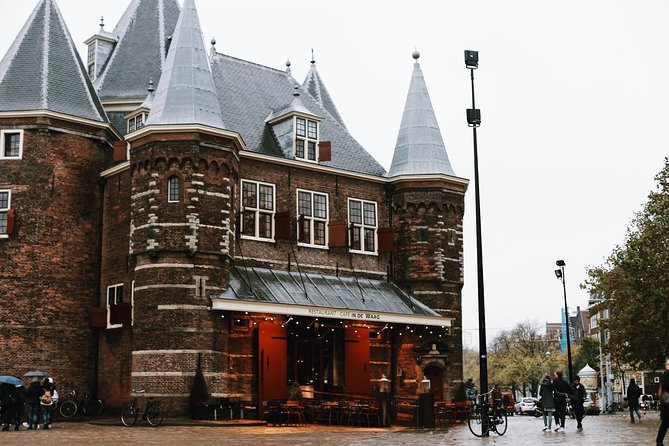
From there, you see De Waag (The Waag), a 15th-century non-religious building that’s among Amsterdam’s oldest remaining of its type. It originally served as a city gate and part of the walls, and later functioned in multiple roles over time, including guildhall, museum, and fire station. I love this stop because it’s a reminder that Amsterdam buildings keep getting repurposed. Nothing is “one and done.”
Here’s a consideration: some buildings are exterior-focused on a walking tour. The tour notes that some attractions can’t be visited from the inside due to security measures. So don’t structure your day around expecting every stop to become a full entry.




The Trippenhuis and the Smallest House: wealth contrasts you can see
You’ll then see the Trippenhuis, described as Amsterdam’s grandest 17th-century mansion, tied to the wealthy Trip family. Right around the area is the contrast: the so-called smallest house, built opposite. Even without stepping inside, that visual contrast is the point. You can literally read social inequality in architecture.
This is also a good segment to take photos without rushing. If you look up, the facades give you that “Dutch Golden Age” sense of ambition: you’re looking at a city that wanted its prosperity to be visible.
Oost-Indisch Huis courtyard: where trade logic became corporate history
Next is Oost-Indisch Huis, tied to the Dutch East India Company. You’ll step into the courtyard of its headquarters area—the birthplace of what’s described as the world’s first multinational corporation.
This stop gives the trade theme a strong payoff. It’s one thing to hear about Amsterdam’s merchant power. It’s another to stand somewhere connected to the way global business formed. If you like your history with a direct line to the modern world, this is one of the stops to pay attention to.
Tiny houses and the art of fitting in: Kleine Trippenhuis
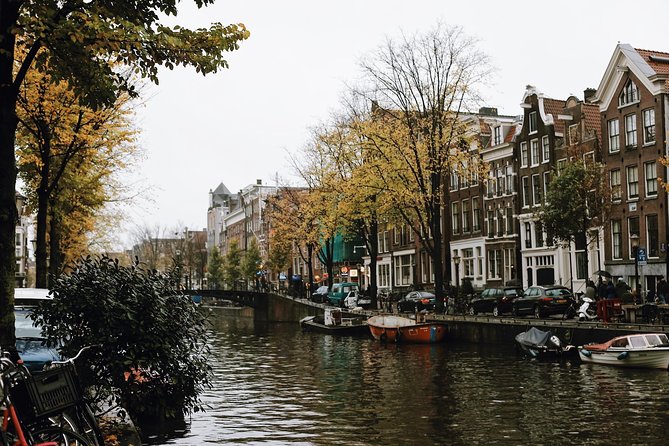
Then you spot Kleine Trippenhuis, a reminder of how land tax pressures encouraged tall, narrow architecture. Again, you don’t need to be an architecture expert to get it. You’ll see a city where space costs money, and buildings respond by stacking themselves upward.
This is also a good segment for posture. You’ll naturally keep looking up at façades, gables, and details—perfect for photos, and perfect for getting what you came for: a city you can interpret.
Zuiderkerk to Rembrandt House area: Protestant change and the creator-city vibe
In the religious-to-cultural shift, you visit Zuiderkerk, Amsterdam’s first purpose-built Protestant church designed by Hendrick de Keyser. The tower is described as one of Amsterdam’s defining landmarks, so it’s the kind of stop where even a quick view still feels meaningful.
After that, you move toward Museum Het Rembrandthuis, the former home and studio of Rembrandt, where he lived and worked for nearly 20 years. Even if you’re viewing from outside, it’s a powerful way to anchor the city to an actual artist’s daily life.
I like this middle section because it balances the heavy themes. Religion and business get the spotlight, then art shows up like a necessary counterweight.
Stopera, canal-house angles, and Begijnhof calm
You’ll then see the National Opera & Ballet complex, often called the Stopera, described as a building that took at least 60 years to construct. It’s a reminder that Amsterdam didn’t only build for commerce and worship—eventually, it built for performance and civic life too.
Next is Huis Aan De Drie Grachten, a rare 17th-century canal house at the junction of three canals, with façades facing in three directions. This is the kind of stop that rewards your eyes. You’ll notice how Amsterdam canal geography forces architecture into unusual angles.
Then comes Begijnhof, a quiet medieval courtyard once home to the Beguines, a community of devout women. Here stands one of Amsterdam’s oldest wooden houses. This is the moment in the walk where I’d call it a breath. If the earlier stops felt “important but fast,” Begijnhof slows your brain down.
Dam Square and the Herengracht Golden Bend: the center of power in one line
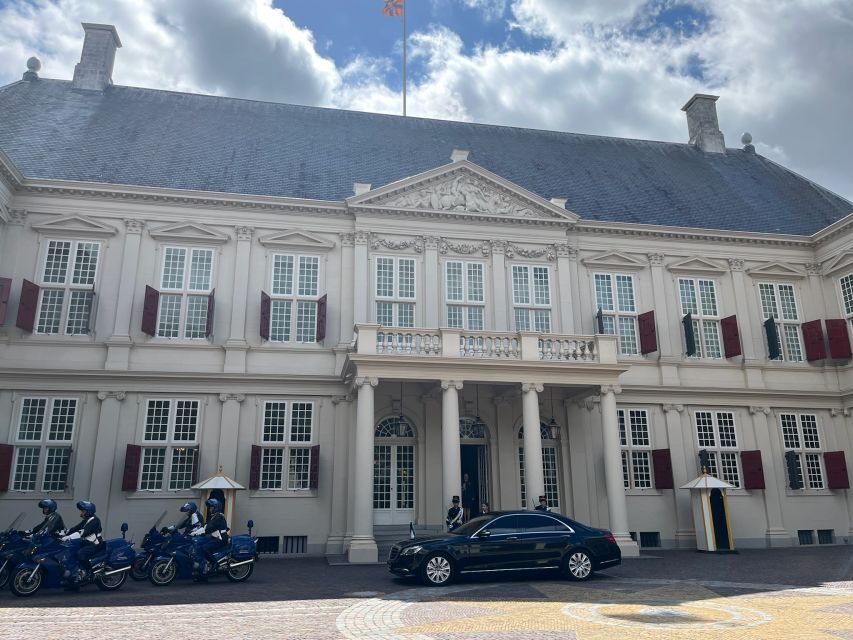
At Dam Square, you’re in the historic heart of Amsterdam, framed by the Royal Palace, the New Church (15th century), and the National Monument to WWII victims. This is where the city’s identity feels most official—politics, remembrance, and civic space all in one plaza.
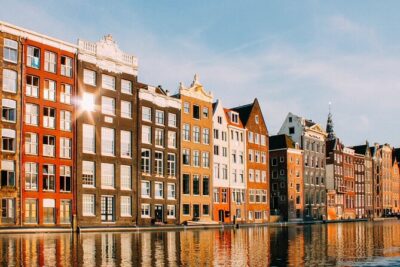
Then you admire Herengracht, focusing on the “Golden Bend” where you’ll find canal mansions tied to the Dutch Golden Age. This is not just pretty canals. It’s power made visible—wealth that funded ships, trade, and building booms.
If you’re walking with the goal of understanding Amsterdam’s hierarchy, this is your payoff stretch.
Anne Frank House area, gabled trade emblems, and Karthuizerhof’s courtyard scale
Outside the Anne Frank House, you’ll pause for a moment tied to WWII history and her hiding period. Next door is the Westerkerk, described as the tallest church tower in Amsterdam. This is another exterior-oriented moment, and it still hits because you’re in the real neighborhood context—not in a removed exhibit space.
From there, you look up at De Drie Hendricken aan de Bloemgracht 87–91, where quirky gable stones show allegories and trade emblems. This is one of those details that makes Amsterdam feel like a carved storybook.
Then you reach Karthuizerhof, described as the largest hofje in Amsterdam. Hofjes are courtyard housing areas, originally built as almshouses around a tranquil inner courtyard for the city’s poor and elderly. I like this stop because it shifts the idea of “history” away from only famous names and toward how ordinary people lived.
Noorderkerk and the Papeneiland finish: from neighborhood worship to apple pie
You see Noorderkerk, a 17th-century Protestant church built for the Jordaan district. It’s noted for an unusual cross-shaped floor plan that reflects Reformation worship ideals. Even with quick viewing, you can sense the plan-driven thinking behind design choices.
Finally, you end at Papeneiland, one of Amsterdam’s prettiest canal corners. The plan includes a visit to Het Papeneiland, a brown café from 1642, where it’s said the apple pie is among the best in town.
This ending matters because it turns the walking tour into a smooth handoff. You’re not dropped in an empty “good luck” zone—you’re placed somewhere photogenic and practical for food, a drink, or a short canal stroll.
Price and value: what you’re really paying for
At $62.48 per person for about 2.5 hours, the value comes down to this: Amsterdam can be chaotic to read on your own. Landmarks compete for your attention, and without context you often remember only what you photographed.
This tour sells clarity. You get a tight sequence of sites across religion, trade, architecture, and civic life. Some stops offer free admission tickets, while others are not included for admission—so the tour design is careful about what you experience in a short time frame. Add in that the tour runs in all weather and that you get an English-speaking guide, and it becomes a solid buy for getting your bearings fast.
Also, you can upgrade to a private tour for undivided attention. If you’re traveling with a small group or you want more time on specific questions—architecture, canal history, WWII context—that option can be worth it.
Who should book this Amsterdam center walk
This works best if you:
- Want a structured introduction without spending energy building a route yourself
- Like history that stays connected to what you see on the street
- Enjoy asking questions and getting direct answers from your guide
- Plan to return later to places you spot today (you’ll be better oriented when you do)
It may be less ideal if you:
- Want a lot of long museum time (this is a walking tour with short stops)
- Need frequent indoor access (the tour notes that some attractions can’t be visited from inside)
- Travel with bulky luggage (large bags and suitcases aren’t allowed)
If you’re moderate on your walking comfort, you’ll be fine. The tour is described for moderate physical fitness, and it’s timed for about 2 hours 30 minutes.
Should you book this tour?
Yes—if your goal is to understand Amsterdam quickly and then explore with more confidence. This tour is strongest as an orientation tool: it strings together churches, courtyards, canal engineering, and Golden Age wealth into a story you can carry all week. The fact that guides like Anita, Diana, and Pedro are praised for knowledge and keeping energy up even in tough weather says a lot about the experience quality.
Book it particularly if you’re there for a short stay. When your time is limited, a guided walk that gives you direction and context is often the best use of your day.
FAQ
What’s the duration of the Amsterdam City Center & History guided walking tour?
It runs for about 2 hours 30 minutes.
How much does the tour cost?
The price listed is $62.48 per person.
Where does the tour start and where do I end?
It starts at Prins Hendrikkade 73, 1012 AD Amsterdam, and ends at The Papeneiland at Prinsengracht 2, 1015 DV Amsterdam.
What language is the tour offered in?
The tour is offered in English.
Does the tour run in bad weather?
Yes. It runs, rain or shine, so dress appropriately.
Is this a private tour?
It’s described as private/activity, meaning only your group participates. One detail to watch is that guide-only-for-you may not apply if you choose the SAVE! BOOK SEMI-PRIVATE option.
Are there attractions or stops where admission is included?
Some stops are listed as having free admission tickets, while others note that admission tickets are not included. Some sites may also be limited for inside visits due to security measures.
What should I bring or wear?
Wear comfortable shoes. Bring a bottle of water, and consider an umbrella in case of rain and a hat during summer. Also, avoid bringing large bags or suitcases.
Is there free cancellation?
Yes, you can cancel for a full refund up to 24 hours before the experience start time.