REVIEW · AMSTERDAM
History & culture tour in Amsterdam with a local
Book on Viator →Operated by Guidance Travel · Bookable on Viator
Amsterdam rewards slow walking. This small-group history and culture tour with a local threads together the city’s big turning points, from a fishing village to a 17th-century trading powerhouse, with tasty stroopwafel breaks along the way. I like how the route keeps you close to the action while still covering the stories you’d miss on your own, like how Amsterdam’s tolerance shows up in places such as Begijnhof. One thing to plan for: it’s a 2 to 2.5 hour walking tour, so if you tire easily, you may want to pace yourself.
What I really like is the small group size (up to 15), which makes it easier to ask questions and stay on track. And the guides—examples include Manouk and Malik—sound like they actually care about tailoring the tour to your interests, not reading a script. The second big plus: the stop-by-stop mix of monuments and overlooked details, from Dam Square to the Waag at Nieuwmarkt.
The one drawback to keep in mind is the pace: each stop is brief (around 10–15 minutes). If you love lingering, sketching, or taking lots of photos without moving, you’ll want to treat this as your framework day—and then come back for longer visits later.
In This Review
- Key things you’ll notice on this Amsterdam history walk
- Why a 2-hour local walk beats a grab-and-go Amsterdam day
- Beursplein: trading roots and the city’s name story
- Dam Square: royal power and WWII memory in one tight circle
- Begijnhof: a serene courtyard and a real lesson in tolerance
- House on the Three Canals and the bicycle bridge idea
- Nieuwmarkt: the Waag, guild power, and the dancing houses
- Zeedijk: Chinatown’s 1970s past and the street’s new life
- Centraal Station: why this building is more than pretty
- Price and value: what $30.07 buys you in Amsterdam
- Who should book this walk, and who might want a different plan
- Should you book this Amsterdam history and culture tour?
- FAQ
- How long is the Amsterdam walking tour?
- Where does the tour start and end?
- Is the tour offered in English?
- What group size is the tour capped at?
- Is there a stroopwafel included?
- What stops are included on the route?
- Are admission tickets required for the stops?
- Can I get a refund if I cancel?
- How do I receive the ticket?
Key things you’ll notice on this Amsterdam history walk
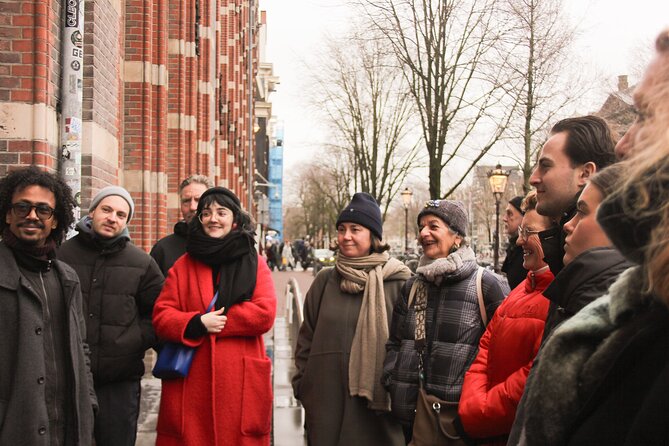
- A tightly planned route: multiple classic sites, but each one gets just enough time to make the story click
- Classic Dutch stroopwafel included as a simple, satisfying break
- Begijnhof’s quiet contrast: a calm courtyard tied to Amsterdam’s religious history
- Canals with personality: the House on the Three Canals and the bicycle bridge connection
- Guild power made visible at Nieuwmarkt, including the Waag and the dancing houses
- Zeedijk’s big shift: from a rough reputation in the 1970s to a favorite street today
Why a 2-hour local walk beats a grab-and-go Amsterdam day
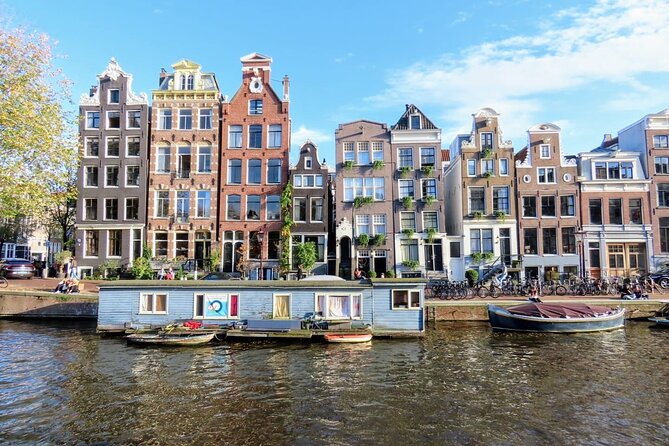
Amsterdam can feel like a puzzle. The streets crisscross, the canals steal your attention, and it’s easy to walk for hours without learning why things matter.
This tour is built to solve that problem quickly. You get a focused walk that ties together landmarks and neighborhoods into one story. You’re not just collecting photos; you’re learning how Amsterdam’s identity formed—economically, politically, and socially.
And because it stays small (max 15 people), the guide can keep momentum without losing everyone. In a city where group tours can feel like a conveyor belt, this format helps you actually connect the dots between stops. That’s also why it works well as a first-day activity: you get a mental map of the city’s themes—trade, tolerance, power, and change.
You can also read our reviews of more tours and experiences in Amsterdam.



Beursplein: trading roots and the city’s name story
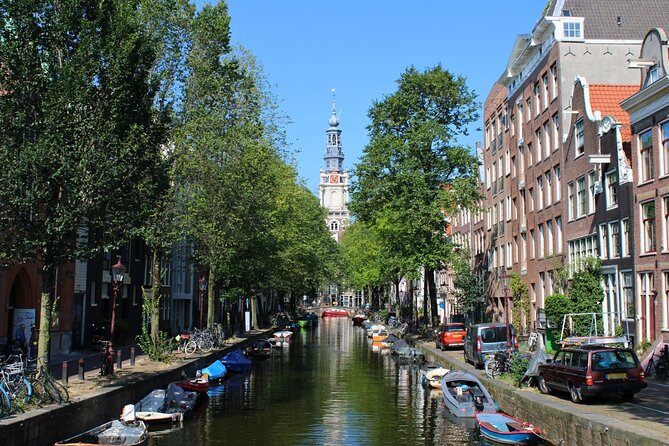
You’ll start at Beursplein, a central square that points toward Amsterdam’s earliest commercial pulse. Here, you’ll learn how the city developed from a small fishing area into a 17th-century center of global finance. That time period matters, because it explains why you still see money and commerce shaping the city’s layout and architecture centuries later.
This stop is short (about 10 minutes), so think of it as your “big picture starter.” You’ll leave with a clearer sense of why Amsterdam became the kind of place where canals weren’t just pretty—they were infrastructure for a trading machine.
What to watch for: don’t expect a museum moment here. The value is in the context the guide gives you so the next stops make sense.
Possible drawback: if you’re hoping for a deep dive into the exact economic details of the 1600s, this isn’t that format. It’s more like getting the “why,” so you can later explore “how” on your own.
Dam Square: royal power and WWII memory in one tight circle
Next up is Dam Square, the famous heart of the city. The guide will explain Dam Square’s role in Amsterdam’s formation, and then bring it into focus through two very different lenses: civic identity today and historical weight from the Second World War.
You’ll also see the Royal Palace on the Dam—a sight that looks like it belongs on a postcard, but the story around it helps you read the space as a political center, not just a landmark.
This is one of those stops where standing for a few minutes can feel too short. That’s not because the site isn’t important—it’s because the tour is designed to move. Still, in a short time, you’ll gain enough context to understand why this area is treated like a symbol.
Possible drawback: this square can be busy. If you’re sensitive to crowds, plan to stand to the side where you can listen without being shoved into the flow.
Begijnhof: a serene courtyard and a real lesson in tolerance
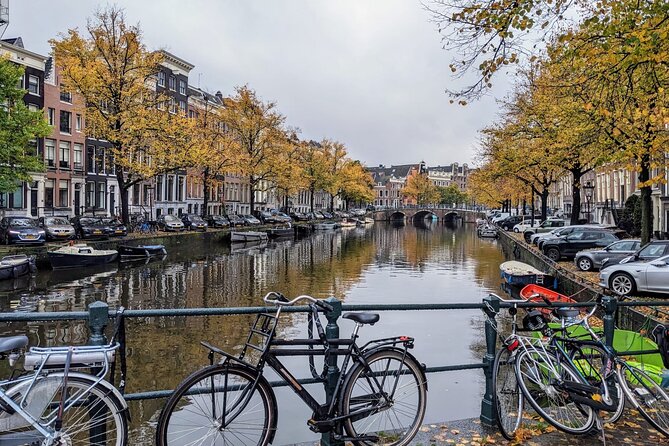
Then the tour shifts tone. At Begijnhof, you’ll step into a calmer, quieter pocket of Amsterdam and learn why this courtyard became meaningful in the city’s religious history.
The big idea here is tolerance, and you’ll see it explained through how this place functioned as part of Amsterdam’s social and spiritual life. It’s not just a pretty courtyard stop. The guide ties the setting to what Amsterdam learned to live with—and how different communities found ways to coexist.
You’ll also get an especially cool detail: an extremely old house in Amsterdam, including one of the two wooden cottages. That’s the kind of fact that makes the place feel grounded in time, not just aesthetic.
Why this stop is valuable: it gives you a pause in the schedule, and it shows a side of Amsterdam that’s easy to overlook when you’re rushing between canal views.
Possible drawback: it can feel a bit still and quiet—if you want constant energy, you might crave a louder story. But for me, that contrast is the point.
House on the Three Canals and the bicycle bridge idea
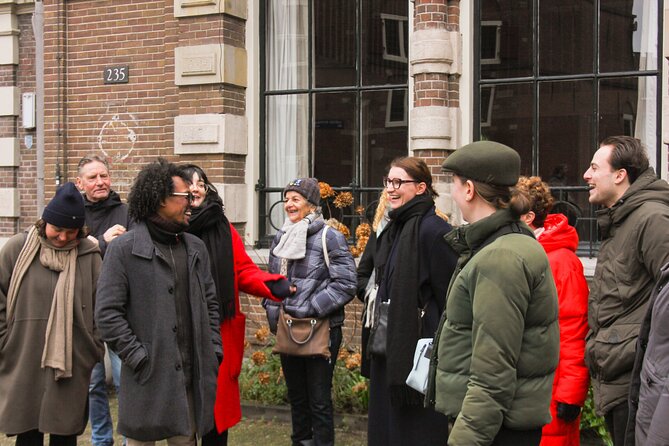
After Begijnhof, you’ll head to House on the Three Canals. This stop is the “wait, what?” moment in the route. The guide explains the unusual layout of the house, built so it sits in a way that interacts with three canals.
You’ll also hear about the idea of the bicycle bridge—a detail that connects Amsterdam’s past to its practical present. It’s a reminder that daily life, especially cycling and canals, isn’t a modern trend; it’s part of the city’s ongoing problem-solving.
What you’ll appreciate here is how the tour uses a single quirky site to teach bigger patterns: clever engineering, narrow spaces, and the city’s habit of turning constraints into features.
Possible drawback: if you’re not into architectural oddities, this could feel like a quick photo stop. But even then, the bicycle bridge connection usually brings it back to something relatable.





Nieuwmarkt: the Waag, guild power, and the dancing houses
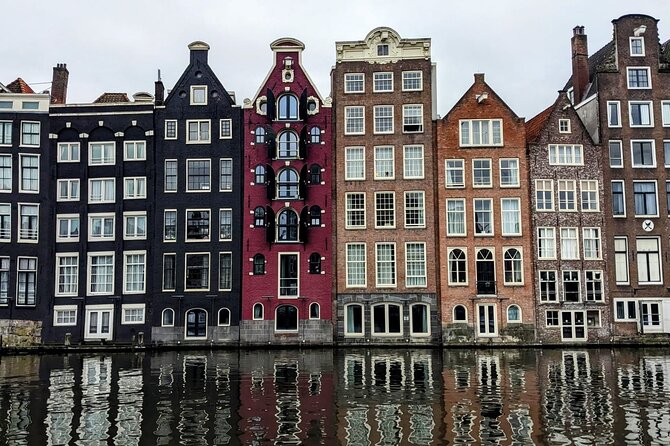
At Nieuwmarkt, you’ll focus on the city’s old gate and later role as a guild space. You’ll see the Waag, learn how it began as one of the old city gates, and then how it became connected to guilds—one of the forces that shaped trade and professional life in Amsterdam.
Guilds matter because they explain who had influence and why. This is where you start to understand Amsterdam not only as a financial machine, but as a community of organized groups with rules, roles, and reputation.
You’ll also encounter the dancing houses—another architectural story point where the guide’s explanation makes the weirdness feel meaningful instead of random.
Time check: this is another about-10-minute stop. You’re not going to master the guild system in 10 minutes, but you will understand what it meant for how the city worked.
Possible drawback: if you’re the type who loves reading signage and scanning every detail, you may feel rushed. Use the tour for context, then come back later if you want to linger.
Zeedijk: Chinatown’s 1970s past and the street’s new life
Next is Zeedijk, where the tour story turns into modern Amsterdam social history. You’ll learn about Chinatown here, including the fact that in the 1970s Zeedijk had a reputation as one of the more dangerous areas in Amsterdam.
The guide then brings you to today, explaining how that atmosphere changed and how the street has transformed into a favorite spot for many Amsterdammers.
I like this stop because it resists the “Amsterdam is always romantic” script. It shows how neighborhoods evolve, and how reputation is often tied to specific periods of history rather than some permanent truth about a place.
What to do with this information: once you understand the shift, you’ll likely notice more detail on a second walk—restaurants, storefront energy, and everyday life patterns that match the newer identity.
Possible drawback: because the stop is brief, you won’t get a deep sociological account. Still, it’s enough to help you walk the street with better instincts.
Centraal Station: why this building is more than pretty
To finish, you’ll reach Centraal Station, one of Amsterdam’s most stunning buildings. You’ll get the architecture context, but the story doesn’t stay stuck in beauty. The guide connects the station’s location to why it has long been a transportation hub—and a historical symbol of connection and prosperity.
This is a smart ending because it ties Amsterdam’s themes together. Trade and movement go together, and the city’s center of transport makes that visible. It also gives you a practical benefit: you’re near a major transit point when the tour ends, which is handy if you’re heading to museums, day trips, or dinner plans.
Possible drawback: depending on the time of day, the station area can be busy and loud. If you have trouble hearing in crowds, stand where you can face the guide and avoid the strongest foot-traffic stream.
Price and value: what $30.07 buys you in Amsterdam
At about $30.07 per person for roughly 2 hours (often listed as 2 to 2.5 hours), this tour is priced like a solid “context package.” You’re not paying for admission fees because the stops shown are free of charge. You’re paying for a local to connect the dots between places you’d otherwise see as separate attractions.
For value, the big three are:
- Small group size (up to 15), which improves the listening experience
- A guided storyline across multiple central sites, instead of a single-site lecture
- One included treat—a classic Dutch stroopwafel—to keep the walk from feeling like all work and no play
If you’re in Amsterdam for only a couple days, this kind of tour is often worth it. It gives you a high-quality orientation. If you have plenty of time and you already know Amsterdam’s history, you might prefer to spend those hours on self-guided canal exploring. But most people benefit from getting the “why” first.
Who should book this walk, and who might want a different plan
This tour fits best if:
- you want history and culture without committing to a long, slow day
- you’re visiting soon and want an efficient way to get your bearings
- you like walking but don’t want to plan your own mini itinerary across several neighborhoods
- you enjoy architecture and small story details more than big museum time
You might choose something else if:
- you dislike walking for 2 to 2.5 hours
- you prefer deeper museum-style content over quick stop narratives
- you want a lot of indoor time with seating
Should you book this Amsterdam history and culture tour?
Yes, if you want a first-day-friendly orientation that turns landmarks into understanding. The route covers major themes—commerce, civic power, faith and tolerance, guild influence, neighborhood change—without wasting your time on filler.
I’d especially recommend it if you like learning in short bursts: each stop is brief, but the guide’s explanations are the difference between seeing buildings and understanding why Amsterdam became Amsterdam. Add in the stroopwafel stop and the small-group vibe, and you’ve got a practical, enjoyable way to spend two hours in the city center.
FAQ
How long is the Amsterdam walking tour?
It’s about 2 hours on average, with the tour lasting approximately 2 to 2.5 hours.
Where does the tour start and end?
The tour starts at Beursplein, 1012 JW Amsterdam, Netherlands and ends back at the meeting point.
Is the tour offered in English?
Yes, it’s offered in English.
What group size is the tour capped at?
The tour has a maximum of 15 travelers.
Is there a stroopwafel included?
Yes. You’ll enjoy a classic Dutch stroopwafel along the way.
What stops are included on the route?
The tour includes Beursplein, Dam Square, Begijnhof, House on the Three Canals, Nieuwmarkt, Zeedijk, and Centraal Station.
Are admission tickets required for the stops?
The listed stops show free admission ticket information.
Can I get a refund if I cancel?
Free cancellation is available. You can cancel up to 24 hours in advance for a full refund.
How do I receive the ticket?
You’ll use a mobile ticket.