REVIEW · AMSTERDAM
Amsterdam : Guided Cultural Food Tour
Book on Viator →Operated by Amsterdamliebe · Bookable on Viator
Amsterdam makes sense with snacks and stories. This guided cultural food tour is interesting because it connects city power, faith, and trade to the streets you’re walking, and I like the small group size that keeps it personal, with a guide who’s friendly and easy to understand in English while answering questions. The one thing to consider is that a few big stops (like Anne Frank House) are only a brief look from the route, and paid admissions are not included there.
You’ll start at the National Monument steps on Dam and end on the Spui square, which is a nice way to flow from the historic center into a more relaxed part of town. The route moves from 13th-century origins through Golden Age wealth, then into neighborhoods like the Jordaan and the 9 Straatjes (Negen Straatjes), where the guide’s food and hangout tips come in handy. Expect a lot of walking, so wear shoes you’re comfortable standing and strolling in for a couple of hours.
In This Review
- Key highlights before you go
- Meeting Dam and ending at Spui: the route rhythm
- Price and time: what $102.41 buys you
- Stop 1: National Monument and Dam Square storytelling
- Stop 2 and 3: Royal Palace Amsterdam in a bigger context
- Stop 4: Oude Kerk and the early roots of the red-light district
- Stop 5 and 6: Beurs van Berlage and Magna Plaza trade-to-tower energy
- Stop 7: The Statue of Multatuli and a hard truth about colonialism
- Stops 8 and 9: The Jordaan and the 9 Straatjes for food and plans
- Stop 10 to 12: Anne Frank House outside views, Westerkerk, and Begijnhof
- A cultural food tour that actually helps you eat better
- How to get the most from a 2.5-hour walk in Amsterdam
- Who should book this tour, and who might want something else
- Should you book Amsterdamliebe’s Guided Cultural Food Tour?
- FAQ
- FAQ
- How long is the Amsterdam guided cultural food tour?
- How much does it cost per person?
- Is the tour offered in English?
- What’s the group size limit?
- Where does the tour start and end?
- Are admissions included for Anne Frank House, Westerkerk, and Begijnhof?
- Are admissions included for the other major stops?
- What’s included in the tour besides the guide?
- What happens if the weather is poor or the minimum number of travelers isn’t met?
Key highlights before you go
- Max 15 travelers keeps questions coming and the pace comfortable.
- Clear English guiding with answers to whatever you’re curious about.
- Monument-to-monarchy storytelling links major landmarks to how Amsterdam changed.
- Golden Age trade stops like Beurs van Berlage show why this city got so wealthy.
- Jordaan + 9 Straatjes food and shopping tips help you turn sightseeing into plans.
- Colonialism context includes the Statue of Multatuli for a harder, necessary perspective.
Meeting Dam and ending at Spui: the route rhythm
Your tour starts at National Monument, Dam (1012 JS Amsterdam), right where the center of the city begins. This is a smart place to begin because it immediately frames Amsterdam as more than canals and bikes. From these steps, the guide sets the timeline: the city’s establishment goes back to the 13th century, so you’re not stuck guessing what era you’re standing in.
You’ll finish on Spui square (Spui 20HS, 1012 XA). That matters more than you might think. Spui is a convenient launch point for exploring on your own afterward—whether you want to keep it walkable, head toward shopping streets, or grab a bite nearby. If you want to return to Dam, the tour notes that you can simply follow your guide’s way back to Dam, which is useful if you’re timing something later that day.
The route is designed as a steady walk—no constant backtracking—and each stop is kept short, usually around 5 to 15 minutes. That format is great for first-timers who want structure without a “museum marathon.”
You can also read our reviews of more tours and experiences in Amsterdam.

Price and time: what $102.41 buys you
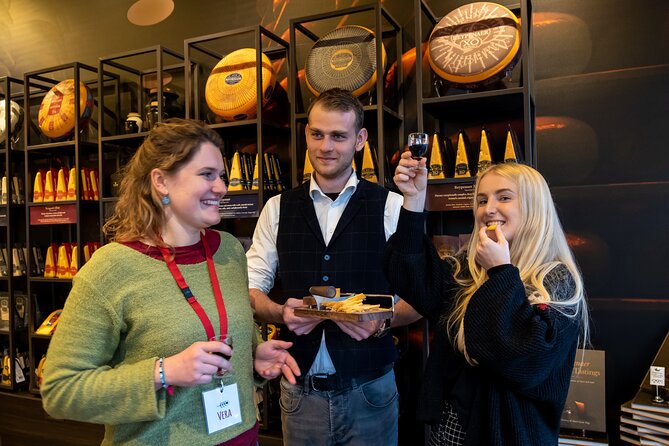
At $102.41 per person for about 2 hours 30 minutes, you’re paying for three main things: a guide, a small-group experience, and small extras that help you enjoy the walk. The tour includes snacks plus a 1.50€ tourist tax, so you’re not showing up and then doing the math mid-tour.
A big part of the value is that you’re not just collecting photos—you’re getting context. Stops include national memory sites, churches tied to early neighborhood patterns, trade history, and modern neighborhood life. That’s the difference between wandering randomly and walking with a plan.
Also pay attention to admissions. Many stops are marked admission ticket free, but a few are not included (Anne Frank House, Westerkerk, and Begijnhof). So you’re likely getting the orientation and story, not full interior time at every landmark. If you want to go inside, plan to do that separately.
Stop 1: National Monument and Dam Square storytelling
You begin at the National Monument, and the guide brings you into Amsterdam’s origins from there. Even if you already know the city is old, it hits differently when someone frames it as a place with a long timeline of power and identity. The stop is short—about 10 minutes—but the aim is to set a theme: Amsterdam wasn’t built in a day, and it didn’t become itself by accident.
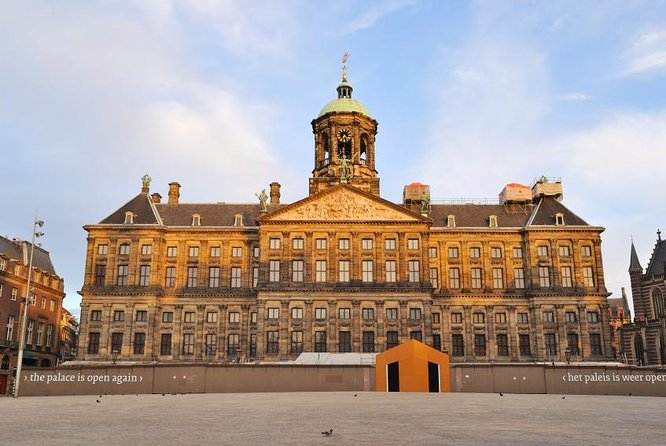
From there you move to Dam Square, the most central, historical point in the city. You’ll hear how Amsterdam grew from a small fishing village into the city people recognize today. The Royal Palace story comes up here too, which is helpful because it explains why that building matters in a “how did this city form” way, not just an “it looks impressive” way.
One detail worth noting: the tour includes empathy for victims of World War II as you walk past the National Monument. That adds emotional weight to the sightseeing, and it’s also a reminder that history in Amsterdam isn’t only “old brick and pretty canals.” It’s lived memory.
Stop 2 and 3: Royal Palace Amsterdam in a bigger context

The Royal Palace Amsterdam stop lasts about 10 minutes and focuses on the Netherlands’ royal past and what monarchy looks like in today’s world. That’s a more useful approach than a quick exterior photo moment, especially if you’re wondering why the Netherlands keeps a royal institution when so much of Europe moved toward republicanism.
Because this tour is short at each stop, your guide’s job is to connect the dots quickly. If you’re the type who likes to understand institutions and not just buildings, this is one of the stops that usually clicks.
What to consider: if you hoped for deep palace interior time, this tour is about orientation and narrative, not ticketed sightseeing inside the palace.
Stop 4: Oude Kerk and the early roots of the red-light district

At the Oude Kerk, you’ll visit Amsterdam’s oldest church and hear how the red-light district area was established in the 14th century. This is handled as history and urban development, not shock value. Still, it’s an emotionally complicated topic, so it helps that the tour gives you a timeline rather than sensational snippets.
The stop is about 10 minutes, which means you’ll get a clear idea of what the church represents and how the surrounding neighborhood patterns formed. If you’re prone to getting swept up in Instagram vibes, this stop is a useful correction: the area has layers, and those layers don’t start with modern nightlife.


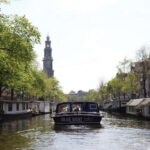
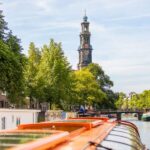
Stop 5 and 6: Beurs van Berlage and Magna Plaza trade-to-tower energy

Next up is Beurs van Berlage, with about 15 minutes set aside. This is where the tour explains how Amsterdam’s small-town beginnings turned into one of the richest cities during the Golden Age. The message is simple but powerful: trade made the city, and architecture followed.
Then you shift to Magna Plaza, the former post office. At about 5 minutes, it’s brief, but it’s a good “look and think” stop: how older infrastructure gets repurposed as the city keeps changing. If you’re the kind of traveler who likes noticing how spaces evolve, you’ll probably enjoy this one more than you expect from a quick stop.
Stop 7: The Statue of Multatuli and a hard truth about colonialism

One of the most interesting parts of this walk is the Statue of Multatuli. You’ll learn about the dark side of colonialism that helped create wealth, and you’ll also hear about Multatuli as an important Dutch author. The tour doesn’t treat this as a footnote. It frames criticism and accountability as part of understanding how wealth was made.
This stop is about 10 minutes, and it adds balance to the Golden Age stories earlier. Golden Age wealth is tempting to romanticize, but the Multatuli angle pulls you back to reality: money and empire often came with real suffering and lasting consequences.
If you enjoy getting a full picture, not a one-note version of history, this is a key reason to choose this specific tour route.
Stops 8 and 9: The Jordaan and the 9 Straatjes for food and plans
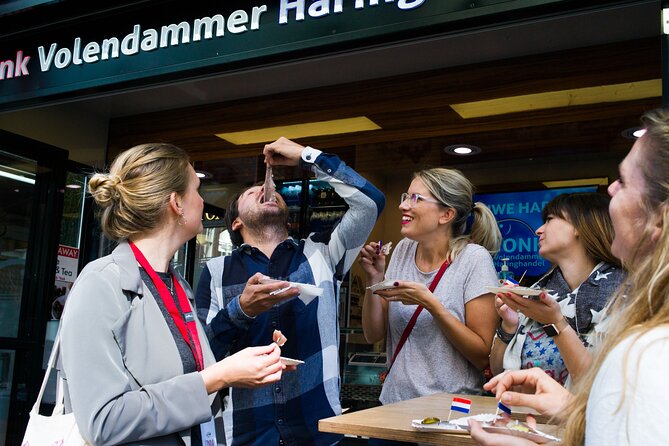
Now you move into areas where the city feels like a neighborhood again. The Jordaan stop lasts about 15 minutes, and you’ll learn why this is described as Amsterdam’s picturesque neighborhood. You’ll also hear the story behind the small houses and how they were established—useful context for understanding why the streets look the way they do.
Then comes 9 Little Streets (Negen Straatjes), with about 10 minutes. This is one of the best segments for people who want to turn the tour into follow-up plans. The guide gives tips for the best bars, restaurants, and shopping opportunities in the area. That’s exactly the kind of practical insight that makes a “walking tour” feel like a value-added city guide.
A quick note on expectations: you’re not shopping with a guide for an extended time. You’re getting direction. If you like browsing, you can use those tips later the same day or the next evening.
Stop 10 to 12: Anne Frank House outside views, Westerkerk, and Begijnhof
The tour includes a brief look at the Anne Frank House on your route, around 5 minutes, with admissions not included. This is best understood as a respectful orientation stop. If this is a must-do for you, you’ll want to plan your own ticketed visit separately.
Next is Westerkerk, one of Amsterdam’s bigger church buildings, shown for about 5 minutes, and again admission isn’t included. The same goes for Begijnhof, visited for around 10 minutes. Begijnhof is known for the stunning courtyard feel and a hidden church inside that you’ll try to spot. Even without interior entry being part of the tour, the “where are you supposed to look” help from a guide can make a difference in what you notice.
Because these stops are short, don’t expect long stays or full-history lectures here. The purpose is to point you to important places and help you recognize what matters, then let you choose how much time to give them later.
A cultural food tour that actually helps you eat better
Even though the route is packed with landmarks, the tour is still positioned as a cultural food tour, and you’ll feel that most in two ways.
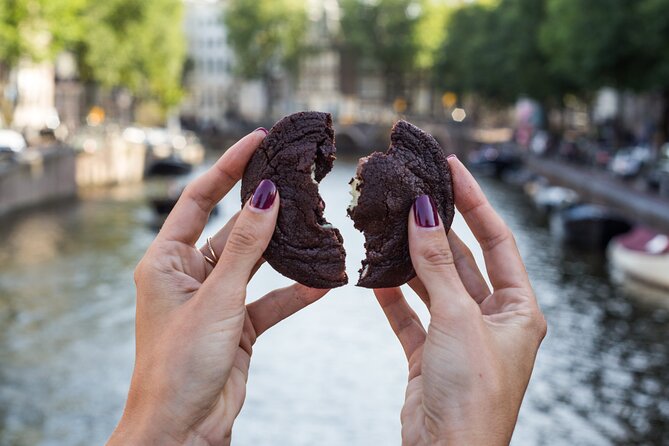
First, you get snacks included, so you’re not walking hungry during a 2.5-hour block of central Amsterdam. That sounds minor, but it changes how you experience the city. You’ll have more patience for stories and walking when you’re not running on an empty stomach.
Second, you get practical food direction in the neighborhood segments. The tour’s best “eat next” moments are around the Jordaan and 9 Straatjes, where the guide shares tips for bars and restaurants. This is where you can benefit without needing to guess your way through menus in a second language.
How to get the most from a 2.5-hour walk in Amsterdam
This kind of tour rewards preparation. A few practical moves make it smoother:
- Wear comfortable walking shoes. You’ll be moving most of the time, and stops are frequent.
- Bring water if you’re out in warmer months. Snacks help, but they’re not a full meal.
- Use the guide for questions. The tour format works because the group is small (max 15), which makes Q&A feel natural.
- Arrive near the meeting time and find Dam quickly. Starting clean is half the stress gone.
- Keep an eye on the route pace. Stops are timed (often 5–15 minutes), so you won’t get stuck in one place.
- Plan follow-up visits for places with admissions not included, especially Anne Frank House, Westerkerk, and Begijnhof.
If you’re someone who likes learning while moving, this tour style can be a great reset for your first day in town.
Who should book this tour, and who might want something else
This is a strong fit if you want:
- A history and culture overview that still connects to daily life in Amsterdam
- A small-group experience where the guide can answer your questions
- A blend of big landmarks and neighborhood streets like the Jordaan and 9 Straatjes
- Clear English explanations without getting lost in translations
It’s less ideal if you’re hoping for:
- A long, ticketed visit inside major sites like Anne Frank House, Westerkerk, or Begijnhof
- A food-focused itinerary with multiple named tastings (the tour clearly includes snacks and food tips, but it doesn’t promise extended market-style meals in the provided details)
- A low-walking day, since it’s built as a 2.5-hour stroll
Should you book Amsterdamliebe’s Guided Cultural Food Tour?
If you’re trying to make Amsterdam feel understandable fast, I’d call this a smart booking. The biggest selling points are the small group limit and the way the guide is described as friendly, charismatic, and easy to understand in English, with answers that keep your curiosity satisfied. You also get that balance of major landmarks plus neighborhood direction, which is what helps you turn a short outing into a full-day plan.
I’d say book it if you’re the type who likes context: how a city forms, why certain places matter, and how wealth and power shape the streets you walk. If your main priority is ticketed interior time at the biggest attractions, you’ll likely want to pair this with separate timed entry plans.
In short: for $102.41 and about 2.5 hours, this is a good value way to connect Amsterdam’s monuments with its everyday food-and-street energy.
FAQ
FAQ
How long is the Amsterdam guided cultural food tour?
It runs for about 2 hours 30 minutes.
How much does it cost per person?
The price is $102.41 per person.
Is the tour offered in English?
Yes, it is offered in English.
What’s the group size limit?
The experience has a maximum of 15 travelers.
Where does the tour start and end?
It starts at National Monument, Dam (1012 JS Amsterdam) and ends on Spui square (Spui 20HS, 1012 XA).
Are admissions included for Anne Frank House, Westerkerk, and Begijnhof?
No. Those stops are marked admission ticket not included.
Are admissions included for the other major stops?
Several stops are listed as admission ticket free, including National Monument, Dam Square, Royal Palace Amsterdam, Oude Kerk, Beurs van Berlage, Magna Plaza, the Statue of Multatuli, The Jordaan, and 9 Little Streets.
What’s included in the tour besides the guide?
The tour includes snacks and a 1.50€ tourist tax, plus the walking tour itself.
What happens if the weather is poor or the minimum number of travelers isn’t met?
The tour requires good weather. If it’s canceled due to poor weather, you’ll be offered a different date or a full refund. If it’s canceled because the minimum number of travelers isn’t met, you’ll also be offered a different option or a full refund.