REVIEW · UTRECHT
Cultural and Historical Audio Guided Walking Tour of Utrecht
Book on GetYourGuide →Operated by Pocketguide Audiotours BV · Bookable on GetYourGuide
Utrecht is best heard, not just seen. This audio tour strings together 22 story stops across canals, courtyards, squares, and older neighborhoods, so you control the pace without waiting on a big group. I like that the route is designed for a slow wander, and I also like the practical focus on recognizable Utrecht landmarks and moments you’ll want to revisit after the headphones go quiet.
One thing to weigh before you book: it’s no live guide, and you’ll need to do the start-up yourself. If the app meeting-point step feels confusing, you’ll feel that immediately—especially since headsets aren’t included.
Key moments that stand out
- 22 stops across the medieval old town, told in English and Dutch
- A chance to climb the Domtoren and earn a view from 465 steps
- Stories tied to real places: Paushuize, Zeven Steegjes, and Huis Zoudenbalch
- Self-paced walking with your own timing, not a scheduled group shuffle
- You must bring headphones and get the app running on your phone first
In This Review
- Why Utrecht Works So Well as an Audio Walk
- Price and the Value of 22 Self-Guided Stops
- Meeting at Kruisstraat and Getting the App Running
- Domtoren: 465 Steps for That Big Utrecht View
- Paushuize and Huis Zoudenbalch: When Buildings Get Stories
- Zeven Steegjes and Canal Streets: The Working-Class Heart
- Oudegracht and the Courtyard-Linked Route
- Museums on This Walk: How Context Beats Checking Boxes
- No Live Guide: The Upside and the Trade-Off
- Language Setup: English and Dutch, So Check Your Settings
- Pacing, Fitness, and Practical Walking Comfort
- What Could Go Wrong (and How to Reduce the Risk)
- Who This Utrecht Audio Tour Is Best For
- Should You Book This Utrecht Audio Tour?
- FAQ
- Where does the audio tour start?
- Do I need headphones?
- Is there a live guide during the tour?
- What languages are available?
- How long do I have access to the tour after booking?
- How many stops are on the route?
- What is the main attraction involving stairs?
- Is it suitable for children or people with accessibility needs?
Why Utrecht Works So Well as an Audio Walk
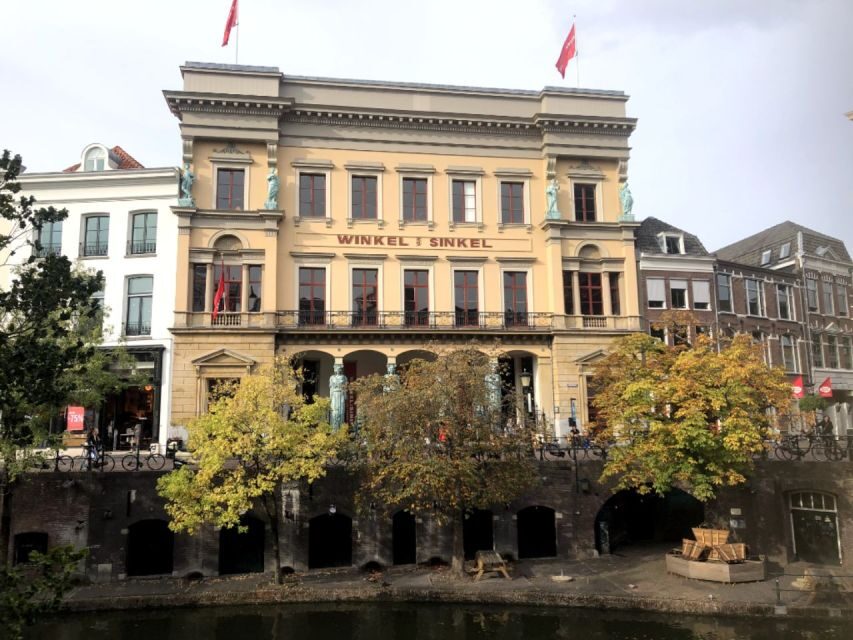
Utrecht’s historic center is compact enough to explore on foot, but it’s big enough that you can easily miss what matters. That’s where an audio format shines. You don’t just pass buildings—you get prompted to look at details while you’re standing right there.
The tour’s approach also fits how Utrecht feels. You’ll move through older city fabric—courtyards, canal-side streets, and small neighborhood lanes—so the stories keep matching what’s around you. It’s not a checklist where you sprint to a photo; it’s more like city-watching, with sound turned on.
The big “value” here is control. With this type of walk, you can slow down for a canal pause or speed up when a stop feels less interesting to you. That flexibility is especially useful if you’re mixing it with museum time or a café break.
Price and the Value of 22 Self-Guided Stops
At about $15 per person, this is priced like a lightweight add-on to your Utrecht day. The math mostly comes from two things: you get many stops (22) and you can reuse the experience over time thanks to the 99-day validity window once you activate it.
The real question is not whether $15 is cheap or pricey—it’s whether you’ll actually use the stories. If you love walking and you like learning by noticing places as you go, this can feel like a bargain. If you prefer a guide who answers questions on the spot, you might find it frustrating, because you’re doing all the guidance yourself.
Also factor in the headset situation. The tour doesn’t include headphones, so budget for that if you’re traveling light. On the upside, if you already own earbuds, you’re set.
You can also read our reviews of more walking tours in Utrecht

Meeting at Kruisstraat and Getting the App Running
The start is simple on paper: the tour begins on Kruisstraat, and the app shows the precise point. In real life, the success of an audio tour often comes down to one early step: opening the app and finding where it wants you to stand.
A few common issues show up in the practical side of this kind of product: people feel momentarily confused at the beginning, or they can’t immediately map where the meeting point is. You can reduce that risk with a simple plan—arrive with your phone charged, app downloaded, and headphones ready before you reach Kruisstraat.
Another practical detail: the tour is available in English and Dutch, but the experience depends on what your app language actually loads. If you’re relying on a specific language setting, check it early rather than halfway through the walk.
Domtoren: 465 Steps for That Big Utrecht View

The tour’s headline physical moment is the climb of the Domtoren, listed at 112 meters high with 465 steps. Even if you’re not chasing the perfect viewpoint, that climb changes how you understand Utrecht. From up top, the city’s center reads differently—canals, roofs, and street lines start behaving like a map instead of random scenery.
This is also where you should be honest with your energy level. A 465-step climb is not “just a little stair moment.” If you’re doing the walk in hot weather, or if stairs are a concern, you’ll want to plan for a slower pace and breaks.
One more thing: audio tours often have timing built into them. If the Dom Tower climb is a must-do, treat it as the anchor of your day. Start early enough that you don’t feel rushed when you return to street level.
Paushuize and Huis Zoudenbalch: When Buildings Get Stories
Not every stop is a dramatic monument, and that’s a good thing. The tour includes major landmarks that give you context about Utrecht’s past and present, including the Paushuize and the listed building Huis Zoudenbalch.
Here’s what makes these stops worth your attention: they’re the kind of places you can walk past without thinking—until the audio explains what to notice. You’re prompted to look at scale, location, and how the city grew around key institutions.
I like this because it turns a normal street walk into something more “film scene” than “shopping stroll.” Even when you’re not sure what you’re looking at, the audio nudges you toward the right details. That’s especially helpful in a place like Utrecht where architecture can vary from medieval to later periods.
Zeven Steegjes and Canal Streets: The Working-Class Heart
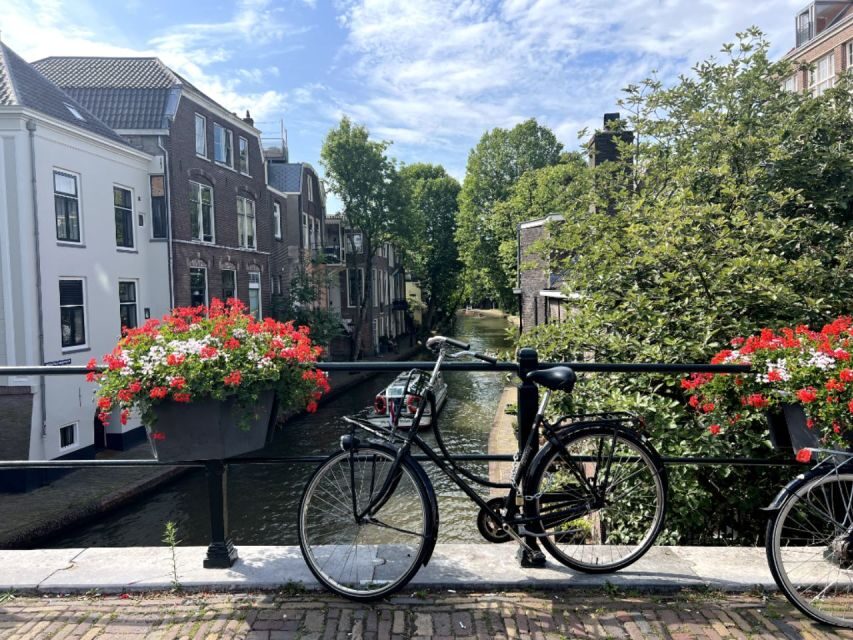
One of the most charming segments is the route through the Zeven Steegjes, described as a working-class neighborhood in the city center. “Steegjes” are those smaller lanes and passageways that make Utrecht feel human-scaled. You’re not stuck in wide streets where everything looks the same.
Pair that with the tour’s emphasis on canals and squares, and you get a strong sense of everyday city life. Utrecht isn’t only towers and museums. It’s also narrow streets, water reflections, and neighborhood corners where you can slow down without feeling like you’re stopping a whole production.
This part works well if you like wandering with purpose. You’ll move through characteristic neighborhood spaces, and the audio stories help you connect what you see now to what the area meant before.
You can also read our reviews of more guided tours in Utrecht

Oudegracht and the Courtyard-Linked Route
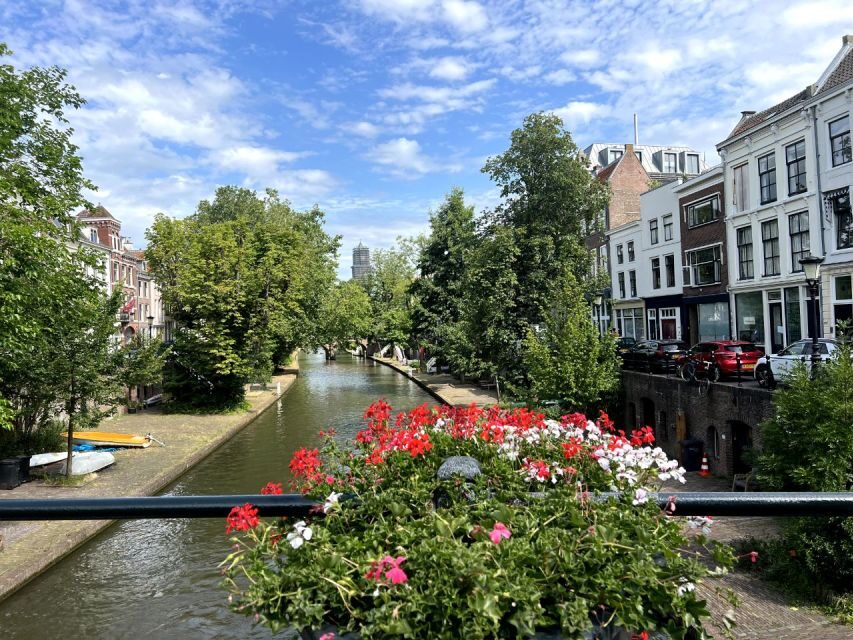
The tour highlights the legendary Oudegracht, which is a key Utrecht canal area. This is one of those settings where the city’s “look” is instantly recognizable, even if you don’t know the exact geography.
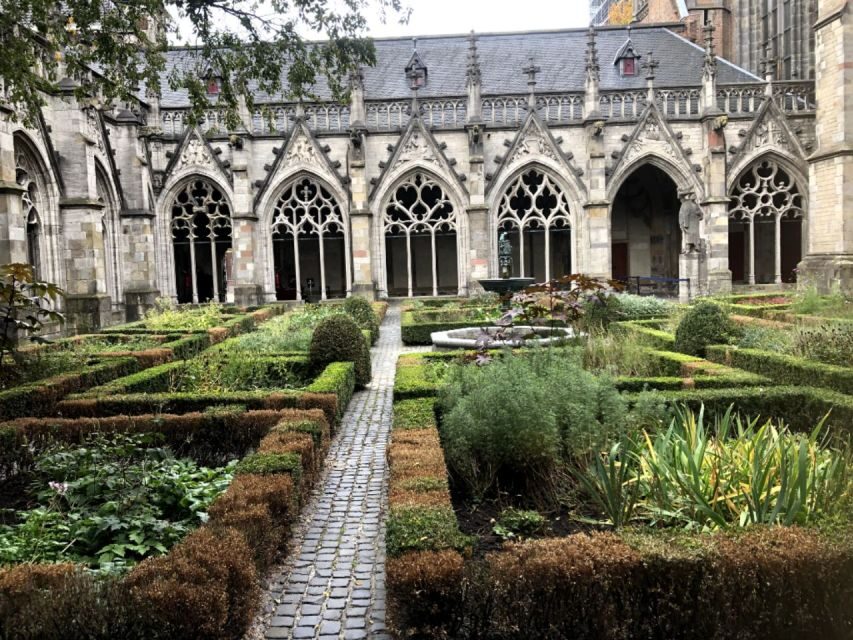
What matters for your experience is how the walk is structured. It doesn’t send you only along postcard canals. It also threads through courtyards and open spaces, so you’re not stuck staring at water the whole time. Those transitions keep the walk from feeling repetitive.
Courtyards also do something subtle: they give you a change in sound. In a city center, the audio can feel more intimate when you step into quieter pockets. If you’re listening at a moderate volume, these breaks help the stories land better.
Museums on This Walk: How Context Beats Checking Boxes
The tour description points you toward the best museums in the Netherlands as part of the overall experience. Even without naming specific museums in the info provided, the intention is clear: this walk connects the medieval town to places where Utrecht culture is preserved and presented.
This is where audio guidance can be more useful than a standard “go see X museum” plan. The city gets explained in the same breath as the institutions you might later visit. That can make a museum stop feel less random and more like the next chapter of what you already heard outside.
If you’re a museum person, this tour can help you choose where to spend more time. If you’re not, you can still enjoy it as an outdoor primer so you know why certain buildings and areas matter.
No Live Guide: The Upside and the Trade-Off
This is an audioguided walk with NO live guide. That’s not a small detail. It changes the whole vibe.
The upside is calm. You don’t have to listen to a group’s schedule, and you don’t have to ask permission to linger. The route is built for you to move at your pace, which can be a relief in a city center where foot traffic is real.
The trade-off is support. If something goes wrong—app language mismatch, confusion at the start, or audio not loading—you’re on your own to troubleshoot. Some people report that help wasn’t immediate when they ran into issues, which is exactly why you should test your phone setup before you commit to a time-based plan.
If you’re the type who enjoys self-guided travel and can figure out a phone app without stress, this tour style can feel great. If you need an in-person human backup, choose carefully.
Language Setup: English and Dutch, So Check Your Settings
The tour is listed as available in English and Dutch, and that’s a key selling point for visitors. Still, audio quality depends on what language the app is actually delivering.
A couple of negative points in the experience revolve around language expectations—like cases where a language was offered in theory but not delivered in the app. The easiest fix is not complicated: confirm your app language before you press play on the first stop. Once you’re walking, it’s harder to correct.
If you don’t speak either English or Dutch, this tour may not be a fit. It also isn’t suitable for hearing-impaired people per the activity info.
Pacing, Fitness, and Practical Walking Comfort
The route is meant for independent strolling, with 22 stops and the option to proceed in your own rhythm. That sounds relaxed, but the presence of the Dom Tower climb means your body still sets the pace.
If you plan to do the full Domtoren stair climb, build in extra time. The step count is specific: 465 steps. It’s not a “maybe I’ll do it” suggestion—it’s part of the major highlights, and the audio framing likely makes it feel like a centerpiece of the day.
Also remember the tour requires a working phone setup: charged smartphone and headphones (headsets are not included). If your battery is shaky, you’ll feel it long before stop 22.
What Could Go Wrong (and How to Reduce the Risk)
Let’s be honest: audio tours are efficient, but they’re also more fragile than human-guided ones. The most common friction points aren’t about Utrecht—they’re about tech, timing, and clarity.
Here are smart ways to reduce risk, based on the kinds of problems that have shown up:
- Start early in the day so you have room to troubleshoot if the app acts weird.
- Double-check the app language (English vs Dutch) before the first stop.
- Know the start area is Kruisstraat, and rely on the app’s precise point rather than guessing.
- Bring your own headphones and test that audio is playing well before you walk away from the start.
- If you’re traveling with friends, consider a practical setup for sharing earbuds if your device setup allows it. One tip shared is that if you can share wireless earbuds, you may be able to use fewer purchases among a small group. The catch is obvious: it depends on your hardware setup.
If you do all of that, the tour becomes what it’s meant to be: a smooth, self-paced way to learn Utrecht while you move.
Who This Utrecht Audio Tour Is Best For
This experience is a good match for you if you:
- like walking without a tight group schedule
- enjoy learning by exploring streets, canals, and buildings
- want a manageable way to cover a medieval center with 22 stops
- can handle a tech-first experience (phone + app + headphones)
It may not be your best choice if:
- you want a human guide to answer questions on the spot
- you don’t enjoy troubleshooting apps
- you need accessibility support not covered here (the activity info says it’s not suitable for people with visual impairment or hearing impairment, and it’s not for children under 12)
If you’re visiting Utrecht with adults who are comfortable with self-guided travel, this can be a great way to get a lot out of limited time—especially if you plan to top off the day with a museum visit or a longer waterfront stroll.
Should You Book This Utrecht Audio Tour?
I’d book it if you want a self-paced way to connect Utrecht’s streets to the stories behind them, and you’re comfortable relying on your phone for navigation and audio. The Domtoren climb, the inclusion of Oudegracht, and the building-focused stops like Paushuize and Huis Zoudenbalch give you strong anchor moments.
I’d think twice if you hate app setup, you need a live-guide safety net, or you’re traveling with strict timing. With an audio walk, the experience is only as smooth as your first five minutes—so do the prep, check your language, and bring headphones.
If you’re the kind of traveler who likes to wander with a soundtrack, Utrecht will reward you.
FAQ
Where does the audio tour start?
The audiotour starts in Kruisstraat. The app will show you the precise point when it’s time to begin.
Do I need headphones?
Yes. Headphones are required, and the tour info says that no headset is included.
Is there a live guide during the tour?
No. This is an audioguided tour with NO live guide.
What languages are available?
The tour is available in English and Dutch.
How long do I have access to the tour after booking?
The tour is listed as valid 99 days from the first activation.
How many stops are on the route?
The tour includes 22 stops.
What is the main attraction involving stairs?
The tour includes climbing 465 steps to reach the top of the Domtoren.
Is it suitable for children or people with accessibility needs?
It’s not suitable for children under 12 years and it’s also listed as not suitable for visually impaired people or hearing-impaired people.