REVIEW · NETHERLANDS
e-Scavenger hunt Venlo: Explore the city at your own pace
Book on Viator →Operated by Qula · Bookable on Viator
A hunt that lets you set the pace.
In Venlo, this e-Scavenger hunt turns a simple walk into a handy way to learn the city’s layers—medieval trade, Gothic churches, and modern ideas—using just your phone and a mobile ticket. I like that it’s built for groups up to 6, so families and friends can move together without the usual tour-stopping and waiting.
Two things I especially like: you get to explore Venlo at your own rhythm, and the route hits major sights that feel worth seeing even if you’re not a museum person. The content is also practical for different ages, which matters if you’re traveling with kids or a mixed crew.
One consideration: you’ll need to get through the phone login on arrival, and that part can feel a bit fiddly if your connection or device isn’t cooperating.
In This Review
- Key highlights you’ll notice right away
- Price and logistics: what you really get for $37.21
- Where you start: Stationsplein as your easy anchor
- How the e-Scavenger hunt feels in real life
- Stop by stop in Venlo: what each place adds
- The Middle Ages trading city behind today’s streets
- Limburgs Museum: culture that works for families
- House of the City (around 1600): a building that kept changing
- Sint Martinuskerk (1410–1610): Gothic church and art treasures
- Holland Casino: the oriental decoration stop
- Beej Benders: food and drink as part of the experience
- Municipal office on Cradle to Cradle: modern values in a city building
- Image-and-sound history museum: visible and audible history
- Sint-Jacobskerk and the medieval city center corner
- Joriskerk: Protestant church and its earlier site layers
- Who this is best for (and who might not love it)
- Value check: why this feels like good money in Venlo
- Practical tips to make your hunt smoother
- Should you book the e-Scavenger hunt Venlo?
- FAQ
- What is the duration of the e-Scavenger hunt in Venlo?
- What does it cost?
- Where does the hunt start and end?
- Do I need a smartphone?
- Is it offered in English?
- Is there a cancellation policy?
Key highlights you’ll notice right away
- Self-paced city exploring: you choose when to pause, snack, or double back
- Phone-only setup: no special gear beyond your own device and data
- Landmarks that teach history: from medieval occupation stories to church art treasures
- Family-friendly cultural stops: like the Limburgs Museum and multiple historic churches
- Modern Venlo stops too: including a municipal office built on the Cradle to Cradle principle
- Private team format: one group, not a big bus of strangers
Price and logistics: what you really get for $37.21
At $37.21 per group (up to 6 people), this is priced like a light activity—more like renting time to explore with built-in prompts than paying for a long guided tour. The 2 to 4 hour window is the real value lever here. You can do it briskly if you’re just passing through, or stretch it out if you want more photo stops and longer breaks.
A nice touch for planning: it runs daily, all day (opening hours listed as 12:00 AM to 11:59 PM), so you’re not forced into a narrow morning or afternoon slot. And because it’s private for your group, you avoid the classic problem where you’re stuck behind slower walkers or rushed by faster ones.
One more practical point: smartphone and data aren’t included. That sounds obvious, but it matters. If you’re in an area with weak service, download what you need beforehand and keep an eye on battery.
You can also read our reviews of more tours and experiences in Netherlands.



Where you start: Stationsplein as your easy anchor
The hunt begins at Stationsplein, 5913 AA Venlo, and it ends back at the same point. That’s helpful because it acts like a base camp. You can park, meet up, and then treat the route like a loop that brings you home.
Also, being near public transportation makes it easier to fit into a bigger day in Venlo. If you’re combining this with trains or a day trip, you don’t have to solve the “how do we get back?” puzzle at the end.
How the e-Scavenger hunt feels in real life
This isn’t a lecture tour where someone talks while you stare. It’s more like a guided walk where your phone provides the structure. You’ll follow prompts tied to stops around the city center and answer questions as you go.
That style is great for people who hate tour schedules. You can wait for your group to catch up, duck into a shop, or take extra time with a building that grabs your attention—without feeling like you’re breaking a strict itinerary.
And since it’s offered in English with a mobile ticket, it’s straightforward if you’re visiting from abroad. If you’re traveling with hearing-impaired guests, it’s listed as user-friendly for that need, which is a reassuring baseline when you’re planning ahead.
Stop by stop in Venlo: what each place adds
Think of the route as three themes: medieval power, historic culture, and modern Venlo ideas. Each stop gives you something different to look for, and the questions help you notice details you’d otherwise glide past.
The Middle Ages trading city behind today’s streets
Your first big set of clues points back to when Venlo was an important trading city in the Middle Ages—and a tempting target for lots of different powers. You’ll learn how Venlo was Spanish, State, and French at different times.
This kind of context pays off. Even if you don’t know Dutch history, you’ll start seeing the city as a place shaped by borders and occupation rather than just “a place with nice buildings.” It’s the fastest way to turn a walk into a story.




Limburgs Museum: culture that works for families
Next up is the Limburgs Museum. It’s presented as an experience on its own, and it’s especially good for families. The key detail here is that it hosts high-profile temporary exhibitions, which means you’re not stuck with the same stuff year after year.
If your group loves museums, you can linger. If you don’t, you can still treat it as a meaningful stop because the exterior and location feel like part of the cultural spine of Venlo. For families, it’s the kind of place where kids and adults can both find something to look at.
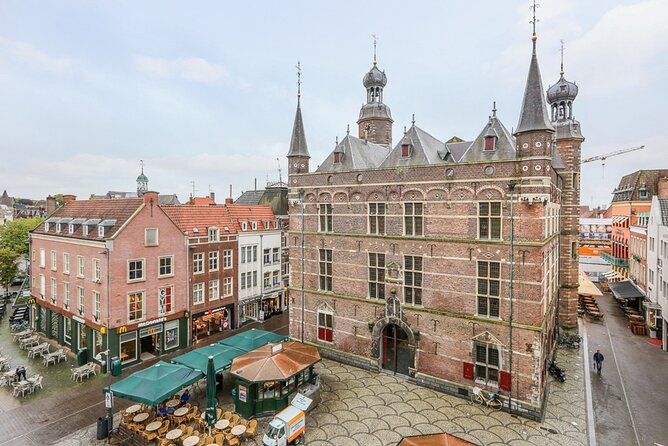
House of the City (around 1600): a building that kept changing
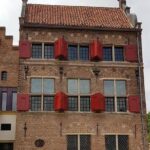
The House of the City dates from around 1600 and has been transformed over the centuries as needs changed. That’s a useful lens: buildings here aren’t frozen in time. They evolve.
As you move through and read your prompts, you’ll likely start noticing how civic buildings often grow with the city—new functions, new requirements, different eras added on. It’s a reminder that history isn’t only in the past. It’s in what gets updated.
Sint Martinuskerk (1410–1610): Gothic church and art treasures
The Sint Martinuskerk is a Gothic church with a long construction span listed as 1410 to 1610, and it houses valuable art treasures. This is one of those stops that rewards a slower look. Don’t just pass through. Use the prompts to focus on what’s inside and what makes it historically significant.
Gothic architecture can be hard to “feel” without context, but churches like this often make it easier. Your phone-guided questions steer you toward the specific details that turn the building from scenery into something you understand.
Holland Casino: the oriental decoration stop
Then you arrive at Holland Casino. What makes this stop interesting isn’t the gambling (you can take it or leave it); it’s the special decoration. You’ll notice the oriental styling as soon as you arrive.
This is a fun reminder that a city trail doesn’t have to stay locked in the past. It can also show how different influences show up in modern commercial spaces. If you’re a “look at design” traveler, this stop can be unexpectedly enjoyable.
Beej Benders: food and drink as part of the experience
Beej Benders is described as stepping into a limitless experience of food and drink, with an emphasis on enjoying what Venlo and the surrounding area has to offer. Translation: this is your built-in moment to slow down and refuel.
I like this kind of stop on a walking game because it keeps you from rationing energy. Even if you only have something small, it helps turn the hunt into a full outing rather than a hurried checklist.
Municipal office on Cradle to Cradle: modern values in a city building
The municipal office of Venlo is called out as a special building because it’s designed and built according to the Cradle to Cradle principle. That’s a big-sounding phrase, but the practical takeaway is that you’re seeing a city that thinks about design and responsibility in a structured way.
For many visitors, this is a contrast stop after all the medieval and church history. It helps you understand Venlo as living today, not just preserved for weekends.
Image-and-sound history museum: visible and audible history
Another museum stop highlights the history of image and sound being made visible and audible. That’s exactly the kind of theme that can pull in non-museum people. It also gives you a different sensory angle than “look at this building.”
If your group enjoys technology, media, or how communication changed over time, this stop will feel like a good match.
Sint-Jacobskerk and the medieval city center corner
The Sint-Jacobskerk is described as a single-aisled church in Venlo’s medieval city center, on the corner of Maasschriksel and Helschriksel. Even if you’re not a church expert, the location detail helps you navigate the city’s fabric.
Single-aisled churches can feel more intimate and straightforward than grand multi-aisled basilicas. The prompt-based approach makes it easier to notice what sets it apart rather than treating it as another doorway photo.
Joriskerk: Protestant church and its earlier site layers
Finally, the Joriskerk is a Protestant church in Venlo and is partly located on the place where the Sint Jorisgasthuis used to be. That layering is the whole point of historic centers: the ground keeps memory.
This stop is good for travelers who like “how did this place change?” questions. It reinforces the bigger story of Venlo being shaped by shifting institutions and needs over time.
Who this is best for (and who might not love it)
This works very well for:
- Families who want an activity that keeps kids engaged but doesn’t lock adults into one pace
- Friends and larger groups (up to 6) who want to explore together without a crowded tour vibe
- Visitors who like a structured route but don’t want constant narration
It may be less ideal if:
- You hate phone-based activities, especially when login is involved
- Your group doesn’t like self-guided pacing and prefers a strict timeline
- You expect all history to be delivered by a live guide (this is more “learn by doing”)
Value check: why this feels like good money in Venlo
For one group up to 6, you’re paying for a walking route with built-in prompts across a mix of churches, museums, and city landmarks. Many “guided” options for a team end up costing more once you factor in guide fees and transport logistics.
Here’s the real value logic: you’re buying flexibility. If you’re the kind of traveler who likes to pause at an unexpected detail, this format pays off. If you’re the kind of traveler who moves fast and covers ground, you can also finish within the shorter end of 2 hours.
Also, because it’s booked fairly ahead on average (about 15 days in advance), it seems like something people plan for—often because it’s easy to fit into a day.
Practical tips to make your hunt smoother
- Bring a fully charged phone. You’ll want it for navigation and whatever the e-hunt loads during the route.
- Wear comfortable shoes. Even at a “take your time” pace, you’ll cover a fair amount of city center walking.
- If login feels tricky, don’t wait until the last second at the start. Give yourself a few minutes at Stationsplein to get sorted.
- Use the food stop strategically. If you try to power through without a break, the last churches can feel like a grind instead of a cool finish.
Should you book the e-Scavenger hunt Venlo?
Yes, if you want a smart, low-stress way to see Venlo with a built-in learning arc. It hits the kind of stops that make a city feel real—medieval trade history, Gothic church art treasures, and even modern ideas like Cradle to Cradle—without forcing you into a rigid tour schedule.
I’d skip it if you strongly prefer live guidance and you don’t want to manage phone login or connectivity. But for most visitors, the balance is solid: a self-paced city trail, clear structure, and enough variety to keep both adults and families interested.
FAQ
What is the duration of the e-Scavenger hunt in Venlo?
The hunt typically takes about 2 to 4 hours, depending on your pace.
What does it cost?
It costs $37.21 per group, for up to 6 people.
Where does the hunt start and end?
It starts at Stationsplein, 5913 AA Venlo, Netherlands and ends back at the same meeting point.
Do I need a smartphone?
Yes. The hunt is provided via a mobile ticket, and smartphone and data are not included, so you’ll need your own device and a data connection.
Is it offered in English?
Yes, it’s offered in English.
Is there a cancellation policy?
You can cancel for a full refund up to 24 hours in advance of the experience start time. Free cancellation is available based on local time.
If you want, tell me what day/time you’re thinking and who’s in your group (ages help), and I’ll suggest a realistic pacing plan for the 2–4 hour window.