REVIEW · AMSTERDAM
Learn to Make Dutch Pancakes in a Beautiful Amsterdam Canal House
Book on Viator →Operated by eatwith · Bookable on Viator
Making pancakes in an Amsterdam canal house feels like a daydream. You’ll learn Dutch techniques from Fusina, then sit down for a proper spread—sweet and savory pancakes plus classic Dutch bites. It’s practical cooking, but the setting turns it into something more personal.
I love that this is hands-on. You’re not just watching; you’re mixing, baking, and flipping your own Dutch pancakes, then tasting them with toppings like apple and bacon. I also love the food lineup—soused herring, farmer’s cheese with apple syrup, and a homemade apple pie dessert.
One thing to consider: this is a private-home style class. A few people found the cooking setup and portions different than they expected, and the meeting spot can be a little tricky to locate, so read your directions carefully before you go.
In This Review
- Key highlights worth showing up for
- A canal-house kitchen lesson on Dutch pancakes
- What you eat: herring, cheese, and apple-syrup starters
- Pancake basics you’ll actually use at home
- What thickness means when you’re flipping
- The canal-house setting: why it changes the whole class
- Lunch and drinks: what comes after the cooking
- Appleschnitt dessert: family recipe comfort
- Price: is $108.47 worth it?
- Small-group size: comfort, pace, and attention
- Meeting point tips: Amsterdam can be sneaky
- Who this is best for (and who should skip it)
- Should you book this Dutch pancake class?
- FAQ
- How long is the Dutch pancake experience?
- What language is the class offered in?
- Where does the experience take place?
- What’s included with the ticket?
- How many people are in the group?
- What kind of pancakes will you make?
- Is this experience family-friendly?
- What if I have food allergies or dietary restrictions?
- Does it include dessert?
- Is there free cancellation?
Key highlights worth showing up for
- Hands-on Dutch pancake making in Fusina’s own Amstel canal home, not a big studio
- Sweet + savory practice (apple and bacon pancakes) with real technique tips as you go
- Dutch classics on the table like herring with pickles and onions, plus farmer’s cheese with apple syrup
- Small group size capped at 7 (and listed as up to 8), which keeps things friendly and chatty
- Included meal and drinks: lunch, tea or coffee, and a glass of Dutch white wine
- Dessert from family tradition: appleschnitt, made with Fusina’s grandmother’s apple pie recipe
A canal-house kitchen lesson on Dutch pancakes
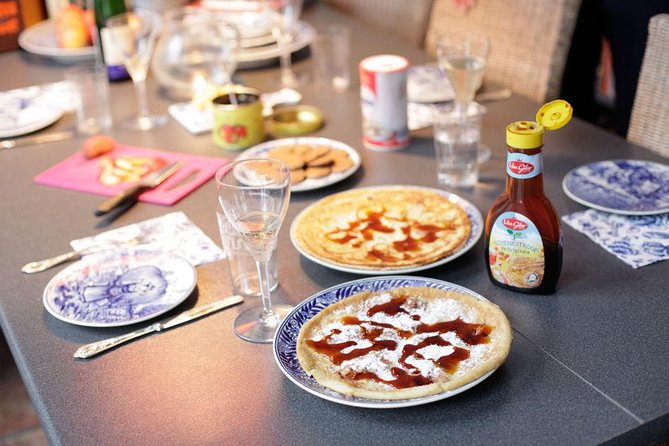
Amsterdam has a lot of food tours. This one isn’t about walking past stalls and buying little bites. It’s about learning how Dutch pancakes actually work—then eating them while you’re still in the kitchen mode.
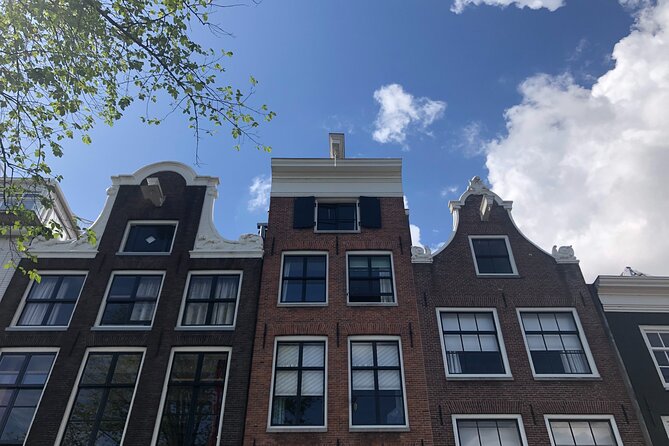
This experience centers on Fusina, who hosts in a beautiful canal house on the Amstel river. You start with an easy, welcoming pace: you’ll likely have time to settle in, talk a bit, and get oriented before the cooking begins. And because the group stays small, you’ll get more attention than you would in a larger class. It’s also a nice option if you want something “Amsterdam” that isn’t just museums and bridges.
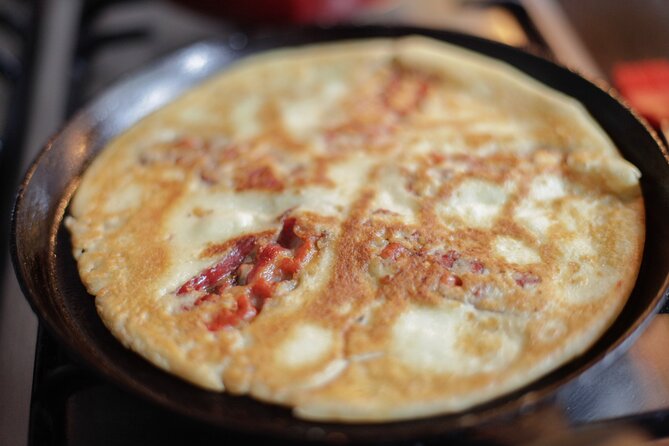
The Dutch pancakes here land in a very specific sweet spot. They’re described as thicker than French crepes yet thinner than American pancakes. That matters because the batter, heat, and flip all connect. When you make them yourself, you understand why they look and taste the way they do—less “fluffy stack,” more delicate, flexible pancake you can fold and top.
You can also read our reviews of more tours and experiences in Amsterdam.
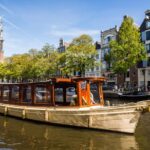
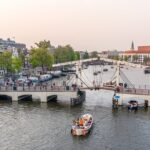
What you eat: herring, cheese, and apple-syrup starters
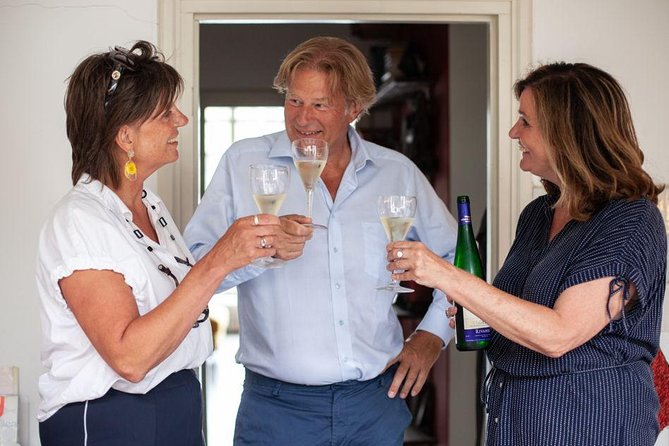
Food is a big part of the value, and the menu is set up like a guided tasting before you get busy cooking.
You’ll start with two Dutch-style starters. One is grass cheese with applesyrop, which shows up in a lot of Dutch kitchens as a mix of savory cheese and sweet apple syrup (you may see it spelled appelstroop). Another is herring with pickles and onions. If you’ve heard of Dutch street food herring, this is that idea—clean, salty, and sharp, with pickles bringing the crunch.
This matters because pancake toppings can feel obvious, but Dutch food often pairs sweet with something salty or tangy. Those starters give you a sense of the Dutch flavor logic before you make the main event.
Also, several positive comments highlight how much people liked the cheese pairing with apple syrup. It’s the kind of combo that makes you understand why locals treat these ingredients as normal, everyday comfort food—not just tourist tasting.
Pancake basics you’ll actually use at home
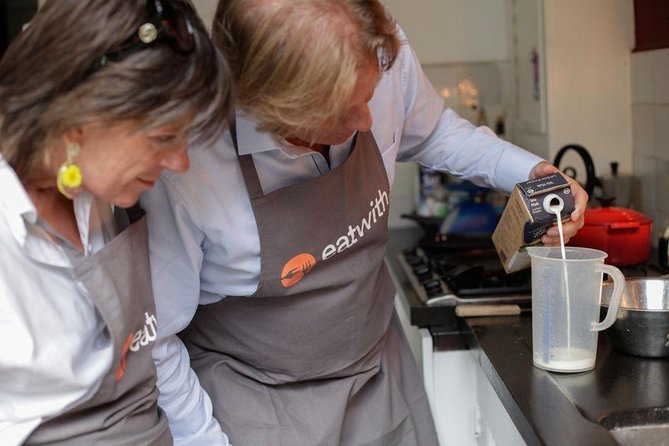
The heart of the experience is making traditional Dutch pancakes from scratch. In the class, you’ll learn how the batter comes together, how the pan heat affects thickness and browning, and how flipping works without turning your pancake into a sad mess.
Your main cooking session is focused on Dutch pancakes with apple & bacon. The idea is simple: you practice the pancake base, then you experience two classic directions—sweet apple flavors and savory bacon flavors.
Even if you’ve never cooked much, this can work well. The best part is that the learning happens in real time. You aren’t memorizing a recipe on paper. You’re watching what happens when batter hits the pan, then making adjustments as you go.
What thickness means when you’re flipping
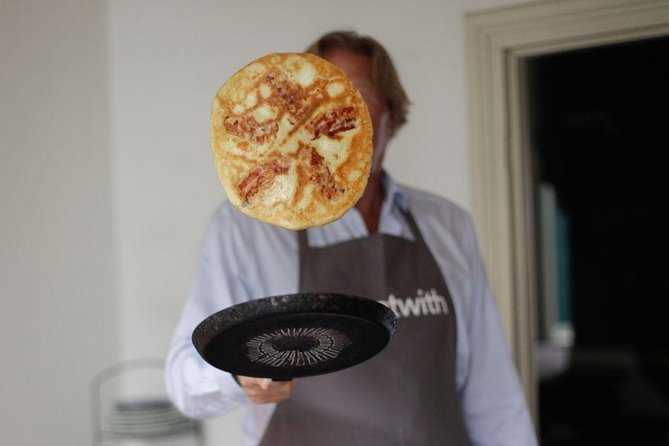
Dutch pancakes aren’t meant to be super thick and airy. When you get the thickness right, you can flip more smoothly and you’ll get that tender texture that still holds toppings.
And yes, flipping is part of the fun. Several people specifically mention getting confident enough to flip without losing the pancake. That’s not just entertainment—it’s the skill you want if you ever try this again at home.
The canal-house setting: why it changes the whole class
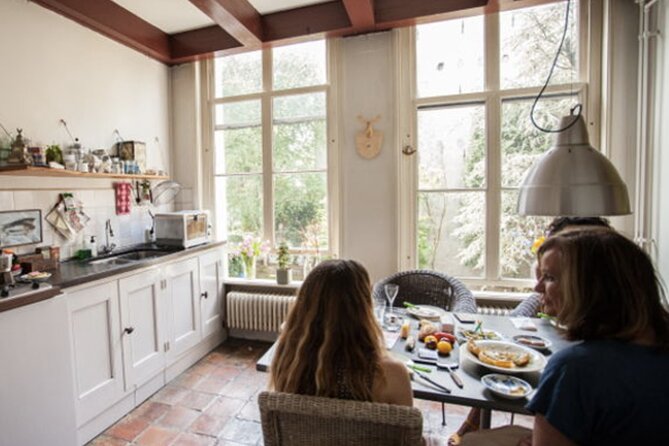
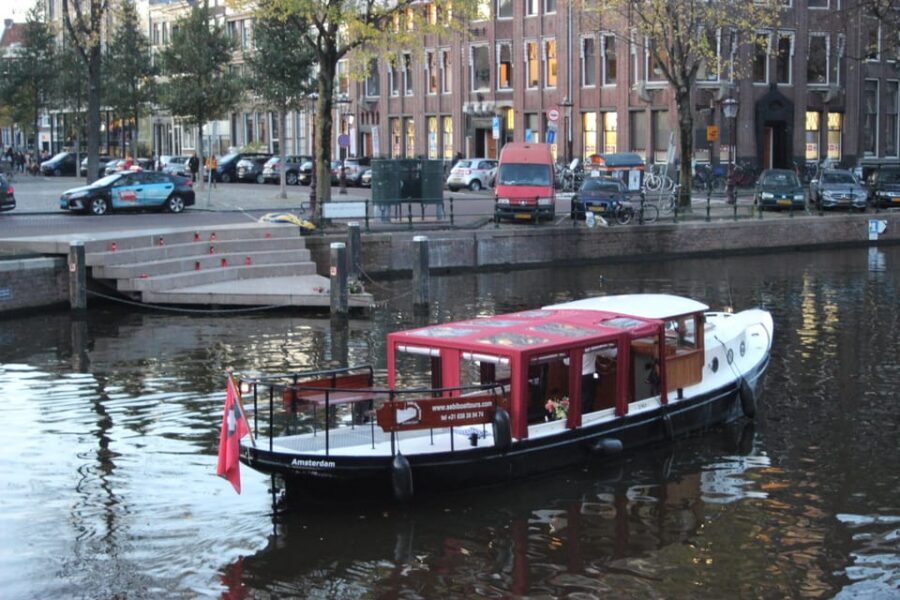
A big part of the magic here is the environment. The home is right on the Amsterdam canal, and people consistently call it pretty, charming, and intimate. You sit together and share the morning like you’re part of a small dinner party.
That “in a home, not a restaurant” detail is a real value driver. You’ll see Dutch life up close—how locals actually live and cook—not just how a business stages food.
You also get the social side. Many comments mention that conversation is a big part of the morning. In addition to cooking, Fusina shares stories about Amsterdam and Dutch life. It’s not an academic lecture. It’s more like learning as you go—food, markets, family recipes, and the small details that make a city feel human.
One review even notes Fusina pointed them toward a local market a short walk away. That kind of tip is exactly what you want from a host: practical, nearby, and grounded.


Lunch and drinks: what comes after the cooking
Once your pancakes are ready, you sit down to eat what you made—plus the Dutch snacks that were built into the start of the experience.
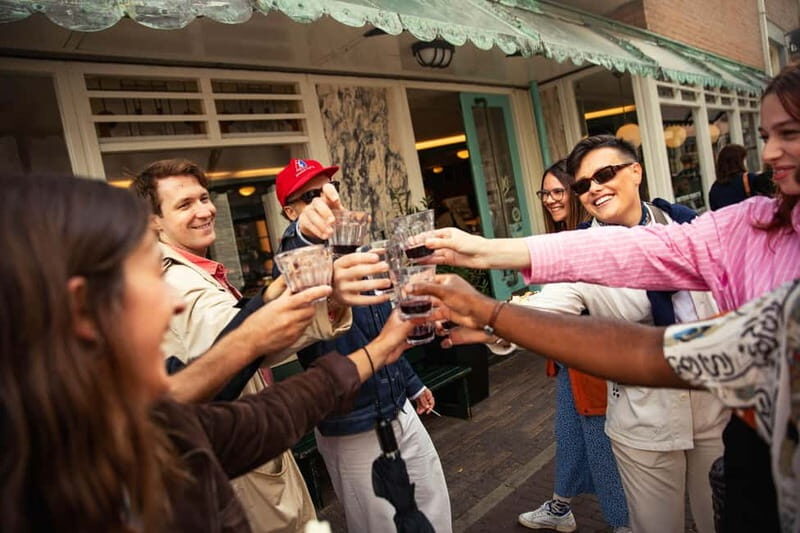
Your included meal includes lunch with the pancakes as the centerpiece. You’ll also have tea and coffee available, and there’s a glass of Dutch white wine included.
This part is underrated. A lot of cooking classes treat tasting as an afterthought. Here, you’re served like a guest: you cook, you eat, and you get to slow down. That makes the experience feel like more than a skill workshop.
If you’re the type who likes to learn through eating, this format fits you. You see how the topping choices work on the pancake you just made, then you taste the full spread while you’re still in that fresh “I just made this” mood.
Appleschnitt dessert: family recipe comfort
Dessert is appleschnitt, homemade apple pie using Fusina’s grandmother’s recipe.
It’s the kind of finish that pulls everything together: savory starters, a pancake base that balances sweet and salty, and then apple-forward comfort dessert. Also, if you liked the apple syrup pairing in the cheese course, the dessert will feel related rather than random.
The family-recipe angle is a common highlight in reviews. It gives the class emotional weight without turning it into a performance.
Price: is $108.47 worth it?
At $108.47 per person for about two hours, the question isn’t just cost. It’s what you get for the money.
Here’s the practical breakdown: you’re paying for a private-home cooking lesson with a maximum group size (capped at 7, and sometimes listed as up to 8). You also get structured Dutch food tastings (herring, cheese with apple syrup), a hands-on cooking session (batter, pan, flipping), lunch, tea and coffee, and a glass of Dutch white wine. On top of that, you’re paying for local hosting from Fusina, including the conversation and city context that many people say is a major part of the morning.
For me, this is worth it if you want more than eating. You want to learn a technique and then eat a meal with it. If your priority is a large quantity of food or a high-intensity, professional cooking station setup, you might feel more cautious. A couple of unhappy reviews mention disappointment around portions and the setup not matching their expectation.
My take: if you come in expecting a cozy home class that teaches a real pancake method, this price starts to make sense fast.
Small-group size: comfort, pace, and attention
The group is small, which affects the whole experience. With up to 7 travelers (and sometimes listed as up to 8), you’re not fighting for space around a counter. That means you can actually watch, learn, and participate without feeling rushed.
It also makes the conversation feel natural. Fusina can answer questions as they come up. You’re more likely to get personal guidance, especially if you’re nervous about cooking or unsure how to flip.
Just keep in mind that a small group doesn’t automatically mean you’ll cook a giant amount. In a two-hour home class, you’ll likely make only a limited number of pancakes as a group, then eat a full meal based on what was prepared.
Meeting point tips: Amsterdam can be sneaky
Two things show up in real-world feedback: people love the experience, but some mention finding the address wasn’t as easy as they hoped.
The tour provides the full address on your confirmation voucher under a before you go section. Do yourself a favor: when the reminder letter arrives, read it fully before you leave for your morning start. One person almost missed the start because the directions weren’t clear on the first pass.
Also, arrive a little early. Canal-house streets can look similar from the outside, and you’ll want time to confirm you’re at the right door.
Who this is best for (and who should skip it)
This fits best if:
- you want a hands-on food experience in a real canal house
- you love Dutch flavors like herring, farmer’s cheese, and apple syrup
- you enjoy conversation and getting local context from a host like Fusina
- you want a family-friendly morning activity that still feels special
It might not be ideal if:
- you expect a formal restaurant-style cooking station with uniforms and lots of workspace
- you mainly want a big volume of food with no focus on technique
- you’re very sensitive to any host personality style, since this is in a private home setting
Should you book this Dutch pancake class?
I’d book it if you want one morning in Amsterdam that feels like learning from someone’s kitchen, not just ticking off a culinary stop. The combination of real technique, Dutch classics like soused herring, and a canal-house home setting makes this a memorable use of two hours.
I’d pause only if you hate small-group, home-kitchen formats or you’re the type who needs a large portion-per-person cooking outcome. If that’s you, read carefully and set expectations around a cozy class pace and modest shared cooking time.
If you do book it, arrive early, review the address instructions, and go hungry for both savory and sweet. The pancakes are the star, but the starters and appleschnitt are what make it feel like a full Dutch morning meal.
FAQ
How long is the Dutch pancake experience?
It runs for about two hours.
What language is the class offered in?
The experience is offered in English.
Where does the experience take place?
It takes place in Amsterdam, Netherlands, in a canal house on the Amstel river.
What’s included with the ticket?
You get the cooking class, local delicacies, lunch, tea and coffee, and a glass of wine.
How many people are in the group?
It’s a guaranteed small-group experience, with a maximum of 7 travelers, and it’s also listed as up to 8.
What kind of pancakes will you make?
You’ll make traditional Dutch pancakes, including apple and bacon.
Is this experience family-friendly?
Yes, it’s described as family-friendly and an educational start to the day.
What if I have food allergies or dietary restrictions?
You need to communicate any food restrictions (allergy or special diet, etc.) during the booking process.
Does it include dessert?
Yes. Dessert is appleschnitt, using Fusina’s grandmother’s apple pie recipe.
Is there free cancellation?
Yes. You can cancel for a full refund up to 24 hours before the experience start time.