REVIEW · AMSTERDAM
MUST DO: Amsterdam’s Red Light District tour with a local
Book on Viator →Operated by Trigger Tours · Bookable on Viator
Streetlights tell stories here. This 2-hour Amsterdam Red Light District tour takes you around the area after dark with a local guide, using old buildings and real-world history to explain why this neighborhood is so controversial and so famous. I like that the walk is on foot, so you can actually feel the street-level scale instead of just seeing a few photos. I also like the focus on specifics, like wooden foundations under the city and recognizable landmarks such as the Waag. The main drawback is simple: it’s a sensitive area and the tour is not recommended for limited mobility, since you’ll be walking on uneven streets.
Expect a candid, practical tour style: the guide gives you context, points out what to look for, and keeps it moving without turning it into a lecture. The group stays small (max 20), and the tour ends back at the start near Geldersekade 2, so it’s easy to plug into an evening plan.
If you’re the kind of traveler who prefers sterilized sightseeing, you might feel a bit out of your comfort zone here. If you come curious and respectful, you’ll get a lot more out of the stories and the street details.
In This Review
- Key things that make this Red Light District tour worth your time
- Why the Red Light District works best as a night walk
- Price and timing: is $31.32 actually good value?
- Getting to the start near Geldersekade 2 and staying comfortable
- What you’ll see: stop-by-stop in the Old Town and Red Light District mix
- Stop: Red Light District streets and the current situation
- Stop: The Dam area and Amsterdam the city built on wooden poles
- Stop: Old Town context so the neighborhood has a deeper timeline
- ’t Aepjen (Pub The Ape): the wooden-building survivor with 1452 in the background
- The Waag: the old city gate turned guild hub
- Smallest House of Amsterdam: VOC storage to long-term living
- The condom shop stop: modern retail inside a historical conversation
- The guides: names you might hear, and what to look for
- Walking in real Amsterdam weather (and why arrival time matters)
- Is this tour for you?
- Should you book Amsterdam’s Red Light District with a local guide?
- FAQ
- How long is the Red Light District walking tour?
- What is the price per person?
- What language is the tour offered in?
- Where is the meeting point?
- Does the tour include admission fees?
- Are food and drinks included?
- How big is the group?
- Is it accessible for people with limited mobility?
- Is there free cancellation?
Key things that make this Red Light District tour worth your time
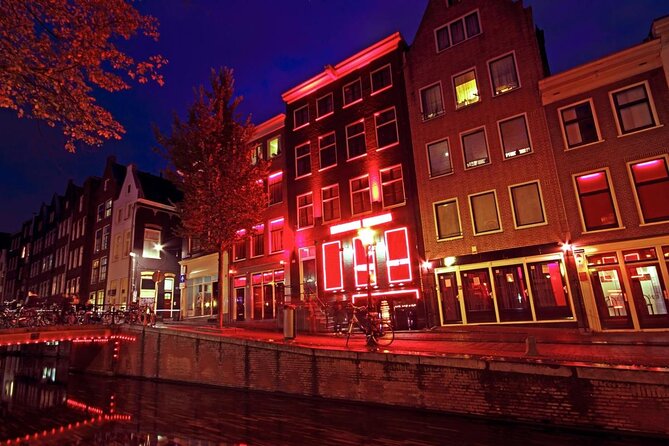
- Local guide, English, with a story-based approach that connects the past to today
- 2-hour walking loop that’s long enough for context, short enough to still enjoy the rest of your evening
- Landmark stops tied to Amsterdam’s foundations, gates, guild life, and old housing
- Pub ’t Aepjen (The Ape): a rare surviving wooden building story linked to the 1452 fire and later building rules
- A stop at the Waag and other nearby “old town” points that help you see the neighborhood beyond the headlines
Why the Red Light District works best as a night walk
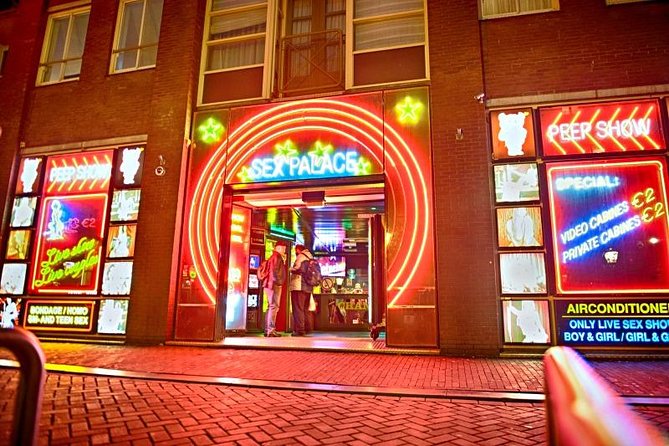
The Red Light District is one of those places you can’t really understand from a daytime glance. At night, the streets feel more like they’re doing what they do—public, watched, busy, and layered. And the guide’s job is to help you read the place as a neighborhood first, not just an attraction.
What makes this tour especially useful is that it doesn’t treat the area like a one-note shock show. You get historical anchors: how Amsterdam was built on wooden piles, how old defenses shaped the town, and how older buildings (some still standing) tell you what life looked like centuries ago. That context matters because it turns the experience from scandal-shopping into city understanding.
Also, because the tour is walking-focused, you notice the details you’d miss from a bus or a quick photo stop. Doorways, narrow streets, and the way buildings sit close together all add up to an atmosphere that photos don’t capture.
You can also read our reviews of more tours and experiences in Amsterdam.



Price and timing: is $31.32 actually good value?

At $31.32 per person for about 2 hours, this sits in the “worth it if you like learning” category. The key value isn’t the price by itself—it’s the fact that you’re paying for a guide to connect the dots between architecture, old city systems, and today’s reality.
This is also a smart slot if you’re trying to cover Amsterdam efficiently. The tour is offered in English, it uses a mobile ticket, and it’s booked fairly far ahead on average (about 47 days). If you’re traveling during peak season, that advance booking pattern is a nudge to reserve early rather than gambling on last-minute availability.
For the timing, you’re basically set for a nighttime city mood. That’s not just romantic; it changes what you experience, and it changes what the guide can point out as the neighborhood is in full swing.
Getting to the start near Geldersekade 2 and staying comfortable
The meeting point is Geldersekade 2, 1012 BH Amsterdam, and the tour ends back there. That “back to start” finish is practical: you don’t need a second transport plan just to get back on track.
The tour runs as a group walk with a maximum size of 20, which usually means you get enough attention for questions, but still enough motion that you won’t feel stuck. It’s also near public transportation, which helps if you’re doing the rest of your day by tram or metro.
One practical heads-up: this is explicitly not recommended for travelers with limited mobility. The streets here can be uneven, and nighttime walking often means you’re covering more distance than you expect. If mobility is a concern, I’d treat this as a “consider carefully” item rather than a casual stroll.
What you’ll see: stop-by-stop in the Old Town and Red Light District mix
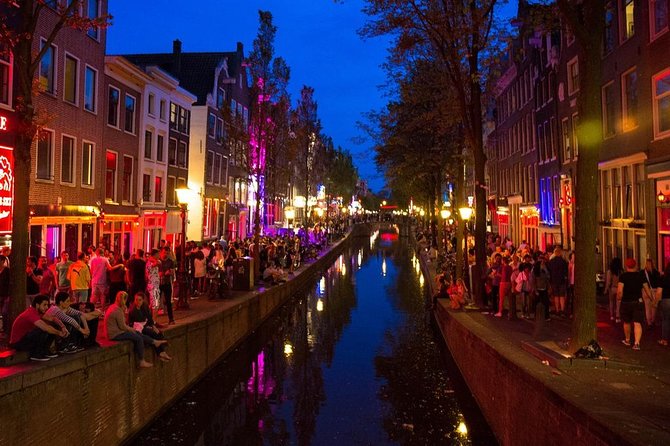
This tour feels like a guided route through two layers of Amsterdam. One layer is the famous neighborhood people come for. The other layer is the older city fabric underneath, which helps you understand why this area looks the way it does.
Stop: Red Light District streets and the current situation
You start by walking through the Red Light District itself, with the guide explaining both history and the current situation. You’ll be moving through narrow streets and seeing the sights in a way that’s less chaotic than trying to “figure it out” on your own.
This part is the core. It’s also the part that sets the tone: you learn how Amsterdam handles this neighborhood socially and politically, not just visually. Come with a respectful mindset. You’re seeing a real community, not a theme park.





Stop: The Dam area and Amsterdam the city built on wooden poles
One of the most memorable explanations you’ll get is how Amsterdam’s ground works. You’ll hear that much of the city sits on a thick layer of fen and clay, with buildings supported by wooden poles pushed down until they reach the first layer of solid sand—about 11 meters deep.
That detail sounds technical, but it pays off fast. When you know Amsterdam is literally built on engineered foundations, the city stops feeling “old and charming” in a vague way. It becomes old and engineered. You start noticing why structures hold up and why building choices mattered for centuries.
Stop: Old Town context so the neighborhood has a deeper timeline
The tour also brings you into the Old Town area feel. That matters because the Red Light District sits within a much older city story. You’re not just seeing a modern nightlife zone; you’re learning that the oldest parts of Amsterdam carry layers of decisions, fires, rebuilding, and governance.
That timeline is one reason some guides manage to keep the tour from becoming repetitive. If the guide is good, the walking turns into a story arc rather than a list of sights.
’t Aepjen (Pub The Ape): the wooden-building survivor with 1452 in the background
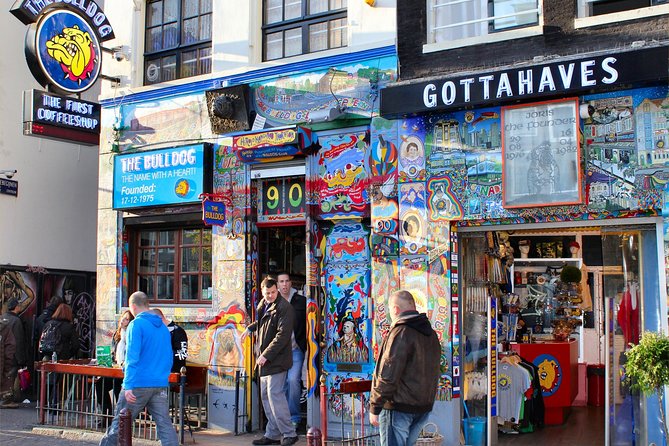
You’ll make a stop at Pub The Ape, also known as ’t Aepjen in Dutch. This building dates to around 1540, and it’s described as one of two remaining wooden buildings in Amsterdam.
The reason that fact lands so well is the 1452 fire story. After that fire, the government pushed building rules that favored brick facades. So when you see this pub, you’re looking at something that survived a major turning point in how Amsterdam decided buildings should be made.
If you’re the type of traveler who likes one or two standout “how did this survive” moments, this is one of them.
The Waag: the old city gate turned guild hub
Next up is the Waag. You’ll hear that it used to be one of Amsterdam’s city gates, part of the defensive wall, built around the 1400s. It’s described as the second oldest building in Amsterdam.
Then the story shifts from defense to daily life: later, the Waag became a place where guilds and craftsman organizations operated, with members situated inside and around the square.
This stop is a good reminder that the Red Light District zone isn’t isolated. It sits beside older civic and economic functions. You’ll understand that this part of Amsterdam has always been a “do things here” area, whether for trade, defense, or commerce.
Smallest House of Amsterdam: VOC storage to long-term living
Another stop takes you to the smallest house of Amsterdam, built around the 1700s. At first it was used as storage for the VOC trading company, then people started living in it for a long time.
This kind of stop hits differently than the big monuments. It gives you a more human angle on the city: space was valuable, and Amsterdam’s economy shaped everyday living. It also works well on a walking tour because it doesn’t require long standing—just enough time to take in the scale.
If you like architecture that reflects economic pressure and practical survival, this is one of the best “wow, that’s small” moments on the route.
The condom shop stop: modern retail inside a historical conversation
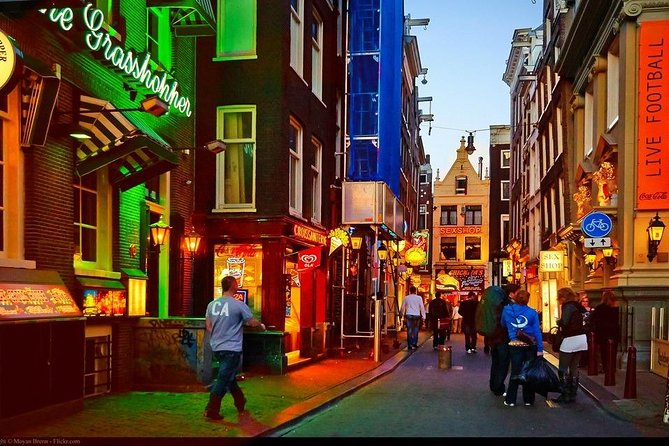
The final “modern but still story-driven” stop is the world’s first dedicated condom shop, with a history in place since 1987. You can learn that it offers customized sizes and different types of condoms.
This stop can be a relief, depending on your expectations. It helps shift the tone from purely sensational to practical and commercial—how needs and services adapt over time in the same neighborhood.
I’d treat this as part of the tour’s broader goal: showing the Red Light District as a place where society, health, commerce, and taboo all intersect.
The guides: names you might hear, and what to look for
The quality of a tour like this rises or falls on the guide’s pacing and tone. In the feedback I’m basing this on, guides like Ben, Robin, Sander, and Max are specifically praised for making Amsterdam’s past feel alive.
Common strengths show up again and again:
- clear, organized storytelling tied to what you’re seeing on the street
- a good mix of history and current-day context
- a friendly, human style with jokes that don’t feel forced
Still, there are a couple of caution flags to keep in mind. One issue that comes up is whether everyone can hear the guide clearly, especially in a moving group. Another is the risk of an uncomfortable experience if a guide’s attitude is wrong. If you’re sensitive to that kind of atmosphere, choose your expectations carefully and pay attention during the first few minutes of the walk.
Walking in real Amsterdam weather (and why arrival time matters)
This is an evening walk, and the streets can be slippery when the weather turns. If you’re visiting when it’s icy, give yourself a little extra buffer time.
One booking issue reported was a late start situation that caused disappointment—basically, the group moved on while the participant was still trying to locate the organizer. I’d treat that as a lesson: arrive a few minutes early, check the meeting point carefully, and send a message fast if you’re delayed.
Even if everything runs smoothly, arriving early helps you settle your headspace. This neighborhood can feel intense at first glance, so getting oriented matters.
Is this tour for you?
This works best if you:
- want context instead of just “see the lights”
- enjoy city history tied to real architecture
- like walking routes where the guide interprets what you’re seeing
It may not be ideal if you:
- have limited mobility (it’s not recommended here)
- dislike adult-themed subject matter and the social reality behind it
- need super quiet, classroom-style explanations
Also, because the tour is about sex-industry history and related culture, it’s usually best suited for adults—or teens who can handle frank city topics. If you’re deciding for a younger traveler, I’d consider the content tone and whether your family prefers age-appropriate framing.
Should you book Amsterdam’s Red Light District with a local guide?
I think this is a strong booking choice if your goal is understanding Amsterdam, not just checking a box. For $31.32 and about two hours, you get a guided street-level route, a bunch of distinct stops (Dam foundations, Pub ’t Aepjen, the Waag, the smallest house, and the condom shop), and a local interpretation that helps you make sense of what you’re seeing.
I’d book it if you’re curious and respectful. I’d hesitate if mobility is limited or if you know you’d feel uncomfortable with adult-themed city realities. And I’d definitely arrive early and be ready to walk—this is a night-on-foot experience, not a short ride with minimal effort.
If you want Amsterdam’s big “wow” factor without staying on the surface, this tour is one of the more practical ways to do it.
FAQ
How long is the Red Light District walking tour?
It runs for about 2 hours.
What is the price per person?
The price is $31.32 per person.
What language is the tour offered in?
The tour is offered in English.
Where is the meeting point?
The tour meets at Geldersekade 2, 1012 BH Amsterdam.
Does the tour include admission fees?
The tour notes that admission ticket cost is free for the stops, and the experience includes the 2-hour walking tour.
Are food and drinks included?
No, food and drinks are not included.
How big is the group?
The tour has a maximum of 20 travelers.
Is it accessible for people with limited mobility?
It is not recommended for travelers with limited mobility.
Is there free cancellation?
Yes. You can cancel up to 24 hours in advance for a full refund.