REVIEW · AMSTERDAM
Operation 45: An Adventure in Diamonds
Book on Viator →Operated by Mystery City Games · Bookable on Viator
Follow the diamond trail in Amsterdam. This game-style experience turns WWII-era Antwerp? no—Amsterdam—history into an interactive mission, tied to a real attempt to keep industrial diamonds out of Nazi hands. You’ll roam past recognizable monuments while solving puzzles that point you toward what happened between May 10, 1940, and Amsterdam’s liberation on May 5, 1945.
Two things I really like: the hands-on mystery format (you’re figuring things out, not just listening), and the flexibility that lets you play when it best fits your day. The mission is also built for group fun, with options for competing teams when you have enough people. One thing to consider: it needs good weather, since you’re walking around to complete the clues.
In This Review
- Key Highlights You Should Know
- A WWII Diamond Mission Turns Amsterdam Into a Game
- How the Mission Works (and What You’ll Actually Do)
- Starting at Mystery City Games: Getting Oriented Fast
- Walking Amsterdam’s Clues Without a Rigid Script
- The May 1940 to May 1945 Storyline (Why It Feels Real)
- Team Play for Groups of 6+ (and Staying Together If You Prefer)
- Flexibility: Play When It Fits Your Day
- Price and Value: Why $29.96 Can Be Fair
- Weather and How It Can Affect Your Day
- Who Should Book This Mission (and Who Might Skip It)
- FAQ
- FAQ
- Where is the starting point for Operation 45?
- How long does the experience take?
- Is this a guided tour or a puzzle game?
- Can our group choose when to play?
- Do groups of 6 or more compete?
- What do we get on booking?
- Where does the experience end?
- Is the activity outdoors?
- What if it gets canceled due to poor weather or plans change?
- Should You Book Operation 45: An Adventure in Diamonds?
Key Highlights You Should Know
- WWII mission story built around real diamonds, resistance clues, and liberation-era timing
- Interactive puzzle walking that makes Amsterdam’s landmarks feel like part of the plot
- Group setup that can stay together or split into competing teams for 6+ people
- Your schedule approach: play when it works best for you
- Mobile ticket and confirmation at booking to keep things simple
- Start and finish at the same place for an easy meet-up and wrap-up
A WWII Diamond Mission Turns Amsterdam Into a Game
Operation 45: An Adventure in Diamonds is not the usual “see the sights” tour. It’s designed as a city-wide puzzle hunt where history is the story engine, and you move on foot from clue to clue. The premise is bold and very specific: during the Nazi invasion on May 10, 1940, a secret mission aimed to stop a cache of industrial diamonds from ending up in Nazi hands.
Then the story flips to May 5, 1945, when Amsterdam celebrates liberation. Your final assignment is to trace what happened to the diamonds after that dramatic early-mission moment, by following the trail left by the resistance. As you walk, you’re not just learning facts—you’re working out the next step, like a detective game played on real streets.
What makes this work well in Amsterdam is that the city already feels like a puzzle. You get the chance to connect historical details to places you can actually stand in front of. Instead of speed-reading your way through a museum timeline, you’re collecting clues while looking at the buildings and monuments around you.
You can also read our reviews of more tours and experiences in Amsterdam.



How the Mission Works (and What You’ll Actually Do)
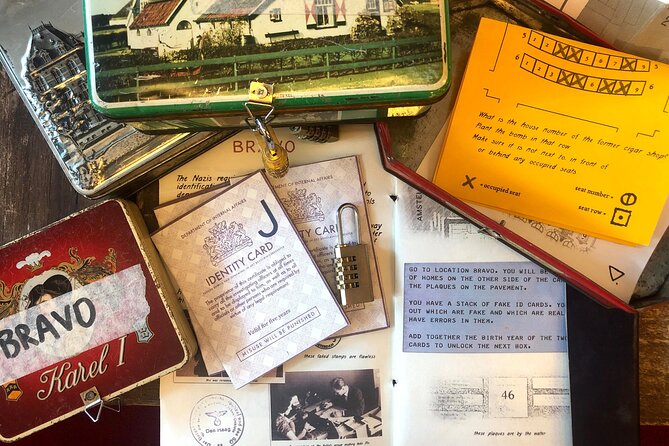
This experience is built around an interactive tour/game. That means your time is spent doing three things: walking, solving, and learning. You’ll be out exploring on foot, and at the same time you’ll face puzzles tied to what you’re noticing around you. The game framing keeps you paying attention, even when you’re just passing through quieter corners.
Along the route, you’ll discover interesting buildings, monuments, and historical details. The story is tied to real WWII-era events and the resistance’s actions, so the puzzles feel like they have a reason to exist—not just random scavenger-hunt trivia.
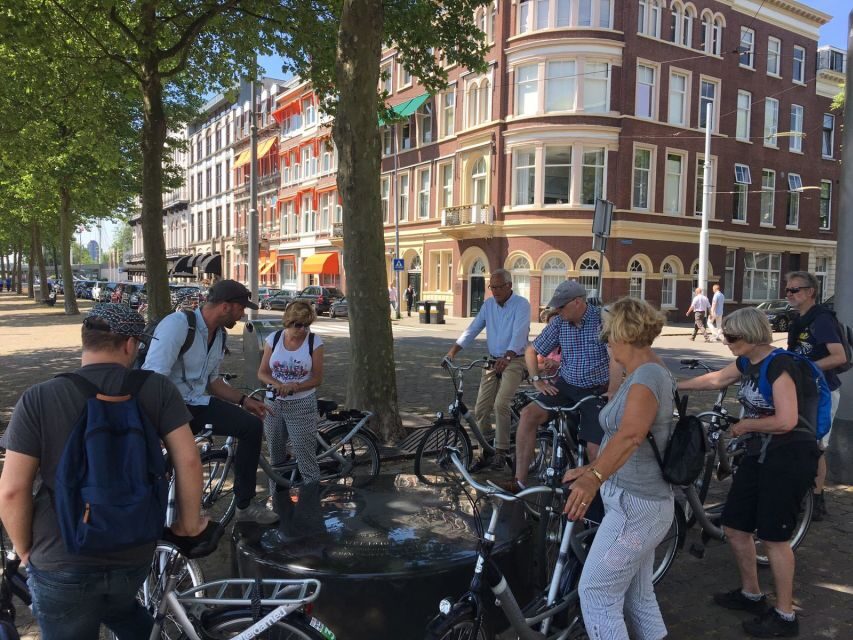
You should also expect a social rhythm. The game is meant to be solved with friends. If you’re traveling as a couple or family, you’ll likely split roles naturally—one person reading the clues, another scanning signage, another sorting out the logic. If you’re in a bigger group, team play adds a fun competitive layer.
The activity is listed at about 2 hours. That’s a sweet spot. Long enough to feel like a real outing, short enough that you can still do dinner plans without stressing your day.
Starting at Mystery City Games: Getting Oriented Fast
Your mission begins at Mystery City Games, Zwanenburgwal 178, 1011 JH Amsterdam. It’s a straightforward meet-up point, and the experience description also notes it’s near public transportation, so you shouldn’t have to build extra time just to reach the start.
Because the format is interactive, arriving ready matters. Bring a phone charger if you like to keep devices running, since you’ll have a mobile ticket and you’ll need your screen if you’re switching between clue steps. Also, if your group tends to wander when excited, agree on a simple rule at the start: one person handles directions while others focus on clues.
One small but useful thing from experience feedback: when map reading didn’t go perfectly, the staff were reachable by phone to help you figure out where you were and how to proceed. That kind of “fast rescue” matters on walking games, because losing momentum kills the fun.
Walking Amsterdam’s Clues Without a Rigid Script
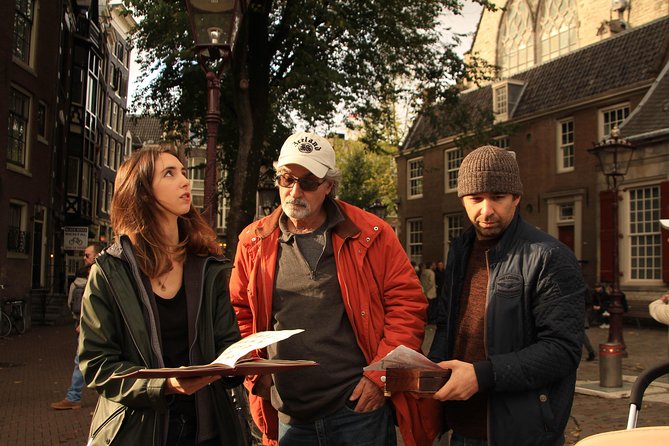
You’ll move around discovering buildings, monuments, and historical details as you play. Since the experience is game-driven rather than lecture-driven, there’s no heavy schedule of speeches or forced pacing. Instead, you make progress by interpreting what you see, solving what you’re asked, and reading enough to connect the clue to the WWII story.
That’s why this works even if you’re not a history superfan. You don’t need to know Amsterdam’s WWII facts from memory. The activity is structured so you learn as you play, using the setting as part of the puzzle.
At the same time, don’t expect a “museum-style deep dive” where someone points out every plaque and explains everything in full. This is about discovery through your own work. If you want an old-school guided talk with constant narration, you might prefer a standard walking tour. If you’re happy to read, think, and wander, you’ll likely enjoy the way the story unfolds.
The May 1940 to May 1945 Storyline (Why It Feels Real)
The storyline is anchored to two dates that give the mission shape. On May 10, 1940, the Netherlands was invaded by the Nazis, and within hours there was a secret mission to stop industrial diamonds from falling into Nazi hands. That urgent, early-window moment is the spark that sets the tone for everything that follows.
Then May 5, 1945 brings liberation celebrations in Amsterdam, and you take on one final assignment: discover what happened to the diamonds. That “before and after” framing gives your clues a sense of direction. It’s not just random puzzle content—it’s built like a trail you’re reconstructing.
The best part is how the game format turns history into a personal investigation. Instead of memorizing names and dates, you’re piecing together a narrative from clues you encounter in Amsterdam itself. That’s a practical way to remember what you learned because you connect it to places you actually walked past.






Team Play for Groups of 6+ (and Staying Together If You Prefer)
One of the smartest design choices here is giving groups options. If you’re traveling with a larger group, the experience says that groups of 6 or more can be split into competing teams. That adds energy. You’ll move with purpose because there’s a clear goal: solve the mystery first.
But it also explicitly supports the opposite approach. If you want to stay together and avoid rivalry, that’s fine too. In practice, that means you can keep one unified group and still divide tasks internally—picking a clue-reader, a map-checker, and a solver—without turning it into a contest.
If you’re deciding how to organize your group, think about personalities. Competitive teams work best when everyone wants to play actively and can handle friendly pressure. Staying together works best if you’ve got mixed ages or different comfort levels with puzzles and reading.
Flexibility: Play When It Fits Your Day
The experience is described as letting you create your own schedule and play when it best suits you. For visitors, that matters more than it sounds. Amsterdam days can get eaten up by weather, long tram rides, or museum lines you didn’t plan for.
So this style of activity is helpful when you want structure without a hard “show up at exactly 9:00 sharp” vibe. You still have a total duration (about 2 hours), but you’re not locked into a rigid sequence of stops dictated by a large bus tour plan.
That flexibility also pairs well with pairing plans. You can do this before dinner, then shift to a relaxed evening walk. Or you can fit it between a museum visit and a canal cruise without feeling like you’re sprinting through sightseeing.
Price and Value: Why $29.96 Can Be Fair
At $29.96 per person for about 2 hours, you’re paying for an organized walking game rather than a guided museum hour. In other words, you’re buying entertainment plus a framework for learning, with a format that naturally involves your group.
The value improves if you’re traveling as part of a bigger group, because the experience lists group discounts. Even if the exact discount rate isn’t shown here, it’s still a good sign: the pricing is set up to reward shared participation rather than only rewarding solo travelers.
Also consider what you get along the way: you cover multiple stops across town, you solve puzzles throughout, and you learn true stories from the city’s history as part of the mission. For many travelers, that combination hits the sweet spot between passive sightseeing and a pricey private guide.
Is it perfect value for every style of traveler? Not necessarily. If you only want a slow, fully explained walk with no puzzles, you might feel like half your time is spent thinking instead of just absorbing. But if you like interactive activities, the price feels easier to justify.
Weather and How It Can Affect Your Day
This experience requires good weather. Since the format depends on walking around to discover and solve, rainy or poor conditions can reduce the comfort and practicality of the game.
The good news is that if it’s canceled due to poor weather, you’ll be offered a different date or a full refund. So you’re not stuck with a ruined plan that you can’t fix.
My practical tip: if you’re booking near the start of a trip, keep one flexible evening available. That way, even if you need to reschedule, you won’t scramble.
Who Should Book This Mission (and Who Might Skip It)
I’d point this toward travelers who want Amsterdam to feel like a live game, not a slideshow of facts. It’s especially well-suited for:
- Families looking for something interactive that still teaches real history
- Friend groups who enjoy puzzles and solving clues together
- Travelers who want variety after doing one or two classic guided walks
- Anyone who likes WWII history but prefers a story you can work through rather than one you only hear
If you’re the kind of visitor who prefers a guided narration with no self-solving, you might get frustrated. Also, if your group is uncomfortable with walking or reading on the move, consider whether you can handle an outdoor game format.
FAQ
FAQ
Where is the starting point for Operation 45?
The tour starts at Mystery City Games, Zwanenburgwal 178, 1011 JH Amsterdam, Netherlands.
How long does the experience take?
It’s listed as about 2 hours (approx.).
Is this a guided tour or a puzzle game?
It’s an interactive tour/game experience. You walk around, solve puzzles, and learn historical details as you go.
Can our group choose when to play?
Yes. The experience says you can create your own schedule and play when it best suits you.
Do groups of 6 or more compete?
Yes. Groups of 6 or more can be split into competing teams, though staying together is also allowed.
What do we get on booking?
You receive confirmation at the time of booking, and the experience uses a mobile ticket.
Where does the experience end?
This activity ends back at the meeting point.
Is the activity outdoors?
It requires good weather, which strongly suggests you’ll be walking around outside to complete the mission.
What if it gets canceled due to poor weather or plans change?
You can cancel for a full refund up to 24 hours in advance. If it’s canceled due to poor weather, you’ll be offered a different date or a full refund.
Should You Book Operation 45: An Adventure in Diamonds?
If you want Amsterdam to feel playful and meaningful at the same time, this is a smart booking. The WWII diamond story gives the game a real backbone, and the puzzle-walk format makes you pay attention to the city instead of just passing through it. The fact that it’s flexible on timing and can work for families makes it a practical choice.
I’d say go for it if your group likes problem-solving and doesn’t mind spending about 2 hours walking and thinking. If your perfect day is quiet museums and nonstop narration, you might prefer a different style of tour. But for most visitors who want a memorable way to see Amsterdam in motion, Operation 45 hits a great mix of value, story, and group fun.