Rotterdam tells its story in strange shapes. I really like how this tour links WWII history to what you see in the streets today, and I also like the small private group (max 15) run by Rotterdam native Yoreh, who keeps the explanations clear and easy to follow. You move from major icons to quieter port areas, so the city feels less like a checklist and more like a timeline in motion.
The main thing to consider is pacing and weather. It’s about 3 hours of walking, mostly outdoors, and the experience requires good weather—so bring a layer and expect to keep moving.
In This Review
- Key highlights you’ll feel on the ground
- Why Rotterdam’s story works best on foot (and with a guide)
- Santa Claus (Beeld) to the Museum District: public art with a point
- Erasmus Bridge + Square 1940: WWII history told through landmarks
- The Scheepvaartkwartier Shipping Quarter: where Rotterdam feels open and working
- Maritime Museum Rotterdam: stepping into an open-air shipyard mood
- Witte Huis: a historical icon in the middle of the rebuild
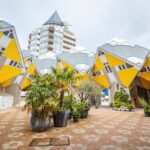
- Kubuswoningen (Cube Houses): architecture with a why, not just a wow
- Markthal: modern indoor market energy (without the confusion)
- Oude Haven: the cozy harbor view that ties it all together
- Price and value: is $180.76 per person worth it?
- Practical tips to get the most out of your 3-hour walk
- Who should book this Rotterdam walking tour?
- Should you book it?
- FAQ
- How long is the private Rotterdam walking tour?
- What landmarks and themes does the tour cover?
- Is the tour really private, and how big is the group?
- Where do we meet, and where does the tour end?
- Do I need to print tickets?
- What if weather is bad?
Key highlights you’ll feel on the ground
- A route built around WWII, then and now: monuments and viewpoints that explain how Rotterdam rebuilt itself
- A local guide who uses before-and-after photos to show how the city changed
- Port-city atmosphere in the Scheepvaartkwartier/Shipping Quarter area, with that open, wide feeling
- Architecture in different eras: from the White House and Erasmus Bridge to the Cube Houses and Markthal
- An easy finish at Markthal where you can keep exploring after the tour with tips from your guide
Why Rotterdam’s story works best on foot (and with a guide)
Rotterdam can look like an argument between old and new. From street level, the contrast isn’t just visual; it’s emotional. In three hours, you get the basic arc: early roots dating back to the 1200s, the massive destruction from WWII bombardments, and then the post-war rebuild that shaped the city’s bold attitude.
The walking format matters because Rotterdam’s details are spread out. A guide can point out what to notice—how a bridge connects city districts, how a harbor area changes your sense of space, and how modern design sits next to scars from the past. With Yoreh, the tone stays practical: he keeps it moving, answers questions, and gives you city-navigation tips when you want them.
You can also read our reviews of more tours and experiences in Rotterdam.


Santa Claus (Beeld) to the Museum District: public art with a point
You start at Santa Claus (Beeld), the Paul McCarthy statue that’s famous precisely because it didn’t start as a crowd favorite. The key to this stop isn’t the statue itself—it’s what your guide explains about Rotterdam’s relationship with art in public space. This is how the tour sets up your mindset: Rotterdam is comfortable with controversy, and it doesn’t always hide its odd choices.
From there, you head to Depot Boymans van Beuningen, described in the tour as a mirrored art depot as part of Rotterdam’s museum district area. The guide helps you understand what’s around there and also mentions the Land of Hoboken as part of the broader museum-zone story. Even if you don’t go inside every museum, this is a strong way to orient your eyes for what comes next.
Time is tight here—think of it as a “warm-up for seeing.” In about 25 minutes, you’ve gone from one of the city’s most debated icons to the museum district’s design language.
Erasmus Bridge + Square 1940: WWII history told through landmarks
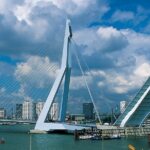
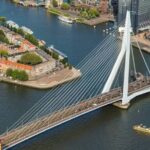
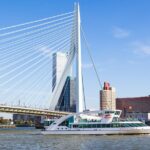
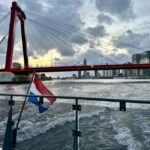
Next comes the heart of the WWII thread: the Erasmus Bridge. You’ll get the big picture on the spot—this is the famous white bridge crossing the river Meuse, connecting north to south. A bridge is already a metaphor for connection and rebuilding, and your guide uses the setting to explain the WWII invasion and bombardments and why Rotterdam’s story didn’t end with the war.
Then you move to Square 1940 and see The Destroyed City statue, one of Rotterdam’s most important WWII-related monuments. This stop matters because you’re not just reading about the war—you’re standing where the city chose to remember. The guide’s explanations give the statue meaning, not just its name.
If you like history that has a physical address, this is where the tour earns its keep. These two stops don’t feel like separate facts; they feel like a continuous storyline from one viewpoint to the next.
The Scheepvaartkwartier Shipping Quarter: where Rotterdam feels open and working
After the memorial stops, the tour shifts into the port side of Rotterdam, with time in the Dokkumer Nieuwe Zijlen area at the Scheepvaartkwartier (Shipping Quarter). The description you’ll hear here focuses on a big difference from the central streets: the feeling is open and wide, like space matters here. That change in atmosphere is part of why I like this route. Rotterdam’s identity isn’t only architecture and museums. It’s also industry, shipping, and the daily logistics of a major harbor.
This is also where the tour fits in lesser-known areas such as Veerhaven and Parklaan as part of the overall “outer city center” story. Even when you’re not staring at a single monument, you’re learning how the city operates—how the harbor shapes movement, views, and the kind of buildings that get built.
Practical note: wear comfortable shoes here. This section is less about stopping for photos and more about walking in a way that lets the city’s layout click.
Maritime Museum Rotterdam: stepping into an open-air shipyard mood
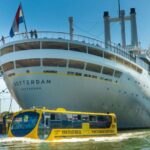
In the Maritime District, the tour adds something refreshingly physical: Maritiem Museum Rotterdam, described as an open-air museum where older boats (over 100 years) sit aging in place. The idea is simple—your route makes Rotterdam feel like a working port with memory, not a theme park.
This stop gives you a break from purely built-environment landmarks. You’ll notice scale differently here. Boats create that human-scale sense of industry: you can understand the harbor without needing extra context, because the vessels are right in front of you.



Witte Huis: a historical icon in the middle of the rebuild
Then you hit the White House (Witte Huis), one of Rotterdam’s historical icons and, as the tour notes, it used to be the tallest office tower in Europe. It’s a strong contrast stop after the memorials and port areas because it represents ambition and corporate-era confidence.
Your guide uses it as a bridge between themes: WWII’s disruption on one side, and the city’s drive to build tall and build new on the other. Even if you’re not a building-history nerd, you’ll come away with a better instinct for why Rotterdam’s skyline looks the way it does.
Kubuswoningen (Cube Houses): architecture with a why, not just a wow
Few things in Rotterdam get attention like the Cube Houses. Here, you don’t just point and photograph. You walk through the concrete forest on the route toward the market square area, and you learn why these cube homes exist, how they’re constructed, and what the design was trying to say.
The tour’s framing is really smart: the Cube Houses are treated as part of the city’s future-minded attitude, not only as a quirky attraction. Your guide’s explanation makes the sight more than a selfie backdrop.
If you’re the type who likes architecture that has an opinion—these are hard to ignore. They also help you connect the broader themes in the tour: past destruction, then future thinking.
Markthal: modern indoor market energy (without the confusion)
You finish with Markthal, the modern indoor market hall. The tour describes it as a food-and-color space and even calls it Rotterdam’s modern Sistine Chapell—an attempt to describe how dramatic the interior feels compared with the street outside.
This is the ideal ending zone because you can adjust your plans instantly. If you want snacks, you can browse. If you want photos, you have plenty of angles. And if you want to keep learning, your guide gives you tips on what to visit next.
One very practical bonus: your guide points out options around the Cube Houses as well. The tour description notes you can visit the demo Cube house on your own after the walking portion, and you’ll get an explanation of both the Cube Houses and Markthal during the tour, plus guidance on where to go.
Oude Haven: the cozy harbor view that ties it all together
Before the tour wraps, you also get time at Oude Haven, described as one of the oldest harbors in the Netherlands and a cozy place to slow down. Even better, it gives you a great view of the Cube Houses—close enough to feel how the architecture sits in real city life, not just on a postcard.
This stop works as a payoff. Earlier you see Rotterdam’s commemorative side. Earlier you learn about shipping and boats. Here you see everyday life and a harbor vibe, with the Cube Houses as the visual link.
Price and value: is $180.76 per person worth it?
At $180.76 per person for about three hours, this isn’t the cheapest way to see Rotterdam. The value comes from the format and the focus.
You’re paying for:
- a private setup designed for a small group (max 15) rather than a large crowd
- an expert local guide, specifically Yoreh, who can answer questions and keep the story coherent
- time at both major landmarks and quieter areas linked to harbor life and WWII memory
- a route that ends where you can keep exploring (Markthal and nearby Cube House options)
This price tends to make the most sense if you’re visiting as a couple or a small group, or if you care about WWII context and architecture enough to justify a guided walkthrough instead of doing it solo.
If you’re traveling alone and price-sensitive, you might feel it more. But if you like history with real-world locations and you want someone to translate the city for you, the tour’s structure does the heavy lifting.
Practical tips to get the most out of your 3-hour walk
A few small things make a big difference on this kind of route.
- Bring a light rain layer. The tour requires good weather, but you’ll still want to be comfortable if conditions shift.
- Wear shoes you trust. You’ll be walking across multiple districts, including open port-feeling areas.
- Charge your phone for Markthal interiors. The market hall is a natural photo zone.
- Ask questions early. The guide is willing to answer, and that helps you connect the later stops back to the earlier themes.
- Plan for a follow-up snack stop at the end. Markthal is the obvious place to continue at your own pace.
Who should book this Rotterdam walking tour?
Book it if you fit at least one of these:
- You want Rotterdam’s WWII story explained through real monuments and viewpoints, not just a museum.
- You’re an architecture fan—Cube Houses, Witte Huis, and the modern design of Markthal are the kind of stops that reward attention.
- You want the harbor side of Rotterdam without getting lost. The route brings you to shipping-related areas and then shows how they connect back to the central sights.
- You like a guide who uses visuals and keeps the pacing tight. Yoreh’s before-and-after approach makes the changes in the city easier to grasp.
Should you book it?
If you’re choosing between a quick highlights stroll and a story-first route, this one leans story-first. You get the major icons—Erasmus Bridge, Cube Houses, Markthal—plus the port and WWII memorial pieces that explain why Rotterdam looks the way it does.
I’d book it if your ideal day includes walking, asking questions, and leaving with a clearer sense of how Rotterdam rebuilt itself and what it chose to keep visible. If you hate walking, or if you’re only interested in one or two attractions, you may feel the full route is more than you need.
FAQ
How long is the private Rotterdam walking tour?
It runs for about 3 hours.
What landmarks and themes does the tour cover?
You’ll see Rotterdam’s Cube Houses, Markthal, Erasmus Bridge, Maritime Museum Rotterdam, Witte Huis, Oude Haven, and several WWII-related monuments, with themes including history, culture, the harbor, WWII, and architecture.
Is the tour really private, and how big is the group?
Yes. It’s private for your group only, and the group size is capped at a maximum of 15 people.
Where do we meet, and where does the tour end?
The tour starts at Oude Binnenweg 137, 3012 JD Rotterdam, and ends inside Markthal at Verlengde Nieuwstraat, 3011 GX Rotterdam.
Do I need to print tickets?
No. The tour uses a mobile ticket.
What if weather is bad?
The experience requires good weather. If it’s canceled due to poor weather, you’ll be offered a different date or a full refund.