REVIEW · THE HAGUE
Private Tour of Delft and The Hague including Transfer
Book on Viator →Operated by Discover Delft · Bookable on Viator
Parliament landmarks meet leaning church towers. This private Delft and The Hague tour gives you a guided line through the big ideas—Dutch revolt, democracy, and the people who shaped modern life—without getting bogged down. I especially liked the guide’s city-to-city connections and the way he made famous buildings feel human and current.
I also liked how the route mixes politics and art: The Hague’s Binnenhof and Noordeinde Palace on one side, then Delft’s Old Church and Vermeer-related stops on the other. That pairing makes the day feel like it has a point, not just a checklist of sights.
One consideration: it’s mostly sightseeing on the move across two city centers, so you’ll want comfortable shoes and decent weather. If weather turns, the experience can be rescheduled or refunded.
In This Review
- Key points you’ll feel on the ground
- Getting oriented fast in central The Hague
- Het Plein to Binnenhof: the Dutch revolt and how power looks up close
- Hofvijver and Thorbecke: democracy in the open air
- Lange Voorhout: The Hague’s formal street full of power and culture
- Noordeinde Palace and the working monarchy detail
- Grote Kerk and the Johan de Witt story: where the guide turns stones into scenes
- The transfer to Delft: included comfort, not an extra hassle
- Delft entrance and the assassination context you’ll carry all day
- Old Church and the leaning-tower moment (plus Vermeer and science)
- Hoogheemraadschap van Delfland: the water board house that explains Delft
- Markt square: town hall, the New Church, and the Father of International Law
- Maria van Jessekerk, the synagogue area, and faith architecture along the route
- VOC-Kamer Delft: trade history in a building tied to the Dutch East India Company
- Price and value: what you pay for and what you get
- Who should book this private tour
- Should you book this Delft and The Hague tour?
- FAQ
- How long is the Private Tour of Delft and The Hague?
- Is this tour private or shared with other people?
- Is the transfer between The Hague and Delft included?
- Do I get hotel pickup and drop-off?
- What language is the tour guide?
- Are admission tickets included for the stops?
- What is included in the price, and what is not?
- What if the weather is bad or I need to cancel?
Key points you’ll feel on the ground
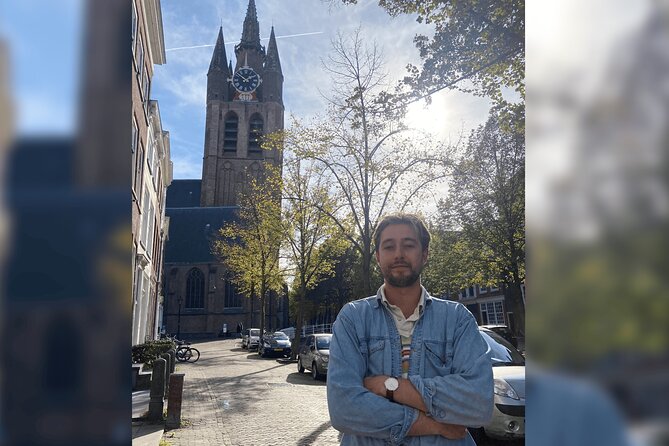
- A private tour with your group only, so you can ask follow-up questions without rushing
- Robin-style guidance (one standout detail from real bookings): friendly, kind, and strong on both cities
- Free-to-view stops across squares, churches, palaces, and monuments, so your money goes to the guide and logistics
- Transfer included in an air-conditioned vehicle, which keeps the day smooth between The Hague and Delft
- High-impact photo moments like Hofvijver, Noordeinde Palace, the Grote Kerk tower, and Delft’s Old Church
Getting oriented fast in central The Hague
The start point puts you right where things happen in The Hague: Het Plein. You don’t have to fight your way across town first. You begin with context—Willem van Oranje, called the Father of the Fatherland, and his role in the Dutch revolt that shaped how this country defined itself.
This is the kind of start that saves time. When you later look at government buildings, monuments, and civic spaces, you won’t be staring at stone with no story. You’ll already know what those names and symbols stand for.
And because it’s a private tour, the pace can be adjusted. If someone in your group wants to linger over details, you can usually do it without feeling like you’re holding up a busload of strangers.
You can also read our reviews of more tours and experiences in The Hague.



Het Plein to Binnenhof: the Dutch revolt and how power looks up close
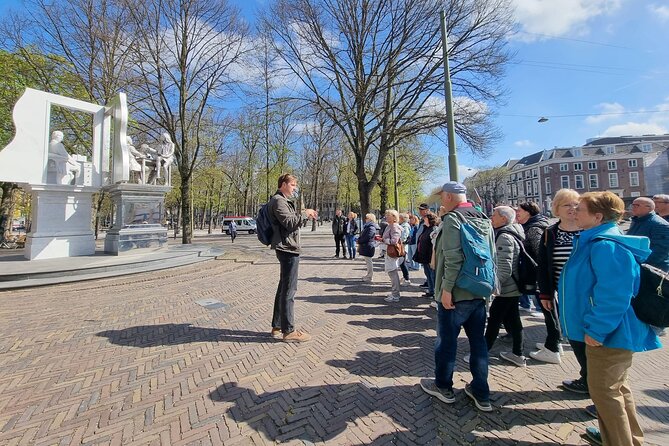
From Het Plein, the tour moves into the parliament complex area, stopping at the square near the Binnenhof and the Ridderzaal (Knight’s Hall). The guide explains why this place matters and what the halls and squares were built to do for Dutch governance over time.
You’ll also get that fun, real-world chance to notice what’s going on. With a bit of luck, you might see ministers or even the prime minister walking by. Even if that doesn’t happen, the setting itself makes it easy to picture how government operates beyond press photos.
Practical tip: this is an area where timing can help. If you’re the type who likes photos without crowds, you’ll usually get a better experience arriving with your guide rather than wandering on your own without a plan.
Hofvijver and Thorbecke: democracy in the open air
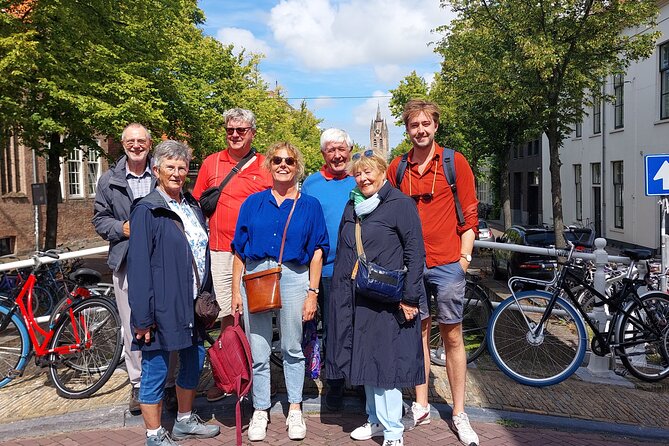
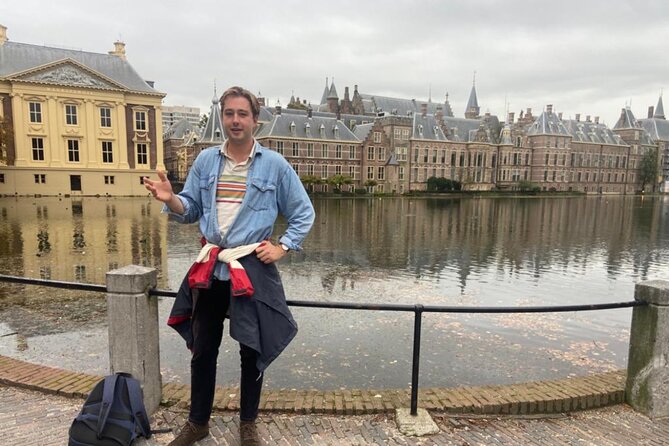
Next up is the Hofvijver, the lake right in front of the parliament building and the prime minister’s office. It’s one of those urban scenes that feels both calm and politically charged. The guide gives the significance of the spot and also adds a “how did that become a story?” angle to some of the history.
Right beside it, you’ll see the Thorbecke Monument. Thorbecke is tied to democracy and the father of the constitution, and the statue becomes a way to talk about government as a design you can actually point to—not just an idea in a book.
If you’re curious about how countries “make” democracy visible, these two stops are exactly that. You’ll understand the symbolism without needing to read a wall of text.
Lange Voorhout: The Hague’s formal street full of power and culture
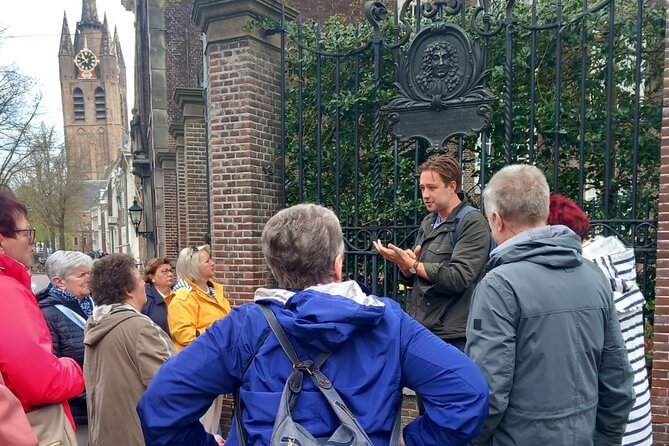
After the government-facing views, the route shifts to Lange Voorhout, often described as The Hague’s more elegant boulevard style. Here you pass embassies and major buildings, plus an art museum and a famous hotel. You’ll also notice the temporary senate building and a statue gallery focused on Dutch heads of states.
This is a great segment for people who like architecture and city planning, but it’s also useful if you don’t. The street works as a mental map: you start to see how The Hague functions as both a political center and a place of international presence.
Because the tour is private, you can ask quick questions as you walk—how one institution relates to another, why certain buildings are placed where they are, and what to notice as you go.
Noordeinde Palace and the working monarchy detail
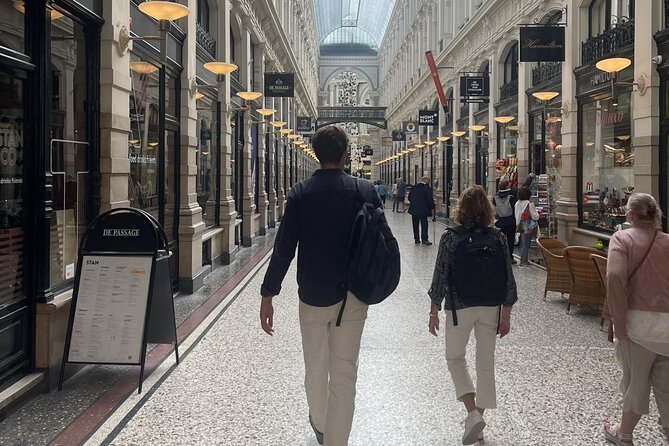
One of the more “only-in-Your-Footsteps” moments comes at Noordeinde Palace. You’re looking at the working palace of the Dutch king, and you can tell whether the king is currently in the country based on the flag.
That’s the kind of detail you’d miss if you just showed up on your own. It’s small, but it turns the palace from a distant landmark into something you can actually interpret in real time.
The stop is also a reminder that The Hague isn’t only about parliament halls. It’s also about ceremonial and practical roles that show up on the street.





Grote Kerk and the Johan de Witt story: where the guide turns stones into scenes
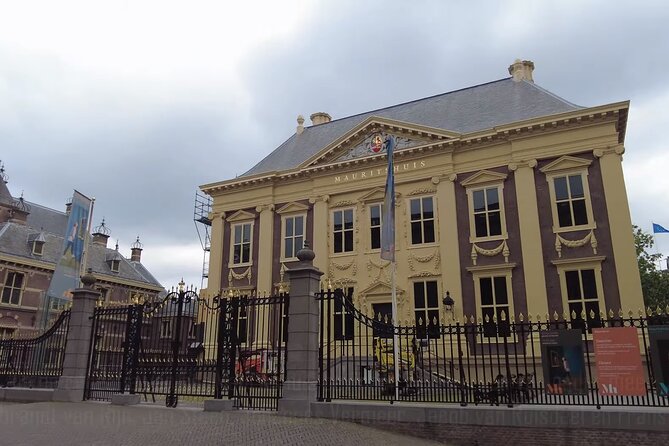
The tour then heads toward the Grote Kerk (“Big Church”). The church tower is unusual, and the guide points out the stork on top—another example of how you learn to look differently. Instead of just seeing a tower, you learn what symbols were placed there and what they might communicate.
From there, you’ll see the Statue of Johan de Witt. This is the stop that surprised me most in the best way: he’s the only head of government in the world that’s described as being eaten by an angry mob. The guide explains what happened so it stops sounding like a strange headline and starts making sense as a human event tied to a tense moment in history.
This segment works well if you like stories that have tension and consequences. It’s also a good reminder: political history isn’t abstract. It’s people under pressure, and it leaves marks on streets and monuments.
The transfer to Delft: included comfort, not an extra hassle
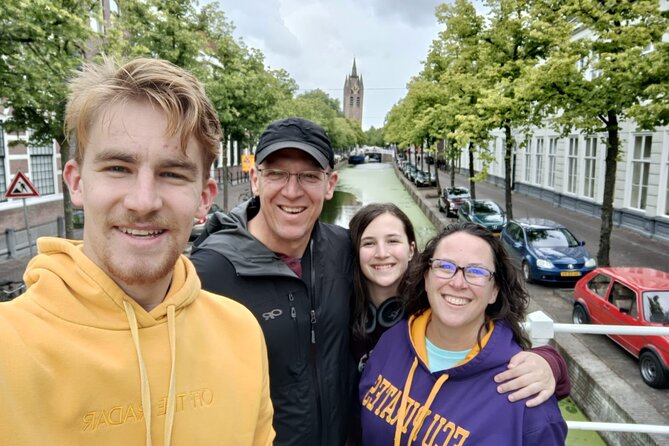
After the The Hague portion, you get the ride to Delft. The tour includes transfer by air-conditioned vehicle, and it can run via tram, train, or car depending on what’s arranged for your booking.
To me, this is a big value point. Two cities in one afternoon sounds easy on paper, but without a plan you can lose time to logistics. Here, you get the reset that keeps the pacing realistic.
A helpful mindset: use the transfer time to recharge, check your photos, and prepare for a more compact, walkable Delft center. You’re going to be in a different kind of atmosphere in a short time—more canal edges, church interiors (from outside viewpoints), and historic street corners.
Delft entrance and the assassination context you’ll carry all day
In Delft, the tour enters the city and you’ll see a historic site tied to the death of the Father of the Fatherland. The guide sets the scene so it feels connected to the earlier Willem van Oranje context from The Hague.
This matters because Delft isn’t just a pretty stop. When you learn why major figures appear on Delft’s map, you understand why the city holds on to certain landmarks and streets. The tour helps you connect the political story across both locations.
If you like your travel to feel “linked,” this is one of the strongest threads of the whole experience.
Old Church and the leaning-tower moment (plus Vermeer and science)
Next, you’ll see the Old Church area, including the famous leaning tower aspect. Even from the outside viewpoints, the church is a magnet for attention because so many notable people are connected to it through burial.
The guide points out that figures like Johannes Vermeer and Antoni van Leeuwenhoek are associated with the church. That’s a powerful combination: painter and scientist in the same historic anchor point.
If you’re doing a Delft visit because of Vermeer, this stop gives you more than “there it is.” It gives you a reason why Delft’s cultural life and intellectual life share the same physical spaces.
Practical note: this segment can involve looking up and scanning details on stonework. Plan for photos, but also give yourself a few quiet moments to read what the guide is connecting.
Hoogheemraadschap van Delfland: the water board house that explains Delft
Then you move along toward Oude Delft canal areas and the Hoogheemraadschap van Delfland stop. This is where the “Dutch engineering” side of the country shows up in real form.
You’ll see the oldest house of Delft with a heavily decorated facade, and it now houses the Water Board since 1645. The guide explains what the water board does and why it mattered—and still matters—for life in the region.
This stop is a reminder that the Netherlands isn’t only famous for canals as scenery. It’s famous for canals as survival and planning. If you’ve ever wondered why water shows up in Dutch history like it has its own personality, this is where it becomes clear.
Markt square: town hall, the New Church, and the Father of International Law
You’ll then reach Markt, Delft’s market square, where the tour packs several major sights into a focused block. You’ll see Delft’s old town hall, the New Church with royal grave tombs, and the oldest shop in Delft. You’ll also notice a statue of the Father of International Law and the place where Vermeer was raised.
This is one of those stops where your brain starts to connect layers fast. Delft isn’t just one thing. It’s a civic town square with political and royal reach, plus a commercial heartbeat, plus cultural roots tied to one of the world’s best-known artists.
If you like walking through a city center and picking up patterns, you’ll love Markt.
Maria van Jessekerk, the synagogue area, and faith architecture along the route
The route continues with two more faith-related stops passed along your way through Delft streets.
First is Maria van Jessekerk, a Catholic church with design details that the guide points out as interesting. Next is the Vrienden van de Synagoge Delft area, where you pass the old synagogue. The tour keeps these moments respectful and context-based, tied to what the buildings represent in Delft’s past.
These stops work best if you notice how different communities shaped the city. Even without going deep into specific interior details, you’ll come away with a better sense of how Delft’s religious and social history lived side-by-side.
VOC-Kamer Delft: trade history in a building tied to the Dutch East India Company
The final Delft stop is VOC-Kamer Delft. You’ll see a former office building of the Dutch East India Company (VOC), located near an old weapons arsenal of Holland.
The guide explains what the VOC was and notes it as the biggest company to ever exist. That single fact can make a whole era feel real, because you’re looking at physical infrastructure linked to global trade power, not just abstract economic charts.
If you’re the type who likes to understand why a city looks like it does—who had money, who built what, and why certain streets matter—this stop helps tie Delft’s historic wealth and global connections to the buildings you see.
Price and value: what you pay for and what you get
At $228.78 per person for about 4 hours 30 minutes, this tour isn’t a budget shortcut. You’re paying for a private guide, organized pacing, and the included transfer between The Hague and Delft in an air-conditioned vehicle.
The big value angle is that the tour covers two distinct city themes in one go:
- The Hague: government, democracy, symbols, and palace details
- Delft: historic streets, churches, water management, and trade-era buildings
Also, the listed stops are admission ticket free for the sights covered, and all fees and taxes are included. So your main spend is the guided experience and the logistics, not buying a stack of attractions.
One more value point: real bookings show an excellent guide experience. The guide name Robin came up in the high rating, with praise for strong knowledge across both cities and a kind, interesting style. If that matters to you, this is a strong sign.
Who should book this private tour
This is a great match if you:
- Want a guided day that connects The Hague politics to Delft cultural sites
- Like history explained through landmarks, not just dates
- Prefer private pacing over self-guided wandering
- Plan to visit anyway for Vermeer and also want more than only Vermeer
It may feel less perfect if you:
- Want a slow day with long museum interiors (this is more street-and-landmark based)
- Expect to do lots of independent detours without coordination
Should you book this Delft and The Hague tour?
I’d book it if you want an efficient, story-driven day that ties government symbolism to Delft’s culture, engineering, and trade history. The included transfer makes the schedule workable, and the free-to-view stops keep your money focused on the guide.
If you’re only interested in one city—either The Hague’s government sites or Delft’s art and church landmarks—then a single-city tour might fit better. But if you’re doing both, this private format helps the day click.
Also keep the weather in mind. The experience notes a good-weather requirement, and if conditions are poor, you’ll get a different date or a refund. That’s a small risk, but for a walking-and-looking itinerary, it’s worth considering.
FAQ
How long is the Private Tour of Delft and The Hague?
The duration is approximately 4 hours 30 minutes.
Is this tour private or shared with other people?
It’s a private tour/activity, meaning only your group participates.
Is the transfer between The Hague and Delft included?
Yes. There is an air-conditioned vehicle transfer between The Hague and Delft as part of the experience.
Do I get hotel pickup and drop-off?
Pickup and drop-off by car is available if you book an option that includes it. If included, you’ll be picked up from the location you select up to 1 hour before the tour starts and dropped off again afterwards.
What language is the tour guide?
The tour is offered in English.
Are admission tickets included for the stops?
Admission tickets for the listed stops are listed as free, and the tour includes all fees and taxes.
What is included in the price, and what is not?
Included are 2 private city tours, the air-conditioned transfer, optional hotel pickup/drop-off (if selected), and all fees and taxes. Gratuities are not included.
What if the weather is bad or I need to cancel?
The experience requires good weather. If it’s canceled due to poor weather, you’ll be offered a different date or a full refund. You can cancel up to 24 hours in advance for a full refund.