REVIEW · ROTTERDAM
Rotterdam Architecture Highlights Walking Tour
Book on Viator →Operated by Walk Rotterdam · Bookable on Viator
Rotterdam’s architecture tells stories fast. This small-group walking tour threads together the city’s postwar rebuild and its bold, modern look, with an architect guide who explains what you’re seeing as you walk. You’ll get a clear route, smart photo stops, and a practical way to orient yourself in Rotterdam.
I especially like that the tour keeps a steady pace and actually pauses at major hits: Rotterdam Centraal Station, Timmerhuis (OMA), and the Markthal’s dramatic interior space. I also like the guides’ style. People have mentioned that guides like Tanja, Sylvia, and Tania stay flexible, answer follow-up questions, and tailor explanations to mixed interests.
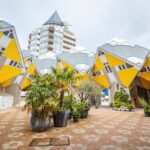
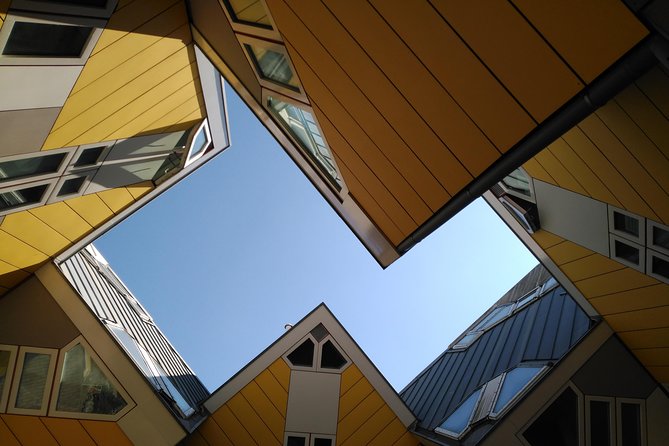
One drawback to know in advance: this is more of an exterior-and-context route than a building-inside day. For example, some architecture-focused visitors felt the Cube Houses were only seen from a distance rather than walked through.
In This Review
- Key highlights at a glance
- Why this Rotterdam architecture walk feels like a best-first visit
- The tour format: 2 hours, small group, and a clear route
- Rotterdam Centraal Station: the city’s new front door
- Schouwburgplein: the cultural podium square and the idea of public life
- Postwar national monument: reading memory into the rebuild
- Timmerhuis by OMA: when modern form becomes an icon
- Markthal: the “indoor market” stop that teaches you how space works
- Boompjeskade on the Maas: views that make the walking pay off
- What I’d watch for: cube houses, depth of design, and meeting point clarity
- Price and value: why $54.31 feels fair for an architect-led route
- Who should book this Rotterdam architecture highlights tour?
- Should you book it?
- FAQ
- How long is the Rotterdam Architecture Highlights Walking Tour?
- Is the tour offered in English?
- What’s included in the ticket price?
- How big is the group?
- What is the minimum age to join?
- Where do I start and where does the tour end?
- Are service animals allowed?
- Does the tour require specific weather?
- Can I cancel for free?
Key highlights at a glance
- Architect guide format: built-in explanations, not just pointing
- Major modern stops: Centraal, Timmerhuis, Markthal, Maas views
- Small group feel (max 15): you can ask real questions
- Photo-friendly timing: short pauses that add up to good angles
- Postwar rebuilding focus: why the city looks like this today
- Weather-dependent walking: plan for wind and Dutch conditions
Why this Rotterdam architecture walk feels like a best-first visit
Rotterdam is famous for trying new things. That’s exactly why a walking tour works here. You’re not stuck reading placards for two hours; you’re moving along the city’s modern spine and learning how the designs connect street to skyline.
What you’ll like right away is the tour’s structure. It strings together stops that help you understand Rotterdam’s big themes: rebuilding after destruction, then reinventing its urban identity with modern architecture. In just a couple hours, you can go from wondering where to look to knowing what each building is doing.
And because it’s guided by an architect (that’s the key detail), the conversation tends to go beyond surfaces. You’ll hear not only what the buildings look like, but how they’re meant to function and what shaped their creation. That makes the walk feel more like a focused briefing than a casual stroll.
You can also read our reviews of more tours and experiences in Rotterdam.


The tour format: 2 hours, small group, and a clear route
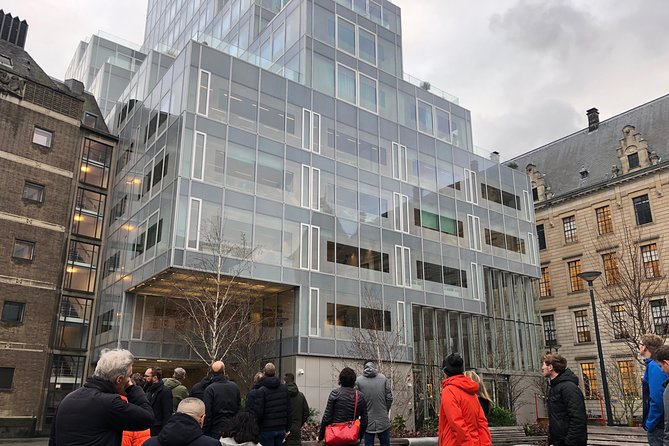
This is designed to fit into a day without exhausting you. Expect about 2 hours of walking, with the tour capped at 15 travelers. The minimum age is 12, and you should have a moderate level of physical fitness, since it is a walking tour.
The route also ends in a really useful spot. You start at Rotterdam Central Station and finish at Boompjeskade by the river, so you’re not left stranded in an awkward transit pocket. That helps you roll into other plans right after—coffee, photo wandering, or a relaxed evening view.
Another practical win: your ticket is mobile, and the stops listed have free admission. So you can spend your time thinking about architecture, not checking price tags at every corner.
Rotterdam Centraal Station: the city’s new front door
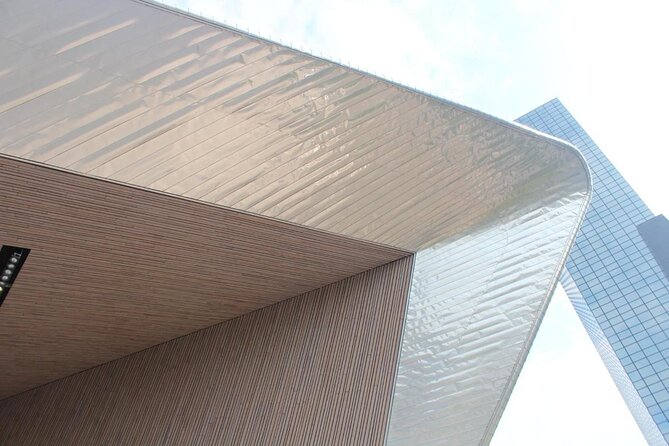
Most cities have an old “main station” vibe. Rotterdam’s Central Station works differently. It’s a striking first stop because it frames how the city presents itself to arrivals—modern, forward-looking, and built to handle flow.
You’ll spend around 10 minutes here, which is exactly enough time for a guide-led orientation. The best part is the explanation of the newly built entry to the city and how it fits into Rotterdam’s postwar rebuilding story. Even if you’ve seen photos online, being there helps you understand the scale and how it shapes the streets you’ll walk next.
Tip I’d give you: take a moment to look beyond the station itself. Notice how the station connects to the wider grid and how the surrounding public spaces set up the rest of the tour.
Schouwburgplein: the cultural podium square and the idea of public life
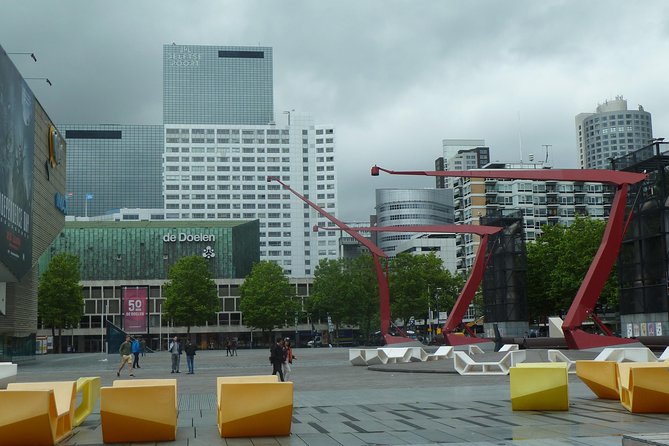
From the station, the tour shifts to a square that feels like a stage. Schouwburgplein is Rotterdam’s cultural podium square, and it’s a smart stop because it explains how the city planned social and civic spaces—not just individual buildings.
You’ll get about 10 minutes here, which again keeps the tour moving while still letting you absorb the setting. What makes this stop valuable is the “why it matters” lens. Rotterdam’s modern identity isn’t only about striking forms; it’s also about public life—where people gather, watch, and move through culture.
If you’re the type who likes architecture but also likes city planning context, this is a good match. You’ll likely come away seeing Rotterdam squares as functional design, not just open space.
Postwar national monument: reading memory into the rebuild
Half the point of Rotterdam architecture is the aftermath. The tour includes a brief stop at a postwar national monument. You’ll likely see how memorial space is woven into the city’s broader transformation, which helps explain the emotional weight behind some of the modern choices.
This is one of those stops that can feel quick on paper, but it adds perspective. When you understand the city’s losses and rebuilding impetus, the modern forms start to make more sense. You stop seeing them as random “cool buildings” and start understanding them as deliberate responses.
If you prefer lighter, purely design-focused content, this might feel like a tonal shift. But even then, it’s short and useful.



Timmerhuis by OMA: when modern form becomes an icon
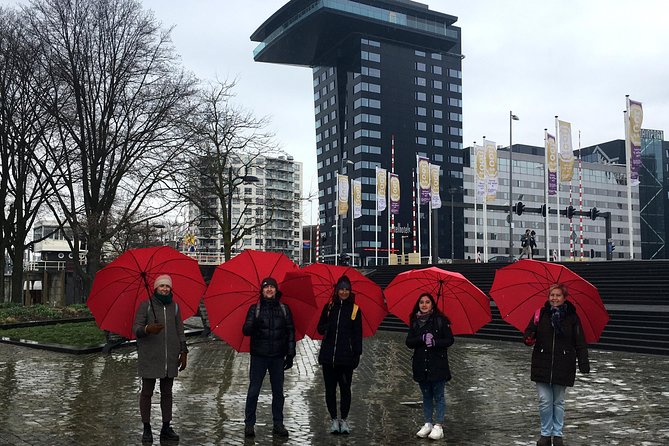
Then you hit a true architecture headline: Timmerhuis – OMA. The guide treats it as an icon for a reason. You’ll spend about 5 minutes here, so your job is simple: slow down, look up, and let the architect guide explain what makes the design meaningful.
Why this stop matters for you: OMA-associated architecture often looks bold from the street, but it also carries ideas about how buildings interact with their surroundings. A guided stop helps you connect the visual impact to the underlying intent—shape, massing, and how the building holds space in the city.
This is also a great place for photos. Even a short stop gives you time to get angles that show the structure without needing to hunt for a viewpoint.
Markthal: the “indoor market” stop that teaches you how space works
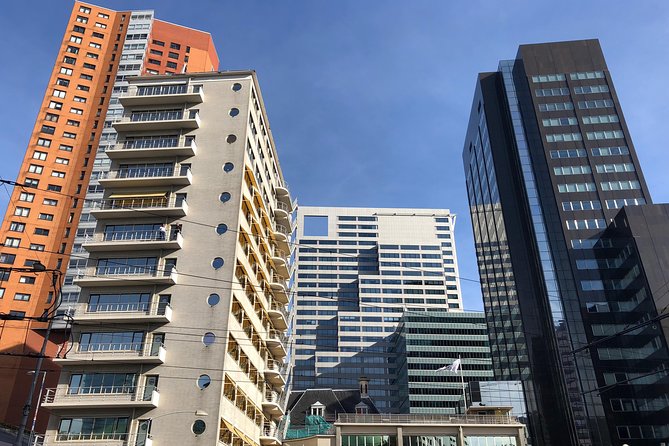
If you want one stop that’s both visually dramatic and practical, it’s Markthal. The tour gives you around 15 minutes here, and that’s long enough to understand why this market is such a famous piece of modern design.
Markthal works because it’s not just an architectural shell. It’s a market you use. You can sense how the building shapes movement and how indoor public space feels when the design is intentionally theatrical.
The guide explanation is what turns it from a pretty photo stop into a learning moment. When you understand how the building creates a contained “city within a city,” the effect is easier to grasp.
One more practical note: with 15 minutes, you can do a quick circuit and still have time to get back with the group. If you linger for snacks, you may need to keep an eye on the meeting pace.
Boompjeskade on the Maas: views that make the walking pay off
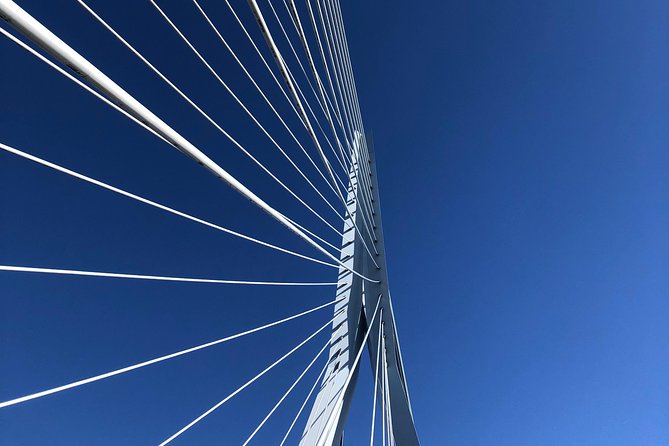
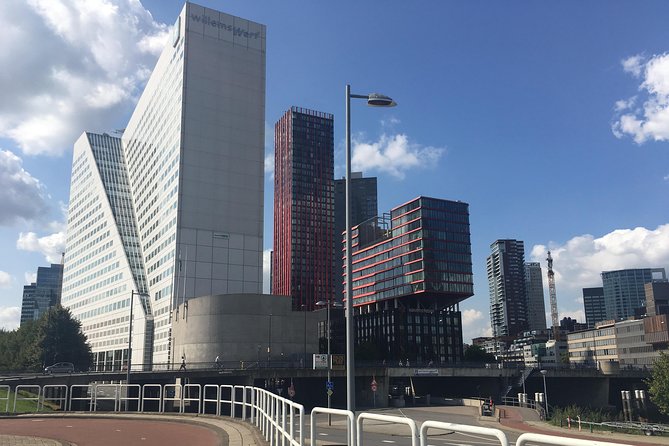
The last stop is Boompjeskade, right by the river Maas. You’ll get about 15 minutes, and this is the kind of finishing point that turns your architecture knowledge into a skyline memory.
The view over the South Bank makes sense as a tour ending because it gives you context. When you can see across water, you notice spacing, angles, and how different buildings sit in relation to each other. The architecture you studied stops being isolated objects and becomes a real urban composition.
This part is also where wind can matter. Many days in Rotterdam feel breezy near the water, so if it’s cold, plan layers. The tour does require good weather, so you’ll enjoy it more when the sky cooperates.
What I’d watch for: cube houses, depth of design, and meeting point clarity
This tour is excellent for orientation and modern-architecture context. But it does have a few limits, and it’s better you know them up front.
First, some architecture lovers want to do more than look. There’s a chance you’ll see the Cube Houses largely from the outside rather than get a full inside look. If your goal is interiors and tactile details, you might prefer a different add-on or a separate visit.
Second, the balance of content can lean toward social and city-planning context as well as pure construction. One way to interpret that: the guide helps you connect buildings to civic purpose. That’s great if you like the “why.” It may feel less satisfying if you want hands-on details about build methods or technical design.
Third, the meeting point can be a little confusing if you rely only on a phone map pin. The tour starts at Rotterdam Central Station (3013 AJ) and ends by the riverside at Boompjeskade (3011 Rotterdam). Arrive a few minutes early and make sure you’re at the right riverside endpoint if the route shifts slightly that day.
Price and value: why $54.31 feels fair for an architect-led route
At $54.31 per person for about 2 hours, you’re paying for two things: time in the city and an architect guide’s interpretation. In a place like Rotterdam, that’s where value shows—because the city’s modern design language isn’t always obvious from the sidewalk.
This isn’t a big, ticket-burden tour. Stops are listed with free admission, so your money mostly goes to guide expertise and the walking structure that ties the stops together. Also, the tour runs with a small-group cap, which usually improves the quality of Q&A.
One planning tip: this tour is often booked around 47 days in advance on average. That doesn’t mean you can’t find seats late, but if you’re traveling in peak seasons or on a tight schedule, booking earlier is smart.
Who should book this Rotterdam architecture highlights tour?
This is a strong choice if you want:
- a modern architecture primer in a short time
- an architect-led route that explains meaning, not just names
- a walking format that ends with a river view at Boompjeskade
- a small group (max 15) where questions actually get answered
It may be less ideal if you’re looking for:
- a deep technical, construction-heavy architecture lecture
- a full interior experience that includes major indoor building visits beyond the market stop
- a hands-off, minimal-walking tour (it’s still a walking route)
If you’re doing Rotterdam as part of a larger Netherlands trip, this works especially well because it gives you “city language.” After this, other architecture photos and neighborhoods start making more sense.
Should you book it?
Yes, I’d book this if you want Rotterdam’s modern architecture explained in plain terms while you stand in the real places. The short, structured route through Centraal Station, Timmerhuis (OMA), Markthal, and the Maas views is exactly the kind of best-first experience that saves time.
If your dream is cube houses inside, lots of interior access, or heavy technical design talk, you might treat this as the orientation stop and plan a separate architecture-specific visit afterward. For most people, though, an architect guide plus a compact 2-hour walk is a very good trade.
FAQ
How long is the Rotterdam Architecture Highlights Walking Tour?
The tour runs for about 2 hours (approx.).
Is the tour offered in English?
Yes, the tour is offered in English.
What’s included in the ticket price?
The ticket includes a 2-hour walking tour and a professional architect as your guide.
How big is the group?
This activity has a maximum of 15 travelers.
What is the minimum age to join?
The minimum age is 12 years.
Where do I start and where does the tour end?
You start at Rotterdam Central Station, 3013 AJ Rotterdam, Netherlands, and you end at Boompjeskade, 3011 Rotterdam, Netherlands, on the riverside.
Are service animals allowed?
Yes, service animals are allowed.
Does the tour require specific weather?
Yes. The tour requires good weather, and if it’s canceled due to poor weather, you’ll be offered a different date or a full refund.
Can I cancel for free?
Yes. You can cancel up to 24 hours in advance for a full refund.