REVIEW · ROTTERDAM
Rotterdam Travel to the Future Walking Tour
Book on Viator →Operated by Snurk.Travel · Bookable on Viator
Modern Rotterdam can feel like sci-fi. That is exactly the hook of this 3-hour future-themed walking tour, where I love how the route mixes public design (rooftop farming, urban bridges, and special gardens) with big-story architecture (Markthal, Erasmus Bridge, and the Cube Houses). The main drawback to think about is the pace: it is a lot of outdoor walking in one go, so you’ll want comfy shoes and a plan for weather.
What really makes this tour work is the guide-led storytelling. If you end up with Dania or Danil Hochlovic as your guide, the comments I’ve seen point to the same thing: sharp, local-feeling explanations that make Rotterdam’s modern choices feel personal, not like a textbook.
You’re also not stuck paying extra for sights. The stops are designed so the important parts are visible from streets and public spaces, and the overall time is short enough to keep your brain fresh instead of overloaded with dates.
In This Review
- Key highlights worth your attention
- Why a Rotterdam future walk beats a normal sightseeing loop
- Meeting at Ode aan Marten Toönder and ending at Erasmus Bridge
- Stop 1: Innovative Rotterdam public spaces, yellow road energy, rooftop farming, and a Piet Oudolf garden
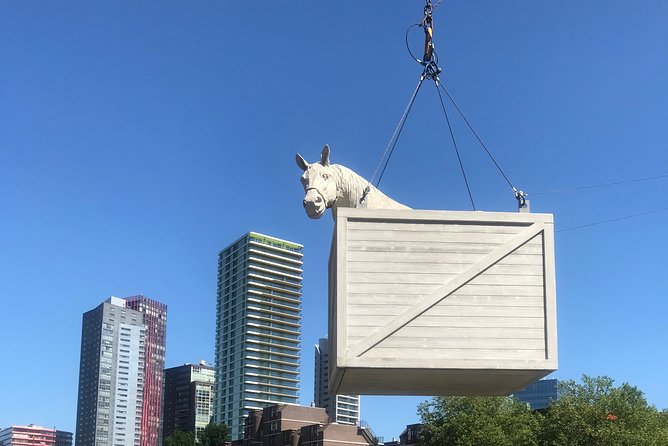
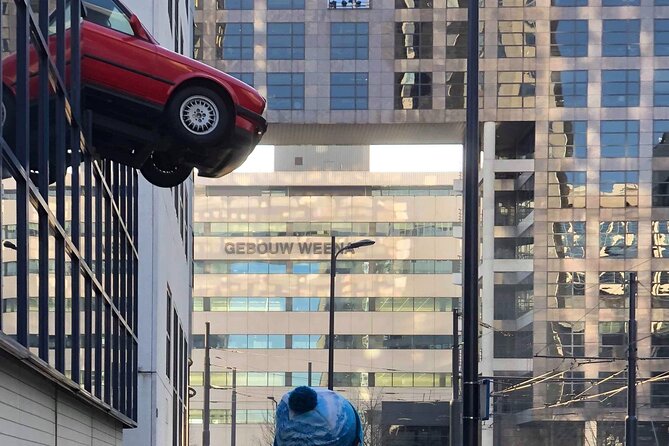
- Stop 2: Street sculptures and graffiti that tell Rotterdam’s real story
- Stop 3: Grote of Sint-Laurenskerk and the older city layer under the modern look
- Stop 4: Markthal by MVRDV and the market-hall chance to taste Rotterdam
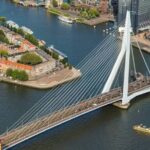
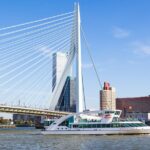
- Stop 5: Erasmus Bridge views plus Rem Koolhaas OMA context
- Final: The Cube Houses, plus Pencil and Apple clues to 20th-century housing thinking
- Price and value: what $274.03 gets you for 3 hours
- Who this Rotterdam walking tour suits best
- Simple advice to make the 3 hours feel easy
- Should you book this Rotterdam Travel to the Future walking tour?
- FAQ
- How long is the Rotterdam Travel to the Future walking tour?
- What language is the tour in?
- What does the price include?
- Are entrance tickets included?
- What is not included in the tour price?
- Where does the tour start and end?
- Is this a private tour?
- Is the tour near public transportation?
- Is the tour canceled for free if my plans change?
Key highlights worth your attention
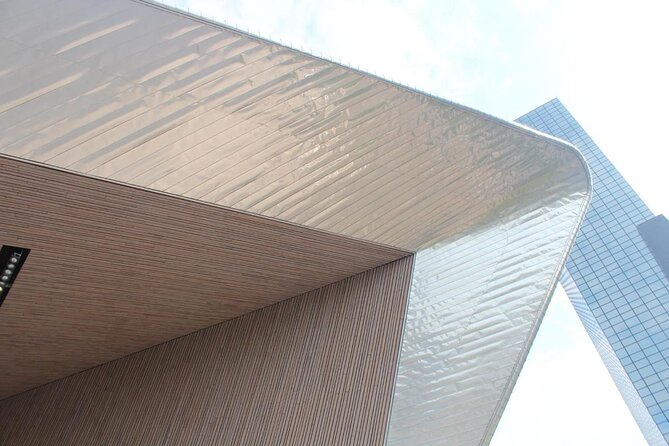
- Future ideas you can see up close: rooftop farming, urban bridges, and public-space design you can walk through
- Street art with meaning: sculptures and graffiti explained as Rotterdam’s social voice, not just decoration
- Markthal architecture by MVRDV: a market hall and housing block in one striking public space
- Landmark views from Erasmus Bridge: a quick stop that gives you context for the rest of the city
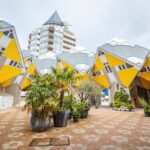
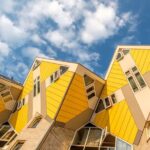
- Cube Houses and 20th-century housing experiments: the classic Rotterdam look, tied to social design
Why a Rotterdam future walk beats a normal sightseeing loop
Rotterdam has a talent for looking forward. This tour leans into that, but in a practical way: you spend your time on places where the city’s future thinking shows up as physical stuff—bridges you can cross, food halls you can enter, streets that feel intentional, and buildings that teach you how people live.
I like that it is not only shiny architecture. One part is street art and public sculpture, and another part is older city DNA near Grote of Sint-Laurenskerk and the old city hall building. That contrast matters, because Rotterdam’s modern style grew from rebuilding, changing priorities, and deciding what public life should be.
You should also expect a guide who explains with stories. In guides highlighted by past participants, the tone is not heavy on dates. The point is understanding how Rotterdam’s people think.
You can also read our reviews of more tours and experiences in Rotterdam.

Meeting at Ode aan Marten Toönder and ending at Erasmus Bridge
The tour starts at Ode aan Marten Toönder, Verlengde Nieuwstraat, 3011 GA Rotterdam, and it ends at Erasmusbrug, 3011 BN Rotterdam. That start-to-finish setup is helpful because it keeps you walking through the city instead of backtracking to the same point.
It is also set up as a private tour with only your group, and it runs in English. For planning, that matters: you can go at a sensible group pace, ask questions, and not have to compete with a large crowd for attention.
Mobile ticketing is included, and the route is near public transportation. So even though it is a walking tour, you’re not locked into a long trek if your schedule gets tight.
Stop 1: Innovative Rotterdam public spaces, yellow road energy, rooftop farming, and a Piet Oudolf garden
This is where the tour earns its name. You start with Rotterdam’s newer public-space ideas and you connect them to design choices that affect real daily life.
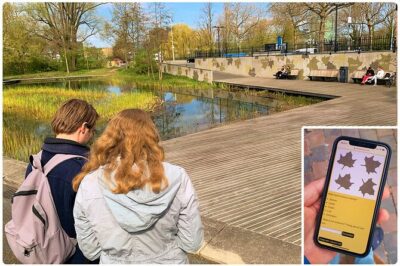
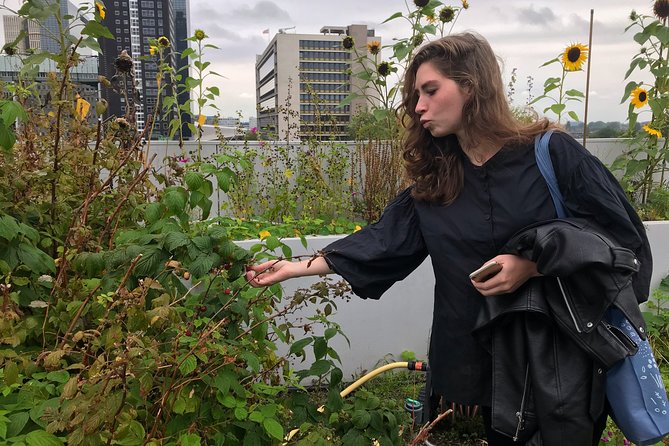
You’ll hear about the yellow wooden road, an eco-farm on a rooftop, and a garden designed by Piet Oudolf. Even if you only catch small details, it’s the kind of stop where the guide’s explanation turns into a way of seeing the city. You start looking at materials, planting styles, and the social purpose of space.
From the storytelling shared in past experiences, you may also encounter ideas around De Luchtsingel, a 390-metre wooden footbridge that connects the center and north of Rotterdam (opened in 2014). The same thread links to Schieblok and the longer viaduct area around it, which helps explain why Rotterdam treats public infrastructure like a design project rather than a boring necessity.
The rooftop farming angle is especially memorable. One account describes DakAkker as an open-air farm of about 1,000 m² where edible flowers, vegetables, and fruit are grown, with bees included. It also notes a small bistro space on site. Even if you do not eat there, the idea is the point: the city turns unused rooftops into something productive and public-friendly.
Practical note: this stop is light on paid entry time. Admission is listed as free, so you’re mostly absorbing what you see and what the guide tells you while you move.
Stop 2: Street sculptures and graffiti that tell Rotterdam’s real story
If Stop 1 is about future infrastructure, Stop 2 is about future attitudes. Rotterdam’s street art and public sculpture are treated like a living archive—messages, names, and social signals that change how you read neighborhoods.
You’ll stroll and repeatedly spot public art pieces, then the guide connects those visuals to stories you might miss on your own. The most useful part here is the interpretation. In one long review, graffiti was described not as random images but as part of how people claim space, remember relationships, and push back against social division. That’s the kind of explanation that makes you slow down.
What I like about this stop is that it is inclusive. If you love art, it feels satisfying. If you do not, it still teaches you how Rotterdam communicates through public surfaces.
Possible drawback: if you are hoping for only famous museum-style artwork, this stop might feel more street-level than you planned. But that is also the point—this is city life, not gallery life.
Stop 3: Grote of Sint-Laurenskerk and the older city layer under the modern look
At first glance, Rotterdam can seem like it jumped straight into the future. This stop pulls the thread back to older parts of the city.
You’ll see the old city hall building connection and Grote of Sint-Laurenskerk (Laurenskerk). The guide’s job here is to connect modern Rotterdam to older foundations, including key figures from the city’s past. The result is not a long lecture. It’s more like a quick reset: you remember that modern design has roots.
This stop is short, with a free admission listing. So plan to keep your attention sharp. Look at how the building reads next to newer development around it. That contrast is what makes it click.
If you only choose one historical moment on your Rotterdam trip, this is a smart one because it still fits the tour’s overall theme: the city’s future isn’t separate from its past.



Stop 4: Markthal by MVRDV and the market-hall chance to taste Rotterdam
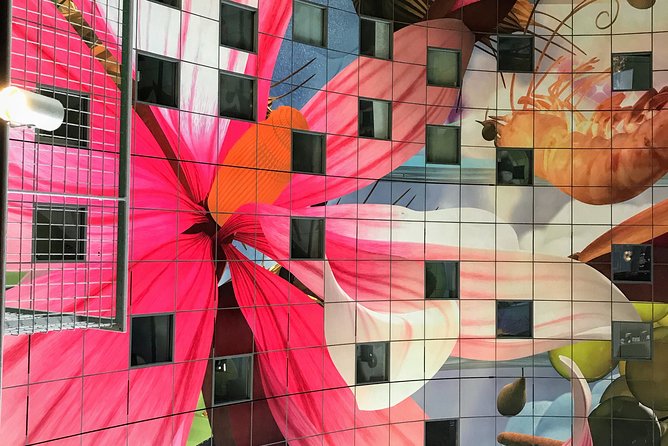
Markthal is the big architecture flex on this route. The tour uses it for two things: understanding the building and using the market as a tasting experience.
Markthal is described as a project by MVRDV that combines accommodation and a market hall. That mix is more than a design headline. It’s a practical idea—housing and daily food life stacked together, creating a public space that feels active even when the weather is typical Dutch gray.
You’ll also have time to walk through the market and try local options. The tour notes specific tasting ideas like herring, homemade truffle sausages, Dutch wine, farmer cheese, and ethical food. Even if you don’t eat those exact items, the point is the variety and the way the market works like a cultural snapshot.
Budget tip: coffee and snacks are not included in the tour price. So if you want to eat inside Markthal, go in ready to pay for your own tastings. The upside is you control what you buy—this is not an all-included meal deal where you feel stuck ordering.
How long is enough? You get about 30 minutes here. That’s enough for a quick loop, a couple of tastes, and getting your bearings. If you want a slow food moment, you might consider returning to Markthal later on your own.
Stop 5: Erasmus Bridge views plus Rem Koolhaas OMA context
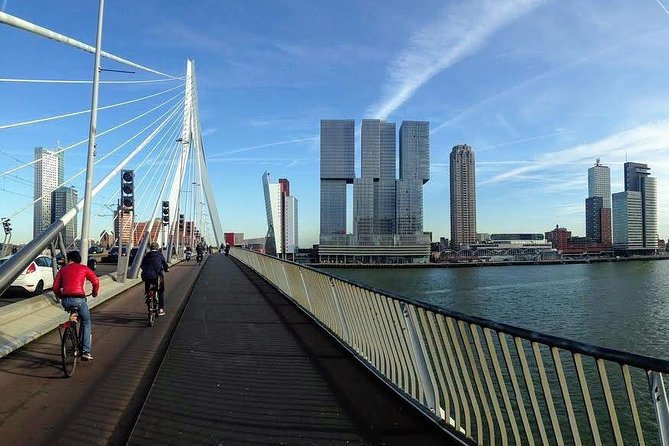
Then comes the view part. Erasmus Bridge is one of the best quick payoff stops, because it gives you scale. From there, you can understand how Rotterdam sits and how the city opens up.
The tour also ties the area to OMA by Rem Koolhaas. Even if you only catch a few visual cues, the guide’s explanation helps you connect the bridge to Rotterdam’s broader architectural brain.
This stop is about views and orientation—about 15 minutes. It’s short, but it works as a mental reset before the final architecture finish.
If you’re taking photos, do it early in the stop rather than waiting. Views can be fun, but you’ll lose time if you keep circling.
Final: The Cube Houses, plus Pencil and Apple clues to 20th-century housing thinking
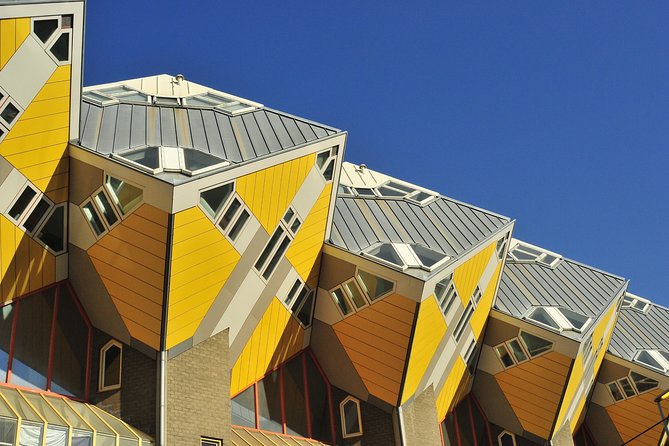
The Cube Houses are why many people come to Rotterdam. This tour uses them in a smarter way than just saying, yep, that’s the iconic spot.
You’ll learn about architectural movements tied to the 20th century and the role of social housing. The big idea: the Cube Houses are not only a gimmick. They represent how Rotterdam experimented with form to solve living and community needs.
The tour also mentions looking around famous neighboring objects like The Pencil and The Apple buildings. That matters because it helps you see Rotterdam as a cluster of design experiments, not isolated one-off sights.
What to do during your time here: slow down and watch the angles. The cubes, the surrounding buildings, and the street layout all tell the story of why this city looks the way it does.
Free admission is listed for the overall experience stops, so you should be able to enjoy the outside and context without extra ticket costs. If you want to go inside, you might need to plan extra time and spending, since entrance tickets are not included.
Price and value: what $274.03 gets you for 3 hours
At $274.03 per person, this is not a budget “walk and go” activity. The value comes from what is included: a certified guide, a structured route, and a private group format (only your group participates).
Also, the tour is designed around free admission stops, meaning the main costs are baked into the guide time rather than attraction tickets. That can make it feel more manageable than tours where you pay again and again for entry.
What is not included matters too. Coffee/tea, snacks, and entrance tickets are not part of the price. So if you plan to eat at Markthal, you’ll need extra budget. If you prefer to snack lightly instead of spending, you can bring your own drinks/snacks, but the tour itself does not provide them.
Is it worth it? It usually is when:
- You care about how design affects public life, not only what the buildings look like.
- You want a guide to connect street art, architecture, and city planning into one story.
- You’d rather pay for interpretation than spend extra time trying to figure everything out solo.
If you want a long, self-guided day with lots of stops you control, you might get similar value by planning your own route. But you’ll miss the guide-led connections that make this tour feel like Rotterdam’s future has a human voice.
Who this Rotterdam walking tour suits best
This tour is a strong match for architecture fans who also like city culture. It is also a good fit if you’ve already seen the most basic highlights and you want a more design-and-public-space angle.
Family-friendly can happen here. One account specifically mentioned a 7-year-old not getting bored, and that usually points to a guide who keeps the pace and explanations engaging.
Best for:
- First-time visitors who want a future-minded overview
- Repeat visitors who are tired of the usual route and want less obvious storytelling
- People who like photos but also like learning what they’re seeing
Less ideal for:
- Anyone who hates walking or needs frequent seating breaks
- People who want only indoor museum time (this is mostly streets and public spaces)
Simple advice to make the 3 hours feel easy
Wear shoes you trust. This is a walking tour with multiple stops, and Rotterdam can change its mood quickly.
Bring a small camera battery plan. You’ll want photos at Erasmus Bridge, Markthal, and the Cube Houses. Street art stops also reward patience, not speed.
If you care about food, decide in advance what you want to try at Markthal. The time is limited, so you’ll have a better experience if you have a short list instead of improvising everything.
Should you book this Rotterdam Travel to the Future walking tour?
I’d book it if you want Rotterdam explained through design choices you can actually walk to. The combination of public-space experiments (rooftop farming, urban bridges, special gardens), art on the street, and major architecture stops gives you a rounded feel for how the city thinks.
Skip it only if you’re mainly after classic museum interiors or you know you’re not comfortable with a concentrated outdoor walk. Otherwise, this is one of the smarter ways to spend half a day in Rotterdam when you want real context, not a checklist.
FAQ
How long is the Rotterdam Travel to the Future walking tour?
It runs about 3 hours.
What language is the tour in?
The tour is offered in English.
What does the price include?
The tour includes a certified guide. A mobile ticket is also used.
Are entrance tickets included?
Entrance tickets are not included. The listed stops have free admission, but the tour does not include paid entry items like additional attraction tickets if you choose to go inside.
What is not included in the tour price?
Coffee and/or tea, snacks, and entrance tickets are not included.
Where does the tour start and end?
It starts at Ode aan Marten Toönder, Verlengde Nieuwstraat, 3011 GA Rotterdam, Netherlands, and ends at Erasmusbrug, 3011 BN Rotterdam.
Is this a private tour?
Yes. It is a private activity, and only your group participates.
Is the tour near public transportation?
Yes, it’s near public transportation.
Is the tour canceled for free if my plans change?
Cancellation is free. You can cancel up to 24 hours in advance for a full refund.