REVIEW · THE HAGUE
The Hague: Old City Private Walking Tour
Book on GetYourGuide →Operated by Stadswandelkantoor · Bookable on GetYourGuide
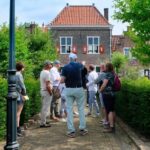
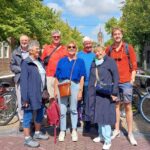
Regal power walks well in The Hague, especially when someone explains it as you go. This private 2-hour route is built around the city’s most official places, from the old Binnenhof complex to the present working palace areas.
I love how the walk mixes very old and very working government sites. You’ll see the 13th-century Binnenhof and also the current royal setting tied to King Willem-Alexander’s daily reality. I also like the pace: it feels relaxed, and you can ask questions as you move.
One thing to weigh: at $265 per group (up to 10) it can be pricey if you’re only a couple of people. If you can split the group cost, the value gets a lot better.
In This Review
- Key things I’d prioritize on this tour
- Where the tour starts: Central Station and an easy way in
- The two-hour format: what you actually get (and what you don’t)
- Binnenhof: stepping into the 13th-century core of Dutch power
- Houses of Parliament and the serious administrative buildings
- Royal palaces on a working route: Noordeinde Palace and beyond
- The stories you’ll carry with you: Charles V, Van Oldenbarnevelt, and the De Witts
- Voorhout and the lime-tree clue: why street design matters
- The “new town” architecture stop: contrast without whiplash
- Skip-the-line timing and why it changes your experience
- Guide quality and the relaxed, question-friendly pacing
- Price and value: $265 per group up to 10
- Practical tips to get more out of the walk
- Who this tour is for (and who might want a different option)
- Should you book The Hague: Old City Private Walking Tour?
- FAQ
- How long is the The Hague Old City Private Walking Tour?
- What is the price for this tour?
- Where do we meet?
- Is the tour private or shared?
- What’s included in the price?
- Are food and drinks included?
- Can we skip the line?
- What languages are available?
- Is the tour wheelchair accessible?
- How far in advance can I cancel for a full refund?
Key things I’d prioritize on this tour
- Skip-the-line with a separate entrance so you spend more time walking and less time waiting
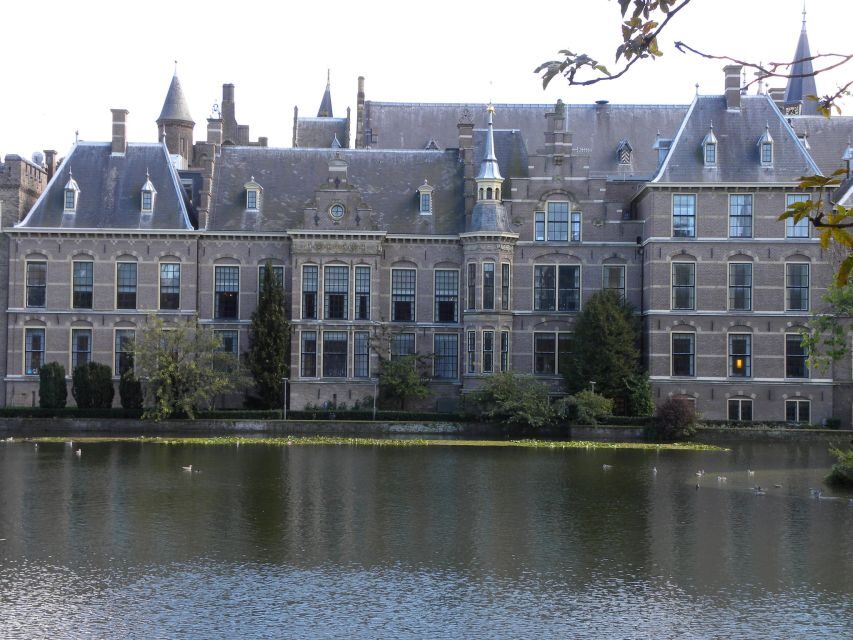
- Binnenhof’s 13th-century complex gives you the full “seat of power” context fast
- Houses of Parliament in The Hague plus other government buildings like City Hall and De Resident
- Noordeinde Palace as a present-day “working palace” angle, not just an exterior photo stop
- Sharp historic stories tied to Charles V and major political violence in Dutch history
- A question-friendly private format, which makes the tour feel personal
Where the tour starts: Central Station and an easy way in
The meeting point is simple: the hall of Central Station, in front of the small supermarket Albert Heijn to go. I like this because you’re already in the main hub of the city. You also avoid the stress of searching for a tiny address on side streets.
Because it’s a private group, the guide can shape the flow to your pace. In practice, that means if your group has mobility needs, you’re not stuck with a rigid “press on” schedule. The tour is listed as wheelchair accessible, which matters here because you’ll be walking through a central city area where routes and crossings can vary.
You can also read our reviews of more walking tours in The Hague


The two-hour format: what you actually get (and what you don’t)
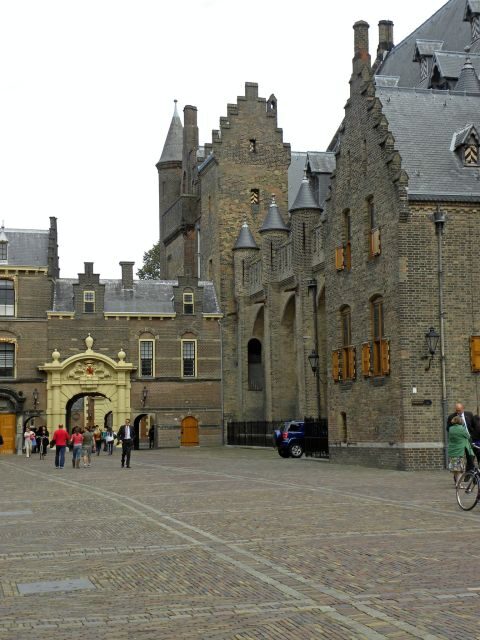
This is a tight walk. Two hours sounds short until you realize you’re covering a dense “power center” area: palaces, historic government buildings, and the older core around the Binnenhof.
Here’s the trade-off. You’ll get enough detail to understand the place, but you won’t have time for long museum-style stops. If you’re the type who likes to linger for 20–30 minutes at one building, plan to save that for later after your orientation walk.
The tour also avoids food stops. No food or drinks are included, so bring water if you run hot, and plan a coffee or snack after the walk.
Binnenhof: stepping into the 13th-century core of Dutch power
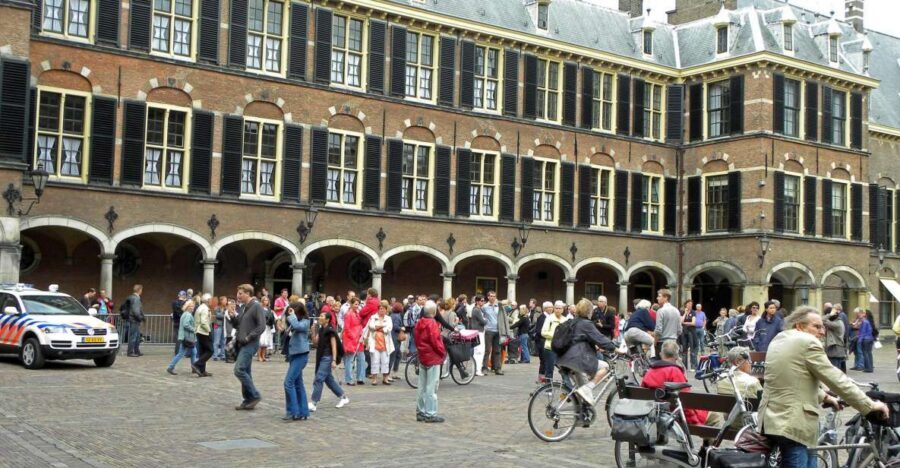
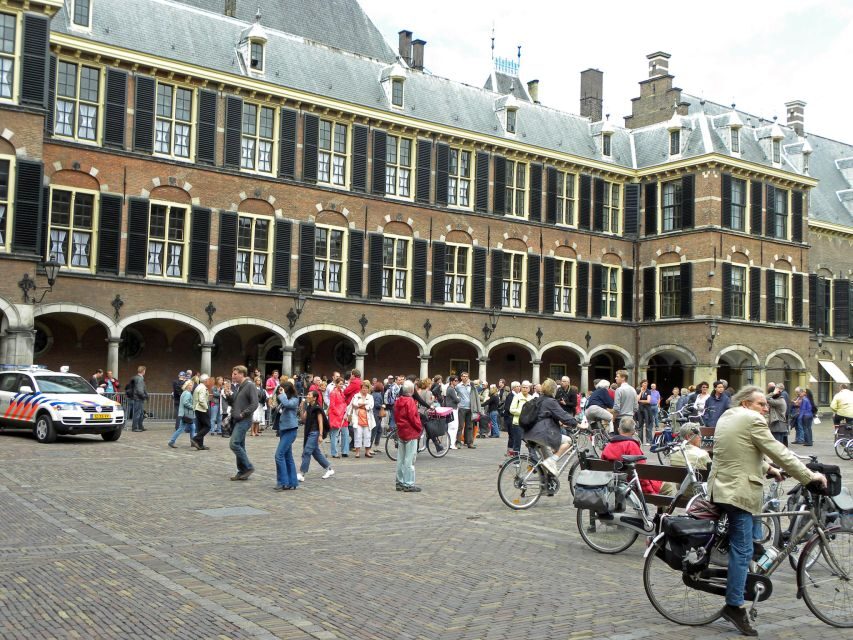
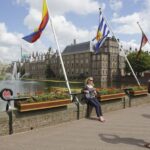
The star of the route is the Binnenhof, a complex originally developed in the 1200s. Even if you’ve seen photos of The Hague’s official buildings, walking through this area gives you something different: scale and layout. It helps you connect why this place became the seat of government and parliament.
What I find useful is that the guide doesn’t just point at facades. You get context for how the area grew from an older hunting residence connected to the Counts of Holland. Count Floris IV built an early version in 1230, and that starting point changes how you read what’s around you now. The streets and buildings stop feeling like random “pretty old architecture” and start feeling like a system built for rule, meetings, and state life.
Drawback to consider: because this is still an active government zone, you may have certain viewing limits depending on where you are along the walk and what areas are accessible at that moment. The good news is the guide’s job is to route you so you still get the key sightlines.
Houses of Parliament and the serious administrative buildings
One of the listed highlights is seeing the Houses of Parliament in The Hague. This is where the tour gets its name-realness. You’re not only admiring historic buildings; you’re seeing the spaces tied to how Dutch government has functioned over centuries.
Two other stops that anchor the modern city feel are City Hall and De Resident. These are the kinds of buildings that help you understand The Hague as more than a royal postcard. It’s a working administrative capital, and these structures give you that everyday “state machine” vibe.
For me, the value here is orientation. After the walk, you’re more likely to notice details on your own later—how city planning concentrates around institutions, how pedestrian movement lines up with major buildings, and how some areas look designed for formal arrivals.
Royal palaces on a working route: Noordeinde Palace and beyond
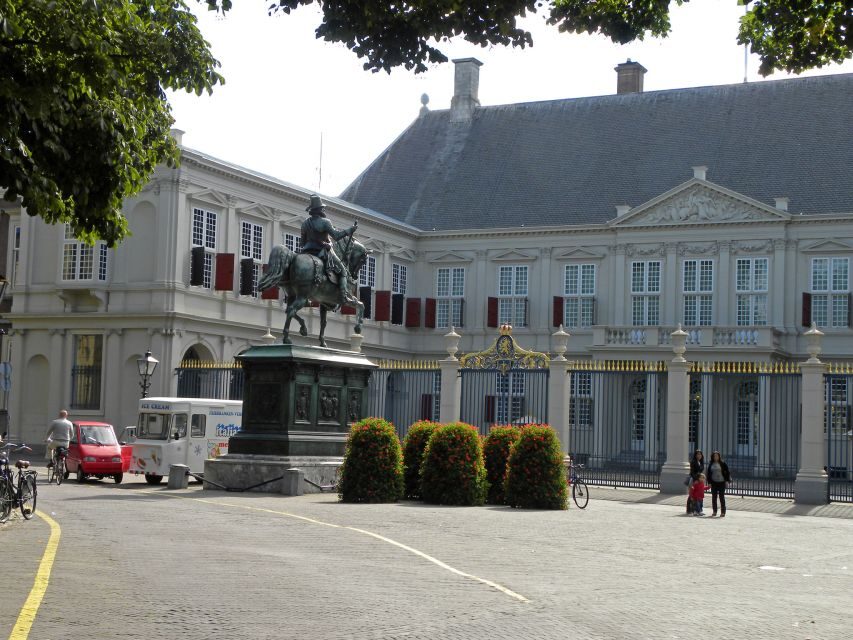
The tour includes palaces along the way, including Noordeinde Palace. What I like about this stop is that it’s framed as a working palace, not a frozen, untouchable monument.
You also get the angle that the current palace situation for the Dutch royals is tied to day-to-day reality, centered around King Willem-Alexander. That detail matters because it helps you picture the monarchy not just as ceremony, but as a present institution with operational space in the city.
If you’ve been to other European cities, you might expect the royal places to feel staged and far removed. Here, the walk brings you into the same streets where government and royal life overlap. That’s why this tour can feel more coherent than a random “see palaces and move on” route.



The stories you’ll carry with you: Charles V, Van Oldenbarnevelt, and the De Witts
This is where the tour becomes more than a building checklist.
You’ll hear how Emperor Charles V ordered the planting of four rows of lime trees in the Voorhout. That kind of detail sticks because it connects a visible street element to a specific political moment. After that, you’ll see the city’s design choices as intentional, not accidental.
You’ll also get two heavier, high-stakes political episodes:
- the dramatic decapitation of Van Oldenbarnevelt
- the assassination of the De Witt brothers
Those events aren’t just trivia. They explain why The Hague feels like it was built for power struggles, negotiations, trials, and enforcement. When your guide connects those crimes and punishments back to places you pass, the city’s seriousness makes more sense. Even if you don’t love dark history, it’s useful context for understanding why the buildings and institutions look the way they do.
One consideration: if your group doesn’t like violent political storytelling, you may want to flag that early. A good guide can still share the facts without turning it into a grim lecture.
Voorhout and the lime-tree clue: why street design matters
The Voorhout detail is small, but it’s the kind of clue that helps you read the city. Trees in a formal boulevard area are not just decoration. They’re structure—an axis, a rhythm, a way of shaping movement in front of important spaces.
When you know the lime trees were ordered by Charles V, you’ll likely start noticing similar “designed for rule” features elsewhere around The Hague. That’s the secret value of this tour: it trains your eye.
The “new town” architecture stop: contrast without whiplash
Another part of the tour takes you into a newer neighborhood area with striking architecture by top architects. The exact names of those architects aren’t provided here, so I won’t guess. But the purpose of this segment is clear: it gives you a contrast between older power spaces and the city’s later design direction.
This contrast works well in a 2-hour format because you’re not just walking backward in time. You see how modern planning and modern architectural taste still orbit the government-centered identity of The Hague.
If you like architectural variety, you’ll appreciate this reset. If you came specifically for medieval details, you may wish the older core got slightly more time. Still, the mix prevents the tour from becoming one-note.
Skip-the-line timing and why it changes your experience
The tour includes skip-the-line through a separate entrance. Even when a place is not complicated to reach, waiting can quietly eat your enthusiasm. Here, that small perk matters because the schedule is short already.
Using a separate entrance helps you keep momentum. In a private walking tour, tempo is everything. You want time to ask questions, take a few photos, and still feel like you got the full story without rushing.
Guide quality and the relaxed, question-friendly pacing
Language options include English, German, Dutch, and you’ll have a live guide for the whole walk. In the past, this type of tour stands or falls on whether the guide can explain without turning into a recitation.
The best sign here is the guide approach people describe: relaxed pace and space for questions. One guide name that comes up is Bert, known for telling lots of stories. That’s exactly what you want in The Hague: a guide who can connect official buildings to personalities, orders, and events.
If you’re traveling with teenagers or non-history people, that question-friendly style helps keep everyone engaged.
Price and value: $265 per group up to 10
Let’s talk money honestly.
The price is $265 per group for up to 10 people. That means your per-person cost depends on how many you bring:
- If you have 10 people, it’s about $26.50 per person
- If you have 4 people, it’s about $66.25 per person
- If you have 2 people, it’s about $132.50 per person
So this tour is best value when you can share it. The private format is part of what you’re paying for, including a guide and a route shaped to your wishes.
Also remember what you do get for that fee: a 2-hour walk with specific stops (Binnenhof, Houses of Parliament, Noordeinde Palace, City Hall, De Resident) plus focused context like Charles V’s lime trees and the Van Oldenbarnevelt and De Witt assassinations.
If you’re a solo traveler or just a couple, you might consider whether another walking tour with a lower per-person cost could satisfy the basics. But if you want control, questions, and a tight route that makes the official district readable fast, this is a smart use of your time.
Practical tips to get more out of the walk
A few simple moves make this kind of tour much better:
- Wear comfortable shoes. You’re walking a central city route for 2 hours.
- Bring a bottle of water. Food and drinks aren’t included.
- Come with one or two questions. The tour works best when you use the guide’s expertise.
- If you care most about royal sites, tell the guide at the start. They can emphasize the palace route more strongly.
- If you prefer lighter history, tell them early so the heavy episodes are handled in a way that fits your group.
Who this tour is for (and who might want a different option)
This tour fits you if you want:
- a quick orientation to The Hague’s seat of government and royal connection
- a private experience where you can ask questions
- a route that connects architecture with political events
It may not fit you as well if:
- you want a super long, museum-style visit with lots of indoor time
- you dislike any discussion of political violence and assassinations
- you’re traveling as a solo or couple and don’t want to pay a premium for privacy
Should you book The Hague: Old City Private Walking Tour?
Book it if you like the idea of getting The Hague’s “official heart” in one focused 2-hour window. The combination of the Binnenhof, Houses of Parliament, and Noordeinde Palace gives you a clear story arc: older power centers evolve into working government and living royal space.
Skip it if budget is your top driver and you’re not splitting the group cost. At $265 per group, it’s a better deal when you can bring friends or family.
If you do book, do it with an eye for questions and context. This tour is at its best when you’re willing to treat the buildings like clues.
FAQ
How long is the The Hague Old City Private Walking Tour?
It lasts 2 hours.
What is the price for this tour?
It’s $265 per group, up to 10 people.
Where do we meet?
Meet in the hall of Central Station, in front of Albert Heijn to go.
Is the tour private or shared?
It’s a private group.
What’s included in the price?
A 2-hour walk with a guide and VAT are included.
Are food and drinks included?
No, food and drinks are not included.
Can we skip the line?
Yes, there is a separate entrance to help you skip the line.
What languages are available?
The live guide is available in English, German, and Dutch.
Is the tour wheelchair accessible?
Yes, the tour is wheelchair accessible.
How far in advance can I cancel for a full refund?
You can cancel up to 24 hours in advance for a full refund.