REVIEW · ROTTERDAM
Rotterdam: Highlights, Gems, Architecture & History Walk
Book on GetYourGuide →Operated by Rottourdam · Bookable on GetYourGuide
Rotterdam doesn’t do boring. This guided walk connects architecture past, present, and future with WWII hardship and harbor-era growth, using photo sheets to show how the city has changed. I love the way the tour makes big ideas feel physical as you move from skyline viewpoints to street-level details, and I especially like ending in De Markthal with practical food tips. One drawback to plan for: it’s a brisk walk of about 5 kilometers and roughly 11,000 steps, so comfortable shoes matter.
Your guide, Yoreh, and sometimes Elmer, bring Rotterdam to life with stories that don’t stay in the abstract. You’ll also get structure for taking photos, plus a halfway break with stroopwafels that keeps energy up. The consideration for some people is physical: expect standing for longer stretches, some stairs, and the tour is not recommended for travelers with back, hip, or foot issues or for those who are highly pregnant.
In This Review
- Key Highlights You’ll Actually Feel on the Walk
- Rotterdam’s Architecture Tells a Story You Can Walk Through
- The Guide Makes It Click: Yoreh’s Stories and the Photo Sheets
- The Early Roots: From the Rotte River to Harbor Power
- WWII, Then Rebuilding: Why Rotterdam Looks the Way It Does
- Depot Boijmans Van Beuningen: Art Where the City Moves
- Veerhaven to Leuvehaven: The Harbor Belt and Its Details
- Erasmusbrug: The Skyline View With a Resilience Story
- Oude Haven and the Maritime District: Past Life on the Water
- Cube Houses (Overblaak): The Geometry That Feels Like a Point of View
- Markthal: Modern Food Hall as Your Ending Point
- Pace, Comfort, and Who Should Book This Walk
- Price and Value: Why $48 Can Feel Like More Than a Walk
- Photo Spots, Food Tips, and What to Do After Markthal
- Should You Book This Rotterdam Architecture and History Walk?
- FAQ
- How long is the Rotterdam Highlights, Gems, Architecture & History Walk?
- What is the price per person?
- What are the main places you’ll see on the walk?
- Do you enter the Cube Houses?
- What food is included?
- Is there a restroom break?
- What languages is the guide available in?
- Is the tour wheelchair accessible?
- What should I wear or prepare for because of the pace?
- Can I get a full refund if I cancel?
Key Highlights You’ll Actually Feel on the Walk
- Old-to-future architecture comparisons using A3 visual sheets for now-and-next planning
- Cube Houses (Overblaak) area walking time, with optional inside access after the tour
- Harbor history route through Veerhaven, Leuvehaven, and Oude Haven viewpoints
- Erasmus Bridge skyline moments tied to Rotterdam’s resilience story
- Markthal finish at Market Hall, with the guide pointing you toward what to eat
- Small-group feel plus photo patience, even when the group is just one or two people
Rotterdam’s Architecture Tells a Story You Can Walk Through
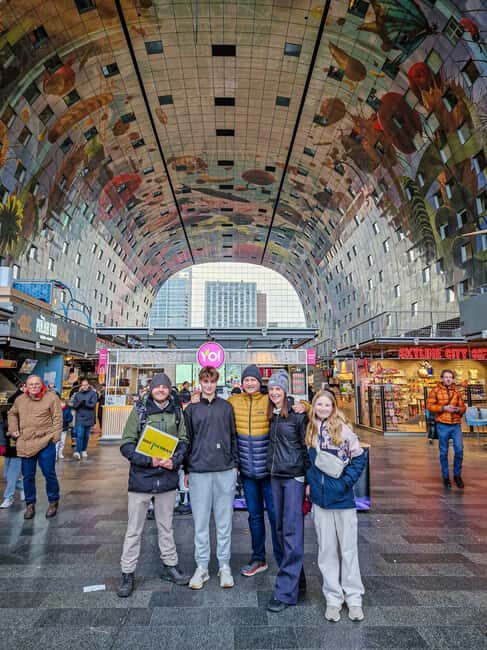
Rotterdam is the kind of city where buildings aren’t just scenery. They’re answers—answers to flooding fears, rebuilding after war, and constant redesign of urban space. That’s why this walk works so well: you’re not just seeing famous stops. You’re learning how the city thinks, then watching those ideas show up in steel, brick, modern food halls, and bridge lines.
I like the tour’s tight focus. It’s centered on architecture and city planning, then threaded with history from early roots to the WWII shock and the rebuilding that followed. You come away with a sense of cause and effect, not a pile of facts.
And yes, you still get the classics: the Erasmus Bridge for the big-picture skyline, De Markthal as a modern anchor, and the Cube Houses area for that instantly recognizable Rotterdam trick of geometry. What makes the experience feel different is the way the guide explains why these places exist and how they connect to the city’s future plans—not just what they look like.
You can also read our reviews of more walking tours in Rotterdam


The Guide Makes It Click: Yoreh’s Stories and the Photo Sheets
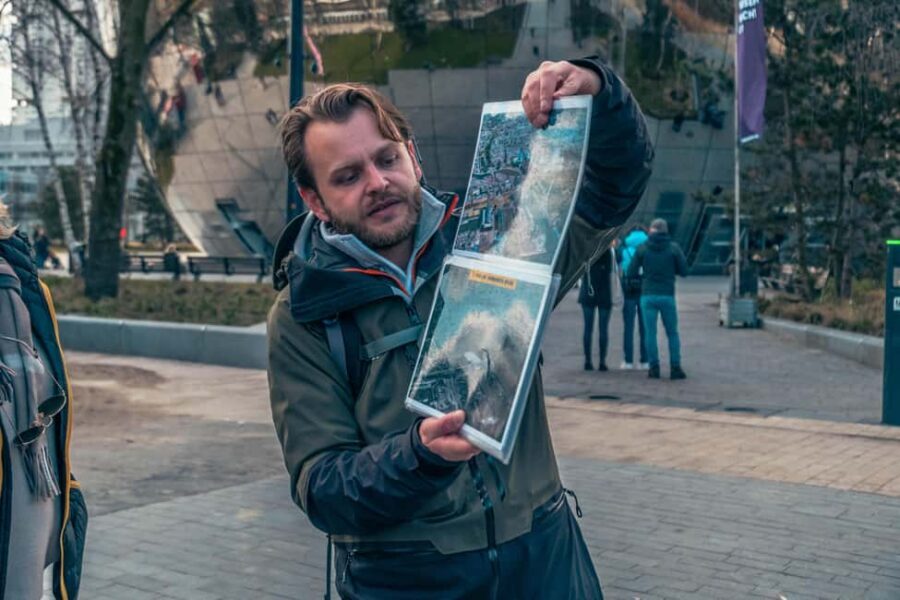
A good architecture walk can turn dry fast. This one doesn’t, because the guide uses visuals as part of the storytelling. You’ll be shown A3 image sheets that help you understand what you’re looking at now, what used to be there, and what’s planned next. It’s like carrying a small timeline in your pocket.
Both Yoreh and Elmer are highlighted in recent experiences for a clear reason: they don’t rush. People note that the guide stops when it matters, gives time for photos, and answers questions without making you feel like you’re holding things up. One review even pointed out that the guide waited while a solo traveler took pictures of unexpected wildlife (yes, birds can become a photo moment when the guide notices them).
If you like tours that feel personal, the small-group setup helps. Even when there’s only a couple of people, the pacing stays human. You’ll hear plenty of practical tips too—where to eat after the walk, where to aim for good photos, and what else is worth your time once you’re oriented.
The Early Roots: From the Rotte River to Harbor Power
The walking route is built around the idea that Rotterdam’s identity was shaped early and then rebuilt hard. The start frames the city’s origin on the banks of the Rotte River, dating back to the 13th century. That matters because Rotterdam’s rise wasn’t random—it was tied to trade, settlement, and the pull of water routes.
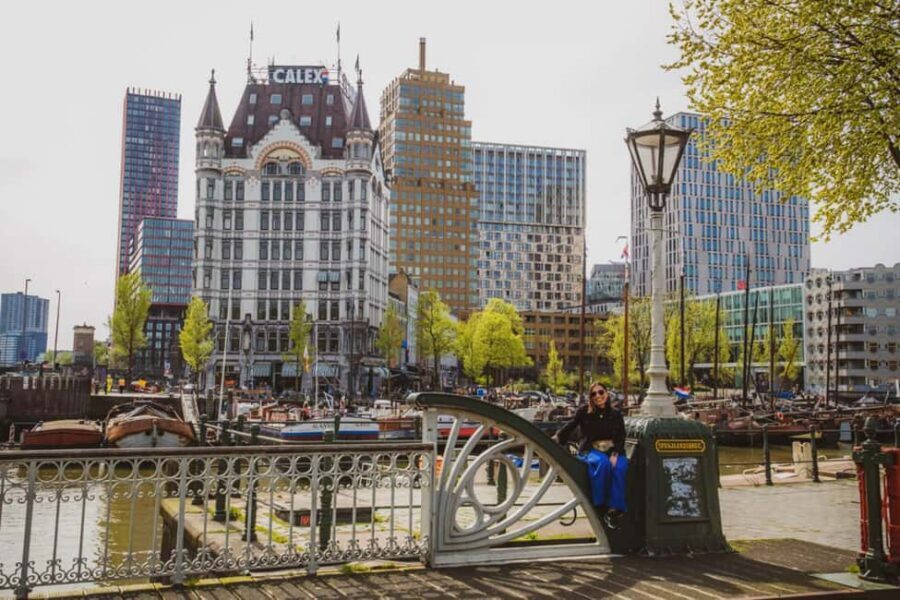
From there, the guide connects Rotterdam’s growth to its harbor power, explaining how the city became one of Europe’s major maritime hubs. You’ll understand why the harbor districts and port-adjacent streets feel like more than just background. They are part of the city’s engine.
This section also helps you read the city. When you later see harbor-related architecture and infrastructure, you’ll know what kind of logic shaped it—work, shipping, rebuilding, and the need to fit life into tight urban spaces.
WWII, Then Rebuilding: Why Rotterdam Looks the Way It Does
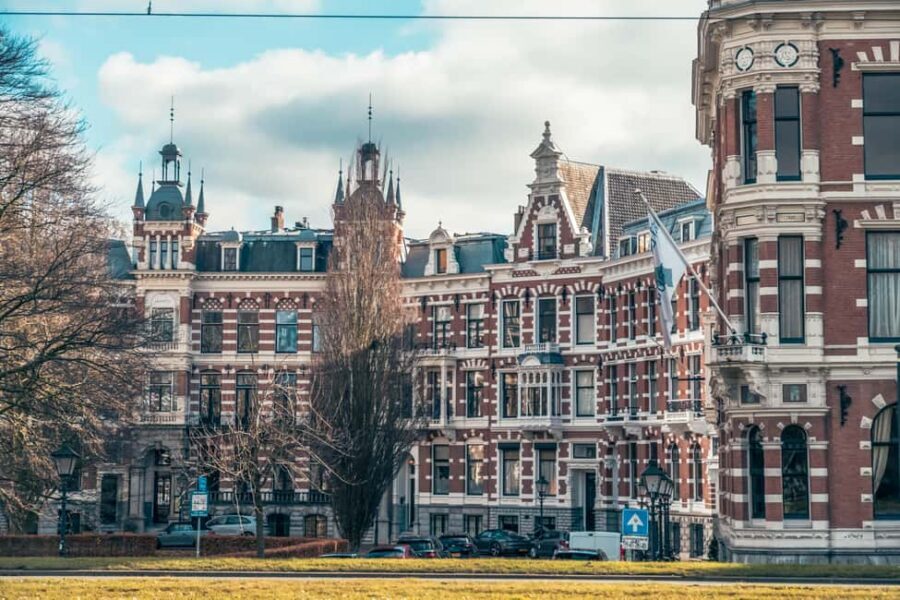
Rotterdam’s story includes destruction, and the guide doesn’t skate past it. You’ll hear how WWII bombing and the invasion hit the city and forced a reinvention. This is one of the most emotional parts of the walk, and it’s also one of the most practical for your understanding.
Here’s the value: once you grasp the WWII impact, you stop assuming that every building form is a centuries-old tradition. A lot of what you see reflects choices made during rebuilding—choices about modern materials, new city layouts, and future-facing design.
It’s the difference between sightseeing and comprehension. You can’t fully understand Rotterdam architecture without that context. The guide uses the history as a lens for the present, which makes the modern buildings feel earned rather than random.
Depot Boijmans Van Beuningen: Art Where the City Moves
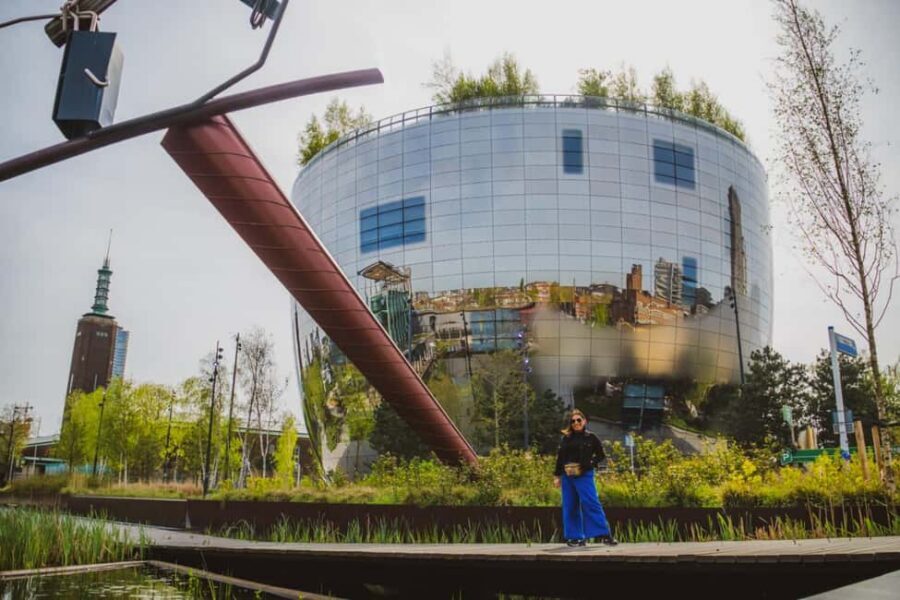
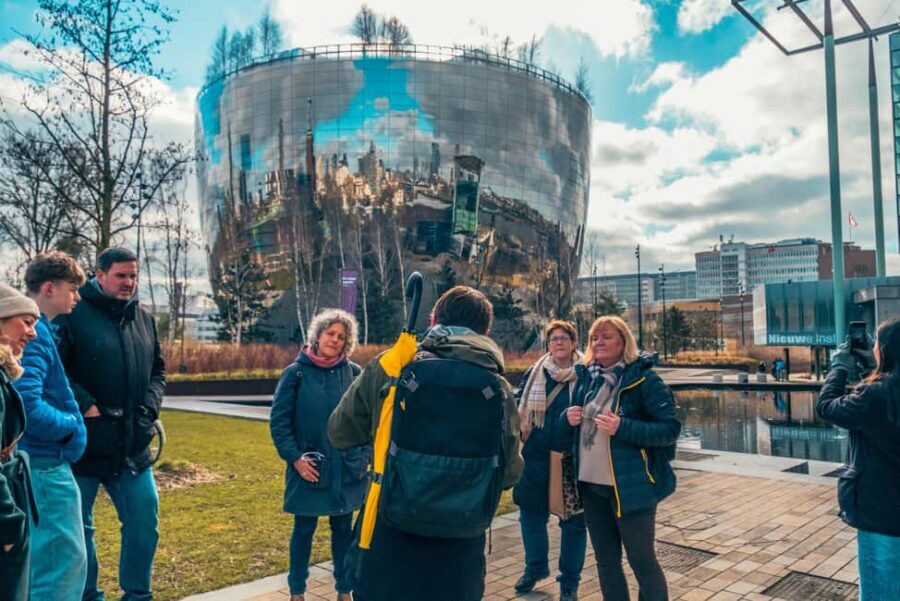
One of the early stops on the pass-by list is Depot Boijmans Van Beuningen. Even when you’re not doing a full museum visit, the stop signals something important: Rotterdam’s culture isn’t separated from its urban transformation. Art and storage, creativity and planning, sit next to everyday city function.
Why you’ll care: this makes the city feel like a living system. Rotterdam isn’t only “architecture sightseeing.” It’s industry, logistics, public space, and cultural infrastructure all at once.
If you’re the type who likes to see where a city houses its creative brain, this stop gives you a direction for what to look up later.
You can also read our reviews of more historical tours in Rotterdam
Veerhaven to Leuvehaven: The Harbor Belt and Its Details
The route walks past Veerhaven and then moves toward Leuvehaven for a short but meaningful stretch. These harbor-adjacent areas help you feel Rotterdam’s maritime identity in your legs, not just on a postcard.
What you’ll notice (and what the guide points out) is how the city’s layout reflects water access. The harbor districts are shaped by the relationship between shipping routes and land use. Even if you aren’t a maritime expert, you’ll leave with a better sense of how the city’s function shaped its streets and views.
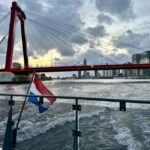
This is also where the skyline starts to matter. You’ll get that familiar Dutch mix of clean sight lines, water, and city geometry. And the guide includes tips for photo spots, so you’re not just guessing where the best angles are.
Erasmusbrug: The Skyline View With a Resilience Story
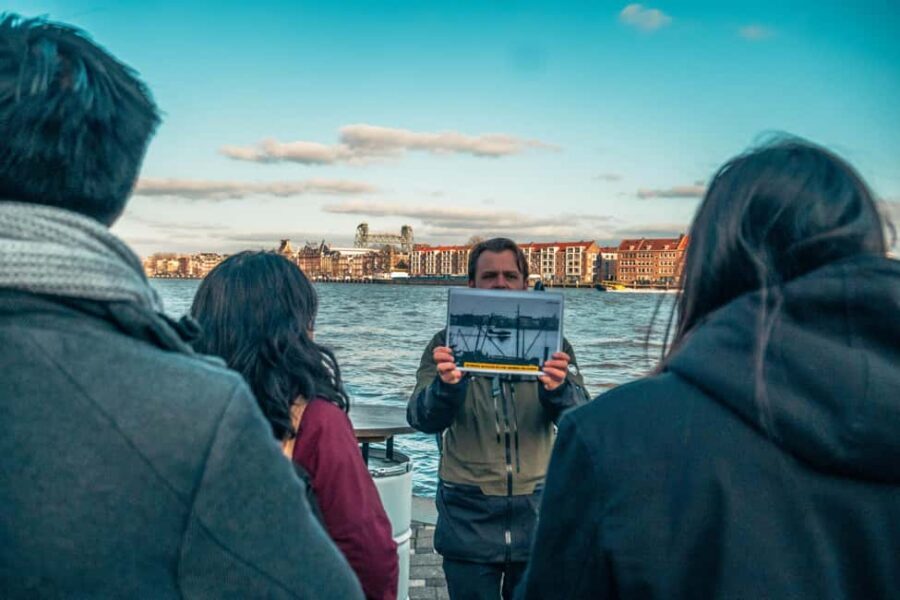
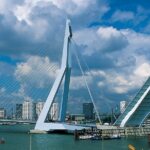
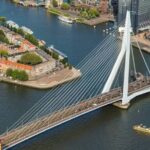
No Rotterdam architecture review is complete without the Erasmus Bridge. Here it works on two levels: visually and emotionally. Visually, it’s a bold line across the harbor space. Emotionally, the guide ties it back to Rotterdam’s rebuilding and resilience.
This stop is ideal for a pause. It gives you time to orient your brain. After you’ve heard the history and seen the harbor route, the bridge becomes a summary of what Rotterdam is trying to be now: forward-looking, connected, and rebuilt to keep moving.
If you’re traveling with someone who gets tired of “too much talking,” this is a good moment. The bridge gives your eyes a break while your guide’s explanation gives your mind something to hold onto.
Oude Haven and the Maritime District: Past Life on the Water
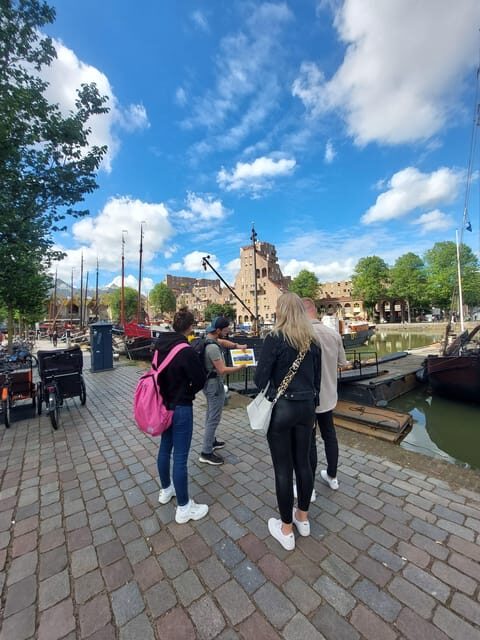
As the walk continues, you pass Oude Haven and move through the Maritime District area. This part is less about one single iconic building and more about atmosphere—how Rotterdam’s older harbor character fits into the city’s modern form.
I like this segment because it helps you build an internal map. You start to understand the city as zones with different roles:
- working harbor life and logistics spaces
- areas where historic identity is preserved or referenced
- modern redevelopment that changes how people live and move
That’s where an architecture tour becomes genuinely useful. You don’t just learn what to see next—you learn how to predict what the city will feel like in different neighborhoods.
Cube Houses (Overblaak): The Geometry That Feels Like a Point of View
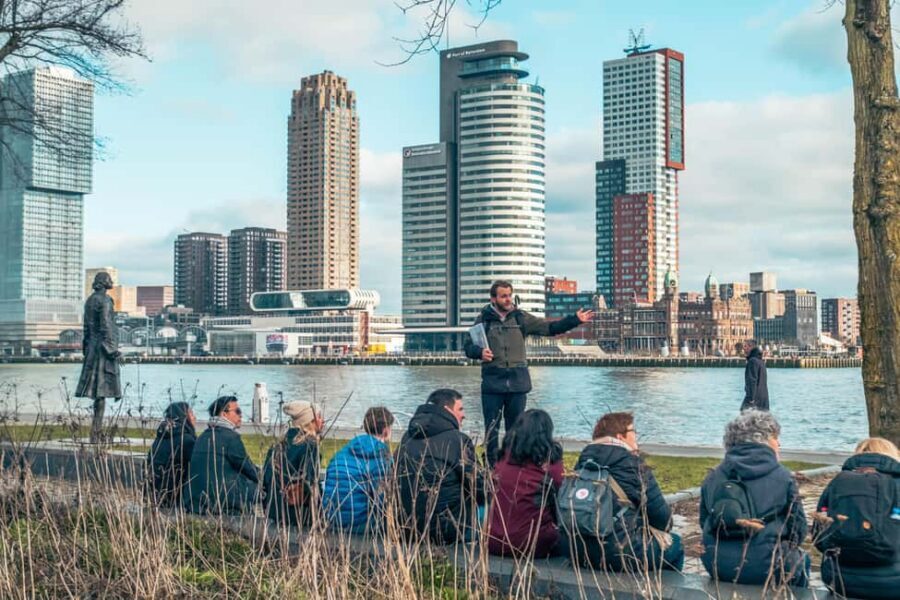
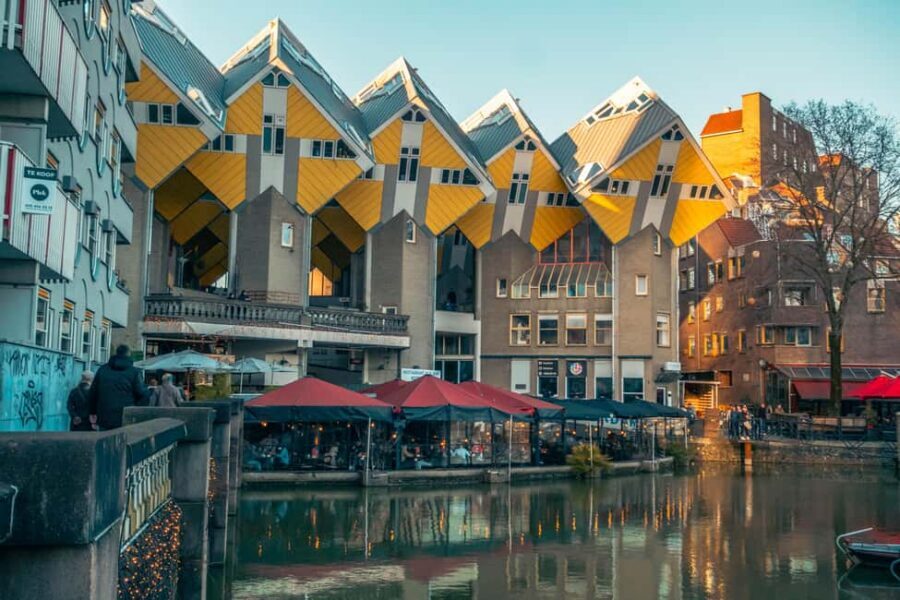
The Cube Houses area at Overblaak is one of the most memorable stops because it’s instantly recognizable. But the tour adds value by explaining what you’re seeing and why it’s such a Rotterdam statement.
Even if you choose not to go inside, you’ll walk through the surrounding area and the guide helps you connect form to thinking. You’ll also have the option to visit inside cube spaces after the tour. That makes sense for most people: you get the structure and meaning during the walk, then you decide later if you want the interior view.
Practical tip: because you’ll be moving through areas where photos matter, wear shoes that handle uneven sidewalk moments and quick stops. Reviews consistently point out the pace, and this is where it pays off.
Markthal: Modern Food Hall as Your Ending Point
Finishing inside the Markthal (Market Hall) is smart. By the time you reach it, you’ve already done the thinking part—history, rebuilding, planning, and architecture comparisons. Now the city rewards you with something sensory: food.
You’ll be guided toward places to eat in De Markthal, and the guide’s recommendations are part of what makes the tour feel like a complete experience rather than a disconnected route. Even if you’re not a big food market person, Markthal is worth it for the setting and for the way it represents Rotterdam’s present-day urban style.
And yes, there’s a reason multiple people like that the walk ends here: it turns the tour into a ready-to-go lunch plan. When you’re sightseeing all morning or afternoon, that kind of payoff saves time and reduces decision fatigue.
Pace, Comfort, and Who Should Book This Walk
This isn’t a slow stroll. The tour covers about 5 kilometers with roughly 11,000 steps and a brisk pace. There are restroom breaks halfway and sitting opportunities during explanations at selected locations, but you should still plan for standing and walking most of the time.
That pace makes it great for:
- first-time visitors who want a fast orientation with real context
- architecture and city-planning fans
- people who enjoy photo stops and don’t mind walking between them
- families with teens who can handle a longer walk and appreciate visuals
It may be a rough fit for:
- anyone with back, hip, or feet problems (not recommended)
- people who are highly pregnant (not recommended)
- travelers who need frequent seating and low-impact movement
Wheelchair access is listed, and the route can avoid steps where possible. Still, expect that the tour involves stairs somewhere on the overall path and longer standing periods. If you’re planning for mobility needs, I’d treat this as a tour where you should contact the provider if you want specifics on your route comfort.
Price and Value: Why $48 Can Feel Like More Than a Walk
At $48 per person, you’re paying for a few things at once:
- a professional local guide covering past, present, and future architecture and planning
- small-group or flexible setups that still deliver personal attention
- photo materials and visual aids (those A3 sheets aren’t just a nice-to-have)
- included treats like stroopwafels halfway
- practical end-point value in Markthal with dining suggestions
When a tour costs this much in a major city, you want to know what’s included beyond standing around looking at buildings. Here, the value is in the explanation method and the structure of the route. You get historical context tied directly to what you see next, so it doesn’t feel like “random stops with a lecture.”
Also worth noting: some reviews highlight the guide’s consistency, including not canceling even when there were very limited bookings in low season. That matters if your travel days are tight and you’re relying on a shared tour working as planned.
Photo Spots, Food Tips, and What to Do After Markthal
A lot of walking tours end with a goodbye. This one tends to end with a starting point. The guide includes tips for good photo locations, and during the route there’s time to stop and shoot without feeling scolded.
The food part is also practical. You get suggestions for what to eat in Markthal, and because the tour ends there, you can act right away. That saves time later, especially if you’re hungry and your legs are tired.
If you want one easy planning move: after the tour, treat Markthal as your lunch anchor, then build the rest of your afternoon around whichever neighborhoods grabbed your attention during the harbor-to-bridge-to-cubes-to-market flow.
Should You Book This Rotterdam Architecture and History Walk?
Book it if you want Rotterdam explained the way locals understand it: as a city shaped by water, war, and constant redesign. You’ll get the major highlights—Cube Houses, Erasmus Bridge, and Markthal—but the real payoff is the story structure, including WWII rebuilding and future planning shown with A3 visual aids.
Skip or reconsider if you’re trying to minimize walking or standing. This tour is built for movement, not for long seated museum-style pacing. If you need a very relaxed itinerary, you might be happier with a shorter stop-based program.
If you’re a first-timer with one half-day to learn the city’s logic, this is an efficient, high-value way to do it—and you’ll leave with a mental map you can use for the rest of your trip.
FAQ
How long is the Rotterdam Highlights, Gems, Architecture & History Walk?
The tour lasts about 2 to 3 hours, depending on the route and pacing.
What is the price per person?
It costs $48 per person.
What are the main places you’ll see on the walk?
You’ll pass by key areas including Depot Boijmans Van Beuningen, Veerhaven, Erasmusbrug, Leuvehaven, the Maritiem District, and Oude Haven, and you’ll visit the Markthal. You’ll also walk through the Cube Houses (Overblaak) area.
Do you enter the Cube Houses?
The tour walks through the Cube Houses (Overblaak) area, and visiting inside a cube is available after the tour. The listing notes it is about a 1-minute walk to do so.
What food is included?
You get stroopwafels halfway as a typical Dutch snack, and the guide offers suggestions for where to eat in De Markthal.
Is there a restroom break?
Yes. There are restroom breaks, including a break halfway through the walk.
What languages is the guide available in?
The live guide speaks Dutch and English.
Is the tour wheelchair accessible?
It is listed as wheelchair accessible, with stairs and steps avoidable on the route when possible. The tour still includes walking, and you should be aware that there may be stairs and standing for longer periods.
What should I wear or prepare for because of the pace?
The tour covers around 11,000 steps and about 5 kilometers. Wear good walking shoes and be ready for a steady pace to finish in time.
Can I get a full refund if I cancel?
Yes. Free cancellation is offered up to 24 hours in advance for a full refund, and there’s also a reserve now & pay later option.