REVIEW · UTRECHT
Utrecht Private Walking Tour With A Professional Guide
Book on Viator →Operated by Global Guide Services · Bookable on Viator
Utrecht’s past is walking distance from you. This private Utrecht walking tour uses a local, English-speaking guide to connect the city’s origin as Roman Traiectum all the way to modern reconstruction, with major stops like Dom Tower and Neude Square. You’ll get a clear story line instead of just a string of photos.
I especially like the private pacing for your group, which makes it easier to ask questions and slow down when something clicks. And I love that the route includes the canal walk along Oudegracht, so history doesn’t just live in churches and plaques.
One consideration: this is about 2 hours, so if you want extra time for long interior visits or you’re chasing only one building, you may wish you had more time to linger.
In This Review
- Key things to know before you go
- Utrecht makes sense with a guide (and a short route)
- Meeting at Neude and keeping the walk easy to follow
- From Roman Traiectum to the city’s name
- Domkerk and Utrecht’s Christian powerhouse
- Squares, the city hall, and the pulse of daily life
- Oudegracht canal: the best “photo plus meaning” stretch
- Independence, the Republic, and industrial-era shifts
- World War II scars and modern reconstruction
- Guides can make or break a short history walk
- Price and value: $313 per group for up to 15
- Who this tour is best for (and who might want something else)
- Should you book this Utrecht private walking tour?
- FAQ
- Where does the Utrecht private walking tour start?
- How long is the tour?
- Is this a private tour or shared with others?
- Is the tour in English?
- What’s included in the price?
- Are entrance fees included?
- How does the tour ticket work?
- What is the cancellation policy?
Key things to know before you go
- Private guide, your group only: a calmer pace with room to ask questions.
- Roman to WWII, in one walk: the guide ties dates to places you can actually see.
- Big Utrecht landmarks: Dom Tower, Domkerk, and Neude Square anchor the story.
- Oudegracht canal time: great for photos and for understanding how the city grew around water.
- Church stops with context: you’ll connect Christianity and trade to what you see on the street.
- Customizable on the spot: you can steer the guide if your interests shift mid-walk.
Utrecht makes sense with a guide (and a short route)
Utrecht is one of those Dutch cities where the center feels compact enough to walk, but layered enough to confuse you if you go solo. The beauty here is not speed. It’s that a guide turns streets and buildings into a timeline you can track as you go.
This tour is built for a first visit, but it also works if you’ve been here before and want the story behind what you’re already noticing. In two hours, you’ll connect why Utrecht grew, why it mattered for Christianity in the north, and why it had strategic value in later conflicts.
You’ll also spend a lot of time where locals actually move: squares, main streets, and the canal-edge streets around Oudegracht. That matters, because you’ll see the city as a living place, not just a postcard set.
You can also read our reviews of more tours and experiences in Utrecht.

Meeting at Neude and keeping the walk easy to follow
The tour starts at Neude, 3512 Utrecht, and it ends back at the same point. That round-trip setup is practical: you don’t have to plot a finish into your day or worry about transportation gaps.
It’s also near public transportation, which helps if you’re arriving by train and want to get oriented without losing time. If you’ve got a tight schedule in Utrecht, this “start and finish at Neude” structure makes it simpler to slot in.
Because it’s private, the guide can also adjust pacing to your group. Some guides in past groups met travelers at the train station and then walked at an unhurried pace, which is a nice reminder: you’re not stuck to a rigid script that only works for one kind of traveler.
From Roman Traiectum to the city’s name
The story begins early, when Utrecht’s roots trace back to the Roman era and the place known as Traiectum. Standing in the modern center while thinking about Roman crossings helps you understand why Utrecht developed where it did, rather than treating it like it appeared out of nowhere.
From there, the guide moves through major turning points: Germanic invasions and the Carolingian Empire, which helped shape the region’s political and religious direction. The point is not memorizing dates. It’s learning why later Utrecht leaders and church builders had a foundation to build on.
If you like history that explains cause-and-effect, this part tends to click fast. Roman roads and crossing points become legible later when you see how the city’s core stayed important.
You’ll also start spotting how the Christian era and trade power grew together. Utrecht wasn’t just a religious stop. It was a place where influence moved along routes, and that shows up in the kinds of buildings you’ll see.
Domkerk and Utrecht’s Christian powerhouse
One of the biggest draws is how the tour uses major church sites as evidence. You’ll see Domkerk and the towering Dom Tower, plus other major religious landmarks like Sint-Catharinakathedraal and Sint-Willibrordkerk.
When a guide ties Christianity in the north to real locations, the churches stop feeling like isolated monuments. You start to understand them as statements of power, identity, and organization. That’s also where the tour can feel more satisfying than a walk focused only on facades.
Some groups specifically enjoyed learning while going into a cathedral. That’s exactly the advantage you want from a guided route: even if you’re standing in front of something famous, you’ll know what to look for next, and why it matters in Utrecht’s timeline.
You might also pass by places like the Oude Hortus and Janskerk, which help broaden the sense of what Utrecht’s center was for across centuries. Even a brief stop can give you a mental map of which institutions mattered at different times.
Squares, the city hall, and the pulse of daily life
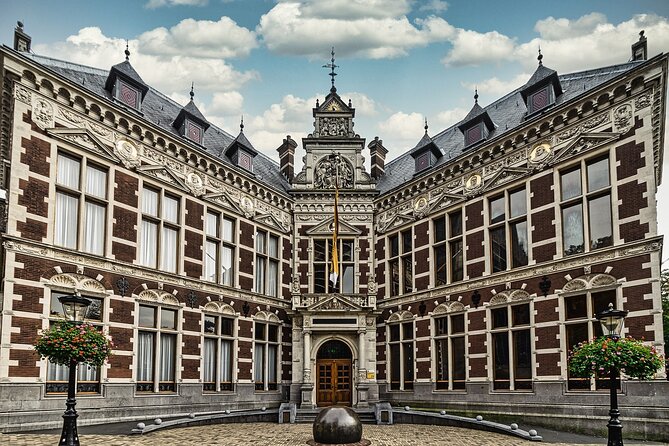
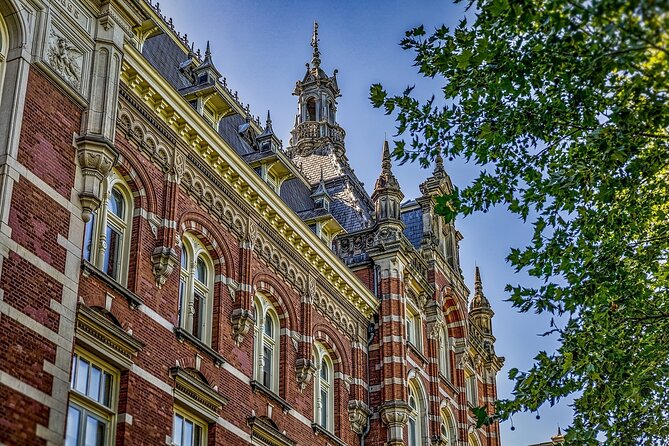
History doesn’t stay in churches on this walk. You’ll also see civic and street-level landmarks like the Stadhuis van Utrecht (city hall) and Neude Square, plus areas such as Voorstraat.
This is where the tour helps you read the city’s mood and priorities. Utrecht’s governance and public life are easier to grasp once you’ve heard how the city grew into a trade hub and why independence mattered in later centuries.
Neude Square is a natural anchor because it functions as a focal point in the modern city. With the guide’s narrative in your head, you can start noticing how squares and streets likely served as gathering points long before today’s shops and cafes.
And the stop at Oudaen helps connect “pretty old street” with the real story of how a city center developed around key routes and movement. The details may be subtle, but that’s the point: with context, you see more.


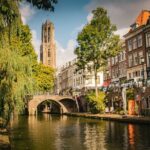
Oudegracht canal: the best “photo plus meaning” stretch
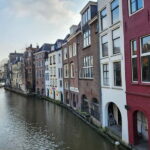
If you only care about one part of the route, make it the canal moment. Walking along Oudegracht gives you a strong Utrecht signature, and it also supports the historical story the guide is telling.
Canals in Dutch cities are never just decoration. They’re logistics, water management, and trade access. Once the guide explains Utrecht’s importance as a commercial hub, the canal becomes a clue rather than just a pretty waterway.
The guide can also help you notice how the canal-edge streets relate to the larger center you’re seeing—like Neude Square and nearby main streets. Even on a short tour, this makes Utrecht feel coherent.
And since you’re walking with a guide, you’re not stuck guessing what you’re seeing. You know which era the city is reflecting and what changed when.
Independence, the Republic, and industrial-era shifts
After the religious and early-power story, the tour moves through major political transitions: the 16th century end of independence and the era of the Republic of the Netherlands. You’ll hear how those changes shaped Utrecht’s role and daily reality, not just big-picture geopolitics.
Then comes the industrial age, which is an important pivot because it shows Utrecht wasn’t only about medieval churches and old canals. Industrial growth affects city planning, workforce movement, and the way neighborhoods evolve.
On the street, that can be hard to read on your own. This is where a guide helps you connect the narrative to what’s in front of you now. You’re not hunting for invisible evidence. You’re being told what to look for and how the pieces connect.
This section is also where pacing matters. On a private tour, you can ask follow-up questions when something feels relevant to what you’re seeing in the streets around you.
World War II scars and modern reconstruction
The most sobering part of the tour is the section on World War II, when Utrecht faced a blitz, became a Nazi domain, and later experienced liberation. That history is treated with care, but it’s still directly connected to the city you’re standing in.
The key value here is that reconstruction is not a vague concept. You’ll hear how modern Utrecht took shape after the war, so the current streets and buildings feel like a result of choices and rebuilding, not just a random modern look.
This is one reason the route feels worthwhile even for people who usually skip “too much history.” You’re learning what shaped the city’s present form—why some areas look the way they do, and why rebuilding mattered.
If you’re the type who likes to understand a place through its toughest chapters, this tour gives you that framework in a controlled, walkable way.
Guides can make or break a short history walk
Because it’s private, the guide’s style matters more than you might think. In past groups, guides named Willemijn, Giovanna, and Famke stood out for being friendly, easy to talk with, and able to explain history clearly without turning it into a lecture.
One guide was praised for patience and a good sense of humor, which is a huge plus on a history-heavy route. Another guide was noted for meeting people and setting a leisurely pace, which helps you stay present instead of rushing through places you want to actually understand.
That’s also where the “customizing on the spot” option becomes practical. If you want more time at Domkerk or you’re more interested in the war and reconstruction story, a good guide can adjust without throwing the whole tour off track.
Price and value: $313 per group for up to 15
At $313 per group (up to 15 people), the math depends on how many of you go together. If you travel in a small group, you’re paying for the convenience of a private local guide who gives your group the full attention of an English-speaking expert for about 2 hours.
What you get for the price is also specific: a local guide who stays with your group only, a private guided tour, and the option to customize on the spot. Since entrance fees are not included, you’re not surprised later by building entry costs at any stop that charges.
For many visitors, this price works because it replaces multiple tickets and self-guided guesswork. Instead of reading a map and hoping the story aligns with what you see, you’re getting an organized narrative that points to what matters.
If you’re traveling solo or as a couple, it’s worth considering whether splitting a private tour cost feels right for your budget. If you do have a group, this is one of the more straightforward ways to get a guided experience without feeling like you’re overpaying for large-group logistics.
Who this tour is best for (and who might want something else)
This tour is a great match if you:
- want an overview of Utrecht’s history from Roman times to modern reconstruction
- prefer walking and conversation over museum-only pacing
- like major landmarks with story context, especially churches and civic buildings
- enjoy canal scenery and want meaning behind it, not just views
It may be less ideal if you:
- need lots of time inside specific buildings and would rather do a longer, multi-stop cathedral plan
- dislike history that moves through conflicts like World War II (even though it’s handled thoughtfully)
- only want to photograph and skip narrative
The good news is that because it’s private, you can often adjust what you emphasize while still keeping the overall structure.
Should you book this Utrecht private walking tour?
I’d book this if your goal is to understand Utrecht quickly and accurately, without bouncing between guidebooks and guesswork. The route hits the biggest landmarks—Dom Tower, Neude Square, Oudegracht, and major churches—while threading them into a storyline from Traiectum to World War II reconstruction.
If your group includes history lovers, first-timers, or anyone who wants a guide who can explain clearly and adapt in real time, this feels like strong value for a private two-hour walk. And with English offered, it’s easy to plan around even if you’re not a Dutch speaker.
If you’re hoping for a slow, building-by-building deep interior day, you might need a longer or more specialized tour. But as an orientation and story walk, this one has the right shape and the right pace.
FAQ
Where does the Utrecht private walking tour start?
It starts at Neude, 3512 Utrecht, Netherlands.
How long is the tour?
The tour lasts about 2 hours.
Is this a private tour or shared with others?
This is a private tour/activity. Only your group participates.
Is the tour in English?
Yes, the tour is offered in English.
What’s included in the price?
A local guide is included, along with a private guided tour for your group only. The guide may also customize the tour on the spot.
Are entrance fees included?
No, entrance fees are not included.
How does the tour ticket work?
You receive a mobile ticket.
What is the cancellation policy?
Free cancellation is available up to 24 hours in advance for a full refund. If you cancel less than 24 hours before the start time, the amount paid is not refunded.