REVIEW · AMSTERDAM
2 Hours Private Amsterdam Rickshaw Tour
Book on Viator →Operated by BlackfoXXX Amsterdam explorer · Bookable on Viator
You can cover Amsterdam fast and still feel relaxed. This private 2-hour rickshaw tour is built for first-time orientation, hitting classic sights and canal-adjacent neighborhoods while you glide through spots bigger vehicles can’t reach. You get a private group for up to two, so the pace and photo stops can actually match your interests.
I love the hotel pickup option. It cuts the usual first-day chaos (finding the right street, matching timing, dragging bags through crowds) and gets you onto the rickshaw without stress. I also like that the ride is photo-friendly, with frequent stops so you can get your bearings and actually see what you’re passing.
One consideration: this is an outdoor experience and it’s best in good weather. If it’s chilly or windy, you’ll want to dress for it, and the city’s most popular areas can still feel crowded—so you’ll be appreciating the sights more than escaping them.
In This Review
- Key things to know before you book
- How the 2-hour private rickshaw tour actually feels
- Price and value: why $234.30 per group can make sense
- Dam Square, the Red Light District, and the city’s “you’re here” moments
- Nieuwmarkt and Rembrandtplein: markets, cafes, and nighttime energy
- The skinny bridge and canal views that change how you see Amsterdam
- Museumplein, Anne Frank House, and Vondelpark in one comfortable arc
- De Gooyer Windmill and De 9 Straatjes: classic Dutch flavor beyond the big squares
- Guide approach and ride comfort (what you’ll notice right away)
- Who this tour is best for (and who might want something else)
- Should you book this Amsterdam Rickshaw Tour?
- FAQ
- How long is the 2 Hours Private Amsterdam Rickshaw Tour?
- Is this tour private or shared?
- How many people can ride in each rickshaw?
- Is pickup included?
- What language is the tour offered in?
- Do I get a mobile ticket?
- Is Wi‑Fi available during the ride?
- Will we pass by the Anne Frank House and other major landmarks?
- What if the weather is bad?
- Is admission included for De Gooyer Windmill?
Key things to know before you book
- Private for up to two (no mixing with strangers), which makes it easier to ask questions and set the pace
- Hotel pickup available across central Amsterdam, plus cruise-ship docking pickup options
- Rickshaw access beats cars and buses for tight streets and canal-adjacent views
- A classic highlights loop in 2 hours, including Dam Square, the Red Light District area, Nieuwmarkt, and Vondelpark
- English-speaking guide focus with frequent stops, including time for photos
- De Gooyer Windmill ticket not included, so you may need to plan for that if you want to go in
How the 2-hour private rickshaw tour actually feels
This tour is designed for people who want a smart overview without turning your day into a walking contest. In about two hours, you’re not trying to master Amsterdam—you’re learning it. You’ll see the main “on the map” sights, plus smaller details that help the city click.
What makes a rickshaw work so well here is the access. Amsterdam is famous for narrow streets and canal-side layouts, and a rickshaw can get you to the kind of vantage points where trams and buses can’t easily stop. The ride is also relaxed enough that you can focus on what you’re seeing rather than calculating routes.
If you’re traveling with someone—partner, friend, or family member this can be a great format. Your group stays private, so you’re not stuck with someone else’s pace or priorities.
You can also read our reviews of more tours and experiences in Amsterdam.
Price and value: why $234.30 per group can make sense
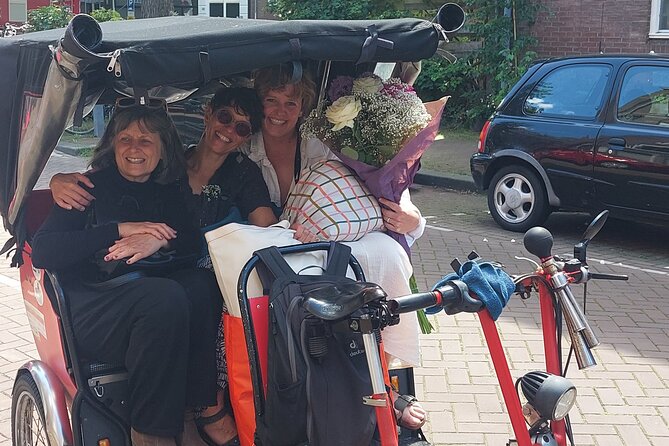
The price is $234.30 per group for up to two people. On paper, that can look “premium.” In practice, it often pencils out better than you’d expect if you’re comparing it to multiple separate options.
Here’s the value logic I’d use:
- You’re paying for a dedicated guide + private ride, not just transportation.
- Hotel pickup can save time and effort (and the cost of a taxi or multiple transit hops, depending on where you’re staying).
- You get frequent stops for photos and city context while you’re moving. That’s the part most transport-only options don’t provide.
If you’re two people traveling together, the per-person cost drops fast. If you’re solo, it’s still a strong choice when you want maximum comfort and minimum hassle, especially during a short stay.
Dam Square, the Red Light District, and the city’s “you’re here” moments
The tour’s first big draw is how it sets you down in the layers of Amsterdam history and modern life right away.
Dam Square is where the city story becomes easy to understand. It traces back to the 13th century era when a dam was built around the river Amstel to help prevent flooding. Today it’s a high-energy tourist square—expect entertainment, a lot of movement, and yes, pigeons. If you visit in spring, you may even catch seasonal carnival-style activity, and in warmer months street performers pop up.
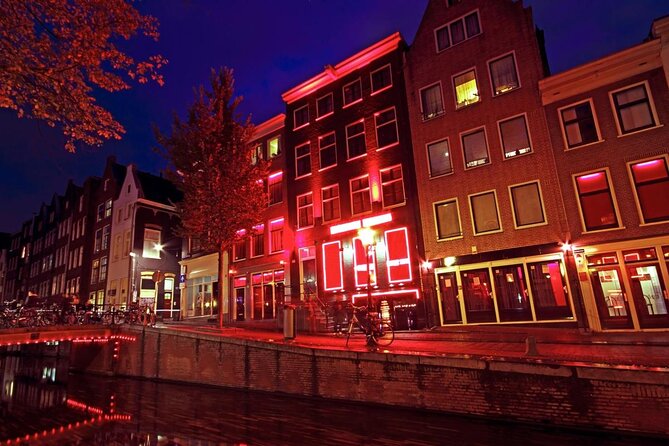
From there, the route moves into the Red Light District area. This isn’t presented as a scare zone. The vibe today is described as friendly, with a lot happening around you. You’ll get a sense of how Amsterdam manages visibility—part tourist curiosity, part neighborhood reality.
Practical note: these areas are popular, so you’ll want to go into the ride with a calm mindset. A rickshaw doesn’t magically remove crowds, but it does help you avoid some of the worst foot-traffic bottlenecks while still seeing the sights.
Nieuwmarkt and Rembrandtplein: markets, cafes, and nighttime energy
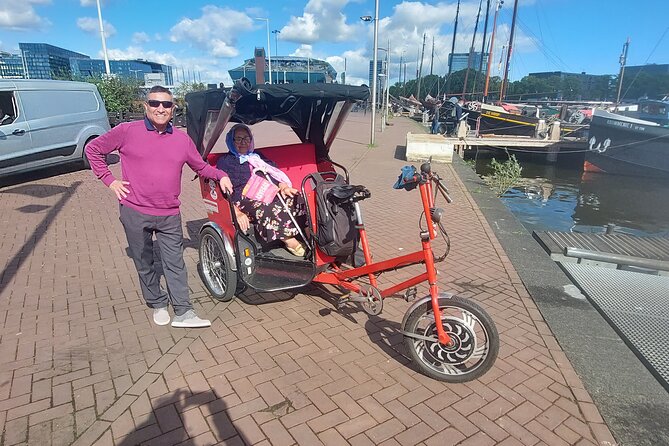
Next up is Nieuwmarkt, just east of the Red Light District in the old city center. Nieuwmarkt’s story is rooted in commerce: it became a hub after canals were filled around the area near the old city gate, which made it a logical gathering place for traders and shoppers. Even now, there’s a daily market, and there’s also an organic market on Saturdays.
You’ll also notice why locals and visitors linger here. It’s surrounded by cafés, restaurants, and coffeeshops, so it’s the kind of square where you can park yourself on a terrace and watch the city move.
From there the tour heads to Rembrandtplein, one of Amsterdam’s busiest squares. It’s known for nightlife and clubbing, and it used to have an agricultural identity—starting as a butter and dairy market. Now the rhythm is café stops, drinks, and people-watching instead of farm deliveries.
If you’re the type who likes to understand Amsterdam by its rhythms—morning markets, afternoon terraces, evening social energy—this portion delivers.
The skinny bridge and canal views that change how you see Amsterdam
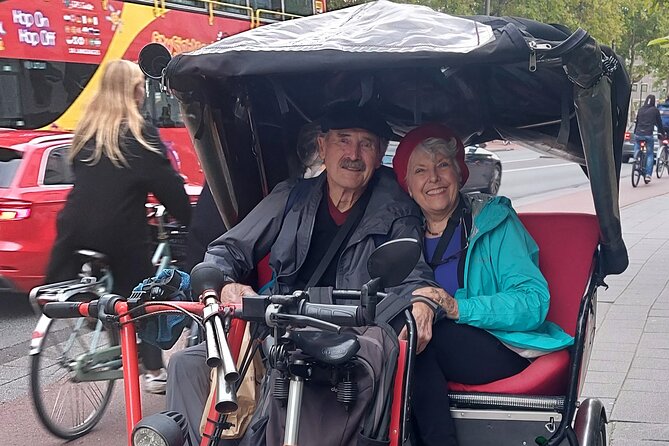
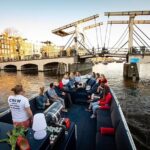
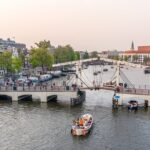
One of the most memorable visuals in the route is the skinny bridge across the river Amstel, near the Carré theatre. It’s a wooden Dutch design bridge known as a double-swipe (balanced) bridge.
You’ll get the story behind its name, which is tied to the legend of the sisters Mager living on opposite sides. Another explanation connects the word mager (skinny in Dutch) to how narrow the crossing feels on foot—harder for two people to pass comfortably side-by-side.
Why this matters: a lot of Amsterdam travel is about canals and “pretty angles.” On foot, you often get stuck behind crowds or in awkward viewing spots. From a rickshaw, the perspective feels more fluid, and your guide can time where you stop so you can actually look at the structure, not just snap a quick photo and move on.

Museumplein, Anne Frank House, and Vondelpark in one comfortable arc
If you’re short on time, this is the part you’ll appreciate most. The route folds in major cultural landmarks and the city’s biggest green space.
Museumplein is the public square in the Museumkwartier neighborhood, and it’s your anchor point for three major museums: the Rijksmuseum, Van Gogh Museum, and Stedelijk Museum. There’s also the Concertgebouw nearby. Even if you don’t go inside on this day, seeing how the area is laid out helps you plan future visits.
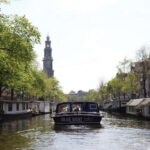
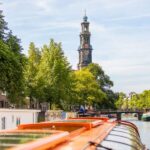
Then you pass the Anne Frank House area on the canal called Prinsengracht, close to Westerkerk. This site is powerful in a way that doesn’t need extra hype. Even from outside, it’s a place that tends to make you slow down and pay attention to what the city remembers.
Finally, the tour swings into Vondelpark, the largest city park in Amsterdam and a place Amsterdammers actually use. Here you’ll see everyday life: people walking dogs, jogging, roller-skating, listening to music, and doing the very Amsterdam thing of lying in the grass and just watching. There are free concerts in season, and you may see open-air events or bandstand activity depending on timing.
A small practical tip: if the weather is on the cooler side, plan for it. Reviews and descriptions highlight the need for a blanket or extra warmth—so bring layers, even if the day starts sunny.
De Gooyer Windmill and De 9 Straatjes: classic Dutch flavor beyond the big squares
To finish, the tour includes two “details you’ll remember” stops.
De Gooyer Windmill is an 18th-century grain mill and the sole survivor of five windmills that used to stand in the area. It was moved to its current spot in 1814, renovated in 1925, and (as described) it’s now a private home. Alongside it, the old public baths were converted into Brouwerij ’t IJ. One more thing to know: the windmill stop notes that an admission ticket is not included.
Then comes De 9 Straatjes (The Nine Streets), the compact shopping zone between Singel, Herengracht, Keizersgracht, and Prinsengracht. This is the kind of place where Amsterdam feels intimate again—one-of-a-kind boutiques, stylish cafés, and small galleries in picturesque streets that connect the canals. It’s not trying to be one big attraction. It’s a stroll zone, and it’s perfect for a short final taste before you go off on your own.
If you want a souvenir without buying the same generic postcard shop stuff, this is the part that tends to deliver.
Guide approach and ride comfort (what you’ll notice right away)
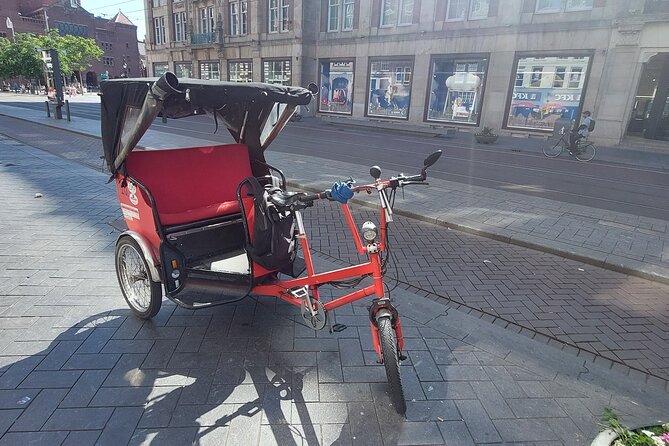
A lot of the quality here comes from how the guide handles stopping and explaining. In the reviews, Lambros (spelled a few ways) stands out as a name tied to friendly, calm explanations, and he’s praised for getting off the bike/rickshaw when explaining something instead of trying to talk while moving.
That matters because Amsterdam landmarks are visual. You need a moment to look, not just hear. The best moments happen when the guide pauses at the right angle and you can take it in—buildings, bridges, canal edges, and street-level details.
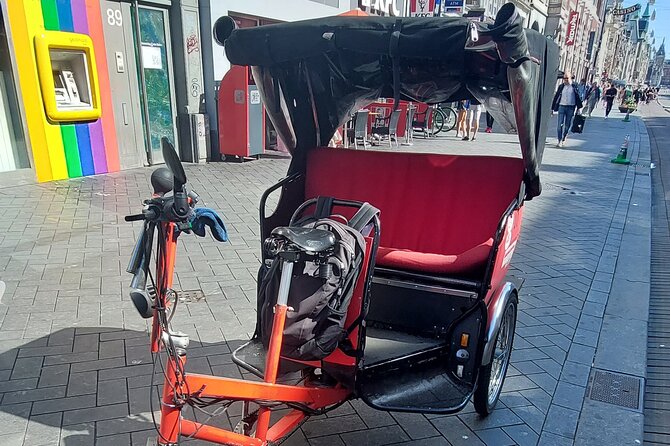
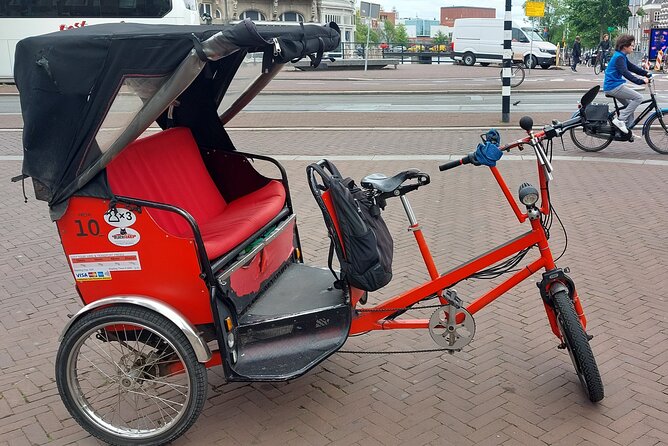
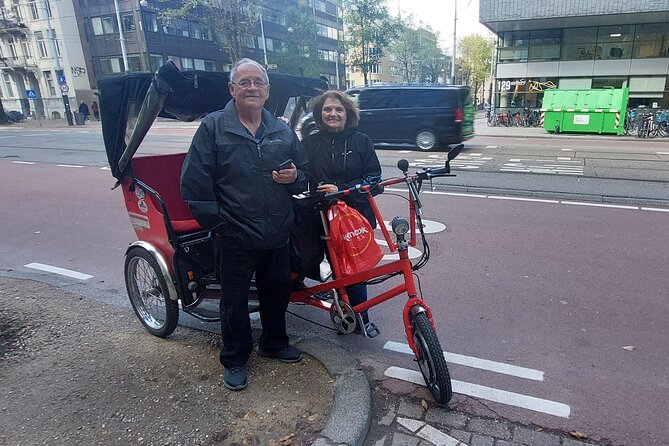
Comfort-wise, expect a rickshaw designed to reduce wind and rain exposure (described as clean and with protection). But since this is still outdoors, it’s smart to dress for cool wind, especially early mornings or shoulder seasons.
Also, the tour includes Wi‑Fi on board, which is handy if you’re mapping your next move or messaging someone while you’re still riding.
Who this tour is best for (and who might want something else)
This is a great fit if:
- You’re a first-time visitor and want a fast overview without walking yourself into a blister.
- You have limited time and want priority sights like Dam Square, the Red Light District area, and Vondelpark.
- You prefer comfort and control, with a private setup for up to two people.
- You want a plan that includes both big squares and quieter, more personal neighborhoods like De 9 Straatjes.
It may be less ideal if:
- You want a deep, slow museum day. This is a highlights ride, not a ticket-by-ticket museum crawl.
- You’re visiting during poor weather. The experience explicitly requires good weather, and if it’s canceled for that reason, you’ll be offered a different date or a full refund.
Should you book this Amsterdam Rickshaw Tour?
I’d book it if you want an efficient, comfortable orientation day. The biggest wins are the private format, hotel pickup, and the way the route links Amsterdam’s main landmarks with a couple of “texture” stops that make the city feel real.
If you’re going to Amsterdam for a short stay, this tour is a smart first-day move. You’ll leave with a map in your head: where the squares sit, how the canal areas connect, and where green space fits into the city’s rhythm. Then you can choose what deserves your time next—museum tickets, long walks, or café time.
If you’re the kind of traveler who values being able to take photos without sprinting through crowds, the frequent stopping style is exactly what you’re looking for.
In short: for up to two people, this is a good way to see Amsterdam, not just pass through it.
FAQ
How long is the 2 Hours Private Amsterdam Rickshaw Tour?
The ride is listed as about 2 hours.
Is this tour private or shared?
It’s private. Only your group participates.
How many people can ride in each rickshaw?
The maximum is 2 adults with a maximum weight of 500 lb (230 kg), or 2 adults and up to 2 small children up to 9 years old, with a total weight up to 500 lb (230 kg).
Is pickup included?
Pickup is offered. You can request pickup from hotels in and around central Amsterdam, and there are also cruise-ship docking pickup options.
What language is the tour offered in?
The tour is offered in English.
Do I get a mobile ticket?
Yes, the tour includes a mobile ticket.
Is Wi‑Fi available during the ride?
Yes, Wi‑Fi is available on board.
Will we pass by the Anne Frank House and other major landmarks?
Yes. The route includes stops around Dam Square, the Red Light District area, Nieuwmarkt, Rembrandtplein, Museumplein, the Anne Frank House area, and Vondelpark, plus De Gooyer Windmill and De 9 Straatjes.
What if the weather is bad?
The experience requires good weather. If it’s canceled due to poor weather, you’ll be offered a different date or a full refund.
Is admission included for De Gooyer Windmill?
No. Admission to De Gooyer Windmill is not included (ticket not included).