REVIEW · AMSTERDAM
5 hrs Golden Age Amsterdam Private Walking Tour With Local Guide
Book on Viator →Bookable on Viator
Five hours can fix your Amsterdam orientation fast. This private walk threads through Golden Age landmarks and quiet courtyards, then drops you right at the edges of De Wallen for real context. You also get a guide who explains the why behind the streets, not just the what.
What I like most is the tight route: you see major sights without spending the whole day in transit. I also like how the guide reads the room, with clear storytelling that works for adults and kids, plus smart photo stops where it actually makes sense to pause.
One thing to watch: several stops are free to look at but not included to enter, and some of the big ones (like Anne Frank House) need advance online tickets. Budget extra time and money for optional museum/church entrances so the tour stays smooth instead of stressful.
In This Review
- Key things to know before you go
- Why this 5-hour Golden Age Amsterdam route is so effective
- Your guide: Aleks and the private-group advantage
- Price and value: what $540.69 gets you (and what it does not)
- Stop-by-stop: how each highlight fits together
- Amsterdam Centraal Station: the city’s big gateway
- St. Nicholas Basilica: the biggest Catholic landmark in the Netherlands
- The Weeping Tower: medieval wall memory and Henry Hudson’s link
- Het Kleinste Huis van Amsterdam: canal math, bridges, and tiny architecture
- De Waag: guild power and the city’s weigh-building
- Ons’ Lieve Heer op Solder: the secret-church story in physical form
- Fo Guang Shan: a calm temple break in Chinatown
- The Red Light District stop done the right way
- Dam Square and royal power: where Amsterdam tells its official story
- Begijnhof: the quiet courtyard that changes your pace
- From canals and markets to guild lanes
- Anne Frank House area: moving from stories to human scale
- The Amstel viewpoint and Jodenbuurt: where the city’s geography becomes a story
- Who should book this tour
- Should you book 5 hrs Golden Age Amsterdam Private Walking Tour?
- FAQ
- FAQ
- What is the duration of the Golden Age Amsterdam private walking tour?
- How many people are in the private group?
- Where do we meet the guide?
- Is pickup offered?
- Are entrance tickets included for all stops?
- Do I need to book Anne Frank House tickets in advance?
- What is the Red Light District stop like?
- What is the cancellation policy?
Key things to know before you go
- Private group of up to 4 means more questions and fewer bottlenecks at busy corners
- Fast orientation across Centraal, medieval remnants, major squares, and river views
- Mix of Amsterdam contrasts from Begijnhof calm to De Wallen policy history
- Free sight stops, paid entries optional help you control your costs
- Anne Frank House timing matters since tickets must be booked online in advance
- Guide energy and flexibility can make or break a short tour, and this one is strong
Why this 5-hour Golden Age Amsterdam route is so effective
Amsterdam is famous for getting you lost in five minutes. This tour is built for that moment: it gives you the big landmarks in the right order so your brain starts mapping the city quickly. In about a workday’s length, you go from transport hub to medieval city clues, then into the political and cultural heart.
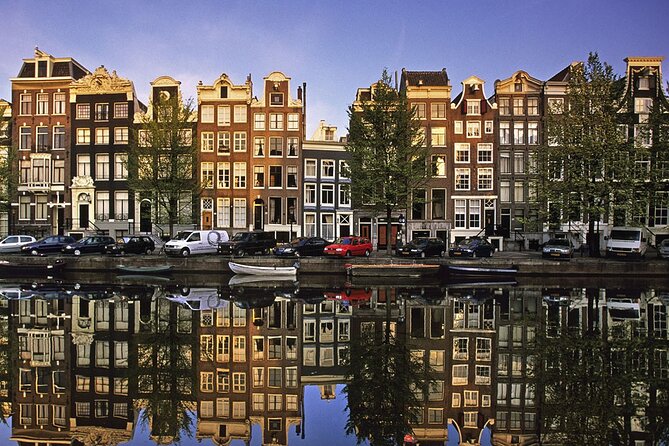
You also get variety without chaos. One minute you’re looking at Dutch neoclassical architecture at Amsterdam Centraal. The next you’re hearing how city walls and waterways shaped where people lived, traded, worshiped, and governed. That mix is the real value: Amsterdam isn’t one story, so your walk shouldn’t be one mood.
You can also read our reviews of more tours and experiences in Amsterdam.

Your guide: Aleks and the private-group advantage
The strongest part of this experience is the human one. Multiple groups highlighted Aleks (also spelled Aleksandar) as the kind of guide who keeps the pace moving while still making time for questions. You can feel the difference when a guide knows how to explain context in plain English, then adjust for different ages and interests.
In a private group, the questions you’re holding back suddenly feel safe to ask. That matters on a tour that covers sensitive topics like prostitution policy around De Wallen. A good guide doesn’t sensationalize. Instead, you get measured explanations and practical suggestions for how to handle what you see.
If you’re traveling with kids, this format helps a lot. The tour stays engaging without turning into a lecture, and the guide can meet different energy levels without slowing the whole group down.
Price and value: what $540.69 gets you (and what it does not)
The tour price is $540.69 per group up to 4 people, for about 5 hours with a local guide. That pricing structure can feel steep if you’re traveling solo, but it becomes fair fast when shared.
Here’s how I’d think about value:
- You are paying for time with one guide, not just access to sights. In a short 5-hour window, that’s the difference between wandering and learning.
- A lot of stops are free to see from the outside or as part of the walk, which helps keep the experience flowing.
- Some of the most famous interiors are not included and come with set entrance fees. That’s common in Amsterdam, but it changes your total budget.
To plan accurately, check the listed optional entrances:
- Royal Palace Amsterdam: €10.00 per person (not included)
- Westerkerk: €7.00 per person (not included)
- Ons’ Lieve Heer op Solder: €16.50 per person (not included)
- Anne Frank House: €16.00 per person (not included, and needs advance online booking)
- Nieuwe Kerk: €10.00 per person (not included)
There’s also an Old Center entrance fee listed at €13.50 per person. If you’re trying to keep costs down, you can still enjoy plenty of the route without buying every add-on.
Stop-by-stop: how each highlight fits together
Amsterdam Centraal Station: the city’s big gateway
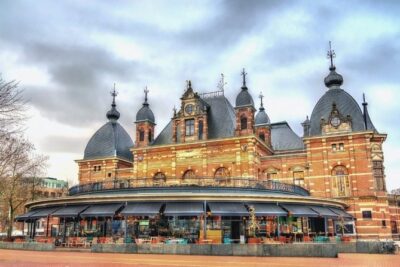
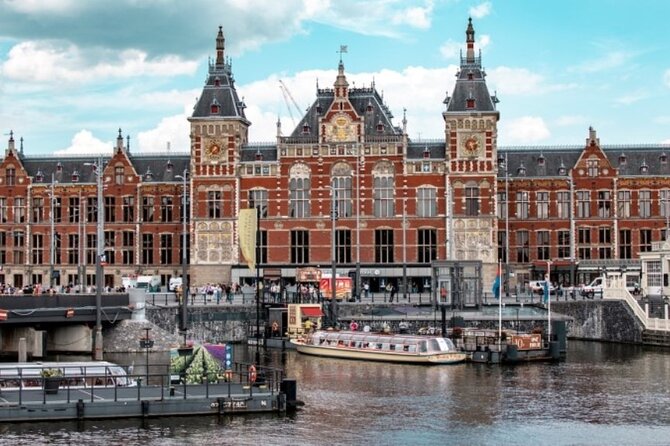
You start at Amsterdam Centraal, a central hub in a Dutch neoclassical style built on thousands of wooden poles. It sounds technical, but the poles detail actually matters in Amsterdam. The city’s relationship with water is physical here, not just poetic.
This first stop is smart because it sets expectations. You’ll learn what to look for as the tour moves from grand public buildings into older medieval traces.



St. Nicholas Basilica: the biggest Catholic landmark in the Netherlands
Next is St. Nicholas Basilica, described as the biggest Catholic temple in the Netherlands from the late 1800s. Even if you’re not religious, this stop works because it shows how Amsterdam adapted over time and how religious life survived different political eras.
The drawback? If you’re expecting a quick photo-and-go, this is a more interpretive stop. Take a minute, look up, and listen for what the guide explains about why it stands here.
The Weeping Tower: medieval wall memory and Henry Hudson’s link
The Weeping Tower area ties together medieval city defense and a surprising global connection: this is linked to the departure of Henry Hudson on his journey toward Northern America. When you hear that alongside the idea of old city walls, Amsterdam feels less like a postcard and more like a node in world history.
It’s brief, but it gives you a useful mental frame: canals and fortifications shaped movement, and movement shaped trade and exploration.
Het Kleinste Huis van Amsterdam: canal math, bridges, and tiny architecture
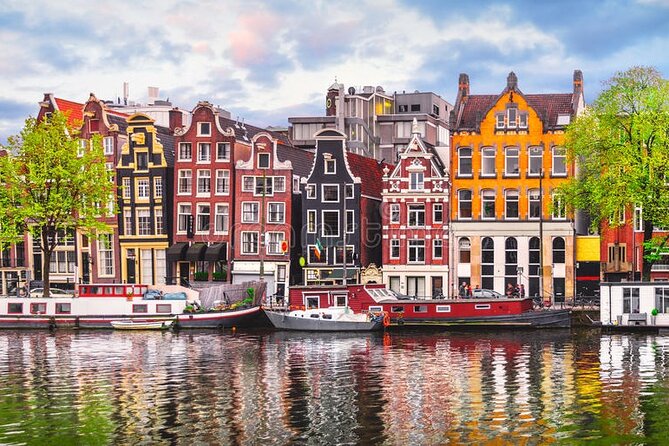
At Het Kleinste Huis van Amsterdam near canal Singel, you’ll get a story about the word grachten and how Amsterdam canals functioned, plus practical quirks about narrow, tall, leaning houses. This is one of those stops where the guide turns a small building into a whole lesson on design pressure and maintenance in canal cities.
If you like architecture details and city planning, you’ll enjoy this. If you dislike trivia, keep it as a short reset and use it to reposition for the next “bigger” monuments.
De Waag: guild power and the city’s weigh-building
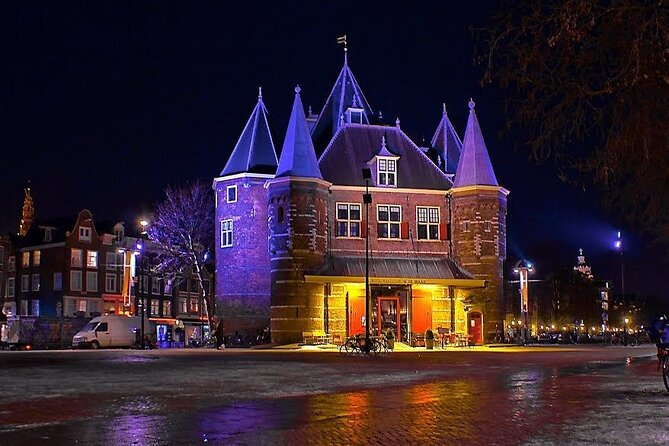
De Waag (the weighing building and customs house) connects Amsterdam’s medieval gate history with the reality of trade. You’ll hear how it served as a place tied to guilds and city business, and that’s why this stop matters: Amsterdam wealth was measured, taxed, and organized.
It’s a great contrast point after the small-house stop. You move from “micro scale” to “systems scale.”
Ons’ Lieve Heer op Solder: the secret-church story in physical form
The tour then heads to Ons’ Lieve Heer op Solder, a famous “secret church” restored and now serving as a museum. This stop is not cheap if you enter (€16.50), so decide in advance what you want from the experience.
What you’ll take away either way is the logic of hidden worship. The attic-church idea becomes clearer when you hear how people had to live under restrictions, and how architecture offered cover.
Fo Guang Shan: a calm temple break in Chinatown
In the heart of Chinatown, you visit Fo Guang Shan, described as the second biggest Buddhist temple of its kind in Europe. This is a good breathing moment after heavier historical themes.
The practical note: it’s a short stop, so if you’re hoping for a long temple visit, plan to return separately.
The Red Light District stop done the right way
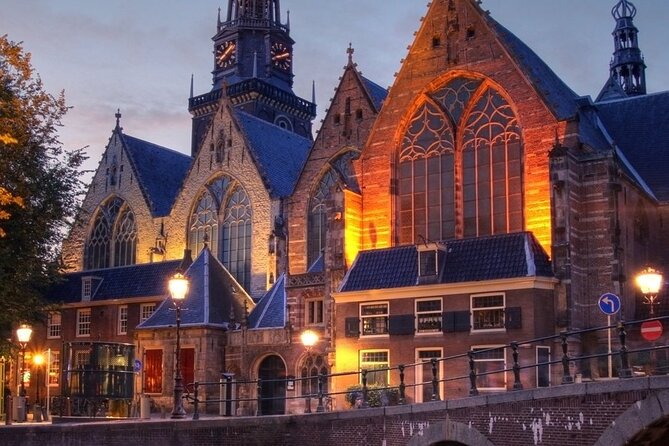
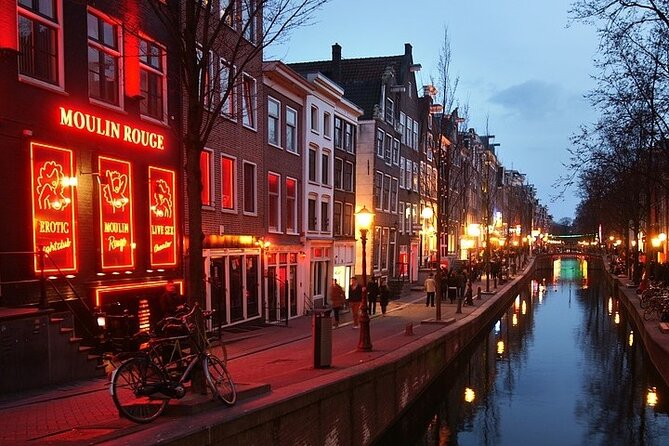
Then comes De Wallen, the Red Light District. Here you get a structured break—about 30 minutes—with discussion of prostitution and drug policy in the Netherlands, plus history and how the area looks today.
I appreciate how a guide can keep this from becoming voyeur mode. Instead, you get a “yes and no” approach to substances and practical advice on how to enjoy the cultural reality while staying within the law. You also learn the longer arc so you’re not just reacting to street theater.
If you’re sensitive to the subject matter, I’d still say it’s worth hearing the context from a guide rather than stumbling in alone. Just choose your comfort level in the moment.
Dam Square and royal power: where Amsterdam tells its official story
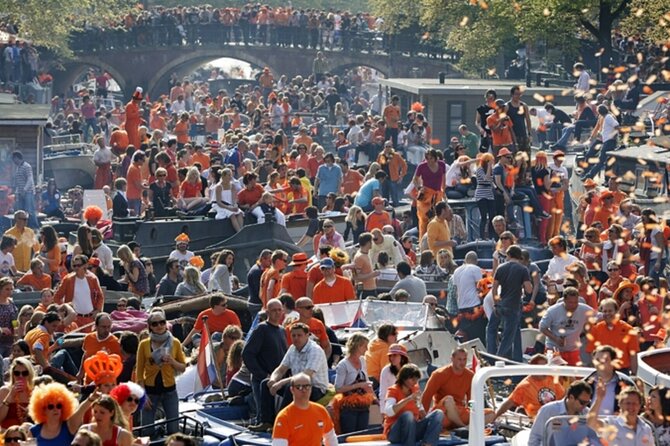
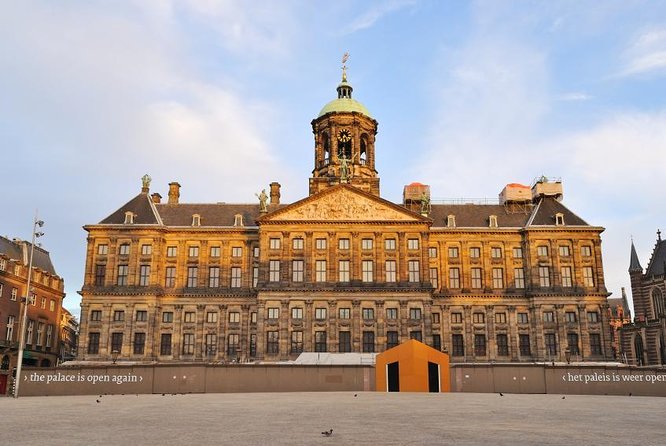
At Dam Square, you get the city’s central oldest square and a snapshot of power and memory. Your guide points out the surrounding landmark mix—Royal Palace, New Church, National Monument, and the larger civic atmosphere.
Then you move to:
- Royal Palace Amsterdam (former City Hall): impressive but entrance not included (€10). If you buy tickets, you’ll get a fuller sense of how official governance shaped the city.
- National Monument: a World War II and armed conflicts remembrance monument.
- Nieuwe Kerk: a Reformed church building used for royal ceremonies, still in use for weddings and crowning events. Entrance is not included (€10).
This section is strong if you like learning how Amsterdam presents itself publicly. It can feel a bit formal if you want only canals and stories, but the political context helps your later stops click.
Begijnhof: the quiet courtyard that changes your pace
The Begijnhof is where Amsterdam slows down on purpose. It’s described as a hidden place and memorial area dedicated to the Beguines—semi-closed sisters living like nuns—with another secret Catholic church. You’ll also hear about the oldest wooden house in Amsterdam and the Begijnhof legend connected to Sister Cornelia Arens, including a miracle story from 1345.
This is one of those stops where you should lower your voice. Even if you don’t enter anything, the courtyard energy makes the historical explanation feel real.
From canals and markets to guild lanes
After Begijnhof, the route moves through that classic “Amsterdam contradictions in one place” zone—church area energy, coffee-shop presence, and the mixture of museums, theaters, restaurants, and streets that can feel chaotic until you understand the layout.
Then you visit Munt Tower (Munttoren): built at a medieval gate meeting point near the river Amstel and the Singel canal, and tied to coin minting in the 1600s. It’s short, but it’s a neat reminder that Amsterdam’s money systems were as physical as its canals.
Next is Rembrandt Monument, connected to The Night Watch with a 3D exposure. Even if you don’t become a Rembrandt fan on the spot, this stop helps you connect the artist’s name to something tangible rather than distant museum knowledge.
Then you head to the flower market area. It’s described as the city’s biggest and most famous flower and garden accessories market, a practical spot if you want tulip bulbs or want to buy something small and Dutch.
Finally, you reach Sint Luciënsteeg and the Burgerweeshuis (city orphanage) from 1580, plus stone gables and identity markers from medieval house histories. If you like street-level history, this is a strong close to the “old city fabric” portion.
Anne Frank House area: moving from stories to human scale
You then arrive at the Anne Frank House area. This stop is not included to enter (€16.00 per person) and tickets can only be booked online, at least 6 weeks in advance.
Even standing outside, the guide can help you make sense of what you’re about to see: life in secret shelter, human solidarity, and the diary that’s been translated into 57 world languages. If you’re going to enter, plan your day with realistic expectations and don’t assume you can walk up.
A related stop follows at Westerkerk, one of the oldest churches from 1631, with its leaning tower. The tour notes that it’s also tied to the wedding of former Dutch Queen Beatrix and a burial claim for Rembrandt that is described as never precisely proven. Entrance is not included (€7), so again, decide based on time and ticket priorities.
The Amstel viewpoint and Jodenbuurt: where the city’s geography becomes a story
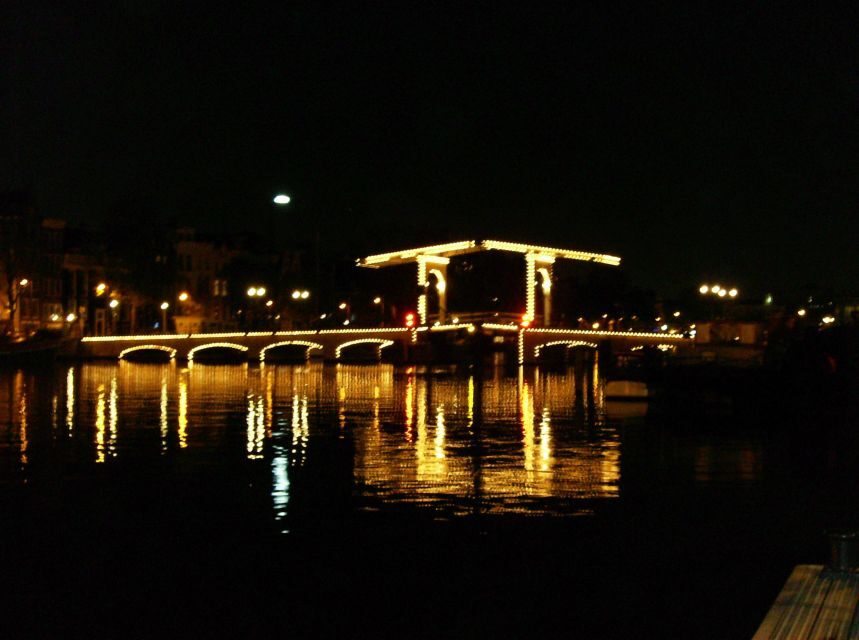
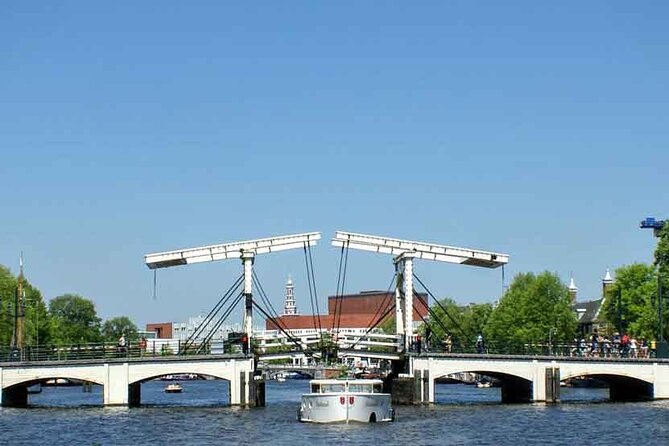
The walk finishes with the Amstel river view, plus famous nearby bridges including the Blue Bridge and Skinny Bridge. This is a nice way to end because it turns Amsterdam back into water and movement, not only buildings and dates.
Then you go to Jodenbuurt, also called Plantage, the Jewish Quarter area where Jews lived from the late 1500s through World War II. You’ll learn about key community buildings over centuries and Holocaust monuments and memorials. The timing works too: after memorial and royal history, your perspective shifts into community survival and memory.
By the end, you’re not just seeing spots on a map. You’re holding a layered picture of how Amsterdam organized itself around water, trade, faith, and the consequences of history.
Who should book this tour
I’d book this if you’re:
- In Amsterdam for the first time and want quick bearings plus real context
- Traveling with a small group (or family) and want a private pace
- Interested in Amsterdam’s contrasts, from secret churches to major civic squares
- You want a local guide who can answer questions in a practical, human way
I might skip or shorten expectations if you:
- Only want modern Amsterdam vibes and nightlife
- Hate any stops related to De Wallen subject matter
- Want a pure museum day with long interior time (this is a walking orientation with optional entrances)
Should you book 5 hrs Golden Age Amsterdam Private Walking Tour?
If you want Amsterdam to make sense quickly, this is a strong pick. The route hits the major “anchors” you’ll use all week, from Centraal Station to Begijnhof, then through royal and memorial sites, ending by the Amstel and into Jodenbuurt. Add in the private group size and the flexibility that Aleks is known for, and you get a tour that feels built around you, not a factory schedule.
Book it if you’re ready to walk and you’ll plan for optional entrances (especially Anne Frank House ticketing). If you want low-stress costs, decide early which paid interiors you truly care about.
FAQ
FAQ
What is the duration of the Golden Age Amsterdam private walking tour?
It runs for about 5 hours.
How many people are in the private group?
The tour has a maximum of 4 travelers.
Where do we meet the guide?
You meet at Amsterdam Centraal railway station, Stationsplein, 1012 AB Amsterdam, Netherlands. The tour ends back at the meeting point.
Is pickup offered?
Yes, pickup is offered.
Are entrance tickets included for all stops?
No. Some sights are listed as free, while several entrances are not included, including Royal Palace Amsterdam, Westerkerk, Ons’ Lieve Heer op Solder, Anne Frank House, and Nieuwe Kerk.
Do I need to book Anne Frank House tickets in advance?
Yes. Tickets for Anne Frank House can only be booked online and at least 6 weeks in advance.
What is the Red Light District stop like?
You get a short break (about 30 minutes) with a moderated discussion about prostitution and drug policy in the Netherlands, plus history and how the area looks today.
What is the cancellation policy?
You can cancel up to 24 hours in advance for a full refund. If you cancel less than 24 hours before the start time, the amount paid is not refunded.