REVIEW · ROTTERDAM
8 hour Walking and Boat Tour to Rotterdam and Kinderdijk
Book on Viator →Bookable on Viator
Some cities feel old. Rotterdam feels rebuilt, on purpose. This 7-hour day mixes classic architecture, modern design, and a trip out to Kinderdijk to see how the Dutch manage water.
Two things I really like: the pace is structured but not rushed, and you get a guided walk that helps the sights make sense fast. I also appreciate the value-adds—snacks, coffee/tea, bus transport to Kinderdijk, and paid entry where it matters (like Kijk-Kubus).
One consideration: it’s a long day with lots of walking between stops, so it’s not a great fit if you have mobility limits. Plan on comfortable shoes and a steady rhythm.
In This Review
- Key Highlights You’ll Care About
- A Day of Rotterdam’s Reinvention, Plus Kinderdijk Windmills
- Meeting at Stationsplein and Getting the Route Right
- Rotterdam Centraal, Water Policy, and the Church That Survived
- Erasmus, Markthal’s Ceiling-Style Market, and the 3/4 Problem at Kijk-Kubus
- Oude Haven: Old Port Energy Without Pretending It’s Frozen in Time
- Witte Huis and the Lift Bridge: Old Skyscraper Ambition Meets Steel Machinery
- Memorials, Leuvehaven, and the Erasmus Bridge Swan-and-Harp Effect
- Kinderdijk: 3 Hours of Polder Logic and Windmill Views
- Price and Logistics: Is $591.46 per Group Actually Good Value?
- Who This Tour Suits Best (and Who Should Skip It)
- Should You Book It?
- FAQ
- How long is the Rotterdam and Kinderdijk walking and boat tour?
- What is the group size limit?
- Where do we meet, and where does the tour end?
- What’s included in the price?
- What is not included?
- Do I need a printed ticket?
- How long do we spend at Kinderdijk?
- When does the tour operate?
- What is the cancellation policy?
Key Highlights You’ll Care About
- Small group (up to 4): easier questions and quicker course corrections when you want a better photo angle
- Alex as guide: he points out details and ties the buildings to real people and real events
- Mix of eras: from a 1525 church to a skyline-era skyscraper and steel bridges
- Kinderdijk time (3 hours): enough breathing room to enjoy the windmills without feeling herded
- Smart inclusions: patatje oorlog fries, coffee/tea, bus transport, and Kijk-Kubus entrance
- Bridge-and-water perspectives: Rotterdam’s riverfront is part of the story, not just a backdrop
A Day of Rotterdam’s Reinvention, Plus Kinderdijk Windmills
Rotterdam can look like a city in permanent motion. That’s not an accident. This tour leans into that idea by pairing waterfront views, architecture, and engineering—the stuff that makes Rotterdam feel like Rotterdam.
You’ll start in central Rotterdam and work your way through landmark buildings and neighborhoods on foot. The day also includes a boat segment as part of the overall experience, so you’re not stuck only on sidewalks. Then you’ll head out to Kinderdijk, where the mood shifts from city steel to quiet polder windmills doing serious work.
If you like places where design and history connect—without turning into a dry lecture—this is an enjoyable format. The stops are practical, close enough together to keep things moving, and long enough to actually register what you’re seeing.
You can also read our reviews of more tours and experiences in Rotterdam.

Meeting at Stationsplein and Getting the Route Right
You meet at Stationsplein 48, 3013 AJ Rotterdam. It’s near public transit, which matters because it makes the whole day feel low-stress. The tour ends back at the meeting point, so you’re not juggling separate returns.
The schedule runs about 7 hours 40 minutes. That lines up well with the time budget at each stop, including a full 3 hours at Kinderdijk. Translation: you’ll spend the bulk of the long-haul time where it counts, instead of skimming the windmills and rushing back.
You’ll also use a mobile ticket, which is convenient if you don’t want to worry about printed paperwork. And since the group is capped at 4, you can usually hear the guide without strain—helpful when you’re standing in busy public areas around big landmarks.
Rotterdam Centraal, Water Policy, and the Church That Survived
Your first stop is Rotterdam Centraal Station, the city’s main railway hub with an average of 170,000 passengers daily. Even if you don’t care about trains, it’s worth using this as a starting point. It instantly tells you how Rotterdam functions: forward, connected, and built to handle movement.
From there, you move to Rotterdam Partners, a 17th-century building that used to be the headquarters of Waterschap Schieland, the water-management authority in this part of South Holland. There’s also a human story tied to it: it served as temporary accommodation for Napoleon Bonaparte. That kind of detail matters because Rotterdam’s identity is shaped by water, not just by modern architecture.
Next up is Grote of Sint-Laurenskerk, a late Gothic building from 1525 and described as the oldest building in Rotterdam. The guide also points out that it survived the Nazi bombing on May 15, 1940. This is one of those stops where the air changes. You’re looking at survival—physical proof that some structures outlast the destruction around them.
These three early stops work as a foundation. You get the city’s “engine” (the station), its “system” (water policy), and its “survival” (the church).
Erasmus, Markthal’s Ceiling-Style Market, and the 3/4 Problem at Kijk-Kubus
The tour then highlights how Rotterdam likes to honor thinkers and shape daily life around ideas.
You’ll stop at the Erasmus sculpture, dedicated to Desiderius Erasmus Roterodamus, also known as Erasmus of Rotterdam. Lots of public buildings and education institutions in the city carry his name, so it’s not random statuary. It’s Rotterdam placing a known mind into the civic landscape.
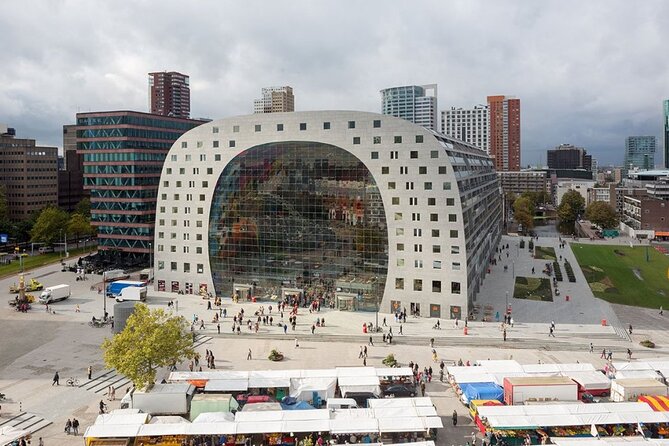
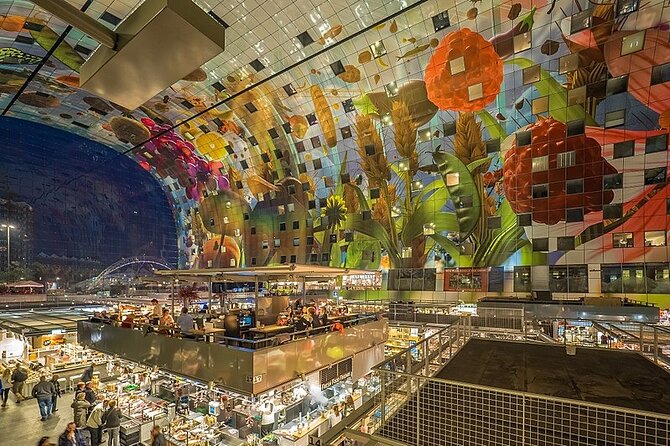
After that, you reach Markthal—the horseshoe-shaped market hall that pairs food and daily life with living space above. It’s nicknamed the Sistine Chapel of Rotterdam, which is a good clue that the building’s interior artwork is a main event. Even if you’re not shopping, it’s the kind of place that helps you understand how Rotterdam mixes utility with spectacle.
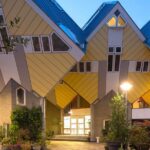
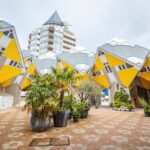
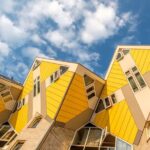
Then comes Kijk-Kubus, the famous cube houses that look like trees with cubes perched on columns. This is one of the most “wait, what am I looking at?” stops on the day. The design is clever but imperfect in a very literal way: because of the shape, only 3/4 of the inner space is usable for typical living. I like including it on a tour like this because it prevents the city from feeling too clean or too polished. It shows experimentation—and consequences.
One practical advantage: entrance fees to Kijk-Kubus buildings are included, so you’re not doing math in your head during the walk.
Oude Haven: Old Port Energy Without Pretending It’s Frozen in Time
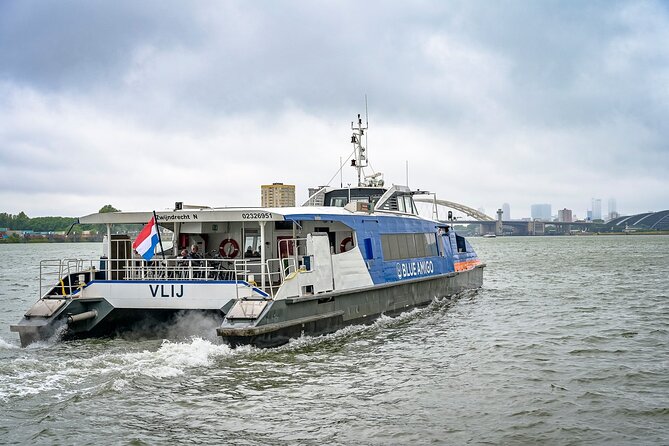
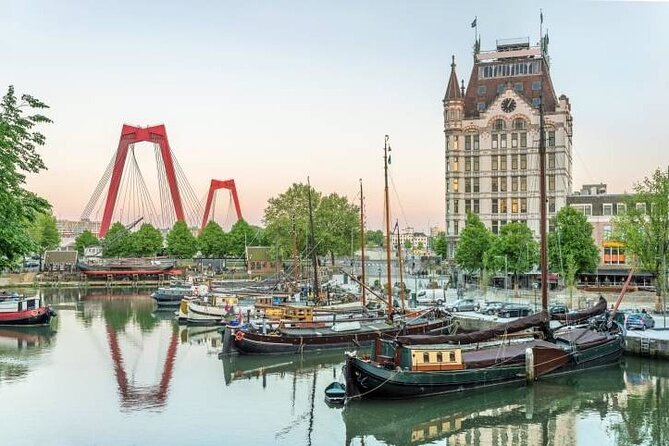
At Oude Haven, you get a change of pace. This port area is described as one of the oldest (not the oldest) ports in medieval Rotterdam, tied to where the Rotte river met and flowed toward the New Meuse. Today it’s a gathering spot with coffee bars, restaurants, taverns, and even disco clubs.
You’ll spend about 1 hour here, which is exactly the right amount of time. You’re not stuck staring at a single view. You can wander a little, grab a snack if you want (you’ll already have included snacks earlier in the day), and just take in how Rotterdam layers modern social life onto older waterfront infrastructure.
This stop also works well for photos. Rotterdam’s waterfront isn’t just scenic—it’s functional. Looking at it from the right angle makes that obvious.


Witte Huis and the Lift Bridge: Old Skyscraper Ambition Meets Steel Machinery

The tour keeps momentum with a sequence of engineering-and-architecture landmarks.
First, Witte Huis. Built in 1898, it’s described as the first skyscraper in Europe after its rise as Europe’s early tall-building wave. It was once the highest building in Europe, and here’s the detail I love because it’s so practical: it was set up on 1,000 wooden pillars. That’s a reminder that tall buildings aren’t just about design—they’re about ground stability and foundations.
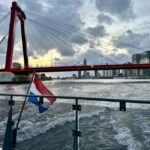
Next is Willemsbrug, also known as the Red Bridge. It’s dedicated to Willem III and connects central/northern Rotterdam with the southern districts. Bridges like this are simple to cross on foot, but they reveal how Rotterdam organizes space across the river.
Then you’ll see De Hef (“The Lift”), a massive steel construction. It used to function like a rotating and lifting train bridge across the New Meuse. The important point is timing: it served before the rail tunnel was built under the river.
If you like industrial design, this cluster hits hard. If you don’t usually notice steel structures, the guide’s explanations will help you see that Rotterdam’s “cool” aesthetic is tied to transportation needs and trade routes.
Memorials, Leuvehaven, and the Erasmus Bridge Swan-and-Harp Effect
After the bridges, you head into the quieter, more reflective parts of the river story.
You’ll stop at De Boeg, a war memorial on the right embankment of the New Meuse. It commemorates 3,500 people who died on Dutch merchant ships in World War II. This isn’t a quick “look at a plaque” moment. Even without extra details added, the number alone puts weight behind the riverside setting.
Then you move to the Maritiem Museum Rotterdam at Leuvehaven, described as an open-air maritime museum. You’ll see a collection tied to shipping and the navy—from the mid-19th century through the 1970s, including steamships, docking cargo machines, ship engines, and related equipment. Because it’s open air, it doesn’t feel like a boxed museum. You get to connect the artifacts to the port environment around them.
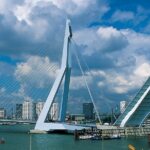
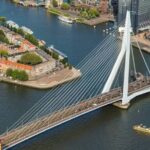
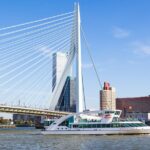
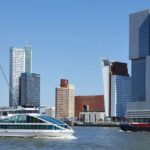
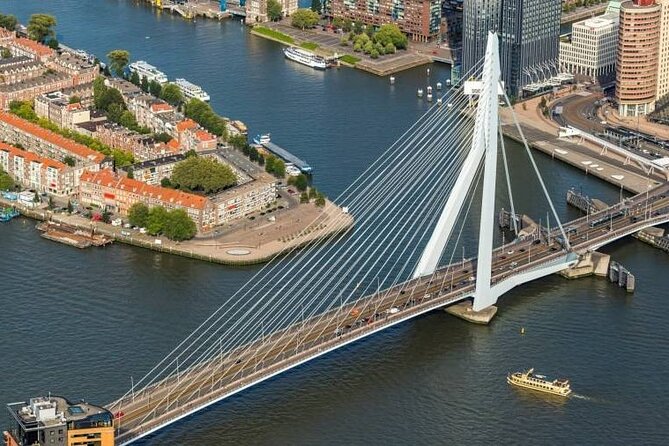
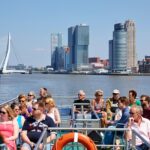
Finally, the star skyline bridge stop: Erasmus Bridge—a hanging bridge and described as the youngest bridge in Rotterdam. It’s one of the most popular images of the city, and it’s nicknamed the Swan or Harp. The stats are big: 139m high, with the biggest and heaviest opening part in Europe at 80m long. Even if you’ve seen pictures, I like seeing it in person because the bridge’s proportions look different when you stand on the water-level viewpoints.
Kinderdijk: 3 Hours of Polder Logic and Windmill Views
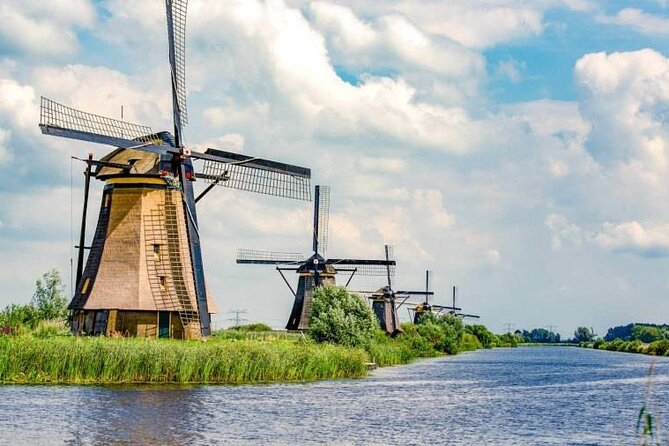
Then you’re out of the city and into one of the most iconic Dutch scenes: Kinderdijk, about 25 km from Rotterdam.
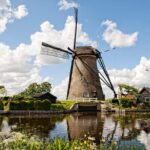
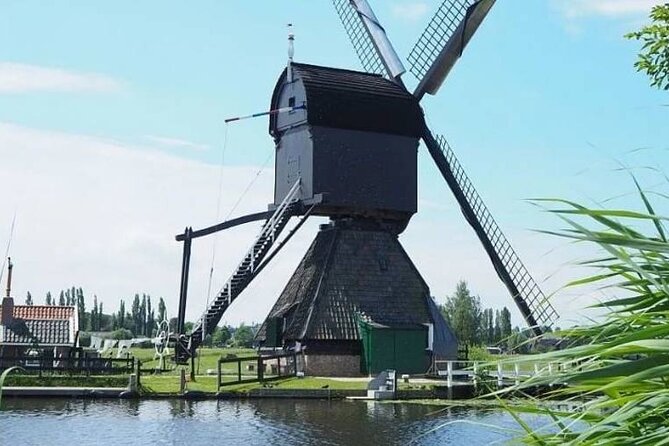
You’ll have 3 hours there, and the tour explicitly frames it as a way to understand the Dutch water-management system over centuries. Kinderdijk is known for 19 windmills, dating to the first half of the 18th century, built to manage water in the polder landscape.
What I like about giving you a longer block of time here is that Kinderdijk isn’t just about the main view. You can adjust your route based on where the windmills look best from your angle. And you can take breaks without feeling guilty. It’s the kind of place where rushing makes you miss what makes it special: the practical beauty of infrastructure.
One key detail: Kinderdijk admission is not included. You’ll pay €19 per person on top of the tour price.
Price and Logistics: Is $591.46 per Group Actually Good Value?
The price is listed as $591.46 per group (up to 4). That’s the biggest reason this tour can feel either like a smart splurge or a “hmm” depending on how you travel.
Here’s how I think about value, based on what’s included:
- You get snacks (patatje oorlog fries) and coffee and/or tea
- You get the guide and entry for Kijk-Kubus
- You get bus transportation to Kinderdijk and back
- You get a structured day with multiple major sights where several are free admissions (like Centraal, the Grotekerk, and many outdoor monuments)
Then you add the separate cost for Kinderdijk (€19 per person). So your true total depends on your group size.
If you can fill even two seats, this becomes a lot easier to justify because the guide time and transport aren’t priced per person in the usual way. If it’s just you and you’d otherwise hire private guidance, it can still be a strong way to get a full-day plan without doing all the coordination yourself.
Who This Tour Suits Best (and Who Should Skip It)
This is a strong match if you want:
- A guided walk that keeps you from getting lost in Rotterdam’s many architectural personalities
- A day that balances city energy with 3 hours at Kinderdijk
- A small group format that makes conversation easier
- Included comfort items like snacks and coffee/tea, not just sightseeing
I’d hesitate if:
- You have mobility concerns, since the route is largely walk-based across many stops
- You strongly dislike paying separate attraction fees, because Kinderdijk admission is extra
Should You Book It?
Yes—if you like architecture, bridges, and the way Rotterdam connects design to the realities of water and transport. This tour’s biggest strength is that it doesn’t treat Rotterdam as a pile of pretty buildings. It explains why the city looks the way it does, then pairs that with the water-management logic of Kinderdijk.
Book it if you can handle a long day on your feet and you’re okay with a separate €19 per person entry at Kinderdijk. If those two points fit your style, you’ll likely come away with a clearer picture of both Rotterdam and the Dutch system behind it.
FAQ
How long is the Rotterdam and Kinderdijk walking and boat tour?
It runs about 7 hours 40 minutes (approx.).
What is the group size limit?
The tour has a maximum of 4 travelers.
Where do we meet, and where does the tour end?
You meet at Stationsplein 48, 3013 AJ Rotterdam and the tour ends back at the same meeting point.
What’s included in the price?
Included items are patatje oorlog snacks, coffee and/or tea, bus tickets from Rotterdam to Kinderdijk and back, entrance fees to Kijk-Kubus buildings, and tour guide services.
What is not included?
Kinderdijk admission is not included and costs €19.00 per person.
Do I need a printed ticket?
No. You’ll use a mobile ticket.
How long do we spend at Kinderdijk?
You’ll have about 3 hours at Kinderdijk.
When does the tour operate?
It’s listed for dates 04/11/2023 – 02/05/2027, running Monday through Sunday from 8:00 AM to 6:00 PM.
What is the cancellation policy?
You can cancel for a full refund if you cancel at least 24 hours before the experience starts. Free cancellation is available up to that cutoff.