REVIEW · AMSTERDAM
Amsterdam 2 Hour History Walking Tour
Book on Viator →Operated by Hit the Bricks · Bookable on Viator
Amsterdam history moves fast. In just about two hours, you’ll get a guided hit of canal-belt culture, uncomfortable corners explained with context, and a few standout photo moments. I especially like the relaxed, small-group vibe that keeps the pace human. You’re not stuck listening forever; you’re walking, looking, and getting the story with a smile.
My second big plus is the way the guide blends history with real-life Dutch perspective and easy travel tips. Guides such as Axel and Mark are the kind who keep things funny without turning serious topics into a joke. One thing to think about: the route includes the Red Light District and WWII-era Jewish history, so if that’s not your mood, plan for a short day of heavier emotions before dinner.
In This Review
- Key points before you go
- Why a 2-hour history walk makes sense in Amsterdam
- Meeting point, timing, and what the pacing feels like
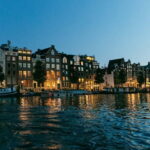
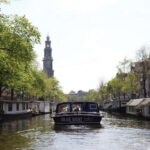
- Canal Ring (Grachtengordel): the water story behind the city
- De Wallen and Dam Square: learning the context, not just the reputation
- South Church and Begijnhof: calm courtyards inside the city
- Jodenbreestraat: Jewish history and the weight of the Hungerwinter
- Bushuis – Oost-Indisch Huis: the Dutch East India company power story
- Stopera Pier: an ugly building locals still feel proud of
- Royal Palace and the orange-vs-flag story you can reuse all trip
- Groenburgwal and the Monet bridge photo moment
- Price and value: what $30.04 buys you in Amsterdam
- Practical tips that make the whole thing smoother
- Should you book it? My honest take
- FAQ
- How long is the Amsterdam history walking tour?
- What is the price per person?
- Is the tour in English?
- How big is the group?
- Where do I meet, and where does the tour end?
- What time does the tour start?
- Is admission included for all stops?
- Do I need to bring bottled water?
- What happens if the weather is bad?
- Is there free cancellation?
Key points before you go
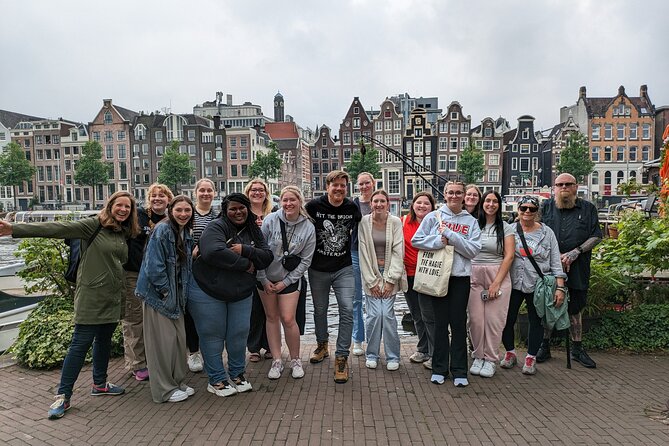
- Small-group feel (max 10): easier questions, less waiting, and a calmer pace.
- Canal belt focus: you connect Amsterdam’s water-management story to how people think today.
- Photo-worthy stops: the Monet bridge moment is quick but very memorable.
- History with humor: jokes help you remember the details without feeling lectured.
- Practical local tips: useful ideas for the rest of your trip, not just facts.
- Bring your own water bottle: several places on the route let you refill.
Why a 2-hour history walk makes sense in Amsterdam
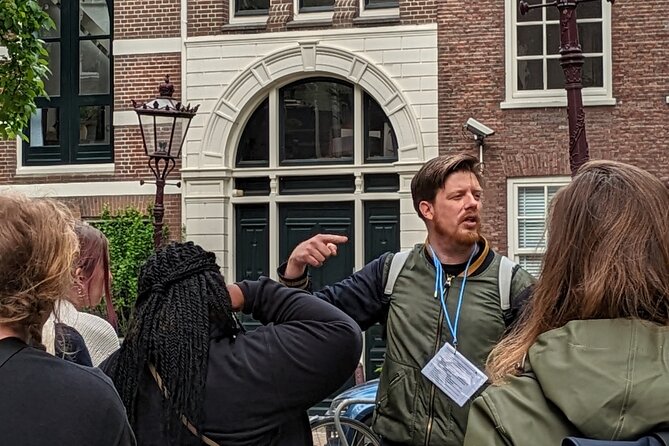
If you’re new to Amsterdam, you need two things fast: orientation and a simple mental framework. This tour gives you both. You’ll start in the classic canal-belt area and move through the city’s most recognizable neighborhoods and squares, so by the end you’ll know where key sights sit relative to each other.
What I like is that it’s not only about pretty views. You’ll hear how the Dutch relationship with water shaped attitudes, politics, and daily life. That’s the kind of context that makes everything you see later feel more logical, whether you’re strolling canals or picking a museum.
And since the group is capped at 10, the tour feels more like walking with a smart friend than like being shepherded. The stories land better when you’re not forced into a loud, oversized crowd.
You can also read our reviews of more tours and experiences in Amsterdam.


Meeting point, timing, and what the pacing feels like
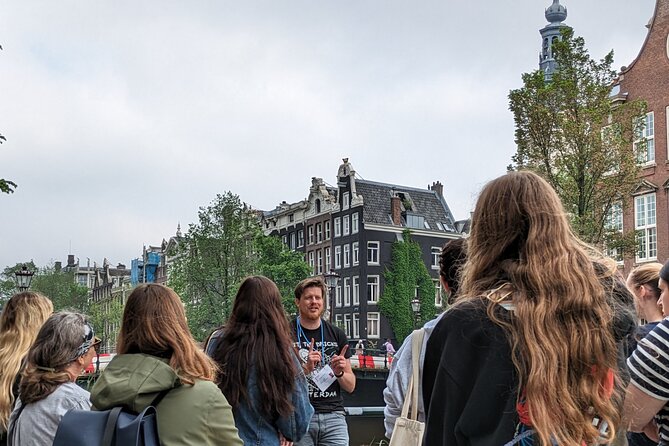
The tour meets at Hit the Bricks Walking Tours, Prinsenstraat 13 (near public transportation). It starts at 11:00 am and runs about two hours. You finish at Dam Square, with easy transit options right there.
Because it’s a short walk, the pace is naturally brisk—but not rushed. Most stops are around five to ten minutes, so you get a “first look” that’s just deep enough to point you toward what you might explore on your own later. If you love long museum-style explanations, this might feel brief. If you want a fast, friendly map of the city, it’s a strong fit.
One small local-touch detail: if you arrive early at the meeting spot, you might meet a cat named Koko hanging around the office. It’s not a reason to book, but it’s the kind of warm, Amsterdam-style charm that makes the start of the day feel less robotic.
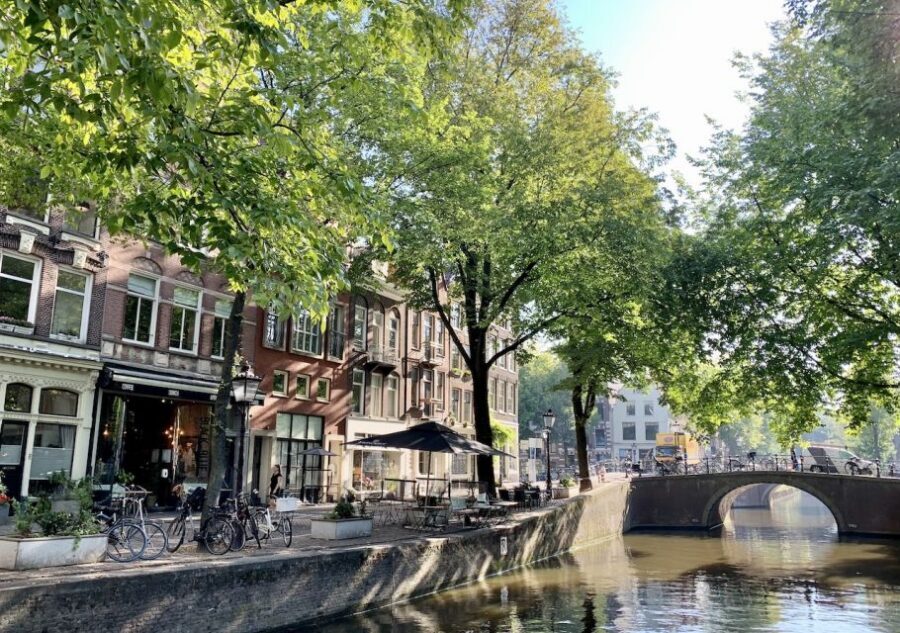
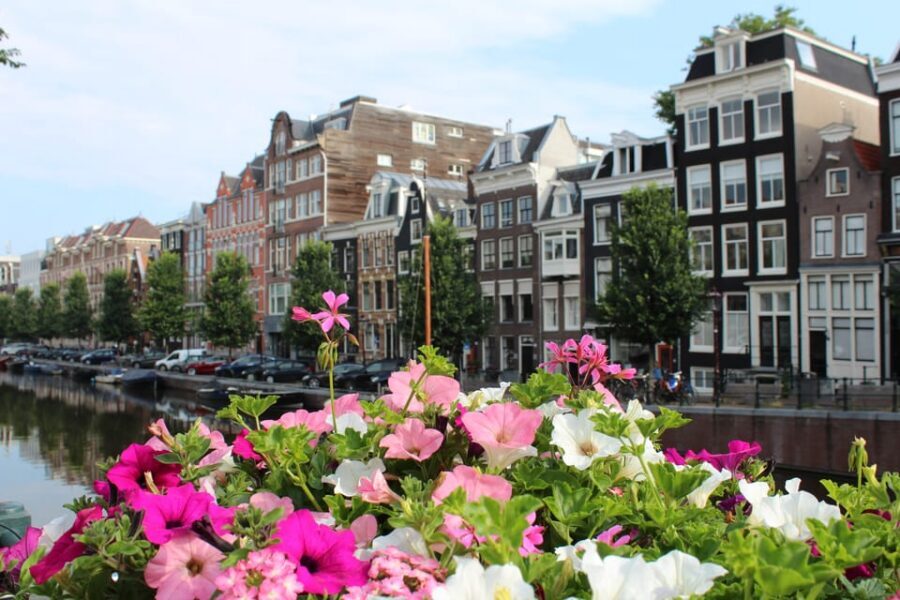
Canal Ring (Grachtengordel): the water story behind the city
You begin in the canal belt area, where Amsterdam’s famous waterways do more than just look good. The guide frames the canal system as a long-term compromise: humans building a life in partnership with water. That theme matters because it shows up everywhere—architecture, city planning, and even national mindset.
This is also one of the easiest places to get oriented. You’ll see how the canals knit neighborhoods together, and you’ll likely spot the shapes of bridges and street angles that later help you navigate without constantly checking your phone.
A drawback to know: canal-belt streets can be busy, so you may not get long, quiet time at the exact same spot. The upside is that you’re learning while you’re moving, which makes the time feel efficient.
De Wallen and Dam Square: learning the context, not just the reputation
Next comes De Wallen, Amsterdam’s most famous neighborhood. Instead of leaving you with only headlines, you’ll get the history of why it’s there and how Dutch society looks at it. It’s a useful approach because it keeps the conversation grounded in how Amsterdam thinks, not just what outsiders assume.
A quick word of honesty: this portion of the walk can make some people uncomfortable. Even when handled respectfully, the topic is sensitive. If you’re easily rattled, you might want to mentally set expectations and treat it like a short, informative stop rather than an entertainment zone.
Then you shift to Dam Square, the city’s central hub. Here, the tour connects Amsterdam’s water-fighting story to how culture and thinking developed over time. It’s a neat contrast: one stop is about a neighborhood that’s often judged; the other is about a square that represents civic identity and national symbols.
South Church and Begijnhof: calm courtyards inside the city
You’ll take a breather at South Church, where the key idea is how and why the Dutch moved from Catholic to Protestant. The focus isn’t just doctrine; it’s what changed in everyday space, including a serene inner courtyard near the church. That kind of detail helps history feel physical, not abstract.
Then comes Begijnhof, a place that functions like a secret pocket of quiet in the middle of Amsterdam. You’ll learn about the beguine sisters who built and shaped the space. Even if you don’t know the term before the tour, you’ll leave understanding why this enclosed-style community felt protective and meaningful.
The practical catch: these inner spaces can feel crowded when groups arrive at the same time. The tour moves you along quickly, so you’ll get enough time to appreciate the atmosphere, but you shouldn’t expect hours of solitude.




Jodenbreestraat: Jewish history and the weight of the Hungerwinter
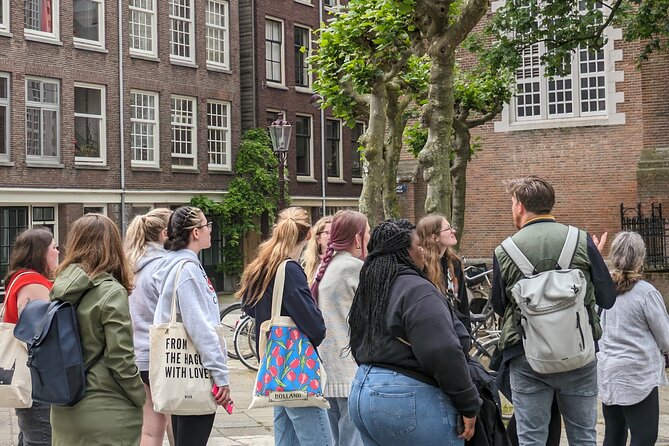
One of the most serious stops is in the Jodenbreestraat area at the edge of Amsterdam’s Jewish Quarter. You’ll hear about the tragic fate of tens of thousands of Jewish people who lived in Amsterdam before and during the war, and the suffering of the hungerwinter.
This isn’t a “fun fact” moment. It’s emotionally heavy, and it’s exactly why a guide matters. Without context, it’s easy to walk past street-level history and miss the human story attached to it. With a guide, you connect location to events and you understand why these streets carry memory.
The time on this stop is short, which is both good and hard. Good because you’re not stuck there for hours. Hard because you might want more time to absorb what you’re hearing.
Bushuis – Oost-Indisch Huis: the Dutch East India company power story
At Bushuis and Oost-Indisch Huis, you’ll learn how the former Dutch East India company HQ helped a small country grow into an empire, especially through spice trade. The guide also highlights how the company fought for its own independence and survival, which helps you see that this was not only commerce—it was power, strategy, and constant pressure.
This stop is great if you like history that explains how global networks were built. The “why” matters: you’ll understand how trade routes and political ambition mixed in ways that shaped the Netherlands far beyond its borders.
Possible drawback: if you’re expecting a purely architectural stop, you might feel that it’s more story-driven than photo-driven. Still, the building’s role gives the details meaning, and the guide keeps it understandable.
Stopera Pier: an ugly building locals still feel proud of
Next, you’ll reach the banks of the Amstel River and see Amsterdam’s modern city hall—often associated with the local nickname Stopera. The guide explains why locals call it that, and why, despite the building’s reputation for ugliness, it’s still a source of pride for Amsterdammers.
I like this stop because it pokes at the usual tourist habit of treating “beautiful” as the only thing that matters. Cities evolve, and civic identity doesn’t always match postcard aesthetics. You’ll leave thinking a little differently about how public spaces reflect the people using them.
Time here is brief, so treat it as a quick look and a conversation starter, not a full architecture deepening.
Royal Palace and the orange-vs-flag story you can reuse all trip
You’ll also see the Royal Palace Amsterdam area and hear how the Dutch royal family came to be, including the role of the French in that story. The tour ties this into a practical detail you’ll actually remember later: why Dutch national color is orange while the flag is red, white, and blue.
This is the kind of mini-history that pays off when you’re watching parades, spotting symbols, or trying to decode what different colors mean in the city.
One thing to note: the Royal Palace admission isn’t included. So you can walk by and get the background, but if you want to go inside, you’ll need to arrange that separately.
Groenburgwal and the Monet bridge photo moment
The walk finishes with Groenburgwal, including a stop for the famous Monet bridge. It’s built for photos, and the tour gives you a dedicated brief moment to capture it without scrambling.
This is quick—just a few minutes—so the key is readiness. Have your camera out, know your angle, and don’t wait for the perfect light. Even in normal daylight, the composition looks great because the bridge sits in a classic canal-view frame.
Finish at Dam Square means you’re not stranded. You can head straight into your next plan, whether that’s a museum, a late lunch, or another canal-side wander.
Price and value: what $30.04 buys you in Amsterdam
At $30.04 per person, this is positioned as an efficient orientation tour. You’re paying for an expert local guide, plus a set of travel tips designed to help you get more from the rest of your Amsterdam days.
It’s also a tour where the included value isn’t just the talk—it’s how the guide connects places. Canals, squares, courtyards, and street-level history all get tied to the Dutch way of thinking. That’s hard to replicate by yourself in a quick timeframe unless you’re already very well read.
There’s also an upside if you’re planning more. You can request discount codes for other tours from the operator, which can help reduce the cost of stacking activities.
The main cost consideration is your own preference for depth. With only about two hours, you’ll learn a lot of “first-layer” context. If you’re the type who wants to linger, you’ll need extra time later.
Practical tips that make the whole thing smoother
- Wear comfortable shoes. You’ll be on foot for a full stretch of central Amsterdam, and the pacing is designed for learning, not for stopping every five minutes.
- Bring a refillable water bottle. Bottled water isn’t included, but the tour notes that there are several places to fill up.
- If you want the best photos, do it calmly during the short stops. The Monet bridge moment especially is time-limited.
- Come ready for mixed tone. The route shifts from light explanation and humor to serious WWII-era history. That rhythm is part of the value.
Finally, remember the tour depends on good weather. If it’s canceled due to poor conditions, you should expect a reschedule or a full refund.
Should you book it? My honest take
Book this tour if you’re visiting Amsterdam for the first time and want a fast, story-led introduction to the city’s identity. It’s ideal for people who like their history explained in plain language, who enjoy a guided sense of humor, and who want photo-ready stops without planning a route for yourself.
Skip or consider alternatives if your priority is deep museum-level detail or if the Red Light District and Jewish WWII history would feel too intense for your trip style. Also, if you hate walking and prefer a sit-down format, two hours on foot might be more than you want.
But for most first-timers, this hits a sweet spot: you get orientation, culture, and memorable moments in a compact time window—and you leave with enough context to explore the rest of Amsterdam with confidence.
FAQ
How long is the Amsterdam history walking tour?
It runs for about 2 hours.
What is the price per person?
The price is $30.04 per person.
Is the tour in English?
Yes, the tour is offered in English.
How big is the group?
The tour has a maximum of 10 travelers.
Where do I meet, and where does the tour end?
You meet at Hit the Bricks Walking Tours, Prinsenstraat 13, and you end at Dam Square.
What time does the tour start?
The start time is 11:00 am.
Is admission included for all stops?
Admission is free for most stops listed, but the Royal Palace Amsterdam admission is not included.
Do I need to bring bottled water?
Bottled water isn’t included. The tour notes there are several places to refill, so bring a refillable water bottle.
What happens if the weather is bad?
This tour requires good weather. If it’s canceled due to poor weather, you’ll be offered a different date or a full refund.
Is there free cancellation?
Yes. You can cancel up to 24 hours in advance for a full refund.