REVIEW · AMSTERDAM
Amsterdam Walking Tour: Explore the Red Light District
Book on Viator →Operated by Free Tour Expert · Bookable on Viator
Amsterdam at night has a way of surprising you. This Red Light District walking tour threads the city’s older layers—sailors, medieval streets, and places of worship—right through the area most people think they already know. You’ll cover classic sights along the way and get smart guidance on what’s worth your time after the walk, including pointers for places like Anne Frank House (extra cost) and the Queer Garden area.
I really like two things here: first, the small group size (max 15) keeps the pace human and the questions coming. Second, the route mixes De Wallen with quieter history stops, so you’re not just staring at neon—you’re learning how Amsterdam’s trade, religion, and community life have overlapped for centuries.
One thing to consider: the tour length is short, so if you want a deeper, slower experience (or timed entry spots), you may feel a bit rushed. And like any night activity, there’s always a small risk of hiccups with guide timing and communication—so it helps to stay flexible and keep your phone handy.
In This Review
- Key Highlights You’ll Actually Feel on the Walk
- From Café the Schreiertower to Sailors’ Farewells
- Zeedijk and Amstel: Medieval Defense to Modern City Rhythm
- De Wallen: The Oldest Part of the City in Plain Context
- Oude Kerk Amsterdam: When the City’s Oldest Building Feels Personal
- Fo Guang Shan He Hua Temple: A Calm Contrast You’ll Appreciate
- Restaurant-Café In de Waag: From Gate and Weigh House to Modern Stops
- Price and Value: Is $32 Worth It for This Short Night Walk?
- Who This Walk Suits Best (and Who Might Want Something Else)
- Booking Reality: What to Know Before You Go
- Should You Book This Amsterdam Red Light District Walk?
- FAQ
- Where does the tour start and end?
- What time does the tour begin?
- How long is the walk?
- How much does it cost?
- What group size should I expect?
- What language is the tour offered in?
- Is admission included for the stops?
- Is there a cancellation option?
- Is there a mobile ticket?
Key Highlights You’ll Actually Feel on the Walk
- Max 15 people keeps it personal enough to ask questions, not just listen
- De Wallen plus real landmarks means context, not just shock-and-awe
- Free stops along the route help you control your total spend
- English-speaking guide with practical sightseeing and food/café tips
- Night-start at 7:30 pm fits well with Amsterdam evening plans
- Tower of Tears heads-up: it’s easy to miss if you haven’t looked it up
From Café the Schreiertower to Sailors’ Farewells
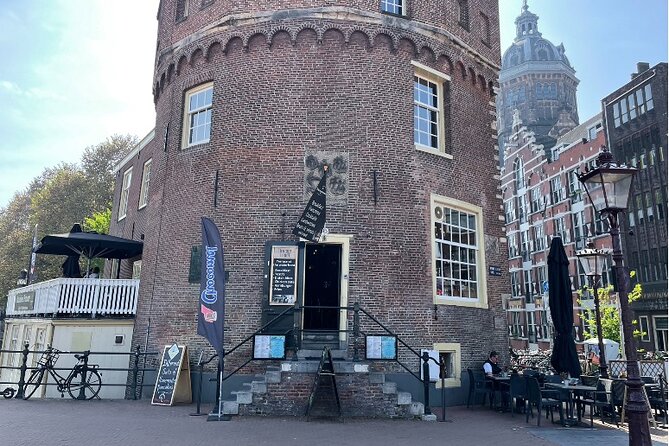
You start near Prins Hendrikkade, at Café the Schreiertower, and the tone is instantly more thoughtful than you might expect. This is one of those spots where history shows up in ordinary life. The story here is about sailors’ wives—how they once gathered to wave goodbye as ships departed from the port. It’s a reminder that Amsterdam’s identity has long been tied to movement: ships leaving, people waiting, and the city constantly reworking itself around trade.
The practical win: because you’re starting with something grounded, you get a better mental map before you hit the louder streets. You’re less likely to treat De Wallen as a single-topic zone, and more likely to see it as part of a larger neighborhood story.
Quick watch-outs: the tour is short, so you’ll want to arrive a minute early and be ready to walk without lingering. If you’re hoping for long photo pauses at every stop, you might not get them.
You can also read our reviews of more tours and experiences in Amsterdam.



Zeedijk and Amstel: Medieval Defense to Modern City Rhythm

Next comes Zeedijk, one of Amsterdam’s oldest streets. You’ll hear how it used to relate to the city’s medieval defense wall, then how it evolved into a place known for its Chinatown atmosphere. Even if you don’t do any shopping, the street itself becomes a lesson: Amsterdam doesn’t replace neighborhoods so much as it layers them.
Then the tour moves toward the Amstel, the river that gave the city its name. It’s also tied to early mills, which mattered because they supported Amsterdam’s early trade. In other words, the city grew where the water helped it work.
Why I think this matters for you: De Wallen can feel like a world unto itself at first glance. But once you understand Amsterdam grew by connecting waterways, commerce, and neighborhood routes, the whole layout starts to make sense. You’ll connect the dots between where goods moved and where people lived.
If you like photos, this section is usually the easiest. Keep it simple: a couple of wide shots, then move on. The energy is forward.
De Wallen: The Oldest Part of the City in Plain Context
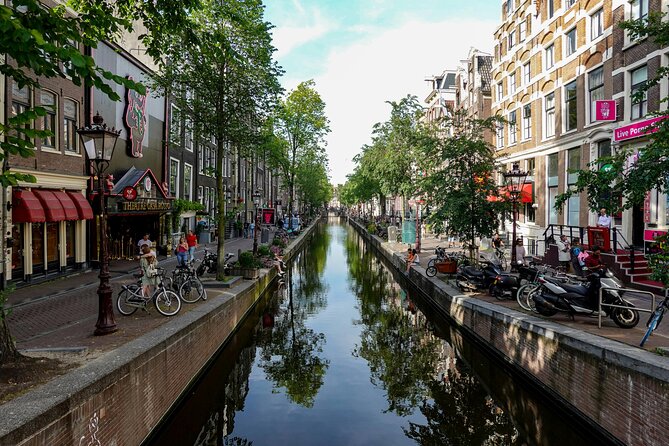
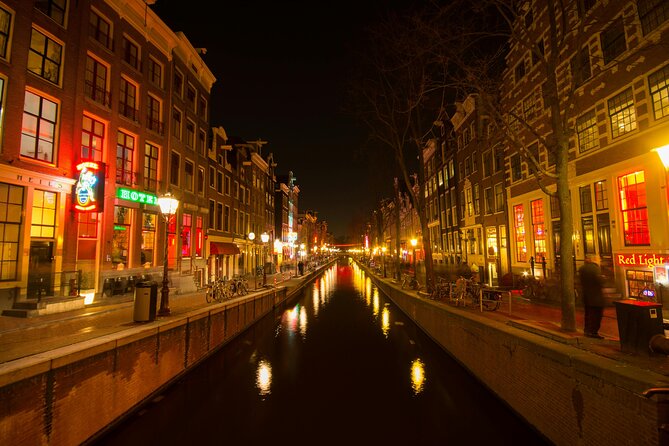
This is the big moment: the Red Light District (De Wallen). Instead of treating it like a single attraction, the guide frames it as the city’s oldest core area where trade, religion, and nightlife have coexisted for centuries. That’s the key shift. You’re not just looking at what’s visible now—you’re hearing how the neighborhood’s role changed while staying in the same geographic pocket.
The best way to use this stop is to keep your expectations grounded. You’ll likely see the area’s distinctive storefront-lit scene, but the point of the walk is context: why this place exists, what role it played historically, and how Amsterdam handled public life in close quarters.
A pro tip from real-world experience: you may want to google Tower of Tears before you go. The building isn’t signed in a way that makes it obvious from the street, so if you want to find it during the walk, advance research helps.
Practical consideration: this is a sensitive area. Keep your distance and move calmly. If you’re traveling with kids or anyone who prefers low-intensity experiences, you’ll want to gauge comfort level before committing.
Oude Kerk Amsterdam: When the City’s Oldest Building Feels Personal
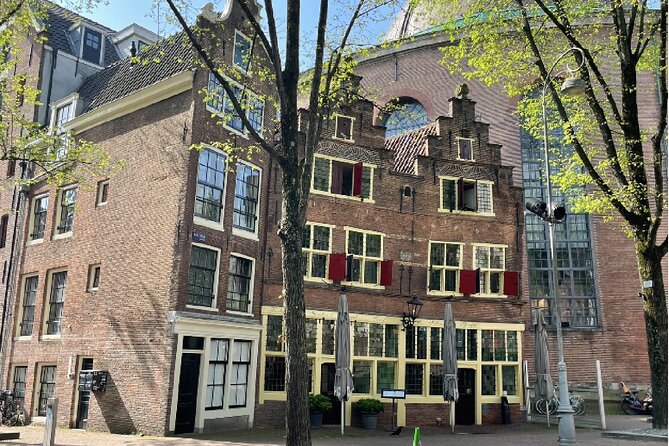
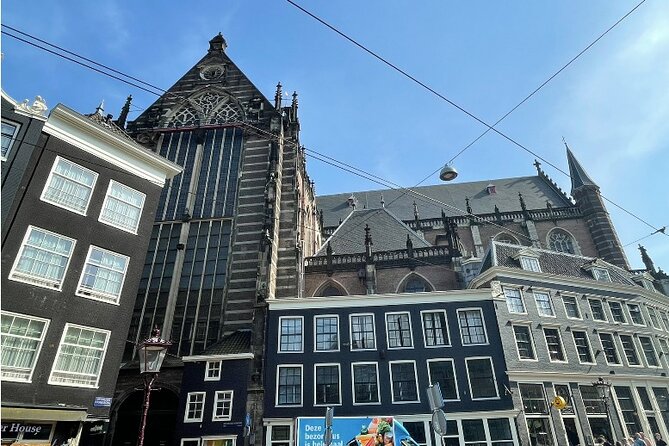
After De Wallen, the vibe shifts to the Oude Kerk Amsterdam—founded in the early 14th century. The tour connects the church to how Amsterdam once looked around water and wooden housing. That’s not just trivia. It helps you picture the city before today’s stone, streets, and canal-side rhythm fully “locked in.”
This is one of my favorite kinds of stops: it’s visually impressive, but it also gives you a mental anchor. If you’ve ever felt like Amsterdam’s streets are too pretty and too confusing at the same time, a historic landmark like this helps you orient.
What you’ll likely enjoy: listening for how old buildings were surrounded by different kinds of housing and water conditions. It makes the present-day city feel more grounded. Less postcard. More place.
One drawback: since the total walk is time-limited, you won’t get to linger for long. If you want a deeper look inside, plan that as a separate visit.
Fo Guang Shan He Hua Temple: A Calm Contrast You’ll Appreciate
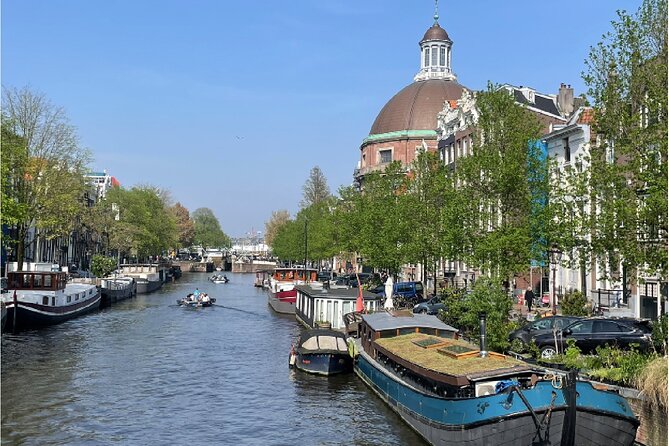
Then you get a fascinating contrast: the Fo Guang Shan He Hua Temple, described as the largest Chinese Buddhist temple in Europe, built in traditional style and inaugurated in 2000. This stop matters because it changes the atmosphere mid-walk. You go from a neighborhood that many people associate with nightlife and provocation to a space designed for reflection and calm.
Even if you’re not deeply religious, the cultural contrast is the point. Amsterdam is a city of immigration and exchange, and this temple is a visible symbol of that. It’s also a great reminder that “Amsterdam in one neighborhood” is never the full story.
Practical note: this section is usually best for slow walking and quiet observation. No rushing. You’ll get more out of it if you let the details register—architecture, layout, and how the space feels compared with the streets you just left.




Restaurant-Café In de Waag: From Gate and Weigh House to Modern Stops
The final major stop is Restaurant-Café In de Waag, a medieval building that served as a city gate, then a weigh house, and later a guild hall. That’s a lot of jobs for one building—and it’s exactly the kind of layered history Amsterdam does well. Trade needs gates. Trade needs weighing. Trade needs guild organization. The city kept reusing what it already had.
Why it’s a smart closing stop: after walking through De Wallen and several major cultural sites, you end with a structure that connects the themes—commerce and civic organization—with a recognizable physical form.
If you’re hungry, this is also a naturally timed place to think about your next move. You’ll know you’re ending the walk back at the meeting area, so you can decide whether to eat nearby or keep moving to another part of the city.
Price and Value: Is $32 Worth It for This Short Night Walk?
At $32 per person, this tour isn’t trying to be a bargain show. It’s priced for a guided experience with a tight route and meaningful stops. For me, the value comes from three places:
First, the small group cap (no more than 15) makes it feel less like a conveyor belt. Second, you’re getting more than one “type” of stop: De Wallen context, an iconic church, a Chinese Buddhist temple, and a medieval building tied to trade. That’s better than paying for a single-topic stroll where you mostly stand and look.
Third, you’ll get tips from your guide for sightseeing, shops, and cafes around Amsterdam. That kind of local guidance can save you time later. You don’t just leave with photos; you leave with a better plan for the rest of your evening.
Now, here’s the fairness note: because the walk is about 1 hour 15 minutes, you won’t get long explanations at each site. Also, the activity description mentions a 2.5-hour guided walking tour format, which suggests there may be some flexibility depending on the exact pacing. If timing matters for your evening, check your confirmation closely and give yourself some buffer.
Who This Walk Suits Best (and Who Might Want Something Else)
This tour is a great fit if you:
- want context around De Wallen without making it the only topic
- like a compact evening plan with multiple landmark stops
- prefer small-group walking with time for questions
- want practical suggestions for where to go next in Amsterdam
You might want a different option if you’re:
- looking for a long, slow, in-depth experience
- planning to add several ticketed attractions during the walk (Anne Frank House is extra cost)
- very sensitive to the look and atmosphere of De Wallen at night
It’s also a good option for people who like mixing cultures and architecture. The temple stop is a real curveball in the best way, and it helps the walk feel more like Amsterdam rather than a single-photo mission.
Booking Reality: What to Know Before You Go
The start time is 7:30 pm, and the meeting point is Prins Hendrikkade 94 95, 1012 AE Amsterdam. The tour ends back at the same location.
You’ll get a mobile ticket, it’s offered in English, and service animals are allowed. It’s also near public transportation, which helps when you’re matching it to dinner plans.
If you’re the type who likes to be prepared, a simple move helps a lot: do a quick search for Tower of Tears. It’s not clearly signed in the way you might expect, and that tiny prep can make the walk feel more rewarding.
Should You Book This Amsterdam Red Light District Walk?
I’d book it if you want a short, guided route that explains what you’re seeing instead of leaving you to guess. The biggest strength is the mix: De Wallen context plus real history landmarks (like Oude Kerk) and a culture-changing stop (like Fo Guang Shan He Hua Temple). For $32, you’re paying for direction, pacing, and local tips—things that usually cost more in time than in money.
I’d hesitate if you hate being in sensitive areas at night, need a lot of time at each stop, or are building a schedule that can’t absorb delays. Also, because one guide-communication issue has popped up in past experiences, I suggest you stay calm but organized: show up early, double-check your starting point, and keep your phone ready in case plans change.
Overall, this is a strong “get oriented” walk—especially if you want De Wallen placed into the broader Amsterdam story.
FAQ
Where does the tour start and end?
It starts at Prins Hendrikkade 94 95, 1012 AE Amsterdam and ends back at the same meeting point.
What time does the tour begin?
The start time listed is 7:30 pm.
How long is the walk?
The tour duration is listed as about 1 hour 15 minutes.
How much does it cost?
It costs $32.00 per person.
What group size should I expect?
The tour has a maximum of 15 travelers.
What language is the tour offered in?
The tour is offered in English.
Is admission included for the stops?
The stops on the route are listed as free for admission, and gratuities are optional.
Is there a cancellation option?
Yes. You can cancel up to 24 hours in advance for a full refund.
Is there a mobile ticket?
Yes, you’ll receive a mobile ticket.