REVIEW · AMSTERDAM
Amsterdam City Center Guided Walking Tour Semi-Private 12ppl Max
Book on Viator →Operated by Babylon Tours Amsterdam · Bookable on Viator
Small bridges, big stories, and zero map stress. This semi-private Amsterdam city center walk strings together the places you’ll want to hit anyway, with frequent stops so you can actually look up, not just keep moving. Small-group focus and photo-friendly pacing are the two things I like most, because you get real attention without feeling rushed.
One heads-up: you’ll be walking a lot on cobblestones and over bridges, and the tour isn’t recommended if you use a wheelchair or have significant walking limitations. You’ll also mostly see many sights from the outside, since some places can’t be entered due to security rules.
In This Review
- Key points worth knowing before you go
- A Semi-Private Route That Hits the Big Names in 2.5 Hours
- Meeting at St. Nicholas Basilica, Finishing at Papeneiland
- Stop-by-Stop: St. Nicholas Basilica to Zeedijk’s Locks
- Nieuwmarkt and De Waag: Trading Square to Old-Gate Remains
- Canal-House Architecture: Trippenhuis and the Thin-House Lessons
- Churches, a Courtyard Peace Pause, and Dam Square’s Power
- Golden Bend Canals, Anne Frank From the Outside, and the Night Watch Corner
- Noorderkerk and the Papeneiland Finish (Plus That Apple Pie Setup)
- Practical Tips That Make the Walk Feel Easy
- Price and Value: Why $59.28 Can Be a Smart Use of Time
- Should You Book This Amsterdam City Center Walk?
- FAQ
- How long is the Amsterdam City Center Guided Walking Tour?
- What is the maximum group size?
- What language is the tour offered in?
- Where do we meet, and where does the tour end?
- Do I need to buy admission tickets for stops?
- Will the tour run if it rains?
- Is this tour suitable for wheelchair users or limited mobility?
- What luggage is allowed?
- Can I cancel for a full refund?
Key points worth knowing before you go
- Semi-private size (up to 12) means you can ask questions and still move like a normal walking group
- A route built around the city’s watery origins helps the places make sense, not just look pretty
- Lots of short stops for photos so you get the best angles without sprinting
- Careful mix of must-sees and architecture details (canal houses, hofjes, city-gate leftovers, church towers)
- Rain or shine operation with practical packing advice you’ll actually use
- Good value for an intro day if you want the big highlights plus neighborhood context in one go
A Semi-Private Route That Hits the Big Names in 2.5 Hours
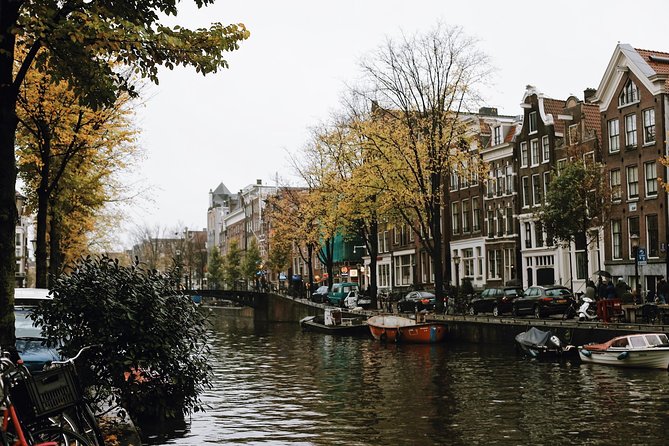
This is designed for people who want Amsterdam in one focused sweep. The timing is tight enough to feel efficient, but not so fast that you’ll miss what matters. You’ll walk through multiple neighborhoods and cross bridges on foot, while your guide connects the dots—how Amsterdam grew from a small, water-bound settlement into the big international city it is today.
I also like that the tour is “semi-private,” capped at a maximum of 12 people. On the description side, it’s framed as an eight-or-fewer style experience, which is exactly what you want in a city where group bottlenecks can kill the vibe. With a smaller group, you get a better chance to hear the guide clearly and get answers that fit what you care about.
The other big win is the guided structure. Instead of bouncing randomly between landmarks, the walk builds a theme: canals, trade, religion, and the architecture shaped by land taxes and tight space. When it works, you come away with a mental map, not just a list of photos.
You can also read our reviews of more tours and experiences in Amsterdam.



Meeting at St. Nicholas Basilica, Finishing at Papeneiland
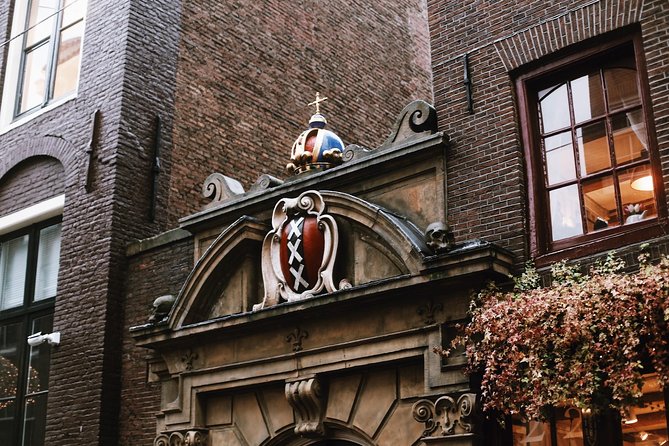
You start at Basilica of Saint Nicholas, Prins Hendrikkade 73 (a central meetup point). Then the tour ends at Papeneiland, Prinsengracht 2, a canal corner that feels like a good landing spot for your day.
This matters more than it sounds. When a city walk has a clean start and finish point, you can plan your next stop without backtracking. And because it’s near public transportation, you’ll have options if your timing is off.
You’ll likely use a taxi or rideshare from your hotel if you’re not right downtown. The tour doesn’t include pickup or drop-off, so build that in. Also, plan to travel light: no large bags or suitcases are allowed on this tour. A small day bag is fine, but don’t roll in with luggage.
Stop-by-Stop: St. Nicholas Basilica to Zeedijk’s Locks
The first stop is St. Nicholas Basilica. Even if you’re not a hardcore church person, it’s worth it here because it’s tied to Amsterdam’s longer religious story. Built in the late 19th century after centuries of prohibition, it’s described as a blend of architectural styles that reflects how the city’s religious landscape evolved. Admission is listed as free for this stop, so you’re not paying extra to get the opening context.
Next comes the Schreierstoren, also known as the Weeping Tower. This medieval tower is tied to a very human image: women saying farewell to loved ones departing by ship. It’s only about a brief stop, and the admission ticket is noted as not included—so assume you’ll see it and hear the story rather than treat it like a long museum visit.
Then you move into Zeedijk, one of Amsterdam’s oldest streets. The key idea is that it used to be a sea dike holding back the waters of the IJ. That “water control” theme continues near the Kolksluis, where you’ll admire the lock bridge area. This is a smart early-morning setup (or early-tour setup): you learn how the city literally managed water, then the rest of the walk makes more sense.
If you like photos, this stretch is a solid start. You’re walking outdoors, you’re looking at old street lines, and you’re getting architecture details that don’t require you to enter anything to appreciate.
Nieuwmarkt and De Waag: Trading Square to Old-Gate Remains
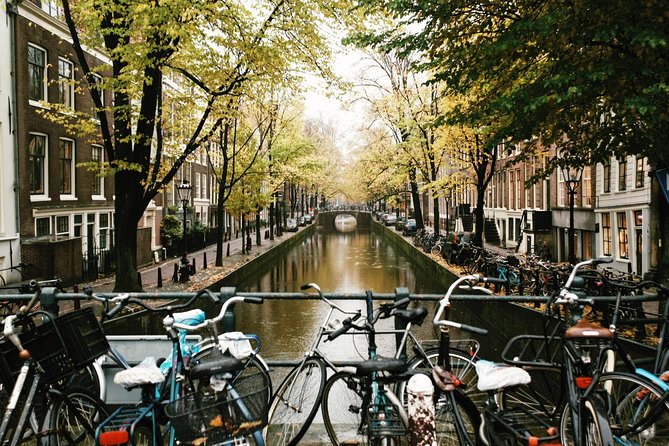
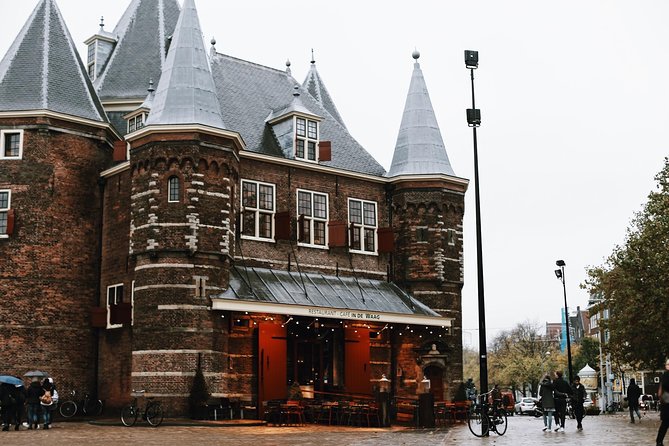
Nieuwmarkt is next, and it’s where Amsterdam shifts from “historical framing” into “lived-in city energy.” The square has served as a center for commerce and socializing since the 17th century, partly because it sat conveniently inside the old city gate. It’s one of those places where the past is still visible in the street layout, not just in buildings.
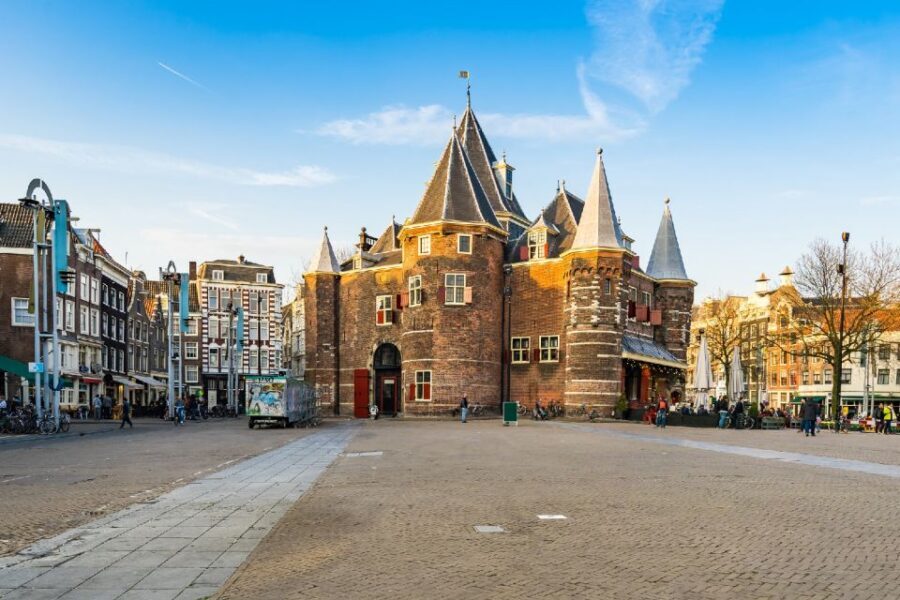
Right around the same area you’ll see De Waag. This 15th-century building is described as one of Amsterdam’s oldest remaining non-religious buildings. It started as a city gate and part of the walls, and it later served as a guildhall, museum, and even a fire station. That variety is the point: Amsterdam reuses buildings when it can, and the city’s “utility history” is part of its charm. Admission is listed as free for this stop.
A quick reality check: because security rules at some attractions can prevent inside access, you should think of this portion as architecture viewing plus narration. You’ll get the why behind the looks, even if you don’t go inside everything.
Canal-House Architecture: Trippenhuis and the Thin-House Lessons
After Nieuwmarkt, you’ll pass by Trippenhuis and Klein Trippenhuis. This is the part of the walk where you start noticing how Amsterdam’s economics shaped its buildings. The Trippenhuis is described as Amsterdam’s widest home, spanning an enormous 22 meters. Across from it, the Klein Trippenhuis is presented as one of the narrowest houses in the city.
The story behind the narrow architecture is especially useful. Smaller, tighter plots—and land taxes—pushed people upward. When you see the buildings side by side, you can almost feel how “space” worked as a cultural force.
You’ll also step through the area of the Oost-Indisch Huis, the Dutch East India Company’s headquarters courtyard, described as the birthplace of the world’s first multinational corporation. Admission is marked as not included for this stop, so plan for outside viewing and guided explanation, not a long break inside.
From a traveler’s standpoint, I love stops like this because they teach you how to read Amsterdam. You don’t just see a pretty facade. You learn what kind of money and trade logic built it, and that changes how you’ll look at canal houses later on your own.



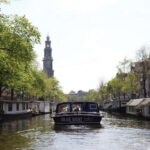

Churches, a Courtyard Peace Pause, and Dam Square’s Power
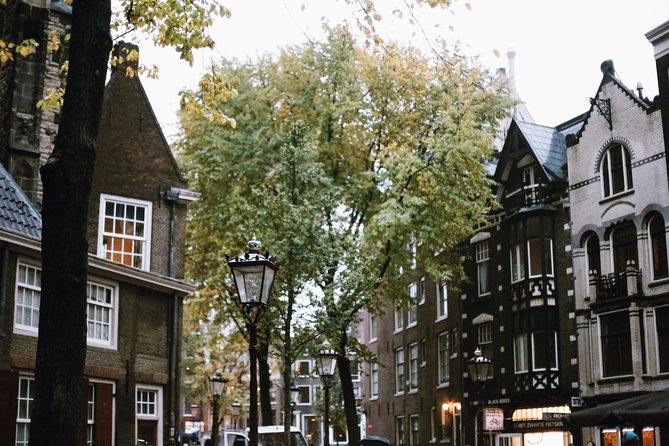
The tour continues with Zuiderkerk, Amsterdam’s first purpose-built Protestant church designed by Hendrick de Keyser. The standout is the tower, described as one of the city’s defining landmarks. Admission is marked as not included, so again, treat it as a close-looking stop rather than a full visit.
Next, you pass Rembrandt’s house area at Museum Het Rembrandthuis. Rembrandt lived and worked there between 1639 and 1656, and the museum is known for collections of etchings and paintings by Rembrandt and his contemporaries. The stop time is short and admission is not included, so your best move is to use the guide’s context to decide whether you want a standalone ticket later.
Then you’ll reach the Stopera—National Opera & Ballet paired with the city hall complex. Construction is noted as taking at least 60 years, which helps you understand why the building complex looks the way it does. It’s a quick stop: you’ll likely see the exterior, and the guide’s notes do the heavy lifting.
After that comes Huis Aan De Drie Grachten. This rare 17th-century canal house sits at the junction of three canals, with facades facing three directions. It’s the kind of stop that’s easy to miss if you’re rushing, which is exactly why it works on a guided walk.
Next is Begijnhof, one of the oldest hofjes in Amsterdam. This is a quieter reset button. The hofje is a group of houses built around a secluded courtyard and garden, connected to the Beguines—unmarried women living together under vows of chastity. Today it’s also the site of two churches. Admission is listed as not included for this stop, but the courtyard setting makes it feel like a slower pocket in the city.
Then you hit Dam Square, one of the most famous squares in Amsterdam. Here you’ll see the Royal Place, the New Church, and the National Monument. Admission is marked as free. This stop is more about orientation than ticking a museum box, since Dam Square is where you’ll end up again anyway.
Golden Bend Canals, Anne Frank From the Outside, and the Night Watch Corner
Herengracht is next, where you’ll admire the “Golden Bend,” lined with some of the richest canal mansions from the Dutch Golden Age. Admission is marked as free for this stop. Even with a short stop, the view is powerful because it’s basically a whole architectural timeline along one canal stretch.
Then you pass by Anne Frank House from the outside. The story is tied to WWII hiding, and next door rises the Westerkerk, described as the tallest church tower in Amsterdam. Admission is marked as not included here, so you’ll want to treat this as a respectful look and a reminder to plan if you want tickets later.
As you keep walking, you’ll look up at De Drie Hendricken aan de Bloemgracht 87–91, focusing on quirky gables carved with allegories and trade emblems. Admission is marked as free. This is one of those “look up” moments that makes you feel like you’re suddenly seeing Amsterdam the way locals see it.
Another highlight area is Rembrandtplein, also tied to the name Rembrandt and his famous painting The Night Watch. There’s a bronze-cast representation described as being displayed as part of the celebration of Rembrandt’s 400th birthday in 2006. It’s marked as free, and it’s a great photo moment before you head toward the last cluster of churches and canal corners.
Noorderkerk and the Papeneiland Finish (Plus That Apple Pie Setup)
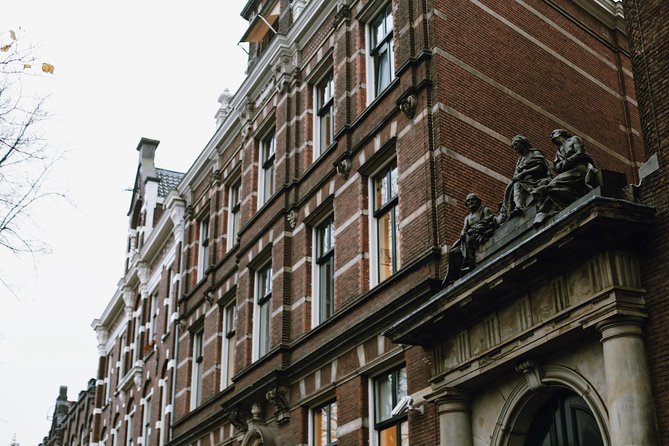
You’ll reach Noorderkerk, a 17th-century Protestant church built for the Jordaan district. The special thing is the unusual cross-shaped floor plan, linked to Reformation worship ideals. Admission is not included, so you’ll likely see it externally and get the architectural meaning in the guide’s words.
Finally, you end at Het Papeneiland, described as one of the city’s prettiest canal corners. The finish includes a brown café from 1642, and it’s said to serve some of the best apple pie in town. Admission is marked as free. Even if you don’t buy pie, this end spot works because it gives you a calm canal moment to reset before you continue your day.
If you want to turn the finish into a useful plan: use this endpoint to decide where you’ll go next. The guide’s tailored tips (part of the experience promise) should help you pick neighborhoods without wasting time.
Practical Tips That Make the Walk Feel Easy
Here’s how to set yourself up for an enjoyable 2.5 hours:
- Wear comfortable shoes. Cobblestones plus bridges add up.
- Bring a bottle of water. You’ll be stopping often, but it still adds up.
- Have a compact umbrella for rain. The tour runs rain or shine.
- Use a hat in summer. You’ll be outside for a long stretch.
- Don’t plan on inside access everywhere. Some attractions can’t be visited inside due to security measures.
One detail that can save stress: you’re required to provide the tour operator with a mobile phone number (including your country code). I’d add that to your booking immediately so you don’t scramble later.
Also, the tour is noted as not recommended for those with walking disabilities or using a wheelchair. If that’s your situation, consider a different type of tour that’s designed with more accessible options.
Price and Value: Why $59.28 Can Be a Smart Use of Time
At $59.28 per person for about 2.5 hours, this isn’t a “cheap and forgettable” walk. The value comes from three things you can feel in your day:
- You get a guided logic to the route. Amsterdam is famous for beauty, but it can also feel like a blur of canals if you don’t get the stories behind them. This tour gives you the why.
- Short photo stops add up. You’re not spending the whole time in a single long line or staring at one building. You collect multiple viewpoints.
- Small-group attention matters. Cap at 12 means you can ask questions and get feedback without your group feeling like a crowd.
Guides can really shape the experience. Two names that show up strongly for this style of tour are Josje B. and Hanneke—both described as engaging and deep on Amsterdam’s history and how neighborhoods fit together. You might not get the same guide, but it’s a good sign that the operator emphasizes clear, local storytelling.
If you’re in Amsterdam for the first time and you want to hit major landmarks without planning every ticket and route yourself, this price often feels fair. If you already know you’ll spend days in museums, you might instead want a themed tour focused on one area. But for a city-center overview with context, this is a strong fit.
Should You Book This Amsterdam City Center Walk?
Book it if you want an efficient first-day overview that helps you understand how Amsterdam works—water control, trade power, tight urban space, and the religion-and-architecture contrasts you see all around you. It’s also a good choice if you like photo stops and want a guide to point out details you’d miss on your own.
I’d skip it if you have limited mobility, if you hate walking on cobblestones, or if you specifically want long, inside museum time at multiple sites. This is built for movement and viewing with explanations, not for deep, multi-hour indoor visits.
If you can do the walking, this tour is one of those “start here, then branch out” experiences. After it, you’ll be better at choosing what’s worth your time for the rest of your Amsterdam days.
FAQ
How long is the Amsterdam City Center Guided Walking Tour?
The tour lasts about 2 hours 30 minutes.
What is the maximum group size?
It’s semi-private with a maximum of 12 travelers.
What language is the tour offered in?
The tour is offered in English.
Where do we meet, and where does the tour end?
You start at Basilica of Saint Nicholas, Prins Hendrikkade 73, 1012 AE Amsterdam, Netherlands. The tour ends at Het Papeneiland, Prinsengracht 2, 1015 DV Amsterdam, Netherlands.
Do I need to buy admission tickets for stops?
Some stops list admission tickets as free (for example St. Nicholas Basilica, Zeedijk, Nieuwmarkt, De Waag, Dam Square, Herengracht, and a few others). Other stops note that admission tickets are not included (for example the Weeping Tower/Schreierstoren, and several buildings where the stop is viewing rather than ticketed entry).
Will the tour run if it rains?
Yes. The tour will run rain or shine.
Is this tour suitable for wheelchair users or limited mobility?
It’s not recommended for those with walking disabilities or using a wheelchair, and you should have a moderate physical fitness level.
What luggage is allowed?
No large bags or suitcases are allowed during the tour.
Can I cancel for a full refund?
Yes. You can cancel for free up to 24 hours in advance for a full refund. If the tour is canceled because the minimum number of travelers isn’t met, you’ll be offered an alternative date or a full refund.