REVIEW · AMSTERDAM
Amsterdam: City Center Walking Tour in italian
Book on GetYourGuide →Operated by insolitAmsterdam B.V. · Bookable on GetYourGuide
Amsterdam’s best stories start on foot. This is a city-center walking tour led by an Italian guide who lives in Amsterdam, so you get more than postcard facts. Two things I really like: you’ll hit the big landmarks fast (like Dam Square), and you also get side-alleys and quieter corners that explain how the city works day to day.
What makes it especially appealing is the focus on everyday Dutch life, told with local context as you move from squares to churches to courtyards. I also like the practical touches: your guide gives end-of-tour tips and suggests classic street food like haring and fries, so you can keep exploring after you finish.
One drawback to consider: it’s not suitable for people with mobility impairments, since it’s a walk around the center with no mention of alternative accessible routing. If you’ve got limited mobility, you’ll likely find it tough.
In This Review
- Key highlights to look for
- Entering Amsterdam with a local Italian guide at Euro Pub
- Dam Square orientation: the fastest way to understand the center
- Royal Palace and Nieuwe Kerk: quick photo stops with the right context
- Kalverstraat Street: walking streets and the rhythm of daily life
- Begijnhof courtyard time: the secret-feeling stop you’ll remember
- Flower Market: color, quick sights, and a practical shopping feel
- The Amstel and canals: the part that makes Amsterdam click
- Rembrandtplein finish: end point with options for your next move
- Price and value: why $32 feels fair for a two-hour orientation
- What to bring (and how to make the walk comfortable)
- Who this tour suits best
- A note on guides: the local touch matters
- Should you book this Amsterdam city-center walking tour?
- FAQ
- Where is the meeting point for the tour?
- How long is the Amsterdam city-center walking tour?
- Is the tour offered in Italian?
- What are the main sights included in the walk?
- What is included in the price?
- Are attraction admission fees included?
- What do I need to bring?
- Is free cancellation available?
- Can I pay later?
Key highlights to look for
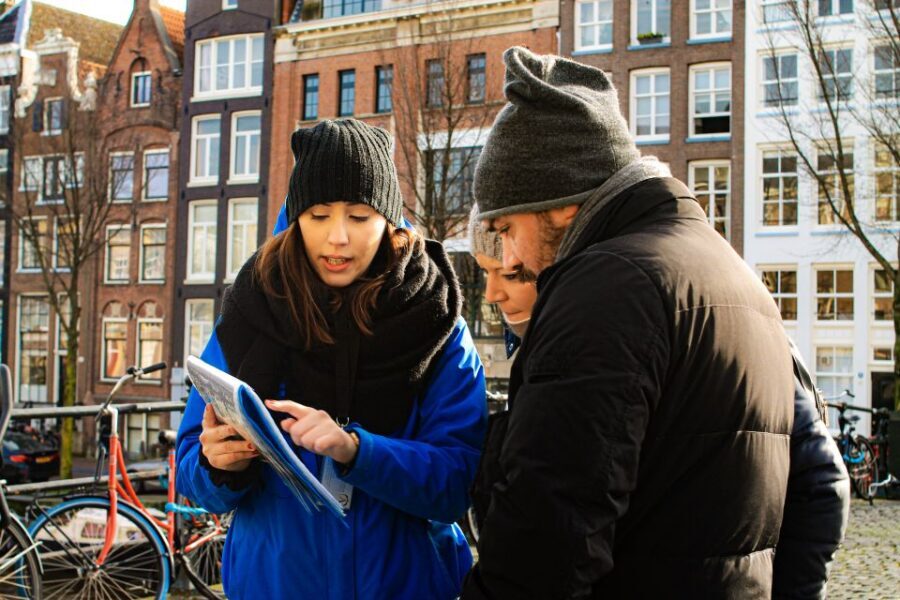
- Italian guide who lives in Amsterdam, sharing local stories and daily-life context
- Dam Square to Rembrandtplein route that helps you map the center quickly
- Begijnhof courtyard time, including an important hidden/secret courtyard stop
- Flower Market and Amstel canal area, for color, views, and atmosphere
- Photo stops at major sights, so you spend time walking instead of waiting
- Street food recommendations for haring and fries at the right moment
Entering Amsterdam with a local Italian guide at Euro Pub

Your tour starts in a very identifiable spot: in front of The Euro Pub in Dam Square. The meeting point matters because this tour depends on finding your guide quickly. The guide carries a blue umbrella, which is a small detail, but it saves you from wandering around Dam Square guessing.
You’ll want to show up with your bearings already set. Dam Square is the kind of place where you can feel like you’re in the middle of everything, yet you still need someone to explain what you’re looking at. That’s where an Italian guide living in the city becomes a real value. Instead of translating a script, the guide can point out how locals think about the same sights you see on photos—what’s meaningful, what’s just busy, and what’s interesting once you slow down.
The tour length is listed as 2 to 2.5 hours, which is a sweet spot. Too-short tours rush you. Too-long tours can wear you out before you get to the canal area. This one aims for a manageable pace: enough stops to understand the city, not so many that you spend the whole time moving through crowds without context.
You can also read our reviews of more walking tours in Amsterdam



Dam Square orientation: the fastest way to understand the center
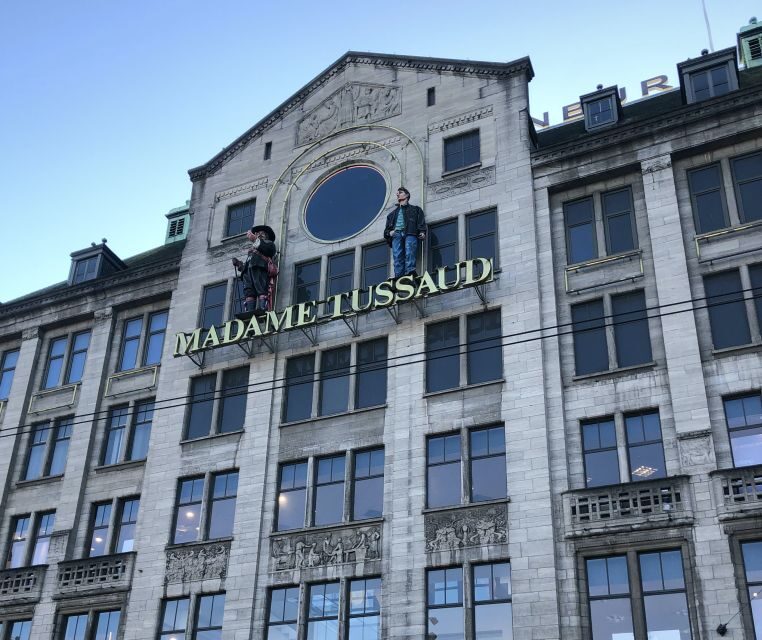
You begin at Dam Square with a guided introduction for about 15 minutes. This is your grounding point. Dam Square is where you can easily get turned around because it’s visually dominant, full of landmarks, and surrounded by streets that all feel like they lead somewhere.
A good orientation here pays off later. When you know what you’re looking at near the square, the rest of the route makes more sense—especially when you reach the canal area and start noticing how the city’s layout shapes daily life.
What you’ll likely get from this part: a sense of Amsterdam’s heritage and why the center developed the way it did. Even if you’ve visited before, this kind of framing helps you connect the dots between different stops instead of treating each one as a separate photo op.
Royal Palace and Nieuwe Kerk: quick photo stops with the right context
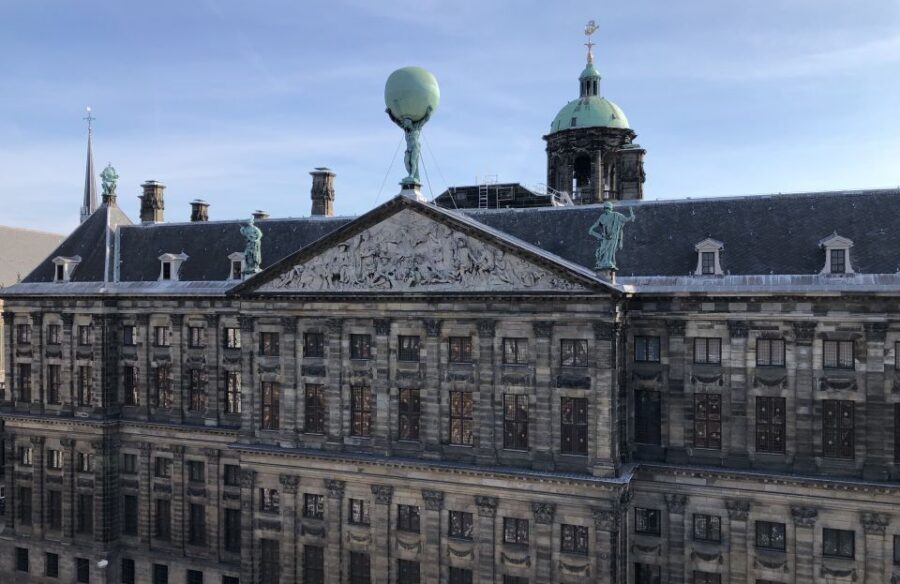
Next up are two classic landmark moments with short photo stops:
- Royal Palace, Amsterdam (about 5 minutes)
- Nieuwe Kerk, Amsterdam (about 5 minutes)
These are brief on purpose. For me, that’s a practical choice. You get the payoff of seeing the buildings, but you don’t lose the tour’s momentum. The best part is that these stops are not just about architecture for architecture’s sake. Your guide is there to connect what you’re seeing to the larger story of the city.
One thing I’d watch for: when photo stops are short, you’ll want to be ready to move as soon as the guide finishes explaining. If you want extra time for pictures, plan to do it efficiently—take a first set quickly, then wait until the guide signals you’re free to linger.
Kalverstraat Street: walking streets and the rhythm of daily life
At Kalverstraat Street, you get around 10 minutes of guided walking. This is the kind of street that can look like any shopping corridor at first glance—but your guide turns it into something more useful.
This is where the tour’s theme of everyday Dutch life becomes real. You’re not just hearing about buildings; you’re watching the city’s flow. I like these “between landmarks” segments because they give you a chance to understand how Amsterdam feels in motion—how people actually move, pause, shop, and head toward the next canal bridge or square.
If you’re the kind of traveler who likes to know what daily life looks like beyond the top attractions, this segment is a good use of time. And it’s also a mental reset: you’re walking, not standing.
Begijnhof courtyard time: the secret-feeling stop you’ll remember
Begijnhof is one of the tour’s centerpieces, and it’s listed twice—both guided time and photo time. You spend about 15 minutes guided, then about 5 minutes on photo stop.
Why this matters: Begijnhof is famous for feeling tucked away, and your route is designed to treat it like a pause, not just another stop. The tour description calls it an important hidden/secret courtyard, and that’s the whole point of including it. Amsterdam can feel open and showy in the main streets. Begijnhof gives you the contrast: quieter, more inward, and reflective of older social structures.
Here’s how I’d use this moment while you’re there:
- Look for the atmosphere shift as you step into the courtyard.
- Pay attention to what your guide says about how this place fit into daily life.
- Don’t rush your photo stop. The lighting can change quickly in courtyards, and you’ll likely want one picture that captures the sense of seclusion.
This is also a stop where an Italian guide really helps, because the story is usually the best part. The buildings and layout are the setting; the explanation makes it stick.
You can also read our reviews of more city tours in Amsterdam




Flower Market: color, quick sights, and a practical shopping feel
Then you reach the Amsterdam Flower Market for about 15 minutes. This is one of those places that looks easy to understand from the outside—flowers, stalls, color—but it becomes more interesting when someone explains what you’re seeing and why it has that role in the city.
Expect guided walking and commentary focused on the market atmosphere and how it fits into the surrounding canal area. Your guide likely points out details you’d miss if you just rushed through for photos.
A practical tip: don’t assume you’ll buy much unless it’s your style. This stop is often more about observing and soaking in the vibe than making a big purchase. If you do want to buy, plan for carrying it. Your shoes should stay comfortable; you’ll be walking the rest of the center.
The Amstel and canals: the part that makes Amsterdam click
The Amstel segment happens twice:
- guided tour around 10 minutes
- photo stop around 5 minutes
Canal-area walking is where Amsterdam becomes more than a list of monuments. It’s where the city’s layout explains everything: how neighborhoods relate, why bridges matter, and why water is part of daily life rather than a background feature.
I also appreciate that the tour doesn’t ask you to do “all the canals” in one go. Instead, it gives you a focused slice of the Amstel area so you can connect the moment to what you learned earlier. The route design helps you notice patterns—streets feeding into the water, viewpoints near bridges, and the way the center feels different from the calmer courtyard stop at Begijnhof.
If you’re someone who gets tired after too many landmark stops, this canal time is a nice reward. It’s visually satisfying and mentally relaxing.
Rembrandtplein finish: end point with options for your next move
Your tour finishes at Rembrandtplein. Ending here is convenient because it’s a lively area with plenty of options afterward, and it’s far enough from Dam Square that you don’t just loop back into the same street maze.
This is also the moment when your guide’s advice matters most. The tour includes tips and suggestions at the end, and in practice, that’s when you can ask what to do next based on your interests—museums, a calmer canal walk, or food.
Since the tour includes street food suggestions like haring and fries, Rembrandtplein is a good place to think about what you want to eat next. If you’re hungry right after the tour, plan your meal right away rather than delaying and then getting stuck with whatever is closest.
Price and value: why $32 feels fair for a two-hour orientation
The price is listed as $32 per person with a duration of about 2 to 2.5 hours. On paper, it’s a straightforward sightseeing cost, but the value comes from the guide type and the pacing.
Here’s how I’d think about the value:
- You’re paying for a local Italian guide, not just a self-guided walk.
- The tour covers a compact set of key sights—Dam Square, Royal Palace area photo stop, Nieuwe Kerk photo stop, Begijnhof courtyard, Flower Market, and the Amstel/canal area.
- You also get a map plus end-of-tour tips, which can save time later when you decide where to go next.
If you were to do this route on your own, you’d probably spend more time figuring out what you’re looking at, and you might miss the quieter “why this matters” stops like Begijnhof. For many people, that’s the exact thing they’re really paying for: explanations that make Amsterdam feel coherent.
What to bring (and how to make the walk comfortable)
This tour asks you to bring:
- Passport or ID card
- Comfortable shoes
- Headphones
Headphones are specifically listed, so I’d plan to have them. Even if the audio system isn’t constant everywhere, it’s better to be prepared than forced to rely on what you can overhear in busy areas.
Also, shoes are not optional here. This is a city-center walking route with multiple stops. If your shoes pinch or your soles are worn out, you’ll feel it more than you expect after an hour.
Who this tour suits best
This walking tour works best if you:
- want an Italian-language experience in central Amsterdam
- like learning through stories and daily-life context, not just checking off landmarks
- enjoy short photo stops paired with real walking time
- want a practical overview that helps you plan what to do after the tour
It may not be ideal if you need an accessible route, since it’s explicitly not suitable for people with mobility impairments.
A note on guides: the local touch matters
The experience is led by local Italian or English guides depending on the option you choose. The overall rating is very high (4.8 with 408 reviews), which usually means consistency in what matters most: timing, clarity, and pacing.
One guide name that stands out from booking stories is Adriana, praised as a strong guide—someone who makes the city feel like an easy place to navigate. That’s the real goal: you don’t want to leave with a pile of facts. You want to leave with a map in your head and confidence in where to go next.
Should you book this Amsterdam city-center walking tour?
Book it if you want a smart, two-hour way to get oriented in central Amsterdam with an Italian guide who lives there, especially if you care about the story behind places like Begijnhof and you want a smooth route through Dam Square, the Flower Market, and the Amstel area.
Skip it (or consider a different format) if:
- you have mobility limitations that make walking difficult
- you prefer long, unstructured time at a single site rather than short photo stops and guided pacing
- you only want major attractions and don’t care about everyday-life storytelling
FAQ
Where is the meeting point for the tour?
The meeting point is in front of The Euro Pub in Dam Square. Your guide has a blue umbrella to help you find her.
How long is the Amsterdam city-center walking tour?
The duration is about 2 to 2.5 hours.
Is the tour offered in Italian?
Yes, the tour lists Italian as one of the available languages (with English also available depending on options selected).
What are the main sights included in the walk?
You’ll see Dam Square, the Royal Palace area (photo stop), Nieuwe Kerk (photo stop), Kalverstraat Street, Begijnhof (guided and photo time), the Amsterdam Flower Market, and the Amstel/canal area (guided and photo stop), ending at Rembrandtplein.
What is included in the price?
Included are a local Italian or English guide (depending on option), a city map, and tips and suggestions at the end of the tour.
Are attraction admission fees included?
No. Attraction admission fees are not included.
What do I need to bring?
Bring your passport or ID card, comfortable shoes, and headphones.
Is free cancellation available?
Yes. You can cancel up to 24 hours in advance for a full refund.
Can I pay later?
Yes. The listing offers reserve now & pay later, meaning you can book your spot and pay nothing today.