REVIEW · AMSTERDAM
Amsterdam: Guided Red Light District and City Walking Tour
Book on Viator →Operated by Trigger Tours · Bookable on Viator
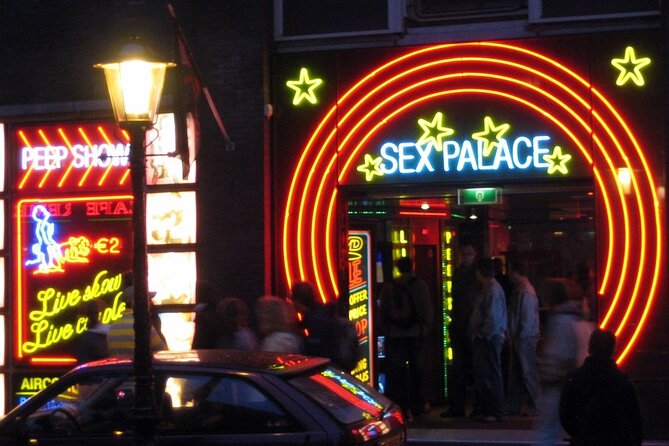
Night lights meet street history in Amsterdam. This guided Red Light District walking tour mixes the well-known streets with the deeper city details you’d otherwise miss—wooden-pile foundations, old gates, and surprising stops that explain how Amsterdam became Amsterdam.
I really like the walk-and-talk format. It keeps the pace easy while the guide connects what you see on the street to how the city is built and governed. I also appreciate the mix of famous and oddball landmarks, from Pub The Ape (Int Aepjen) to the Condomerie, so you don’t just get one narrow slice of the neighborhood.
One consideration: this area is topic-heavy and can feel uncomfortable if you’re sensitive to adult themes. Also, it’s not recommended for travelers with limited mobility since it’s a walking route through older streets.
In This Review
- Key things to know before you go
- What you’re really seeing in Amsterdam’s Red Light District
- Getting started at Geldersekade 2 and how the 2-hour walk flows
- The Dam and Amsterdam’s engineering roots: why the city stands on poles
- Old Town layers: the Red Light District inside the oldest part of Amsterdam
- Pub The Ape (Int Aepjen): a wooden survivor with a fire past
- The Waag: a former city gate turned guild hub
- The smallest house: VOC storage turned long-term home
- Condomerie: Amsterdam’s practical approach to sexual health and commerce
- Ethics, laws, and street-level reality on a guided walk
- Guides and group energy: what makes the tour click
- Price and value for a $35.44, 2-hour guided walk
- Practical tips that make the walk easier and more enjoyable
- Who should book this tour (and who might want to think twice)
- Should you book the Amsterdam Red Light District and City Walking Tour?
- FAQ
- FAQ
- How long is the Amsterdam Red Light District and city walking tour?
- What does the tour cost?
- Is the tour offered in English?
- Where do I meet the guide?
- Is the group large?
- Is food and drinks included?
- Are there admission fees for the stops?
- Is the tour suitable for limited mobility?
- Can I bring a service animal?
- What’s the cancellation window?
Key things to know before you go
- Small group (max 15) means you can ask questions without getting lost in a crowd.
- Multiple start times help you fit it into your day.
- English guide with a licensed/local setup, so the focus stays on local context.
- Old Town + Red Light District stops give both city history and neighborhood reality.
- No food/drinks included, so plan a quick drink or snack before or after.
- Mobile ticket at a central meeting point near public transport.
What you’re really seeing in Amsterdam’s Red Light District
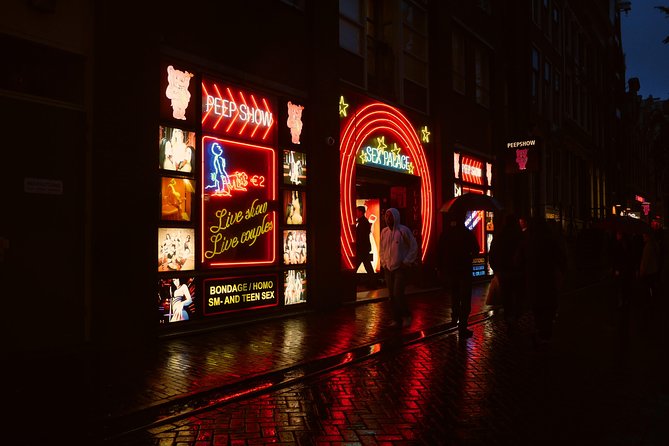
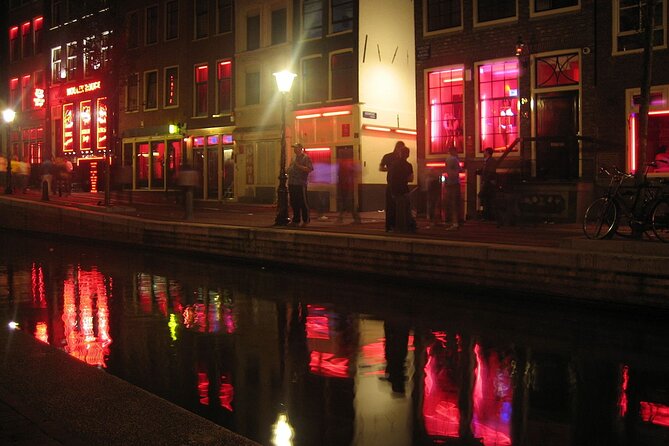
This tour is built around more than the windows people expect. Yes, you’ll be walking through Amsterdam’s Red Light District streets, but the bigger value is how the guide frames what’s happening there in the context of the city.
Amsterdam has a way of turning practical engineering into daily life. That shows up in the walking route, where you’ll learn why buildings sit on wooden poles driven deep into the ground. When you see the streets and old structures in person, that technical fact stops being abstract and starts feeling real.
You also get the legal and cultural angle. The tour is designed to explain how this neighborhood developed and how it operates today. If you want to understand the area rather than just photograph it, this is the kind of walk that helps.
And it’s not only serious architecture and regulations. You’ll pass through places that reflect Amsterdam’s blunt, everyday attitude toward sex, commerce, and regulation—like the Condomerie stop focused on sexual health and specialty products.
You can also read our reviews of more tours and experiences in Amsterdam.



Getting started at Geldersekade 2 and how the 2-hour walk flows
You’ll meet at Geldersekade 2, 1012 BH Amsterdam, and the tour ends back at the same meeting point. It’s a clean setup for first-timers because you’re not trying to navigate to a new drop-off area afterward.
The duration is about 2 hours, which is a smart length for a topic this intense. Long enough to cover meaningful Old Town landmarks and the Red Light District streets, not so long that everyone gets fried by the constant stimulation of walking and discussing.
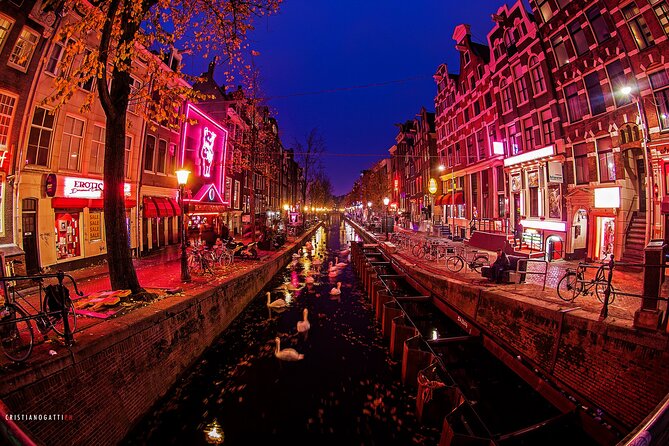
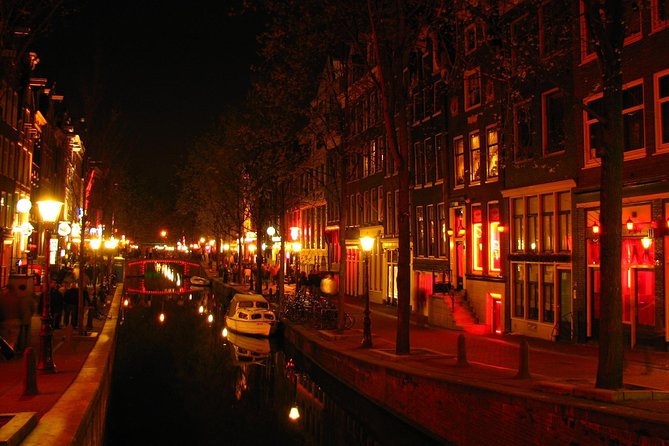
You’ll also have a choice of start times. That matters in Amsterdam because lighting and crowds change through the day. If you like the mood of evening bridges and city light, picking a later time can make the walk feel more atmospheric.
Expect a small group—up to 15 travelers—and a licensed guide with local guide support. With a group this size, the guide can slow down when questions pop up, especially when the subject matter is sensitive.
The Dam and Amsterdam’s engineering roots: why the city stands on poles
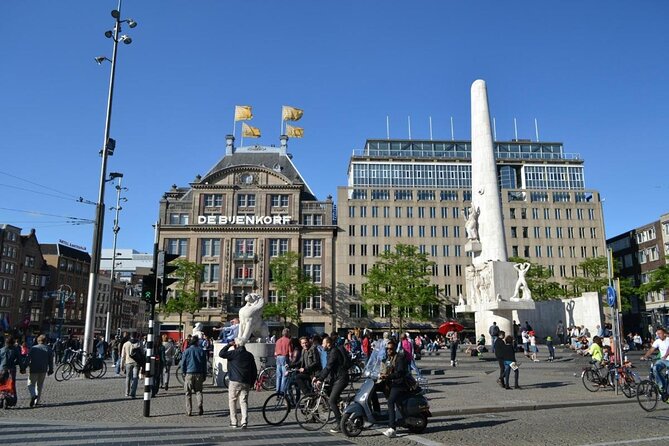
One of the first “wait, that’s wild” stops is the area around the Dam, also tied to the story of Amsterdam being built on trees. The point isn’t just trivia. It’s why the city looks the way it does.
Amsterdam’s soil is largely fen and clay, with deep layers that make building directly on the ground difficult. So houses and structures were built on wooden foundation piles driven down until they reach a more stable layer of sand. That means the city’s history isn’t only political or economic—it’s also physical.
When you learn this while standing in the center of the city, you start to notice patterns. You’ll see how the density of old buildings fits into a place that literally needed a different foundation strategy. It’s one of those “everything makes sense now” moments that makes a walking tour feel worth the time.
Old Town layers: the Red Light District inside the oldest part of Amsterdam
Another useful piece of context is that this neighborhood sits inside the Old Town story. The guide positions the district as part of the oldest urban fabric, which helps explain why the streets feel tightly packed and why the area has so many long-standing landmarks.
This matters because the Red Light District isn’t floating in isolation. It’s woven into Amsterdam’s broader street network and historic development. Even if you know the district by reputation, understanding it as part of the oldest city area gives you better perspective on why you see so much age in the architecture.
If your goal is to get your bearings fast—social, historical, and physical—this “Old Town” framing is a big part of that.
Pub The Ape (Int Aepjen): a wooden survivor with a fire past
Pub The Ape, known in Dutch as Int Aepjen, is the kind of stop that makes you stop walking for a second and look up. It’s described as a wooden building dating back to around 1540, and it’s one of the remaining wooden structures in Amsterdam.
The story here has weight: a major fire in 1452 changed building rules, and after that point the government pushed brick facades more broadly. So when you see surviving wooden architecture, you’re seeing a rare remnant from a different building era.
This is also where the tour becomes more than “history lecture.” It gives you a tangible link between city policy and what still stands today. And because it’s a pub, it’s placed in the real-life culture of Amsterdam, not locked in a museum.




The Waag: a former city gate turned guild hub
Next is the Waag, which used to function as one of Amsterdam’s city gates. Built around the 1400s, it’s noted as the second oldest building in Amsterdam.
City gates are more than entrances. They were part of defense and control, and they shaped trade patterns. Later, the building’s role shifted: it became associated with guilds, craftspeople, and organizations meeting in and around the square.
This stop is valuable because it connects city growth to daily work. You’re not only learning facts about a building—you’re learning why certain buildings mattered to how people earned money, regulated goods, and organized life.
For anyone who likes the “why” behind architecture, this is one of the tour’s strongest anchor points.
The smallest house: VOC storage turned long-term home
You’ll also hear about the smallest house of Amsterdam, built around the 1700s. Initially, it served as storage connected to the VOC trading company. Then it later became a residence for people who lived there for a very long time.
This is a great reminder that Amsterdam’s famous global trade didn’t just make wealthy merchants. It also shaped the urban fabric for everyday storage and housing. A tiny structure like this becomes a story about scale—how space was used, repurposed, and stretched as needs changed.
It also pairs nicely with the tour’s earlier engineering theme. If the city needed deep foundations, then every square meter mattered. Learning about a minuscule house makes that pressure feel more personal.
Condomerie: Amsterdam’s practical approach to sexual health and commerce
One of the most distinctive stops is the Condomerie, described as the world’s first condom shop dedicated to condoms since 1987. The tour frames this as a place where you can get different sizes, including customized options and specialty condoms.
Whether you’re stopping for curiosity or just to understand the culture, this works because it connects adult themes to health and regulation—not just spectacle. Amsterdam is often portrayed through its nightlife, but it also has a reputation for handling taboo topics in a practical, commercial way.
It’s also a reminder that the Red Light District isn’t only about one kind of transaction. There are businesses and institutions around it, and the city’s approach includes categories like public health and consumer needs.
Ethics, laws, and street-level reality on a guided walk
A walking tour in the Red Light District is never just scenic. The subject is adult and can feel awkward, even if you’re curious.
What I like about this format is that the tour is structured to discuss history and the current situation, plus the surrounding city context. That tends to keep the walk from turning into shock-value storytelling. Instead, it aims at understanding: why this neighborhood developed, how it functions, and how Amsterdam fits it into its rules and culture.
That doesn’t erase discomfort for everyone. If you want a sightseeing stroll with zero adult content, you might feel off-balance here. But if you’re aiming for understanding—how laws, commerce, and architecture shaped the neighborhood—this tour gives you a framework.
Guides and group energy: what makes the tour click
Guides are a major reason people enjoy this experience. In the tour’s recent guide roster, names like Ari, Ben, Pedro, Angel, Max, and David come up for a reason: the best versions of this walk use humor and clear storytelling to keep the tone respectful while still making it interesting.
The common thread is delivery. A guide who can connect details—like wooden buildings, city gate history, and why certain businesses exist—turns a tight street walk into something you can remember later.
With a group size of up to 15, you’re not stuck watching from the back. The guide can answer questions, adjust pacing for the sidewalk situation, and keep the group together without turning it into a sprint.
If you do tend to enjoy history explained in plain language, this guide-led structure is the real value.
Price and value for a $35.44, 2-hour guided walk
At $35.44 per person for roughly two hours, this isn’t a “cheap and cheerful” attraction. It’s priced like a guided experience, which means the cost is mostly paying for a licensed/local guide and the storytelling that connects the stops.
The value improves because it’s a small group and the tour is built around multiple landmark types: foundations and engineering, city gate and guild life, wooden architecture surviving policy changes, and a modern specialty shop stop tied to sexual health.
You also get a mobile ticket, and the tour includes the guide service. Food and drinks are not included, so you should treat this like a focused walk you pair with a snack plan elsewhere.
If your Amsterdam day is packed, this is a smart way to cover a high-interest area with context. If you’d rather wander freely without adult-topic framing, you can technically do the walking yourself. But you’d miss the “why” connections that make the neighborhood click.
Practical tips that make the walk easier and more enjoyable
The tour is easy to join since it says most travelers can participate, but it’s not meant for limited mobility due to the walking route.
A few practical things help:
- Wear shoes you trust on older cobbled streets. You’ll be walking continuously for about 2 hours.
- If you pick a later start time in warmer months, you may catch evening lighting and bridge views that make the city feel extra photogenic.
- Bring a light layer if it’s chilly or drizzly. The tour is time-boxed, so weather can change how comfortable you feel.
Also, keep your plan for food flexible. Since food and drinks aren’t included, decide ahead of time whether you want a quick bite before meeting or afterward when you’ve got your energy back.
Who should book this tour (and who might want to think twice)
This tour is best for you if:
- You want more than surface sightseeing and like the story behind city spaces.
- You enjoy architecture and city planning details, like wooden foundations and historic buildings.
- You’re comfortable with adult-themed neighborhoods and want context around it.
It may not be ideal if:
- You’re uncomfortable with adult subject matter and prefer a family-friendly overview only.
- You need accessibility support for limited mobility, since it’s not recommended for that.
Should you book the Amsterdam Red Light District and City Walking Tour?
I’d book this tour if you want to understand the Red Light District as part of Amsterdam’s older structure—physically, historically, and legally. The strongest reason is the stop selection: you get iconic area streets plus proper city context like the Dam area foundation story and the Waag’s gate-to-guild evolution.
If you’re looking for pure sightseeing without any adult-topic framing, consider a different Amsterdam walk. But if you want real context and a guided route that keeps you from feeling lost or misinformed, this one fits well.
FAQ
FAQ
How long is the Amsterdam Red Light District and city walking tour?
It runs for about 2 hours.
What does the tour cost?
The price is $35.44 per person.
Is the tour offered in English?
Yes, it’s offered in English.
Where do I meet the guide?
The meeting point is Geldersekade 2, 1012 BH Amsterdam, Netherlands.
Is the group large?
It has a maximum of 15 travelers.
Is food and drinks included?
No, food and drinks are not included.
Are there admission fees for the stops?
Admission tickets are listed as free.
Is the tour suitable for limited mobility?
It is not recommended for travelers with limited mobility.
Can I bring a service animal?
Yes, service animals are allowed.
What’s the cancellation window?
You can cancel for a full refund up to 24 hours before the experience starts. Cancellation less than 24 hours before start is not refunded.