REVIEW · AMSTERDAM
Amsterdam: The Newest Canal Cruise with Drink Option
Book on GetYourGuide →Operated by Eco Boats Amsterdam · Bookable on GetYourGuide
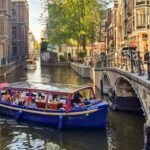
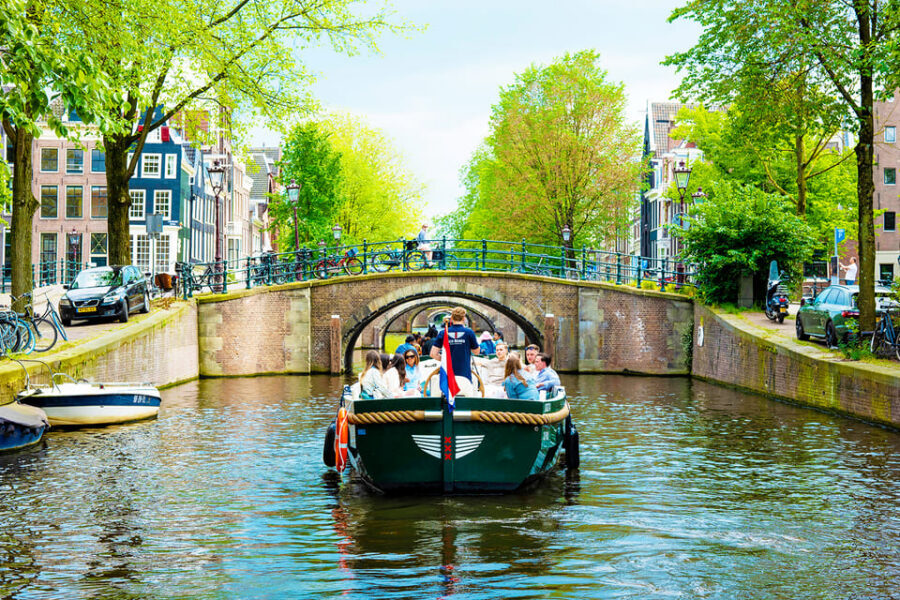
Water gives Amsterdam a whole new angle. I love the electric Eco Boats and the small group size (up to 28), which makes the stories feel personal; the only catch is that there are no microphones on board, so in wind you may work a little to hear every detail.
This is a 1-hour ride that hits the UNESCO-listed canal belt at an easy pace, so you’re not stuck on the water all day.
And if the day needs a little comfort, you can add optional drinks and expect an open or partly covered boat depending on weather, with your start right by Amsterdam Central Station.
In This Review
- Key things I’d pin on a map before you go
- A fast way to see the canal belt without tiring out
- Meeting Eco Boats by Amsterdam Central Station (and finding it quickly)
- Electric-boat comfort: open-air views or a sheltered ride
- Skipper stories in English, plus an 8-language QR booklet
- Optional drinks that don’t hijack the vibe
- The canal route: what you’ll see from the water
- Starting near the grand waterfront energy
- Basilica of Saint Nicholas and Sea Palace views
- Montelbaanstoren and Oudeschans: classic canalside framing
- The Amstel River and Blauwbrug Bridge
- H’ART Museum and the Dancing Houses photo moment
- Oude Kerk, then the Red Light District from the water
- How to hear the skipper and not miss the best lines
- Price and value: what $18 buys in real terms
- Who should book this canal cruise (and who might not)
- Should you book Eco Boats Amsterdam Canal Cruise?
- FAQ
- How long is the Amsterdam canal cruise?
- Where exactly do I meet the tour?
- What languages is the skipper?
- Is there a guide if I don’t speak English?
- How many people are on the boat?
- Can I add drinks to the cruise?
- Is the boat open-air or covered?
- What sights will we pass?
- Are wheelchair users allowed?
- Are there any rules for the boat?
- What if I can’t hear the skipper?
Key things I’d pin on a map before you go
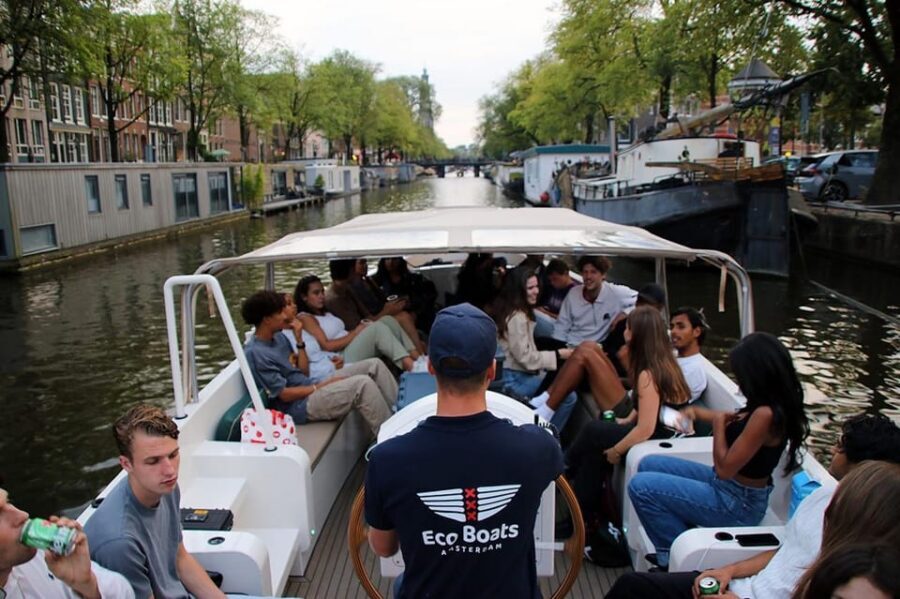
- English skipper + multilingual QR guide: You get live narration in English, plus a digital booklet in eight languages via QR.
- Up to 28 passengers: Less crowding means better sightlines around the canals.
- Electric boat comfort: Expect a modern, eco-focused ride on Amsterdam’s waterways.
- Weather-smart boat setup: Open, partly covered, or fully covered depending on what the sky decides to do.
- Optional wine/beer/soda: Book it ahead for an easy onboard add-on.
- No microphones on board: You’ll likely hear fine in calm weather, but plan for wind and ask the skipper to speak up if needed.
A fast way to see the canal belt without tiring out
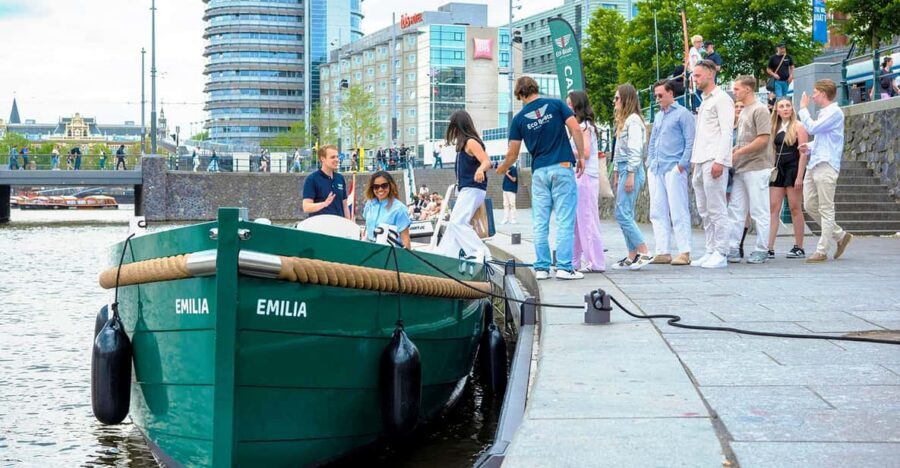
Amsterdam’s canals can feel like a blur when you’re also trying to do museums, neighborhoods, and food. This cruise keeps it simple: one hour on the water, with a local skipper speaking English (and Dutch too). The result is a route that helps you orient fast—especially if it’s your first day in town.
You’re not just staring out the window. The skipper’s job is to connect what you’re seeing to how the city grew around the canals. That’s why the time works: there’s enough time to get a real sense of the city from the water, but not so much that you get “cruise fatigue.”
The practical consideration is sound. The operator says they don’t use microphones on board due to local rules. In calm weather, it’s usually fine. In wind—especially on open sections—you might miss a few lines unless you position yourself closer to where the skipper speaks and ask them to repeat anything.
You can also read our reviews of more boat tours in Amsterdam
Meeting Eco Boats by Amsterdam Central Station (and finding it quickly)
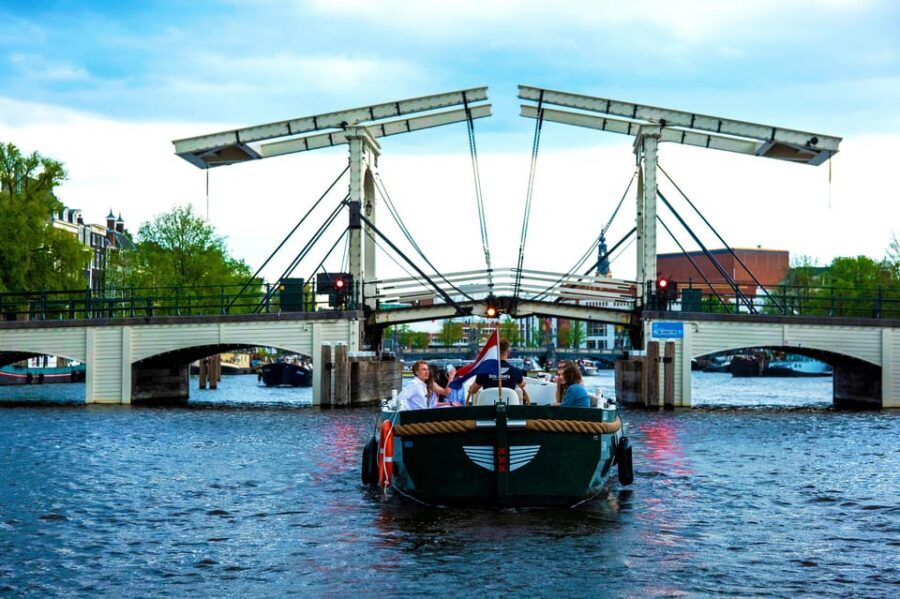
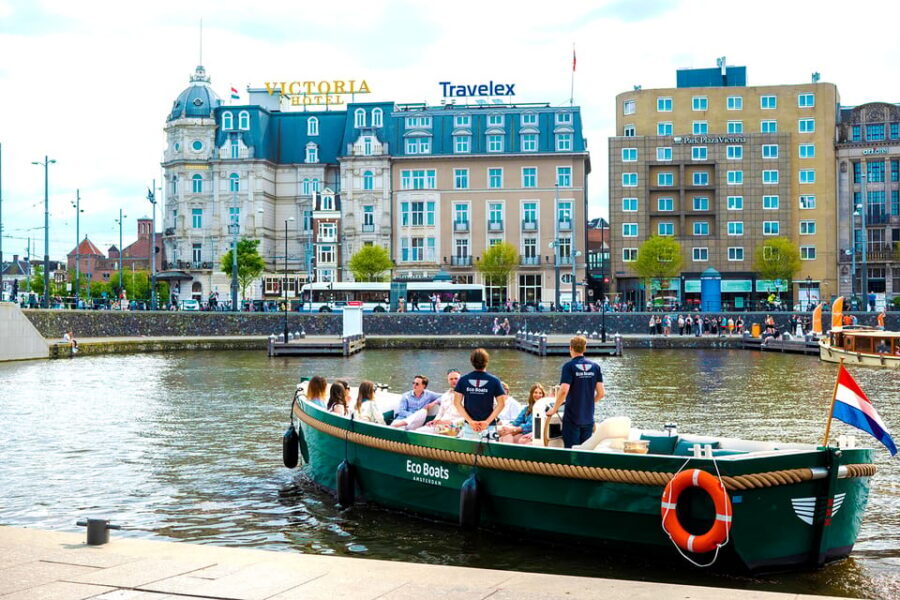
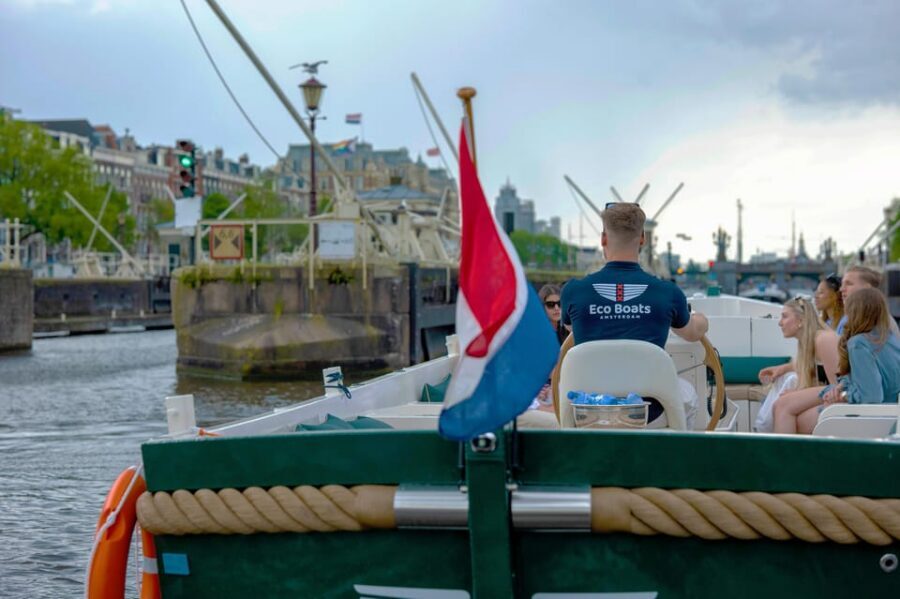
The meeting point is right where you’d hope it is: in front of Amsterdam Central Station, by the tram stops near the water. Look for a dark green beach flag, and staff wearing dark blue Eco Boats shirts.
One detail that saves time: use Google Maps, not Apple Maps, for the exact pin. If you’re walking in from the station, give yourself a few extra minutes the first time—canal-side meeting points can be easy to miss if you’re not looking for the flag and the clothing.
If you arrive a few minutes early, you’ll have time to locate the right boat and get settled before departure—useful when you’re trying to pick the best side for views.
Electric-boat comfort: open-air views or a sheltered ride
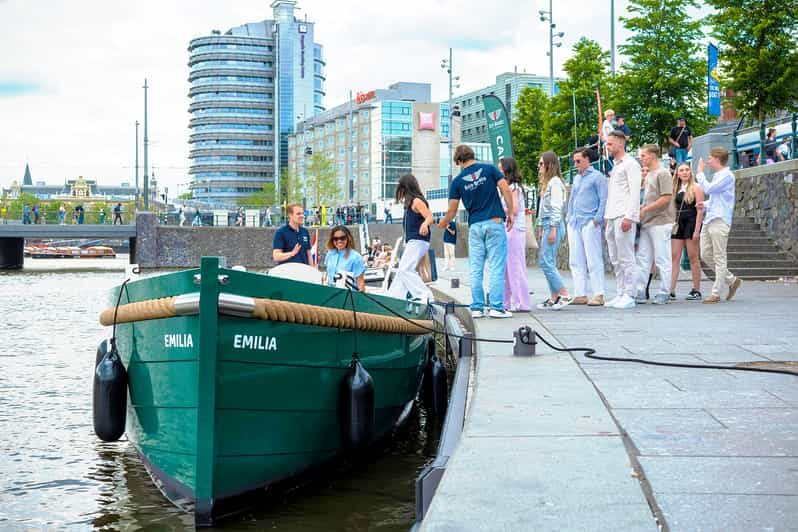
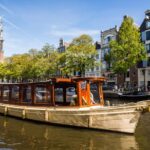
Eco Boats cruises depending on weather: you might be on an open boat, a partly covered boat, or fully covered. That matters in Amsterdam because a “quick shower” can turn into a wind shift within minutes. A covered option is also helpful if you’re dressed for sightseeing on land and not for a cool breeze on the water.
What I like about the setup is that it’s flexible rather than fixed. You’re not stuck thinking you booked the wrong boat. You’re booked for the cruise; the boat configuration adjusts so you can still enjoy the main experience—passing landmarks and canal scenes up close.
Also, small groups help here. With no more than 28 passengers, you’re not stuck behind five rows of people at the rails. It’s easier to move a little for photos or to switch sides if the best views change at a bridge.
Skipper stories in English, plus an 8-language QR booklet
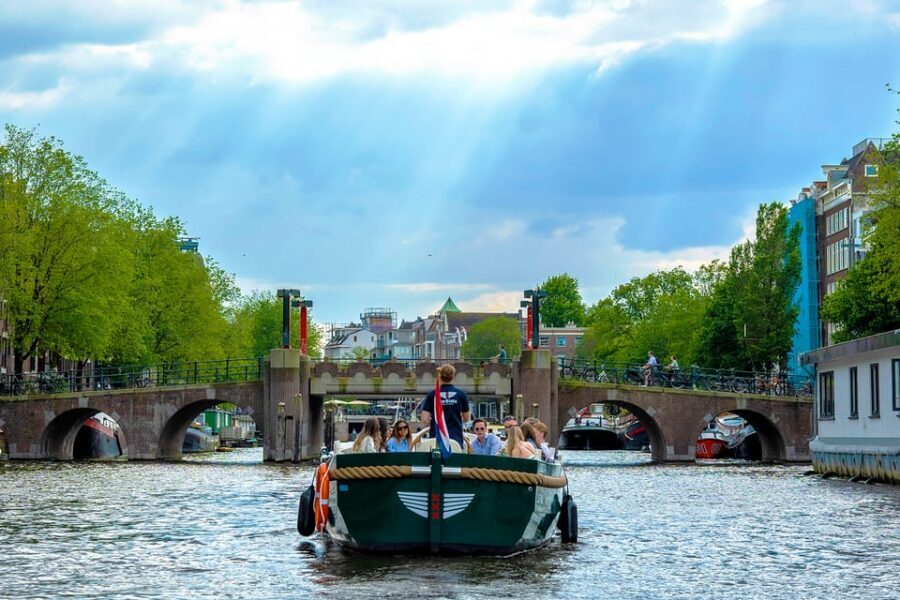
This cruise is designed for mixed groups. The skipper speaks English and Dutch, and there’s a free digital guide booklet available via a QR code on board. The languages listed are English, Chinese, Spanish, Portuguese, Dutch, German, French, and Italian.
That combination is practical. If you don’t catch a moment of narration, you can scan the QR booklet and keep your bearings. And if you’re traveling with someone who prefers a different language, they can follow along without splitting off for a separate tour.
A small but important note: because there are no microphones, you’ll do better if you’re not too far from the skipper. If you’re near the middle and the wind picks up, politely ask for volume—your skipper is instructed to speak louder if needed.
Optional drinks that don’t hijack the vibe
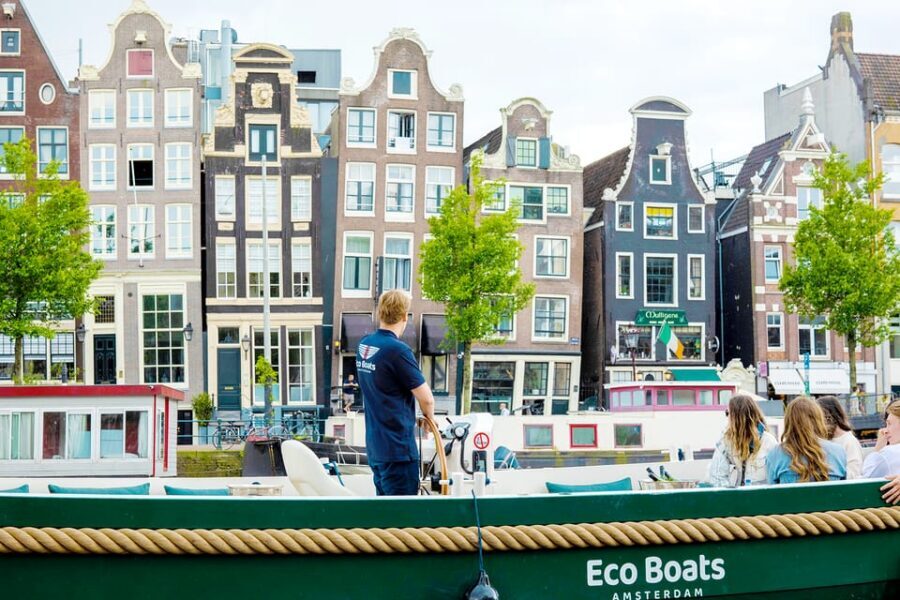
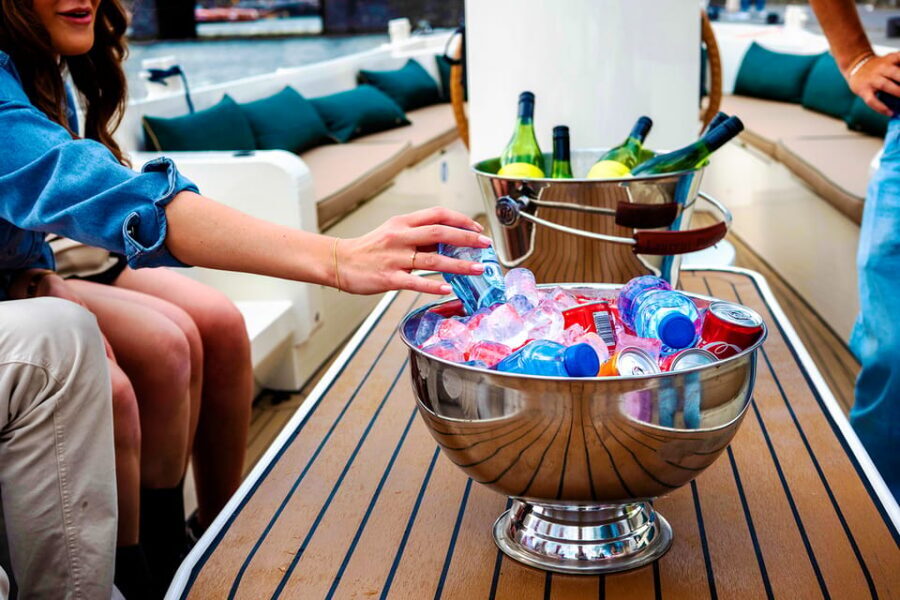
Yes, you can add a drink option—wine, beer, or soda—and if you select it, you get unlimited drinks during the cruise.
But the structure still feels like a sightseeing tour first. The drinks are there to help you relax, not to turn the hour into something chaotic. In a city where most walking days are intense, this is a nice change of pace: your legs rest while you take in the views, and the drink option gives the ride an extra layer of comfort.
One tip: if it’s a windy day or you’re sensitive to motion, keep your drink simple and take frequent breaks to look outward. You want the canals to stay the main event.

The canal route: what you’ll see from the water
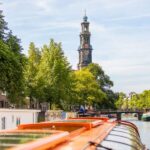
This is a highlight-heavy route that focuses on the classic “Amsterdam from the canal” sights—without forcing you into a multi-hour marathon. You’ll cruise the Canal Belt (Grachtengordel) area, and you’ll also spot landmarks like the Skinny Bridge (De Magere Brug) and the famous Dancing Houses.
From the stop list provided, here’s how the hour typically unfolds as you move through the city scenes—each stop reads like a different postcard, with the water framing the buildings and bridges:
Starting near the grand waterfront energy
The cruise begins from the Central Station area and quickly starts threading into the canal system. Early on, you’ll pass spots like Schreierstoren Oosterdok, a tower view that helps you notice the city’s mix of historic and functional waterfront geometry.
Basilica of Saint Nicholas and Sea Palace views
You’ll move past Basilica of Saint Nicholas, Amsterdam and Sea Palace. From a canal, churches and grand facades can look surprisingly different than they do from the street—because you’re seeing them across water level rather than from a sidewalk at human height.
This is also where the cruise helps you map Amsterdam in your head. You’re learning the “where everything sits” feeling without needing to read a guidebook mid-walk.
Montelbaanstoren and Oudeschans: classic canalside framing
Next you’ll encounter Montelbaanstoren and Oudeschans. These are the kinds of stops that are easy to overlook on foot, because walking routes don’t always put you directly in line with the water.
On the boat, you get a cleaner view line: the canal acts like a guiding corridor, and the landmarks anchor that corridor.
The Amstel River and Blauwbrug Bridge
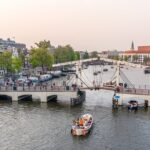
Then you head toward the Amstel and the Blauwbrug Bridge. Bridges are where boat tours feel most “Amsterdam,” because they create those tight, framed moments—especially when the boat passes beneath or near them.
This stretch is also useful if you’re trying to understand how Amsterdam’s canal network links neighborhoods. It’s a visual shortcut compared to walking the same distance.
H’ART Museum and the Dancing Houses photo moment
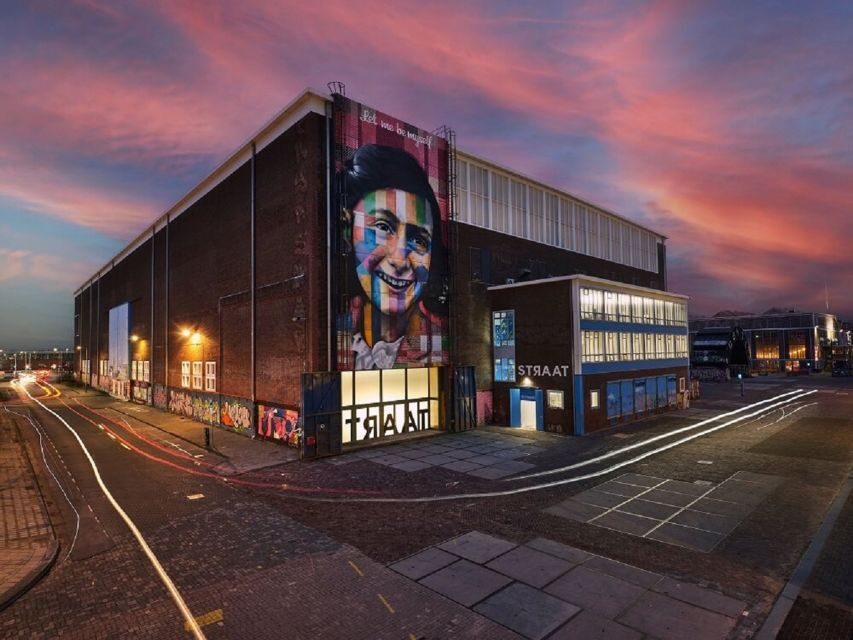
You’ll see H’ART Museum and later the Dancing Houses, Amsterdam. The Dancing Houses are one of the stops people remember, and from the canal you’re positioned to catch the angles that make them distinctive.
This is also a good moment to pause and slow down your thinking. If you’ve been snapping photos nonstop, this is where the cruise format encourages you to look longer—because the water angle gives you a clearer “read” of what you’re seeing.
Oude Kerk, then the Red Light District from the water
You’ll pass Oude Kerk and continue toward the Amsterdam Red Light District, along with Zeedijk Street. From the canal, these areas feel less like headlines and more like city blocks—still unmistakably Amsterdam, but framed in a calmer way than you might experience on foot.
If you’re sensitive to the adult-tourism vibe, you might feel more comfortable seeing it from water rather than walking directly through the area.
How to hear the skipper and not miss the best lines
Because there are no microphones, your best strategy is positioning and attention. Here’s what helps in practice:
- Choose a spot where you can hear the skipper clearly when they start talking about a landmark.
- If it’s windy, expect the sound to travel differently than on land. Ask them to speak up.
- When you’re heading toward bridges, keep your eyes up and your ears open. Those moments are often when the skipper ties together story and navigation.
If you’ve ever done tours where the guide feels “muted” by poor audio, this setup is different. It’s less processed. The skipper is right there, voice to the crowd.
Price and value: what $18 buys in real terms
At $18 per person for a 1-hour cruise, the value comes from the mix of three things you’re getting together:
- A live local skipper with English (and Dutch too).
- A small-group experience (up to 28).
- A practical guide system via QR booklet in multiple languages.
Add the electric-boat element, and you also get a modern way to travel through the canal belt. The one-hour duration is important for value: you’re paying for focused time, not a “stretch the route” strategy.
The drink option can push the total cost up if you add it, but it’s optional and structured. If you’re trying to keep the budget tight, you can still enjoy the cruise without drinks and use the QR booklet as your built-in guide.
Who should book this canal cruise (and who might not)
I’d book this if you want a straightforward, guided canal pass that fits into a normal sightseeing day. It’s especially good for:
- First-time Amsterdam visitors who need a fast sense of how the city lines up
- Families and mixed-language groups (because of the skipper + multilingual QR guide)
- People who want comfort without signing up for a half-day tour
I’d skip it if accessibility is a concern. This activity is listed as not suitable for wheelchair users. If you’re unsure, check with the operator directly before committing.
Also, if you’re extremely noise-sensitive, remember this is a live-voice tour with no microphones. In many conditions it works well, but it’s not designed like a theater show.
Should you book Eco Boats Amsterdam Canal Cruise?
For me, the decision comes down to what you want your Amsterdam water time to do. If you want a guided hour that helps you get your bearings, this is a strong pick. The small group, electric boat, and QR guide in eight languages make it feel efficient and easy to follow.
Book it if:
- You want the classic canal sights like the Skinny Bridge and Dancing Houses
- You like having a local skipper connect visuals to city context
- You prefer a short cruise that doesn’t steal your whole day
Think twice if:
- You’re very dependent on perfect audio (because there are no microphones)
- Weather is likely to be rough and you’d rather not be on an open section—though the boat adjusts by weather
FAQ
How long is the Amsterdam canal cruise?
The cruise lasts 1 hour.
Where exactly do I meet the tour?
Meet in front of Amsterdam Central Station, by the tram stops near the water. Look for a dark green beach flag and staff wearing dark blue Eco Boats shirts. Use Google Maps for the meeting point.
What languages is the skipper?
The local skipper speaks English and Dutch.
Is there a guide if I don’t speak English?
Yes. There’s a digital booklet available via QR on board, with information in multiple languages including English, Chinese, Spanish, Portuguese, Dutch, German, French, and Italian.
How many people are on the boat?
The boats run with no more than 28 passengers.
Can I add drinks to the cruise?
Yes. You can book an optional drink package with wine, beer, or soda. If you select it, drinks are unlimited during the cruise.
Is the boat open-air or covered?
Depending on the weather, you’ll cruise on an open boat, partly covered boat, or fully covered boat.
What sights will we pass?
You’ll see Amsterdam’s UNESCO-listed canal area and highlights such as the Canal Belt, Schreierstoren Oosterdok, the Skinny Bridge (De Magere Brug), the Dancing Houses, the Amstel River, and more. Stops listed include Basilica of Saint Nicholas, Montelbaanstoren, Oudeschans, Blauwbrug Bridge, H’ART Museum, Oude Kerk, the Red Light District, and Zeedijk Street.
Are wheelchair users allowed?
No. This activity is listed as not suitable for wheelchair users.
Are there any rules for the boat?
Smoking is not allowed.
What if I can’t hear the skipper?
In line with local regulations, there are no microphones on board. If you’re having trouble hearing, ask the skipper to speak louder.