REVIEW · THE HAGUE
Delft 2-Hour Walking Tour | Discover The City With A Local
Book on Viator →Operated by Guided Tour Holland · Bookable on Viator
Delft Blue and royal stories in two hours. This walking tour packs the key sights of Delft into a tight loop, with a guided stop at the Delft Blue pottery and the Girl with the Pearl Earring viewing box, plus local context as you walk. You’ll also get practical pointers on where to go next—and which tourist traps to skip—before you finish right back where you started.
I love the small group size (max 10), because it makes it easier to ask questions and stay together in crowded spots like the Markt. I also like that the route is built around major, easy-to-recognize landmarks: the Crooked John Old Church, the big Markt square, and a bell-shaped-flower building now used by the regional water authority. One thing to consider: some guides can speak fast or softly, so if you’re sensitive to sound, stand near the guide and don’t be shy about asking for clearer volume.
In This Review
- Key highlights at a glance
- Two hours in Delft for $3.57: what you’re really buying
- Getting started at the Hugo Grotius Statue on the Markt
- Stop 1: Delft Blue pottery viewing and the Girl with the Pearl Earring context
- Old Church in Delft: seeing Crooked John from the square
- The Markt square: Delft’s big stage for daily life and national holidays
- House of Bells: bell-shaped flowers, now a water authority office
- Guides make the difference: Michel, Jos, Niels, and the pacing factor
- Who this Delft walking tour suits best (and who should reconsider)
- After the tour: using the route as your launchpad
- Should you book this Delft 2-hour walking tour?
- FAQ
- How long is the Delft 2-hour walking tour?
- Where does the tour start and end?
- What time does the tour start?
- Is the tour offered in English?
- How big is the group?
- Is there a mobile ticket?
- What if I’m late?
- Is free cancellation available?
- Is it near public transportation?
Key highlights at a glance
- Delft Blue pottery viewing box with guided storytelling tied to Delft’s famous ceramics
- Girl with the Pearl Earring context as part of the pottery experience
- Old Church nicknamed Crooked John from the start-square viewpoint
- Markt square as Delft’s daily hub, with extra energy on national holidays
- House of Bells building history, now tied to the regional water authority
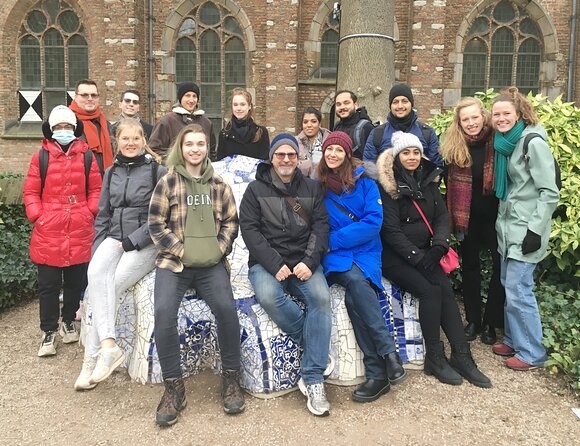
- Max 10 travelers, which keeps the pace personal and question-friendly
Two hours in Delft for $3.57: what you’re really buying
At $3.57 per person, this is the kind of tour price that lets you sample a guided walk without blowing your day budget. In particular, the schedule is built so you get more than street scenery: you’re paying for a guide who can explain what you’re looking at, rather than just pointing at it.
You also get a clear structure for a short time window: the walk runs about 2 hours, and the first stop includes admission ticket-free access to what’s described as a live viewing box experience. If you like compact itineraries—where you still have time left to explore on your own—this format fits well.
You can also read our reviews of more tours and experiences in The Hague.


Getting started at the Hugo Grotius Statue on the Markt
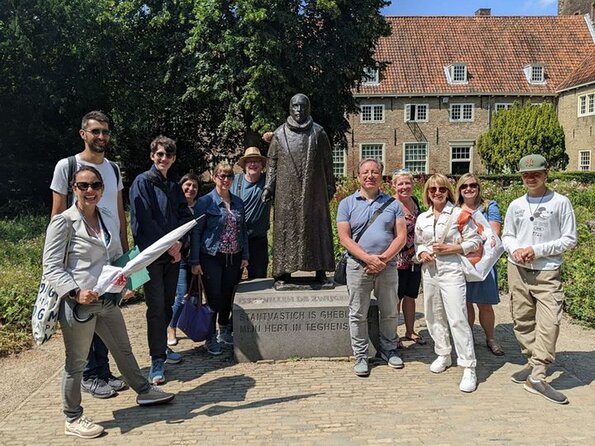
The meeting point is the Hugo Grotius Statue GW, Markt, 2611 GW Delft, and the tour ends back at the same spot. That matters more than it seems: starting and finishing on the Markt keeps you from spending extra time repositioning, and it anchors the tour in the heart of Delft’s center.
The tour is offered in English, and it’s described as near public transportation. With a maximum of 10 travelers, you’re less likely to feel like you’re in a big herd, even when the route passes through busier areas.
One practical note: the tour doesn’t do a late catch-up. If you arrive late, you may need to book another time slot. If you want a stress-free experience, show up a few minutes early so you can get oriented and settle your questions before walking begins.
Stop 1: Delft Blue pottery viewing and the Girl with the Pearl Earring context
This is the star stop. You’ll discover Delft’s famous Delft Blue pottery, and you’ll also connect it to the cultural pull of the Girl with the Pearl Earring. The highlight here is access to a live viewing area—described as a live viewing box—where your guide explains what you’re seeing and how Delft’s identity formed around this craft.
Why this matters for you: when you see a place like a pottery workshop tied to a painting icon and a local craft reputation, you get better understanding than if you just take photos and move on. A good guide can translate the “why” behind what’s made there, and the itinerary explicitly includes the guide pointing you toward what to do after the tour.
You should also expect conversation. In multiple experiences with guides like Michel, the storytelling approach is front and center—funny, engaging, and focused on answering questions while moving through the area. Do note that pacing can vary by guide: a few reviews mention guides speaking too quickly or quietly, which can make the details harder to catch during indoor moments. If that’s a concern, get as close as you can to the guide during the viewing.
Old Church in Delft: seeing Crooked John from the square
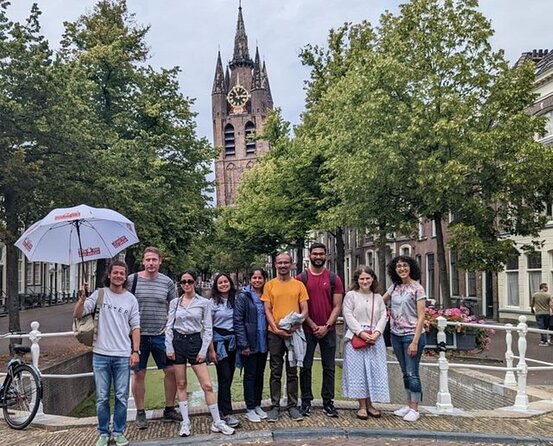
After the pottery stop, the walk continues toward the Old Church, locally dubbed Crooked John. The description sets it up nicely: it dates from the 13th century and towers above the square where the tour starts. Even if you don’t get inside, this is the kind of landmark that instantly gives you scale—Delft’s center feels built around old structures that still dominate views.
For practical touring, this stop is useful because it gives you a mental map. Once you understand where the church sits in relation to the Markt, you can navigate the rest of the historic area with confidence on your own.
Possible drawback: because the church is tied to the start-square viewpoint, you may be in a lively outdoor area with foot traffic. If you’re hoping for a quiet, contemplative moment, you’ll likely find it more “city-walk” than “slow stop,” especially if other groups are around.
The Markt square: Delft’s big stage for daily life and national holidays
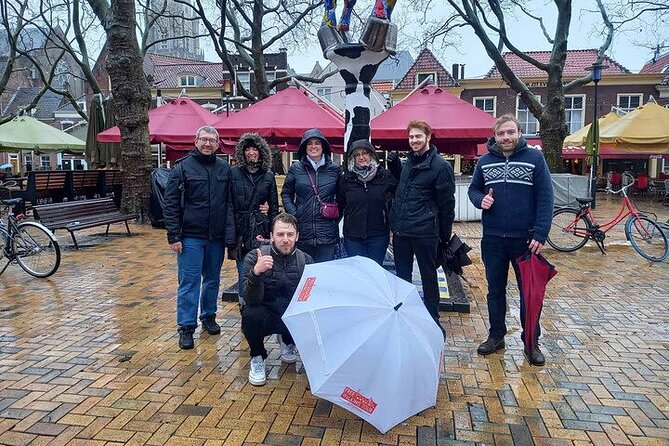
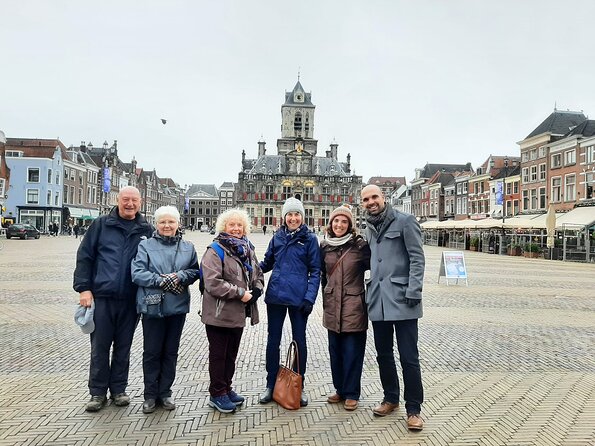
Next up is the Markt square, described as 120 meters long and 50 meters wide—one of the largest Dutch city squares. On any regular day, it’s portrayed as café terrace territory with lots of small everyday activity.
The real value of including this stop isn’t only the size. It’s the way your guide connects the square to both normal life and special occasions. The description notes that the Markt comes alive during national holidays with live music performances, market stalls, and food trucks. Even if you’re not visiting on a holiday, the square’s layout helps you picture how the city functions as a gathering place.
You’ll also likely spend time taking in the “two sides of the same story” effect: the Old Church and the Town Hall create a strong frame around the square. That means you can use the Markt as a reference point for future wandering—handy when you want to branch out for independent exploring later.





House of Bells: bell-shaped flowers, now a water authority office
The tour ends with a unique landmark: the building known historically as the House of Bells. It was originally described as a residential building, and the name comes from bell-shaped flowers that grew around the porch.
Today, it’s used as the main office for the regional water authority. That detail is more interesting than it first sounds, because Delft is a city shaped by water management, and this stop hints at that connection through architecture and function. Even without going deep into engineering, you leave with a sense that Delft’s history isn’t just art and royalty—it’s also practical systems that keep life working.
One caution: this stop may feel more story-driven than photo-driven. If you want lots of grand exterior scenes, you might find yourself more focused on the guide’s explanation than on scenic spectacle. Still, the “why this building looks like it does” angle makes it a memorable closer.
Guides make the difference: Michel, Jos, Niels, and the pacing factor
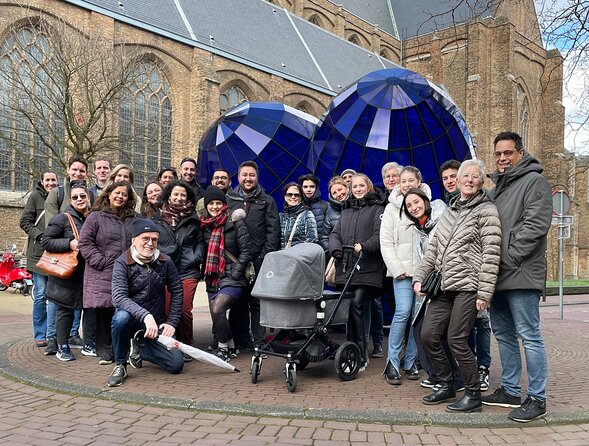
The reviews give you a clear picture of what can vary most: the guide’s delivery.
Positive themes show up strongly. In one experience, Michel is praised for interesting anecdotes, history, humor, and for actively engaging the whole group while tracking people in crowded areas. Another positive review highlights Niels as knowledgeable and able to keep the two hours interesting. Jos is also described as very knowledgeable and successful at making the walk enjoyable through her delivery.
The tradeoff is consistency in speed and clarity. Several reviews mention guides speaking too quickly, or speaking too softly, or having sentences that trail off, making it hard to catch details. In one case, the walk started moving later than expected, around 1:50 pm, after an early delay.
So what should you do? If you want the best chance of catching the story:
- Stand close enough to hear without straining.
- If you can’t hear clearly, make a quick request for slower, louder speech early on.
- If you’re visiting with someone who struggles with audio in busy spaces, this tour’s small group size helps, but you’ll still want to position well.
Who this Delft walking tour suits best (and who should reconsider)
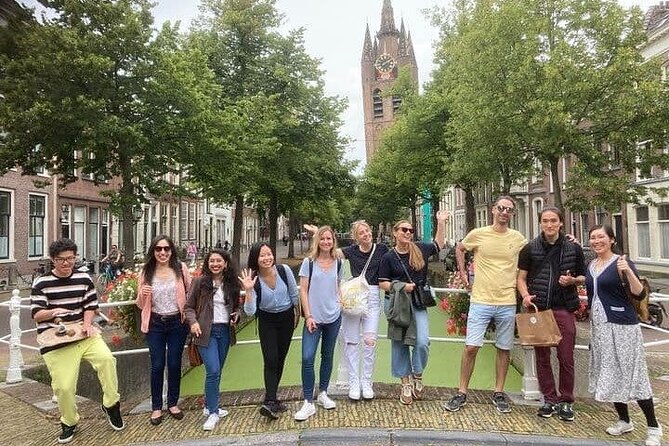
This tour is a strong match if you want:
- A short, focused loop of key sights in Delft
- A guide-driven explanation tied to Delft Blue and major landmarks
- A small group experience where questions feel possible within 2 hours
- A starting point in the center so you can continue exploring afterward
It may be less ideal if:
- You rely on slower speech to absorb details
- You’re hard of hearing without hearing support (the data shows cases where audio clarity was an issue)
- You prefer tours with lots of free time or frequent long stops; this walk is designed as a single coherent circuit, not a choose-your-own adventure
After the tour: using the route as your launchpad
Because the walk loops back to the Markt, you can treat this as an “orientation pass” for Delft. Once you’ve seen the church dominating the square, located the Markt’s full footprint, and connected the Delft Blue stop to the wider city vibe, you’ll know where to go next without overthinking.
Also, the tour explicitly includes guidance on what to do after. The guide’s job isn’t only to talk during the walk; it’s also to help you continue smartly—where to focus your time and what tends to be less worth it.
Should you book this Delft 2-hour walking tour?
Book it if you want a value-packed Delft introduction with a live pottery viewing and guided context for the places you’ll see anyway. At this price, the main thing you’re buying is a focused explanation of Delft’s identity—craft, landmarks, and local stories—without taking over your whole afternoon.
Skip or be cautious if you know you struggle with fast, quiet guides. The tour’s size helps, but delivery speed and volume seem to be the most common complaint in the feedback. If you do book, position yourself near the guide and ask for clarity right away.
If you want, tell me your travel dates and what you care about most—ceramics, church views, or the city’s everyday rhythm—and I’ll suggest how to time your Delft Blue stop with the rest of your day around the Markt.
FAQ
How long is the Delft 2-hour walking tour?
It runs for about 2 hours.
Where does the tour start and end?
It starts at the Hugo Grotius Statue GW, Markt, 2611 GW Delft, Netherlands, and ends back at the same meeting point.
What time does the tour start?
The listed start time is 1:30 pm.
Is the tour offered in English?
Yes, it’s offered in English.
How big is the group?
The tour has a maximum of 10 travelers.
Is there a mobile ticket?
Yes, the tour uses a mobile ticket.
What if I’m late?
If you’re late, you won’t catch up with the group. You’ll be asked to book a new time slot.
Is free cancellation available?
Yes. You can cancel up to 24 hours in advance for a full refund.
Is it near public transportation?
Yes, it’s described as near public transportation.