REVIEW · NETHERLANDS
Groningen: Battlefield tour
Book on GetYourGuide →Operated by Joël Stoppels Battlefield Tours · Bookable on GetYourGuide
War found its way into Groningen’s streets. This 2-hour Battlefield Tour with Joël Stoppels brings the April 1945 fighting into focus, and I love how Joël Stoppels connects the story to what you’re actually looking at. I also love the period photographs and objects that turn headlines into something you can see on the street.
One thing to check before you book: the tour is listed as wheelchair accessible, yet it is also marked not suitable for people with mobility impairments. If you or anyone in your group has mobility needs, contact the provider and confirm what route and ground conditions to expect.
In This Review
- Key highlights worth your attention
- Groningen’s April 1945 story, in real streets and real time
- Meet Joël Stoppels: the kind of guide who adjusts to your group
- Start at De Martinitoren, orient fast, then hit the Grote Markt
- Following the Canadians with printed maps in your hands
- What you’ll see as you walk: remnants of damage that still mark the city
- The route toward Zuiderdiep and the struggle for key city areas
- Ending at Sint Jansstraat: the State Archives and the final encirclement
- Photos, objects, and maps: why these details make the story stick
- Price and value: $171 per group (up to 25) for a 2-hour private walk
- Who this tour suits best (and who might want a different plan)
- Practical tips before you go (so you get more from the walk)
- Should you book the Groningen Battlefield Tour?
- FAQ
- Where do I meet for the Groningen Battlefield Tour?
- How long is the tour?
- What languages are offered?
- What is included in the tour price?
- What is not included?
- Is the tour a private group experience?
- Is audio recording allowed?
- Is the tour suitable for people with mobility impairments?
Key highlights worth your attention
- Guide badge from the International Guild of Battlefield Guides (badge #70): formal battlefield-guiding training, not just a walking tour.
- Printed maps you carry during the walk: you follow the exact route as you go, not after the fact.
- Authentic 1945 photos and original objects: the guide uses them to explain what happened right where you are standing.
- Visible remnants of wartime damage: you’ll still spot traces of the destruction across the city.
- Question-friendly, personalized guidance: the best version of the tour is when the guide shapes it around your group’s interests.
- A clear arc to the end point: you follow the advance, then finish at the State Archives area before returning to the Grote Markt.
Groningen’s April 1945 story, in real streets and real time
This tour focuses on one grim stretch of history: the battle for Groningen in April 1945. On April 13, soldiers of the 2nd Canadian Infantry Division began the liberation of the city, facing fierce German resistance under General Johannes Blaskowitz—the defense known as Festung Holland. The fighting lasted four days, and the city paid for it in ruins.
What makes this work well as a walking experience is that the guide doesn’t just talk history. You move through the spaces where events unfolded—street by street, alley by alley, and house by house—so the “urban battle” label stops being abstract. The impact was severe: the Grote Markt was left in ruins, and more than 270 buildings were destroyed. When the German commander surrendered on April 16, the Battle of Groningen ended—but the cost was heavy: 43 Canadian soldiers and 110 civilians died.
You’ll also learn the route logic. The story isn’t random. You’re tracing an advance toward key areas, ending where German forces were ultimately surrounded. In two hours, that structure helps you feel oriented instead of just overwhelmed.
You can also read our reviews of more tours and experiences in Netherlands.



Meet Joël Stoppels: the kind of guide who adjusts to your group
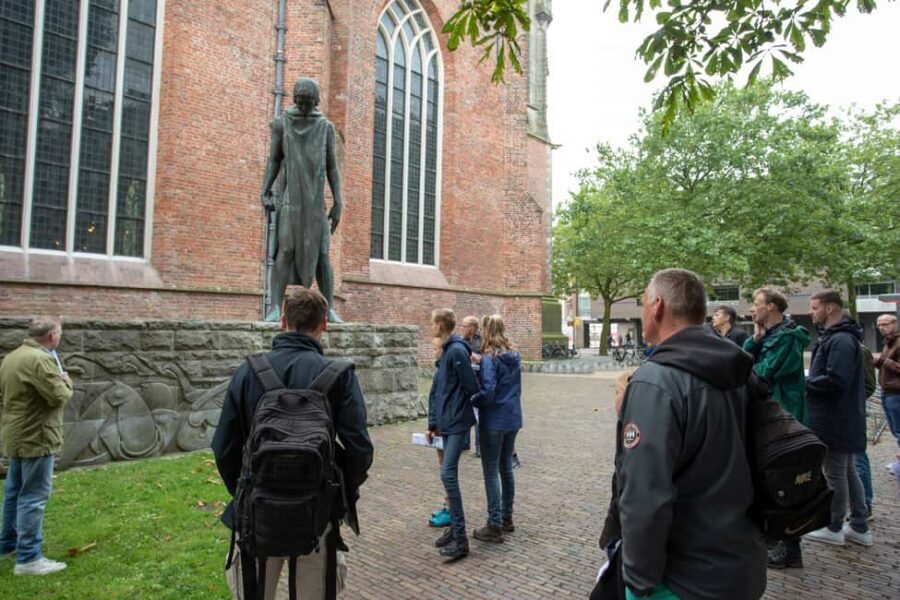
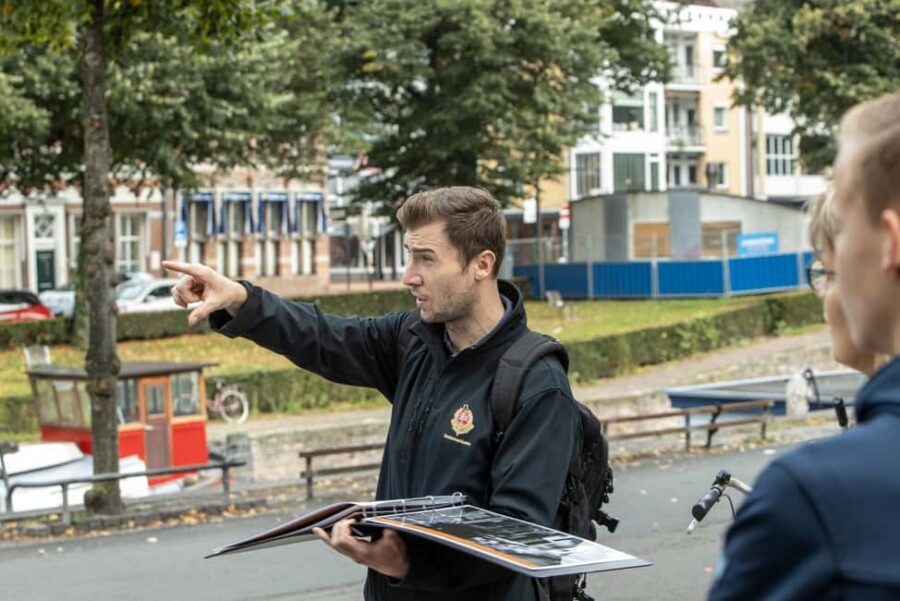
The biggest quality of this tour is the way the guide guides. Joël Stoppels isn’t treating this as a fixed script that everyone hears the same way. He’s open to questions and will often add short, relevant side notes about Groningen’s background—especially when your group shows curiosity.
That matters because battlefield tours can swing in two directions: either they’re tightly factual but emotionally flat, or they’re moving but vague. Here, you get both direction and clarity. Joël has battlefield guiding credentials (including International Guild badge #70), and that shows in how smoothly the explanations match the route.
For practical planning, this is also a private group format. You’re not packed into a huge crowd. That makes it easier to ask follow-ups and have the guide slow down when something grabs your attention—like how a specific location relates to the fight.
Start at De Martinitoren, orient fast, then hit the Grote Markt
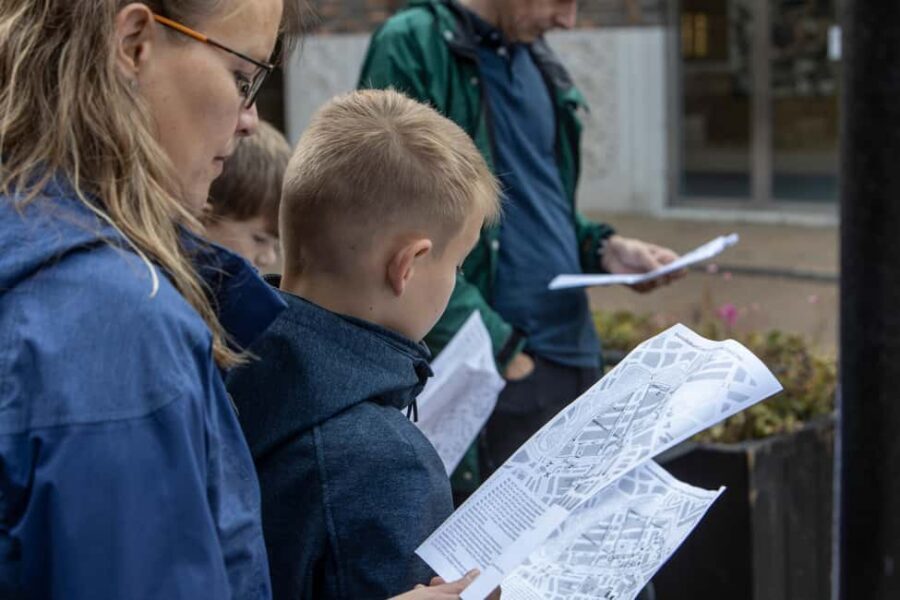
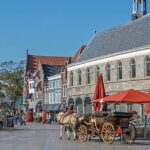
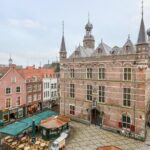
You meet at De Martinitoren, a logical start point because it helps you orient right away in Groningen’s layout. From there, the walk leads you to the Grote Markt, which is the emotional center of the narrative.
The Grote Markt stop is more than a photo opportunity. It’s where you connect the story of the battle’s damage to a space that used to function as the city’s lively heart. During the April fighting, it was left ruined, part of a broader destruction that took out hundreds of buildings.
Starting here also sets a good rhythm for the tour. You begin with a clear landmark, then the guide builds outward along the route of the Canadians. By the time you’re moving through other streets and passages, you already understand why you’re going there.
Following the Canadians with printed maps in your hands
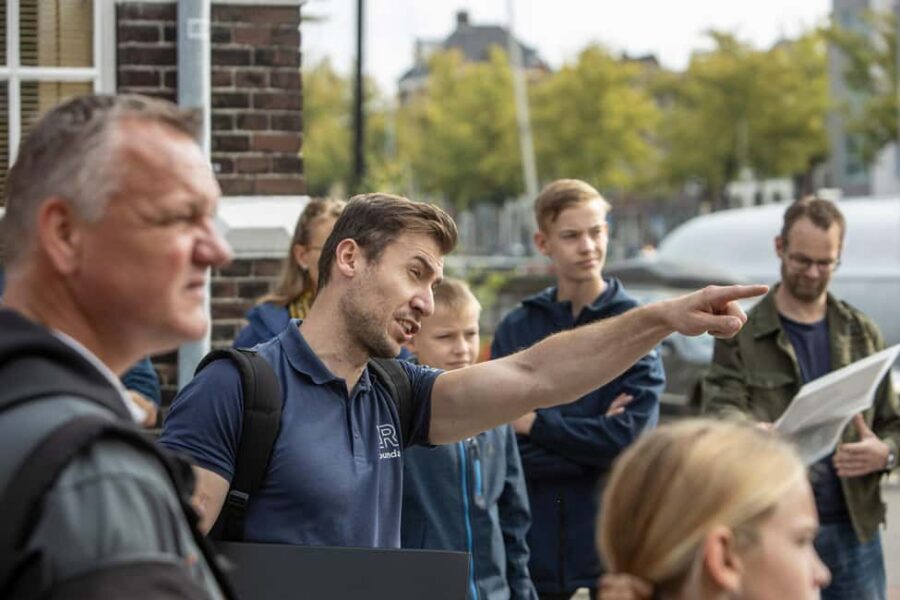
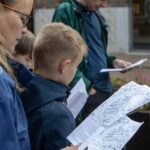
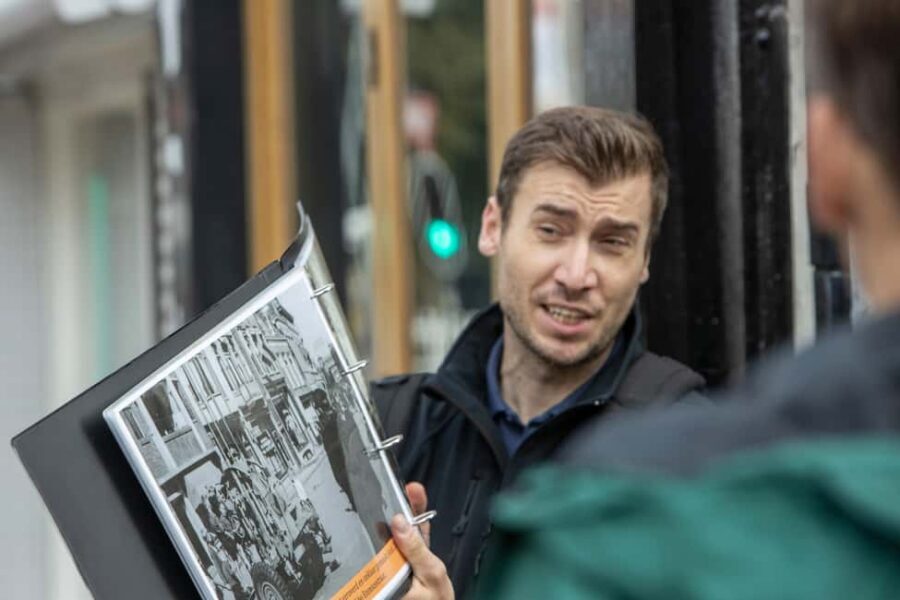
One of the most useful inclusions is simple: you’re given printed maps that you follow during the tour. That changes how you experience a walking battlefield route. Without maps, it’s easy to feel like you’re just going from one stop to another. With maps, you track movement and direction, and the story becomes easier to remember.
You’ll use these maps alongside the guide’s explanation of how the Canadians advanced. The guide uses detailed maps to show the logic of the approach—where pressure was applied, how the battle unfolded, and how the final encirclement came together.
This is also where the tour becomes especially strong for groups. A map helps everyone stay aligned, even if you’re not a history buff. If you’ve ever been on tours where someone asks a question and the whole group gets lost, this structure helps prevent that.
What you’ll see as you walk: remnants of damage that still mark the city
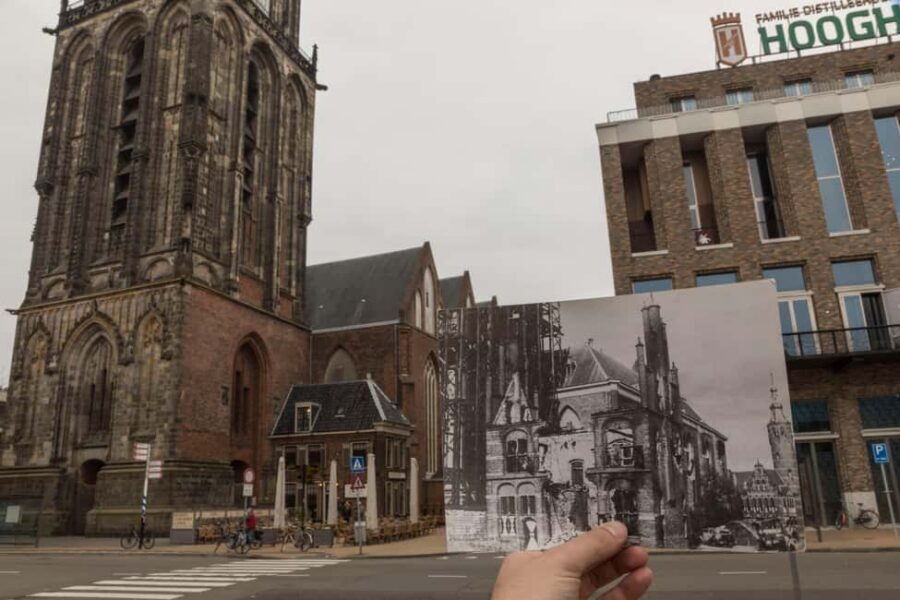
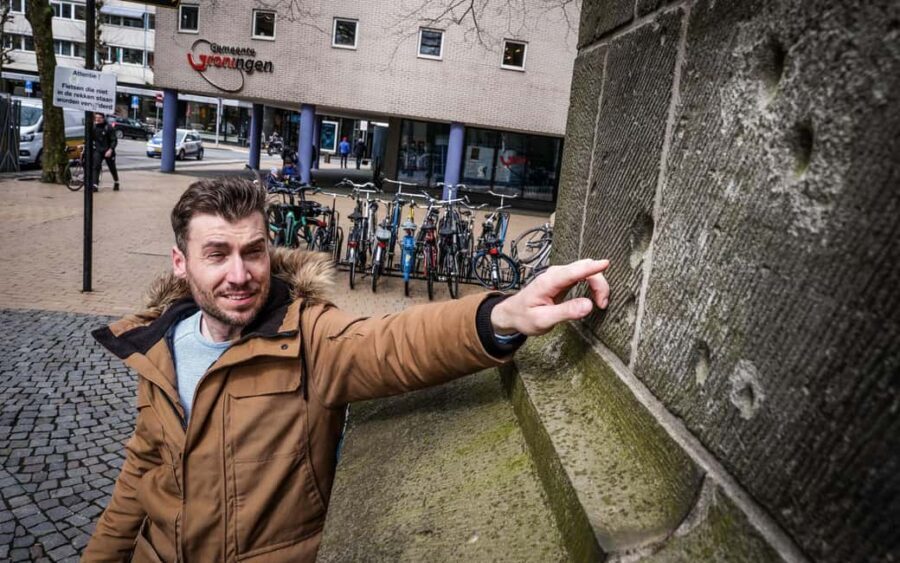
A battlefield tour in a modern city sounds like it could be all storytelling. Here, the city contributes a lot to the experience. You’ll still see many remnants of wartime damage along the route, and the guide points out what to look for.
That’s a key value in this kind of tour: you’re not only hearing about destruction, you’re noticing its physical echoes. You may find contrasts—places where rebuilding and change are visible next to areas that retain signs of the conflict. The guide ties those clues back to what happened in April 1945.
And because it’s an urban battle story, the tour relies on small-scale geography. You’re not walking across empty fields. You’re moving through streets and corners where battles turned into close-quarters clearing—under heavy fire and under constant risk. That street-level focus helps you understand how a city can become a battlefield without needing dramatic reenactments.



The route toward Zuiderdiep and the struggle for key city areas
The tour follows the Canadians’ footsteps and traces the advance through the city toward the Zuiderdiep and back toward the Grote Markt area. That loop is important, because it mirrors how the battle evolved: pressure built in key directions, then the fighting concentrated and intensified near central targets.
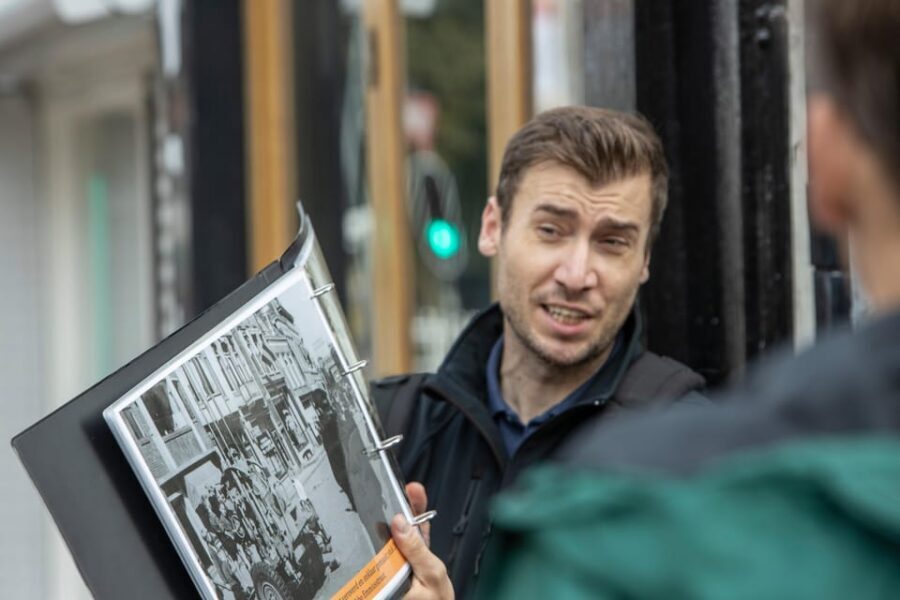
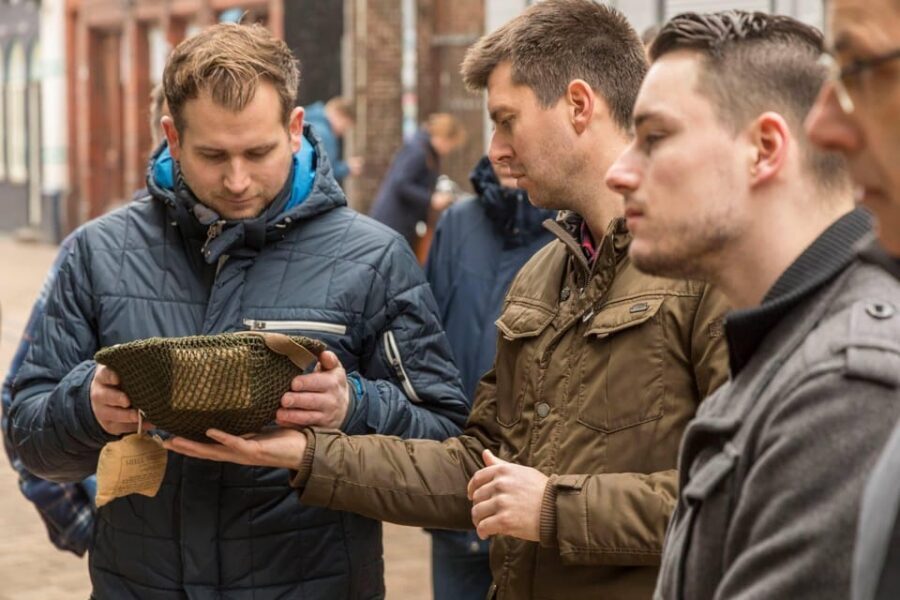
This is where the guide’s use of photos and objects adds weight. You’ll see impressive photos and objects from 1945, and they’re used to connect what you’re walking through now with what soldiers experienced then. Instead of just listening, you’re comparing the past record with the present street layout.
One practical note: this tour is only two hours. That means the guide can’t cover every street in Groningen. But the focus is tight—enough to understand the advance and the outcome, without turning into an all-day march.
Ending at Sint Jansstraat: the State Archives and the final encirclement
The final stretch takes you to the former State Archives in the Sint Jansstraat, where German forces were ultimately surrounded. This matters because the tour’s story has a destination. You’re not simply walking; you’re walking toward the point where the battle’s endgame clicked into place.
Finishing here gives you a sense of closure. The advance, the fighting intensity, and the route logic all lead to this moment. After that, you return to the Grote Markt area, which makes the whole experience feel like a complete loop: start at the city center’s heart, follow the advance, end at the encirclement point, and come back to where it all connects.
Photos, objects, and maps: why these details make the story stick
There are two ways a history tour can fail. Either it sticks to generalities and feels like a lecture on pavement, or it gets so detail-heavy you lose the thread. This tour avoids both, largely because it uses a mix of tools: authentic photos, original objects, and maps you actively use.
Photos and objects from 1945 do more than add drama. They anchor the timeline and make explanations feel grounded. Maps, meanwhile, stop the route from becoming a vague walk. When those two things work together, you remember the story later, even after you’ve left the city.
Also, the guide is willing to answer questions and adapt a bit. That’s something I genuinely value on tours. If you care about a specific detail—like how a particular location fits the advance—you don’t get shut down. The best moments tend to be when you can connect the guide’s visuals to what your group wants to know.
Price and value: $171 per group (up to 25) for a 2-hour private walk
At $171 per group (up to 25) for a 2-hour battlefield tour, the value depends on how your group is sized and how much you’d otherwise pay for guided storytelling in a city like Groningen. The price is structured around group sharing, so it often becomes reasonable for clubs, companies, or school groups that want one guided experience instead of splitting into multiple arrangements.
What you’re getting for the money is not just someone speaking while you walk. You get:
- a battlefield guide with professional credentials (badge #70),
- printed route maps included so you can track the advance,
- and context tied to tangible 1945 materials and visible traces of damage.
Also, transport and museum entrance aren’t included, so if you’re trying to pair this with other stops, you’ll want to plan that separately. Still, as a focused two-hour experience, it’s priced like something meant to be efficient and useful rather than a slow, sprawling day.
Who this tour suits best (and who might want a different plan)
This is a good fit if you:
- want a structured walk through the Battle of Groningen with a clear route,
- like maps and location-based explanations,
- and prefer learning that stays tied to the street-level reality of a place.
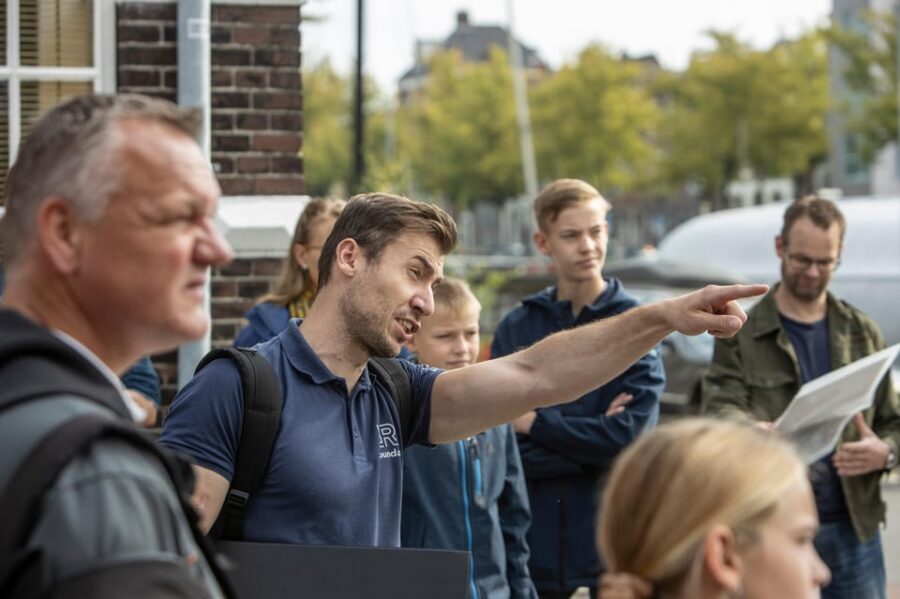
It’s also a smart choice for groups that want a memorable shared experience. The format is built for groups such as schools, sports clubs, companies, and defense organizations, and the guide aims to keep it flexible.
There are a couple practical constraints to keep in mind. Audio recording is not allowed, and alcohol and drugs are not permitted. And while the tour is described as wheelchair accessible in one place, it’s also marked as not suitable for people with mobility impairments—so plan carefully if mobility is a factor.
Practical tips before you go (so you get more from the walk)
Because this is a city-walking battlefield tour, comfortable shoes matter. You’ll likely spend the full time on foot while moving between the key points tied to the battle’s timeline.
Bring yourself in with questions ready. Joël’s approach is question-friendly, and you’ll get more out of the maps and photos if you ask about what you see.
If you’re thinking of pairing it with nearby sights afterward, remember that museums and coffee tea aren’t included. You’ll want to plan those add-ons separately so the tour stays the focused two-hour experience it’s designed to be.
Should you book the Groningen Battlefield Tour?
If you want a route-based WWII experience that’s more than a general overview, I’d book this. The strongest reasons are the combination of a credentialed guide (Joël Stoppels), printed maps during the walk, and period photos/objects that connect the April 1945 battle to places you can still recognize.
If you have mobility concerns, do your homework first and contact the provider about the exact walking conditions for your group. Aside from that check, this is the kind of tour that helps you understand why Groningen changed so dramatically in four days—and why the city’s landmarks still carry memory.
FAQ
Where do I meet for the Groningen Battlefield Tour?
You meet at De Martinitoren.
How long is the tour?
The tour lasts 2 hours.
What languages are offered?
The live guide speaks Dutch and English.
What is included in the tour price?
The tour includes the guided experience and printed maps so you can follow the Canadians’ advance route.
What is not included?
Coffee and tea, transport, and any museum entrance fees are not included.
Is the tour a private group experience?
Yes, it’s a private group format.
Is audio recording allowed?
No, audio recording is not allowed.
Is the tour suitable for people with mobility impairments?
The information provided includes both wheelchair accessible and not suitable for people with mobility impairments. If this applies to you, confirm details with the provider before booking.