Cracks turn into gold lines in Amsterdam. This Kintsugi workshop teaches the Japanese art of repairing broken pottery with gold leaf glue, wrapped in a calm, hands-on experience guided by Annelies. It’s the kind of session that makes you slow down on purpose, not just learn a craft step.
I especially like the serene start and the way Annelies keeps things welcoming and clear. You’re not left guessing what to do next, and that matters when you’re working carefully with tiny parts and patience.
You’ll also get real satisfaction from the full process: a symbolic plate break, then a patient rebuild that turns fractures into something visually striking. One small catch: coffee and/or tea aren’t included, so plan a sip before you go.
In This Review
- Key points before you go
- Kintsugi workshop Amsterdam: what you’re really learning in 2 hours
- Meeting at Paleisstraat 107 and settling in without stress
- The symbolic plate break: why that first step matters
- Reassembling shards with patience and golden leaf glue
- The final look: turning damage into a design detail
- Why the wabi-sabi mindset feels useful (not just artsy)
- Price and group size: is $90.11 good value?
- Who should book this Kintsugi workshop (and who might skip it)
- Schedule: when it runs in Amsterdam
- Should you book the Kintsugi workshop?
- FAQ
- What is the duration of the Kintsugi workshop?
- Where does the workshop meet in Amsterdam?
- Is the workshop offered in English?
- Are materials provided?
- Are coffee or tea included?
- Is there free cancellation?
Key points before you go
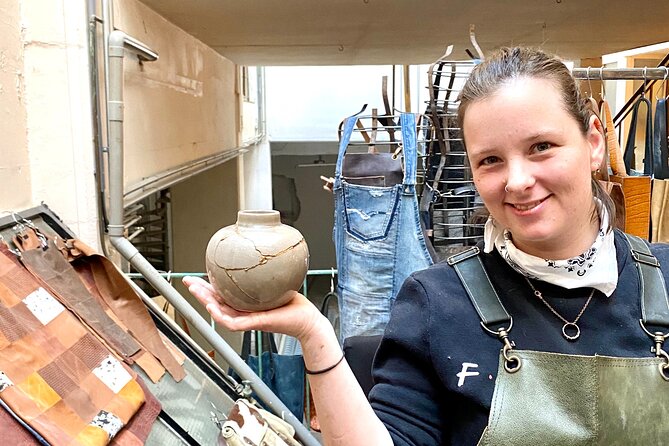
- Gold leaf glue, not paint: you’ll be working with the traditional look of Kintsugi repairs.
- Small group size (max 6): more personal attention while you reassemble your piece.
- Two focused hours: you’ll cover the full ritual-like flow without it dragging on.
- Symbolic reset moment: you’ll break a plate to mark a fresh start.
- English workshop: easy to follow if you’re visiting from abroad.
- Materials provided: you won’t need to bring tools or supplies.
Kintsugi workshop Amsterdam: what you’re really learning in 2 hours
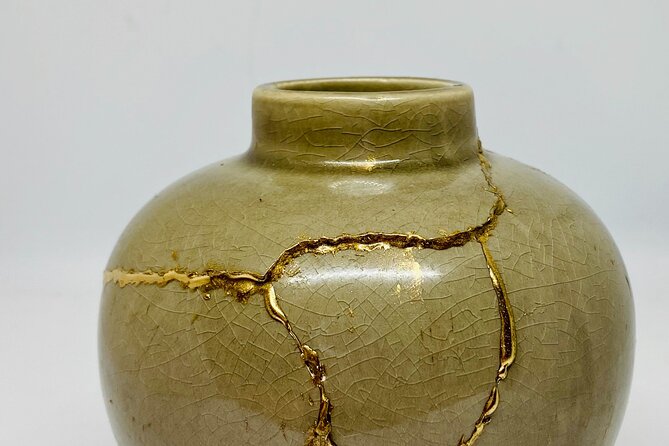
Kintsugi is the Japanese practice of restoring broken ceramics so the repair becomes part of the beauty. Instead of hiding cracks, you highlight them with a gold-like finish, creating an intentional, artful record of what happened.
In this workshop, the focus is on that idea of repairing imperfection through hands-on work. You start with a short, serene introduction and then move into the practical steps: break a plate symbolically and rebuild it into a new whole using golden leaf glue. That structure is smart. It gives you the meaning first, then the muscle memory.
And yes, there’s also a real-world benefit beyond art. When you spend two hours concentrating on careful alignment and slow assembly, you’re practicing a kind of focus you can actually carry back into everyday life: slow down, re-check, and trust the process. It’s craft and mindset at the same time.
You can also read our reviews of more tours and experiences in Amsterdam.


Meeting at Paleisstraat 107 and settling in without stress
Your workshop starts at Paleisstraat 107, 1012 ZL Amsterdam. It ends back at the same meeting point, so there’s no awkward “now what?” at the finish.
This is also a convenient setup for logistics: it’s near public transportation, and you get a mobile ticket. If you like arriving a little early and getting your bearings, you’ll be able to. And since it’s a small group (maximum of 6), you’re less likely to feel swallowed by a crowd.
A couple of notes that matter for comfort. The session is offered in English, and it requires a moderate physical fitness level. Also, it’s not suitable for children under 10, so if you’re traveling with kids, you’ll want to plan accordingly.
The symbolic plate break: why that first step matters
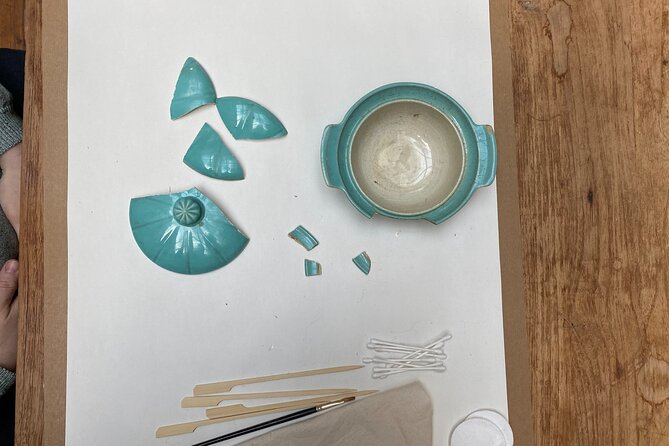
The experience starts with a serene introduction, then a key moment: you’ll break a plate symbolically. That sounds dramatic, but the point is psychological. It’s a way of saying the material is already changed, so the question becomes what you do next.
This first step helps set the tone for the rest of the workshop. Kintsugi isn’t about returning something to how it used to be. It’s about acknowledging damage and turning it into a readable story. In practical terms, the symbolic break also helps you stop worrying about being too careful at the beginning. Once it’s “done,” you can focus on the rebuild.
If you’re someone who gets anxious about making mistakes, this is actually a good thing. The workshop gives you a structured moment to let go, then it hands you the method to put things back together.
Reassembling shards with patience and golden leaf glue
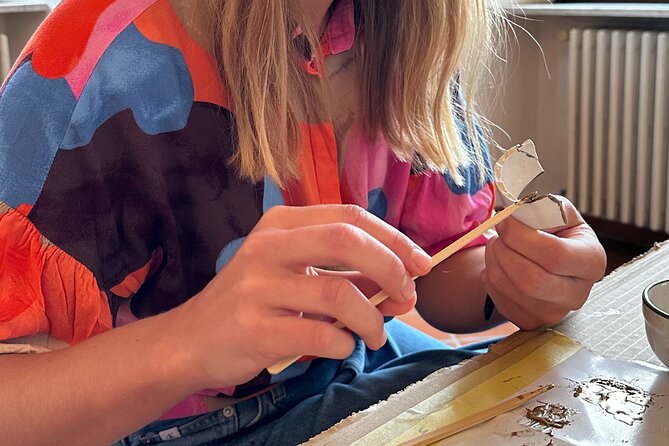
After the break comes the slow part: reassembling the shards piece by piece. This is where your hands do real work, and your brain pays attention.
You’ll be working with the materials needed for the workshop (so you don’t need to source tools or supplies). The key element is the gold leaf glue finish, which is what gives Kintsugi its signature look—repair lines that feel intentional rather than accidental.
What I’d watch for during this stage is your tempo. This isn’t a race to the finish. The transformation happens because you align pieces carefully and take time with the repair process. It’s also where the “deep focus” part becomes real: you’ll likely find yourself going quiet inside, concentrating on small adjustments.
And that’s the transferable skill. Even if you never do another Kintsugi project, you’ll remember the feeling of steady attention—checking fit, correcting course, and letting the work take the time it needs.
You also might notice a small shift in your thinking as the repair grows clearer. The parts that seemed like “broken” become lines, edges, and pattern. The cracked surface becomes a design choice.
The final look: turning damage into a design detail
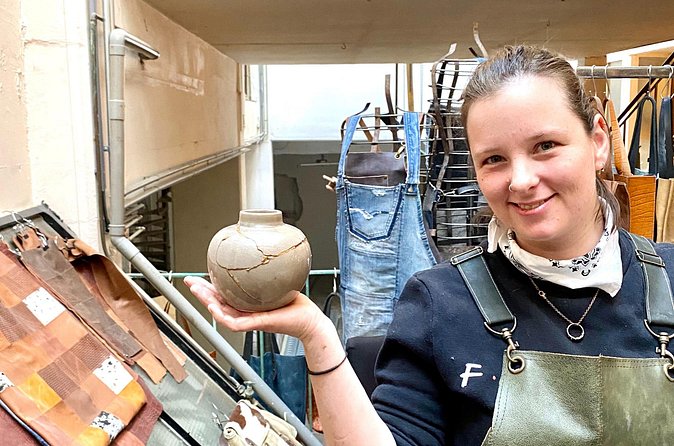
By the end, you don’t just end with a repaired object. You end with an outcome that celebrates the repair itself.
Kintsugi has a strong visual identity because the gold-like finish makes the fractures readable from a distance. It’s not subtle. It’s meant to be seen. And that means your final piece can feel surprisingly bold for something that began as damage.
This is the part people tend to love most because it’s immediate proof of the concept. You take something that’s been broken and create something that’s uniquely beautiful in its own altered state.
One interesting practical implication: this workshop uses items provided for the activity. So you aren’t required to bring your own damaged ceramic. That said, if you’re the type who wants to keep going after the session, you can get value from asking the guide beforehand about whether bringing an item to repair is realistic for your skill level and the workshop setup.






Why the wabi-sabi mindset feels useful (not just artsy)
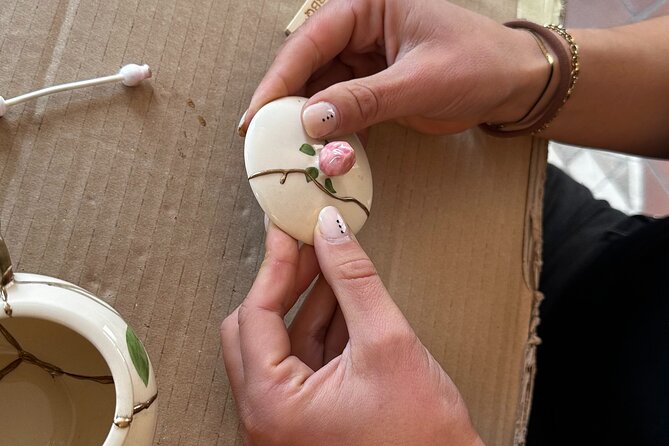
The workshop’s philosophy is tied to wabi-sabi, the idea that imperfection, impermanence, and natural material qualities are part of the beauty of life. In a lot of workshops, the “meaning” is just a nice speech at the start.
Here, it’s more functional than that. The symbolic break and the careful reassembly create a physical version of the concept. You don’t just hear that scars can have meaning—you work through it with your own hands.
That’s why it can stick after you leave. You get an experience that feels slightly ritual-like, but still grounded in technique. The metaphor for resilience shows up in the craft process itself: pieces don’t erase what happened. They transform it.
Price and group size: is $90.11 good value?
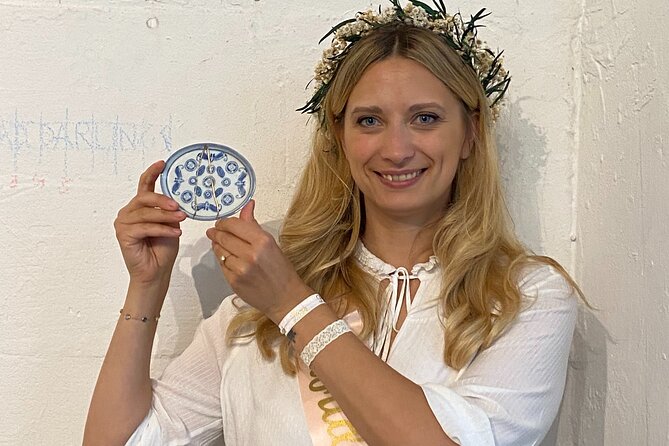
At $90.11 per person for about 2 hours, this is priced like a focused, hands-on class—not a big museum talk.
Here’s where the value comes from:
- Materials are included, which you often end up paying for separately in DIY craft classes.
- Small group size (max 6) means less waiting and more guidance while you work.
- It’s fully structured: intro, symbolic break, reconstruction, and a completed outcome rather than a quick demonstration.
If you’re comparing it to entry-level craft workshops, the advantage here is attention. With a small group, you’re less likely to feel lost mid-process. And with the Kintsugi focus, you’re learning a specific art form tied to a clear concept, not just making a generic decorative item.
Booking timing matters too. It’s commonly booked about 90 days in advance, so if you have a date in mind, it’s smart to lock it sooner rather than later.
Who should book this Kintsugi workshop (and who might skip it)
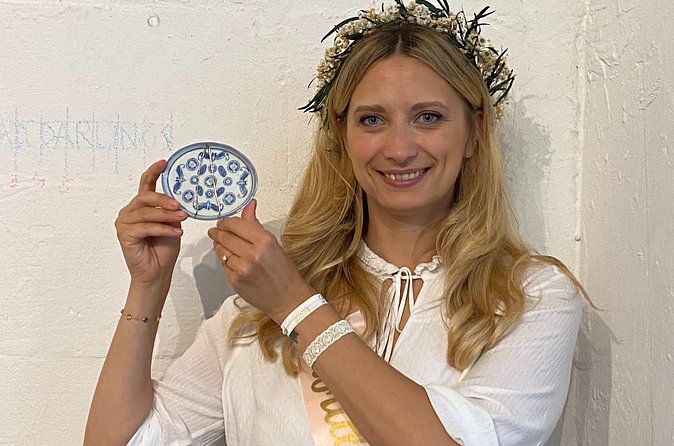
This is a great fit if you want a calm creative break in Amsterdam that’s different from the usual sights. If you enjoy crafts, like working slowly, or you’re curious about Japanese aesthetics, you’ll probably feel right at home.
It’s also a good choice if you want something with meaning, but you don’t want a lecture. The session gives you both: a mindset framing and then practical steps with gold leaf glue.
You may want to think twice if:
- You’re sensitive to the idea of breaking a plate (even symbolically). It’s part of the structure, not optional.
- You’re traveling with kids under 10, since the workshop isn’t suitable for them.
- You’re counting on snacks. Coffee and/or tea aren’t included, so bring your own plan for timing.
Schedule: when it runs in Amsterdam
This workshop runs on Wednesdays during the listed date windows, from 2:00 PM to 4:00 PM. That’s helpful because it gives you a clean afternoon block. Amsterdam afternoons can turn into walking marathons fast—so this is a nice reset.
Since the session ends back at the meeting point, it also works well as an anchor before dinner plans.
Should you book the Kintsugi workshop?
If you like craft work, calm focus, and learning something with a clear philosophy you can actually use, I think this is a strong booking. The combination of a welcoming guide (Annelies), a structured symbolic start, and the hands-on repair process makes it more than a novelty activity.
Book it if you want a meaningful takeaway and you’re comfortable working carefully for two hours. Skip it if you need your activity to include refreshments or if you’re traveling with children under 10.
FAQ
What is the duration of the Kintsugi workshop?
The workshop lasts about 2 hours.
Where does the workshop meet in Amsterdam?
It starts at Paleisstraat 107, 1012 ZL Amsterdam, Netherlands, and ends back at the same meeting point.
Is the workshop offered in English?
Yes, the workshop is offered in English.
Are materials provided?
Yes. All materials needed for the workshop are provided.
Are coffee or tea included?
No. Coffee and/or tea are not included.
Is there free cancellation?
Yes. You can cancel up to 24 hours in advance for a full refund. If you cancel less than 24 hours before the experience starts, you won’t be refunded.