REVIEW · AMSTERDAM
Private tour: Your own Amsterdam: walk through the old city
Book on Viator →Operated by Snurk.Travel · Bookable on Viator
Amsterdam can be loud and confusing fast, so this walk is a smart reset. You get a private, English-guided route through the old city, tied together by one theme: how people lived, believed, drank, and feared during the Dutch Golden Age.
I especially like the way the guide connects big themes to small street details—history you can point at, not just facts you memorize. I also love the stop at ’t Aepjen, an authentic bar in one of the oldest wooden houses, where Dutch drinking traditions are explained with art references and local color. One thing to keep in mind: it’s only about 3 hours, so it’s best if you enjoy walking and short, focused stops rather than lingering everywhere.
Even when the weather misbehaved, the guide kept the pace and the story moving. In one group experience shared with me, Anna handled rain and even hail without losing the thread, and people came away feeling like they learned a lot and still had fun. Just note that Portuguese Synagogue admission isn’t included, so you may want to plan for that extra cost.
In This Review
- Key highlights you’ll feel quickly
- A three-hour old-city route that actually makes sense
- Starting at Amsterdam Centraal: Golden Age context from the first minute
- St. Nicholas Basilica: where religion shaped the city’s tension
- ’t Aepjen: the oldest wooden-house bar and Dutch drinking rituals
- Chinatown in 15 minutes: contrast you can feel immediately
- Nieuwmarkt and De Waag: myths, punishment, and the human side of rules
- Rembrandt House: why the guide pays extra attention
- The Portuguese Synagogue area: Jewish diaspora in daily life
- Price and value: what $265.05 buys you in the real world
- Weather proofing and guide energy: why people rate this so high
- Who this Amsterdam walk fits best
- Should you book this tour? My call
- FAQ
- FAQ
- How long is the Amsterdam walk?
- Is this a private tour?
- What are the start and end points?
- Is the tour offered in English?
- Are entrance tickets included?
- What if I need to cancel?
Key highlights you’ll feel quickly
- Golden Age storytelling built into everyday landmarks, from Amsterdam Centraal to De Waag
- A private setup where your guide can answer questions and adjust to your group
- ’t Aepjen in a historic wooden house, focused on Dutch drinks and traditions
- Rembrandt-focused stop that connects the painter’s life and the era’s expectations
- Jewish neighborhood route ending at the Portuguese Synagogue area
A three-hour old-city route that actually makes sense
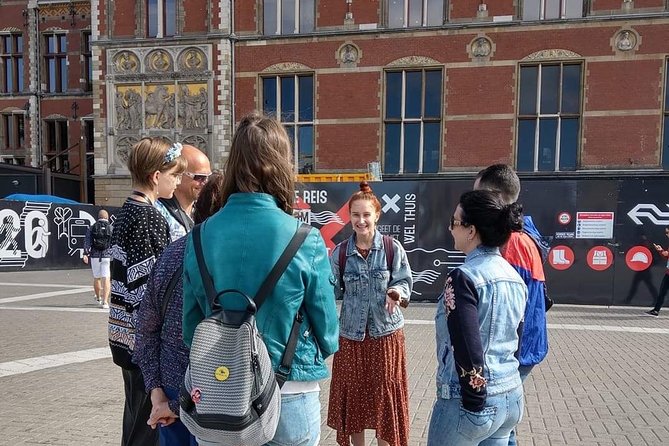
This is a walk designed for orientation. In about 3 hours, you move through several of Amsterdam’s most recognizable zones, but the guide keeps them connected with clear explanations, not wandering.
The private format matters. When your group only needs to worry about one pace and one set of questions, you spend less time waiting and more time understanding. And because the tour is in English, it’s straightforward to follow along, even when the streets start twisting.
You’ll also notice the tour is built around quick “story stops.” Many locations are about 15 minutes, so you get a taste of each place without turning your day into a marathon. The trade-off is that you won’t have hours to roam on your own at every stop.
You can also read our reviews of more tours and experiences in Amsterdam.


Starting at Amsterdam Centraal: Golden Age context from the first minute
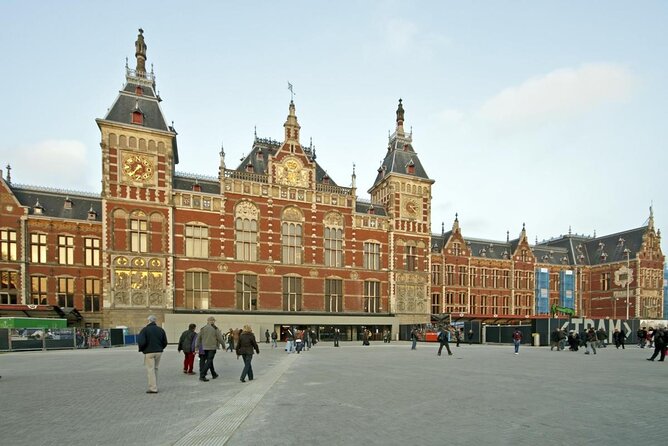
Your meeting point is Amsterdam Centraal Railway Station at Stationsplein 13a. The guide starts with the station area and uses it as a gateway into how the Netherlands grew rich and powerful in the Golden Age.
This matters more than you might think. Centraal isn’t just a transportation hub—it’s a point where you can understand the country’s rise, maritime reach, trade, and the mindset that fueled big building projects and bold civic life. If you arrive feeling like Amsterdam is all canals and Instagram angles, this opening gives you a story spine.
You’ll spend about 15 minutes here, and the goal is to get your bearings fast before the route tightens into narrower streets.
St. Nicholas Basilica: where religion shaped the city’s tension
Next is the St. Nicholas Basilica (St. Nicolaaskerk). Even though the church doesn’t date to the Golden Age, the guide uses it to explain a central theme of that era: the religious split between Catholics and Protestants, shaped by the Eighty Years’ War and its long consequences.
This stop works because it’s not just “look at a church.” You get context for why Amsterdam’s culture could hold contradictory impulses—tolerance alongside control, commerce alongside conflict. The guide’s job is to help you see how faith and power were intertwined, then to connect that to what you’ll see later in other neighborhoods.
Admission for this church stop is listed as free, and the time on site is about 15 minutes.
’t Aepjen: the oldest wooden-house bar and Dutch drinking rituals
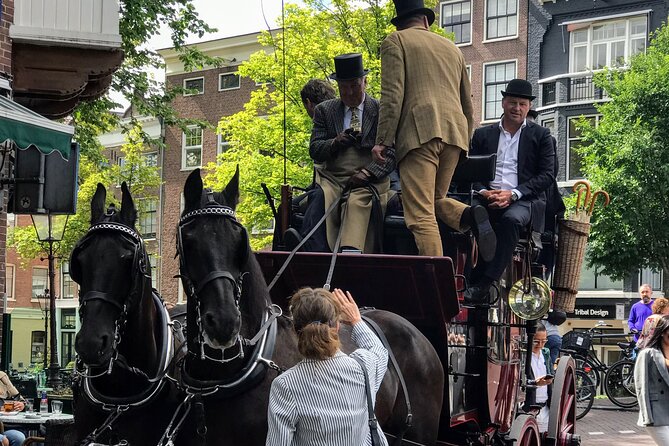
Then comes a favorite for good reason: ’t Aepjen. You’re guided into Dutch drinking traditions and the national mentality around food-and-drink culture. It’s set up as a history lesson you can taste, with references to famous Dutch artists like Jan Steen and Frans Hals.
The bar is special not only for what it represents, but for the building itself. Being in an authentic spot in what’s described as Amsterdam’s oldest wooden house gives the story a physical anchor. You can’t fake that kind of place.
Your stop is about 15 minutes, and admission here is listed as free. One practical note: since coffee and snacks aren’t included, plan to eat before or after, and if you like—bring water along so the walking doesn’t dry you out.
Chinatown in 15 minutes: contrast you can feel immediately
The route includes a quick walk through Chinatown, with about 15 minutes here. This isn’t a deep-dive shopping spree. Instead, it’s a contrast stop—Amsterdam as a crossroads of cultures, where you can see how the city’s identity keeps layering over time.
Because the tour keeps a steady tempo, Chinatown functions like a pause that refreshes your perspective. If the morning felt heavy with war, religion, and punishment stories, this segment gives your brain a lighter visual and sensory shift—without losing the overall “people, beliefs, and community” theme.
Admission for this stop is listed as free.





Nieuwmarkt and De Waag: myths, punishment, and the human side of rules
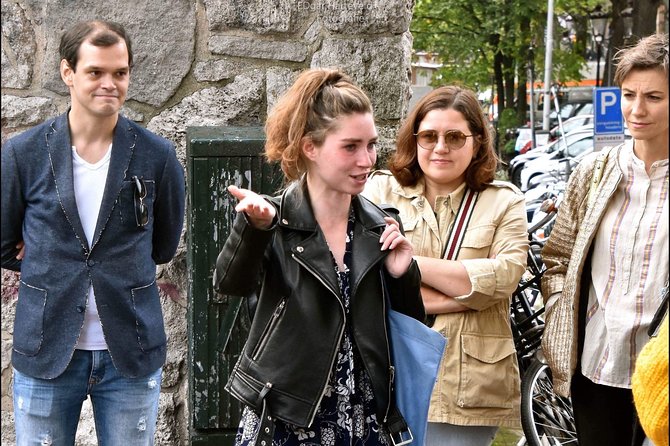
Now you hit a more intense square stop: Nieuwmarkt and De Waag. The guide frames this area as a place full of myths and secrets, and it connects the square to old ideas about science, public life, and punishment.
The big hook here is the mention of the former anatomical theatre nearby, plus the way the guide uses Rembrandt paintings to talk about the Golden Age’s ideas of spectacle and fear—talking about witches, prisoners, and punishments of the era.
This is the kind of stop where you’ll want to listen closely to the details the guide offers. The area can look like a normal square at first glance, but the story explains why it became popular for leisure and family time—and why those same spaces also hosted darker narratives.
This segment lasts about 30 minutes, and admission is listed as free.
Rembrandt House: why the guide pays extra attention
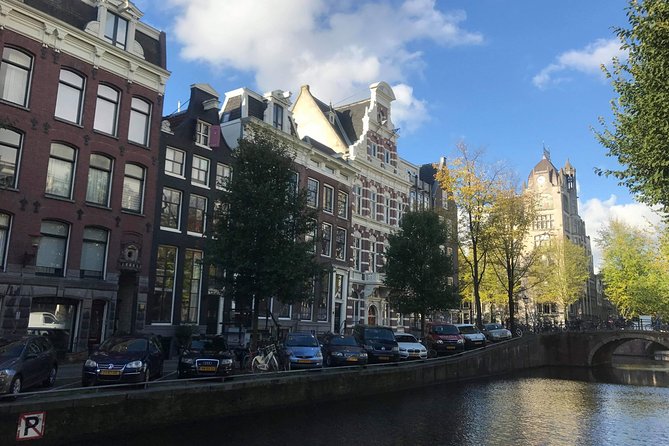
After the square stories, the tour gives special attention to Rembrandt House. This part is about Rembrandt’s life, his talent, and his fate—plus what it meant to succeed as an artist during the Golden Age.
This is a strong choice because Rembrandt isn’t just “a painter.” The guide’s focus helps you understand the pressure, expectations, and risk artists faced when wealth and prestige were tied to visibility and patronage. If you’ve seen only his portraits and assumed that’s all there is, this stop helps you connect the art to the person and the era’s rules.
Time for this segment isn’t clearly specified in the basics you provided, so treat it as a guided pause where your questions matter. If you like art history that connects to politics and society, this will land well.
The Portuguese Synagogue area: Jewish diaspora in daily life
The final zone shifts to the Jewish neighborhood, ending at the Portuguese Synagogue of Amsterdam area. The walk points out a quieter district feel and mentions the nearby Jewish Historical Museum, the Portuguese synagogue itself, and the famous flea market.
This part is about Jewish diaspora in the Netherlands—traditions, lifestyle, and rights—framed through how the neighborhood developed and how community identity persisted through change. It’s also a nice contrast to earlier stops about conflict and punishment, because here the emphasis is on continuity and community life.
Time here is about 20 minutes. Importantly, the admission ticket isn’t included for this stop. So if you want to go inside the synagogue buildings (if open during your visit), plan extra time and budget.
Your tour ends at Mr. Visserplein 3, 1011 RD Amsterdam, near the synagogue area.
Price and value: what $265.05 buys you in the real world
At $265.05 per person for an approximately 3-hour private walk, this isn’t a “cheap and cheerful” stroll. The value comes from three places.
First, it’s private, meaning your group benefits from an in-person guide with space for questions. Second, many key stops have free admission tickets listed (Centraal, St. Nicholas Basilica, ’t Aepjen, Chinatown, Nieuwmarkt/De Waag). That keeps your out-of-pocket costs lower than you might expect for a multi-stop route.
Third, you’re paying for how the guide stitches the story together. In one shared experience, Sasha added a quick cafe stop with glass walls and a view of the city, turning the walk into more than just photo stops. In another, Oleksandr adjusted the program based on the group’s wishes and answered questions along the way. That kind of flexibility is hard to get on a fixed-route group tour.
One practical drawback: since coffee and snacks aren’t included, you’ll want to plan a meal around the 3-hour time window.
Weather proofing and guide energy: why people rate this so high
The best thing about a guided walk is the human factor—pace, clarity, and whether the guide can handle chaos. In the experiences shared, Anna stood her ground even when the weather turned nasty, including rain and hail, and still kept the day feeling special.
That matters in Amsterdam. The city changes fast—wind off the water, sudden showers, and slippery cobblestones. If you’re booking, choose the mindset that you’ll dress for weather and let the guide handle the plan.
It also helps that the guide approach seems flexible. Private tours make it easier to answer what you actually care about, whether that’s religious conflict, Rembrandt’s career, or how Dutch drinking culture became part of everyday identity.
Who this Amsterdam walk fits best
This tour fits you if you want a guided orientation that connects landmarks to meaning. It’s also a good match if you like art, religion, and social history without spending the entire day in museums.
You’ll get the most value if:
- you’re visiting Amsterdam for the first time and want structure
- you enjoy short stops with a clear narrative at each one
- you prefer a guide who can handle questions rather than a big group
If you’re the type who wants to linger for an hour at each attraction or do lots of independent browsing, you may feel the tempo is fast. In that case, you might pair this with one or two longer museum stops after the walk.
Should you book this tour? My call
If your goal is to understand Amsterdam’s old core in a smart, story-driven way, I’d book it. The mix of Centraal’s Golden Age framing, the religious context at St. Nicholas, the drinking traditions at ’t Aepjen, the square stories at Nieuwmarkt/De Waag, and the art-and-life focus at Rembrandt House gives you a rounded picture in a short time.
I’d skip it only if you hate walking, dislike topic-heavy history, or you want a flexible schedule with lots of free time at each stop. Otherwise, this is the kind of tour that makes the city feel legible quickly—and that’s worth real money in Amsterdam.
FAQ
FAQ
How long is the Amsterdam walk?
It’s approximately 3 hours.
Is this a private tour?
Yes. It’s private, and only your group participates.
What are the start and end points?
It starts at Amsterdam Central Railway Station (Stationsplein 13a, 1012 AB Amsterdam) and ends at the Portuguese Synagogue of Amsterdam (Mr. Visserplein 3, 1011 RD).
Is the tour offered in English?
Yes, it’s offered in English.
Are entrance tickets included?
Some stops list admission tickets as free, while the Portuguese Synagogue admission is not included. Coffee and snacks are also not included.
What if I need to cancel?
You can cancel for a full refund up to 24 hours in advance of the experience start time.