REVIEW · ROTTERDAM
Rotterdam Rooftop tour
Book on Viator →Operated by Inside Rotterdam · Bookable on Viator
Rooftops in Rotterdam tell one smart story. This rooftop tour strings together city views with a practical lesson on how Rotterdam rebuilt after 1940, using roofs in new ways. I especially love the small-group format and the variety of rooftop types, from green spaces to skyline viewpoints.
One thing to plan for: the highest viewpoints are good, but not skyscraper-level. In other words, this is about clever roof access and urban design, not chasing a dramatic height like you’d get from a tall tower.
You’ll also go in with an easy setup: it’s run in English, you get a mobile ticket, and you’ll meet near Rotterdam Centraal at the Tourist Information office before walking city blocks toward the Old Harbor.
In This Review
- Key highlights to know before you go
- Why Rotterdam’s rooftops feel different from other cities
- Five rooftops, five different ways to use the same city space
- Stop 1: Rotterdam Centraal Station, where the roof story starts
- Stop 2: Luchtpark Hofbogen and the long rooftop park on an old train line
- Stop 3: DakAkker rooftop garden with chickens and fresh produce
- Stop 4: NH Atlanta rooftop on the Coolsingel, plus modern rooftop uses
- Stop 5: Grotekerkplein rooftop viewpoint toward Laurenschurch
- Stop 6: Witte Huis in the Old Harbor, and the tour’s best wide view
- What you learn on a Rotterdam rooftop tour (beyond the views)
- Timing, pace, and how not to feel rushed at the rooftops
- What to wear and bring for rooftop weather in Rotterdam
- Getting the most out of the views: quick photo and sightseeing tips
- Value check: why this tour is worth your time
- Who should book this Rotterdam Rooftop tour?
- Should you book the Rotterdam Rooftop tour?
- FAQ
- How long is the Rotterdam Rooftop tour?
- What language is the tour offered in?
- Where do I meet and where does the tour end?
- Is the tour for people who want lots of rooftop height?
- Do I need to worry about weather?
- Are rooftop tickets included?
- Is food included during the tour?
- Can I bring a service animal?
Key highlights to know before you go
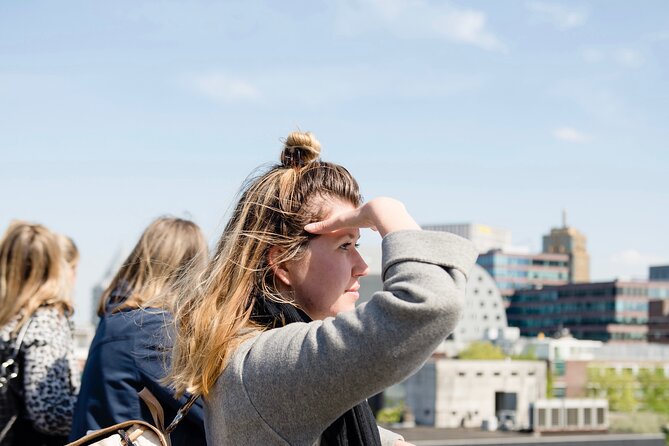
- Five exclusive rooftops in about 2.5 hours across multiple neighborhoods
- Hofbogen’s 2-kilometer elevated park on a former train track
- DakAkker’s rooftop garden with chickens, vegetables, and fruit
- Coolsingel views from the NH Atlanta rooftop with landmarks below
- Central rooftop sightlines toward Laurenschurch and a social rooftop use
- Finish at the Witte Huis for wide views over the Maas and the Cube Houses area
Why Rotterdam’s rooftops feel different from other cities
Rotterdam is a city that thinks in systems. Buildings, bridges, and transport all connect, so it’s only natural that rooftops become useful real estate too. On this tour, you don’t just look down at the city—you learn why rooftops matter in a place that rebuilt itself hard after the 1940 era.
I liked that the tour treats rooftops like part of the city’s “next chapter,” not leftover space. You’ll see roofs doing very different jobs: growing food, hosting people socially, creating quiet park space, and giving you smart, angled perspectives that help you understand how the city is laid out.
And because the group is capped at a small number, your guide can keep the pace human. You don’t feel herded. Questions land fast, and you get clearer answers while you’re still standing where the story makes sense.
You can also read our reviews of more tours and experiences in Rotterdam.

Five rooftops, five different ways to use the same city space
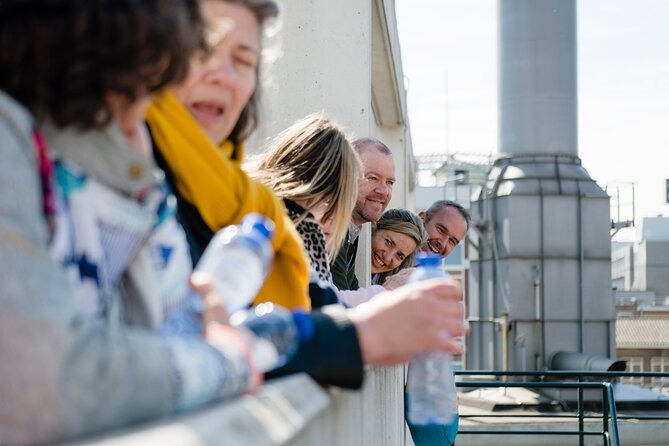
This tour is built around variety. You’ll visit several rooftops across Rotterdam, each one showing a different purpose—and each one gives a different kind of viewpoint.
That’s the big win for you: you see rooftops as a toolkit. The views are great, but the deeper value is noticing how design choices change what a roof can do for a city.
Stop 1: Rotterdam Centraal Station, where the roof story starts
You begin at Rotterdam Tourist Information at CS Stationsplein 21. Starting near Rotterdam Centraal is smart because you get your bearings early, and you’re already in the thick of the city’s connections.
The guide starts with an intro to the rooftop theme and the bigger background: why Rotterdam’s reconstruction after 1940 matters for how the city grew and how buildings were re-used. It sets the pattern for what you’ll be seeing later—this isn’t random roof-hopping. You’ll hear the logic behind what gets built, what gets transformed, and why rooftops ended up in the spotlight.
Practical note: this is also where you learn what kind of stops you’ll make next (including some rooftop stairs and changes in light as you move between viewpoints).
Stop 2: Luchtpark Hofbogen and the long rooftop park on an old train line
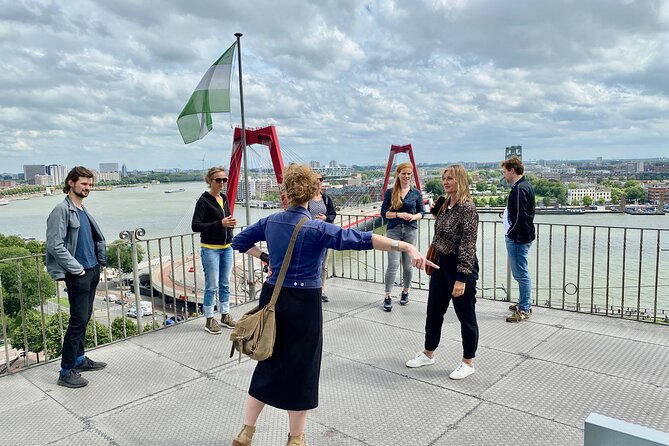
The next stop is Luchtpark Hofbogen, also known as Tuin op Hofbogen. This rooftop is in total about 2 kilometers long, which makes it the longest rooftop of the Netherlands. That single detail changes how you experience it: you’re not just stepping onto a viewpoint—you’re walking through a long ribbon of green space.
This elevated park comes from an old train track. That history is the whole point. You’re seeing how a leftover piece of infrastructure can become a new urban asset once the city decides it wants green, public space above the streets.
What you’ll likely notice from up there:
- The way the park edges frame movement through the area
- How rooftops can create a “walking path” without adding traffic pressure
- The contrast between old industrial bones and newer public use
If you’re the type of traveler who enjoys city planning (even a little), this is where the tour starts feeling special.
Stop 3: DakAkker rooftop garden with chickens and fresh produce
DakAkker is the rooftop garden that earned the Best Rooftop of the Netherlands recognition. This stop is playful but also very practical, because it shows rooftops as productive space—not just decorative greenery.
Up on the roof, you’ll see chickens and also plant-growing areas with vegetables and fruit. That mix makes it feel like a small ecosystem. It’s a real-world example of turning a flat surface into something that supports life and food supply, even in a dense city.
For your planning brain, here’s why this matters: rooftop gardens can be hard to picture from street level. On DakAkker, it’s visible immediately. You get a direct understanding of how you can fit both people and production into a roof plan.
Expect some time here to look closely. This is one of those stops where you’ll naturally slow down, because the scene is different from what you’re used to seeing on a city roof.



Stop 4: NH Atlanta rooftop on the Coolsingel, plus modern rooftop uses
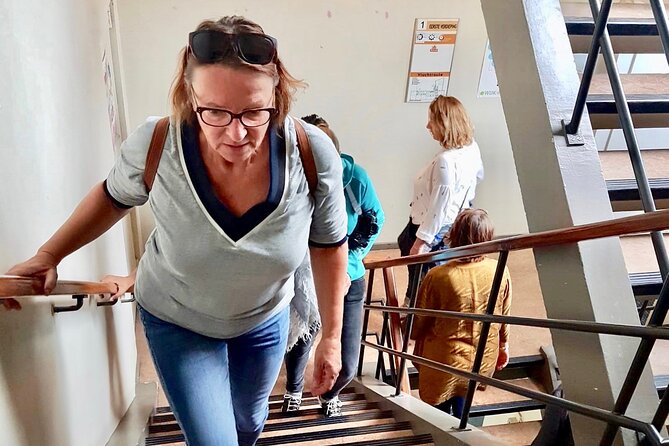
Next you’ll head to the rooftop of the NH Atlanta hotel on the Coolsingel. This is the stop for views with context.
From above, you can line up the view toward the city hall and the old Post Office, which helps you read the center of Rotterdam as a composed urban space. And the guide uses this moment to talk about newer uses of rooftops—how the city is still re-inventing roof space, not just preserving the past.
If you like skyline photos, this is a strong place to get them. Even if you don’t plan to take many, you’ll want to stand a few minutes and watch how the city stretches out below you. Rotterdam is made of lines and angles, and rooftops help you see those patterns cleanly.
One small drawback to keep in mind: you’re in a walking tour, so you won’t have long, leisurely rooftop time at every stop. The plan aims for variety—fast enough to cover several roofs, long enough to understand each one.
Stop 5: Grotekerkplein rooftop viewpoint toward Laurenschurch
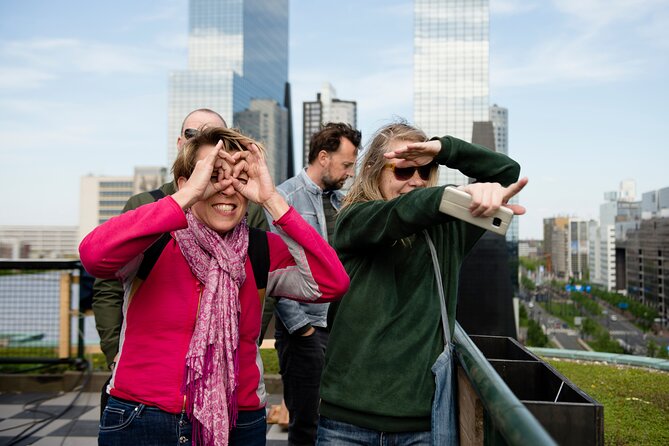
Grotekerkplein is in a very central part of the city center, and the rooftop view points you toward the medieval Laurenschurch. That “medieval-to-modern” contrast is a great teaching moment. You see how time layers on top of each other in Rotterdam, even if the city feels strongly modern at street level.
This rooftop also has a social use. That detail is important because it shifts the conversation away from roofs as engineering projects and toward roofs as places where people gather, talk, and spend time.
The guide also shares how Rotterdam has transformed over about the past 70 years. The timeframe matters—this isn’t only post-war reconstruction in theory. It’s connected to how the city’s priorities evolved and how the built environment adapted.
Stop 6: Witte Huis in the Old Harbor, and the tour’s best wide view
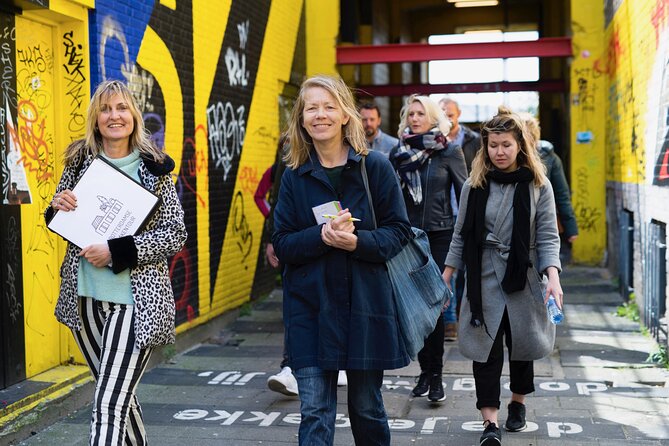
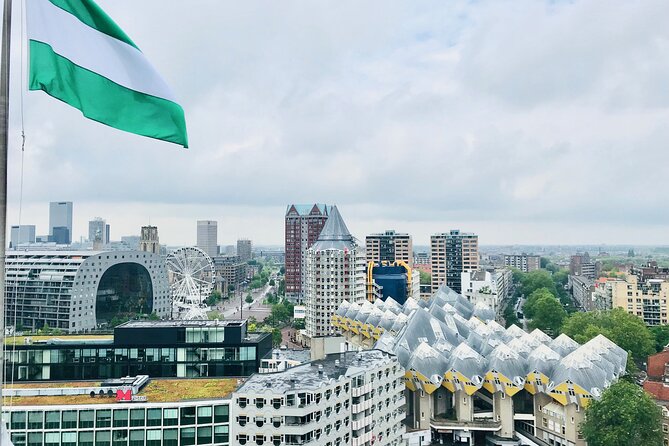
The final stop is the Witte Huis in the Old Harbor of Rotterdam. This is where the tour ends, and it’s easy to see why.
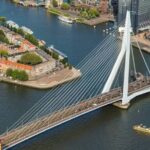
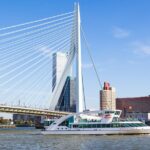
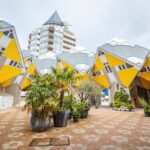
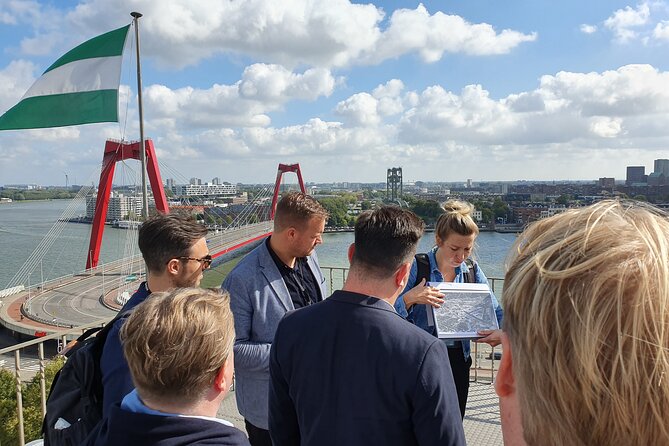
You’ll go up to enjoy wide views over the Maas river, the Cube Houses, and the entire city center. This is the payoff for earlier stops: you’ll recognize the city’s layout more clearly because you’ve already looked at it from multiple rooftop angles.
If you’re hoping for a “wow, I get it now” moment, this is where it tends to land. Rotterdam can be visually busy, but rooftops help you sort it into understandable chunks.
Also, because you finish here at the Old Harbor, you’ll be near plenty of places to keep exploring after the tour ends.
What you learn on a Rotterdam rooftop tour (beyond the views)
Yes, you’ll get great city photos. But the learning piece is built into every stop.
Here are the themes you should expect to hear clearly as you go:
- Why rooftop use became a bigger deal after the 1940 reconstruction era
- How roofs can serve more than one job (green space, food growing, social space, scenic views)
- How Rotterdam turns infrastructure leftovers into useful public areas—like an old train track that becomes an elevated park
- How the city keeps experimenting with rooftop possibilities, not just repeating older models
This is also where your guide’s role really matters. A strong guide ties each rooftop back to the city’s bigger story so you don’t just see five viewpoints—you understand what you’re seeing.
And because the group is small (max 15), you get more of that back-and-forth. The pace isn’t rushed, and it’s easier to ask about what you’re staring at in the moment.
Timing, pace, and how not to feel rushed at the rooftops
The tour runs about 2 hours 30 minutes, give or take, and it may run a little longer. That flexibility is normal for rooftop access and guided walking. If you have another plan right after, tell the guide so they can manage the pace with you in mind.
The order matters too. You start near the main rail station for orientation, then move through rooftop spaces that increasingly feel like distinct “roof worlds.” By the time you reach the Old Harbor and the Witte Huis, you’re ready for the wide, final view.
In practice, this pacing works well if you:
- Like a structured walk with distinct stops
- Want time on rooftops, but don’t want a half-day commitment
- Prefer small groups over large crowds with headsets
It also helps to know you’ll need moderate physical fitness. This isn’t described as a strenuous climb marathon, but rooftop access and walking between stops do add up.
What to wear and bring for rooftop weather in Rotterdam
Rooftops are exposed. So even if the tour operates in all weather conditions except heavy rain, you should dress like a local who expects wind and changing skies.
For a smoother experience:
- Wear comfortable walking shoes with decent grip
- Bring a layer you can add or remove as the light changes on rooftops
- Plan for wind; it can feel colder up there than on street level
Because the tour runs in most weather, you don’t need to reschedule at the first sign of drizzle. But you do want to be realistic about heavy rain, when the tour won’t run.
Getting the most out of the views: quick photo and sightseeing tips
You don’t need photography gear to enjoy these rooftops, but you can make your time more satisfying with a few habits.
First, at each stop, take 2 minutes just standing still. Rotterdam’s layout becomes clearer when you stop moving long enough for your eyes to “connect the dots.”
Second, use the landmarks the guide points out. City hall, the old Post Office, Laurenschurch, the Maas river, and the Cube Houses aren’t random. They help you understand distance, direction, and urban form.
Finally, don’t rush the garden stops. DakAkker, in particular, is worth slow looking. If you care about how cities can support life above us, it’s one of those places where you’ll notice details.
Value check: why this tour is worth your time
Even without discussing exact ticket pricing, you can judge value by what you’re getting:
- Access to five exclusive rooftops you may not find on your own
- A professional, friendly guide who ties the rooftops into Rotterdam’s post-1940 story
- A group size that allows real attention, not just standing in line
The rooftop variety is also part of the value. You’re not repeating the same scene five times. The tour intentionally mixes raised parks, rooftop gardens, hotel rooftops, central viewpoint rooftops, and a final Old Harbor panoramic view.
And the practical part: it’s offered in English, uses a mobile ticket, starts near public transport, and ends in an area that’s easy to continue exploring.
If you enjoy city history, urban planning, or even just clever design, this tour turns a normal “look at the skyline” outing into something with meaning.
Who should book this Rotterdam Rooftop tour?
Book it if you:
- Want rooftop access with a guide who connects the dots
- Like modern city design plus post-war reconstruction context
- Prefer small groups and structured stops
- Enjoy views, but also enjoy why-the-city-is-like-this explanations
Consider skipping or swapping for something else if you:
- Only care about extreme heights and far-off skyscraper views
- Have tight timing and can’t tolerate a tour that may run a bit longer
Should you book the Rotterdam Rooftop tour?
I think you should book this rooftop tour if you want a smart mix of views and city thinking, without needing to be a hard-core architecture fan. The stops are different enough to stay interesting, and the guide’s explanations make the rooftops feel connected rather than random.
It’s also a strong choice for first-time visitors who want an efficient way to see Rotterdam from multiple angles, then understand why rooftop use became part of the city’s rebuild and reinvention.
If you’re excited by places where old infrastructure turns into public space, you’ll especially enjoy Hofbogen. And if you like seeing food and wildlife ideas in real form, DakAkker is the moment you’ll remember.
FAQ
How long is the Rotterdam Rooftop tour?
It lasts approximately 2.5 hours, though it can run a little longer.
What language is the tour offered in?
The tour is offered in English.
Where do I meet and where does the tour end?
You meet at Rotterdam Tourist Information, CS Stationsplein 21, and the tour ends at Oudehaven in the Old Harbor.
Is the tour for people who want lots of rooftop height?
The views are impressive, but the highest rooftop experience is not described as skyscraper level. Expect meaningful urban views rather than extreme heights.
Do I need to worry about weather?
The tour operates in all weather conditions except heavy rain, so you should dress appropriately for wind and rooftop weather.
Are rooftop tickets included?
Access to the rooftops is included. One of the stops is noted as admission free, while the other rooftop stops include admission ticket access in the tour.
Is food included during the tour?
Food and drinks are not included unless specifically stated.
Can I bring a service animal?
Service animals are allowed.