
REVIEW · AMSTERDAM
Stedelijk Museum Amsterdam: Modern and Contemporary Art
Book on Viator →Operated by Stedelijk Museum Amsterdam · Bookable on Viator
Modern art can feel intimidating.
This Stedelijk Museum experience makes it simple, with mobile scan entry plus an audio tour that helps you read what you’re seeing. I also like that the collection and exhibitions connect art with design and social change, so it is not just name-dropping. One drawback: if contemporary art leaves you cold, you may need to pace yourself and pick a few areas rather than trying to absorb everything in one go.
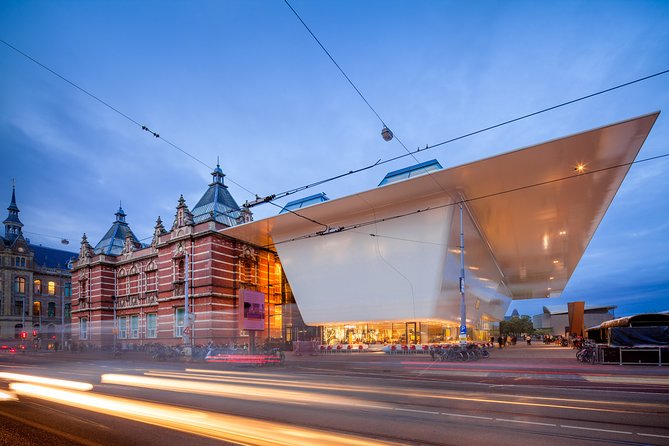
The museum’s mix is big and genuinely varied, from Dutch and European modern classics to heavyweight contemporary names. Plan on a visit that runs about 1 to 1.5 hours, and expect a few surprises as you move through galleries organized by themes and a loose sense of time. The museum is open daily from 10:00 AM to 6:00 PM, and it’s near public transportation, so it fits easily into a normal Amsterdam day.
In This Review
- Key things that make this Stedelijk visit work
- Stedelijk Museum Amsterdam: modern art with a clear storyline
- Mobile scan entry and on-the-spot simplicity at the museum
- What you’ll see: permanent collection themes and design-social connections
- The special exhibition: Erwin Olaf – Freedom (until March 1, 2026)
- Using the included audio tour to actually understand what you’re seeing
- How to pace a 1 to 1.5 hour visit without feeling rushed
- Even if modern art is not your thing, you can still enjoy Stedelijk
- Food and breaks: plan a café stop even though it is not included
- Price and value: is $27.01 a good deal?
- Who should book this Stedelijk experience?
- Should you book? My decision guide
- FAQ
- What is included with the ticket?
- Is the ticket mobile?
- How long should I plan for the visit?
- Which languages are available for the audio tour?
- Is food included?
- What are the museum opening hours?
- What special exhibition is on view?
- Is the museum near public transportation?
- What is the cancellation policy?
Key things that make this Stedelijk visit work
- Mobile ticket entry: Scan your phone for access at the museum.
- Permanent plus special exhibitions: You get admission to the collection and temporary shows.
- Audio tour in EN/NL: Included, so you can slow down and actually understand the art.
- Modern meets design and society: The collection is organized thematically (with a loose chronology).
- A current major exhibition: Erwin Olaf – Freedom is on view until March 1, 2026.
- Usually low-stress access: Many people love how fast entry can be with the mobile pass.
Stedelijk Museum Amsterdam: modern art with a clear storyline
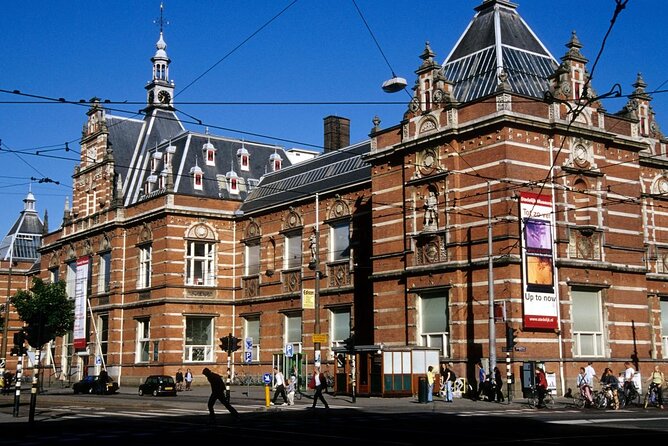
The Stedelijk is built for modern and contemporary art, but you do not need a specialist brain to enjoy it. What makes this visit more than just walking through rooms is the museum’s way of organizing ideas. The collection leans thematically, with a loose chronology, so you can see how art and design change alongside real social movements.
As you move, you’ll run into the kind of names that make modern art feel less abstract. Think in terms of artists like Vincent van Gogh, Marc Chagall, Piet Mondrian, Yayoi Kusama, Andy Warhol, Marlene Dumas, Henri Matisse, Jackson Pollock, Gerrit Rietveld, and Charley Toorop. Even if you only know a handful of these from pop culture, you’ll see the bigger web they connect to: color, shape, identity, technology, and politics.
One small but important consideration: this is modern and contemporary by nature, so galleries can be thought-provoking rather than purely decorative. You might find yourself reading labels more than usual, and that is a good thing—just be ready for it.
You can also read our reviews of more tours and experiences in Amsterdam.


Mobile scan entry and on-the-spot simplicity at the museum
The biggest practical win here is the mobile admission ticket. You do not need to hunt for printed papers. You scan your phone for entry, then you’re inside.
That matters in a city where plans can change fast. If you are trying to fit the museum between canals, a tram ride, and dinner reservations, the “no paperwork” entry style helps you keep your day on track.
A second practical point: the museum is open daily from 10 AM to 6 PM, which gives you flexibility. And the museum is near public transportation, so you’re not forced into a long walk or a tricky route right before you start paying attention to artwork.
What you’ll see: permanent collection themes and design-social connections
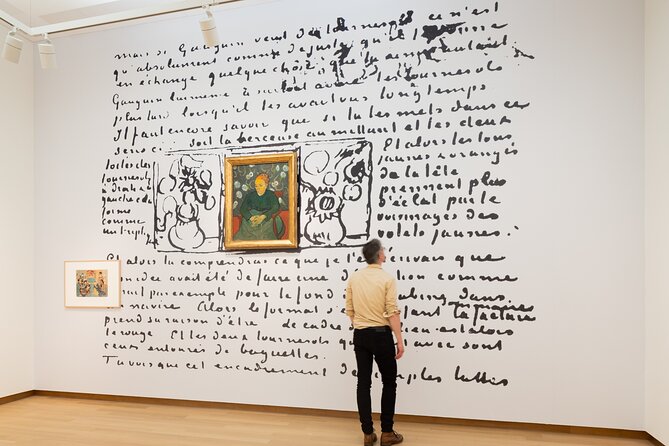
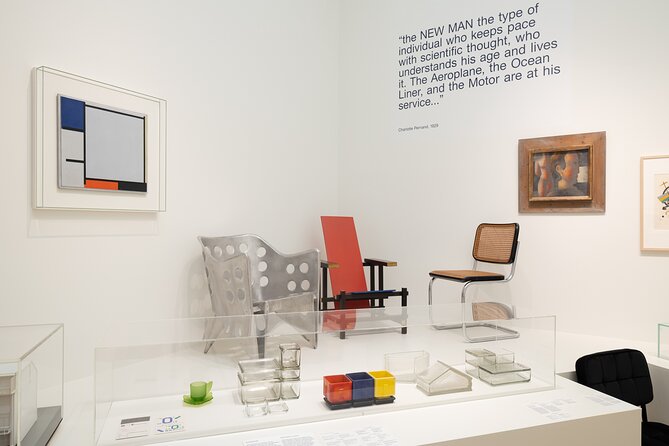
This is not a museum that treats art as separate from life. The permanent collection is organized to show how art and design develop alongside social movements. In plain terms, it encourages you to look at art as a response to the world, not just an isolated object.
Here is what that feels like on the ground:
- You’ll see how styles and ideas evolve without having to memorize a timeline first.
- You’ll notice connections between artists, movements, and design choices—especially when you move from one thematic cluster to another.
- You’ll likely cross paths with key 20th-century and design movements such as the Amsterdam School and the Bauhaus movement (the museum highlights these as part of what it teaches through the collection).
It also helps that the Stedelijk mixes heavy-hitters across eras. You get to experience how different artists handle form and meaning—how modern art can be emotional, political, experimental, or quietly precise. If you usually skip modern museums because you think it will be too abstract, this structure is a good reason to try.
The special exhibition: Erwin Olaf – Freedom (until March 1, 2026)
Right now, a major reason to go is Erwin Olaf – Freedom, on view until March 1, 2026. This exhibition is a museum retrospective and the first since his unexpected death two years ago. The show is designed to cover his whole creative process, not just the most famous images.
What to expect inside the special exhibition:
- You’ll see iconic works and well-known series.
- You’ll also encounter lesser-known work, including videos and sculptures.
- The presentation includes his commercial photography and personal archive material.
- It culminates with his last work, an unfinished video.
Why this matters for your visit: a good retrospective can pull you through a museum faster, because you start with a subject you can follow. Olaf’s career gives you a thread, and then you use that thread to understand broader themes in modern photography and contemporary art—identity, media, and how images shape culture.
Using the included audio tour to actually understand what you’re seeing
The audio tour is included, and it’s available in two languages: NL/EN. That’s a big value add because it turns the visit from passive viewing into guided looking.
Here’s how I suggest you use it:
- Don’t try to listen end-to-end like a documentary. Use it like a map.
- Start with one section where you feel even slightly curious. If something feels confusing, that is exactly the moment to press play.
- When you hit a room full of unfamiliar names, use the audio tour to connect the dots between what you see and what the museum is trying to explain.
Also, the museum provides guided-tour devices at no extra cost. That’s handy if you’re the kind of person who likes structure, but you still want control over pace.
If you’re visiting with someone who reads slowly, the audio guide lets you split the difference. You can separate for 5–10 minutes without losing the plot, then meet back up with fresh context.





How to pace a 1 to 1.5 hour visit without feeling rushed
The time window listed for this experience is about 1 hour to 1 hour 30 minutes. That is enough time to enjoy the highlights, but you need a strategy.
A realistic plan:
- Spend the first part of your visit getting oriented with the permanent collection themes. Pick a couple of thematic sections instead of trying to sprint.
- Then go to the special exhibition area and give it proper attention. A retrospective like Erwin Olaf’s rewards time.
- Finally, if you have energy, return to a permanent area you found interesting earlier and look again.
The reason this pacing matters: Stedelijk galleries can encourage slow looking. If you rush, you’ll feel like you are just scanning names. If you go too slow, you’ll start repeating yourself. The sweet spot is quick orientation, one deeper stop, and one return trip to confirm what you actually liked.
Even if modern art is not your thing, you can still enjoy Stedelijk
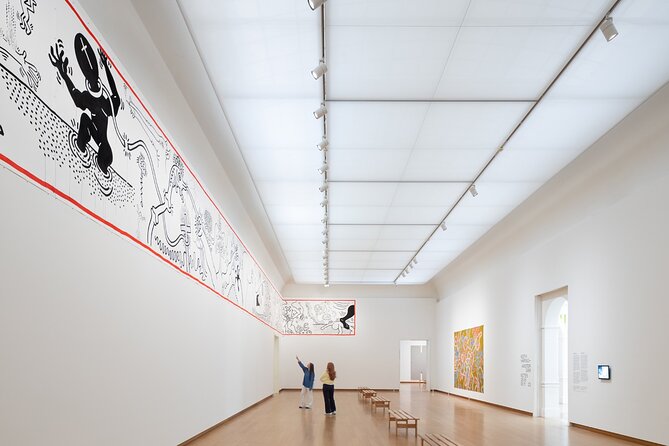
A lot of people worry that modern and contemporary art museums are only for specialists. This museum is a fair counterargument because it mixes styles and it links art to bigger shifts in society.
In practice, the collection’s thematic approach helps. If a room feels too weird at first, the museum’s structure makes it easier to see the point: art as a conversation about how people live, think, and argue.
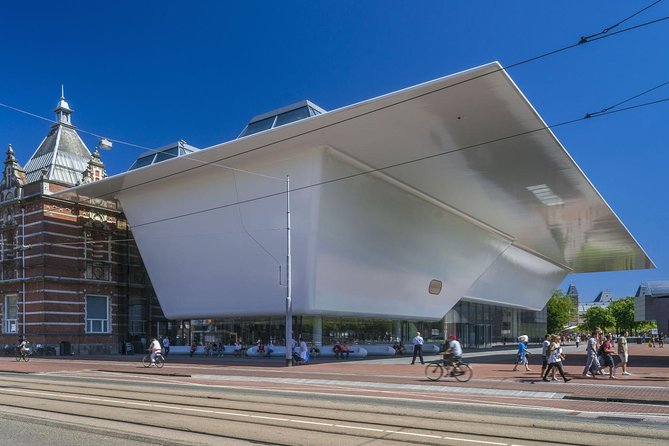
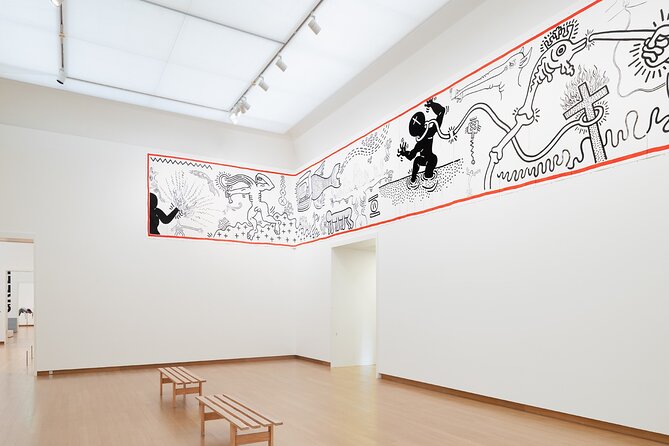
Also, the museum is known for beautiful architecture and strong presentation. That helps your brain settle in. When the building supports the art (lighting, spacing, and how you move between rooms), the experience becomes easier to enjoy, even when the artwork itself is challenging.
One caution: sometimes parts of a museum can be closed depending on the day. If you have limited time and you see an area you hoped for, it is worth staying flexible rather than assuming every gallery is open on every visit.
Food and breaks: plan a café stop even though it is not included
This ticket includes admission and the audio tour, but food and drinks are not included. That does not mean there is no place to eat. The museum has a café, and people have mentioned enjoying lunch there—things like lentil soup, gazpacho, and apple tart.
I treat the café as a reset button. If you’ve been reading labels and listening to the audio, you’ll appreciate a break before you continue. If you are traveling on a schedule, grab something quick rather than planning a long sit-down meal.
Price and value: is $27.01 a good deal?
$27.01 might sound like a “special ticket” price, but here’s the value logic that makes it feel reasonable.
You get:
- Museum admission
- An audio tour
- Access to temporary exhibitions
Add that up and it becomes a practical bundle. You’re not paying separately for the guide or for special exhibitions. And if you are the kind of visitor who would normally read labels or pay for guidance on your own, the audio inclusion is where the savings often show up.
This is also a museum you can revisit in sections. One trip might focus on design and social change. Another trip might focus on contemporary photography or a different temporary show. If you think you’ll do more than one modern-art stop in Amsterdam, Stedelijk is a strong anchor.
Still, keep one eye on how you’ll spend your time. If you only want one or two rooms and nothing else, you might feel like you paid for more museum than you used. On the other hand, if you like a structured route through modern art, the package fits well.
Who should book this Stedelijk experience?
Book it if you:
- Want a simple entry system with a mobile ticket.
- Like modern art but want help understanding it via audio.
- Prefer a guided pace over wandering with zero context.
- Want to see a major temporary exhibition alongside the permanent collection.
You might skip or adjust your expectations if you:
- Dislike contemporary art enough that you struggle to stay focused for 60–90 minutes.
- Are very short on time and only want one small sample of the museum.
Should you book? My decision guide
If your goal is a high-quality Stedelijk visit without fuss, I would book. The mobile scan entry is genuinely convenient, and the audio tour plus temporary exhibitions makes the ticket feel like a bundle instead of an add-on.
One last tip before you go: check what’s on view for your dates (especially the Erwin Olaf exhibition, which runs until March 1, 2026). Then choose to spend your time where your curiosity is strongest. Modern art rewards that approach.
FAQ
What is included with the ticket?
You get museum admission to the Stedelijk Museum, an audio tour, and access to temporary exhibitions.
Is the ticket mobile?
Yes. This experience uses a mobile admission ticket that you scan on your phone for entry.
How long should I plan for the visit?
Plan for about 1 hour to 1 hour 30 minutes.
Which languages are available for the audio tour?
The audio tour is available in two languages: NL and EN.
Is food included?
No. Food and drinks are not included.
What are the museum opening hours?
The Stedelijk Museum is open daily from 10:00 AM to 6:00 PM.
What special exhibition is on view?
Erwin Olaf – Freedom is currently on view until March 1, 2026.
Is the museum near public transportation?
Yes, it is near public transportation.
What is the cancellation policy?
Free cancellation is available if you cancel up to 24 hours in advance for a full refund.