REVIEW · AMSTERDAM
The Anne Frank Tour (Jewish Neighborhood & Amsterdam during WWII)
Book on Viator →Operated by Guided Tour Holland · Bookable on Viator
Anne Frank’s story in Amsterdam is closer than you think. This is a small-group WWII walking tour that gives you street-level context—plus a respectful, guided path through key spots tied to Anne’s hiding and Amsterdam under Nazi occupation. The only drawback: you’ll see the Anne Frank House area from the outside, not go in.
I like that the guide tells the story in a way that connects everyday city scenes to what was happening during the war. You’ll start at National Monument Dam at 11:00am and walk for about two hours, with stops at Dam Square and Westertoren along the way.
In This Review
- Key points you’ll feel on the walk
- A 2-hour street-level look at Anne Frank’s Amsterdam
- Starting at National Monument Dam: easy to find, easy to mis-time
- Outside the Anne Frank House: what you get without tickets
- Dam Square after liberation: a place where history hurts
- Westertoren and the sound Anne might have heard
- Walking the area Anne knew: hearing, seeing, and guessing
- The guide experience: storytelling that stays respectful
- Price and tipping reality: what $3.61 is really buying
- Who should book this Anne Frank Tour (and who might prefer something else)
- Should you book the Anne Frank Tour?
- FAQ
- Is admission to the Anne Frank House included?
- How long is the Anne Frank Tour?
- How big is the group?
- Where does the tour start, and what time does it begin?
- Is the tour offered in English?
- Can I cancel for a full refund?
Key points you’ll feel on the walk
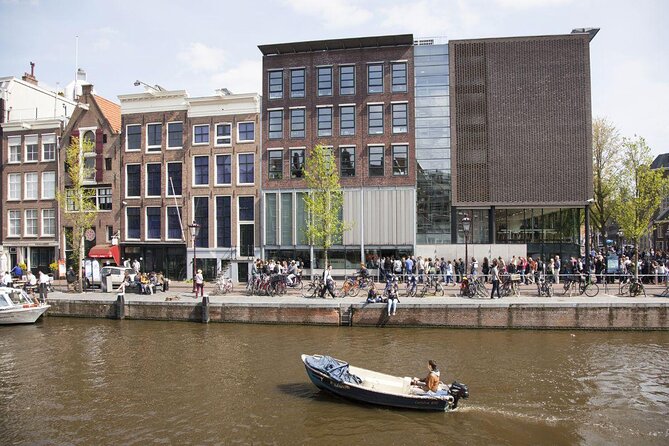
- Outside Anne Frank House, with real wartime context (no entry, but the area is powerfully explained)
- Dam Square history tied to the chaos after liberation
- Westertoren churchbells in the exact soundscape Anne Frank wrote about
- A maximum of 10 people, so questions actually get answered
- English-speaking guide using maps/documents in the storytelling
- Low upfront price, with the practical expectation that you’ll tip if the guide’s work lands for you
A 2-hour street-level look at Anne Frank’s Amsterdam
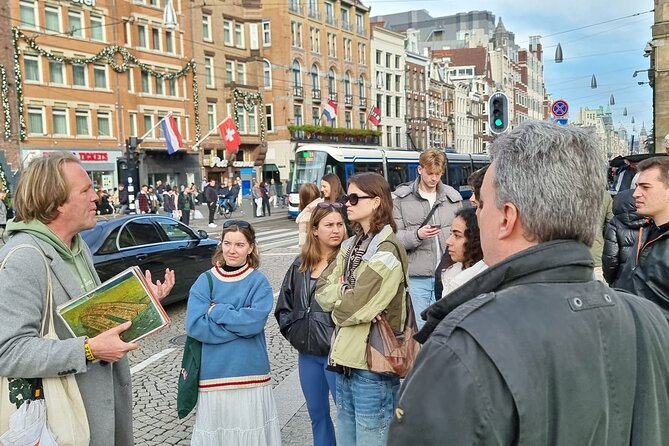
This tour is built for one goal: to help you understand Anne Frank’s life and the German occupation through the shape of the city around her. You’re not just hearing dates. You’re seeing how Amsterdam’s streets, landmarks, and neighborhoods can frame what it must have felt like to live in fear and silence.
It’s also the right length for most schedules. About two hours keeps it focused, so you’re not wandering all afternoon with a heavy subject dragging behind you. And since the group stays small (up to 10 people), it tends to feel more like a guided walk with room for questions than a mass lecture.
You’ll hear about the Nazi occupation and the Jewish community in Amsterdam, and the guide uses storytelling to connect the outside world to what people in hiding could (and couldn’t) know. That connection matters, because it turns the Secret Annex from a concept into something tied to real streets, real church bells, and real civic spaces.
You can also read our reviews of more tours and experiences in Amsterdam.



Starting at National Monument Dam: easy to find, easy to mis-time
The meeting point is National Monument Dam, 1012 JS Amsterdam, and the tour starts at 11:00am. You’ll end back at the same meeting point, so it’s a straightforward loop rather than a one-way hike.
One detail that can quietly ruin the day if you’re not ready: the tour doesn’t wait for late arrivals. If you show up behind schedule, you won’t be able to catch up with the group during that slot. That’s not unusual for small walking tours, but with a timed start, it’s smart to give yourself a buffer.
How to prepare:
- Wear shoes you’re comfortable walking in for two hours.
- Bring something for weather. Amsterdam loves to change the rules mid-walk.
- If you’re planning to visit the Anne Frank House afterward, give yourself enough time—this tour doesn’t include entry.
Outside the Anne Frank House: what you get without tickets
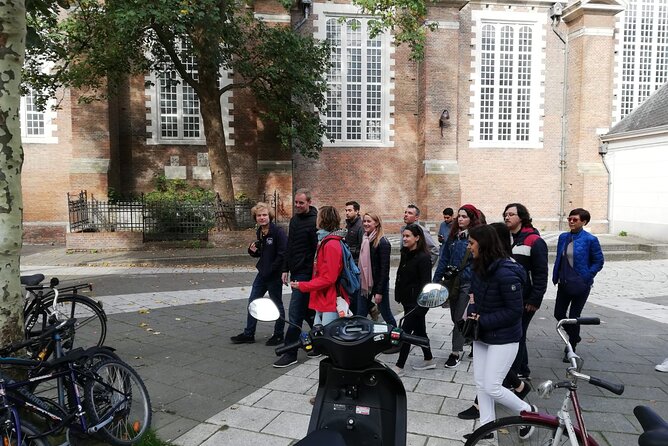
Here’s the big practical point: this tour is designed to stay outside the Anne Frank House. You won’t enter the museum or the house itself during this experience. Stop time here is about 20 minutes, and the guide uses the space outside the building to tell the story of hiding and fear.
Even without tickets, that outside perspective can work well—especially if you’re new to the story. You’ll hear how Anne’s diary connects to the human side of what people faced: not only persecution, but also the struggle for dignity in a time when dignity was constantly attacked. The guide frames the area like a living part of the city’s wartime memory, not just a photo spot.
If you’re hoping for inside views of rooms, the staircases, or the Secret Annex itself, you’ll need to book the house entry separately on the Anne Frank House’s own ticket channels. Think of this tour as the “meaning and map” lesson that sets you up before you go inside, or as the “still valuable option” if you can’t get tickets.
A careful note: this is exactly where confusion can happen. If you want the museum-house experience, plan it independently. This walk is about the context around the house, not the admission.
Dam Square after liberation: a place where history hurts
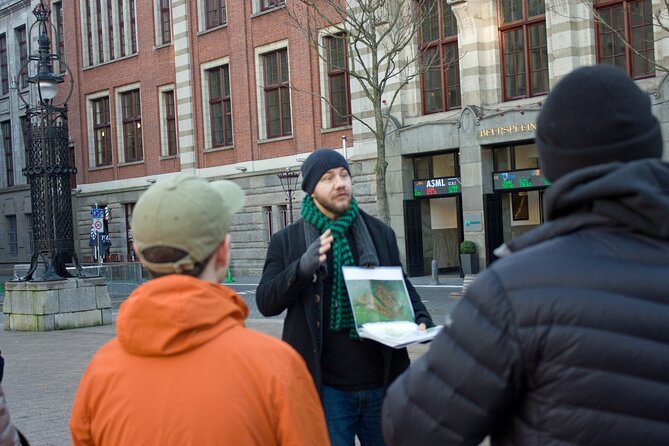
Next comes Dam Square, another 20-minute stop. This square is one of Amsterdam’s main public stages, and that’s part of why it matters here. When you talk about wartime and occupation, it’s easy to keep everything in the narrow lanes of the Jewish quarter. Dam Square reminds you how the whole city was swept up in events—liberation didn’t mean instant peace.
The guide ties the location to the violence that followed the liberation of the Netherlands. There aren’t many places in the city that feel as “center stage” as Dam Square, so hearing the wartime aftermath described here can feel both immediate and unsettling.
This stop is free, and that’s practical. You don’t need tickets or museum time to absorb the meaning; you just need to listen. Since the tone here can be heavy, it’s also a good time to pace your questions. You’ll likely want a moment after this stop before moving on.
Westertoren and the sound Anne might have heard
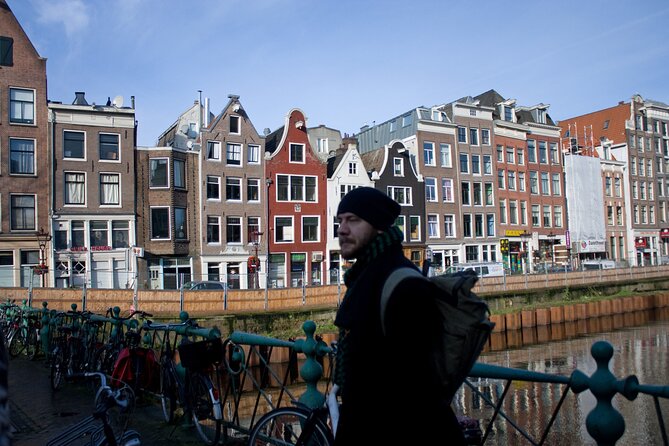
Then you’ll head to Westertoren, where the focus shifts from broad events to a small, human detail: church bells. The guide explains the kind of soundscape Anne could hear from her hiding place in the Secret Annex.
This is a smart change of pace. It takes what can be abstract—life in hiding—and makes it tactile. Bells are something you can imagine even if you never lived through a dictatorship. They’re part of the city’s daily rhythm, which is precisely what makes them chilling in this context: even when life is forced into silence, the world still ticks on outside.
Expect about 20 minutes here. Since this stop is also free, it’s an efficient way to deepen your understanding without adding museum lines or extra ticket planning. If you’ve read Anne Frank’s diary before, this stop can make you re-read the sentences with different ears—more street-level, less classroom.





Walking the area Anne knew: hearing, seeing, and guessing
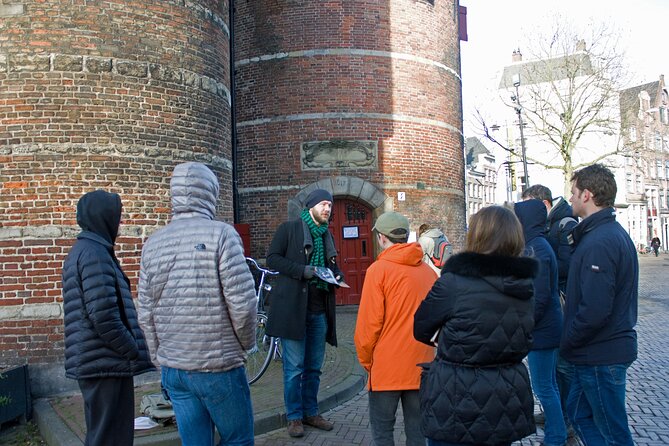
The final part of the walk is the longest: about one hour spent exploring the Amsterdam area linked to Anne Frank’s life before and during the war years when she was in hiding. The guide frames this section as a mental exercise: what did Anne hear from inside the annex, and what could she see—or not see—from the outside world while she was writing?
This portion is valuable because it turns the city into a clue. You start noticing how streets funnel sightlines, how neighborhoods feel different blocks apart, and how big-city landmarks can seem distant when you’re trapped behind walls.
It’s also where a good guide helps the most. The best moments tend to be the questions you don’t think to ask in advance:
- How did the city change during occupation?
- What kinds of “hidden” spaces existed nearby?
- What did ordinary urban life look like while persecution was unfolding?
In the broader war context, the guide may reference wartime resistance efforts and related sites in Amsterdam—like the Resistance Museum—and the idea that secret hiding places weren’t just one isolated story. You get the sense that this was a network of fear, help, and survival.
The guide experience: storytelling that stays respectful
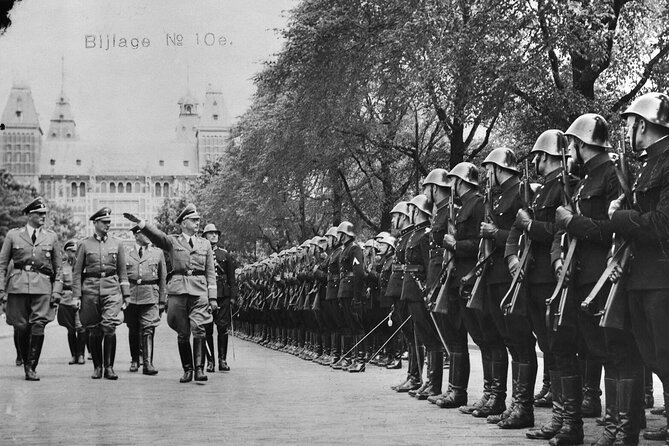
What makes this tour feel worth it is the guide work. The experience depends heavily on who’s leading your walk, and the best guides bring it together: personal perspectives, historical visuals (like documents and maps), and a storytelling pace that keeps you paying attention without turning tragedy into entertainment.
You may encounter guides such as Sebastiaan, Marius, Miesch, Craig, Wendy, Iris, Luc, Max, or Jasmine. While your exact guide will vary by date, the pattern shows up in how they handle questions and how they connect Anne Frank’s story to the larger Jewish experience in Amsterdam under Nazi rule.
If you care about detail—dates, names, and how Amsterdam functioned during occupation—you’ll likely enjoy this. If you prefer a lighter tone, you might still find the subject hard, but the guide’s role is to keep it humane and clear.
Price and tipping reality: what $3.61 is really buying
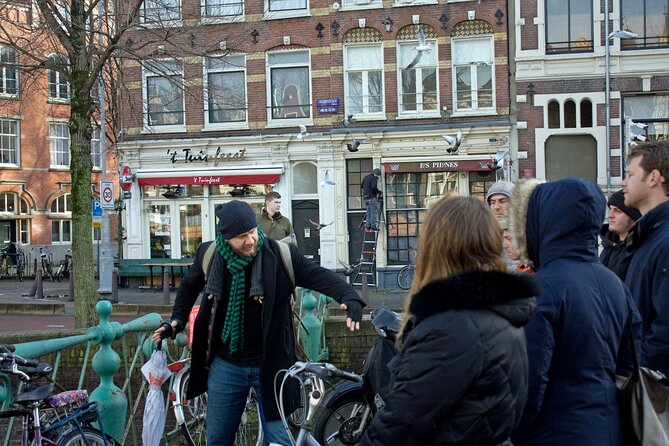
The listed price is $3.61 per person, which is unusually low for a guided walk. Here’s the practical way to think about it: that upfront amount functions like a small booking fee, and you’re expected to tip the guide at the end if you feel the guidance was worth it.
This is also where confusion can happen. Some people see the free-tour-style signage and assume it’s a fully free experience. It isn’t. You do pay something upfront online, and then tipping becomes part of the real-world cost.
If you’d rather keep things simple, do this:
- Budget for a tip at the end.
- Carry a bit of cash if you can, just in case (and because some guides prefer it).
- Read the description carefully if you’re comparing this with other “free tour” options in Amsterdam.
Value-wise, the math makes sense if the guide is strong, because you get an organized, story-led route through key WWII-linked locations without paying museum admission for multiple stops. And since the group is small, that guidance time tends to be more personal than with giant tours.
Who should book this Anne Frank Tour (and who might prefer something else)
This is a good fit if:
- You want a guided introduction to Anne Frank’s Amsterdam and the occupation period.
- You like walking tours that help you understand the city fast.
- You’d benefit from a guide connecting Anne’s diary to what’s around her.
It may be less ideal if:
- You specifically want to enter the Anne Frank House during this experience. You won’t.
- You’re looking for a short photo stop with minimal history. This is a story walk, not just a sightseeing loop.
- You’re traveling with very young kids who may struggle with upsetting material. Some guides can adapt pacing, but the topic is inherently heavy.
If you’re doing Amsterdam in layers, I’d think about pairing this with the Anne Frank House entry as a separate ticketed plan. This tour can set the context, then the museum-house experience gives you the physical rooms and artifacts.
Should you book the Anne Frank Tour?
I’d book it if you want an organized, respectful walk that turns Anne Frank’s diary and WWII in Amsterdam into something you can see around you. The small group limit and the guide-led storytelling are the main reasons it’s worth your time, especially if you don’t want to rely on self-guided reading alone.
Skip it (or book it only as a context warm-up) if your priority is house/museum entry during the same slot. This one keeps you outside, and that’s the deal.
If you can, book ahead. Tours like this often get scheduled out earlier than you’d expect—on average, about a month in advance—so planning sooner keeps options open.
FAQ
Is admission to the Anne Frank House included?
No. You’ll stay outside during this tour, and Anne Frank House access is not included. House entry tickets are available to book separately.
How long is the Anne Frank Tour?
It lasts about 2 hours on average.
How big is the group?
The tour has a maximum of 10 travelers.
Where does the tour start, and what time does it begin?
It starts at National Monument Dam (1012 JS Amsterdam) and begins at 11:00am. The tour ends back at the meeting point.
Is the tour offered in English?
Yes. The tour is offered in English with an English-speaking guide.
Can I cancel for a full refund?
Yes. You can cancel up to 24 hours in advance for a full refund. If you cancel within 24 hours of the start time, the amount paid is not refunded.