REVIEW · AMSTERDAM
Walking Tour about Golden Age Architecture, private local guide
Book on Viator →Operated by Artsy Tours · Bookable on Viator
Amsterdam’s canals hide a lot.
This private 1.5-hour walk connects Amsterdam’s Golden Age architecture to the people and engineering that made it possible, from Dam Square power to canal-belt façades. You’ll move through key city sights fast, with a local guide shaping what to notice so the buildings make sense, not just look pretty.
What I like most is the way Anna turns stone and brick into stories you can actually picture. You’ll also appreciate the stop choices: canal-belt homes and warehouses plus the major landmark church make the walk feel like a guided “read” of 17th-century Amsterdam, not a random checklist.
One consideration: this is a walking tour with about 1.5 hours on your feet, and it’s not recommended if you use a walker or have trouble walking and standing. There’s no mobility help provided, so plan accordingly.
In This Review
- Key things to know before you go
- Golden Age Amsterdam in 90 Minutes: What You’ll Actually See
- Dam Square to Royal Palace Amsterdam: Power, Town Hall, and Building on Hard Ground
- Royal-Style Neighbors: Huis Bartolotti and the Canal-Belt Baroque Look
- Torensluis and the Four Golden-Age Façades: Crooked Houses and Creative Adaptation
- De Dolphijn and the Night Watch Connection
- Ronde Lutherse Kerk: Why Domes Matter in the Renaissance Shift
- Prinsengracht Warehouses: The Functional Face of Wealth
- Jordaan and Gevelstenen: Learning to Read Small Stone Clues
- Westerkerk: Calvinist Simplicity, Rembrandt’s Resting Place, and the 85-Meter Spire
- Anna’s Teaching Style: How This Walk Becomes a Real City Lesson
- Price and Value: Is $73.59 Per Person Worth It?
- Should You Book This Golden Age Architecture Walk?
- FAQ
- How long is the Golden Age architecture walking tour?
- What is the meeting point for the tour?
- Where does the tour end?
- Is the tour private?
- What language is the guide offered in?
- What does the price include?
- Is there a mobile ticket?
- Are bottled water and other drinks included?
- Is the tour suitable for people with mobility needs?
- Are there cancellation options?
- Does the tour allow service animals?
Key things to know before you go
- Private guide for just your group: you set the pace and can ask questions without a crowd.
- Golden Age building details, up close: façades, materials, and design choices tied to trade and status.
- Engineering stories you usually skip: construction challenges on clay and marshy ground get explained clearly.
- Canal-belt reading skills: you learn how to spot things like gevelstenen façade stones and what they mean.
- Handy endpoint near Westerkerk: the tour finishes by the famous church near the Anne Frank House area.
Golden Age Amsterdam in 90 Minutes: What You’ll Actually See
This tour is built for time-crunched sightseeing. At about 1 hour 30 minutes, you cover major stops along the center and canal areas while keeping the focus on architecture—who built what, why it looks the way it does, and how the city managed serious building challenges.
Because it’s private with a local guide, you’re not stuck watching everyone else’s heads. You’ll have room to pause for photos, ask follow-ups, and get pointers on what to look for at the next façade. In the reviews, Anna came up again and again for making the stories clear and fun, plus being patient when questions pile up.
The price—$73.59 per person—makes sense if you value context. You’re paying for a person to interpret the city’s design logic, not just for a route. If you enjoy architecture and want your photos to come with meaning, this is a smart way to spend 90 minutes.
You can also read our reviews of more tours and experiences in Amsterdam.
Dam Square to Royal Palace Amsterdam: Power, Town Hall, and Building on Hard Ground
You start at Dam Square, and that matters. It’s the kind of place that can feel like a quick photo stop if you don’t know what it meant historically. Your guide sets the scene for how Amsterdam rose as a global trade hub during the 17th century, and how that prosperity shaped what got built next.
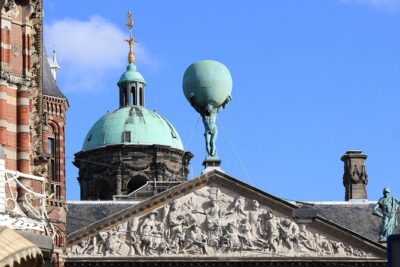
From there you move to the Royal Palace Amsterdam. The standout point here is the building’s role in the Dutch Golden Age: it was originally constructed as the city’s town hall. That single detail changes how you read the space. You’re not just looking at a grand exterior—you’re seeing a symbol of civic power in an era when Amsterdam’s merchants and officials wielded major influence.
Then comes one of the most useful ideas on the tour: the engineering behind putting something monumental on challenging ground. Amsterdam’s soft clay and marshy conditions weren’t an afterthought. Your guide explains how construction on difficult terrain required real ingenuity, which helps you understand why the city’s architecture and canal infrastructure are linked.
Practical note: both Dam Square and the Royal Palace stop are marked as free admission on this walk, so you’re not juggling ticket lines.
Royal-Style Neighbors: Huis Bartolotti and the Canal-Belt Baroque Look
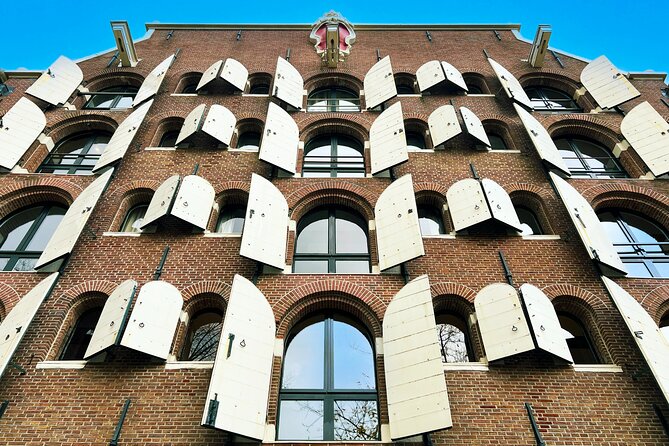
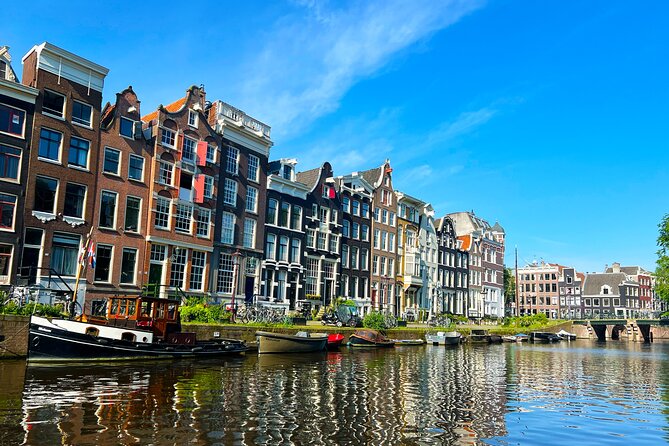
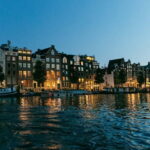
After the “big statement” civic buildings, you shift to canal homes where wealth shows up in the details. Huis Bartolotti is a good example. This 17th-century Dutch baroque-style house along the canal uses striking red brick and sculptural sandstone details. Even if you’re not an architecture nerd, you’ll likely spot the difference between a utilitarian structure and a home designed to display status.
What makes this stop valuable is the connection between the design and the owner. The house reflects trading ties with Italy, and that’s the point of Golden Age architecture: style often followed trade networks. You’re learning to see façades like a message board—money, connections, and identity, all in stonework.
If you like photo-taking, this is a strong place to slow down. The canal backdrop and the façade details are both visible, and a guide helps you aim your camera where the story is.
Torensluis and the Four Golden-Age Façades: Crooked Houses and Creative Adaptation
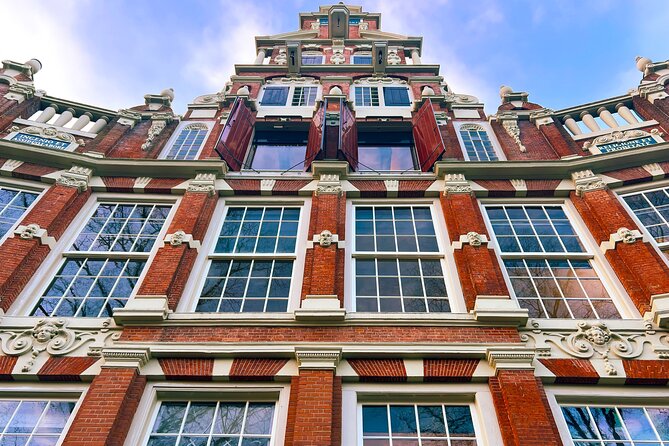
Next is Torensluis, a wide bridge spot that gives you an excellent view for comparing façades. The tour focuses on four unique designs popular with the mercantile class during the Golden Age, showing how baroque style was adapted in the Netherlands rather than copied blindly.
This is also where you get the very Amsterdam feature—crooked houses. Buildings lean in whimsical ways because Amsterdam’s ground is soft and marshy. The guide’s explanation helps you stop thinking of it as a flaw and start seeing it as a consequence of how the city grew and how engineering worked with real terrain.
This stop is brief, so don’t treat it like a long viewpoint break. The value is in the comparison. If you know you like symmetry, angles, and façade rhythms, you’ll get more out of these few minutes than you might expect.
De Dolphijn and the Night Watch Connection
De Dolphijn is another canal-belt house, and the symbolism here is fun in a practical way. The name refers to a dolphin symbol of wealth, tied to Amsterdam’s maritime trade during the Dutch Golden Age.
You also get a real cultural link: De Dolphijn was originally owned by Frans Banning Cocq, the captain immortalized in Rembrandt’s painting The Night Watch. That connection turns the building from scenery into a piece of the larger Amsterdam story—art, trade, and status all braided together through the people who lived there.
This is the kind of stop that helps you enjoy the canal belt more on your own later. Once you learn how to connect symbols and owners to what you’re seeing, every façade becomes easier to “read.”

Ronde Lutherse Kerk: Why Domes Matter in the Renaissance Shift
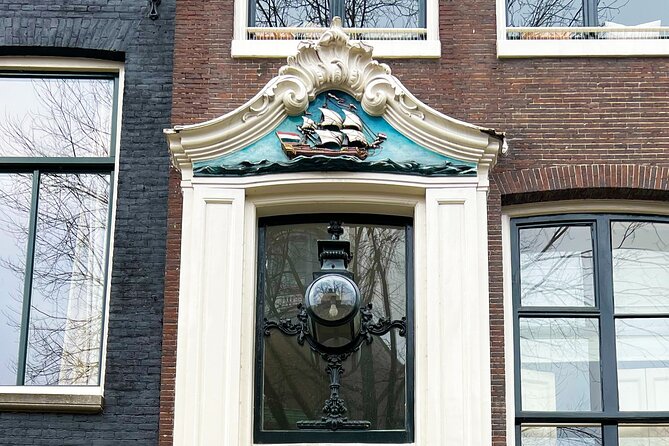
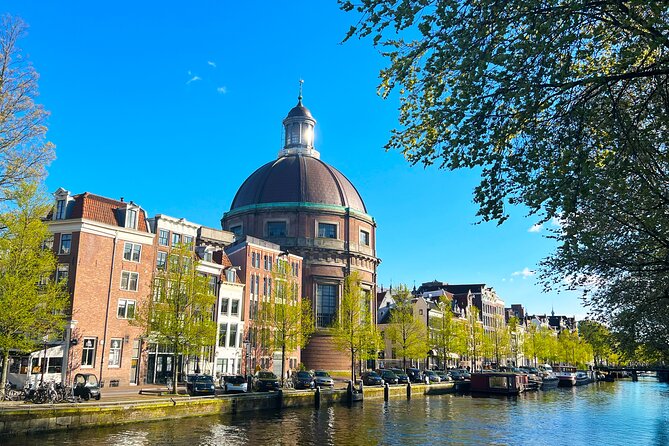
The tour includes Ronde Lutherse Kerk, with a quick but memorable focus: domes were a high point of architectural achievement during the Renaissance period. Even in a short stop, that message helps you recognize the architectural “language” changing across time.
You’re not going to spend long here, so if you’re hoping for a deep interior visit, manage expectations. The value is mostly about using this church as a time-marker in the bigger story: Amsterdam’s building styles didn’t stay stuck. They evolved as taste, religion, and design goals changed.
Prinsengracht Warehouses: The Functional Face of Wealth
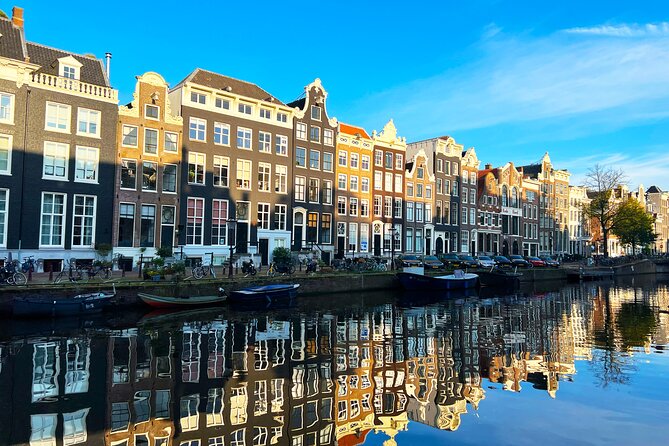
Prinsengracht is where the tour shifts from residences to commerce. The warehouses along this canal are classic examples of Golden Age architecture built for work: tall, steep gables; large windows; and wooden hoisting beams on the roof used to lift heavy cargo from ships.
This is one of the most practical sections of the walk. You’ll learn to see why some buildings look “simple” on purpose. The exteriors emphasize clean lines and minimal ornamentation because these were working structures. Yet the grand scale still signals wealth and power, because the merchants who funded them had serious money tied to trade.
A guide makes the difference here. Without help, you might miss the hoisting-beam story and just see old canal warehouses. With guidance, you start noticing functional design choices that make sense in the Amsterdam waterways system.
Admission at this stop is free, which keeps the pacing smooth for a tour designed to cover a lot in 90 minutes.
Jordaan and Gevelstenen: Learning to Read Small Stone Clues
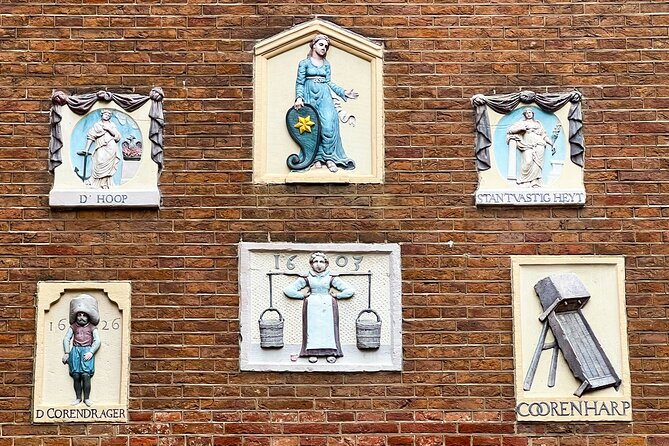
If you want to feel like you’re learning street-level “architecture literacy,” Jordaan is your payoff. In the 17th century, it mixed residential and commercial life—craftsmen and laborers lived close to work, and narrow canals ran beside rows of houses.
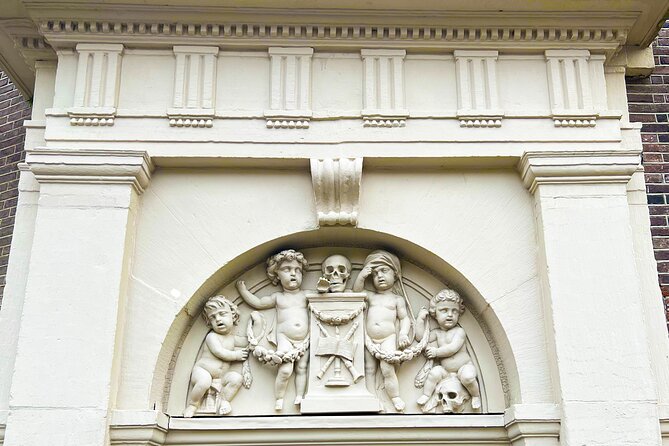
The key detail here is gevelstenen, the façade stones embedded into building exteriors. These small plaques weren’t just decorative. They often communicate how the building was used or the profession of the owner, plus other facts about people living and working there. Many include carvings that add a creative layer to the streetscape.
This is exactly the kind of skill that keeps paying off after the tour. Once you start spotting gevelstenen, you don’t just walk through the canal belt—you interpret it. And that makes self-guided time later more enjoyable and less guesswork.
Westerkerk: Calvinist Simplicity, Rembrandt’s Resting Place, and the 85-Meter Spire
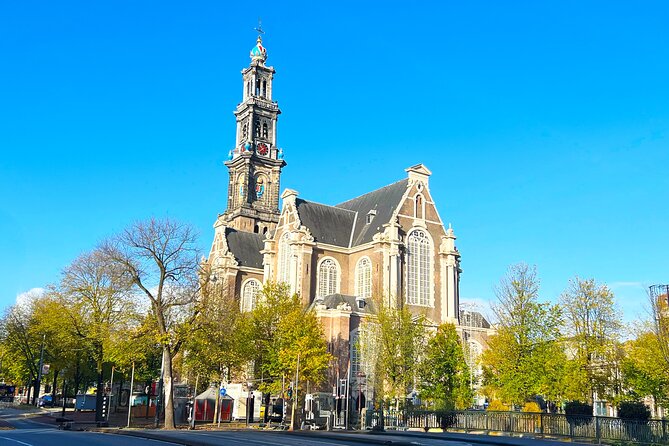
The tour ends near Westerkerk, one of Amsterdam’s important landmarks. This church started as a Calvinist church for a growing population, and the architecture reflects Calvinist worship spaces: large, airy interior feel with simple, elegant design.
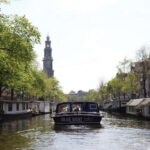
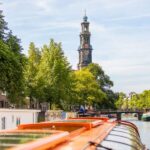
The tour also brings in major cultural history. Westerkerk is the final resting place of Rembrandt van Rijn. The guide points out the spire too—completed in 1638 and reaching about 85 meters (280 feet) above the Jordaan district—crowned with an imperial crown symbolizing Amsterdam’s status since the 15th century.
Then there’s the clock and its chimes. Your guide explains that the clock’s chimes were described in Anne Frank’s diary, which gives you a modern emotional reference point to go with the 17th-century architecture.
If you’ve been thinking that church exteriors are just church exteriors, this stop helps correct that. In Amsterdam, even a landmark has layers: religion, civic identity, and long-running city sound.
The ending location is also convenient for continuing your day. The tour ends near Westerkerk, close to the Anne Frank House area, so you’re not stranded in the middle of nowhere when you finish.
Anna’s Teaching Style: How This Walk Becomes a Real City Lesson
Anna is the big reason this tour earns a 4.9 rating with 15 reviews, and you can feel the difference in how the tour is described. She’s consistently praised for being friendly and patient, plus for using English that’s clear and easy to follow.
What I like about this approach is that Anna doesn’t just tell you facts. She points out architectural features you might otherwise miss. She also connects buildings to social policies and the people behind them, so you leave with more than a photo set—you leave with a way to understand what you saw.
If you ask a lot of questions, you’ll likely be in good hands. In the reviews, she’s described as accommodating and allowing time to take pictures, so you won’t feel rushed out of the moment.
Price and Value: Is $73.59 Per Person Worth It?
At $73.59 per person for about 1.5 hours, this sits in the “worth it if you care” category. You get a private guide, and the itinerary is tightly focused on Golden Age architectural interpretation—along the way you’re also learning engineering and design reasoning.
This is good value if:
- You want context for the canal belt and major landmarks
- You’re the type who zooms in on façades and details
- You’d rather pay for guidance than spend time researching before you go
It may feel less worth it if:
- You mainly want broad sightseeing with minimal stops
- You’re not interested in architecture beyond quick photos
- You’re walking with mobility limits and need a slower, more adaptable plan (the tour doesn’t provide mobility aids)
Also note: bottled water isn’t included. It’s a small item, but on a 90-minute walk, it’s still a practical thing to plan for.
Should You Book This Golden Age Architecture Walk?
I’d book it if your idea of a great Amsterdam day is learning why buildings look the way they do. The tour’s strength is the pairing of major sites (Dam Square, Royal Palace, Westerkerk) with the canal-belt detail that most first-time visits miss. Anna’s teaching style seems built for curiosity—fun, clear explanations and time for questions.
I’d skip or rethink it if you can’t comfortably walk and stand for about 1.5 hours, since mobility aids aren’t available. And if you’re expecting a long stop in one place, this tour is designed to keep moving and comparing.
If you’re excited by architecture, trade, and the engineering behind the city’s shape, this is a solid choice—especially because it’s private and you get the guide’s full attention the whole time.
FAQ
How long is the Golden Age architecture walking tour?
It lasts about 1 hour 30 minutes.
What is the meeting point for the tour?
The start is at Royal Palace Amsterdam, Nieuwezijds Voorburgwal 147, 1012 RJ Amsterdam.
Where does the tour end?
It ends near Westerkerk at Prinsengracht 279, 1016 DL Amsterdam, close to the Anne Frank House area.
Is the tour private?
Yes. It’s a private activity, so only your group participates.
What language is the guide offered in?
The tour is offered in English.
What does the price include?
The tour includes a private guide. Admission at the listed stops is free on this experience.
Is there a mobile ticket?
Yes, you’ll use a mobile ticket.
Are bottled water and other drinks included?
No. Bottled water is not included.
Is the tour suitable for people with mobility needs?
It’s not recommended for participants who use a walker or have trouble walking and standing for 1.5 hours. Mobility aids are not available.
Are there cancellation options?
Yes, free cancellation is available. You can cancel up to 24 hours in advance for a full refund.
Does the tour allow service animals?
Yes, service animals are allowed.