REVIEW · AMSTERDAM
Amsterdam: Private Pedicab Historical Sightseeing Tour
Book on GetYourGuide →Operated by Bram de Haan Events · Bookable on GetYourGuide
Pedicabs make Amsterdam feel personal. You start at Dam Square and glide through tight historic streets with Bram de Haan guiding you, stop-by-stop, with stories that connect landmarks you’d otherwise treat like checkboxes.
Two things I loved most are the car-free canal district routing and the way each stop comes with clear, practical context you can actually use on future days in town. The main drawback is simple: in just 2 hours, you’ll cover a lot, so you won’t have long meandering time at every single photo spot.
If you want Amsterdam’s highlights with less walking and more seeing, this is one of the smoother ways to do it. Just plan to dress warm, because the comfort level lives and dies by the weather.
In This Review
- Key highlights to notice on this pedicab tour
- Pedicab history tour: the real value is how little you have to plan
- Dam Square to Royal landmarks: the city’s starting point on a pedicab
- Zeedijk and Nieuwmarkt: dike defenses, old interiors, and the city gate in the middle
- Montelbaanstoren to the oude Waal: defenses, houseboats, and a lookout you’ll actually use
- Jewish Quarter stops: synagogues, the Portuguese connection, and the 102,000-brick monument
- Hermitage widowhouse and the Skinny Bridge at light-bulb hour
- Canal district “half circles” and merchant-house clues in the 17th-century ring
- Museumsplein and the Rijksmuseum tunnel: ending where museum lovers start
- Comfort, photo pacing, and how to plan around a 2-hour loop
- Price and value: $230 for a private group up to two
- Who should book this pedicab history tour
- Should you book it or skip it?
- FAQ
- Where does the tour start?
- How long is the Amsterdam private pedicab historical sightseeing tour?
- How much does the tour cost?
- Is hotel pickup and drop-off included?
- What sights are included?
- What languages is the guide available in?
- Are food and drinks included?
- What should I bring for the tour?
- What are the weight limits?
- Can I cancel or pay later?
Key highlights to notice on this pedicab tour
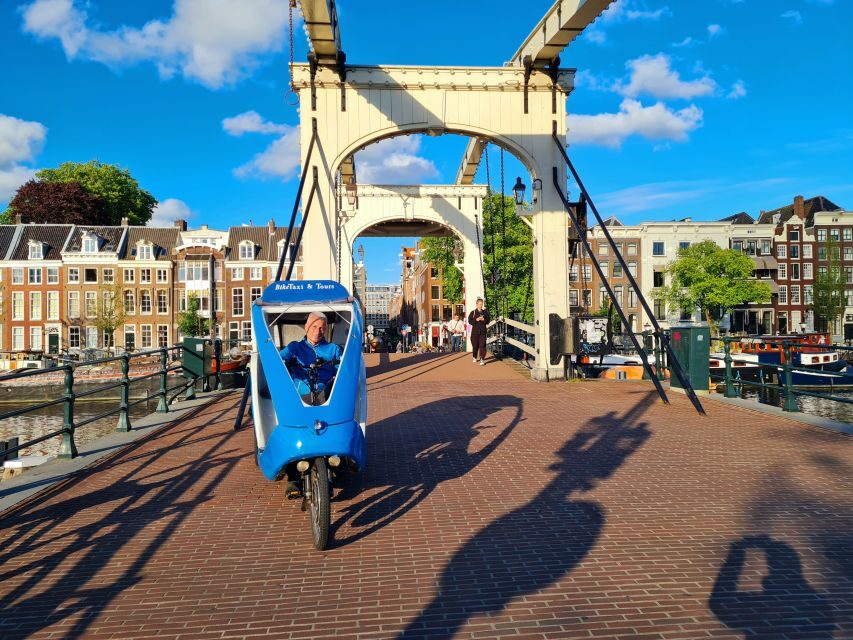
- Dam Square to Museumsplein covers the city’s historic spine in one smooth loop
- Seventeen bridges and Amstel river views give you instant orientation for a first visit
- Jewish Quarter stops include the Big Synagogue area and the 102,000-brick Holocaust name monument
- Montelbaanstoren + oude Waal lookout connects the dots between defenses, water, and housing
- Rijksmuseum tunnel drive plus a stop on Museumsplein makes the museum quarter feel real, not abstract
- Private pacing for up to two means you can ask questions and keep the ride comfortable
Pedicab history tour: the real value is how little you have to plan
Amsterdam rewards slow wandering, but it also punishes decision fatigue. This private pedicab tour is a clean shortcut. You show up, get picked up, and you’re carried through the parts of the city that define what Amsterdam looks like at street level: old centers, canal rings, and the neighborhoods that shaped Jewish and immigrant community life.
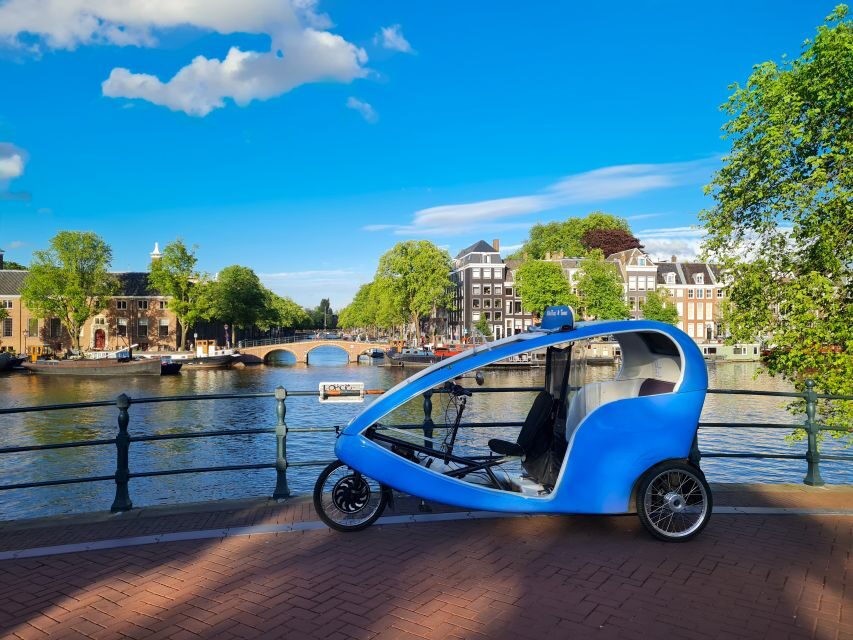
The big win is the vehicle choice. A pedicab can go down streets that cars can’t, which means you get closer to the city’s everyday feel. You also avoid the grind of hopping between trams and buses while trying to read canal-house façades at the same time. In a couple of hours, you learn the “map in your head” that makes the rest of your trip much easier.
Another practical win: the guide doesn’t just rattle dates. You get explanations tied to what you’re seeing—how canals were protected, why certain buildings ended up where they did, and what specific monuments mean. One person even noted visual aids like photos and maps, which helps if you like to understand the city’s shape, not just memorize names.
The tradeoff is that this is a high-coverage ride. You’re not meant to turn it into a long personal walking tour. Think of it as a guided orientation plus a set of the most meaningful landmarks—then you can come back later on your own for deeper exploring.
You can also read our reviews of more private tours in Amsterdam


Dam Square to Royal landmarks: the city’s starting point on a pedicab

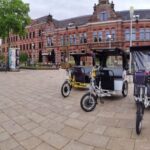
You begin at Dam Square, the core where Amsterdam’s story starts to make sense. This isn’t just a busy meeting place. It’s the birthplace area of the city’s growth, where you’ll find the Royal Palace, the Nieuwe Kerk (New Church), and the National Monument.
On a pedicab, this opening matters because Dam Square can feel like a blur from street level. Your guide helps you see what’s around you in a logical order: what role the square played historically, and why this location became the heart of the old center. You also get an early sense of scale—how the street grid and the water system funnel movement toward the canal districts.
Practical tip: if you’re traveling with limited mobility, starting here is useful. You’re not committing to a long walk through multiple neighborhoods before you’ve learned how the city is laid out. Instead, you get the “big picture” first, then spend the rest of the tour zooming into more specific areas.
Zeedijk and Nieuwmarkt: dike defenses, old interiors, and the city gate in the middle
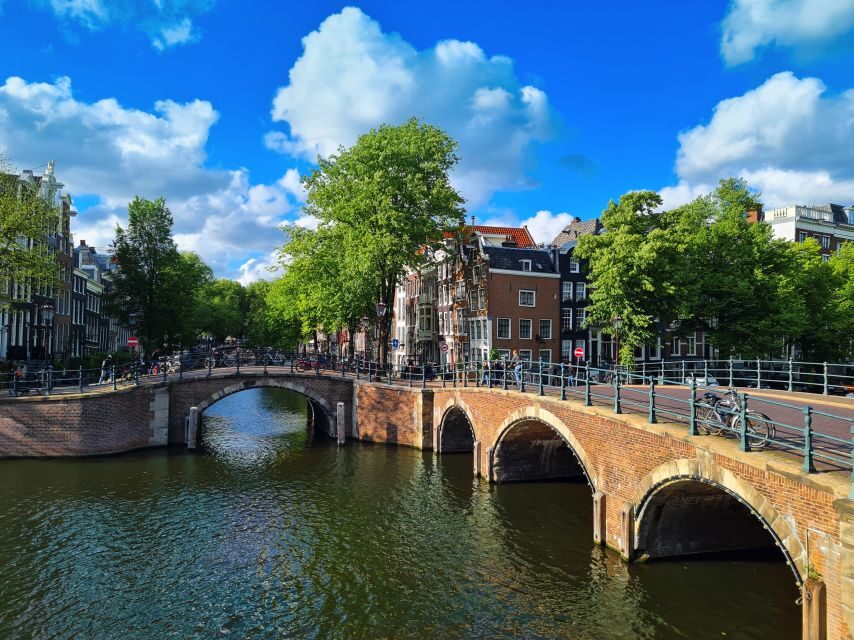
Next comes Zeedijk. Today it’s a street, but in the past it functioned as part of the dike system protecting the old city. That detail changes how you read what you’re seeing. You stop thinking of Amsterdam as just canals and bikes, and start seeing the engineering logic behind it.
Zeedijk also has a very specific charm point: you’ll get a view of the oldest café still standing, with its original interior. Even if you don’t go inside, it’s one of those details that makes the neighborhood feel anchored in real continuity rather than staged tourism.
A bit further along, you’ll get a glimpse of Chinatown nearby. It’s not a deep Chinatown walk, but it gives you enough of a visual cue to look for it later when you’re doing independent exploring.
Then you’ll move to Nieuwmarkt, centered on one standout: the 15th-century city gate that sits right in the square. The gate isn’t a random landmark; it’s a clue to how the city defended itself, controlled entry, and structured movement. You’ll get the story behind why this kind of building sat where it did, and how the city’s protection needs changed over time.
Montelbaanstoren to the oude Waal: defenses, houseboats, and a lookout you’ll actually use
Minutes later the tour shifts to Montelbaanstoren, an old watch and defense tower tied to Amsterdam’s expanded defense line from the early 16th century. It’s one of those stops that sounds niche until your guide explains what a tower like this meant in practice. You start to understand that Amsterdam’s canals weren’t just views—they were part of a defensive landscape.
From there, you get a lookout over the oude Waal. You’ll see houseboats lined up with 17th-century canal houses as the background. This is a helpful “reality check” stop. On maps, canal districts can look uniform. In person, the water edges, the textures of façades, and the way boats sit along the line bring the whole canal system into focus.
If you care about photos, this is a strong moment for it. It’s a location where the view does most of the work for you, and your guide’s context helps you frame what you’re capturing.
Jewish Quarter stops: synagogues, the Portuguese connection, and the 102,000-brick monument
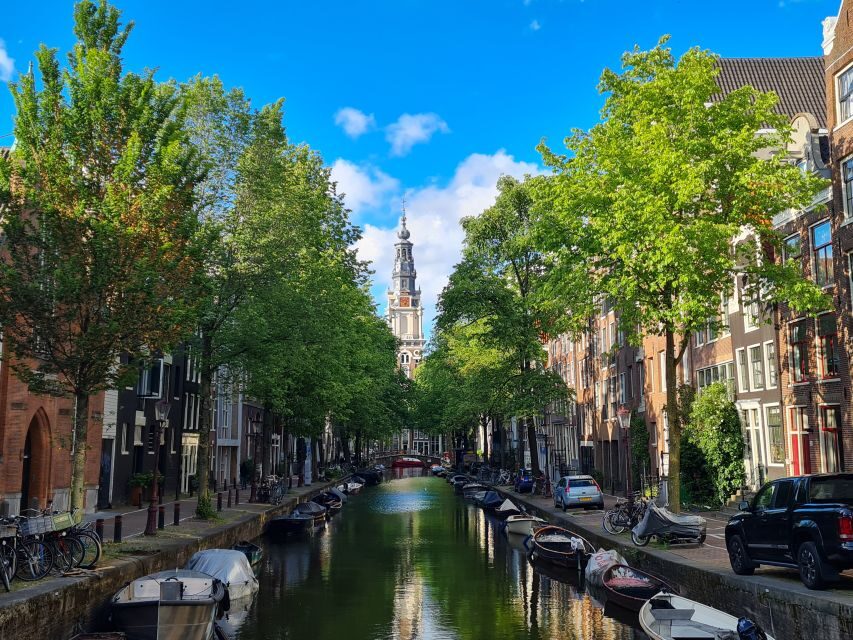
The Jewish Quarter portion is one of the most meaningful parts of the ride. You’ll visit the area around the Big Synagogue, described as the first synagogue Jewish people were allowed to build in Western Europe over 350 years ago. Seeing that in context helps you understand why a building like this carried so much weight far beyond architecture.
Across the street area, you’ll also see the Portuguese Synagogue. That detail matters because it shows how Jewish community life wasn’t one single story. Different communities and histories shaped different places and institutions.
Then there’s a monument stop that doesn’t let you treat the neighborhood like just another scenic district: the Holocaust name monument made up of 102,000 bricks, honoring the names of Dutch Jewish victims of World War II. In a short tour format, this kind of stop can feel intense, and it is. But it’s also one of the reasons this tour is worth doing with a guide who can explain what you’re looking at in clear terms.
You’ll also see old 17th-century canal houses nearby that were inhabited by Sephardic immigrants who were successful in the diamond business. That addition gives the story balance: it connects hardship and memory with the daily lives, work, and community presence that came before—and after—disaster.
A note to plan your mindset: this is a stop where the best listening happens when you slow down your phone scrolling. Let the moment land.
You can also read our reviews of more historical tours in Amsterdam





Hermitage widowhouse and the Skinny Bridge at light-bulb hour
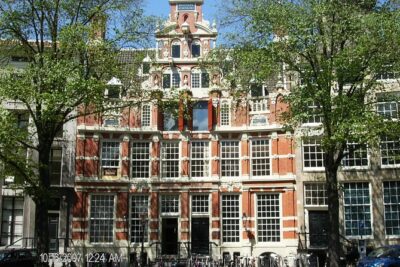
After the Jewish Quarter, the route moves toward the museum cluster with Hermitage in the mix. You’ll hear about it as a huge old 17th-century widowhouse, now housing the Hermitage Museum. That framing is smart because it stops you from thinking of the museum as something you either do or skip. You start seeing the building as part of the city’s living past.
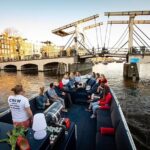
Then you’ll catch the Skinny Bridge, one of Amsterdam’s iconic bridges that lights up at night with hundreds of bulbs. Even if your timing is daylight, the guide’s description helps you picture what it becomes after dark. If you happen to be out in the evening, it’s one of those visual moments that makes Amsterdam look like a city with a personality, not just a set of landmarks.
From this area you’ll get a panoramic over the Amstel river, described as Amsterdam’s main and widest canal. This is a practical photo stop and also a helpful orientation moment. You start to grasp which waterway anchors what parts of the city.
Canal district “half circles” and merchant-house clues in the 17th-century ring
Now comes the part that turns Amsterdam from a list of sites into a coherent place. You’ll ride through the 17th-century canal district surrounding the old center, shaped like half circles that wrap around the core.
On a map, it’s easy to see circles and assume they’re just decorative. On the ground, you notice differences. You’ll see many typical canal houses that were once homes of successful merchants. Your guide points out that while the houses share some common elements, each one is slightly different—an important reminder that even within a “planned” district, people’s lives shaped the architecture.
This is where the tour quietly pays off for the rest of your trip. After this ride, you’ll be able to look at canal houses and ask better questions: why certain features appear where they do, and how time shows up in the look of the façades.
If you like learning how cities function, this segment is a strong use of your 2 hours. You’re not just seeing beauty; you’re picking up the logic behind why the city grew the way it did.
Museumsplein and the Rijksmuseum tunnel: ending where museum lovers start
The final stop is Museumsplein, a large 19th-century green open square. It’s home to the country’s most important museums, including the Rijksmuseum and Van Gogh Museum. You’ll drive through the Rijksmuseum tunnel and make a stop in the middle of the square.
This ending is strategic. By the time you reach Museumsplein, you’ve already been through older civic, religious, and residential stories. Now you arrive at a modern landmark area where Amsterdam’s identity is packaged through institutions and architecture. It’s a satisfying contrast.
You also get a chance to reorient for the next phase of your trip. Museumsplein is a practical base if you want to keep exploring by foot. It’s open, it’s easy to navigate, and it’s simple to pivot into whatever you want next.
One extra flexibility point: you can set a desired location to finish the tour in advance. That helps if your hotel isn’t near the pickup spot or if you want to route yourself closer to another plan.
Comfort, photo pacing, and how to plan around a 2-hour loop
This tour is private and lasts 2 hours. The timing matters because it shapes the experience. You’ll hit major neighborhoods and key landmarks, but you’re not meant to linger for long. If you want more time at a specific photo spot, you should plan to speak up when you reach it.
In past experiences with this guide, people found that photo stops weren’t a hassle. That doesn’t mean every stop becomes a ten-minute pause, but it does mean the guide tends to be flexible when you ask reasonably.
Cold-weather comfort is covered in two ways. The tour includes a blanket in case of cold weather, and they recommend warm clothing. Bring layers even if you think you’ll be fine. Amsterdam’s wind off the water can cut through faster than you expect.
Also keep in mind the physical limits. The tour lists a maximum combined passenger weight of 200 kg and notes it’s not suitable for people over 220 lbs (100 kg). If you’re traveling as a couple, this is easy to check before you book.
Price and value: $230 for a private group up to two
At $230 per group for up to two people, this tour isn’t a budget deal. But it’s also not priced like a long multi-activity day. The value comes from what you get bundled in:
- Private guide time (English, Dutch, or German)
- Hotel pickup and drop-off
- A route that covers multiple major districts in one go
- Comfort extras like a cold-weather blanket
- Stop-by-stop explanations that make the landmarks click
If you’re going with one other person, the effective cost is $115 per person for a 2-hour private intro to Amsterdam’s key neighborhoods. That can be competitive once you factor in that you’re not paying separately for transport and guide time across scattered stops.
If you’re traveling solo, you’ll still pay the group rate. In that case, think of it as paying for convenience and guided context, not just sightseeing. If you hate planning and you want your first look at Amsterdam to feel coherent, it can still be worth it.
Who should book this pedicab history tour
This tour fits best if you want a smart first orientation with minimal walking. It’s especially useful if you’re balancing:
- limited mobility
- jet lag and short attention spans
- a first-time visit where you want the main threads of Amsterdam’s story
It’s also a good match for people who like history, but hate when history is just a list of dates. Here, you’re connecting stories to actual buildings: a city gate, defense tower, synagogue area, memorial bricks, merchant houses, and museum icons.
If you’re the type who loves getting lost for hours and doesn’t care about organized stops, this may feel like too much coverage too fast. But if you want to understand the city quickly, you’ll appreciate how this tour sets up your independent exploration afterward.
Should you book it or skip it?
Book it if you want a private, warm-intro Amsterdam experience that hits the big neighborhoods without turning your day into a navigation project. The combination of hotel pickup, car-free style streets, and a guide who connects what you see to why it matters makes it a strong use of a limited time window.
Skip it if you want long, unstructured wandering time at each site, or if the idea of a 2-hour loop doesn’t match how you like to travel. The tour is designed for efficient coverage, not extended detours.
If you’re on the fence, I’d decide based on this: do you want your first day in Amsterdam to feel guided and coherent? If yes, this pedicab tour is a solid bet.
FAQ
Where does the tour start?
The tour starts at Dam Square.
How long is the Amsterdam private pedicab historical sightseeing tour?
It lasts 2 hours.
How much does the tour cost?
It costs $230 per group, up to 2 people.
Is hotel pickup and drop-off included?
Yes, pickup and drop-off are included. You’ll wait outside in front of your hotel.
What sights are included?
You’ll see stops around Dam Square, Zeedijk, Nieuwmarkt (including the 15th-century city gate), Montelbaanstoren, the Jewish Quarter (including the Big Synagogue area and the Portuguese Synagogue), the Holocaust name monument, the Hermitage, the Skinny Bridge, the Amstel views, the 17th-century canal district, and Museumsplein (Rijksmuseum and Van Gogh Museum area).
What languages is the guide available in?
The live guide is available in English, Dutch, and German.
Are food and drinks included?
No, food and drinks are not included.
What should I bring for the tour?
Bring warm clothing, and note that a blanket is included if it’s cold.
What are the weight limits?
The maximum combined passenger weight is 200 kg, and the tour is not suitable for people over 220 lbs (100 kg).
Can I cancel or pay later?
You can cancel up to 24 hours in advance for a full refund, and you can reserve now & pay later.